
Published 30. 8. 2026 · Updated 1. 9. 2026
The Boston Terrier is a small breed with a compact, muscular build and a weight of around 11.4 kg, originating from the United States of America. Despite its shorter nose, its expression is lively and intelligent, which also matches its nature – it is sociable, friendly and learns quickly, although the training requirements are low, so even an owner without experience will get along with it. The short coat requires minimal care and shedding is low, which makes it an undemanding roommate for an apartment. The Boston Terrier mainly needs the proximity of people – it does not tolerate loneliness well, but it gets along well with children, other dogs and cats. It is moderately active, barking is rather moderate. Thanks to its nature and size, it is also suitable for seniors or less active households, where it will mainly appreciate company, not miles on a leash.
Professionally consulted
The content was created in cooperation with the veterinary clinic Veterinární klinika VYVET sro and MVDr. Adam Hylák.

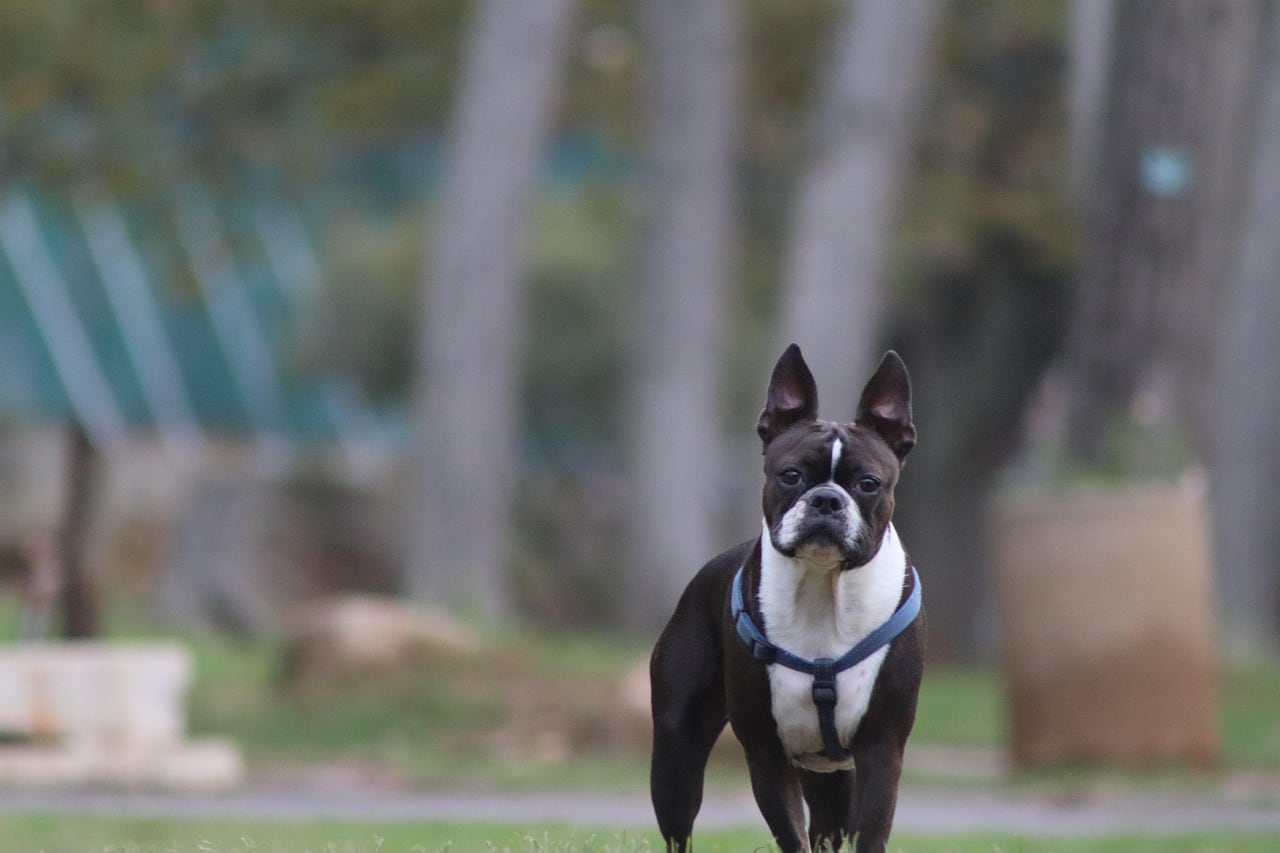
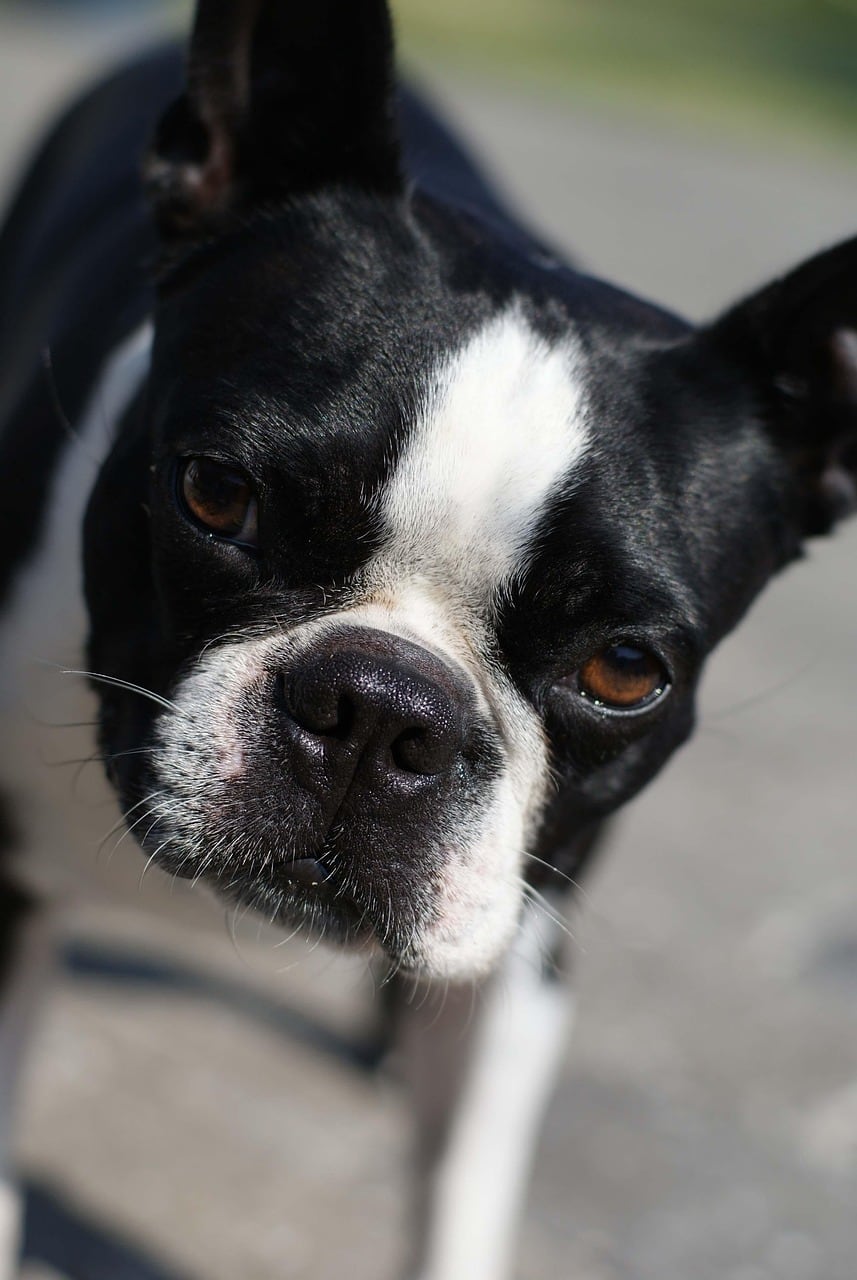

Quick overview
What is a Boston Terrier like?
The Boston Terrier is a small American breed classified in FCI Group 9, although its name refers to terriers - it is more of a social dog with a compact, muscular build and a weight of around 11.4 kg regardless of gender. The short coat requires only minimal care and shedding and drooling are low, making it suitable for households where thick fur or strong odors would be a problem.
It is a lively but balanced dog with a medium level of activity and barking. Thanks to its easy trainability and strong bond with humans, it is suitable for the first experience with a dog, but it needs the regular presence of a family - it does not tolerate loneliness well. It can easily cope with apartment life and usually gets along well with children and other animals in the household, including cats and other dogs.
With its adaptability and calmer nature, it is also suitable for seniors or owners who are not looking for extreme sports, but would appreciate a companion with enough energy for regular walks and games.
Origin and history
The Boston Terrier originates from the United States of America. The FCI classifies it in Group 9 among small Molossian type Dogs (section Small Molossian type Dogs), under standard No. 140.
The specific historical circumstances of the breed's origin are not further documented in the available documents.
Appearance and size
The Boston Terrier is classified as a small breed – according to FCI standard No. 140, it belongs to group 9 (companion dogs), specifically to the section of small molossoid-type dogs. This corresponds to its compact, muscular body, which, despite its small stature, appears solid and robust. The weight of both males and females is around 11.4 kg –
Boston Terrier Colors
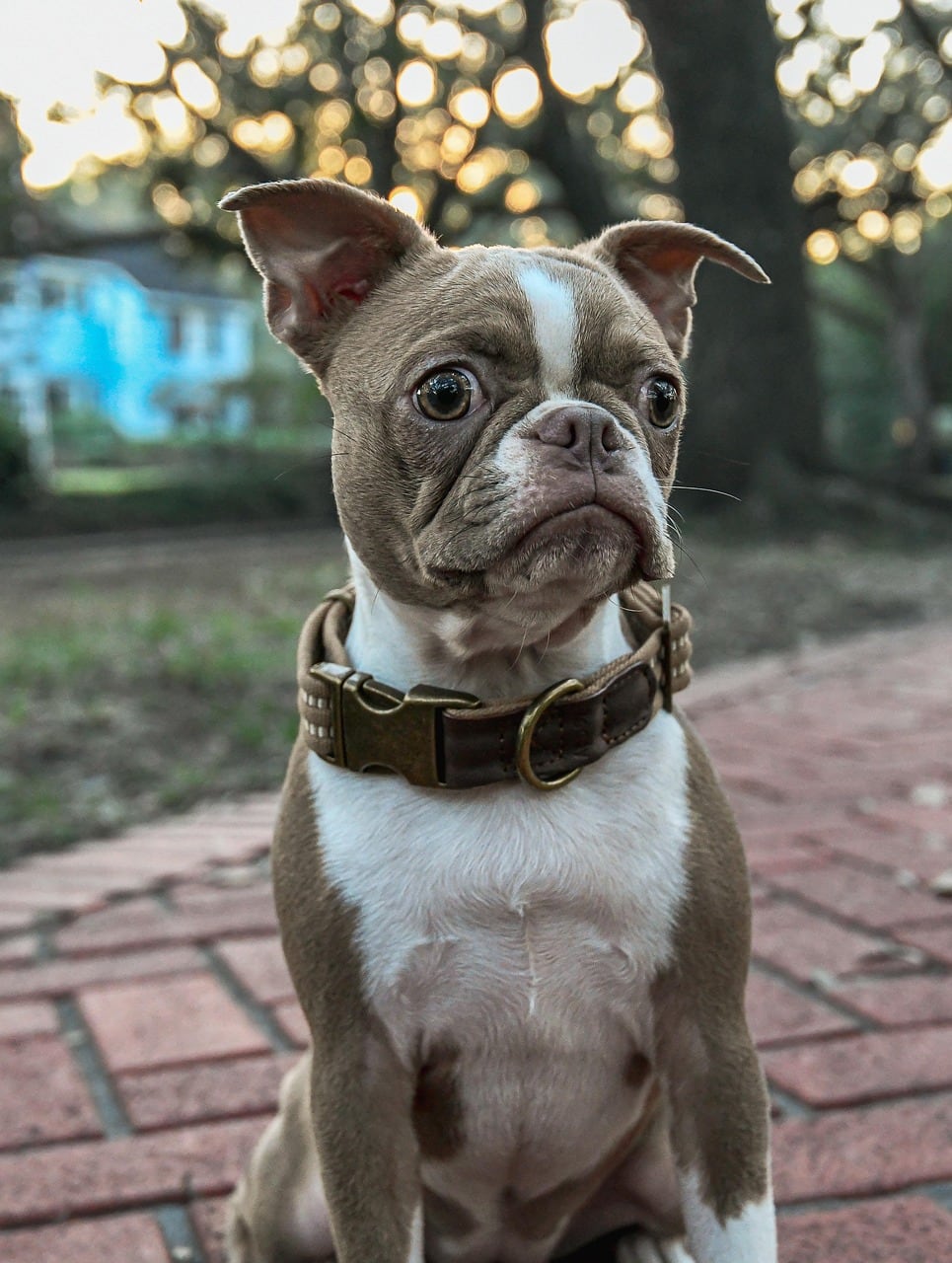
FCI Standard No. 140 precisely defines which colors and white markings are recognized and which are disqualifying in the Boston Terrier. The specific list of color variations and patterns is part of the breed standard and should always be the first guide when choosing a puppy.
Occasionally, specimens are offered on the market in shades that are not allowed by the standard - for example, blue, merle or chocolate coloration. These are fashionable deviations that do not arise in accordance with the traditional breeding goal of the breed and are often associated with a higher risk of health complications and the opaque origin of the breeding individuals. Interested parties are therefore advised to verify the origin of the puppy and prefer breeders who adhere to the standard and do not sell the coloration as an exclusive "rarity" for an above-standard price.
Boston Terrier Personality
The Boston Terrier is a social dog with a strong bond with its family - it has a high need for human closeness and does not tolerate loneliness well. It is a balanced breed with a medium level of activity, so it needs adequate exercise and is not one of the dogs that requires a demanding sports program.
The Boston Terrier is generally friendly with children, which, together with its compact size and low maintenance requirements, makes it a suitable candidate for families with smaller apartments. It is usually friendly with other dogs and cats, so integrating it into a household with other animals is usually not a problem.
It has a medium level of barking – it will be heard, but it is not one of those dogs that barks for no reason and continuously. The training requirement of this breed is low, which makes it a suitable choice even for beginner owners. It will appreciate mental stimulation, but its need is not extreme, so short training games and regular walks are usually fully sufficient for its satisfaction.
Thanks to its balanced nature and low demands on an active program, the Boston Terrier is a suitable companion even for seniors, who will appreciate its calmer expression combined with a real need for human closeness.
Boston Terrier and children
The Boston Terrier is quite good with children and, thanks to its high need for companionship, enjoys spending time and playing with them. Its moderate activity level and low training requirements mean that it is a dog that can be handled by a family without previous training experience.
However, it is necessary to take into account its body structure - it is a brachycephalic breed, for which it is advisable to monitor the load during play, especially in warm weather, and not let it breathe too much. Young children should be instructed that play needs to be adapted to the dog's breathing, and on hot days, allow the dog to enjoy quieter activities in the shade.
Otherwise, it is a sociable and adaptable breed that has no problem living in an apartment with children in the household. As with any breed, it is recommended that children be taught basic rules of behavior towards dogs - not to disturb them while they are eating and resting, and to respect their need for peace, even if they are otherwise friendly to people.
Boston Terrier and other dogs and pets
The Boston Terrier gets along well with other dogs and cats and in many households works without major problems alongside another animal. His sociable nature and low level of territorial behavior make it easy for him to live with another dog, especially if he is used to contact from a puppy.
He is usually friendly towards cats, as he lacks a strong hunting instinct that would force him to actively chase a cat. However, gradual and controlled introduction is key - even a balanced nature does not guarantee trouble-free coexistence from the first minute.
Thanks to its moderate need for mental stimulation and low training requirements, the Boston Terrier can be taught basic rules of behavior towards pets relatively easily. Since it is a social dog with a high need for human proximity, it feels better where it has a permanent family and possibly another animal around it than in isolation.
Before introducing a new pet into the household, it is still worth proceeding with caution and giving the Boston Terrier time to adapt, especially if it is an adult individual used to living as an only pet.
Is the Boston Terrier suitable for an apartment?
Yes, it is very suitable for an apartment and is one of the breeds for which a small city apartment is a natural environment. Its small size, short coat with low care requirements and low shedding rate make it an undemanding roommate even in a more limited space.
Although this is a dog with a calmer nature, it needs regular exercise - its activity level is at a medium level, so its exercise should not be limited to running around the apartment. Given that this is a short-headed (brachycephalic) breed, it is advisable to choose walks at a reasonable pace and avoid overheating, which also applies to movement around the house.
The Boston Terrier's barking is rated as moderate, so it usually doesn't pose a problem in an apartment building if it has enough stimulation and company - it needs contact with its family a lot and doesn't tolerate loneliness well. It needs moderate mental stimulation, so it's worth supplementing walks with small games or sniffing activities right in the apartment.
What an apartment breeder will appreciate
- Small size and low space requirements
- Easy care short coat and low shedding
- Calmer nature suitable for beginners and seniors
How much exercise does it need?
The Boston Terrier has a medium level of activity and can do well with a normal family routine – two to three walks a day for a total of approximately 30-45 minutes, supplemented with free exercise and play. It is not a dog that needs hours of exercise, and is better suited to owners who prefer a more leisurely pace than endurance breeds.
As this is a short-nosed breed, it is advisable to avoid intense exercise in hot weather and too long runs – short but regular walks are a better option than one strenuous exercise. During the summer, it is recommended to plan to move during cooler parts of the day and have water on hand.
In terms of physical activities, he is suited to short games of fetch, sniffing games in the garden or walks in the field with various stimuli, which also fulfill his moderate need for mental stimulation. More demanding dog sports such as agility at a high pace are not a typical choice for this breed, but more measured activities where movement alternates with rest are more suitable.
Training and education
Boston Terrier training is one of the less demanding breeds – it is a breed with low demands on the owner's experience, which makes it a suitable choice even for beginners. The key is its high need for company and natural orientation towards people, thanks to which the Boston Terrier likes to cooperate and learns easily, if the motivation is based on praise and treats, not on hard pressure.
It is recommended to start socialization and basic obedience training as soon as possible after your puppy comes home. Short, frequent training blocks work better than long sessions – they meet the dog’s moderate need for mental stimulation and keep the dog focused. The Boston Terrier appreciates variety: a combination of obedience, sniffing games and simple tricks.
Due to the moderate barking, it is worth working on controlling impulses when disturbed, so that barking does not become an addictive behavior. Strict, but calm and consistent training without unnecessary pressure is ideal for this breed - rough methods or ignoring its social needs can lead to insecurity rather than better obedience.
Hair care and hygiene
The Boston Terrier's short, smooth coat requires minimal grooming - a weekly brushing with a rubber brush or smooth glove is enough to remove loose hair and promote a natural shine. Due to the low shedding rate, there is no need to deal with the coat intensively, even during the transition between seasons.
Bathing should only be done when necessary, for example after soiling during a walk, using a gentle shampoo designed for dogs. Frequent bathing could unnecessarily dry out the coat and skin.
Ears deserve regular attention - checking and cleaning helps prevent dirt buildup and potential irritation. Claws should be trimmed regularly, usually every three to four weeks, to prevent them from growing and causing discomfort when walking.
Dental care should be part of a regular hygiene routine – brushing with dog toothpaste several times a week helps reduce tartar buildup and keep gums in good condition. Thanks to their low-maintenance coat and overall grooming needs, the Boston Terrier is a good choice for owners who don’t want to spend hours grooming their dog.
Feeding
The Boston Terrier weighs around 11.4 kg and is of medium activity, so its energy requirements are not extreme - the ideal food is food appropriate for the breed's size and life stage (puppy, adult, senior), with sufficient but not excessive protein and fat content. Since the breed easily becomes overweight, it is advisable to divide the amount of food into two portions a day and strictly follow the recommended dosage according to the dog's weight and activity, not by eye.
The short muzzle and shortened muzzle can affect the way the Boston Terrier eats - some individuals swallow quickly and do not bite enough, which increases the risk of digestive problems. A bowl with a food intake retarder or dividing the daily ration into several smaller portions can help. After eating, it is advisable to leave the dog calmly, without sudden movements or play.
Fresh water should be available throughout the day. Any changes to food should be made gradually over a few days to avoid digestive upset. If you are in any doubt about a suitable feeding schedule, it is best to consult your veterinarian.
How long does a Boston Terrier live?
The Boston Terrier lives an average of 11 to 15 years , making it a relatively long-lived breed for its size. The specific lifespan depends on several factors – genetics, quality of breeding, diet and overall lifestyle.
As a brachycephalic breed with a short muzzle, the Boston Terrier may have difficulty breathing, especially during exercise or high temperatures, which is a good idea to take into account when planning activities and the length of walks. An appropriate weight without excess pounds can significantly reduce the burden on the respiratory and musculoskeletal systems and contribute to a more comfortable aging of the dog.
Regular veterinary care also has an impact on lifespan - preventive examinations allow you to detect potential health complications early and respond to them before they affect your quality of life. Due to the low demand for coat care and its generally calmer nature, the Boston Terrier is one of the dogs that, with a responsible approach from the owner, can be expected to meet the upper limit of the above range.
Who is the Boston Terrier suitable for?
The Boston Terrier is a small, companion dog with low grooming and training requirements, making it a suitable candidate for a variety of household types, from apartments to families with children.
This breed may be right for you if…
- you live in an apartment and are looking for a dog that adapts well to a smaller space
- you prefer a breed with low grooming requirements and low shedding rates
- you have children or other animals at home – the Boston Terrier usually gets along well with them
- you are a beginner in dog breeding and you will appreciate the low training requirements
- you can devote enough time to the dog, because it needs a high level of company and does not tolerate long-term loneliness
- you are a senior or looking for a calmer companion with a medium level of activity
Consider another breed if…
- you spend most of the day away from home and the dog would be alone for a long time
- you are looking for a dog for intense sports - the Boston Terrier is not a typical companion for active owners
- You are concerned about a breed with a shortened snout, which may be more sensitive to high temperatures and more demanding physical exertion.
- you prefer a very quiet dog – the Boston Terrier has a moderate tendency to bark
Interesting facts about the breed
The Boston Terrier is one of the few breeds that originated in the United States of America - the vast majority of breeds in FCI Group 9 come from Europe, so it is an exception included in the section of small molossoid dogs under standard No. 140.
Its body structure is also interesting: although it belongs to the short-haired breeds with low demands on coat care and only minimal shedding, its appearance and skull structure make it a brachycephalic breed. This means that it may have an increased predisposition to breathing problems, which is also pointed out by professional sources dealing with the health of short-headed breeds.
Thanks to its low barking rate, low training requirements, and high need for human company, the Boston Terrier is often considered a dog suitable for apartments, even for owners who are just starting out with dog breeding.
Boston Terrier Health
"The Boston Terrier lives an average of 11-15 years, which makes it one of the breeds with a relatively favorable lifespan. The short muzzle, which is typical of this breed, nevertheless carries certain risks associated with breathing, and therefore it is advisable to take into account physical exertion, especially in warm weather and during higher exertion. Regular veterinary examinations help to detect possible problems early, before they become apparent externally, and are therefore an important part of the dog's life-long care. It is also worth paying attention to the eyes and joints of the Boston Terrier, because the structure of the body and head of this breed can put more strain on some areas than in other dogs. The owner should monitor how the dog breathes during exertion and at rest, what its condition is, and whether there is excessive panting outside of hot days. Maintaining an appropriate weight is important for this breed, because being overweight can further worsen health problems. A properly selected diet, adequate physical activity, and regular preventive Veterinarian visits are essential to keeping your Boston Terrier in good health throughout his or her life. Specific health conditions for this breed are listed in a separate section of the text.
Known predispositions
The breed is described to have an increased predisposition to:
- eye problems, such as congenital lens defects (cataracts).
- to patellar luxation (dislocation of the kneecap).
- to hip dysplasia.
- to damage to the cornea, including the formation of corneal ulcers, which is related to the brachycephalic structure of the skull and prominence of the eyes.
- to congenital spinal defects such as hemivertebra (wedge-shaped vertebra).
- to the development of mast cell tumors (mastocytomas) of the skin.
Discussed risks
The breed is described to have an increased predisposition to:
- to brachycephalic obstructive airway syndrome (BOAS), with the Boston Terrier being among the breeds in which this syndrome has been recorded in studies as the third most commonly affected breed after bulldogs and pugs.
- to respiratory difficulties associated with a short head, where the degree of problems depends on the number and severity of anatomical deviations in a particular individual.
- to gastrointestinal problems related to brachycephalic syndrome, such as gastroesophageal reflux, which may occur concurrently with respiratory problems.
This overview is for informational purposes only and does not replace the examination or recommendations of a veterinarian.
What to buy for a Boston Terrier
A practical basis that is suitable for this breed:
- Car seats for dogs – Car seats and safety equipment for transporting a dog by car.
- Toys – Dog toys – fetching, chewing and interactive.
- Cosmetics – Shampoos, conditioners and hair care products.
- Bowls – Feed and water bowls, anti-swallow bowls and stands.
- Collars – Dog collars – leather, textile and semi-tight.
- Beds – Beds and mattresses for dogs of all sizes.
- Leashes – Leashes, switch leashes and tracking lines.
Useful instructions
Practical tips that are useful when caring for a dog:
Frequently asked questions
Is the Boston Terrier suitable for an apartment?
Yes, the Boston Terrier is perfect for apartment living. He has a medium activity level, a short coat with low shedding, and is also small in stature, so he doesn't mind an apartment without a garden.
How good is the Boston Terrier with children?
The Boston Terrier is rather good with children and is a social dog that seeks human presence. His need for companionship is high, so he likes to play and spend time with children.
Can a beginner handle a Boston Terrier?
Yes, this breed is more suitable for beginners. The training requirements are low, so even a new owner without breeding experience can handle it.
How much does a Boston Terrier weigh and how long does it live?
Both male and female Boston Terriers weigh around 11.4 kg, making them a medium-sized breed. The average lifespan is between 11 and 15 years.
How much exercise does a Boston Terrier need?
The Boston Terrier has a medium level of activity and is not an ideal choice for owners looking for an extremely active dog - in this regard, it is neutral to an active lifestyle. Regular walks and moderate mental stimulation will suffice.
Does a Boston Terrier shed a lot?
No, thanks to its short coat, the Boston Terrier is one of the breeds with a low shedding rate. Caring for its coat is generally easy.
Does the Boston Terrier get along with other dogs and cats?
Yes, the Boston Terrier gets along well with both other dogs and cats, making it suitable for households with other animals.
Does the Boston Terrier bark a lot?
The Boston Terrier has a moderate barking rate, so it is not the type of dog that barks non-stop, but it can occasionally draw attention to itself.
Is the Boston Terrier suitable for seniors?
Yes, the Boston Terrier is more suitable for seniors. Its low training requirements, low coat care, and medium size make it an undemanding companion.
Resources and further information
- FCI Standard No. 140 – Boston Terrier – Fédération Cynologique Internationale
- Source of body measurements – bostonterrierklub.cz
- Expert resource - ufaw.org.uk
- Expert resource - ncbi.nlm.nih.gov
Professional cooperation
This breed overview was created in cooperation with the Veterinary Clinic VYVET sro and MVDr. Adam Hylák .