
Published 30. 8. 2026
The Yorkshire Terrier is a small breed from Great Britain, classified in FCI Group 3 among terriers (Toy Terriers section, standard no. 86). It measures 20–23 cm at the withers and weighs 2–3.2 kg, while the dimensions of the male and female are practically the same. Despite its small stature, it is a typical terrier - temperamental, confident and loud, with a strong bond with its owner. Its characteristic feature is its long, silky and straight coat, which does not tend to fall out, but requires regular and time-consuming care. The Yorkshire Terrier is suitable for apartments and for seniors, but it is rather neutral towards children and works better in a household without small children. Thanks to its low rate of shedding and calmer nature towards other dogs, it is a popular choice even for owners who are just starting out with breeding small breeds. However, it needs plenty of company and its tendency to speak loudly is a good thing to take into account when deciding on the purchase.
Professionally consulted
The content was created in cooperation with the veterinary clinic Veterinární klinika VYVET sro and MVDr. Adam Hylák.
Quick overview
What is a Yorkshire Terrier like?
The Yorkshire Terrier is a small breed from Great Britain, classified in FCI Group 3 among toy terriers (Toy Terriers section, standard No. 86). It measures 20–23 cm and weighs 2–3.2 kg, bitches have the same dimensions as dogs. Despite its small stature, it is a true terrier – spirited, self-confident and with a strong need to express its opinion, which is also manifested in increased barking.
A typical feature is a long, silky and straight coat, which requires regular and demanding care if the owner wants to maintain its length and shine. On the other hand, shedding is minimal in this breed, which will be appreciated by households sensitive to hair.
The Yorkshire Terrier is lively, curious and very attached to its owner - it needs company intensely and does not tolerate long-term loneliness well. It is rather neutral towards children, it usually gets along well with other dogs, its attitude towards cats is variable. It requires a medium level of activity and mental stimulation, it is moderately demanding to train and, thanks to its adaptability, it is suitable for an apartment even for beginners or seniors.
Origin and history
The Yorkshire Terrier originates from Great Britain and is classified in FCI group 3 (terriers), section Toy Terriers, under standard no. 86. Specific historical facts about its origin and the original purpose of the breed are not documented in the available documents, so we will not list them here.
Appearance and size
The Yorkshire Terrier is a small breed, standing 20-23 cm at the withers and weighing 2-3.2 kg, with both males and females reaching the same size frame. Despite their small stature, they have a compact, well-built body with a proud head carriage.
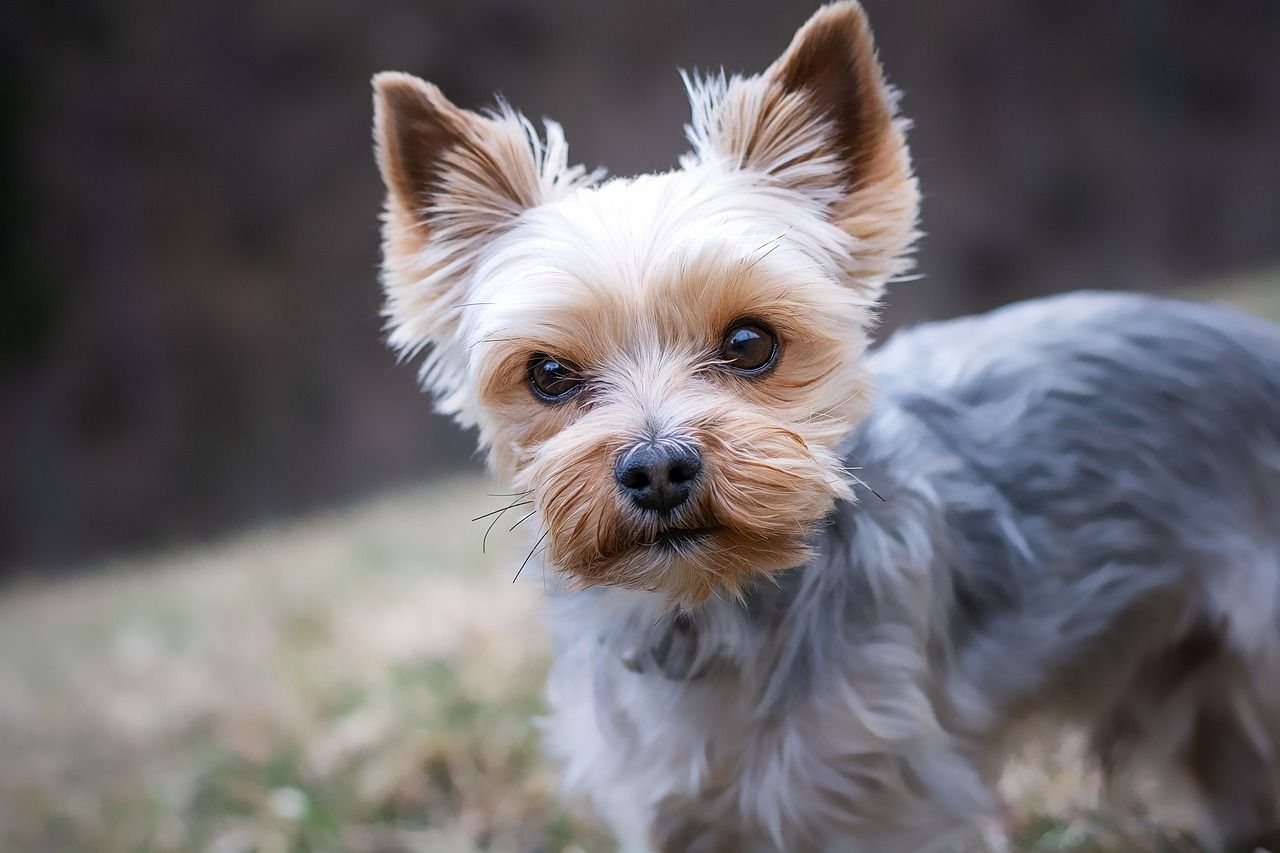
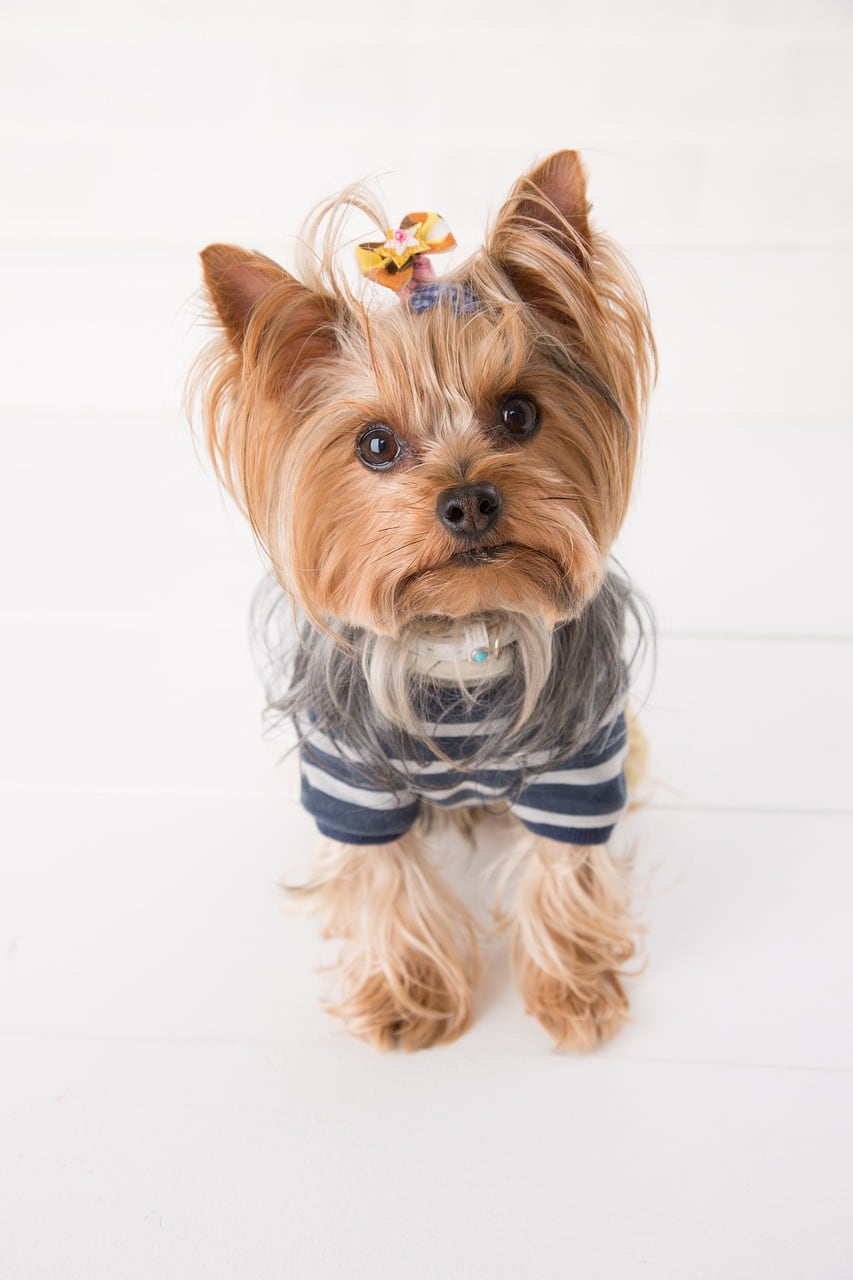
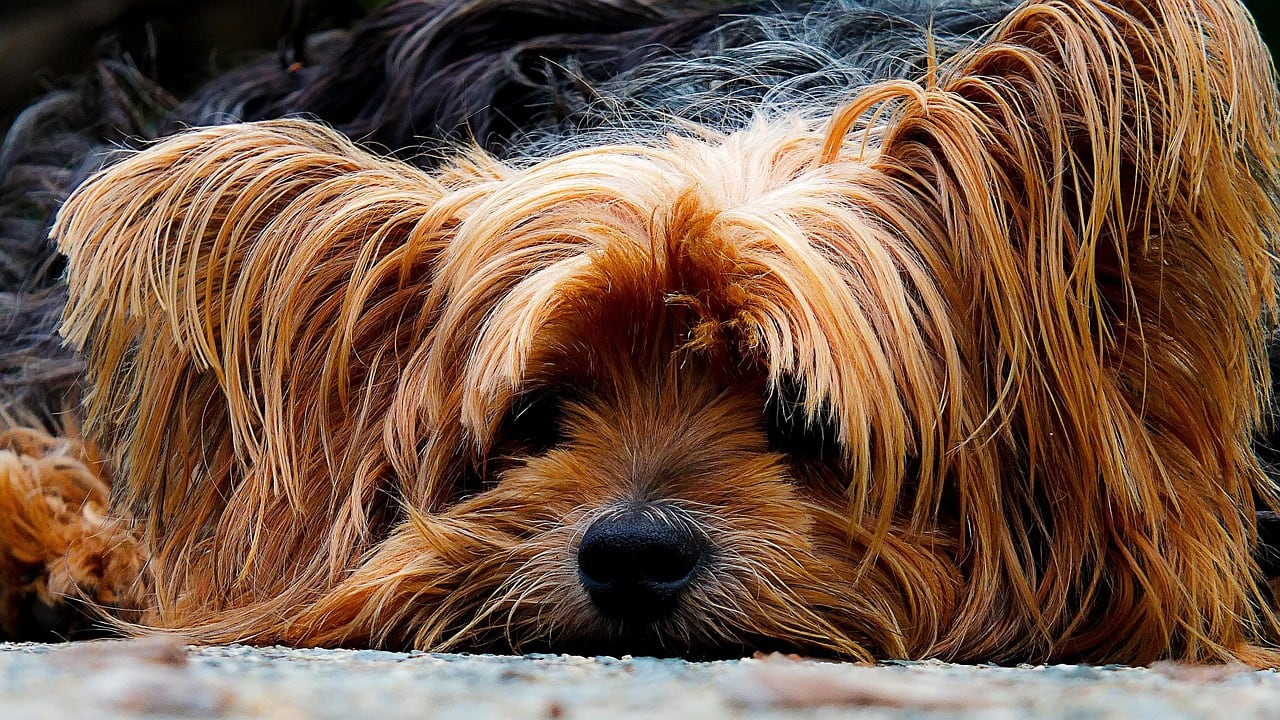
The most striking feature of the Yorkshire Terrier is its coat – long, silky and completely straight, without an undercoat, which falls on both sides of its body. Thanks to its structure, the coat resembles human hair more than classic dog hair, which is also reflected in the low rate of shedding. On the other hand, it is demanding to care for – in show dogs, the coat reaches the ground, while in companion dogs it is usually shortened to a more practical cut.
The head is small and flat, with a not too long muzzle, the eyes are dark and medium-sized, the ears are small, erect and carried close together. The steel completes the overall impression of an elegant, small dog, whose appearance, even after centuries of breeding, is still primarily associated with a distinctive, silky coat.
Yorkshire Terrier Colors
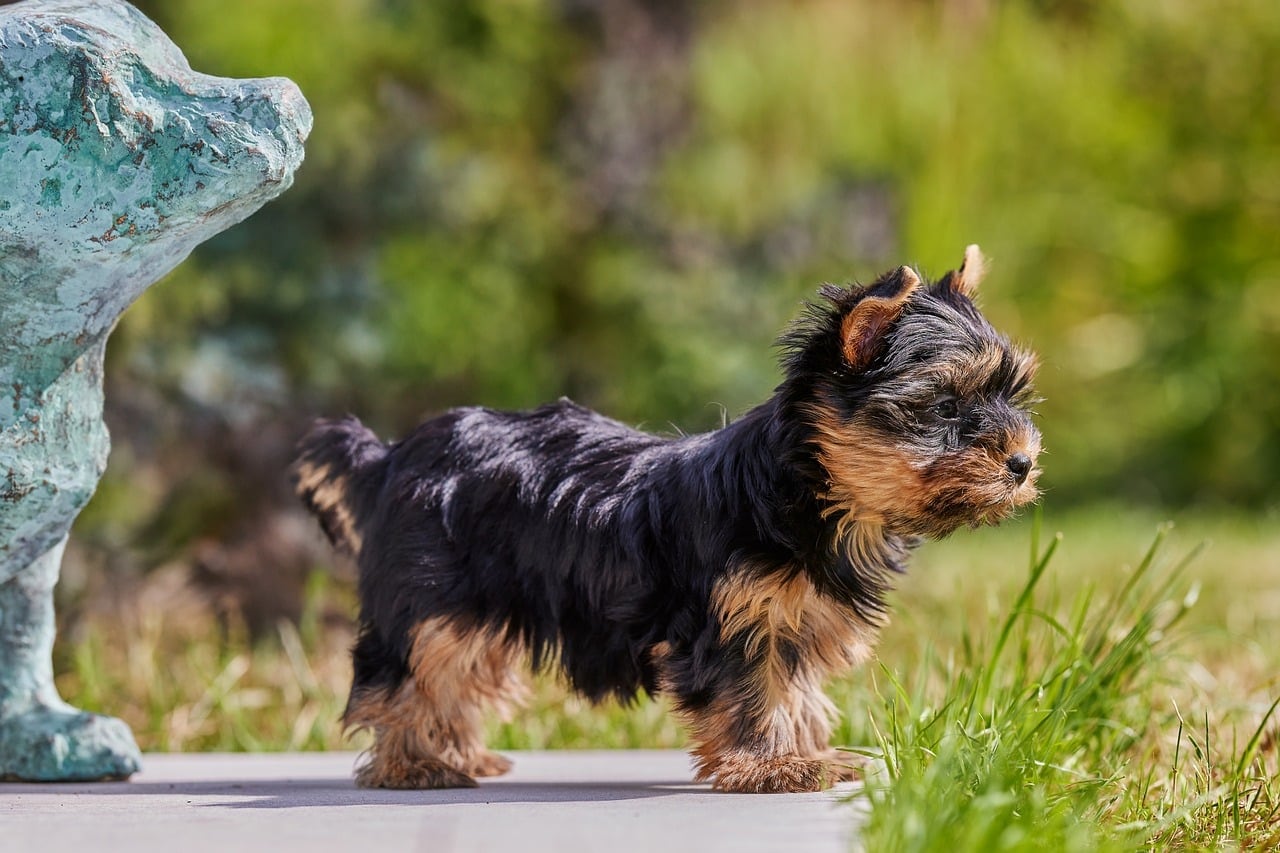
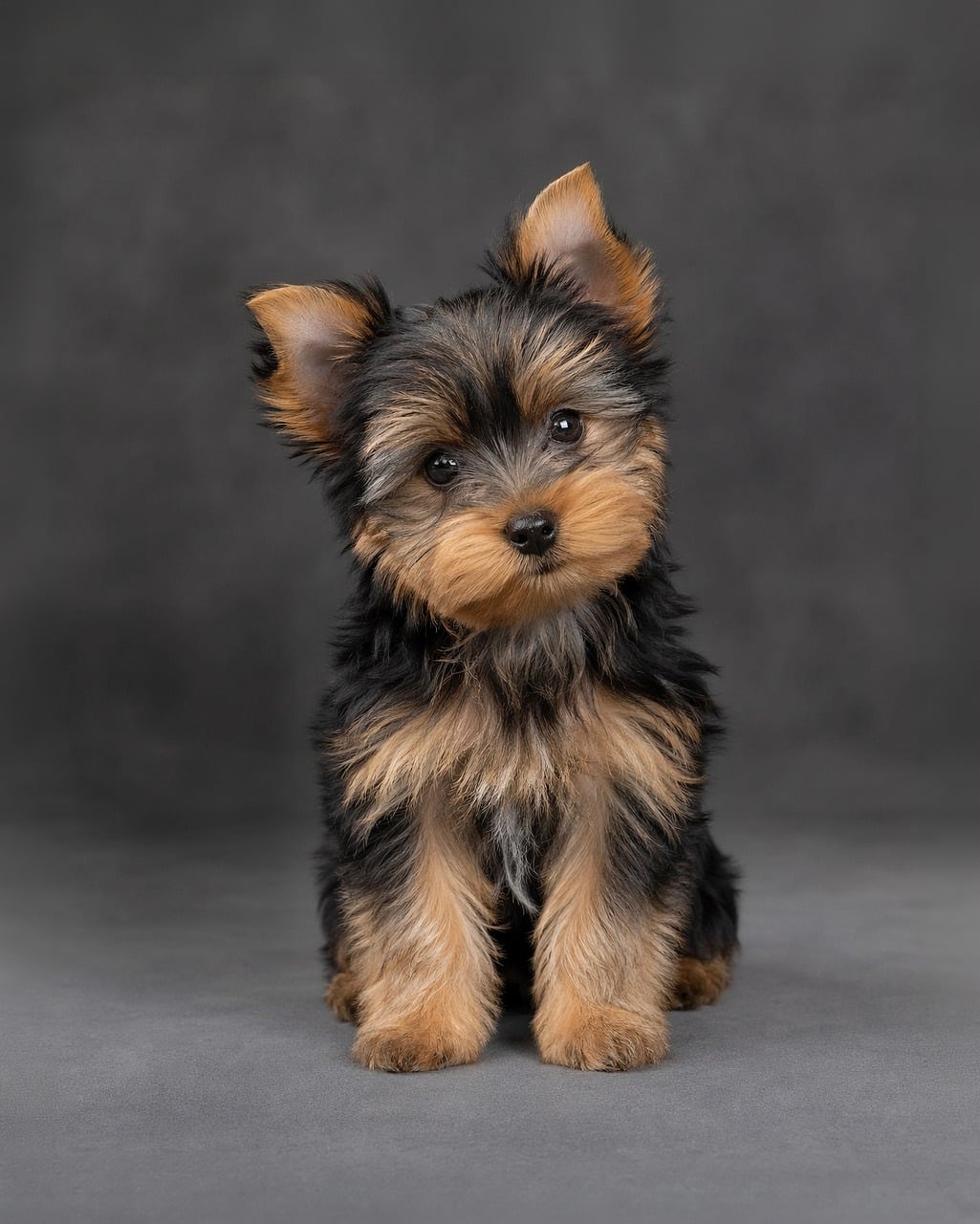
The FCI standard for the Yorkshire Terrier allows only one color combination: steel blue on the body and bright golden-brown (tan) tan on the head, chest and legs. Puppies are born black and the typical blue-gold coat color develops gradually, usually only during the first years of life. The blue color must be saturated, cool and uniform, not silvery or bluish in shade only. Today, Yorkshires are also offered on the market in colors that are not recognized by the standard - for example, chocolate, parti (white and black), blue-blue without tan or even with merle markings. Such a color in this breed is not a natural variant, but the result of targeted crossing with other color lines or breeds, or the uncontrolled occurrence of color mutations. In addition, there is a documented risk associated with merle coloration associated with damage to vision and hearing if two carriers of this gene are combined in breeding. Those interested should know that an "exotic" color in itself does not indicate the quality of the breeding and often indicates that the breeder has prioritized appearance over health and breed standard. Therefore, for serious breeding, pedigree and compliance with the standard are crucial, not unusual color.
Yorkshire Terrier personality
The Yorkshire Terrier is a small dog with a temperament that far exceeds its size. Although it is a toy breed, it retains typical terrier traits in its nature - it is courageous, confident and not afraid to express its opinion. It is strongly attached to its family and seeks its closeness, it does not tolerate loneliness well, because its need for company is high.
A typical manifestation is loudness - the Yorkshire Terrier barks often and likes to warn about anything unusual, which makes it an alert companion, even though it has a very modest body structure. It behaves neutrally towards children, so the relationship depends more on the specific nature of the dog and on how the children learn to treat it - it is a small dog that needs to be treated with respect.
He gets along well with other dogs, his attitude towards cats is neutral and depends on socialization. The training requirement is medium - the Yorkshire is intelligent, but also stubborn, so he will appreciate a patient and consistent approach. He needs mental stimulation at a medium level, activity is rather medium, so he is satisfied with a combination of walks and quieter time in the apartment. Thanks to his adaptability, he is also suitable for seniors and, more likely, for beginners.
Yorkshire Terrier and children
The Yorkshire Terrier's relationship with children is rather neutral - it is not a breed that would seek out children's company on its own, but if properly accustomed, it usually gets along with children. Its small body structure is especially key: weighing around 2-3.2 kg, the Yorkshire Terrier is physically very vulnerable and rough handling, dropping or careless lifting can easily hurt it.
For this reason, it is more suitable for households with smaller children who cannot yet estimate their strength, rather carefully. It is ideal to teach children how to pick up the dog, when to leave it alone (food, rest) and that the Yorkshire is not a toy. Due to its high barking, the dog may react to noisy games or sudden movements by barking, which needs to be taken into account especially in a smaller apartment.
It is recommended to monitor all contact between the dog and children at first and gradually build mutual respect on both sides. For older children who can treat a small dog with respect, a Yorkshire terrier can be a pleasant companion - due to its size, it is more suitable for calmer games than wild antics.
Yorkshire Terrier and other dogs and pets
The Yorkshire Terrier gets along well with other dogs, especially if he is used to their presence from a puppy. However, due to his small size, he is more suited to the company of dogs of a similar height - an encounter with a significantly larger or more temperamental dog can be physically risky for a small Yorkshire Terrier, even if it is just a game. In addition, a piece of hunting instinct and strong self-confidence remain in the terrier, so he is not afraid to assert himself even against larger individuals, which needs to be monitored.
The relationship with cats and other pets is rather neutral and depends a lot on specific experience and socialization. A Yorkshire Terrier raised with a cat from a young age usually shares the household with it without any problems, while an adult dog that is not used to cats may have a hunting instinct towards small animals such as rodents or birds.
In general, gradual and calm introduction to other animals in the household is key for this breed – not because of its aggressiveness, but rather because of its strong territorial nature and tendency to loudly warn about everything new.
Is the Yorkshire Terrier suitable for an apartment?
The Yorkshire Terrier is perfect for apartment living. With a size of up to 3.2 kg and a height of around 20–23 cm, he does not need a large space and can do well in a smaller apartment with enough space to run around and play. His activity level is moderate, so short walks supplemented by playing in the living room are usually enough to maintain his physical and mental well-being.
One characteristic, however, makes apartment living a little more complicated – the Yorkshire Terrier barks a lot. He reacts to sounds behind the door, footsteps in the hallway, and movement outside the window, which can be a problem in a block of flats with thin walls or sensitive neighbours. It is therefore worth working from the puppy on making sure that barking is not an automatic reaction to every stimulus.
The advantage is a low rate of shedding and minimal drooling, so cleaning the fur and stains on the furniture is not a big issue - but regular care of the long, silky fur itself requires attention. Due to the high need for company, it does not tolerate long stays alone in an empty apartment and tolerates a household where someone is present most of the day better. This makes it a good companion for seniors or beginners living in an apartment, if they can devote enough time to it.
How much exercise does it need?
The Yorkshire Terrier has a medium level of activity – it is not a lazy dog, but it is not a dog that needs hours of running around. Two short walks a day, totaling 30–45 minutes, are usually enough for him. Thanks to his small constitution and low weight (2–3.2 kg), he can satisfy his exercise needs even in a small space, which makes him a suitable breed for an apartment.
Due to its size, it is necessary to adjust the pace and terrain - long trips in difficult terrain, jumping from heights or moving in tall grass are not good for it and risk injury. A combination of walks on a flat surface and free play in the garden or apartment is more suitable.
In addition to physical exercise, the Yorkshire Terrier also needs mental exercise, which is at a medium level. Short training games, finding treats, simple obedience exercises or agility adapted for small breeds are suitable. Given his temperament and intelligence, sniffing games are also suitable, which will keep him entertained without the risk of overloading his joints.
The Yorkshire Terrier appreciates regularity rather than extreme exertion - short but frequent activities suit him better than one long trip a week.
Training and education
The training difficulty of the Yorkshire Terrier is medium - he is bright and learns quickly, but at the same time he has a mind of his own and typical terrier stubbornness. Positive motivation, short training blocks and consistency without unnecessary pressure work best. Physical force of punishment has no place with such a small dog, clearly set boundaries and rewards for desirable behavior are enough.
Due to the high barking rate, it is worth working on the command to quiet the puppy and not responding to the barking with increased attention, which only strengthens it. The Yorkshire has a high need for company, so it is advisable to train independence and coping with short-term solitude gradually to avoid separation problems.
Socialization is key for this breed – Yorkshires tend to be more wary of strangers and dogs, and the sooner they are introduced to various stimuli, the more balanced they will react in adulthood. Thanks to their moderate need for mental stimulation, a combination of short training sessions, sniffing games and walks together is enough. For beginners, they are a suitable choice due to their adaptability and lower demands on physical activity, although patience with their stubbornness is needed.
Hair care and hygiene
The long, silky coat of the Yorkshire Terrier without undercoat requires regular and thorough care - it is one of the most demanding of all breeds. Without daily brushing, the coat quickly tangles and forms clumps, so it is advisable to comb the breed with a brush and comb every day, ideally in layers down to the skin. Many owners therefore shorten the coat to a practical cut, which makes care much easier, while the long show coat requires almost professional care.
Bathing should be done at reasonable intervals with a quality shampoo designed for long-haired dogs - over-washing and under-washing unnecessarily burden the coat. The hair around the eyes often needs to be trimmed regularly to prevent eye irritation, and it is also a good idea to keep an eye on the hair around the muzzle and paws.
It is advisable to check the ears regularly and clean them gently if necessary, and to cut or grind the claws, as they quickly grow in small breeds, which wear down less naturally. Dental care should be a given - regular cleaning helps prevent the formation of tartar, which small breeds are generally prone to.
Feeding
The Yorkshire Terrier is a small breed weighing around 2–3.2 kg, which places specific demands on the food ration. Small breeds have a faster metabolism than large dogs, so it is recommended to divide their feeding into several smaller portions per day - especially for puppies, who are at risk of blood sugar fluctuations. Due to their very small jaws and susceptibility to tartar, it is advisable to choose kibble that corresponds to the size of the piece, or to pay attention to regular dental care. The energy requirement of the Yorkshire Terrier corresponds to a medium level of activity - this is not a breed that requires an extreme supply of energy, so it is necessary to monitor the size of the portions and prevent overweight, which burdens small dogs disproportionately given their body structure. High-quality food should contain enough animal protein and a balanced ratio of fats, especially if the owner wants to support the condition of a long, silky coat. It is always advisable to adjust the amount of food to the age, weight and current condition of the particular dog and to consult a veterinarian about any changes to the diet, especially for older individuals or dogs with sensitive digestion.
How long does a Yorkshire Terrier live?
The Yorkshire Terrier lives an average of 13-16 years , which makes it one of the breeds with a longer life expectancy - this is related to its small size and low weight (2-3.2 kg).
Life expectancy is influenced by a number of factors. Small breeds, such as the Yorkshire Terrier, are generally expected to age more slowly than large dogs. However, the specific lifespan of an individual dog also depends on genetics, diet quality, exercise regimen, and timely veterinary care.
Due to their small body size, it is advisable to ensure that the joints and teeth are adequately stressed – small breeds are more prone to tartar and respiratory problems, which can indirectly affect the dog's overall condition in old age. Regular veterinary check-ups and appropriate care throughout their life can help the Yorkshire Terrier fulfill its genetic potential for longevity.
Who is the Yorkshire Terrier suitable for?
The Yorkshire Terrier is a small companion dog suitable for apartments and seniors. Thanks to its low shedding, it is an interesting choice for owners who are concerned about dog hair around the apartment. Its high need for company and rather good tolerance with other dogs make it a good companion if you can give it enough attention.
This breed may be right for you if…
- you live in an apartment and are looking for a small dog suitable for beginners
- Are you willing to dedicate time to caring for a long, silky coat every day?
- you will appreciate a dog with low shedding and very low drooling
- you can offer him plenty of company – he doesn't like to be left alone for long periods of time
- you are a senior or a less active person who is satisfied with a moderate level of activity
Consider another breed if…
- you don't want to regularly engage in demanding coat maintenance
- Do you mind the increased barking?
- you have small children and are looking for a dog with a really high tolerance – the Yorkshire Terrier is rather neutral towards children
- Are you looking for a dog that is suitable for living with cats without reservations?
- you spend a large part of the day away from home and cannot provide him with enough company
Interesting facts about the breed
The Yorkshire Terrier is registered with the FCI under number 86, in group 3 (terriers), specifically in the toy terrier section - i.e. among small companion breeds, not among working terriers hunting rodents. It comes from Great Britain and in Czech the abbreviated forms "yorkšír", "yorkšír" or simply "york" are also commonly used for it.
An interesting feature is the combination of long, silky fur and very low shedding rate - the Yorkshire is therefore a breed suitable for households where hair flying around the apartment is a nuisance, but fur care is very demanding. Despite its small weight of 2-3.2 kg, it is a long-lived breed, usually living to 13 to 16 years.
Within the FCI Toy Terrier section, the Yorkshire Terrier is often mentioned together with related breeds of similar type and purpose, such as the English Toy Terrier with its characteristic black and tan coloration or the Australian Silky Terrier, with which it shares a coat type and overall elegance.
Yorkshire Terrier Health
The Yorkshire Terrier is a long-lived breed, with a lifespan of 13-16 years, which is also due to its small body structure. However, small stature does not mean carefree health - in general, with small breeds, regular veterinary check-ups can detect problems before they become fully apparent, and this is doubly true for the Yorkshire Terrier due to its slender build and delicate joints.
It is worth noting preventive dental examinations - the small mouth and closely spaced teeth are more prone to tartar in this breed, and gingivitis can develop inconspicuously. It is also a good idea to monitor breathing and behavior when excited or pulling on the leash, because the delicate structure of the neck requires a harness rather than a collar. Regular weighing helps maintain optimal weight, which significantly reduces the strain on the joints and spine in a small dog.
A responsible breeder should have the puppy's parents health checked before placing them in the breeding program, and new owners should not hesitate to consult a veterinarian as soon as they notice anything unusual - from limping to changes in breathing to vision problems. In addition, the Yorkshire's small size makes it easier to transport to the doctor and for preventive examinations, which owners should take regularly, not just in case of problems.
Known predispositions
- to patellar luxation (dislocation of the kneecap) – an epidemiological study from primary veterinary care in England reports a significantly increased probability of diagnosis in Yorkshire Terriers compared to crossbred dogs.
- to congenital portosystemic shunt (liver shunt), with a retrospective analysis of thousands of cases ranking Yorkshire Terriers among the breeds with the highest proportion of this diagnosis.
- The breed may experience dysplastic changes in the hip joints, as is generally the case with many dog breeds.
- The breed may develop cancer throughout its life, similar to dogs in general as they age.
Discussed risks
The breed is described to have an increased predisposition to:
- to periodontal disease (periodontal disease), which is among the most frequently diagnosed health problems of Yorkshire Terriers in veterinary care.
- to the persistence of deciduous (temporary) teeth, which was among the most frequently reported findings in the breed in a large primary veterinary care study.
- to tracheal collapse, which, according to the professional literature, is described with the highest frequency in small and toy breeds, especially in Yorkshire Terriers and Pomeranians.
- to Legg-Calvé-Perthes disease (avascular necrosis of the femoral head), which is one of the developmental diseases of the hip joint described in small and toy breeds, including the Yorkshire Terrier.
This overview is for informational purposes only and does not replace the examination or recommendations of a veterinarian.
What to buy for a Yorkshire Terrier
Practical basis that is suitable for this breed:
- Car seats for dogs – Car seats and safety equipment for transporting a dog by car.
- Toys – Dog toys – fetching, chewing and interactive.
- Cosmetics – Shampoos, conditioners and hair care products.
- Bowls – Feed and water bowls, anti-swallow bowls and stands.
- Collars – Dog collars – leather, textile and semi-tight.
- Beds – Beds and mattresses for dogs of all sizes.
- Leashes – Leashes, switch leashes and tracking lines.
Useful instructions
Practical tips that are useful when caring for a dog:
Frequently asked questions
Is the Yorkshire Terrier suitable for an apartment?
Yes, the Yorkshire Terrier is ideal for apartments and smaller spaces due to its small size and weight of 2-3.2 kg. Its activity level is moderate, so short walks and playing at home are enough for it.
How long does a Yorkshire Terrier live?
The average lifespan of a Yorkshire Terrier is 13–16 years, which is among the higher values among dog breeds.
Is the Yorkshire Terrier suitable for beginners?
Rather yes – the Yorkshire Terrier has a medium level of training, making it manageable even for owners without previous experience. The more demanding task is caring for its long, silky coat, which needs to be groomed regularly.
Is the Yorkshire Terrier good with children?
This breed is neutral towards children. Due to its small build, it is advisable to supervise contact with small children to avoid unintentional injury.
How much does a Yorkshire Terrier shed?
The Yorkshire Terrier's shedding rate is low, making it a good choice for households where dog hair on clothing or furniture is a problem. However, the coat requires high maintenance - regular brushing and grooming.
Does the Yorkshire Terrier bark a lot?
Yes, this breed barks a lot. The Yorkshire Terrier likes to draw attention to what is happening around him and to visitors, which is a good thing to take into account when training him.
Does the Yorkshire Terrier get along with other dogs and cats?</p>
They get along well with dogs, but their relationship with cats is rather neutral and depends on the specific socialization and nature of the individual.
Is the Yorkshire Terrier suitable for seniors?
Yes, thanks to its small size, low exercise requirements, and high need for human company, the Yorkshire Terrier is a suitable companion for seniors.
How much does a Yorkshire Terrier weigh?
The weight of the Yorkshire Terrier ranges between 2 and 3.2 kg for both males and females, and the height at the withers is 20–23 cm.
Resources and further information
- FCI Standard No. 86 - Yorkshire Terrier - Fédération Cynologique Internationale
- Source for predisposition - cgejournal.biomedcentral.com
- Predisposition resource - ufaw.org.uk
- Predisposition resource - akcchf.org
- Source for predisposition - link.springer.com
- Source on predisposition - pubmed.ncbi.nlm.nih.gov
Professional cooperation
This breed overview was created in cooperation with the Veterinary Clinic VYVET sro and MVDr. Adam Hylák .