
Published 31. 8. 2026
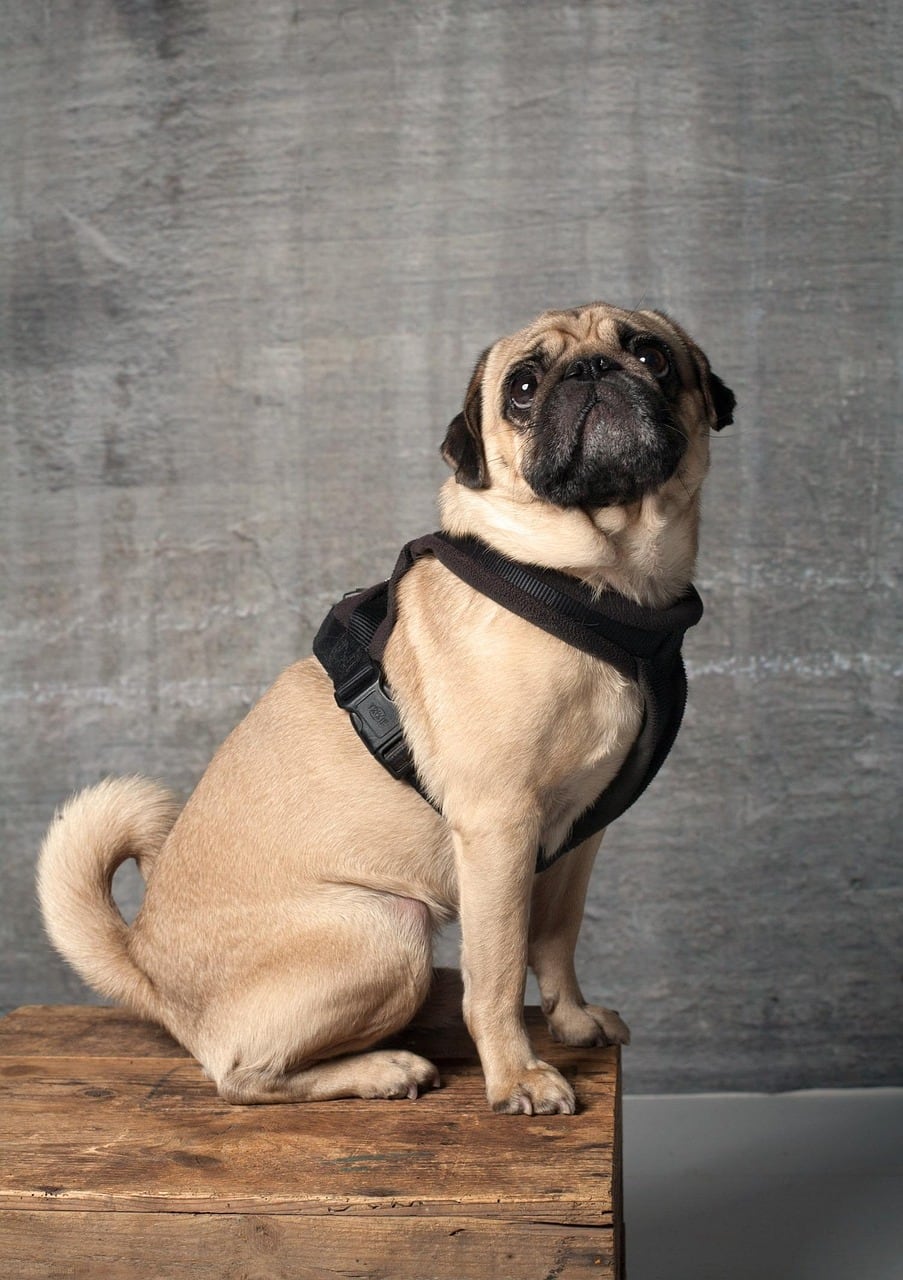
The Pug is a small, stocky dog with a distinctive flat face and wrinkled skin, one of the most easily recognizable breeds of all. It originates from China and is now classified in FCI Group 9 as a small molossoid dog. It weighs 6.3–8.1 kg regardless of gender and its short, smooth coat requires minimal care, although shedding is common.
The pug is calm, sociable and strongly attached to its family by nature - it does not tolerate loneliness well. It does not require high levels of exercise or mental exertion, which makes it suitable for seniors or beginners. It is suitable for apartments, usually gets along well with children and other animals in the household and is not a barking breed. On the contrary, it is not suitable for people looking for an active sports partner.
Professionally consulted
The content was created in cooperation with the veterinary clinic Veterinární klinika VYVET sro and MVDr. Adam Hylák.
Quick overview
What is a Pug like?
The Pug is a small companion dog with a distinctive, flat head and a compact, muscular body - both sexes usually weigh 6.3-8.1 kg. It originates from China and is one of the small molossoid types of dogs. It is a breed with low demands on exercise and mental exertion, but with a high need for human proximity - it does not tolerate long-term loneliness and does best where it spends most of its time with its family.
He is calm, friendly and non-confrontational by nature, he rarely barks, so he is not a problem even in an apartment. He approaches training with his head, so he requires patience and consistency, although he is definitely not a problem student.
Who is it suitable for?
- For apartment and house owners who do not seek out sports activities
- For beginners and seniors thanks to its undemanding nature
- For families with children and households with other dogs or cats
- Less suitable for extremely active owners looking for a companion for long trips
Origin and history of the Pug
The Pug is one of the oldest cultural breeds in the world – its roots go back to ancient China, where small flat-nosed dogs were bred in the Chinese imperial courts more than two thousand years ago. The predecessors of today's Pug were bred exclusively as companions for the ruling classes and monks, not for working use, which is typical of the breed to this day.
These dogs reached Europe through trade with the Far East, especially through the Dutch traders of the East India Company in the 16th-17th centuries. In the Netherlands, the pug quickly gained popularity among the nobility and became a symbol of the House of Orange. From there, it spread to European courts, becoming popular with the French and later English aristocracy.
In the 19th century, with the development of organized cynology in Great Britain, targeted breeding aimed at stabilizing the type began - then the color patterns and proportions of the head and body that are known today were also formed. The English Cynological Society later standardized the breed and the continental clubs also took over the development of the standard from it. The FCI International Standard No. 253 classifies the pug in Group 9 (companion breeds), the section of small molossoid dogs, which corresponds to its true original and current purpose - to be a devoted companion of man, not a working dog.
In the Czech Republic, specialized clubs associated with the Czech-Moravian Cynological Union are dedicated to breeding pugs, ensuring that a healthy type corresponding to the historical character of the breed is maintained.
Appearance and size
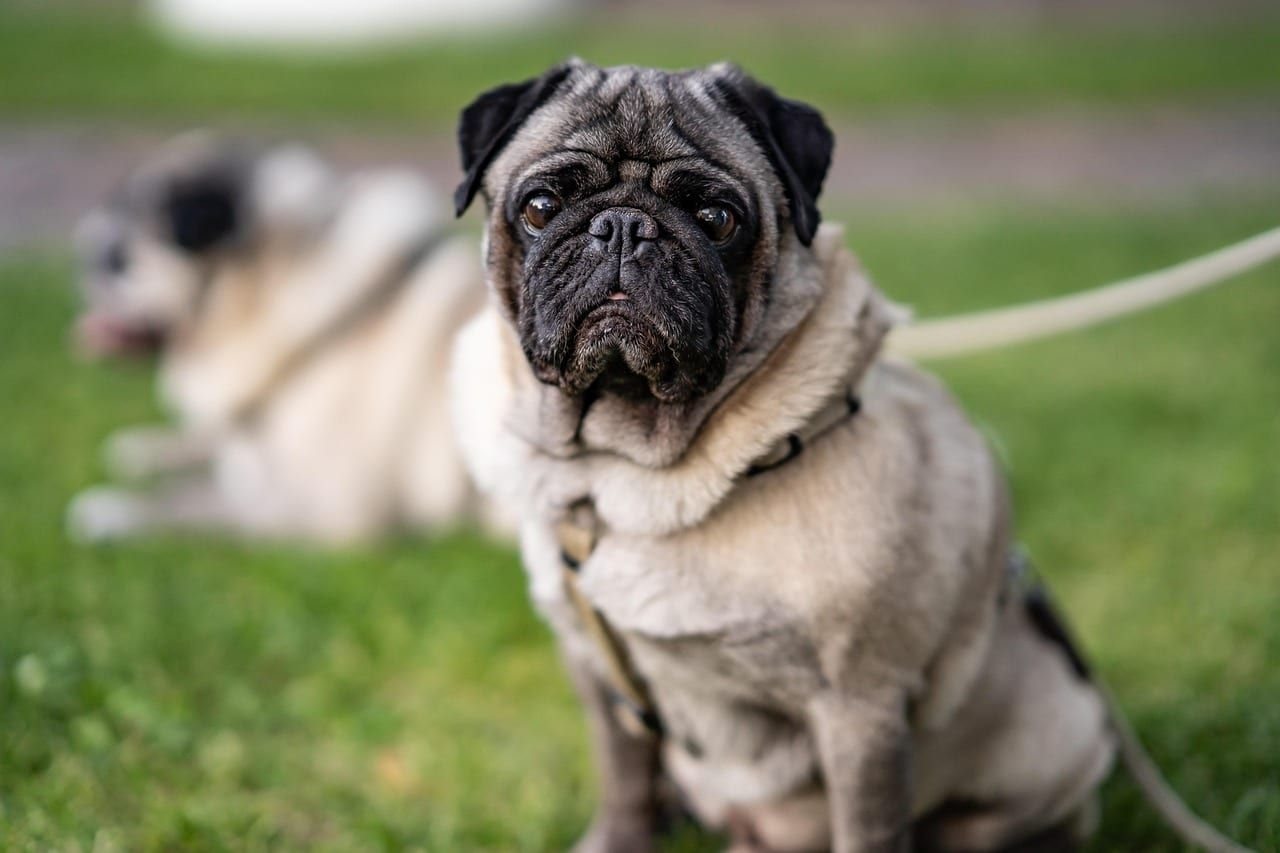
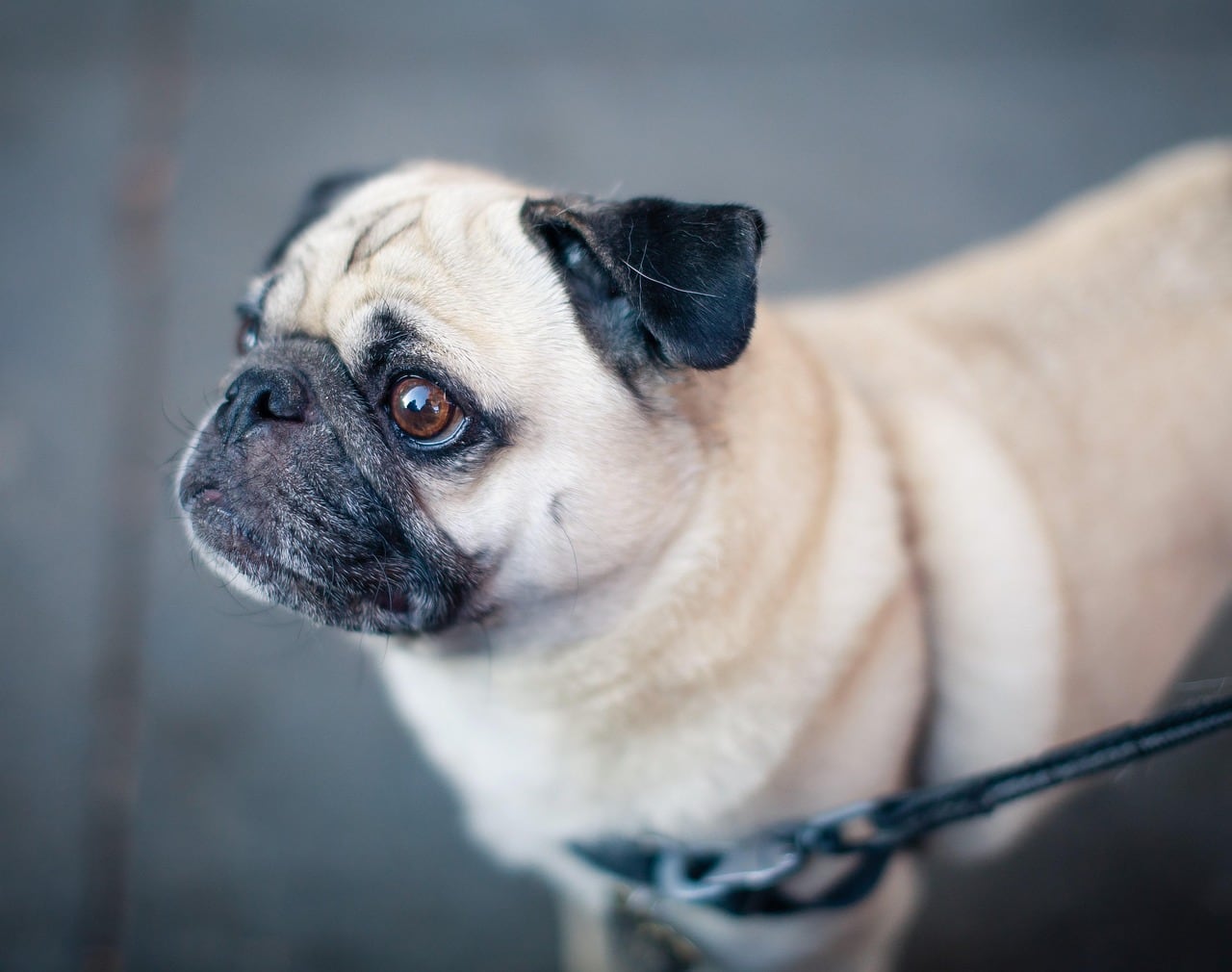
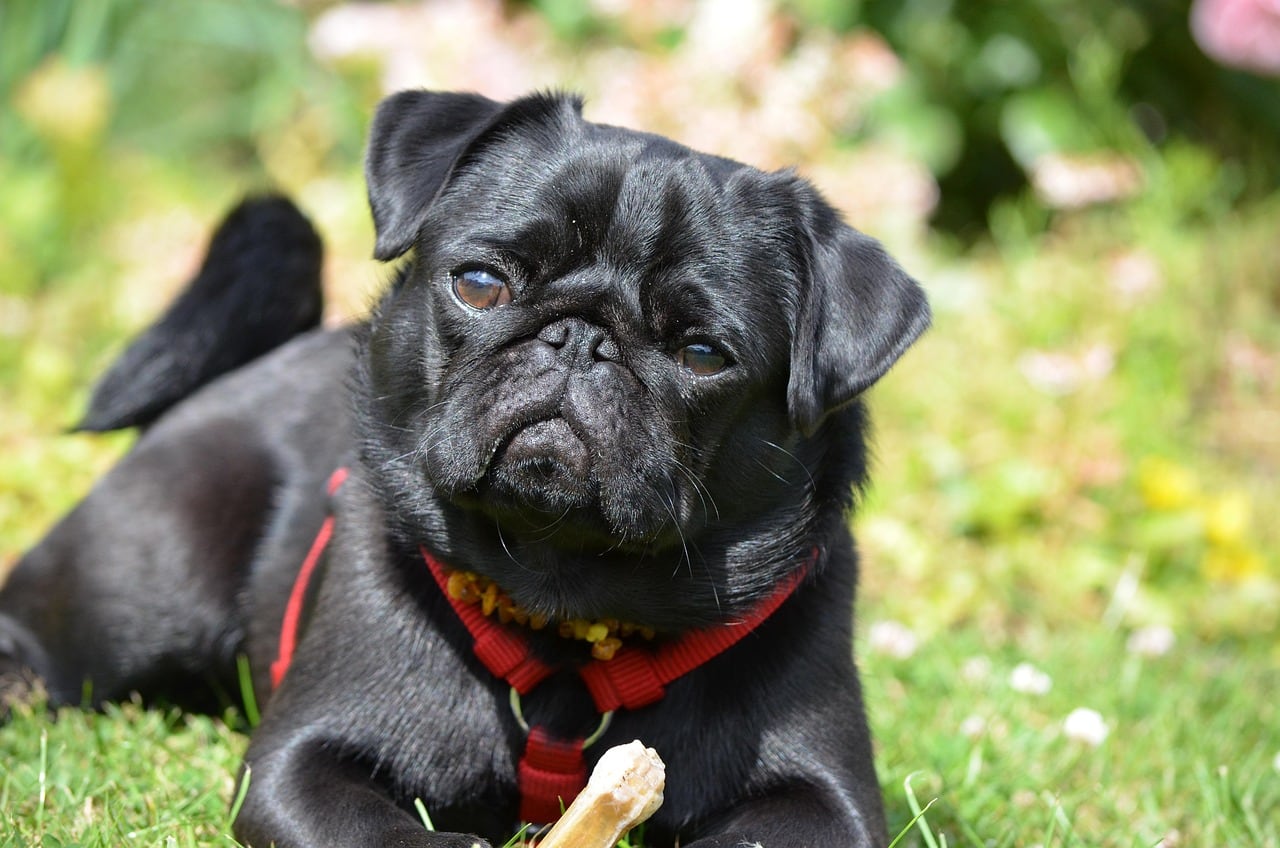
The Pug is a small, compact dog with a muscular, stocky body that gives a square appearance - in this respect, the male is practically no different from the female. The weight of both sexes ranges from 6.3 to 8.1 kg, with the standard emphasizing full, dense muscle mass without a hint of thinness or excess weight.
The head is large, round, without a pronounced dome of the skull, with a short blunt muzzle and pronounced wrinkles, which are a typical recognition feature of the breed. The eyes are large, dark, round and slightly protruding, with a lively, interested expression. The ears are thin, small, either in the shape of a "rose", or more fitting "button" ears - both variants are allowed by the standard.
The body is short and wide with a deep chest, a straight back. A characteristic feature is a tightly curled tail carried high above the rump, ideally double curled. The coat is short, smooth and soft, lying close to the body - despite its length, the pug is one of the breeds with more pronounced seasonal shedding.
The specific color variety and permissible coat shades are described in more detail in a separate section dedicated to coloration.
Pug Colors
The breed standard specifies specific coat colors as well as a typical mask and back line, but an exact list of recognized color variants is not available in this section, and therefore we do not list it here to avoid the risk of inaccuracy. Those interested in breeding individuals should check the current version of the standard directly with the breed club.
Pug personality
The Pug is a social dog with a calm, friendly nature and a strong bond with its owner. It requires a lot of human closeness and does not tolerate long-term loneliness - ideally, it spends most of its time in the presence of its family, whose activities it enjoys watching and actively participating in.
In temperament, it is a balanced and non-conflict dog with no tendency to excessive barking or nervousness. It has rather low energy, so it is suited to a calmer home regime alternated with short walks. Nevertheless, it can be playful and likes to participate in small activities with the family, especially if they are connected to the company of people.
The intelligence of the Pug is solid, but it is accompanied by a certain amount of stubbornness - during training, a slight stubbornness can be manifested, which makes obedience training rather difficult. Positive motivation and patience work best, a rough approach does not work with this breed.
The pug does not need much mental stimulation, and is content with the usual stimuli of everyday life. It has virtually no guarding instinct - it is more friendly than wary towards strangers, so it is not suitable as a house guard.
In relation to other animals, the pug is usually tolerant, and can coexist with dogs and cats without any problems, especially if it is used to their presence from puppyhood. Thanks to its gentle nature, it is also suitable for families with children, seniors and less experienced dog owners.
Pug and children
The Pug is rather well tolerated with children, but it is a calmer and less energetic companion that does not seek out wild games or long outdoor activities. Thanks to its low barking rate and gentle nature, it is usually non-conflicting in a family environment, although living with small children should always be supervised by an adult.
As a breed with a low need for exercise and mental stimulation, the Pug usually prefers a calmer form of contact – sitting next to a child or a short game – to demanding fetch or running. This makes it a suitable candidate for families where intensive sporting activities are not expected, but rather the daily closeness and common presence in the household that the Pug naturally craves.
What to watch out for
- Due to the structure of the snout and airway, children should be instructed not to handle the dog roughly, pick it up roughly, or expose it to overheating while playing.
- Small children should not be left unattended with a dog - this applies in general to all breeds, but especially to the pug due to its smaller body constitution.
- Socializing your puppy with children and, conversely, teaching children to respect the dog's rest and space helps prevent misunderstandings on both sides.
- Due to the medium difficulty of training, it is advisable to set clear rules for the dog's behavior in the family from the beginning, including contact with children.
With older children who can respect dog signals and boundaries, coexistence is usually problem-free and the pug becomes a constant companion around the household even during quieter family activities.
Pug and other dogs and pets
The Pug gets along well with other dogs and cats, which is also related to its original purpose - it is a social breed bred as a companion dog without a hunting background. Unlike breeds bred to hunt small game, it does not have a strongly developed hunting instinct, and therefore it usually does not perceive cats or other small animals in the household as prey.
Low barking and calm nature make it easy to live in a multi-member pack and in a household with other species of animals. Thanks to the high need for human company, the pug often seeks contact with other animal members of the household, if it is used to them from puppyhood.
What to watch out for
- Even though the pug does not have a strong hunting instinct, it is always advisable to introduce a new animal gradually and under supervision.
- Since the pug is a social dog with a low need for independent activity, it tolerates the presence of calmer canine companions better than highly temperamental individuals.
- Despite their gentle nature, it is advisable to ensure safe separation for small rodents or birds, as individual dogs may react differently.
Is the Pug suitable for an apartment?
Yes, the Pug is one of the breeds that is very well suited to apartment living. Its low activity level and low need for mental stimulation mean that it can do with a calmer daily schedule and does not need a large garden or constant exercise to be happy.
Thanks to its low barking rate, it does not pose a burden to neighbors, even in a panel house - it only barks loudly exceptionally. Nevertheless, it is necessary to take into account several conditions that will make apartment keeping easier:
- Space: It doesn't have to be large, a pug can handle a smaller apartment as long as it has enough quiet space to rest.
- Peace and warmth: due to its short snout, it has a harder time with heat and demanding physical exertion, so it will appreciate a balanced environmental temperature and not being overworked on hot days.
- Regular but undemanding exercise: despite its low activity requirement, it needs shorter walks to maintain its fitness and prevent overweight.
- Society: he has a high need to be with people, so staying alone in an apartment for a long time does not suit him.
The high rate of shedding means that even indoors, regular cleaning of the coat is necessary, although the care itself is not demanding. Overall, this is a breed that is suitable for apartment life, even for beginners and seniors, as long as the owner can devote enough time and attention to it.
How much exercise does it need?
The Pug is a breed with a low need for exercise - it can do with short walks several times a day, supplemented by free running around the garden or apartment. It is a dog that adapts well to the owner's calmer lifestyle and does not require a sporty pace or long hikes.
Due to the structure of the respiratory tract typical of brachycephalic breeds, physical activity should be adjusted to the weather and the condition of the individual. In the hot summer months, it is advisable to move walks to cooler parts of the day and avoid intense exercise in direct sunlight, as the pug has a harder time regulating its body temperature.
Suitable activities
- Short to medium-length walks in pleasant weather
- Free movement in the garden or in a safe outdoor area
- Olfactory games and finding treats as a substitute for more demanding sports
- Quiet indoor games, especially on hot days
Mental stimulation does not have to be too intense - a little distraction in the form of toys with treats or simple obedience training will suffice. Due to the high need for human company, the pug will appreciate time spent near its owner rather than independent sports activities, which are not typical or suitable for this breed.
Training and education
Training a Pug requires patience and consistency rather than a firm hand - this is a dog that likes to please, but can also be stubborn and quickly loses interest in repeated training without a clear reward. It responds best to short, positively led lessons where the motivation is a treat or praise, not pressure or a loud command.
The key to success is consistency – the same verbal commands, the same procedure and, most importantly, regularity, even if it's just a few minutes a day. Longer or more physically demanding training sessions are not suitable, as the short muzzle and overall low activity level mean that the pug will quickly tire and overheat, especially in warm weather or after eating.
Socialization and specifics
It is a good idea to start socialization soon after your puppy arrives home - introducing them to different people, sounds and situations helps prevent excessive shyness. Due to their high need for human company, the Pug usually integrates easily into family life and tolerates contact with children and other animals in the household.
- Short training blocks (5–10 minutes) repeated several times a day work better than one long lesson.
- A reward in the form of a treat or a game holds attention better than mere verbal praise.
- It is advisable to plan outdoor training outside the hot parts of the day due to limited heat tolerance.
- Punishing or raising your voice tends to be counterproductive - the pug will withdraw rather than cooperate.
For novice owners, the pug is generally manageable because it does not require specialized knowledge or a sporting background - all that is needed is a patient, kind approach and realistic expectations about the pace of learning.
Hair care and hygiene
The short, smooth coat of the pug requires minimal grooming, but despite the low cost of grooming, it is important to expect a high rate of shedding – hair falls out practically all year round and appears on carpets, textiles and clothing in the apartment. Regular brushing with a rubber brush or glove several times a week will help, which will remove loose hair and at the same time promote blood circulation to the skin.
The skin folds on the face of the Pug require special attention, especially around the nose and forehead. These folds are prone to moisture, dirt and sebum, which can lead to irritation or an unpleasant odor. Regularly wiping the folds with a damp cloth and drying them thoroughly is recommended to prevent moisture from building up.
Bathing should only be done as needed, overwashing can damage the natural protective layer of the skin. Due to the short snout and flattened mouth, it is advisable to ensure that water does not get into the dog's nose when bathing.
Ears, eyes and teeth
The ears of the Pug should be checked regularly and gently cleaned if necessary, as excessive shedding and the presence of fine hair around the ears can contribute to the accumulation of dirt. The large, prominent eyes require regular visual inspection to ensure they are not red, watery or irritated. Due to the structure of the jaw, this breed also requires special attention to dental care, including regular brushing.
Claws
Claws need to be checked and trimmed regularly, especially if they are not naturally worn down enough during normal movement - this is even more true for a pug with a low activity level.
Feeding
Given the breed's low exercise requirements and notorious appetites, controlling the quantity and quality of food is one of the most important aspects of Pug care. A tendency to overeat and low energy expenditure mean that being overweight is a real risk for this breed, and extra pounds put a strain on the joints and respiratory system, which the shortened muzzle already has to cope with.
The basis should be a high-quality complete food appropriate to the age, size and current stage of life - a puppy has different energy and nutrient requirements than an adult or aging dog. When choosing food, it is advisable to take into account the low physical activity of the pug and not choose options with too high an energy content if the dog does not spend most of the day actively moving.
Physical fitness check
Because the pug gains weight easily, it is worth regularly monitoring its body composition - the ribs should be easily palpable under a layer of fat and a hint of a waist should be visible when viewed from above. The amount of food should be adjusted according to the dog's actual condition, not just according to the approximate tables on the food packaging.
- The feeding ration should correspond to the age, weight and level of exercise, not just the breed as such.
- It is advisable to count treats and table scraps in your total daily intake to avoid an unnoticeable increase in calories.
- Regular weighing and visual inspection of the figure help to detect incipient overweight early.
- For older individuals or dogs with lower energy expenditure, it is advisable to gradually adjust the amount of food to prevent long-term fat accumulation.
How long does a Pug live?
The exact lifespan of a pug cannot be stated without a verified source, but in general, small and medium-sized breeds of similar constitution are expected to live for several years, up to over ten years. The specific age of a particular individual is influenced by a number of factors, which can be influenced to some extent by care.
What affects lifespan?
- The puppy's genetics and origin - the health of the parents and the responsible choice of a breeding pair have a fundamental influence on the predispositions with which the dog enters life.
- Physical condition – Pugs tend to gain weight quickly because their activity level is low and their energy expenditure is limited. Being overweight puts a strain on their joints and respiratory system and can significantly harm a dog's life.
- Exercise - although the pug is not a dog suitable for very active owners, regular, moderate walks help maintain muscle mass and proper weight.
- Prevention and veterinary care – regular check-ups, vaccinations and deworming reduce the risk of complications that could shorten life expectancy.
- Nutrition – due to the low need for exercise, the food needs to be adjusted in terms of quantity and energy to prevent obesity.
- Health predisposition - due to the short snout, the breed may have an increased predisposition to breathing problems, especially in heat or during exercise, which should be taken into account when planning exercise and travel.
Who is the Pug suitable for?
The Pug is a social dog with low demands for exercise and mental stimulation, making it suitable for people who do not seek active leisure activities. However, it needs a lot of contact with its family and does not tolerate long-term loneliness.
Who is the breed suitable for?
- For beginners who want a smaller dog without demanding training
- For seniors looking for a quiet companion for their apartment
- For owners of apartments or smaller households without a garden
- For families where the dog is in the presence of people most of the day
- For households with children where contact with the dog is supervised
- For breeders who already have another dog or cat and want to add a calm breed to their collection
Who is the breed not suitable for?
- For active owners looking for a partner for running, hiking or sporting cynology
- For people who spend most of the day away from home and the dog would be left alone for a long time
- For households where no one would bother with regular removal of shed hair
- For owners expecting a dog with minimal need for closeness and comfort care
Interesting facts about the breed
The Pug originated in China, from where it later spread to Europe, where it is now a popular companion breed, bred primarily for its temperament, rather than for working purposes. The International Cynological Federation classifies it in Group 9 of the small molossoid types of dogs under Standard No. 253.
Its most striking features include a distinctly short muzzle and smooth, short fur, which is nevertheless characterized by a relatively high rate of shedding - interested parties should therefore expect regular cleaning of the fur in the household, although the fur care itself is undemanding.
In the Czech Republic, the breed is bred by the Pug Club of the Czech Republic, which runs the standard and breeding activities, and the breed is also covered by the Moravian-Silesian Bulldog-Pug Club as a member entity of the Czech-Moravian Cynological Union.
Pug Health
The health characteristics of the pug are closely related to its body structure – these are compact, heavier dogs with a short head, which the FCI classifies as small molossoid types (section Small Molossian type Dogs). This structure brings certain risks that should be considered when choosing a puppy and throughout the dog's life. The pug is also characterized by a high rate of shedding, which places more demands on regular coat care than on health as such. In general, it is recommended to monitor body weight and physical activity in breeds with a similar constitution, because being overweight can further aggravate health risks.
Breathing and body structure
Due to its classification as a small molossoid type, the breed may be more prone to breathing difficulties and poorer tolerance of physical exertion, especially in hot and humid weather. It is recommended to avoid strenuous exercise on hot days and provide the dog with the opportunity to rest in a cooler environment.
Coat care and shedding
The Pug's short, smooth coat does not stop shedding - on the contrary, it is a breed with a high shedding rate, so regular brushing is part of basic care and helps keep the skin and coat in good condition.
What to look for when choosing a puppy
- Be interested in whether the puppy's parents can handle normal physical exertion without signs of shortness of breath.
- Observe the breeding environment and the behavior of the puppies – active and inquisitive puppies are a good sign.
- Check with the breeder whether the breed is registered with one of the breed clubs associating this breed in the Czech Republic.
- Do not underestimate the information about the parents' weight - the pug should have an appropriate, not excessive, body constitution.
Known predispositions
The breed is described to have an increased predisposition to:
- to brachycephalic obstructive airway syndrome (BOAS) due to a short skull and narrowed airways.
- to corneal diseases, such as ulcers or injuries, associated with large, bulging eyes.
- to inflammation of skin folds (intertrigo, pyoderma) in the area of the muzzle fold.
- to patellar luxation.
- to hip dysplasia.
- to obesity, especially with lack of exercise and an inappropriate diet.
- to spinal deformities such as hemivertebrae (wedge-shaped vertebrae).
- to an inflammatory brain disease known as pug dog encephalitis (necrotizing meningoencephalitis).
This overview is for informational purposes only and does not replace the examination or advice of a veterinarian.
What to buy for a Pug
Practical basis that is suitable for this breed:
- Car seats for dogs – Car seats and safety equipment for transporting a dog by car.
- Toys – Dog toys – fetching, chewing and interactive.
- Cosmetics – Shampoos, conditioners and hair care products.
- Bowls – Feed and water bowls, anti-swallow bowls and stands.
- Collars – Dog collars – leather, textile and semi-tight.
- Beds – Beds and mattresses for dogs of all sizes.
- Leashes – Leashes, switch leashes and tracking lines.
Useful instructions
Practical tips that are useful when caring for a dog:
Frequently asked questions
Is a pug suitable for an apartment?
Yes, the pug is one of the breeds specifically suited to apartments. It has a low activity level and low need for mental stimulation, so it doesn't mind a smaller space without a garden.
How much does a pug weigh?
An adult pug, whether male or female, weighs approximately 6.3–8.1 kg. Weight does not differ significantly between the sexes.
Why does a pug shed so much if it has short fur?
Although the pug has a short and smooth coat, it sheds a lot. The short hair also sticks well to textiles, so regular household cleaning is necessary.
Is a pug suitable for beginners?
Yes, the Pug is a beginner-friendly breed. It combines low activity and low need for mental stimulation with moderate training that even a less experienced owner can handle.
Can a pug get along with children?
The Pug is considered to be rather suitable for children. It is a social breed that seeks contact with people.
Does a pug need a lot of exercise?
No, the Pug's activity level is low and the breed is not suitable for extremely active owners. Short walks and time spent with the family are sufficient.
Can a pug be left alone at home?
Rather not without problems - the pug has a high need for company and is a very sociable dog. Long-term solitude does not suit it.
Does your pug bark a lot?
No, the pug's barking rate is low. Combined with low drooling, it is a relatively undemanding apartment roommate.
Does a pug get along with other dogs and cats?
Yes, the Pug tends to get along well with both other dogs and cats, making it a good choice for a multi-pet household.
Is a pug suitable for seniors?
Yes, the pug is one of the breeds recommended for seniors. Its low activity level, low grooming requirements, and high need for companionship make it well suited for a quieter household.
How difficult is it to care for a pug's coat?
The pug's coat requires little care, although it sheds a lot. The short coat does not require cutting or complex grooming, just regular brushing.
Where does the pug come from and where is it classified according to the FCI?
The Pug originates from China and is listed under FCI standard No. 253 in group 9 (companion breeds), section of small molossoid dogs. The original English name of the breed is Pug.
Resources and further information
- Breed standard – Pug Club of the Czech Republic – Pug Club of the Czech Republic, zs
- List of breeds – Pug, FCI No. 253 – Czech-Moravian Cynological Union (CMKU)
- Member entities – Moravian-Silesian Bulldog-Pug Club – ČMKU
- FCI Standard No. 253 – Pug – Fédération Cynologique Internationale
- Source of body measurements – fci.be
Professional cooperation
This breed overview was created in cooperation with the Veterinary Clinic VYVET sro and MVDr. Adam Hylák .