
Published 30. 8. 2026
The Australian Shepherd is a medium breed from FCI Group 1 (Sheepdogs section, standard no. 342), which, despite its name, originated in the United States of America. The male dog measures 51–58 cm at the withers and weighs 25–34 kg, the female is slightly smaller – 46–53 cm and 19–26 kg. The long coat with an undercoat is striking, which sheds heavily and requires regular brushing.
In terms of temperament, this is an exceptionally smart and energetic dog with a very high need for exercise and mental stimulation - it suffers from boredom and can find its own, not always desirable, activity without involvement. It handles training quickly and with gusto, is attached to its people and seeks company intensely. Thanks to this, it is more suitable for active households with enough space and time, not for an apartment or for beginners or seniors. It usually gets along well with dogs, and is rather friendly with children if it is led from a puppy.
Professionally consulted
The content was created in cooperation with the veterinary clinic Veterinární klinika VYVET sro and MVDr. Adam Hylák.
Quick overview
What is an Australian Shepherd like?
The Australian Shepherd is a medium-sized working breed built for all-day movement on pastures - despite its name, it comes from the United States of America, where it was developed as a versatile dog for working with livestock. Males measure 51–58 cm at the withers and weigh 25–34 kg, females are slightly smaller, 46–53 cm and 19–26 kg. It is characterized by a medium, long coat with an undercoat, thanks to which the Aussie can withstand being outside in different weather conditions, but also sheds a lot.
By temperament, this is a dog with a very high level of activity and an equally high need for mental stimulation - it needs work, not just walks. It handles training quickly and willingly, which makes it a grateful partner for sports such as agility or herding trials. It is strongly attached to its family, needs company intensely and does not tolerate loneliness well.
It is rather friendly towards dogs, neutral towards cats, and tends to be rather accommodating towards children, provided it gets enough exercise. It is not suitable for apartments and is usually not recommended for beginners or seniors - it is a breed for active owners who can offer it enough stimulation.
Origin and history
The Australian Shepherd is a breed originating from the United States of America, although its name refers to Australia. The FCI lists it under standard No. 342 within Group 1, Sheepdogs section, which corresponds to its original purpose – working with livestock.
The inclusion in the herding breed section shows that the Aussie was bred for everyday practical work on farms, not as a companion or ornamental dog. This is reflected in its current nature - a high need for exercise and mental stimulation, which the breed inherited from generations of dogs used to work with cattle and sheep.
The FCI standard does not specify the exact historical development of the breed and its ancestors, so the only documented fact is its American origin and herding purpose.
Appearance and size
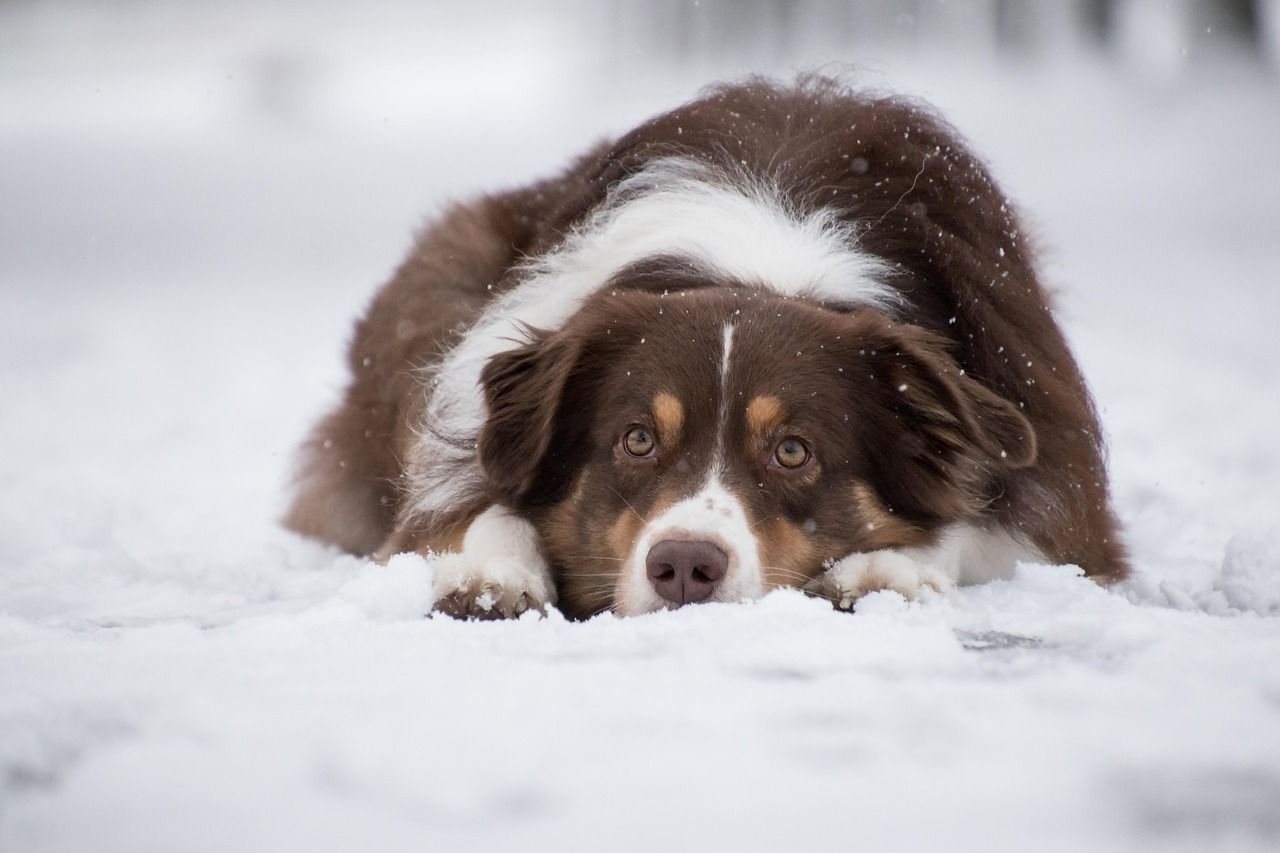
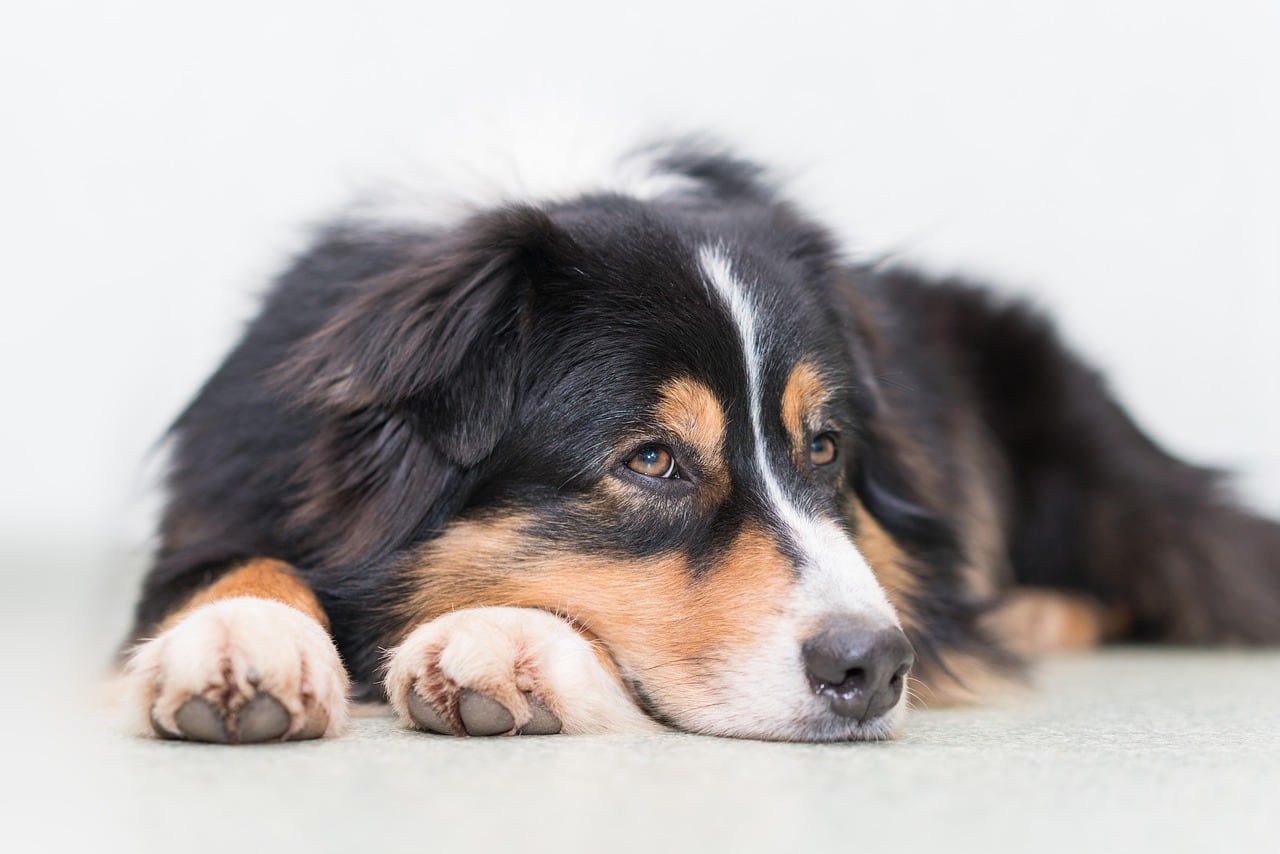
The Australian Shepherd is a medium-sized, athletic breed with balanced proportions and a supple movement that reflects its working heritage with cattle. Male dogs grow to a height of 51–58 cm and weigh 25–34 kg, while females are smaller – 46–53 cm and 19–26 kg. Their bodies are compact, muscular, with a deep chest and a straight back, giving them the strength and endurance needed for all-day field work.
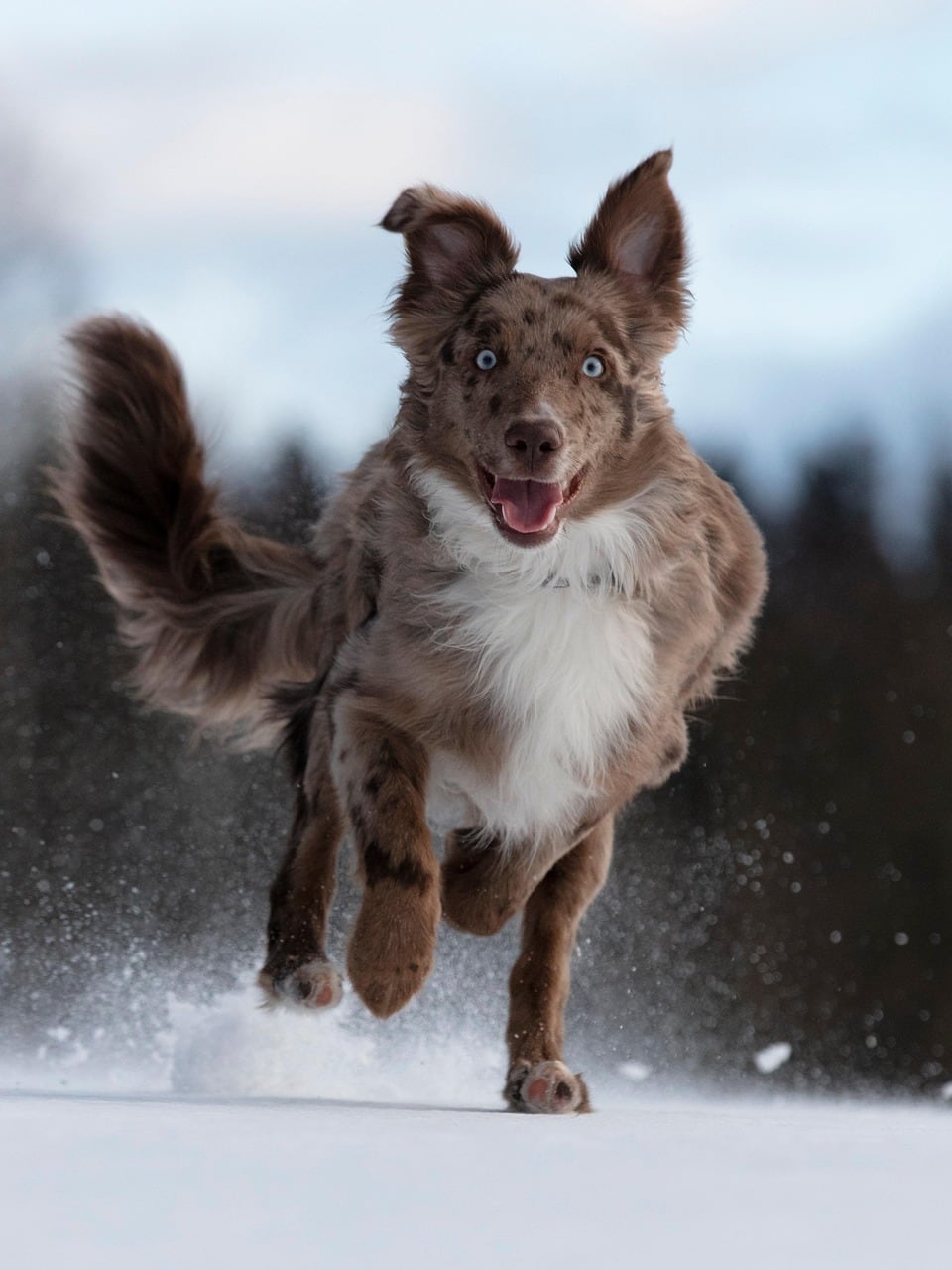
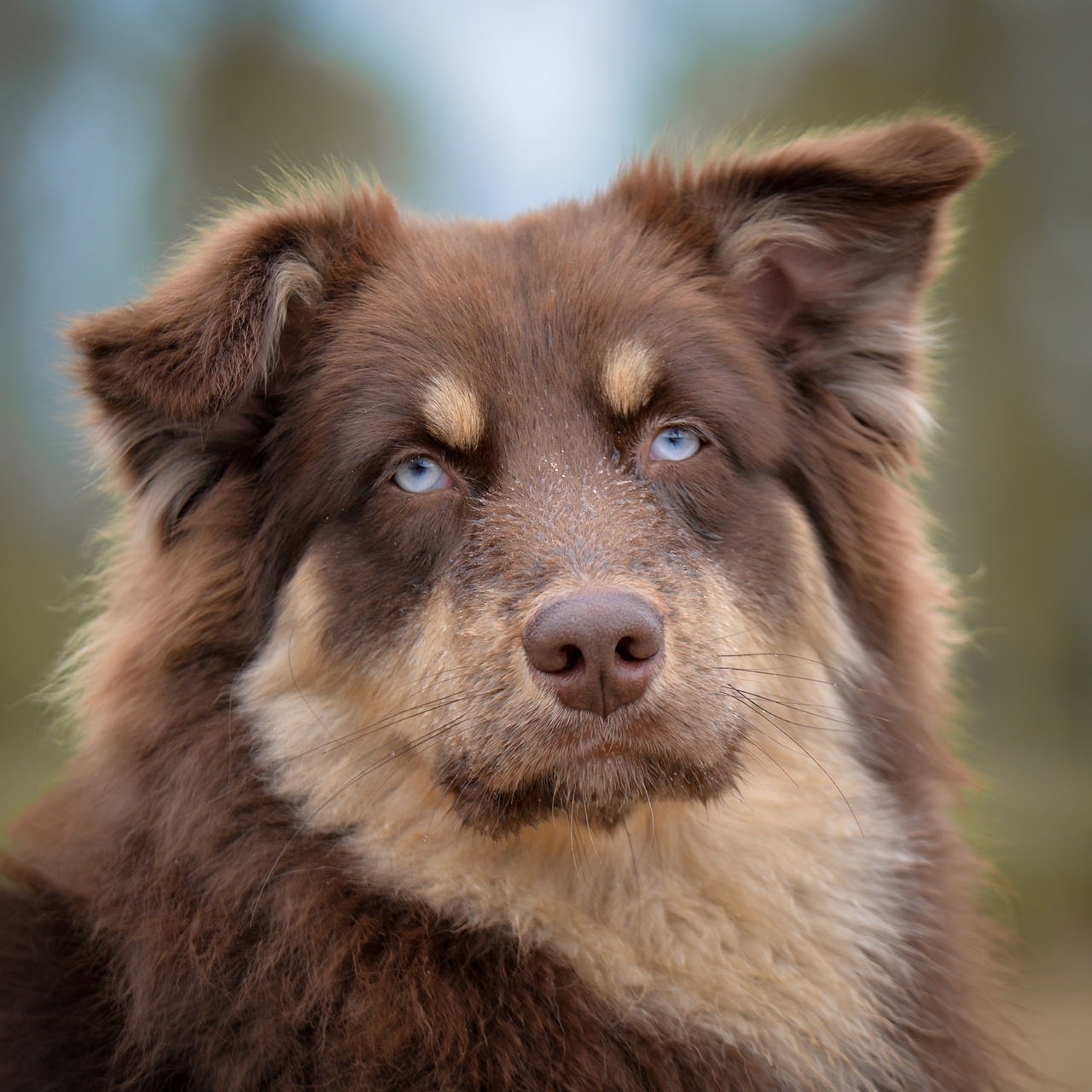
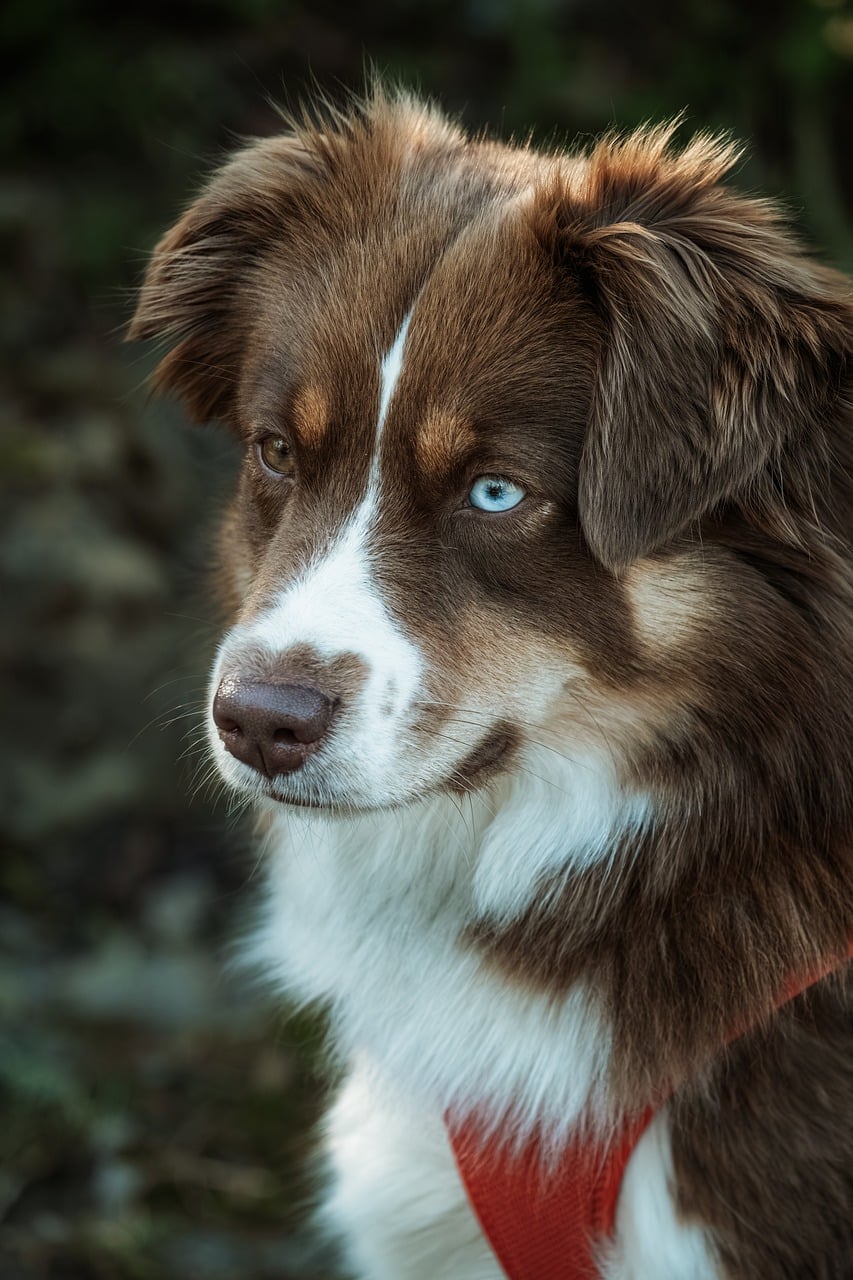
The head is in proportion to the body, with a strong, intelligent expression and medium-sized, high-set ears that hang down when at rest and are raised when alert. The eyes of this breed are striking - often varying shades of brown, blue and amber, or combinations of these within one eye.
The coat is long, with a medium length and dense undercoat, meaning that the Australian Shepherd requires regular grooming, especially during the shedding season, which is common in this breed. The outer coat is straight to slightly wavy, thicker on the neck and back of the legs, where it forms a fine "pants". The tail is naturally short or long, depending on the individual.
Australian Shepherd Colors
FCI Standard No. 342 defines exactly what colors and markings are permissible in the Australian Shepherd, including combinations with white and copper markings on the head and legs. A detailed list of color variations is part of the official standard.
Puppies sometimes appear on the market offered as exotic or "exclusive" colors that are not allowed by the standard. Merle color deserves special attention - although it is standard for this breed, mating two merle individuals (so-called double merle) is associated with an increased risk of congenital defects of vision and hearing in puppies. A responsible breeder avoids such crossing. When choosing a puppy, it is therefore advisable to ask the breeder not only about the color of the parents, but also whether they have been tested for the merle gene, and to verify that the color corresponds to the FCI standard.
Australian Shepherd temperament
The Australian Shepherd is a dog with a very high activity and temperament, which is manifested by a constant need to do something - whether it is work, exercise or play. Its nature is closely linked to its original purpose in herding work, which is also reflected in its relationship with the family: the Aussie needs to be in the middle of things and spends as much time as possible with its people. It does not tolerate loneliness or lack of stimulation well.
He is rather friendly with children and likes to join in their activities, although his energetic temperament requires that both parties know how to set boundaries. He is usually tolerant of other dogs, and neutral towards cats - it depends on specific experience and socialization.
Thanks to the low training requirements, he learns quickly and likes to cooperate if he has enough mental stimulation - he tolerates boredom only with difficulty and without employment he can find his own, not always desirable, activity. Barking is at a moderate level, more as a reaction to stimuli than as a sign of nervousness. Overall, he is a social dog that needs active participation in the family program, not just the role of a companion on the couch.
Australian Shepherd and children
The Australian Shepherd is generally good with children, but its high energy and herding instincts require a thoughtful approach from the family. It is a breed bred to work with the herd, and therefore has a tendency to "get" children - running around them, trying to direct them or barking lightly when they get wild. With smaller children, it is advisable to regulate this behavior from the beginning and teach the dog alternative commands.
Thanks to the low training requirements, the Aussie quickly learns what is and is not desirable, so borderline manifestations of herding nature can be corrected relatively easily. However, it is essential to provide the dog with enough exercise and mental stress - a bored and exhausted Australian Shepherd can be restless and less patient, which will be more noticeable when living with children than in calmer breeds.
It is recommended that older children who understand that a dog needs rules and a schedule be used to playing and caring for the dog. Interactions between a dog and young children are always best supervised by an adult, especially given the temperament and strength that the Aussie displays during play.
Australian Shepherd and other dogs and pets
Australian Shepherds usually get along well with other dogs, especially if they are used to their presence from puppyhood. Due to their high need for companionship, they can appreciate a second dog in the household - offering them a playmate and a companion for times when the owner does not have time for an active program. However, it is advisable to build relationships between dogs gradually, because the Aussie has a strong working temperament and can be demanding with its energy for less active or older dogs.
Coexistence with cats and other pets is usually neutral - the result depends a lot on socialization and the specific nature of the individual. Due to the origin of the herding dog, the Australian Shepherd may exhibit a hunting and driving instinct, i.e. a tendency to follow and chase moving animals, including cats or small pets. If he is to grow up with a cat or other animal, it is advisable to get him used to their presence from an early age and teach him that he is not an object of work.
Is the Australian Shepherd suitable for an apartment?
The Australian Shepherd is not suitable for an apartment. It is a breed with a very high level of activity and an equally high need for mental stimulation, which is difficult to meet in a small and confined space. The Aussie needs plenty of daily exercise and tasks that engage its mind - even a long walk on a leash is no substitute for herding sheep in an apartment.
A family home with a garden is more suitable for him, where he has space to move freely and where he can also rest in peace, because this is a dog with a high need for company - he definitely should not spend time alone in the yard without contact with the family. Without sufficient exercise and closeness to people, this breed can easily show restlessness, excessive vocalization or destructive behavior.
The medium size may lead you to think that the Australian Shepherd is not demanding on space, but its temperament says otherwise. It is only exceptionally suitable for an apartment, provided that the owner can provide several hours of active time outside the home per day - otherwise the dog will not be a suitable companion for a smaller apartment.
How much exercise does it need?
The Australian Shepherd is a breed with a very high level of activity and its exercise requirements are really high - a short walk on a leash is not enough. It needs several hours of physical exercise every day, ideally combined with tasks that involve the mind, because its need for mental stimulation is as great as its need for exercise itself.
Suitable activities are those in which the dog works with a person and has to make decisions - running with a wheel, fetch with elements of obedience, games of finding objects or shepherding simulations. Thanks to the low level of training, they learn new commands and tricks well, which can also be used in dog sports.
Popular disciplines include agility, dog frisbee, obedience or flyball - all of which combine speed, accuracy and cooperation with the leader. If the dog does not receive enough stimulation, it will easily find its own entertainment, which may not suit the owner, for example chasing everything that moves or destructive behavior out of boredom.
Therefore, the Australian Shepherd is not an ideal choice for families looking for a companion for regular walks - it is more suited to active owners who can offer it a regular program and meaningful work.
Training and education
The Australian Shepherd is one of the breeds with very low training requirements - it learns quickly and can master new exercises after a few repetitions. However, this easy trainability is associated with a very high need for mental stimulation, so obedience alone quickly gets boring and the owner must constantly vary and develop the training.
Due to his working background, he responds best to a clearly structured approach with specific tasks - agility, obedience, herding trials or nosework are suitable for him. On the other hand, boring, repetitive drills without meaning frustrate him and can lead to undesirable manifestations such as excessive barking or destructive behavior.
Due to their high need for companionship, the Australian Shepherd bonds easily with its owner and is willing to cooperate if it feels training makes sense. This is why they are better suited to more experienced owners who can offer plenty of stimulation and consistency – for beginners without experience with an active breed, the pace and demands of the job may be challenging.
Hair care and hygiene
The Australian Shepherd has a long coat with a thick undercoat that protects it from both the cold and the heat of the sun. Although the coat is rated as medium in terms of grooming, regularity is key - brushing two to three times a week will prevent matting, especially behind the ears, under the armpits and on the back of the thighs, where mats are most likely to form.
Due to the high rate of shedding, it is necessary to take into account the autumn and spring periods, when the dog sheds its undercoat more intensively and brushing should be included daily. Bathing is only necessary when necessary - frequent washing could disrupt the natural oiliness of the coat, which protects it from dirt.
It is advisable to check the ears regularly and, in case of excessive sebum or odor, gently clean them to prevent inflammation of the ear canal. The claws should be trimmed according to how quickly they wear out from walking - in active dogs they naturally wear down less often than would be expected. Dental care in the form of regular brushing or chewing aids helps prevent the formation of tartar, which is generally true for all breeds regardless of coat length.
Feeding
The Australian Shepherd is a very active dog with a medium-sized body, which is reflected in its nutritional needs. A quality food should contain enough animal protein to support muscle regeneration after strenuous exercise, and a balanced ratio of fats to cover the energy requirements of this hardy breed.
Due to the high activity level, it is advisable to adjust the amount of food to the current load - a dog that spends the day on the farm or in dog sports needs a different energy supply than an individual with a calmer schedule. It is better to divide the portion into two daily doses, which helps prevent digestive problems and reduces the risk of overeating.
Because the Australian Shepherd tends to maintain a lean, athletic build, it is advisable to regularly check its body condition and adjust the feeding ration according to age, weight and activity level. In puppies and young individuals, it is important to ensure gradual growth without unnecessarily overloading the joints with excessive energy intake.
Fresh water should be available to your dog at all times, especially after strenuous activity. If you are unsure about the appropriate composition of your dog's diet, it is always best to consult your veterinarian.
How long does an Australian Shepherd live?
The Australian Shepherd has an average lifespan of 12–15 years , which is on the longer end of the spectrum for a medium-sized breed. The specific lifespan of a particular individual depends on several factors that the owner can largely influence.
Physical and mental stress plays a crucial role - the Aussie is a dog with a very high need for activity, and if this need cannot be met in the long term, it affects not only the psyche, but also gradually the overall condition. Equally important is the genetic load of a particular line, so it is worth asking responsible breeders about the health tests of the parents.
The breed may be predisposed to certain hereditary diseases, including degenerative myelopathy, a progressive neurological disease affecting older dogs. For this reason, there is a genetic test that can estimate an individual's risk before symptoms develop.
Life expectancy is also influenced by a diet appropriate to the dog's age and activity level, maintaining a healthy weight, and regular veterinary checkups, which will allow any health complications to be detected early.
Who is the Australian Shepherd suitable for?
The Australian Shepherd is an energetic working dog that needs regular physical and mental exercise. Before getting one, consider whether you can meet its demands for activity and mental stimulation over the long term.
This breed may be right for you if…
- you lead an active life and are willing to spend hours a day outdoors with him - on walks, doing sports and training
- Are you looking for a dog for dog sports such as agility, obedience or herding trials?
- Do you have a garden or a house, because Aussies are not suited to an apartment?
- you live with children and want a social dog that likes to be involved in family activities
- you will appreciate the low training requirements – the Aussie is docile and quickly understands new commands
- you can handle regular coat care, including heavy shedding
Consider another breed if…
- you are a beginner without experience with a more demanding working breed
- you spend most of the day away from home and the dog would be left alone for a long time - the need for company is high
- Are you looking for a calm companion for seniors or a dog for an apartment?
- you don't want to invest time in daily mental stimulation – without it, your Aussie may develop unwanted behaviors
- you have a cat at home and you are not sure how it would cope with coexistence - the Aussie's reaction to cats tends to be rather neutral
Interesting facts about the breed
Despite its name, the Australian Shepherd has its official origin in the United States of America, which is confirmed by the FCI standard No. 342, where it is listed in Group 1, Sheepdogs section. The name "Australian" thus refers more to the historical journey of the breed's ancestors through Australia than to the place of its actual origin.
Aussie is one of the dogs with a very high need for mental stimulation and activity - it does not tolerate boredom well and without enough tasks it often looks for its own, not always desirable, job. It is also interesting that the breed may have an increased predisposition to degenerative myelopathy, which is one of the reasons why genetic testing is performed on breeding individuals.
Due to its constitution and demands for training and exercise, the Australian Shepherd is often compared to the Border Collie, with which it shares similar working roots in herding.
Australian Shepherd Health
The Australian Shepherd can live for 12-15 years with good care, making it a breed with a decent life expectancy. As with any breed with a long history of targeted breeding for working performance, the Aussie may have certain health predispositions that are worth considering when choosing a puppy and throughout its life.
Due to the high activity and intensive commitment that this breed typically requires, it is worth paying attention to the condition of the joints and musculoskeletal system, ideally from puppyhood with appropriately dosed exercise. Regular veterinary examinations, eye monitoring and early detection of possible genetic burdens using available tests are reasonable prevention measures for responsible breeders.
In general, a dog in good condition, with a balanced diet and adequate mental and physical stimulation, has a better chance of living a healthy and happy life. Specific health predispositions to focus on for this breed are listed below.
Known predispositions
The breed is described to have an increased predisposition to:
- to hip dysplasia, which is one of the common orthopedic defects of Australian Shepherds.
- to elbow dysplasia, and according to available data, this defect is more common in Australian Shepherds than previously thought, and dogs with it may also have a higher risk of concurrent hip dysplasia.
- to the MDR1 gene mutation, which is associated with increased sensitivity to ivermectin and some other drugs.
- to hereditary cataracts associated with a mutation in the HSF4 gene, which has been identified in Australian Shepherds as one of the genetic causes of this disease.
- to Collie Eye Anomaly (CEA), a developmental defect of the choroid and retina that Australian Shepherd breeders have been monitoring since the 1980s.
- to idiopathic epilepsy, with a study on Australian Shepherds describing an often moderate to severe course of the disease in affected individuals and a connection with a mutation in the ABCB1 (MDR1) gene.
- to degenerative myelopathy associated with a mutation in the SOD1 gene, with the Australian Shepherd being among the breeds in which this clinical manifestation of the disease has been described.
- to hemangiosarcoma, an aggressive tumor of vascular tissue, which in Australian Shepherds is classified as a hereditary type of cancer occurring relatively frequently in this population.
This overview is for informational purposes only and does not replace the examination or recommendations of a veterinarian.
What to buy for an Australian Shepherd
Practical basis that is suitable for this breed:
- Car seats for dogs – Car seats and safety equipment for transporting a dog by car.
- Toys – Dog toys – fetching, chewing and interactive.
- Cosmetics – Shampoos, conditioners and hair care products.
- Bowls – Feed and water bowls, anti-swallow bowls and stands.
- Collars – Dog collars – leather, textile and semi-tight.
- Beds – Beds and mattresses for dogs of all sizes.
- Leashes – Leashes, switch leashes and tracking lines.
Useful instructions
Practical tips that are useful when caring for a dog:
Frequently asked questions
Is the Australian Shepherd suitable for an apartment?
No, the Australian Shepherd is not suitable for an apartment. It is a very active breed with a high need for exercise and mental stimulation, which requires a home with plenty of space, ideally a house with a garden.
How long does an Australian Shepherd live?
The average lifespan of an Australian Shepherd is 12–15 years.
Is the Australian Shepherd good with children?
The Australian Shepherd is rather suitable for children, as it is a social dog with a high need for contact with people. However, due to its high activity and working nature, it is advisable to always supervise children and ensure the dog has enough exercise and stimulation.
Can even a beginner handle an Australian Shepherd?
The Australian Shepherd is not suitable for beginners. Although the training requirements are low due to its intelligence and docility, its high need for activity and mental stimulation places considerable demands on the owner.
How much does an Australian Shepherd weigh?
The male weighs 25–34 kg and measures 51–58 cm at the withers, the female is smaller – 19–26 kg and 46–53 cm.
Is the Australian Shepherd lazy a lot?
Yes, the Australian Shepherd is a high-shedding breed. It has a long coat with an undercoat, and its care is medium, but regular brushing is a must, especially during the shedding season.
How much exercise does an Australian Shepherd need?
The Australian Shepherd has a very high activity level and needs plenty of daily exercise and mental stimulation. It is a breed created for active owners, for whom it can be an equal partner on trips and in sporting activities.
Is the Australian Shepherd suitable for seniors?
No, this breed is not suitable for seniors. Its very high demands for exercise and mental stimulation require an energetic and active owner who can provide it with enough stimulation.
How does the Australian Shepherd get along with other animals?
The Australian Shepherd gets along well with dogs, but its relationship with cats is rather neutral and depends on socialization and the specific nature of the individual.
Is the Australian Shepherd difficult to train?
The training requirements for the Australian Shepherd are low, as it is a very intelligent and docile breed that readily learns new tasks. It is more challenging to provide it with enough mental stimulation so that it does not get bored and seek entertainment on its own.
Resources and further information
- FCI Standard No. 342 - Australian Shepherd - Fédération Cynologique Internationale
- Predisposition resource - ashgi.org
- Predisposition resource - vgl.ucdavis.edu
- Source on predisposition - pubmed.ncbi.nlm.nih.gov
Professional cooperation
This breed overview was created in cooperation with the Veterinary Clinic VYVET sro and MVDr. Adam Hylák .