
Published 11. 9. 2026
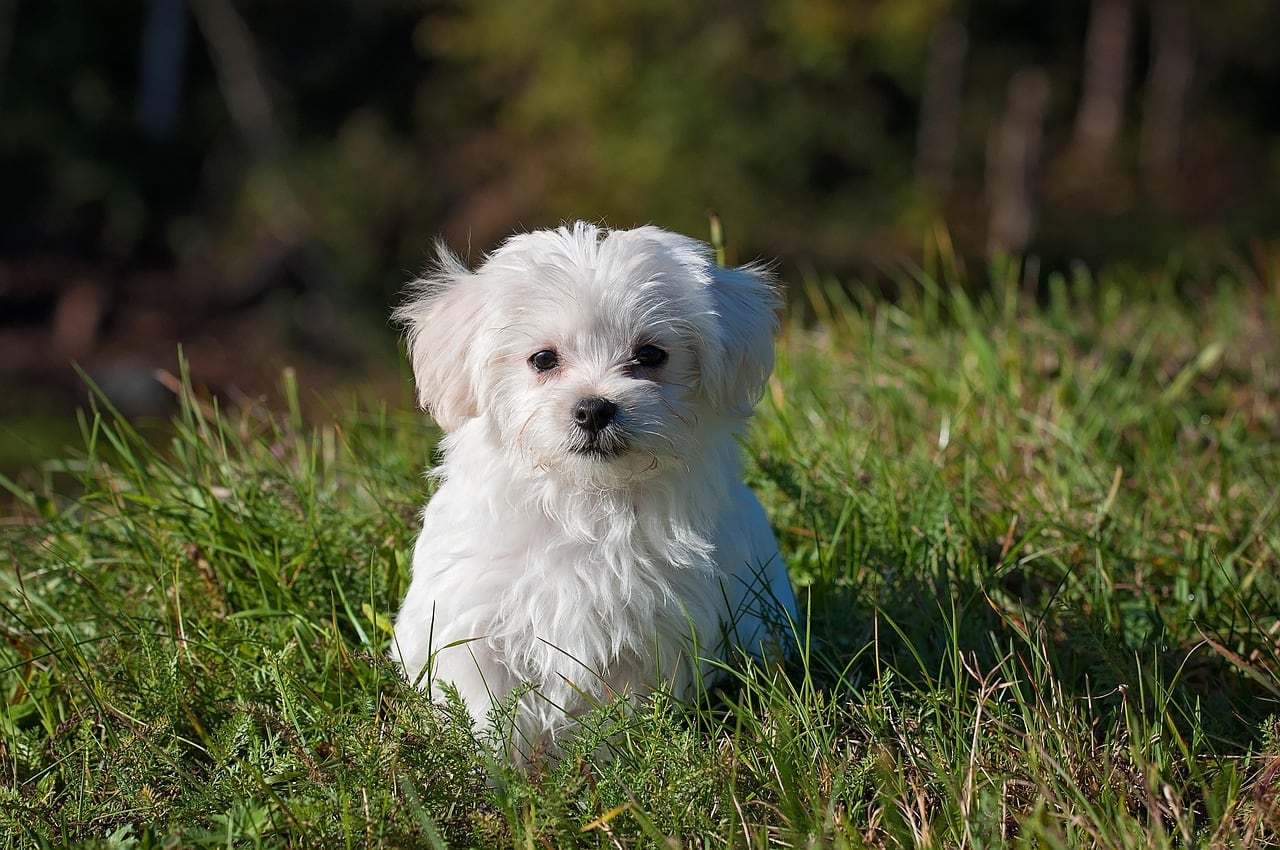
The Maltese is a small breed originating from the central Mediterranean region, classified in FCI Group 9 among Bichons and related breeds. With a height of around 20–25 cm and a weight of 3–4 kg, it is a small companion dog, whose long silky coat is one of the most distinctive features of the entire breed. It requires regular and relatively demanding care to maintain its characteristic appearance.
The Maltese dog is lively, affectionate and strongly attached to its family - it does not like being alone, but it tolerates the presence of children and other pets well. Thanks to its moderate activity and training requirements, it is also suitable for less experienced owners, seniors or people living in an apartment. It is a dog that appreciates company rather than a large space to move around.
Professionally consulted
The content was created in cooperation with the veterinary clinic Veterinární klinika VYVET sro and MVDr. Adam Hylák.
Quick overview
What is a Maltese dog like?
The Maltese is a small companion dog with a long silky coat and a weight of only 3-4 kg, belonging to FCI Group 9 among the Bichon and related types. It originates from the central Mediterranean region and despite its size, it can handle a medium level of activity and mental stimulation - it is definitely not just a decorative addition to the sofa.
It has a balanced, affectionate and strongly attached nature to its owner, barking moderately to moderately. It can be trained without any major difficulties, which is why it is suitable for beginners. On the other hand, its main requirement is the care of its coat, which needs to be regularly and thoroughly groomed to remain in good condition.
- It is perfectly suited for an apartment and even for less experienced owners.
- He gets along well with children and other dogs or cats in the household.
- It requires a lot of human company and does not tolerate long solitary waiting times.
- Also suitable for seniors looking for a small, calmer companion.
Origin and history of the Maltese dog
The Maltese is one of the oldest known breeds of small companion dogs, with roots in the central Mediterranean region, probably Malta and the surrounding port areas where ancient trade routes passed. Similar small dogs with long white fur are depicted on ancient Greek vases and are also mentioned by Roman authors - the breed has accompanied European civilization for thousands of years.
Unlike most breeds, the Maltese was not bred for hunting or working, but exclusively as a companion and salon dog. Its small size, calm nature and striking appearance made it a favorite pet of the aristocracy and wealthy townspeople in the Mediterranean and later throughout Europe in ancient and medieval times. Thanks to the favor of the noble courts, it has survived in a relatively unchanged form for many centuries, without undergoing significant cross-breeding aimed at working qualities.
In the 19th century, the Maltese became part of dog shows and gradually developed into a standardized type, retaining its silky, long white coat and small, elegant body structure. The FCI classified the breed in Group 9 (Companion Dogs), Section Poodles and Related Breeds, under Standard No. 65, formally confirming its long-standing status as a pure companion dog.
From a similar Mediterranean and Bichon foundation, related breeds have developed over the centuries, such as the Bolognese, Bichon Frise, or Havanese, which share both appearance and social purpose with the Maltese.
Appearance and size
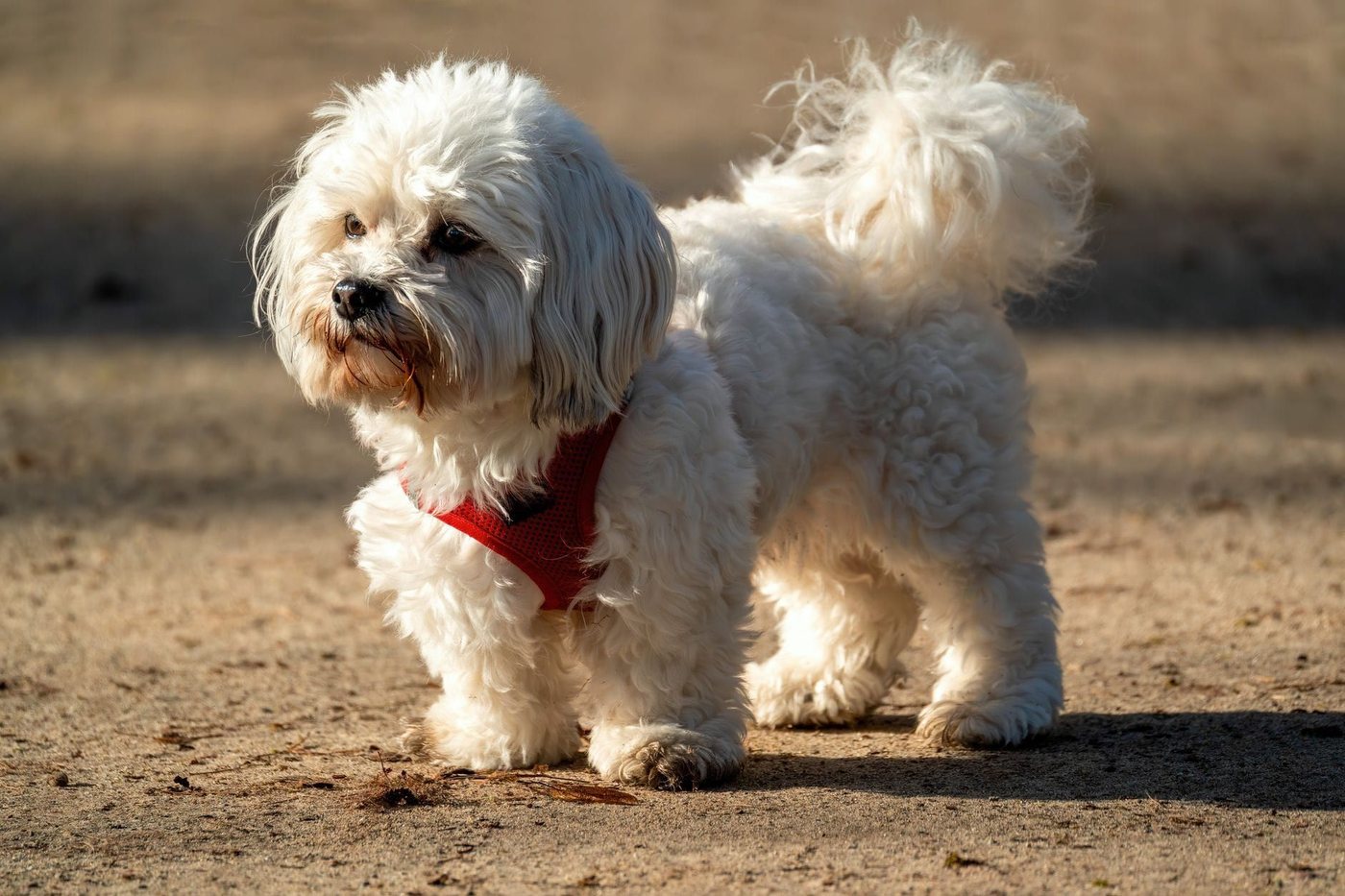
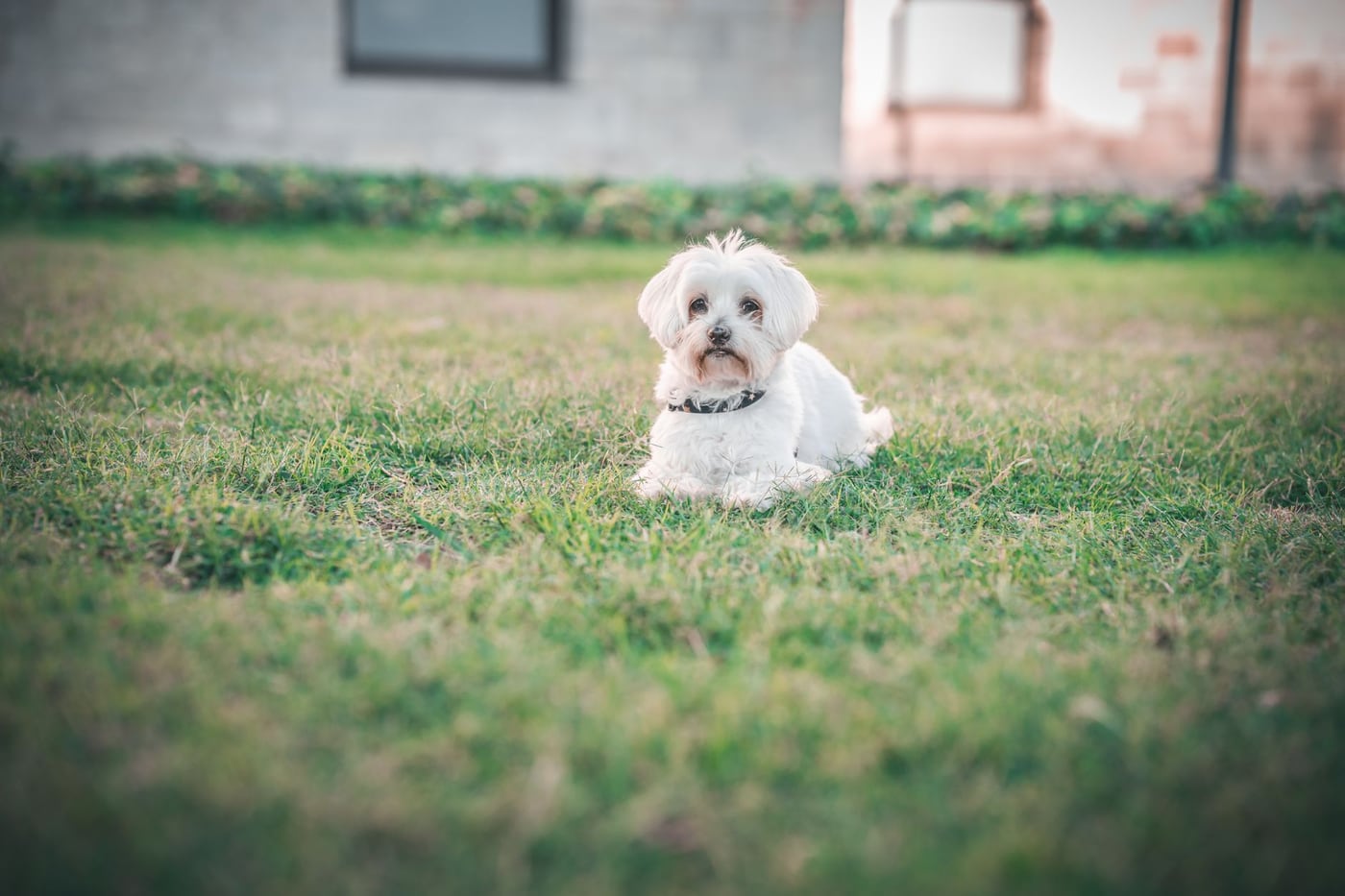
The Maltese dog is one of the smallest breeds – it only reaches 20–25 cm at the withers and weighs 3–4 kg. The differences between the male and female are minimal: the male measures 21–25 cm, the female 20–23 cm, and the weight is the same for both sexes.
The body is compact, with proportions that highlight the long flowing hair covering the entire body from the head to the small tail. The tail is set high and carried in an S-shaped curve over the rump, which is a typical feature of the breed. The head is moderately wide, with prominent dark eyes and medium-length ears that are covered with long hair and flow down the sides of the head.
Hair
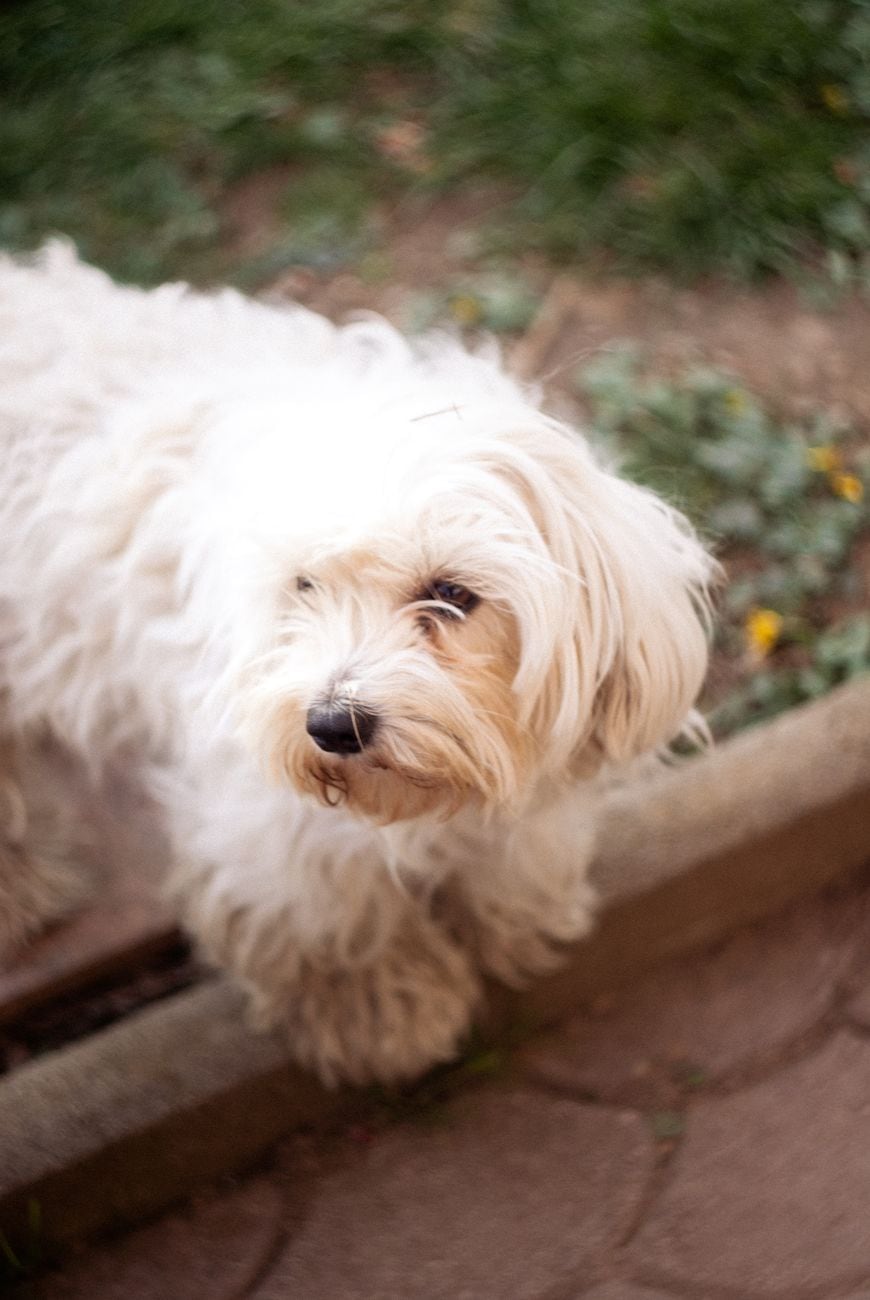
The coat is long, silky and flowing smoothly, without an undercoat - this structure distinguishes the Maltese from similar-looking bichon-like breeds. Care for it is quite demanding, because without regular brushing the coat quickly matts, and the breed itself almost does not shed. A separate section is devoted to the color variants of the standard.
The overall appearance of the Maltese is elegant and light, yet with a solid frame and a confident posture that suggests a lively and sociable nature hidden beneath the abundant coat.
Maltese Dog Colors
The standard for the Maltese dog focuses primarily on the structure and quality of the coat - long, silky and flowing - not on the list of color variants, which is common in breeds with more colorful colors. We do not provide a specific specification of recognized and unrecognized shades according to the current version of FCI standard No. 65 here, as this would be an unfounded addition beyond the scope of verified data.
Maltese dog personality
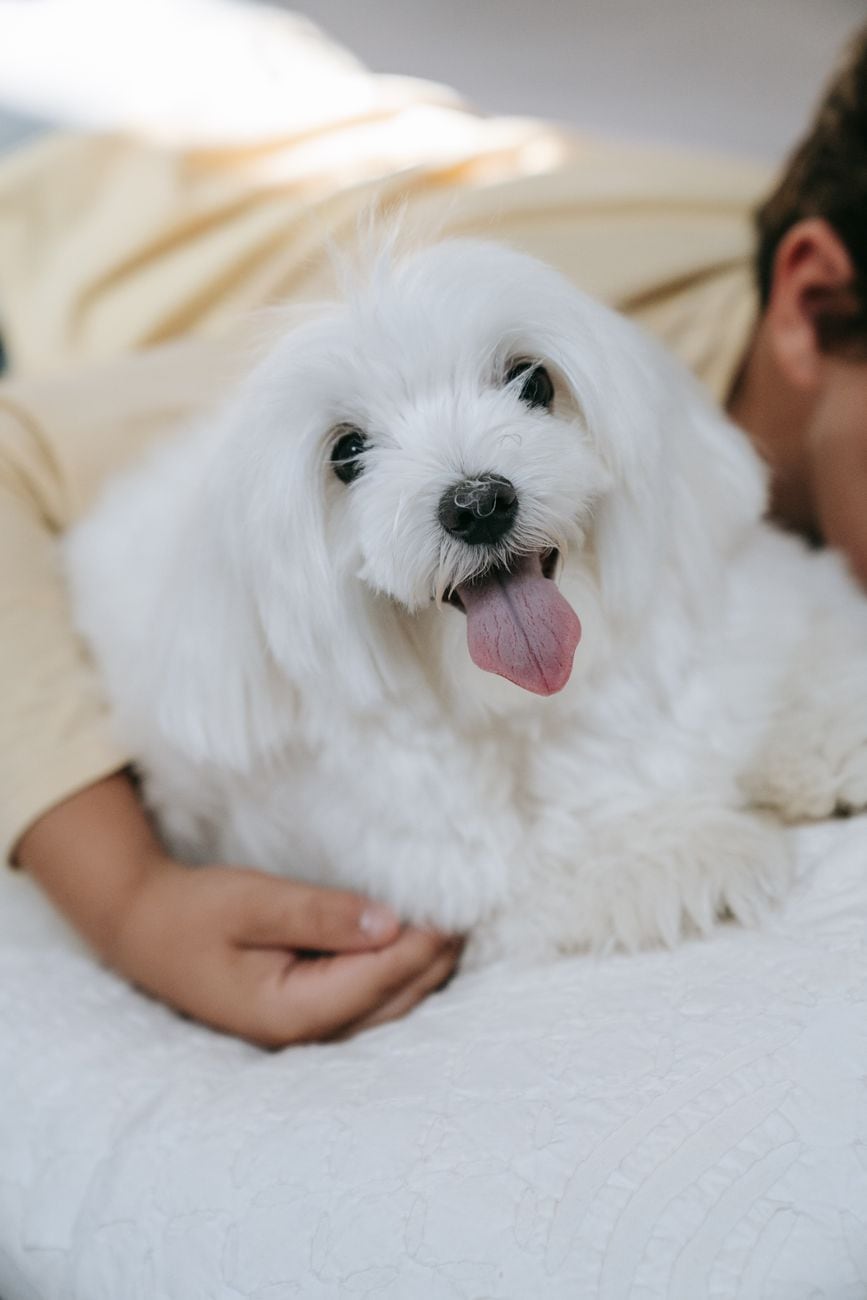
The Maltese dog is a sociable and sensitive companion whose nature revolves primarily around a close relationship with its owner. It needs to be part of the household and is not good for being left alone for long periods of time - it is one of the breeds with a high need for human company, which needs to be taken into account when planning the day.
By temperament, it is a lively, but not overly energetic dog - its demands for exercise and mental exertion correspond to a rather medium level, so it will suffice with regular walks and occasional play or small training. Thanks to this, it is also suitable for quieter households, without being phlegmatic - it likes to notice what is happening around it and reacts lively to stimuli.
In training, the Maltese is receptive and intelligent, but sometimes a certain amount of stubbornness appears - typically he will insist on his own pace or ignore an instruction that does not make sense to him. A consistent, kind approach and motivation with treats or praise usually lead to good results, harsh methods will not gain his cooperation.
He is rather moderate in his barking - he will respond to an unusual sound or a visitor, but he does not tend to bark excessively without a reason. This quality also makes him a solid "alarmist", although not a watchman in the true sense of the word, he will rather warn than actively defend the territory.
In contact with other animals and people, the Maltese dog is friendly - it usually gets along with dogs and cats in the household and is rather friendly towards children, although its smaller size requires considerate treatment from the youngest members of the family. Overall, it is a dog that easily integrates into family life and maintains close contact with its owner throughout the day.
Maltese dog and children
He usually gets along well with older children who respect his size and sensitivity - he is sociable, seeks contact with people and likes to get involved in household activities. However, greater caution is needed with young children, as his small body is more vulnerable than that of larger breeds and rough handling or rough lifting can easily hurt him.
Training and socialization from puppyhood play a crucial role in how a dog behaves around children – gradual and calm introduction to children’s noises, movements and touch helps build their confidence and reduces the risk of startle reactions. Training this breed tends to be of a medium level, so a patient and consistent approach pays off, ideally with clear rules that children follow.
What to watch out for
- Adult supervision during play is especially appropriate for small children to prevent unintentional injury to the dog.
- Children should be taught to handle the dog gently and not to lift it without support.
- Given the demanding care of long hair, it is a good idea to involve children in this aspect of care so that they understand that the dog requires regular attention.
- A calm and predictable environment helps the dog feel safe in the presence of children.
Maltese dog and other dogs and pets
The Maltese dog gets along well with other dogs and cats, so living in a multi-person household is usually not a problem. It was bred primarily as a companion dog for human proximity, not for hunting or guarding, so a strong hunting instinct cannot be expected from it.
Due to their high need for human company, the Maltese dog usually adapts well to the presence of other pets, as long as they are given sufficient attention from their owner. Their smaller size and playful nature allow them to make contact with other small breeds without unnecessary tension.
- With other dogs: usually without problems, especially with gradual and calm introduction.
- With cats: usually good compatibility, especially if they grow up together from puppyhood.
- With small animals (rodents, birds): due to the absence of a pronounced hunting instinct, coexistence is not risky, but it is still advisable to control the first meeting.
Despite its generally calm nature, it is recommended to introduce new animals gradually and under supervision so that the Maltese dog can get used to their presence without stress.
Is the Maltese dog suitable for an apartment?
Yes, the Maltese dog is one of the breeds that is very well suited to apartment living - its small size and low space requirements make it a typical companion for life in a smaller apartment or in the city center.
However, it is worth noting a few conditions that are good to ensure:
- Space: thanks to its size (around 3–4 kg), it can handle a small apartment, but it will appreciate a quiet corner where it can rest away from the hustle and bustle of the household.
- Exercise: This breed's activity level is medium - short walks and playing at home will cover its need for exercise, a large outdoor space is not necessary like larger breeds.
- Peace and company: the Maltese dog has a high need for company and does not tolerate long-term loneliness, which is an advantage for apartment breeding - the owner is in close contact with it even during the day.
- Barking: manifested by a medium-high tendency to bark, which may need to be corrected through training in a panel house with thin walls to avoid disturbing the neighbors.
- Coat care: the long silky coat requires regular and thorough combing, which should be considered part of daily care in apartment conditions.
With sufficient attention, regular grooming, and gentle training regarding barking, the Maltese dog is a very suitable choice for apartment living.
How much exercise does it need?
The Maltese dog needs two short to medium-long walks a day, supplemented with free play - this is a breed with a medium level of activity, which can do with a walk around the neighborhood and some exercise in the garden or apartment. This is not a dog that needs hours of running, but even a short run on the doorstep is not enough to satisfy it.
Due to their small constitution and long fur, it is best to choose routes that are not too demanding on the terrain - long fur easily gets caught in dense undergrowth and gets dirty in wet or muddy conditions, which increases the demands on subsequent care.
Suitable activities
- Walks at a leisurely pace, ideally shorter and more frequent than one long outing
- Free play at home or in the garden with balls and toys
- Basic obedience and trick training – encourages cooperation and keeps the dog busy
- Olfactory games and searching for treats that will also engage the mental side
Mental stimulation should complement physical exercise – the breed has a medium need for it, so short training sessions or puzzles can fill the time just as effectively as a walk. The training intensity is also medium, so a systematic but gentle approach to learning pays off.
Due to their small stature, it is advisable to avoid extreme heat and excessive physical exertion in high temperatures - short legs and thick fur mean that the body warms up faster, so it is better to move activities to cooler parts of the day in the summer.
Training and education
Training a Maltese requires patience and consistency rather than a harsh approach – he responds poorly to rough methods, while he responds readily to praise, treats and play and learns quickly. Short, positively guided lessons work better than long, repetitive training sessions because they will keep him focused and motivated.
What motivates him?
As a social dog with a high need for human contact, he sees training best as a form of shared activity, not as an obligation. Rewards in the form of praise or petting often work just as well as treats - the proximity of the owner is motivating in itself.
Socialization
Due to its small size, it is advisable to start socialization as early as possible - introduce it to common sounds, other dogs and strangers, so that it does not develop excessive caution or a tendency to bark at unfamiliar stimuli. Gradual and calm exposure to new situations helps to raise a balanced dog that also handles contact with children or other animals in the household well.
Specifics of education
- Short training blocks, ideally multiple times a day, will maintain interest and prevent boredom.
- Consistent rules from puppyhood help prevent the development of so-called small dog syndrome, where a dog learns to disobey commands due to its size.
- Given their moderate need for mental stimulation, they will appreciate simple games and tasks that will add variety to their training.
Hair care and hygiene
The Maltese's long, silky coat requires regular and thorough care - without daily or at least every other day combing, it quickly becomes tangled, especially in the armpits, behind the ears and in the groin area. Use a brush with long bristles and a comb with denser teeth, ideally in layers, to brush through the undercoat near the skin.
Bathing and grooming
Bathing should be done at regular intervals with a quality shampoo designed for long hair, after bathing the coat should be thoroughly dried with a hairdryer and brushed evenly - otherwise there is a risk that the wet coat will remain limp and more prone to tangling. Many owners choose shorter, trimmed styles that simplify coat care, or braiding strands around the eyes so that the coat does not irritate the eyes.
Eyes and area around the muzzle
This breed requires extra attention around the eyes – the long fur easily traps tears and dirt, which can lead to dark fur and skin irritation. Daily wiping with a damp cloth and keeping the fur around the eyes trimmed helps prevent problems.
Ears, teeth and claws
- It is advisable to check and clean the ears regularly, and keep the fur around the earlobe trimmed to prevent it from becoming clogged with dirt.
- Teeth require regular care, as tartar buildup is more common in small breeds.
- Claws need to be trimmed regularly, especially if the dog walks less on hard surfaces that would naturally wear them down.
The Maltese dog's shedding rate is low, so the coat does not fall out seasonally like in breeds with undercoats, but greater emphasis needs to be placed on regularly removing tangled clumps and keeping the coat free of knots.
Feeding
Due to their small size and low weight (3-4 kg for adults of both sexes), the Maltese is a typical example of a small breed that needs a complete food formulated specifically for small breeds. The kibble for this category has a smaller size, adapted to the small mouth, and is more energy-concentrated, which corresponds to the faster metabolism of small dogs.
The choice of food should depend on the life stage - a puppy, an adult dog and a senior have different requirements for nutrient content, and therefore it is advisable to switch between individual food lines gradually, never in leaps. Given the medium level of physical activity of this breed, there is no need to choose an extremely energy-rich food intended for sports-intensive dogs.
Physical fitness check
In small breeds, even a seemingly small excess of food can easily be reflected in weight, because a difference of a few dozen grams represents a significantly larger proportion of the total weight in a three-kilogram dog than in a large breed. It is recommended to regularly check the ribs by palpation and observe the dog's waist from above - it should be visibly narrower than the chest.
Treats used for training or socialization should be included in the total daily intake to avoid unwanted overfeeding. Dogs with lower physical activity or neutered individuals tend to gain weight more, so it is advisable to adjust the amount of food from time to time according to the current condition, not just according to the recommendations on the package.
How long does a Maltese dog live?
We do not have an exact figure for the expected life span of this breed, which is supported by a reliable source, so we do not provide a specific range of years. In general, small dog breeds live longer than large breeds, and the Maltese dog, thanks to its small constitution (3–4 kg), belongs to this group.
What affects lifespan?
The actual lifespan of a particular individual depends on a combination of innate predispositions and the care that the owner provides throughout its life.
- Genetics: The health of the parents and grandparents and the breeder's responsible approach to selecting breeding pairs significantly influence the predispositions with which a puppy is born.
- Physical condition: Maintaining a slim figure without being overweight reduces the strain on joints and internal organs, which is especially important for a small breed with a delicate body structure.
- Exercise: The Maltese dog needs regular but adequate exercise corresponding to its medium-high activity level - neither lack nor overexertion of its joints is beneficial.
- Prevention: Regular veterinary checkups, vaccinations, and deworming help catch potential problems early.
- Nutrition: A quality diet adapted to the dog's age, size and activity level supports coat health, digestion and overall vitality.
- Health predisposition: The breed may have an increased predisposition to some health problems typical of small breeds, so it is advisable to take care of the dog with regard to its small build and not to overload it.
Who is the Maltese dog suitable for?
The Maltese dog is best suited to a household where the person has enough time for the dog and wants to have it close at all times - it is a social dog with a high need for contact, which does not tolerate long-term loneliness. Thanks to its small size, it is easy to live in an apartment and can be handled by even a senior, but the care of its long silky coat is more demanding, requiring regular and thorough combing.
Who is the breed suitable for?
- For people living in an apartment who don't mind having their dog within reach at all times.
- For seniors looking for a small, social dog for their household.
- For owners willing to regularly devote time to caring for long fur.
- For households with children who are respectful of the dog.
- For families where another dog or cat already lives, the new member should be a calm companion.
- For beginners who can handle moderate training and mental stimulation demands.
Who is the breed not suitable for?
- For people who leave their dog alone most of the day.
- For owners who don't want to spend time regularly maintaining their long coat.
- For truly sporty owners looking for a dog for long, active trips.
- For households where a small dog would be exposed to rough treatment by small children.
Interesting facts about the breed
The Maltese dog is one of the oldest European breeds, its origin is linked to the central Mediterranean region. In the FCI classification, it bears standard number 65 and is classified in group 9 (companion breeds), specifically in the section of bichons and related breeds.
Its relationship with other bichon-like breeds is interesting - the Bolognese, Bichon Frise and Havanese come from the same lineage of small white companion dogs that were kept in the Mediterranean for centuries, primarily as favorites in courtyards and households.
Despite its small size and silky coat, it is a dog with a medium need for activity and mental stimulation - it is definitely not just a decorative companion that sleeps on a pillow all day.
Maltese Dog Health
The health of the Maltese dog is not described in the available documents with specific diagnoses, so it is best to stick to general principles that result from its body structure and coat type. It is a small breed weighing around 3-4 kg, and in small dogs it is generally recommended to monitor the condition of the joints and teeth a little more carefully than in larger breeds. The long silky coat without undercoat requires regular care, otherwise it may become matted and the skin may become irritated. Specific health predispositions should be discussed with the owner by a breeder or veterinarian who knows the pedigree and health history of a particular individual.
Hair and skin care
Due to the demanding nature of the coat, it is advisable to brush the dog regularly to prevent matting near the skin, which can cause local irritation. The low shedding rate means that dead hairs remain in the coat longer and need to be actively combed out, rather than relying on natural shedding.
Teeth
Small breeds tend to have relatively thin jaws and close-packed teeth, which can make dental care difficult. Regular checkups of the condition of teeth and gums are essential for preventative care.
What to look for when choosing a puppy
- Choose a breeder who performs available health tests on the parents and is willing to document them.
- Monitor whether the puppy and parents appear alert, have clear eyes, and show no signs of breathing or movement problems.
- Ask about the health history of the line, including cases of joint or skin problems in ancestors.
- Verify that the puppy was weaned at the appropriate age and has received basic veterinary care.
Known predispositions
The breed is described to have an increased predisposition to:
- to patellar luxation (dislocation of the kneecap).
- to the so-called white shaker syndrome, manifested by tremors.
- to portosystemic shunt (congenital vascular abnormality of the liver).
- to progressive retinal atrophy.
- to dental and periodontal diseases.
- to mitral valve disease of the heart.
- to collapse of the trachea (tracheal collapse).
- to allergic skin diseases.
This overview is for informational purposes only and does not replace the examination or recommendations of a veterinarian.
What to buy for a Maltese dog
A practical basis that is suitable for this breed:
- Car seats for dogs – Car seats and safety equipment for transporting a dog by car.
- Toys – Dog toys – fetching, chewing and interactive.
- Cosmetics – Shampoos, conditioners and hair care products.
- Bowls – Feed and water bowls, anti-swallow bowls and stands.
- Collars – Dog collars – leather, textile and semi-tight.
- Beds – Beds and mattresses for dogs of all sizes.
- Leashes – Leashes, switch leashes and tracking lines.
Useful guides
Practical tips that are useful when caring for a dog:
Frequently asked questions
Is a Maltese dog suitable for an apartment?
Yes, the Maltese dog is very suitable for apartment living. Thanks to its small size (height 20–25 cm, weight 3–4 kg) and moderate need for exercise, short outdoor walks supplemented with indoor play are more than enough.
How much does a Maltese dog weigh and how big is it?
The Maltese dog reaches a height of 20–25 cm (male 21–25 cm, female 20–23 cm) and weighs 3–4 kg for both sexes. It is therefore one of the small breeds of FCI group 9.
Is the Maltese dog suitable for beginners?
Rather, yes, the Maltese dog is suitable for beginners due to its medium training requirements and friendly nature. However, caring for its long, silky coat is more demanding, and the owner must be prepared for this.
How difficult is it to care for a Maltese dog's coat?
Grooming a Maltese dog's coat is highly demanding - the long, silky coat requires regular and frequent combing to prevent tangles. Despite the high grooming requirements, the coat itself sheds very little.
Does the Maltese dog shed a lot?
No, the Maltese dog has a low shedding rate. However, this does not mean that the coat is undemanding - on the contrary, it needs very regular care to prevent matting and remain silky.
Is the Maltese dog suitable for children?
Rather yes, the Maltese dog usually gets along well with children. However, due to its small body structure, it is more suitable for children who can be considerate and not overly playful for a small dog.
Does the Maltese get along with other dogs and cats?
Yes, the Maltese dog gets along well with both other dogs and cats. His sociable nature makes it easy for him to coexist in multi-animal households.
Where did the Maltese dog come from and what was it originally bred for?
The Maltese dog originates from the central Mediterranean region and belongs to FCI Group 9 among Bichons and related breeds (section Bichons and related breeds, standard no. 65). It is one of the oldest small companion breeds of this region.
Does a Maltese dog need a lot of exercise?
No, the Maltese dog has a medium level of activity, so it does not require a lot of exercise. It can do with regular short walks and play, but rather active owners are not a prerequisite for it.
Does the Maltese dog bark a lot?
The Maltese dog has a moderate level of barking. Due to its high need for companionship, barking can occur mainly when left alone for long periods of time.
Can a Maltese dog tolerate loneliness?
No, the Maltese dog has a high need for companionship and does not tolerate loneliness well. It is a breed built as a social dog that needs to be close to its people.
Is the Maltese dog suitable for seniors?
Yes, the Maltese dog is suitable for seniors due to its small size, moderate exercise needs, and sociable nature. However, the demanding care of the coat needs to be managed or dealt with by a professional groomer.
Resources and further information
- FCI Standard No. 65 – Maltese – Fédération Cynologique Internationale
- Source of body measurements – annangels.es
Professional cooperation
This breed overview was created in cooperation with the Veterinary Clinic VYVET sro and MVDr. Adam Hylák .