
Published 20. 8. 2026 · Updated 30. 8. 2026
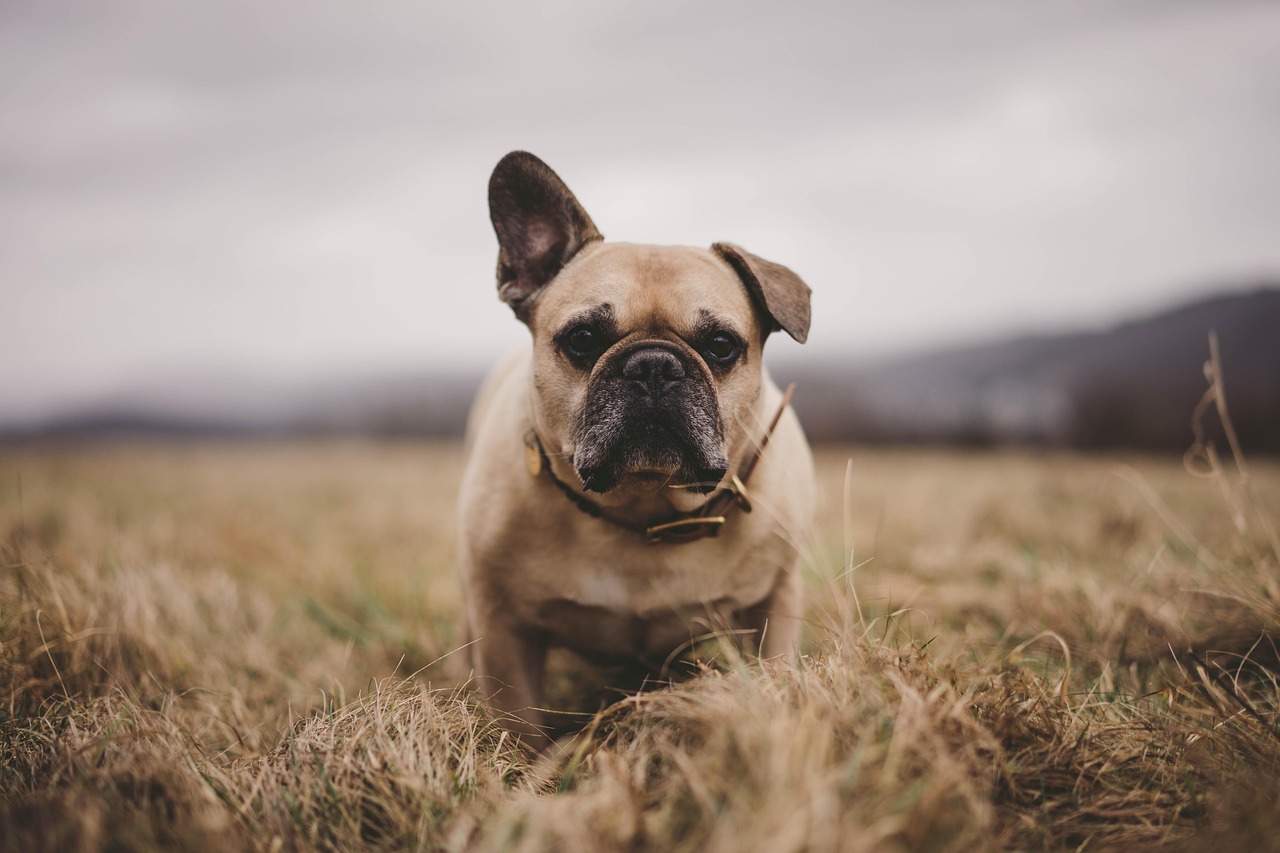
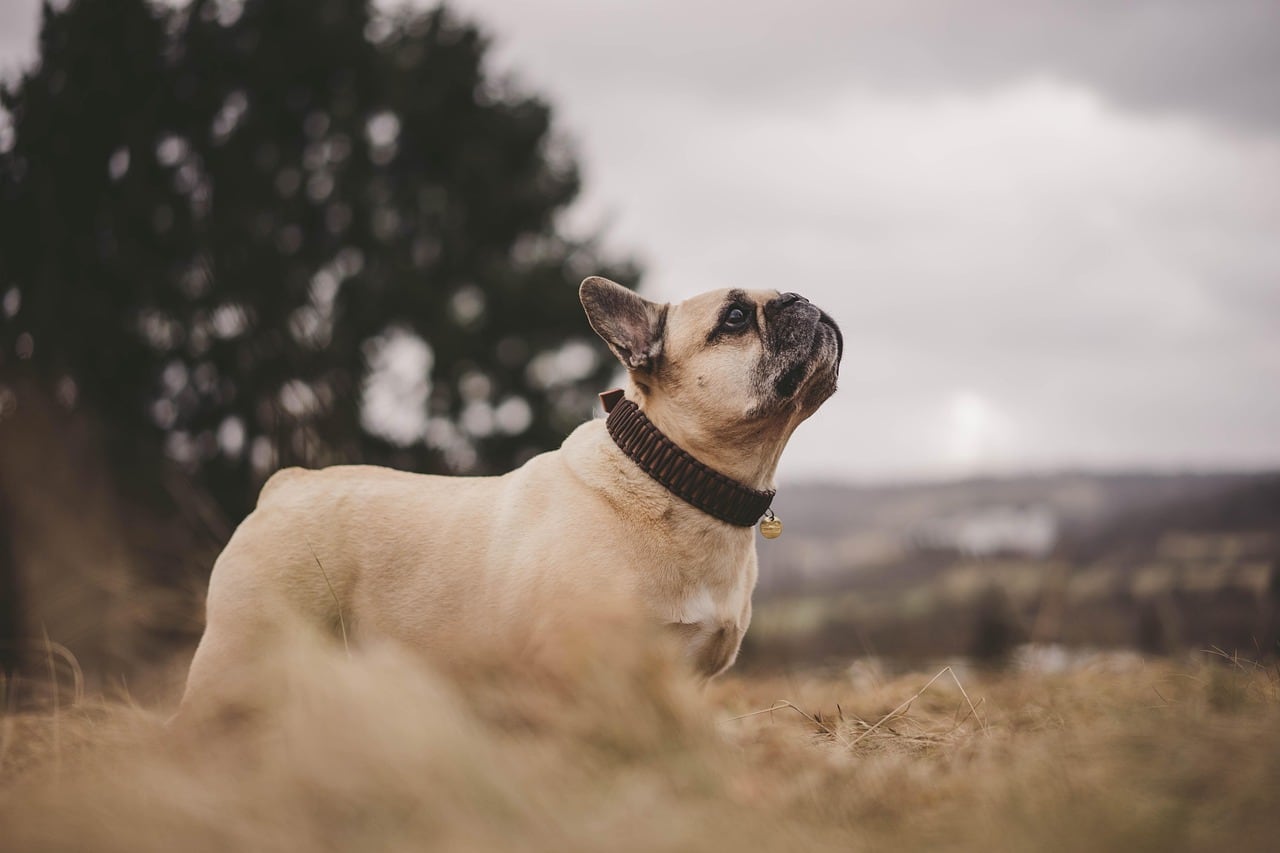
The French Bulldog is a small breed from FCI group 9, although with its sturdy build and massive head it looks more like a miniature molossoid. It comes from France, measures around 24–35 cm at the withers and weighs 8–14 kg depending on the sex. It is unmistakable thanks to its short coat, round head and characteristic erect ears, which are nicknamed "bat ears".
By nature, it is a social dog with low barking and a high need for contact with people - it does not tolerate loneliness well. Its activity and training requirements are in the medium range, while coat care is undemanding. Thanks to its calmer nature and suitability for an apartment, the Frenchie is often a choice for beginners, families with children and seniors who are not looking for a dog for long sports performances, but rather a constant companion at hand.
Professionally consulted
The content was created in cooperation with the veterinary clinic Veterinární klinika VYVET sro and MVDr. Adam Hylák.
Quick overview
What is a French bulldog like?
The French Bulldog is a small breed of massive, compact build, belonging to FCI Group 9 among small molossoid dogs. Males grow to 27–35 cm and weigh 9–14 kg, bitches are slightly smaller, weighing 8–13 kg. They are characterized by a short muzzle, erect bat ears and a smooth, short coat that does not require much maintenance.
In terms of temperament, it is a sociable and calm dog with a moderate need for exercise and mental stimulation - it can do with regular walks and play, it does not need extreme exertion. It rarely barks, but it can still alert to unusual stimuli. It behaves rather neutrally and without unnecessary conflict towards foreign dogs and cats.
The Frenchie is a family dog - it requires a lot of contact with people and does not tolerate long-term loneliness. It is suitable for apartments and children, with whom it usually gets along well, and thanks to its undemanding nature, it is also suitable for beginners and seniors looking for an undemanding companion for a small space.
Origin and history
The French Bulldog originated in the second half of the 19th century as a smaller offshoot of the English Bulldog. It originated from smaller, so-called toy bulldogs, which were bred by English lacemakers and weavers - especially in the area around Nottingham. When the industrial revolution began, domestic textile production declined and craftsmen sought a livelihood in France, they took these small bulldogs with them. In France, the dogs were crossed with local breeds, probably with Rat Terriers and Pugs, which further reduced their size and changed the shape of their heads and ears.
Originally used as a rat catcher and watchdog in workshops and markets, it later became more of a companion dog. At the end of the 19th century, it became popular with Parisian bohemians and high society, thanks to which it spread from working-class environments to salons and became a fashionable accessory in Paris at that time.
The characteristic erect "bat" ears, which today clearly distinguish the breed from the English bulldog with its drooping ears, were established thanks to breeders in France and subsequently in the USA, where one of the first specialized clubs was established and where this type of ear became a mandatory standard. From there, the preference returned to Europe and influenced the form of the breed recognized by the FCI, which leads it under the French flag as a separate breed with its own standard within the small molossus group.
Appearance and size
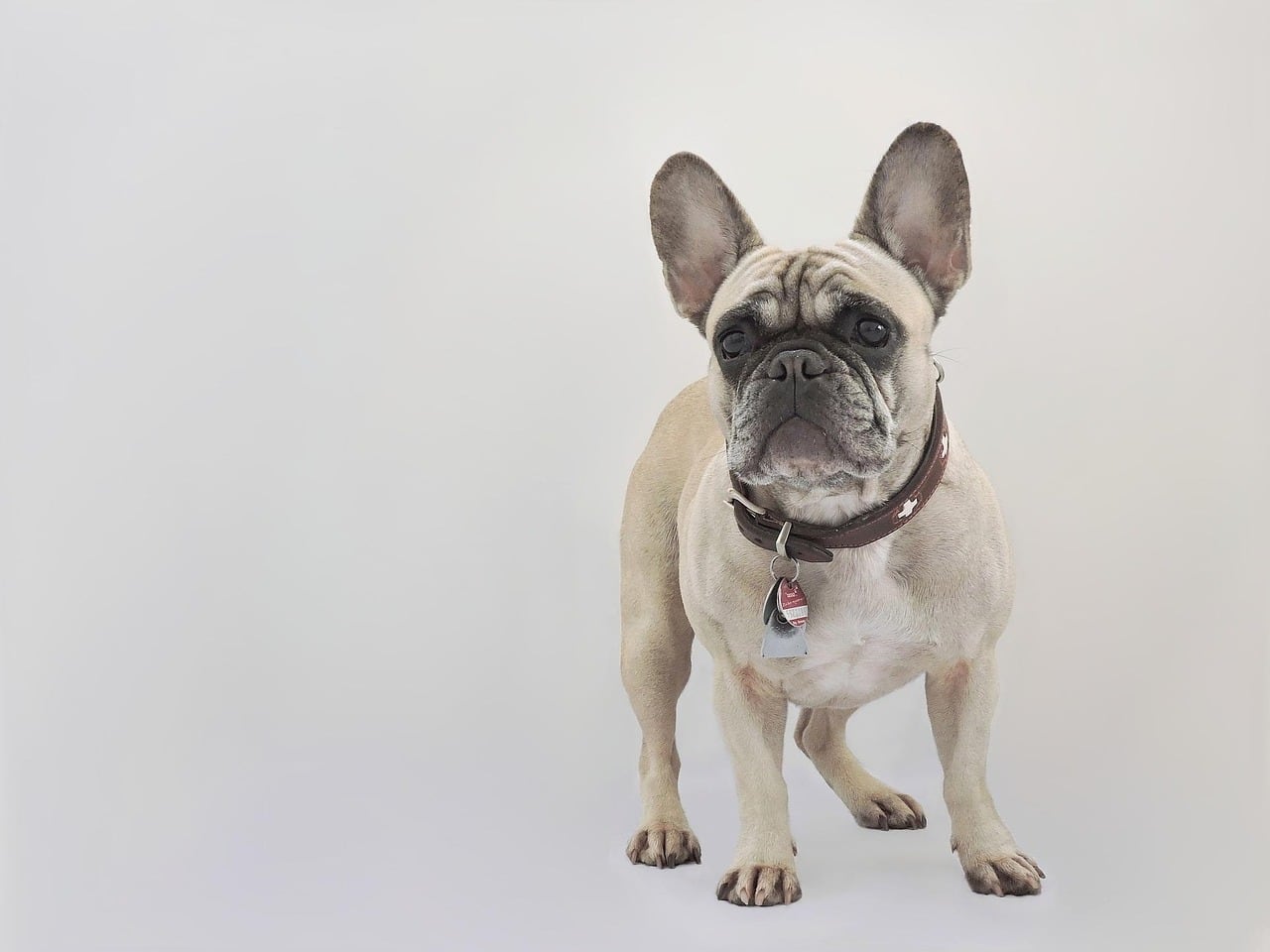
The Frenchie is a stocky, compact dog with a powerful skeleton and a muscular body that gives the impression of strength despite its small stature. Males reach a height of 27–35 cm and weigh 9–14 kg, while females are slightly smaller – 24–32 cm and 8–13 kg. The body is short and wider in the chest, the back slopes slightly towards the groin.
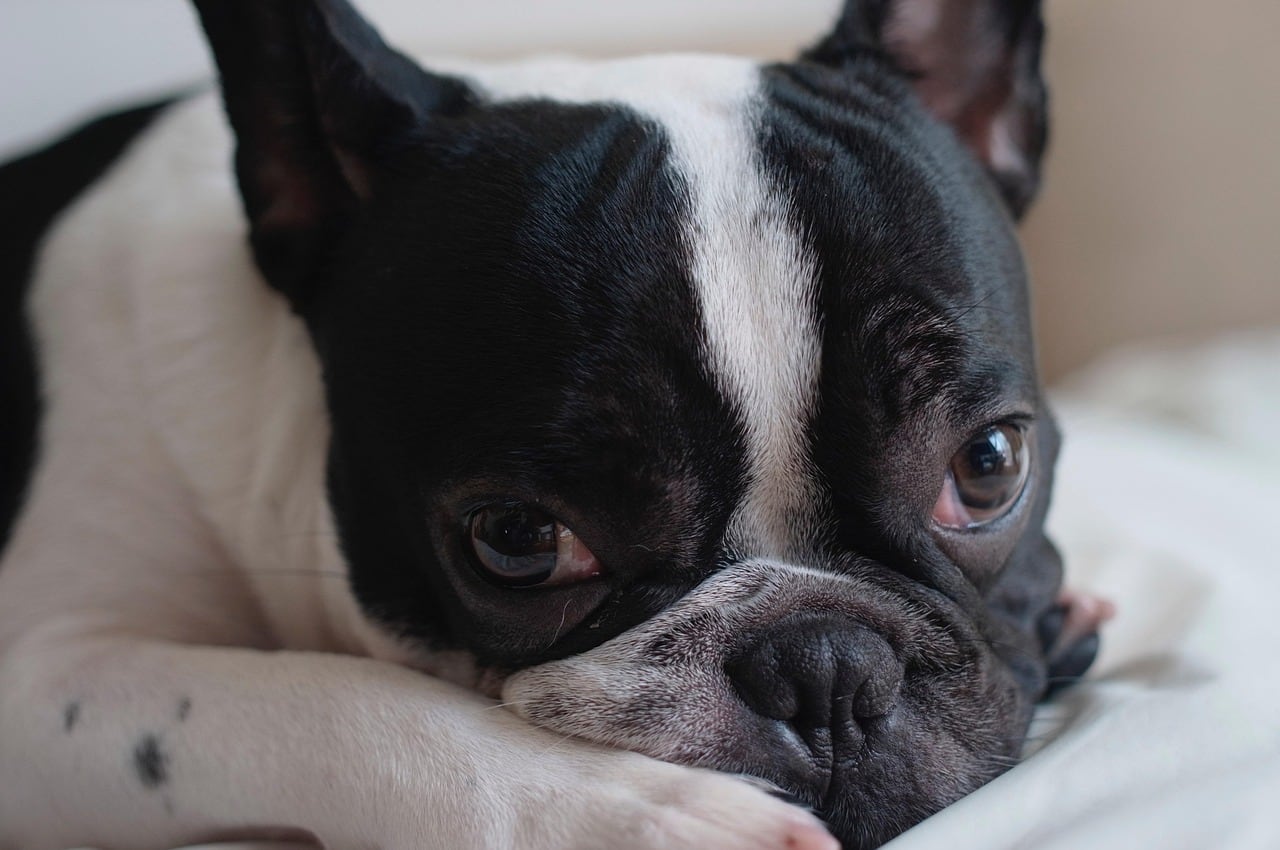
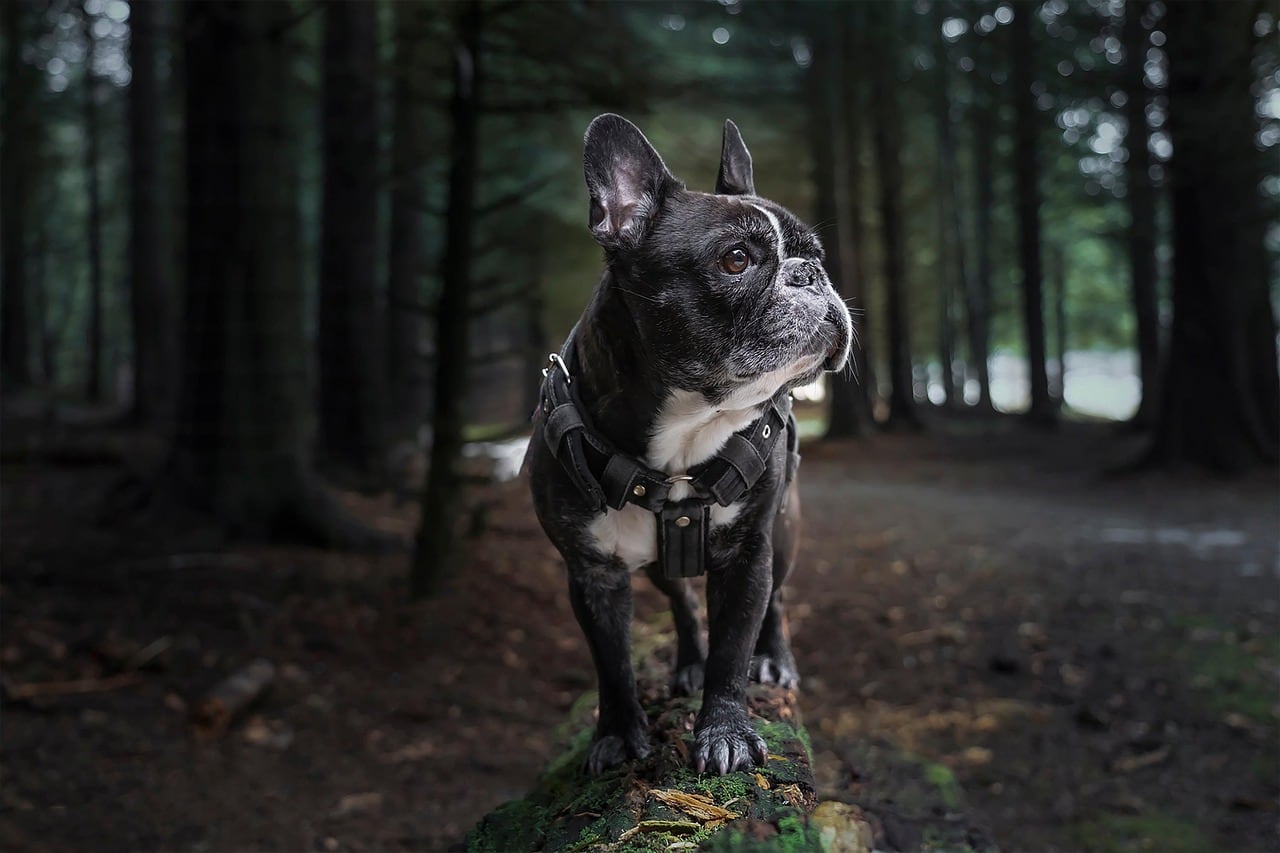
The head is massive and square, with a short snout and pronounced skin folds on the forehead. A characteristic feature are the so-called bat ears - set high, wide at the base, erect and rounded at the tip. The eyes are large, dark and round, set low and far from the ears, with an open and lively expression.
The coat is short, fine and lies flat against the body, without an undercoat. The coat color variations are described in a separate section dedicated to the breed colors.
The tail is set low, short and tapers from the root, carried low even when moving. Typical physical characteristics also include a short and muscular neck and a broad, deep chest, which gives the body a cylindrical shape.
The differences between the sexes are mainly manifested in overall dimensions and weight - males tend to be slightly larger at the withers and in weight than females, the body structure and typical head features are identical in both sexes.
French Bulldog Personality
The French Bulldog is a sociable and even-tempered dog that seeks human companionship and does not tolerate prolonged solitude. Its temperament is calmer and less explosive than one would expect for a small breed – its energy is rather moderate and it manifests itself in short, intense bursts, between which it rests.
They form strong bonds with their owners and enjoy being a part of the household. They are not the type of dog that can do well alone in a yard or kennel – they need to be where their family is, whether it is on the couch, in the kitchen or out for a walk around the neighborhood.
It has solid intelligence, but combines it with a certain amount of willfulness. Training is therefore rather medium-demanding - the Frenchie quickly understands what is wanted of it, but is not always motivated to fulfill it right away. A positive approach, patience and short, fun training blocks are proven, as it reacts indifferently to boredom or hard drill.
It needs a medium level of mental stimulation – it will welcome sniffing games, simple tasks or practicing commands, but it is not a working type of dog that would require demanding sports. It rarely resorts to barking, rather it shows satisfaction or disapproval in other ways – through facial expressions, breathing sounds or body posture.
Although it is not a guard dog in the true sense of the word, it usually warns of unusual sounds or the arrival of a stranger. It is neutral towards strangers and other dogs and cats - it is not a conflict seeker, but not a particularly warm companion for everyone it meets. It gets along well with children and its nature also meets the requirements of novice owners or seniors, who will appreciate a dog without excessive demands for activity, but with the need for constant human presence.
French Bulldog and Children
The French Bulldog is classified as "rather suitable" for children - it is a sociable breed, with a calmer nature and a low tendency to bark, so it usually appears non-conflicting in a family environment. However, the decisive factor is always the specific individual, the method of upbringing and how the dog is treated with children from puppyhood.
Thanks to its moderate activity level, the Frenchie does not need an enormous amount of exercise or wild chasing, which may suit families with smaller children - however, contact between the dog and the child should always be supervised by an adult. The Bulldog has a high need for companionship and likes to spend time near people, which makes it a dog that gets involved in family activities, but at the same time it means that it should not be isolated or overworked for long periods of time.
Socialization and upbringing
As with any breed, early and consistent socialization of a puppy with children, common household noises, and various situations greatly influences how well-balanced the dog will react as an adult. Training is rated as medium for the French Bulldog - the dog is docile, but benefits from a patient and consistent approach rather than harsh methods.
Children should be taught how to treat a dog – respect its rest, do not touch the bowl while feeding and do not expose it to unnecessary stress. Given the breed's physical structure (short muzzle, compact body), it is advisable to avoid vigorous physical play and excessive stress in hot weather.
Adult supervision
- Meetings between small children and dogs should always be supervised by an adult.
- It is advisable to teach children to recognize the signals that a dog wants to be alone or needs peace.
- It is recommended to gradually build mutual trust through calm, controlled interactions.
French Bulldog and other dogs and pets
In relation to other animals, the French bulldog is non-conflicting and generally neutral towards other dogs and cats - it does not seek out fights, but it does not actively react positively to foreign animals either. Coexistence with other pets therefore usually depends more on socialization and the nature of the individual than on a strong breeding tendency.
Its original role as a companion and companion dog is reflected in this profile - the Frenchie was not bred to hunt or work with game, so a strong hunting instinct cannot be expected from it. This makes it easier to get used to cats and smaller animals in the household, if the introduction occurs gradually and calmly.
- They are neutral towards other dogs, without a significant need to establish contact and without a tendency towards aggression.
- He approaches cats in a similarly balanced manner, especially if they grow up together from puppyhood.
- The absence of a strong hunting instinct reduces the risk of chasing small animals around the apartment or garden.
- Despite their calm nature, it is recommended to always check the first meeting with another animal and not rely solely on breeding predisposition.
Is the French Bulldog suitable for an apartment?
Yes, the French bulldog is one of the breeds that is very well suited to apartment living. Its small size and low barking rate make it a non-conflicting neighbor even in a panel house, where the more pronounced vocalizations of other breeds could be a problem.
Nevertheless, it is worth considering several conditions so that the apartment really suits him:
- Space: Thanks to its small size, it can fit in a smaller apartment, but it will appreciate its own quiet place to relax away from direct sunlight and heating.
- Calm and temperature: The short muzzle and compact body structure mean that the French Bulldog has a harder time tolerating heat and heavy physical exertion - in an apartment, it should not be exposed to overheated rooms or sudden temperature fluctuations.
- Exercise: Its activity level is at a medium level, so it needs regular, rather shorter walks spread out throughout the day, not one exhausting workout.
- Barking: A low tendency to bark is a definite advantage for living in an apartment and reduces the risk of conflicts with neighbors.
- Society: He needs to be in close contact with his family, he does not like being left alone for long periods of time - this needs to be factored into his daily schedule when deciding on apartment living.
The combination of easy care for the coat, calmer nature, and low barking makes the French bulldog one of the breeds that is suitable for apartment life without major modifications - the key is to provide it with enough human presence and avoid overheating.
How much exercise does it need?
The French Bulldog can do with short to medium-length walks spread out over several parts of the day – it is a breed with a medium level of activity that does not need hours of running, but regular exercise does. Two to three walks a day, supplemented by free running in the garden or park, are ideal.
Due to the structure of the respiratory tract, typical of brachycephalic breeds, it is necessary to adjust the intensity and duration of the movement to the weather. On hot and humid days, there is a risk of overheating and difficulty breathing, so it is recommended to move walks to cooler parts of the day (early morning, evening) and avoid strenuous activities in the midday heat. The same caution should be observed in higher humidity, when the dog cools down more difficultly.
Suitable activities
- Walks at a moderate pace, ideally in nature or in a park
- Free movement without a leash in a secure area
- Short games of fetch or scent games in the garden
- Easy obedience exercises and tricks as a form of exercise and fun
Demanding dog sports with high physical demands (high-speed agility, long bike runs) are not suitable for this breed. Mental stimulation is as important for Frenchies as physical exercise - sniffing games, simple task toys or short training blocks will be useful, which will keep the dog entertained without unnecessary physical strain.
Training and education
Training a French Bulldog is usually moderately demanding – it is not a breed that learns by itself in a flash, but with the right approach, it can master basic obedience and other skills without much difficulty. Motivation is the key: a Frenchie works best with treats, praise and the owner's proximity, and is less responsive to pressure or repeated drills without reward.
Due to its body structure and respiratory system, it is advisable to choose short training blocks, rather than several shorter lessons per day, rather than one long exercise. More demanding physical elements of training (long fetches, repeated jumps) are not natural for this breed and are better not to include them.
Approach to education
- Positive motivation in the form of treats and praise works more reliably than strictness.
- Short but regular and consistent lessons will keep the dog focused.
- Patience pays off - the Frenchie learns at his own pace, rushing and pressure will only worsen the result.
Socialization
Thanks to its high need for human company and social nature, the French bulldog usually adapts easily to new environments and people if it has the opportunity to get to know them gradually and without stress. Meeting other dogs and various stimuli from a puppy age helps to develop a balanced and calm adult - it tends to be rather neutral towards its fellow dogs, not specifically seeking contact, but not conflicting either.
Low barking and a calmer temperament make the Frenchie a suitable candidate even for owners who are just starting to train their dog - however, it is worth paying attention to the basics of obedience and socialization from an early age so that its social qualities can fully manifest themselves.
Hair care and hygiene
The French Bulldog's short, smooth coat doesn't require much grooming - a weekly brushing with a rubber brush or smooth glove is enough to remove dead hair and promote blood circulation to the skin. Although grooming itself is easy, the breed makes up for this with increased demands in other areas that require regular attention.
Skin folds in the face
The characteristic wrinkles on the muzzle and around the nose need to be checked and cleaned almost constantly, as dirt, moisture and sebum accumulate in them. Without regular wiping (e.g. with a damp cloth and then drying), skin inflammation and an unpleasant odor can easily develop here.
Ears
The French Bulldog's large, erect ears are well ventilated, but it is still a good idea to check them once a week and, if necessary, gently clean them with a damp cloth - this will prevent the accumulation of sebum and possible inflammation of the ear canal.
Eyes
Due to the slightly protruding eyes, it is a good idea to check daily for discharge in the corners and gently wipe away any dirt with a damp swab so that it does not irritate the sensitive eye mucosa.
Teeth, claws and bathing
- Brush your dog's teeth several times a week with a special toothpaste for dogs to reduce tartar buildup.
- Trim the claws regularly if they do not naturally smooth out from walking on hard surfaces.
- Bathing is only necessary occasionally, when dirty or as needed - frequent bathing could unnecessarily dry out the coat and skin.
Feeding
The French Bulldog should receive a high-quality complete food appropriate to its age, size and activity level – i.e. special lines for puppies, adults or older dogs of small breeds. Given the structure of the muzzle and lower demands for movement, it is advisable to ensure that the granules are not too large or shaped in a way that makes food intake difficult.
This breed tends to gain weight, so it is a good idea to check their body condition regularly – the ribs should be easily palpable and the waist should be visible when viewed from above. Excess weight puts pressure on the joints and respiratory tract, which can be more problematic in the bulldog than in other breeds.
What to watch out for
- Adjust the amount of food to the dog's actual activity, not just its age.
- Treats should be included in the total daily ration to avoid overfeeding.
- Monitor for any digestive problems and respond by adjusting the diet after consulting with your veterinarian.
- Ensure constant access to fresh water, especially in warm weather when the breed has difficulty coping with stress.
How long does a French Bulldog live?
The French Bulldog lives for approximately 9 to 12 years. However, the specific lifespan is always individual and is influenced by a number of factors - from genetics to lifestyle to the quality of care that the owner provides to the dog.
What affects lifespan?
- Genetics: Origin from proven breeding with healthy parents reduces the risk of hereditary burdens and provides the prerequisite for a longer and better quality of life.
- Physical condition: Due to the body structure, it is important for this breed to maintain an appropriate weight - excess weight puts a strain on the joints and respiratory system and can significantly shorten their lifespan.
- Exercise: Regular but reasonably dosed exercise corresponding to a moderate level of activity helps keep the muscles and heart in shape without exposing the dog to excessive strain in heat or suffocation.
- Prevention: Regular veterinary check-ups, vaccinations, and early detection of health problems have a major impact on how long and in what quality a dog lives.
- Nutrition: A quality diet adapted to age, activity level and any health restrictions helps prevent overweight and digestive problems.
- Health Predisposition: Due to the short-headed (brachycephalic) head structure, the breed may be more prone to breathing problems, especially in heat or under stress. Taking these factors into account in the dog's daily regimen can contribute to its well-being and longevity.
Who is the French Bulldog suitable for?
The French Bulldog is best suited to people who want a small dog for an apartment and who don't mind the fact that it will need their closeness rather than long walks in the field. It is a breed with a moderate need for exercise and mental stimulation, which will appreciate a regular but undemanding program rather than a sports load.
Who is the breed suitable for?
- For apartment dwellers, urban living suits them both in terms of size and mobility requirements.
- For families with children, where the dog is a regular part of the daily routine.
- For beginners looking for a dog with medium training requirements and low coat care.
- For seniors who appreciate a calmer companion without the need for extreme physical activity.
- For people who spend a lot of time at home or can take their dog with them – the Frenchie has a high need for company and does not tolerate long-term loneliness.
- For households where barking is a problem – this breed barks little, although it does tend to alert to unusual stimuli.
Who is the breed not suitable for?
- For owners who are truly sporty and want a dog for jogging or long trips, more active breeds are better suited.
- For people who are away from home for a long time during the day and cannot take a dog with them - the high need for company does not allow it.
- For owners who expect completely problem-free coexistence with other dogs or cats without gradual socialization - the relationship towards them is rather neutral, not automatically friendly.
- For those looking for a distinctly independent dog that functions without human contact.
Interesting facts about the breed
The French Bulldog originates from France and is a small breed classified in FCI Group 9, Small Bulldog-like Dogs Section, under Standard No. 101.
Its colloquial name "frenchie" has also become common in the Czech cynological community and is often used as an informal alternative to the official name.
Although the Frenchie is a small breed, its original French name, Bouledogue Français, refers to its bulldog roots - it belongs to the molossoid-type dog section, albeit in miniature form.
French Bulldog Colors
The FCI/ČMKU standard for the French Bulldog defines specific recognized colors and their combinations, including permissible markings on the coat - a precise list is part of the official text of the standard, which is administered by the ČMKU and the French Bulldog Club.
In addition to the colors recognized by the standard, there are also variants that are not described in the standard. Their health implications are not documented in the available documents, so we do not present them here as generally valid statements.
French Bulldog Health
The French Bulldog is a brachycephalic breed with a short muzzle and a compact, heavier body structure, which is also reflected in its health predispositions. The average lifespan is between 9 and 12 years. The short coat makes skin care easier, but the structure of the head and body itself requires increased attention from the owner in several areas. Responsible breeding and the selection of healthy parents significantly reduce the risk of more serious problems. The following overview summarizes the areas that are worth focusing on in this breed.
Breathing and thermoregulation
Due to the short muzzle, the breed may be more prone to difficulty breathing, especially in hot temperatures, physical exertion or stress. The French Bulldog has a harder time tolerating heat and stuffiness, as the shortened nasal cavity limits effective cooling through breathing. It is recommended to avoid strenuous activity on hot days and to provide the dog with access to shade and coolness.
Skin folds
The characteristic folds of skin on the head and tail area can be more prone to local irritation if moisture or dirt accumulates in them. The breed may therefore be more prone to minor skin problems in these areas, which can be largely prevented by regular inspection and hygiene of the folds.
Spine and musculoskeletal system
A compact and robust body structure with a short back is a typical feature of the breed, which may be related to an increased predisposition to problems with the spine and joints. Maintaining an appropriate body weight and avoiding sudden jumps from heights are among the measures that reduce the load on the musculoskeletal system.
Eyes
The more prominent eye position in brachycephalic breeds is associated with an increased predisposition to minor corneal injuries or eye irritation. Regular visual eye checks are a basic part of the care of this breed.
What to look for when choosing a puppy
- Monitor whether the puppy and parents are breathing calmly, without excessive snoring, grunting or choking, even when at rest.
- Check with the breeder the health status and any examinations of the parents, if they provide them.
- Check the cleanliness and condition of the skin folds on the head and tail area.
- Pay attention to the puppy's movement - it should move freely, with no signs of pain or reluctance to move.
- Choose a breeder who is a member of a breed club and adheres to its breeding conditions.
Known predispositions
The breed is described to have an increased predisposition to:
- to brachycephalic obstructive airway syndrome (BOAS), manifested by noisy breathing, reduced exercise and heat tolerance.
- to narrowed nostrils (stenotic nares) as part of the brachycephalic head structure.
- for acute extrusion of the intervertebral disc in the thoracic and lumbar spine.
- to congenital malformations of the vertebrae (so-called hemivertebrae), which are also associated with the characteristic twisted tail.
- to inflammation of the skin folds (intertrigo) due to the characteristic skin folds on the body and tail.
- to injuries and ulcers on the cornea of the eye, due to, among other things, the anatomy of the orbit and a flat face.
- to overheating and sunburn, especially at higher temperatures and physical exertion.
- to a complicated birth (dystocia) requiring veterinary intervention.
This overview is for informational purposes only and does not replace the examination or recommendations of a veterinarian.
What to buy for a French Bulldog
Practical basis that is suitable for this breed:
- Car seats for dogs – Car seats and safety equipment for transporting a dog by car.
- Toys – Dog toys – fetching, chewing and interactive.
- Cosmetics – Shampoos, conditioners and hair care products.
- Bowls – Feed and water bowls, anti-swallow bowls and stands.
- Collars – Dog collars – leather, textile and semi-tight.
- Beds – Beds and mattresses for dogs of all sizes.
- Leads – Leads, switching leads and tracking lines.
Useful instructions
Practical tips that are useful when caring for a dog:
Frequently asked questions
Is a French Bulldog suitable for an apartment?
Yes, the French Bulldog is perfect for apartment living – he is small, has a medium activity level and low barking, so he won't bother the neighbors. He will get by with short walks and peace at home.
How much does a French bulldog weigh and how big is it?
The male dog measures 27–35 cm at the withers and weighs 9–14 kg, the female is slightly smaller with a height of 24–32 cm and a weight of 8–13 kg. It is classified as a small breed, although it appears stocky and compact.
Why does a French bulldog snore and huff so much?
This is due to the structure of the head - the Frenchie has a short muzzle, which in brachycephalic breeds typically leads to noisier breathing, snoring and poorer heat tolerance. Therefore, in higher temperatures, it is necessary to limit physical exertion and provide plenty of shade and water.
Can a French bulldog handle longer walks or runs?
Not much, really – it has a medium activity level and due to its short snout it gets out of breath quickly, especially in the heat. Short to medium-length walks and mental stimulation are more suitable instead of strenuous exercise.
Is the French Bulldog suitable for children?
Yes, in general, it is more suitable for children, as it is a social dog with a high need for human presence. Even so, supervision is always needed with small children, regardless of the breed.
How long does a French bulldog live?
The average lifespan is between 9 and 12 years. The specific lifespan also depends on the individual's condition and health care.
What health problems should you watch out for in a French bulldog?
Due to the short-nosed head structure, the breed may be more prone to respiratory problems, especially in hot weather or under stress. It is recommended to discuss specific health risks with a breeder or veterinarian before purchasing a puppy.
Is caring for a French Bulldog's coat difficult?
On the contrary, thanks to its short coat, care is easy and regular brushing is sufficient. Shedding is moderate, so occasional vacuuming of the fur from the sofa will be a necessity.
Is a French Bulldog suitable for beginners?
Yes, rather yes – this is a dog with medium training requirements that can handle normal home care and does not require an experienced owner. However, it will appreciate an owner who will devote a lot of time to it, as it has a high need for company.
Does a French Bulldog bark a lot?
No, this breed has a low barking rate, so it is not a typical alarm dog. However, it can still alert you to visitors or unusual sounds.
Can a French Bulldog handle being left alone at home?
It's not ideal - the Frenchie has a high need for company and seeks human presence, long-term loneliness is not good for him. He is more suited to people who spend a lot of time at home or can take the dog with them.
Does the French Bulldog get along well with cats and other dogs?
Its relationship to other animals is neutral, so coexistence usually depends on socialization and the specific nature of the individual. With gradual introduction, there is usually no problem.
Resources and further information
- KFB – French Bulldog Club, zs
- French Bulldog – breed card in the Czech-Moravian Cynological Union (CMKU) breed list
- French Bulldog breed standard – Czech translation – Czech-Moravian Cynological Union (ČMKU), translated by Ing. Hana Petrusová
- French Bulldog Club, zs – registration card of a member entity of the Czech-Moravian Cynological Union (ČMKU)
- FCI Standard No. 101 – French Bulldog – Fédération Cynologique Internationale
- French Bulldog - Wikipedia - Wikipedia, the free encyclopedia
Professional cooperation
This breed overview was created in cooperation with the Veterinary Clinic VYVET sro and MVDr. Adam Hylák .