
Published 31. 8. 2026
The Shar Pei is a medium-sized breed originating from China, unmistakable thanks to its loose, deeply wrinkled skin and bluish tongue. According to the FCI classification, it belongs to group 2, among the molossoid dogs (standard no. 309). The short, rough coat requires only moderate care and shedding remains at a similar level, so it is suitable for apartment owners who do not have to rely on a large space.
In terms of temperament, this is a dog with a strong personality - calm, independent and rather reserved towards strangers and other animals. It is loyal and sociable towards its family, but training requires patience and consistency, as the Shar Pei tends to act in its own way. This is why it is not suitable for complete beginners without experience with more dominant breeds. Its low barking and undemanding drooling make it an undemanding roommate, if the owner can handle its quirky nature and offer it enough mental stimulation.
Professionally consulted
The content was created in cooperation with the veterinary clinic Veterinární klinika VYVET sro and MVDr. Adam Hylák.
Quick overview
What is a Shar Pei like?
The Shar Pei is a medium-sized molossoid breed originating from China, belonging to FCI Group 2 among dogs of the dog type. Its characteristic features are short, rough hair and noticeably wrinkled skin, more pronounced especially in puppies, in adults the wrinkles are concentrated mainly on the head and shoulders.
In terms of temperament, this is an independent and calm dog, with a moderate need for activity and mental stimulation. It is loyal to its people, but rather reserved towards strangers. It behaves neutrally towards children, other dogs and cats - coexistence depends on socialization and the specific nature of the individual.
Training a Shar Pei is one of the more challenging breeds, as it combines its dominant nature with a certain stubbornness. It therefore requires a more experienced and consistent owner who can lead the dog calmly but firmly. This breed is therefore not recommended for complete beginners.
The coat is easy to care for, it barks little and drools only minimally, which makes it a relatively undemanding roommate even in an apartment. It is more suitable for owners who appreciate a dog with a strong personality and do not mind giving it regular, consistent attention.
Origin and history of the Shar Pei
The Shar Pei originates from southern China, from the area around Guangdong Province and the Canton Peninsula, where its existence has been documented for centuries. The breed is one of the ancient Chinese dogs and its ancestors probably shared with other Asian molossoid and spitz-like types of dogs, including the Chow Chow, with which it shares a dark-colored tongue. It originally served as a versatile village dog - guarding farms and farms, hunting small game and being used to herd cattle. Unfortunately, at some times it was also used in dog fights, which is believed to have contributed to its loose, strong skin, which allowed it to defend itself against bites from opponents.
After the establishment of the People's Republic of China in the second half of the 20th century, dog breeding was generally considered a bourgeois relic and Shar Pei numbers declined dramatically, bringing the breed to the brink of extinction. It survived mainly thanks to breeders in Hong Kong, Macau and Taiwan, from where it was introduced to the United States in the 1970s. The interest of American breeders and the media coverage of the endangered breed helped save the Shar Pei and spread its breeding worldwide.
Based on the type individuals imported from Hong Kong, a breeding standard was gradually drawn up, which was later adopted by international canine organizations including the FCI. The breed is now classified in the second group among the molossoid types of dogs and is bred almost exclusively as a companion and family dog, although its appearance - wrinkled skin and short, rough coat - still refers to its original working purpose.
Appearance and size
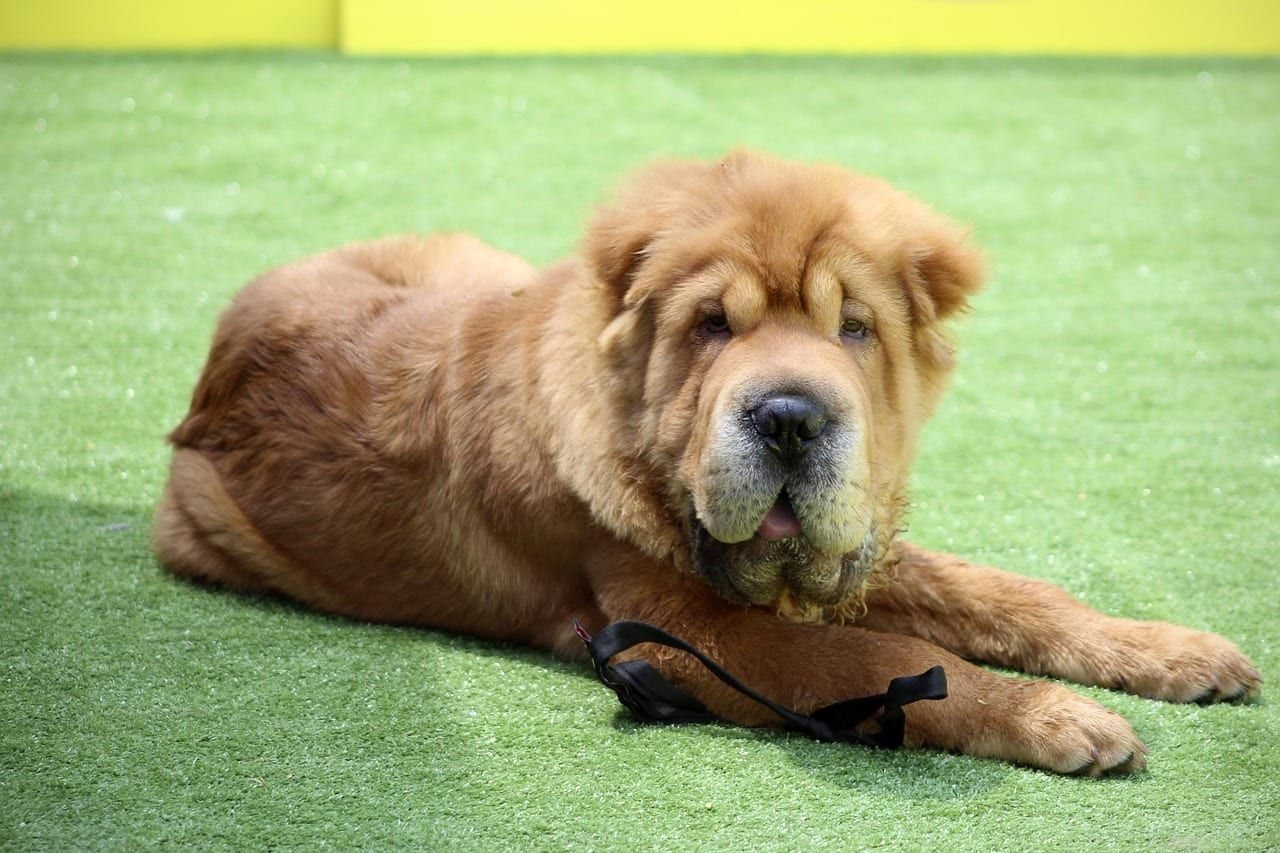
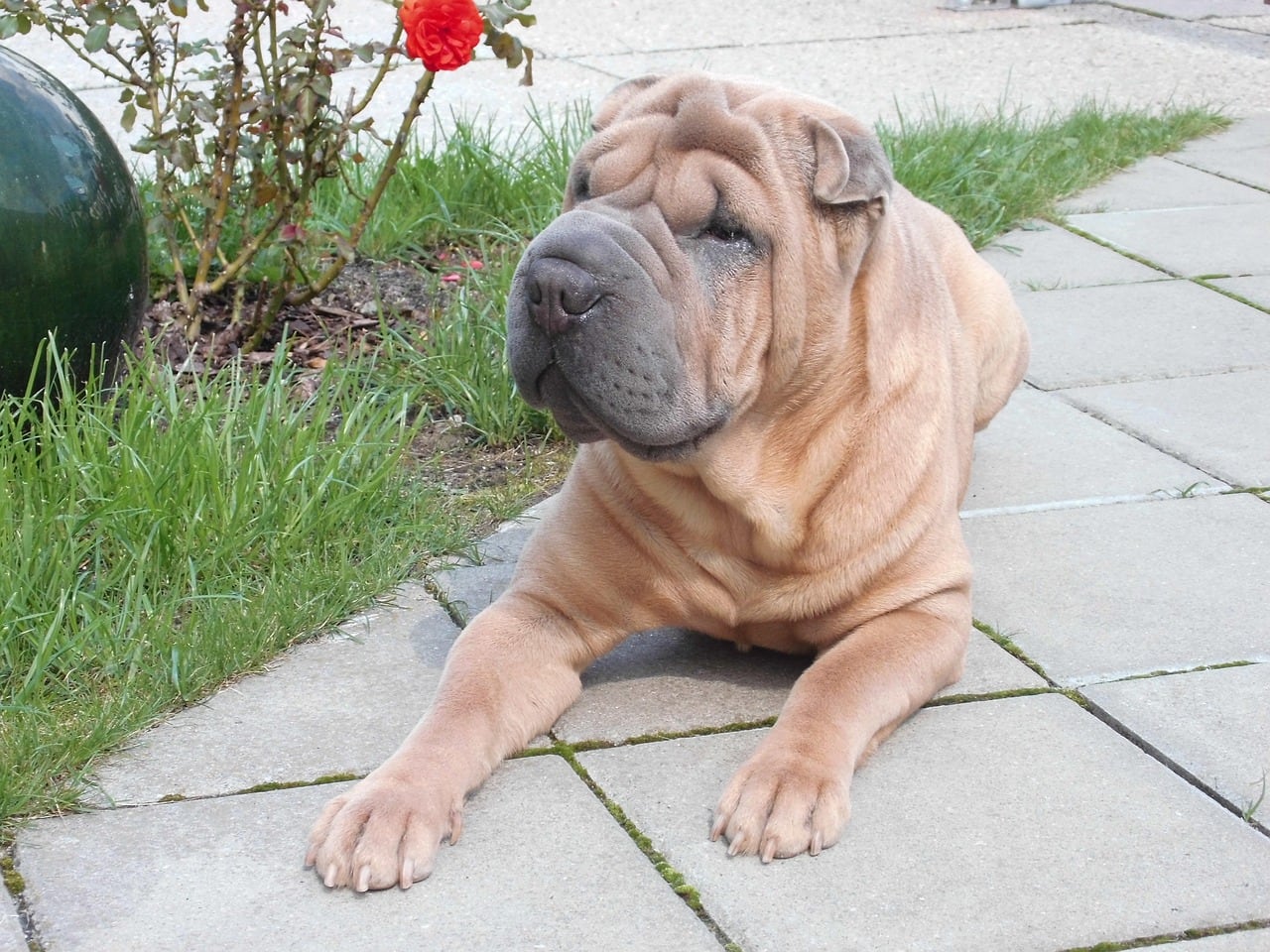
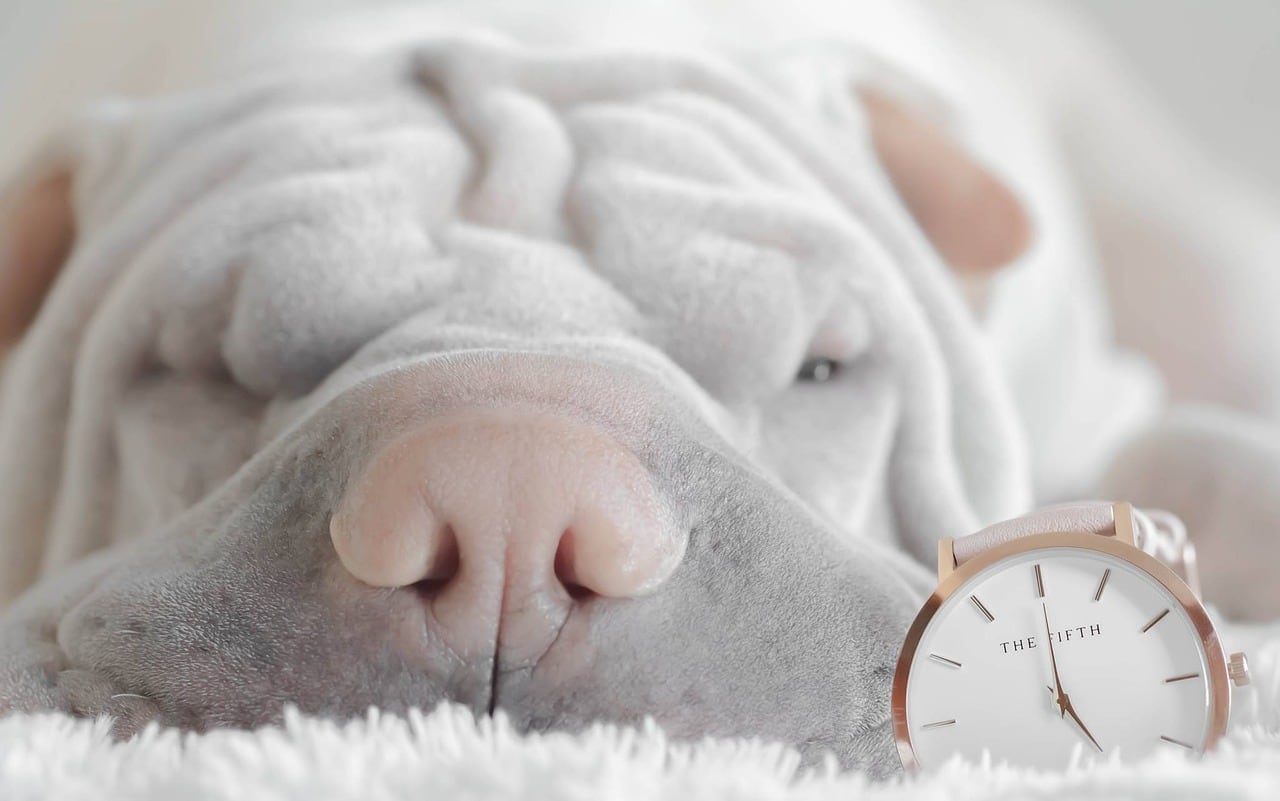
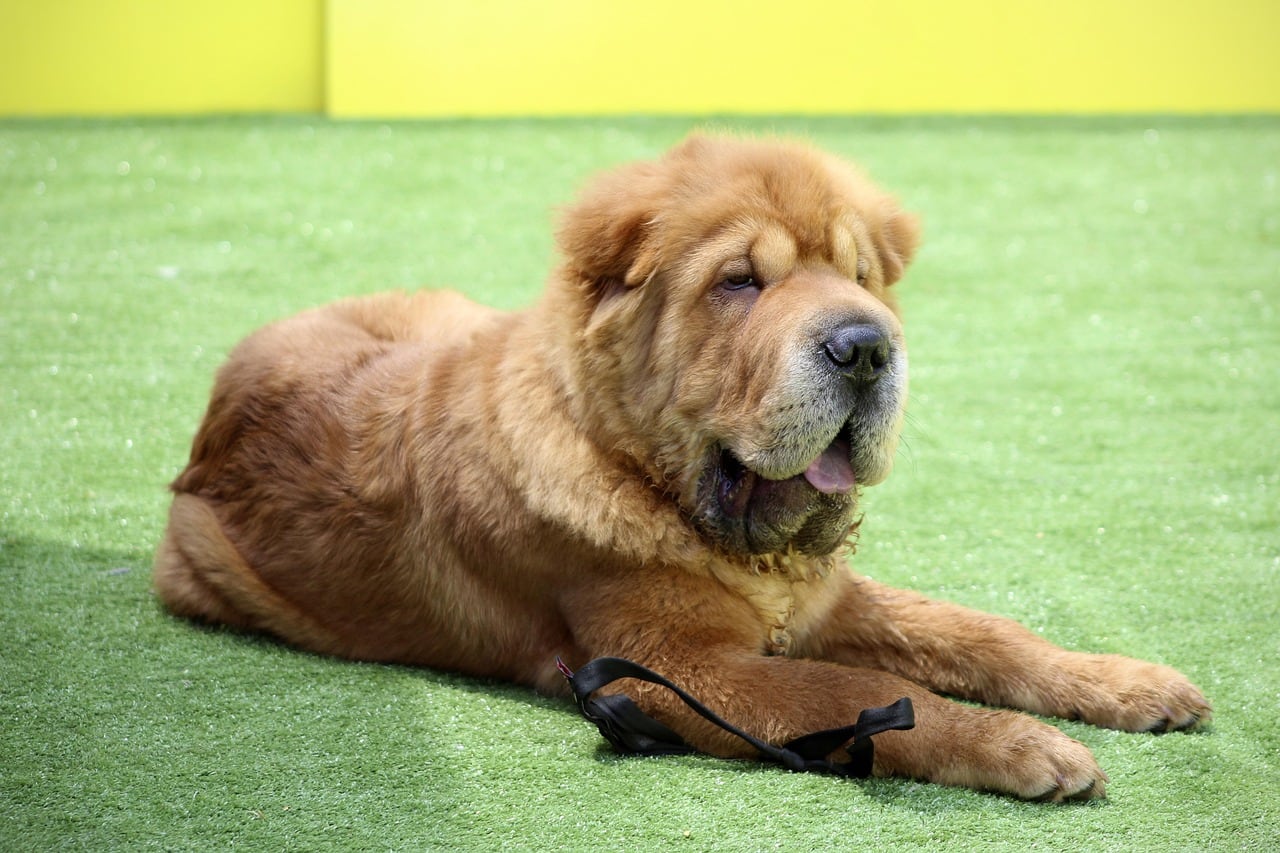
The Shar Pei is a medium-sized breed with a dense, compact body structure that is striking at first glance with its characteristic loose skin forming folds and wrinkles - most prominently on the head, neck and withers. In adults, the number of skin folds usually decreases with age, but they remain a typical distinguishing feature of the breed.
The head is relatively large, with a flat skull and pronounced wrinkles that converge towards a slightly raised muzzle. The ears are small, triangular, set high and carried forward close to the cheeks, which gives the head a characteristic expression. The eyes are small, almond-shaped, set between the eyelids. The muzzle is wide and powerful, the tongue is blue-black in color, which is a typical feature of the breed.
The coat is short and rough to the touch, lying close to the body without an undercoat, making it easy to care for, although the breed sheds its coat continuously throughout the year. We describe the coat color variants and their combinations in a separate section dedicated to color.
The tail is set high, strong at the root and tapering towards the tip; the standard requires it to be carried curled over the back or to the side. The body is short and compact, the chest is deep and well arched, the back is short and strong. The standard does not specify any significant differences in body dimensions between males and females, females tend to have a slightly more delicate build overall.
Shar Pei Colors
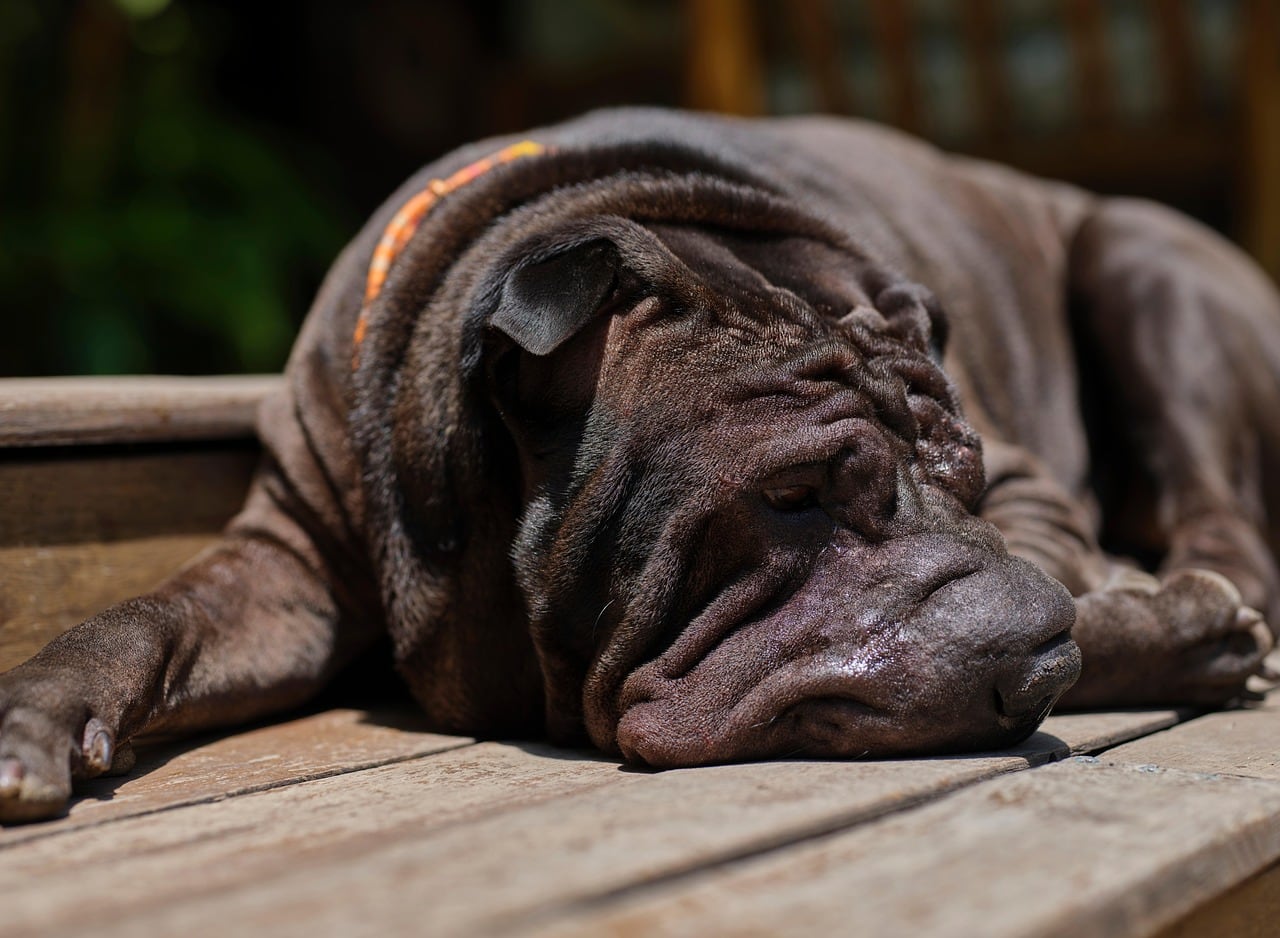
The FCI standard for the Shar Pei does not specify a closed list of color shades, but requires a solid coat - all solid colors are permissible except white. The color can be only one shade, or with a hint of shading (so-called sable effect), when the hairs at the ends are darker, but the basic color remains uniform.
Standard recognized color features
- Solid-colored coat in shades from light to dark (e.g. fawn, brown, black and their variations) – white is excluded.
- Fine shading of the coat (sable) is permissible, as long as it does not appear as patterned or spotted.
- The pigmentation of the nose, lips and gums should correspond to the overall color type - the breed distinguishes between the so-called masked (black) and maskless (self-coloured, with the nose color matching the coat) variants.
Non-standard coloring
Patterned coloring, spotting, prominent white markings on the chest or paws, and colors that are not explicitly permitted by the standard (typically white as the base coat color) are considered non-standard. The presence of such coloring in itself does not constitute a health risk - it is primarily a reason for exclusion from breeding and show judging, not a documented connection with a specific disease.
Shar Pei's nature
The Shar Pei is a dog with a calm, reserved temperament, which outwardly manifests itself as a certain independence and self-reliance - it is definitely not the type of dog that excessively demands attention. It builds a strong bond with its owner and family, but tends to be rather cold and measured towards strangers, which makes it a natural watchdog with low barking - it manifests itself more through alert observation than loud warnings.
It is an intelligent breed, but at the same time it keeps its own head. This combination of intelligence and stubbornness places high demands on training - the Shar Pei understands well what is wanted of it, but the willingness to obey without thinking is lacking. Training therefore requires patience, consistency and a rather experienced leader who can set clear rules without unnecessary pressure.
The Shar Pei has medium energy, so it needs adequate daily activity, but it also needs enough mental stimulation to avoid boredom and looking for its own programs. It behaves neutrally towards other dogs and cats - coexistence is individual and depends on socialization and the specific nature of the individual.
In relation to children, it is considered a neutral breed - it does not actively seek interaction, but it does not dramatically reject it either. Due to its independent nature and demanding nature, it is not considered an ideal choice for a first dog experience.
Shar Pei and children
The breeders' management assesses the Shar Pei's relationship with children as neutral - it is not a breed that would actively seek attention from children, but it is not a dog that would be hostile to them either. Its nature is rather reserved and independent, which means that coexistence with children works well especially where it is built gradually from puppyhood and with respect for the dog's nature.
Consistent socialization is key. A Shar Pei that is exposed to children's presence, their loudness, and unpredictable movements from an early age will become more accustomed to these stimuli and react more calmly to them. Without adequate socialization, it may become more withdrawn and less tolerant of situations where a child encroaches on its space – for example, when playing, feeding, or resting.
Education should be conducted patiently and consistently. Given that the training of this breed is more demanding, setting rules in relation to children also requires clear and repeated work on the part of the owner. Children should be taught from the beginning how to treat the dog correctly - not to disturb it while eating or sleeping and to respect it when the dog withdraws into peace on its own.
Adult supervision as a basis
Due to the neutral assessment of the relationship with children, it is recommended that contact between smaller children and the Shar Pei always take place under the supervision of an adult. This approach is generally valid for most breeds, but it is even more important for the Shar Pei, because its reactions can be less readable than in significantly contact breeds.
- Gradual and repeated introduction of the puppy to children of different ages.
- Teaching children basic rules of behavior towards dogs.
- Constant adult supervision during shared interactions.
- Respecting the dog's space, especially during rest and feeding times.
Shar Pei and other dogs and pets
In relation to other dogs and animals, the Shar Pei is neutral - neither outright conflictive nor overly friendly. Its reaction depends primarily on socialization from puppyhood and the specific situation, as it is a breed with a pronounced territorial behavior and a certain amount of stubbornness, which is also confirmed by the high level of training.
The Shar Pei was used in China as a versatile farm and guard dog, and in the past also for hunting and guarding property. From this use, it has retained its alertness to foreign stimuli and the ability to independently assess the situation - qualities that can also be manifested in contact with unfamiliar dogs or small animals on a walk.
Living with other dogs in the household
The relationship with other dogs within a household is usually individual. Given the strong nature and lower willingness to submit, it is advisable to introduce dogs gradually and under control, ideally during the period when the Shar Pei is still a puppy and learning social rules.
Cats and small animals
Living with cats or small pets is not automatically problematic for this breed, but it is not guaranteed to be problem-free either. It mainly depends on how used the dog was to their presence from an early age - for an adult without previous experience, caution is advisable during the first meetings.
Is the Shar Pei suitable for an apartment?
Rather yes - the Shar Pei can adapt to apartment life if the owner provides enough daily exercise and a quiet environment without unnecessary noise. This is not a breed that needs a large garden, but rather a stable home environment and a regular routine.
Low barking is a great advantage for apartment living - the Shar Pei does not show excessive vocal expression, so it is not a source of conflicts with neighbors. Its moderate need for mental stimulation and activity means that it will be sufficient with regular walks and occasional training, but it does not require complete peace on the couch.
On the contrary, education and socialization are essential - given the high level of training, the owner should have clearly set rules in the home environment from the puppy stage. Although the Shar Pei does not show itself to be boisterous, it can be stubborn without consistent leadership, which will be more pronounced in a smaller household space than on a large plot of land.
How much exercise does it need?
The Shar Pei has a moderate need for exercise - it can handle regular walks and shorter active activities during the day, but it does not need hours of running or extreme exercise. It is rather a calmer dog that needs a reasonable amount of exercise supplemented with plenty of rest.
Given the nature of the coat and body structure, it is advisable to choose activities of appropriate intensity - walks, games in the garden or short trips to nature. Also suitable are:
- nature walks of various lengths depending on the dog's condition
- search games and olfactory activities
- basic obedience exercises included in the daily routine
More demanding dog sports involving high physical exertion are not a typical choice for the Shar Pei - he is better suited to a combination of adequate exercise and mental stimulation, for example in the form of obedience training or solving simple tasks. Given the nature of the breed and its high training requirements, it is advisable to include mental activities regularly, ideally in the form of short and consistent training sessions.
At higher temperatures, it is advisable to limit exercise and plan activities for cooler parts of the day - overheating and strenuous exercise in the heat are not ideal for this breed.
Training and education
Training a Shar Pei is one of the more demanding disciplines and it is not easy for an owner without experience with more dominant breeds. This is a dog with a strong will, who likes to do things his own way, and he quickly gets bored with mechanical repetition of commands.
Motivation is more likely to be calm, confident and respectful of leadership than mindless completion of tasks for the sake of a treat. Shar Pei responds well to a firm but calm and non-conflict approach - praise with a voice, a small treat or a short game works better than harsh methods that can easily make them stubborn or withdrawn.
How to conduct training
- Short training blocks, repeated regularly – long lessons lose his attention.
- Clear and unchanging rules from the puppy, consistency without unnecessary pressure.
- Positive motivation, avoid confrontational or forceful methods.
- Patience – results come gradually, not after a few days.
Socialization is key for this breed and should start as early as possible. Given its neutral attitude towards other dogs and children, it is advisable to continuously and sensitively introduce the Shar Pei to various situations, people and animals, so that it develops a balanced and predictable attitude towards its surroundings. It is also suitable for beginners with a reservation - without previous experience, it is recommended to consult a cynologist or attend an obedience course.
Hair care and hygiene
The most distinctive feature of the Shar Pei is its skin folds, which require regular attention - moisture and dirt can accumulate in them, so it is advisable to check the folds regularly and dry them gently if necessary, especially after bathing or being outside in wet weather.
The Shar Pei's coat is short and rough to the touch, and its care is moderately demanding - occasional brushing is sufficient, which helps remove loose hair and keeps the skin in good condition. Shedding is normal, but is usually more pronounced during the seasonal change of coat, when it is advisable to comb it a little more often.
Bathing should only be done as needed, with emphasis on thoroughly rinsing and drying all folds - moisture left in the skin folds can lead to irritation. It is advisable to use a shampoo specifically designed for dog skin.
Ears, eyes, teeth and claws
- It is a good idea to check the ears regularly and clean them if necessary, as the small ear canal in this breed can restrict natural ventilation.
- It is advisable to check the eyes, which are set in skin folds, from time to time to see if they are irritated or clogged.
- Brush your teeth regularly to prevent tartar buildup.
- Claws should be trimmed as needed, usually once every few weeks, unless they are naturally worn down by walking on hard surfaces.
Feeding
The Shar Pei is a medium-sized breed with a medium level of activity, and the composition and quantity of food should correspond to this. The basis is a high-quality complete food (granules or properly prepared BARF/homemade food after consulting with a specialist), which covers the energy and nutritional needs of the dog at a given age and life stage - a puppy, an adult and a senior have different requirements for the content of proteins, fats and minerals.
Due to their body structure and moderately active lifestyle, it is advisable to regularly monitor their physical condition and adjust the amount of food accordingly. Shar Pei is not a dog with a high energy output, so insufficient exercise or excessive portions can easily lead to weight gain, which increases the load on the joints and generally worsens the quality of life.
What to focus on
- Choose food appropriate for the age, size and activity of the specific individual.
- Regularly check your body condition by feeling your ribs and monitor your weight development.
- Include the amount of treats in the total daily intake to avoid excess energy.
- If you have any questions about appropriate diet or dosage, consult a veterinarian or canine nutritionist.
How long does a Shar Pei live?
The exact average lifespan of a Shar Pei cannot be stated without a reliable source, but in general, for medium-sized molossoid breeds, it is within the range typical for their body constitution and depends on a number of individual factors.
What affects lifespan?
- Genetics: A puppy's background and parents' health history have a major impact on how long a dog lives and in what condition.
- Physical fitness: maintaining a slim and muscular figure without being overweight reduces the strain on joints and internal organs.
- Exercise: the Shar Pei has a medium-high need for activity - regular, adequate walks and exercise maintain its fitness without unnecessarily overloading it.
- Prevention: regular veterinary check-ups, vaccinations and deworming help detect health problems early.
- Nutrition: a high-quality, balanced diet appropriate to the dog's age and activity level supports good health throughout its life.
- Health predisposition: the breed may have an increased predisposition to problems associated with the characteristic skin structure and wrinkled facial structure, therefore regular care and monitoring of these areas is appropriate.
Who is the Shar Pei suitable for?
The Shar Pei is a dog with a strong personality that requires an experienced and consistent owner. Due to the high training requirements and rather independent nature, it is not suitable for everyone - the main thing is the willingness to devote long-term and patient socialization.
Who is the breed suitable for?
- For owners with experience in training and managing dogs with a stronger temperament.
- For people looking for a dog with a moderate need for exercise, which is sufficient for a reasonable walk without extreme demands for activity.
- For households in an apartment or a family house - thanks to its low barking rate and short coat, the Shar Pei can adapt to even a smaller space.
- For those who appreciate a dog with a more sociable nature, but at the same time don't mind a certain amount of independence.
- For owners willing to regularly check the characteristic skin folds and take care of the coat and skin.
Who is the breed not suitable for?
- For complete beginners with no experience in dog training, as the Shar Pei requires firm and patient leadership.
- For owners who automatically expect trouble-free coexistence with other dogs or cats - the relationship with other animals in this breed must be built gradually and individually.
- For families who want to be sure of an unconditionally positive relationship with children - compared to breeds that are specifically for children, the Shar Pei's nature towards children is rather neutral.
- For people who don't have the time or inclination to devote themselves to regular mental stimulation and consistent daily dog management.
Interesting facts about the breed
The Shar Pei originates from China and is one of the breeds classified in FCI Group 2, Molossoid Type Section, under Standard No. 309. Its most striking feature is its characteristic skin wrinkles, which make this breed unmistakable at first glance among other Chinese and European Molossoid dogs.
Breeds with which the Shar Pei is classified in a similar category of more robust dogs include, for example, the Dogue de Bordeaux, the Boxer or the English Bulldog - in all of these breeds, the distinctive structure of the head and body plays a role that is just as important as the Shar Pei's typical coat and skin.
The Shar Pei's short, rough coat requires a medium level of grooming, which is less common for a breed with a specific skin texture than many other short-haired breeds - attention must be paid to the folds of the skin, not the length of the coat itself.
Shar Pei Health
The Shar Pei is characterized by its loose, heavily wrinkled skin, especially during puppyhood, when the folds are most pronounced and as they mature, they partially smooth out. The short, rough coat does not require extensive combing, but it is still recommended to pay regular attention to the skin folds and their cleanliness in this breed. The medium level of coat care is therefore more a question of skin care than the coat itself. Given the specific body structure, it is advisable to consult the breeder and veterinarian about the health condition from puppyhood.
Skin eyelashes and their care
The characteristic wrinkled folds on the head, neck and torso are a defining feature of the breed, but they are also places where moisture and dirt can accumulate. Regular inspection and cleaning of the skin folds is therefore recommended as part of routine care for the Shar Pei, similar to other breeds with similar skin structure, such as the English Bulldog.
What to look for when choosing a puppy
- Verify that the breeder provides health records for the parents and is willing to answer questions about the health status of the line.
- Examine the puppy and parents directly in the breeding environment, including the condition of the skin and skin folds.
- Monitor whether the puppy is in good condition, alert and without visible signs of skin or eye irritation.
- Ask about the breeder's experience with skin tag care and any previous need for veterinary intervention in previous litters.
- Due to the high level of training, check whether the puppy has already received basic socialization from the breeder.
Known predispositions
The breed is described to have an increased predisposition to:
- to repeated episodes of fever associated with joint swelling, known as Familial Shar-Pei Fever.
- to systemic amyloidosis, which can affect the kidneys.
- to inflammation of skin folds and bacterial pyoderma due to the characteristic loose skin.
- to entropion (inversion of the eyelids).
- to narrowing and inflammation of the external auditory canal (otitis externa) due to the narrow shape of the ear canal.
- to mucous hypertrophy of the skin (so-called shar-pei mucinosis), manifested by excessive formation of skin folds and blisters filled with hyaluronan.
- to hip dysplasia.
Discussed risks
The breed is described to have an increased predisposition to:
- to allergic skin diseases and atopic dermatitis.
This overview is for informational purposes only and does not replace the examination or recommendations of a veterinarian.
What to buy for a Shar Pei
Practical basis that is suitable for this breed:
- Car seats for dogs – Car seats and safety equipment for transporting a dog by car.
- Toys – Dog toys – fetching, chewing and interactive.
- Cosmetics – Shampoos, conditioners and hair care products.
- Bowls – Feed and water bowls, anti-swallow bowls and stands.
- Collars – Dog collars – leather, textile and semi-tight.
- Beds – Beds and mattresses for dogs of all sizes.
- Leads – Leads, switching leads and tracking lines.
Useful instructions
Practical tips that are useful when caring for a dog:
Frequently asked questions
Is the Shar Pei suitable for beginners?
Probably not – the Shar Pei requires a high level of training and consistent, patient guidance from the puppy. Its quirky nature and strong personality will be appreciated by a more experienced owner who can handle consistent upbringing.
How difficult is it to care for wrinkled Shar Pei?
Skin folds need to be checked regularly and kept dry and clean as they can accumulate moisture and dirt. This is a typical breed-specific grooming routine that goes beyond regular brushing.
Does the Shar Pei line up a lot?
The Shar Pei sheds moderately, and its coat is short and rough, making it generally easy to care for. Regular brushing is enough to keep its coat in good condition.
Is a Shar Pei suitable for an apartment?
Yes, the Shar Pei is more suitable for an apartment due to its moderate activity level and low barking. It does not mind a quieter home environment as long as it receives adequate exercise and mental stimulation.
Is the Shar Pei suitable for children?
The Shar Pei's relationship with children is neutral, depending on socialization and the specific nature of the individual. Due to its strong personality and territorial disposition, it is advisable to always keep children under supervision.
How does the Shar Pei get along with other dogs?
Cohabitation with other dogs is neutral, the Shar Pei is not automatically friendly to every strange dog. Early and consistent socialization helps to manage its natural reserve.
Why is training a Shar Pei considered difficult?
The training difficulty of this breed is rated as high due to its independent nature and strong will. It requires a patient, calm and consistent approach without harsh methods.
Where did the Shar Pei come from and what was it originally used for?
The Shar Pei originates from China and belongs to FCI Group 2, Molossoid Breed Section. Its massive build and independent nature correspond to the type of dog bred as a guard and watchdog.
Does a Shar Pei need a lot of exercise?
The Shar Pei's activity level is medium, so it doesn't require extremely long or demanding trips. However, regular walks and mental stimulation won't be enough for it in the long run - it also needs mental stimulation.
Is the Shar Pei a barking dog?
No, the Shar Pei's barking is low, which makes it a calmer neighbor even in apartment living. It shows its alertness more through attitude and behavior than through loud barking.
Is the Shar Pei a social dog, or more of a loner?
The Shar Pei is considered a rather sociable dog with a neutral need for human presence. It is attached to its family, but tends to be more reserved with strangers and animals.
Resources and further information
- FCI Standard No. 309 - Shar Pei - Fédération Cynologique Internationale
- Source of body measurements – fci.be
- Shar Pei - Wikipedia
- Familial renal amyloidosis in Chinese Shar Pei dogs – PubMed (veterinary research)
- Chinese Shar-Pei dogs: a model for human Mediterranean fever? – PubMed (veterinary research)
- Inheritance of renal amyloidosis in Chinese Shar-pei dogs – PubMed (veterinary research)
- Shar-Pei Fever - Merck Veterinary Manual
Professional cooperation
This breed overview was created in cooperation with the Veterinary Clinic VYVET sro and MVDr. Adam Hylák .