
Published 2. 9. 2026
The English Bulldog is a medium-sized breed from Great Britain, classified in FCI Group 2 among the molossoid types of dogs. At first glance, it impresses with its massive head, broad chest and characteristic wrinkled muzzle - its appearance is unmistakable and one of the most recognizable dog silhouettes ever. Despite its robust build, it is a dog with a low level of activity, content with short walks and peace at home.
The English bulldog is calm, devoted and sociable by nature, it is friendly towards children and tolerates seniors well. However, training requires patience - it is one of the breeds with higher demands for a consistent approach. Care for the short coat is easy, but you should expect more drooling. Thanks to its low need for exercise and mental stimulation, it is also suitable for an apartment, but as a companion it is best suited to owners who do not seek active leisure time.
Professionally consulted
The content was created in cooperation with the veterinary clinic Veterinární klinika VYVET sro and MVDr. Adam Hylák.
Quick overview
What is an English Bulldog like?
The English Bulldog is a medium-sized breed from Great Britain, belonging to FCI group 2 among the molossoid types. The male weighs around 25 kg, the female is lighter, around 23 kg, and its appearance is unmistakable - a massive head, a stocky build and a short coat. It lives on average 8–10 years.
He is calm, devoted and rather phlegmatic in nature - he needs only limited activity and mental stimulation, so he is comfortable with the slower pace of the household. He is sociable with his family and seeks human presence, but training requires patience, as he can be stubborn. He is neutral towards other dogs and cats, depending on specific experience and socialization.
It is suitable for apartments and children, with whom it is rather friendly, and thanks to its low need for exercise, it is a suitable companion for seniors. On the other hand, it is not a choice for extremely active owners or for hunting or working - it is purely a social dog.
Origin and history of the English Bulldog
The English Bulldog originates from Great Britain, where its roots date back to the Middle Ages. The ancestors of today's breed were bred for the blood sport of bull-baiting - chasing and wrestling with a tied bull, the dog had to jump on its muzzle and hold on despite the pain and resistance of the animal. For this purpose, it needed a powerful jaw, a low center of gravity, extreme endurance and resistance to pain, which shaped its characteristic robust body structure.
When bull-baiting was banned in England in the first half of the 19th century, the breed lost its original working purpose and was threatened with extinction. Breeders therefore focused on softening the temperament and gradually eliminating the aggression that was necessary for its original use. Over the course of a few decades, the fighting dog became a social breed, valued for its calmness and devotion to family.
The English Bulldog was one of the first breeds to have organized breed clubs and written standards – England was a pioneer in European canine science in this regard. Through gradual breeding, the type stabilized into the form we know today, and the breed was classified as a molossoid type in the FCI international classification. From Britain, it spread to continental Europe and America, where it became a popular symbol – thanks, among other things, to its unmistakable silhouette and calm nature, thanks to which it found a place outside the working use for which it was originally bred.
Appearance and size
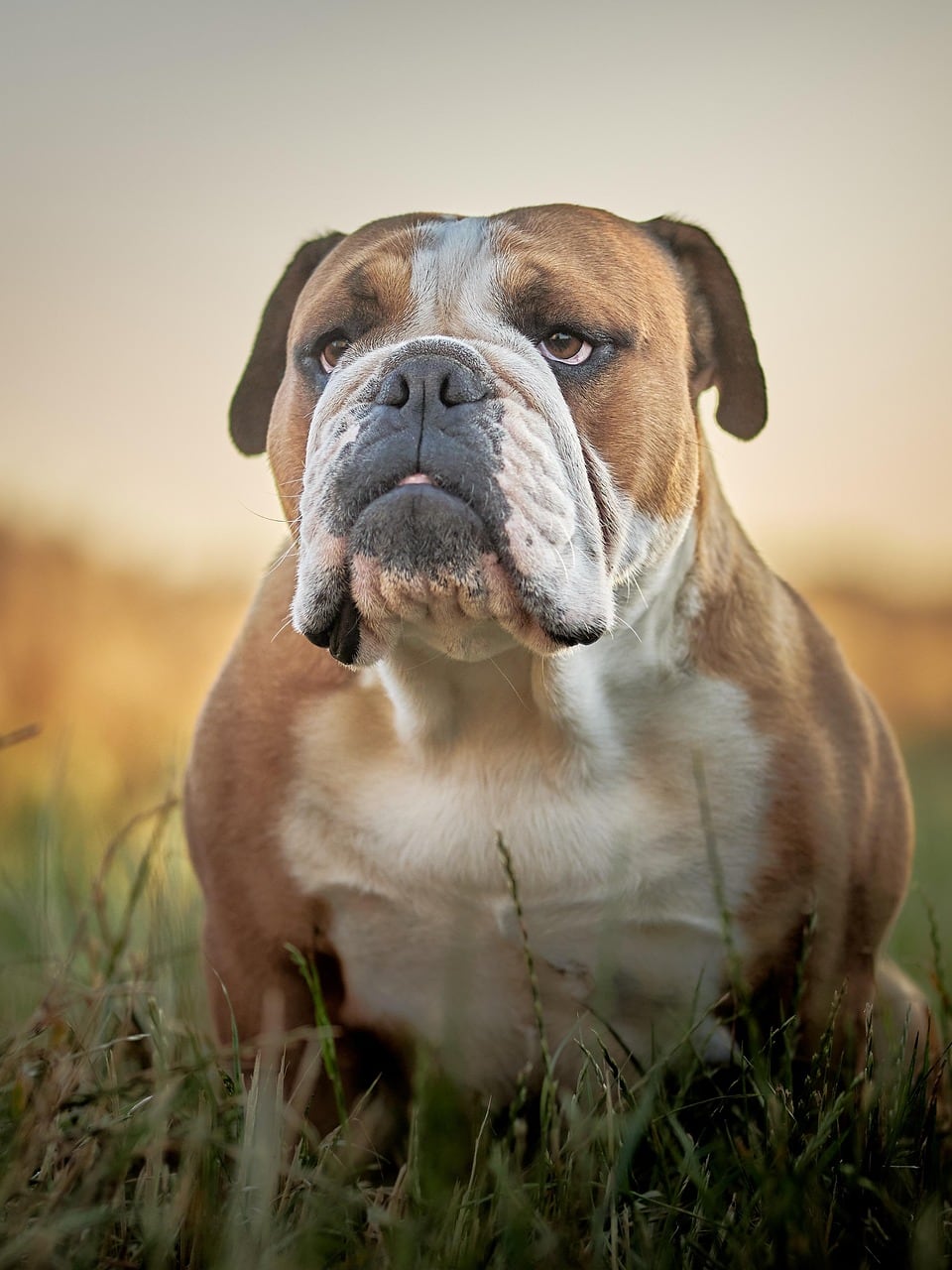
The English Bulldog is a medium-sized, extremely compact dog with a massive, broad and low build, which is more characteristic of the breed than the height at the withers. The male weighs around 25 kg, the female is slightly lighter, around 23 kg - the difference between the sexes is more in weight and finer frame than in other proportions.
Head and expression
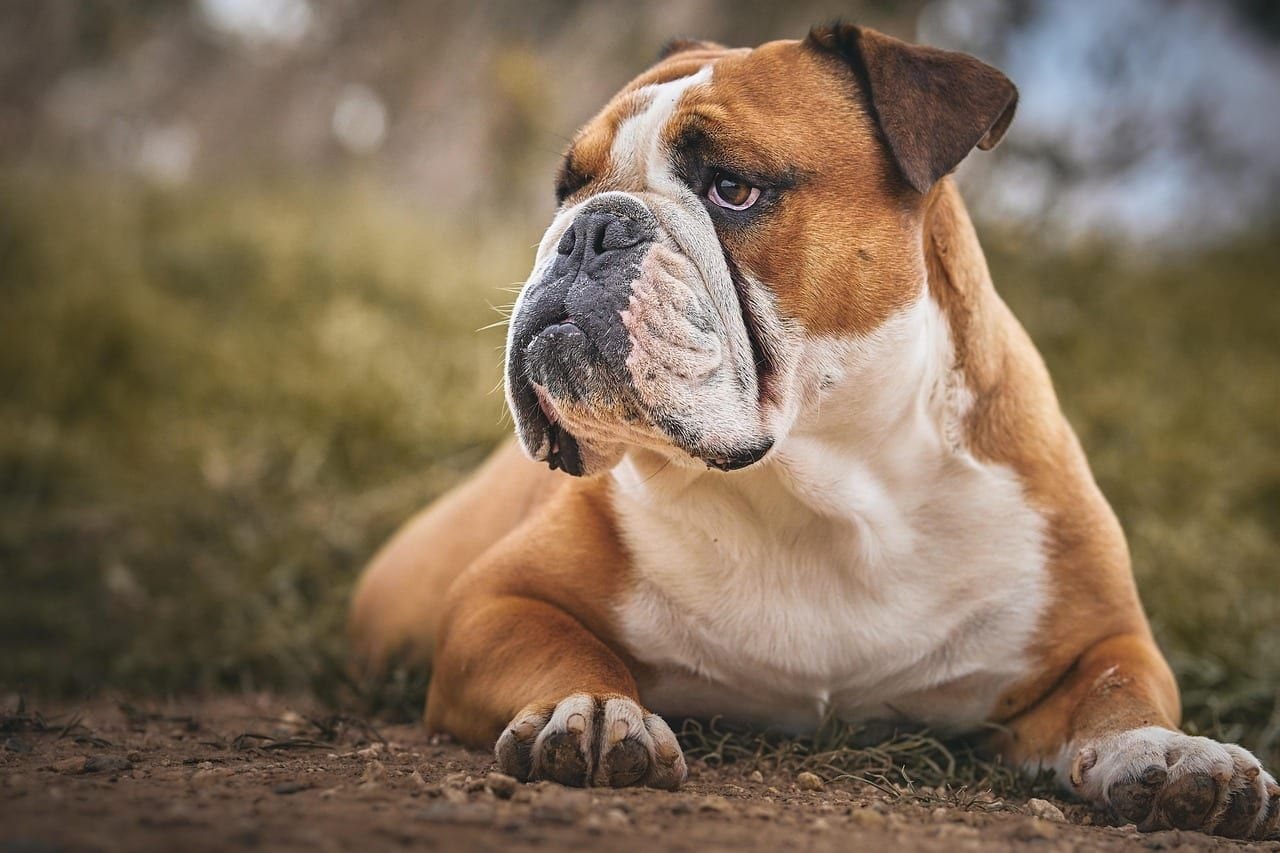
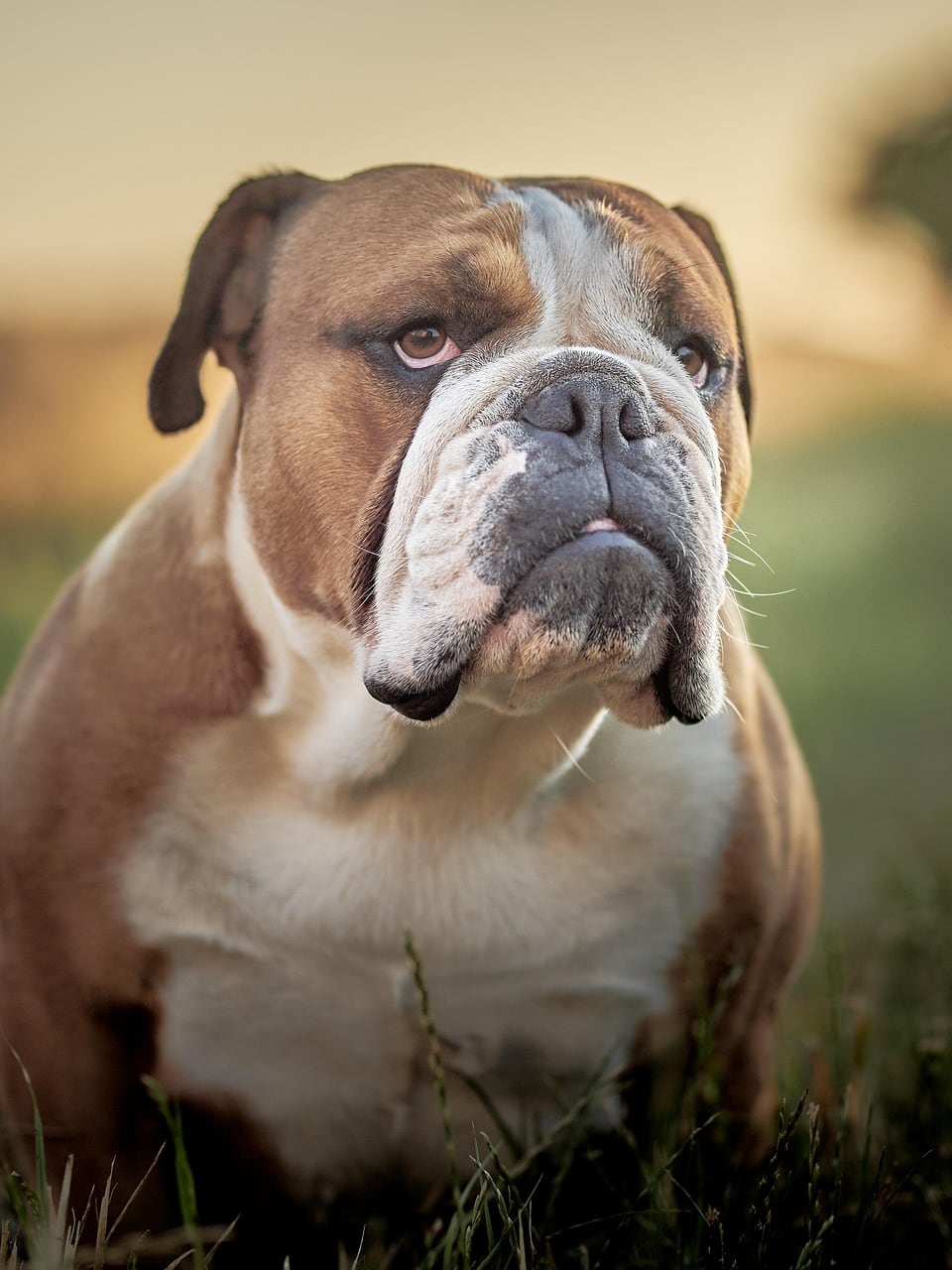
The typical feature is a large, massive head with pronounced wrinkles and a short, retracted muzzle, which gives the breed a characteristic flattened profile. The jaw is wide, the lower jaw slightly protrudes in front of the upper. The eyes are relatively small, dark and set low, the ears are thin, small and set high, folded into a typical shape known as a "pink ear".
Body and fur
The body is short and broad-chested, the back is typically arched towards the rump (so-called carp-like back), with a pronounced muscular neck and wide forelegs. The tail is set low, short and straight or spiral, never carried high above the level of the back. The coat is short, smooth and fine, lying close to the body and emphasizing the muscular, compact constitution. The color variations of the coat are described in a separate section dedicated to coloration.
English Bulldog Colors
The FCI standard for the English Bulldog defines specific permissible and impermissible coat colors and patterns, but the exact list is not part of the materials used for this article, and therefore we do not include it here in order not to risk inaccuracy. Those interested in breeding or showing are advised to check the current version of standard No. 149 directly with the FCI or ČMKU.
English Bulldog Personality
The English Bulldog is a calm and quiet companion with a significantly low energy level - he likes to sleep or sit near his family most of the day and is not particularly interested in wild games or long activities. Nevertheless, he is a dog that is strongly attached to his person, seeking contact and companionship, although he expresses it more through a quiet presence than exuberant enthusiasm.
Training this breed is one of the more demanding – it is not so much a lack of intelligence as a strong stubbornness and a mind of its own. The English bulldog remembers well what is worth it, but if the exercise does not have a clear meaning or reward for it, it can simply resist the decision. Therefore, it requires a patient, consistent and calm approach, loud or harsh methods usually do not work and rather lead to hardening.
His need for mental stimulation is low, so he doesn't mind a less stimulating, calm home regime. He only resorts to barking exceptionally - he doesn't bark loudly even in situations where other breeds would raise an alarm. He is therefore not very useful as a watchdog, but rather an apartment dog that enjoys the peace and comfort of home.
It is rather friendly and patient with children, which makes it often suitable for families with children. In relation to other dogs and cats, its reaction is rather neutral - it does not seek conflicts, but it does not particularly demand their company either. Overall, it is a very social breed, but its calm, sometimes stubborn nature makes it a better choice for owners who appreciate an undemanding, easy-going dog without great demands for exercise and intensive activities.
English bulldog and children
The English Bulldog is rated rather positively with children, thanks to its low barking rate and calm, not very active temperament, it acts as a non-conflict companion in a household with children. Its low need for exercise and mental stimulation means that it does not seek boisterous games and rather prefers peace and quiet near the family, which can suit both children and adults.
Nevertheless, it is necessary to take into account that this is a strong and robust dog, which with its weight and massive body can unintentionally pull down or crush a child during play - therefore, contact between small children and the dog should always take place under the supervision of an adult. Given the high level of training, it is advisable to focus on basic obedience and training of calm behavior from puppyhood, so that the dog can respect boundaries even in a busier environment that children naturally create.
What to watch out for
- Gradual and consistent socialization with sounds, movements and touches typical of children's behavior.
- Adult supervision whenever the dog comes into contact with young children, especially due to the breed's physical strength.
- Respecting the dog's rest - even a social dog needs its own quiet place where children will not disturb it.
- Due to the high rate of drooling, it is advisable to familiarize children with this symptom in advance so that coexistence can proceed without unnecessary conflicts.
English Bulldog and other dogs and pets
The English Bulldog does not have a strong hunting instinct - in the overview of characteristics it is listed as a dog that was not bred for hunting or working use, but exclusively as a social breed. This is also reflected in its coexistence with other animals in the household, where it tends to be rather calm and non-conflicting, although the reaction to a specific individual (dog, cat or other animal) may vary and depends on the socialization and experience of each dog.
Relationship with other dogs
In relation to other dogs, the English Bulldog is rated as neutral – it is not a breed that seeks conflict, but at the same time it cannot be counted on to automatically be enthusiastically attached to every canine companion. Low barking and an overall calm nature contribute to the fact that living with another dog in the household is usually uncomplicated, if gradual and calm introductions take place.
Relationship with cats and small animals
The relationship with cats is similarly neutral – the English bulldog has neither a distinctly negative nor a distinctly positive relationship with them. Thanks to the absence of a hunting instinct and low need for activity, cats and small animals in the household are not a source of stress in the form of chasing or hunting activity, as is the case with breeds with a strong hunting or hunting instinct. Even so, it is advisable to always ensure new coexistence gradually and under supervision, especially at the first contact.
Is the English Bulldog suitable for an apartment?
Yes, the English bulldog is suitable for an apartment - it is one of the breeds with low demands on movement and space, so a smaller apartment is fine for it. The peace and temperature of the household are more important than square meters.
Thanks to its low activity level and low need for mental stimulation, short walks and a calm daily routine are enough for it - it does not seek out long runs or demanding activities, on the contrary, they can cause it problems. In the apartment, it will appreciate a cooler place without drafts, where it can rest in peace, as it does not tolerate overheating well. In terms of volume, it is a quiet dog that does not bark unnecessarily, which is an advantage for living together in an apartment building. On the other hand, it is necessary to take into account a higher level of drooling and the fact that it leaves marks on the floor and furniture after doing household chores.
- Low need for exercise – short walks are enough
- Prefers a quiet, cooler environment without drafts
- It barks little, which makes it easier to live in an apartment building
- Higher levels of drooling require more frequent cleaning
How much exercise does it need?
The English Bulldog only needs short, leisurely walks – short walks spread throughout the day are sufficient, no long trips or intense runs. His body structure and respiratory system are not adapted to endurance exercise, so the amount of exercise he is comfortable with is significantly lower than most breeds of similar size.
As this is a brachycephalic breed, it is important to avoid exercising in hot and humid conditions – increased exertion in higher temperatures can lead to breathing difficulties. It is best to plan walks for cooler parts of the day and always have water and shade available.
Suitable activities
- Short walks at a slower pace, ideally several times a day
- Free play in the garden without the need for long runs
- Olfactory games and finding treats – an easy form of entertainment without physical exertion
- Quiet social outings among people, rather than sporting activities
Demanding dog sports such as agility or long endurance events are not suitable for this breed. Mental stimulation does not need to be intense – the English Bulldog will usually be satisfied with simple tasks and regular contact with the family, rather than demanding distraction games or training sequences.
Training and education
Training an English Bulldog is one of the more challenging disciplines, although the reason is not aggression or excessive temperament - rather, it is his notorious stubbornness and low motivation to perform anything on command. The combination of his strong will and gentle nature means that classic directive methods usually fail with him and only bring resistance or passivity.
Positively guided training based on treats and short, frequently repeated lessons works best. Long training blocks will quickly tire and bore a bulldog, while five-minute bursts several times a day can keep him focused and cooperative. Consistency is key – once a dog learns that a command can be avoided, he will try it again.
What motivates a bulldog?
- Food and treats – the most reliable motivational tool for this breed
- Closeness to a person and their praise, thanks to a strong bond with the family
- Peace and comfort – refuses demanding or physically exhausting exercises due to low endurance rather than reluctance
Socialization should be done gradually from puppyhood, although the English Bulldog, thanks to its low barking rate and generally calm nature, is not usually problematic in contact with people or other animals. Meeting different stimuli, environments and other dogs helps maintain its balanced and non-conflict nature even in adulthood.
Due to the low need for mental stimulation, the bulldog does not require complicated tasks or intense fetch games - it is satisfied with basic obedience and simple exercises. Training is manageable for beginners, but it pays to be patient and not be discouraged by the dog's initial stubbornness.
Hair care and hygiene
The English Bulldog's short coat requires minimal grooming - a weekly brushing with a rubber brush or smooth glove is enough to remove loose hair and promote blood circulation to the skin. The breed sheds moderately, so during the transitional seasons, it is advisable to increase the brushing frequency to two to three days a week.
The skin folds on the face and around the nose, typical of the Molossoid body type, deserve special attention. They should be checked regularly and wiped with a dry cloth or a damp cloth intended for dogs if necessary to prevent moisture and dirt from accumulating in them. Due to the high rate of drooling, it is also practical to have a cloth at hand to wipe the muzzle, especially after eating or drinking.
Bathing is not necessary often - it is sufficient in case of dirt or as needed, using a shampoo designed for dogs with sensitive skin.
Ears, eyes, teeth and claws
- It is advisable to check the ears once a week and, if they are dirty, clean them with a damp swab without going deep into the ear canal.
- It is enough to observe the eyes visually and carefully wipe away any discharge with a soft cloth.
- It is a good idea to brush your teeth several times a week with a special toothpaste for dogs, ideally in combination with dental aids that help reduce plaque formation.
- Claws need to be trimmed regularly, approximately every three to four weeks, depending on how quickly they naturally wear down.
Feeding
A high-quality complete food adapted to the age, size and low activity level is the basis of proper nutrition for the English Bulldog. Given the low exercise requirement and body structure, it is necessary to carefully monitor the energy content of the food to avoid a calorie surplus, which can easily lead to weight gain in this breed.
Being overweight puts an increased strain on the English Bulldog – its compact body and specific airway structure make it harder to handle extra pounds than slimmer breeds. Regular body condition checks, including visual and tactile assessment of the ribs and waist, should therefore be a natural part of the dog's care throughout its life.
What to focus on
- Choose food appropriate for the current life stage – puppy, adult dog, senior – and adjust the dosage according to the actual level of movement.
- Monitor body condition and, if there are signs of overweight, appropriately reduce the amount of food and treats in a timely manner.
- Divide your daily dose into several smaller portions, which can help prevent digestive problems.
- Ensure constant access to fresh water, especially after increased physical exertion or in warm weather.
It is advisable to consult a veterinarian about the specific diet settings, who will take into account the individual condition and any health predispositions of the specific individual.
How long does an English Bulldog live?
The English Bulldog lives an average of 8 to 10 years. This is a relatively short lifespan compared to most breeds of similar size, which is mainly due to its specific body structure and health predispositions that need to be taken into account when caring for it.
What affects the lifespan of an English Bulldog?
The specific age a dog will live to depends on a combination of innate predispositions and the care that the owner provides throughout his life.
- Genetics: The English Bulldog is a brachycephalic breed with a distinctive head and respiratory structure, which is due to targeted breeding and is also reflected in the overall lifespan.
- Physical fitness: Maintaining an appropriate weight is key for this breed – excess weight puts strain on joints and breathing and can significantly shorten the time a dog can stay active and healthy.
- Exercise: Although the English Bulldog is one of the dogs with a low need for activity, regular, appropriate exercise helps maintain fitness without overloading the body, especially in warm weather, when the Bulldog needs to be given extra attention.
- Prevention: Regular veterinary check-ups allow for early detection of any problems with breathing, skin or the musculoskeletal system and allow for adaptation of care so that the quality and length of life deteriorate as little as possible.
- Nutrition: A balanced diet appropriate to the dog's age and weight helps prevent overweight and related health complications.
- Health Predisposition: The breed may be predisposed to problems associated with a short head and narrowed airways, as well as some eye problems. These factors should be discussed with a veterinarian when choosing a puppy.
Who is the English Bulldog suitable for?
The English Bulldog is best suited to people looking for a calm, easy-going companion for their apartment and who don't mind a higher level of health care. It is a breed with low exercise and mental stimulation needs, spending most of the day resting and not requiring long walks or intense activity.
Who is the breed suitable for?
- For owners living in an apartment who don't mind having a dog around almost all the time - the bulldog has a medium need for company and likes to be in contact with the family.
- For people with a calmer lifestyle who are not looking for an active dog for long walks or sporting activities.
- For families with children, where the breed is considered rather suitable due to its balanced nature.
- For seniors who are comfortable with an undemanding exercise regimen and a sociable, but not overly temperamental dog.
- For owners who can handle lower grooming demands – short coat care is easy, although moderate shedding is expected.
Who is the breed not suitable for?
- For active owners looking for a dog for jogging, hiking or dog sports - the English Bulldog is not designed for this lifestyle.
- For complete beginners who do not take into account that training this breed requires patience and consistency - the training is very difficult.
- For households that do not tolerate drooling – the breed has a high rate of drooling.
- For owners expecting a dog suitable for extreme heat - the short muzzle and head structure make the bulldog a breed sensitive to high temperatures and demanding physical exertion.
- For those who do not want to deal with the increased veterinary costs associated with caring for a brachycephalic breed.
Interesting facts about the breed
In the FCI classification, the English Bulldog is included in the group of molossoid breeds (Molossian type section) under standard no. 149, and its country of origin is Great Britain - the breed's current form was formed in the British Isles.
The disproportion between the sexes is interesting: while an adult male weighs around 25 kg, the female is slightly lighter, weighing around 23 kg - a difference that is more pronounced in many other breeds.
Although this is a dog with a low activity level and low need for mental stimulation, training is among the more demanding - the English Bulldog is known for its stubbornness, which makes it a breed for more patient owners rather than complete beginners.
Professional studies on brachycephalic breeds, including the English Bulldog, repeatedly focus on its respiratory system and the structure of the facial skull - this breed is therefore often mentioned in connection with research on the so-called brachycephalic syndrome and in connection with eye diseases, which are addressed by veterinary clinics dealing with breeds with short muzzles.
English Bulldog Health
The English Bulldog is a short-faced (brachycephalic) breed and its health profile is closely linked to the characteristic structure of the head, skin folds and overall body constitution. It is the combination of a shortened muzzle, massive head and compact body that is responsible for most of the health issues that need to be monitored in this breed. A lifespan of 8–10 years is among the lower values for dogs of this size and professional sources associate it with the brachycephalic structure. High levels of drooling are common in the breed and are related to the anatomy of the muzzle and lips; it is not a known manifestation of the disease. The following sections summarize the areas to which the professional literature on the English Bulldog pays the most attention.
Breathing and thermoregulation
The shortened skull and narrowed airways in brachycephalic breeds are associated with a set of problems known as brachycephalic obstructive airway syndrome (BOAS). In the English Bulldog, the literature indicates an increased predisposition to more difficult breathing, noisy breathing, and reduced tolerance to heat and exercise. For this reason, the breed has a lower tolerance to high temperatures and intense exercise, which also corresponds to its low natural need for activity.
Skin folds
The prominent folds of skin on the head and tail area require regular inspection as they can trap moisture and dirt. Expert sources describe breeds with similar build as being more prone to skin irritation in these folds if not kept dry and clean.
Spine and musculoskeletal system
The English Bulldog's compact body and specific tail shape are associated with vertebral deformities, which are described as being more common in the breed than in the general dog population. Scientific studies focusing on brachycephalic breeds mention these anatomical peculiarities in connection with possible motor or neurological manifestations.
Eyes
Research on eye diseases in dogs places the English Bulldog among the breeds at increased risk of painful eye problems related to the shape and position of the eyes and surrounding tissues. Regular eye examinations are therefore recommended for this breed.
What to look for when choosing a puppy
- Monitor the breathing of the puppy and parents at rest and under mild exertion - excessive snoring or rapid breathing may signal narrowed airways.
- Ask the breeder about the parents' health history, especially in the areas of the respiratory tract, eyes, and skin.
- Check the condition of the skin folds and the presence of any irritation.
- Pay attention to the shape and carriage of the tail, and possibly seek advice on possible vertebral abnormalities.
- Prefer breeders who actively select breeding individuals with regard to freer breathing and healthier head anatomy.
Known predispositions
The breed is described to have an increased predisposition to:
- to brachycephalic obstructive airway syndrome (BOAS), which affects short-nosed breeds including the English bulldog.
- to hip dysplasia.
- to elbow dysplasia.
- to patellar luxation (dislocation of the kneecap).
- to skin inflammation in skin folds (so-called skin fold dermatitis).
- to prolapse of the third eyelid gland, known as cherry eye.
- to a difficult birth often requiring a cesarean section.
- to difficult thermoregulation and overheating in warm environments due to the short muzzle.
- to inflammation of the external ear canal (otitis externa).
Discussed risks
The breed is described to have an increased predisposition to:
- to intervertebral disc disease related to congenital vertebral malformations of the spine.
This overview is for informational purposes only and does not replace the examination or advice of a veterinarian.
What to buy for an English Bulldog
A practical basis that is suitable for this breed:
- Car seats for dogs – Car seats and safety equipment for transporting a dog by car.
- Toys – Dog toys – fetching, chewing and interactive.
- Cosmetics – Shampoos, conditioners and hair care products.
- Bowls – Feed and water bowls, anti-swallow bowls and stands.
- Collars – Dog collars – leather, textile and semi-tight.
- Beds – Beds and mattresses for dogs of all sizes.
- Leashes – Leashes, switch leashes and tracking lines.
Useful guides
Practical tips that are useful when caring for a dog:
Frequently asked questions
Is the English Bulldog suitable for an apartment?
Yes, the English Bulldog is very suitable for apartment living due to its low activity level and low need for exercise. It can get by with short walks and a rest period, making it an ideal dog for smaller spaces.
How much does an English bulldog weigh?
The male weighs around 25 kg, the female around 23 kg. This makes it a compact but very strongly built medium-sized breed.
How long does an English bulldog live?
The average lifespan of an English Bulldog is 8-10 years, which is a shorter lifespan than is typical for this body type.
Why does an English bulldog snore so much and breathe heavily?
This is a result of its short head and shortened nasal tunnel, i.e. brachycephalic skull structure. The breed may be predisposed to respiratory problems associated with this type of structure, as described by professional sources focused on brachycephalic syndrome.
Can an English Bulldog tolerate heat and physical exertion?
No, due to its short head and restricted breathing, it does not tolerate hot weather and increased physical exertion well. In the summer, it is necessary to avoid walks in the afternoon and not burden it with prolonged exercise.
Is the English Bulldog good with children?
Rather, the English Bulldog is calm and tolerant with children. Its low barking rate and sociable nature make it a good house dog, but supervision is still appropriate with small children.
Is English Bulldog training difficult?
Yes, the training requirements for this breed are high, as they tend to be headstrong and less motivated to obey. They require a patient, consistent approach and positive motivation.
Does an English Bulldog drool a lot?
Yes, drooling is high in this breed, which is related to the shape of the muzzle and looser lips. It is one of the typical characteristics that the owner must take into account.
Do English Bulldogs have eye problems?
The breed may be at increased risk for painful eye problems, according to research from the UK's RVC, and this is a topic that should be discussed with the breeder and veterinarian before purchasing a puppy.
Is an English Bulldog good for beginners?
The suitability for beginners is neutral for this breed, rather it depends on the owner's specific experience with training and health care. The combination of demanding training and health specifics means that a novice should be well informed in advance.
Is the English Bulldog suitable for seniors?
Yes, due to their low activity level and low need for mental stimulation, the English Bulldog is more suitable for seniors. They do not require long walks or intense games, just quiet company is enough.
Does the English bulldog bark a lot?
This breed sheds moderately despite its short coat. Regular brushing helps keep the coat and skin in good condition.
Resources and further information
- FCI Standard No. 149 – Bulldog – Fédération Cynologique Internationale
- Expert resource - ncbi.nlm.nih.gov
- Expert source – nature.com
- Expert Resource - sciencedirect.com
- Expert resource - todaysveterinarypractice.com
- Expert resource – rvc.ac.uk
Professional cooperation
This breed overview was created in cooperation with the Veterinary Clinic VYVET sro and MVDr. Adam Hylák .