
Published 9. 9. 2026
The Boxer (Deutscher Boxer) is a large breed originating from Germany, classified in FCI group 2 among the molossoid types of dogs (standard no. 144). Males measure 57–63 cm at the withers, females 53–59 cm, and usually live to be 10–12 years old. The short coat requires minimal care, shedding is moderate, and so is the tendency to drool.
In terms of temperament, this is an energetic, alert dog with a strong bond with its family – its need for company and mental stimulation is high, as is its overall activity. It is rather friendly towards children, it can handle training with medium difficulty, but it will appreciate more experienced leadership. Due to its temperament and demands for exercise, it is more suitable for active owners than for seniors or complete beginners.
Professionally consulted
The content was created in cooperation with the veterinary clinic Veterinární klinika VYVET sro and MVDr. Adam Hylák.
Quick overview
What is a Boxer like?
The Boxer is a large molossoid breed of German origin, growing to 57–63 cm at the withers for males and 53–59 cm at the withers for females, with a short coat and a lifespan of around 10–12 years. It is a strong, muscular dog with high energy and an equally high need for mental stimulation – it is not a couch potato, but a companion for an active program. It is sociable in nature, family-oriented and has a rather positive attitude towards children, which makes it a popular choice for households with children who can handle its temperament.
It can handle training at a medium level – it needs consistency and plenty of stimulation, otherwise it will find its own entertainment. Hair care is undemanding, shedding and drooling are at a medium level. It is rather suitable for an apartment, it needs space and exercise more than four walls. It is not an ideal choice for complete beginners or seniors, but on the contrary, it offers active owners a loyal and energetic companion.
Origin and history of the Boxer
The Boxer was developed in Germany in the late 19th century from the Bullenbeisser, an older German hound and hunting dog of the Molossoid type, used to hunt large game such as deer, boar and bear. The Bullenbeisser was crossed with other breeds, including bulldogs imported from England, which gave the breed greater compactness, jaw strength and endurance. The aim of this crossing was to produce a dog capable of holding and immobilizing game until the hunter arrived, and later the breed was also used as a farm, guard and working dog.
At the turn of the 19th and 20th centuries, the first breeding efforts to stabilize the type began to take shape in Munich, which led to the establishment of clubs striving for a uniform standard. The Boxer gradually moved away from its hunting past and found application as a versatile working dog - it was used in the police, the army and as a guide and companion. It was its versatility and easy handling that made it a popular assistant in many areas of canine practice.
In the 20th century, the Boxer spread far beyond Germany, particularly to the United States and Great Britain, where it became widely popular as a family and companion dog. The breed's German name, Deutscher Boxer, still refers to its origins, even though it is now bred and developed virtually all over the world.
Appearance and size
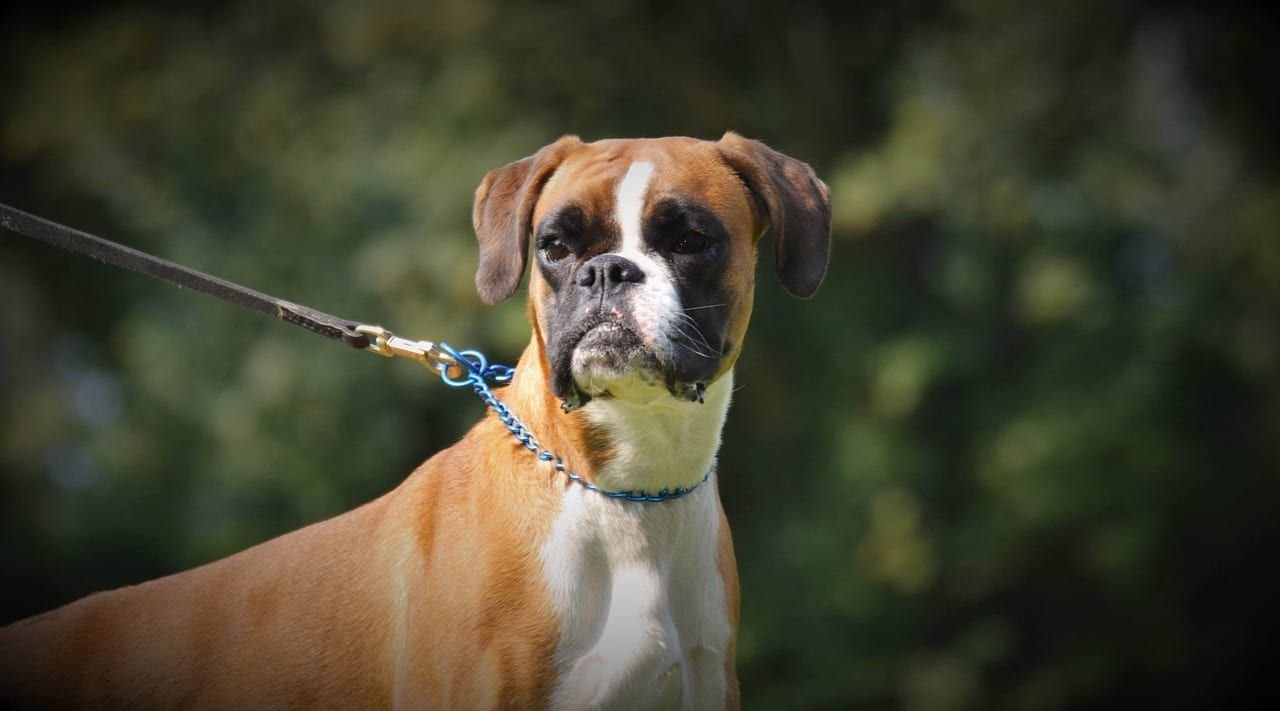
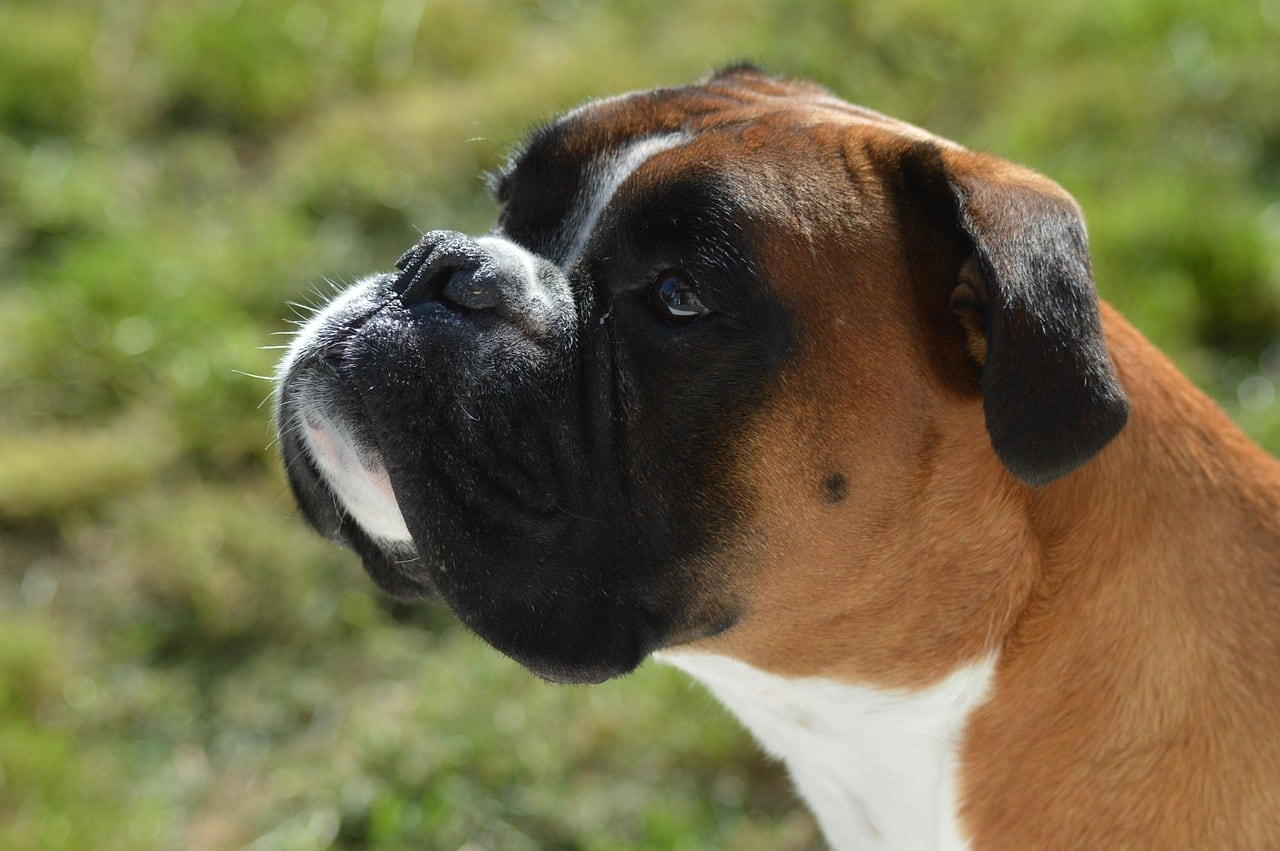
The Boxer is a large, muscular dog with a square body and a distinctive head, which is a characteristic feature of the breed. The male reaches 57–63 cm at the withers, the female is smaller with a height of 53–59 cm – the difference between the sexes is so noticeable at first glance, the female giving an overall more slender and delicate impression.
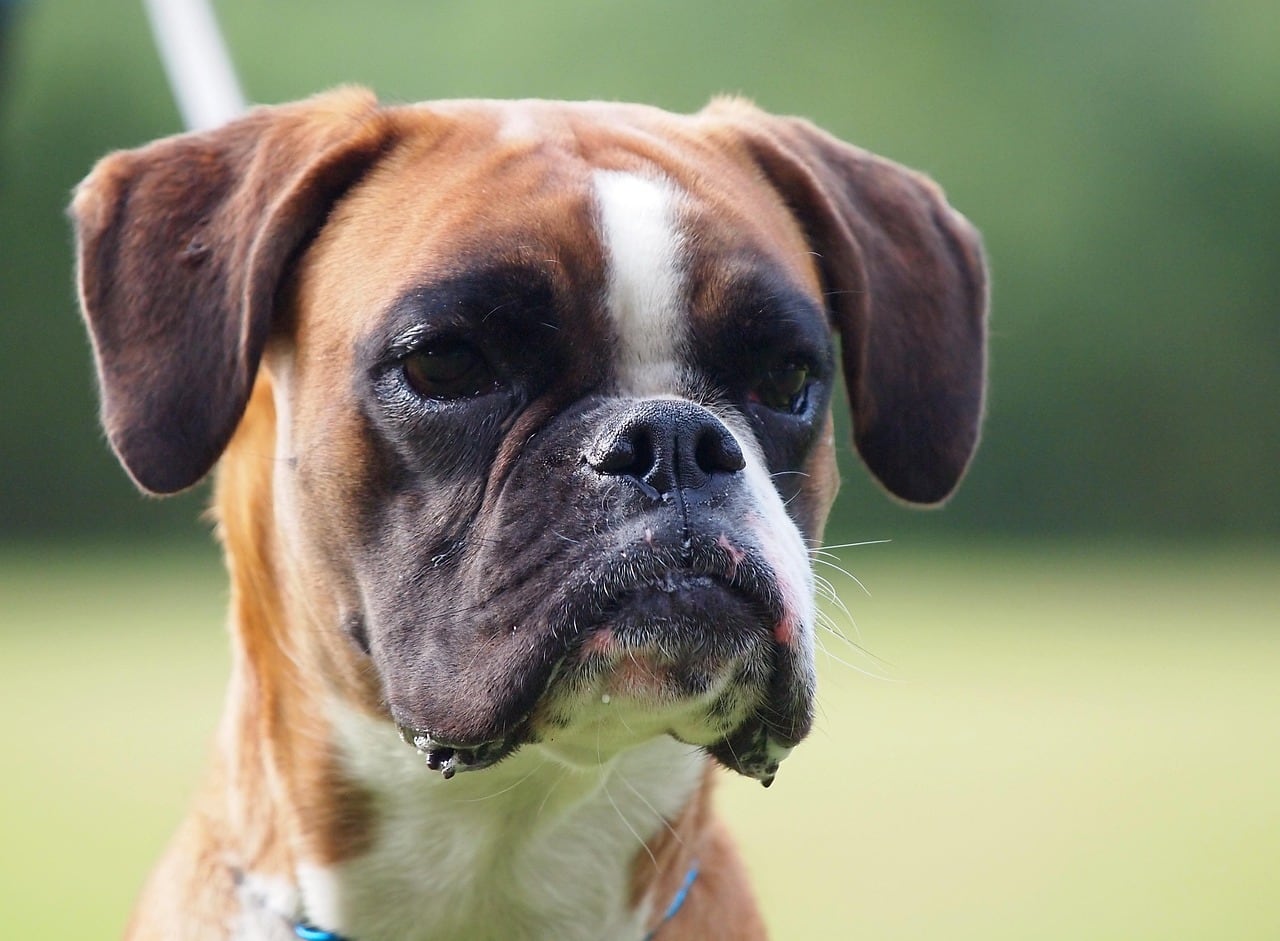
The head is square, with a pronounced, wide muzzle and an overshot bite, which is typical of a boxer. The muzzle is black and wide, the eyes are dark, large and lively, with an alert and intelligent expression. The ears are set high, in untrained individuals hanging loosely and lying close to the cheeks.
The body is compact, with a deep chest and a straight, firm topline. The back is short and muscular, the belly slightly tucked up. The tail is set high and carried horizontally or slightly above the line of the back.
The coat is short, smooth and close-fitting, stiff and shiny to the touch. It requires little care, regular brushing is sufficient, and the breed sheds moderately. The color variants and their standard combinations are described in a separate section dedicated to color.
Typical signs
- Square head with overshot mouth and prominent muzzle
- Muscular, compact body with a deep chest
- High-set tail
- Short, close-fitting coat that is easy to care for
- A noticeable difference in height between a male and a female
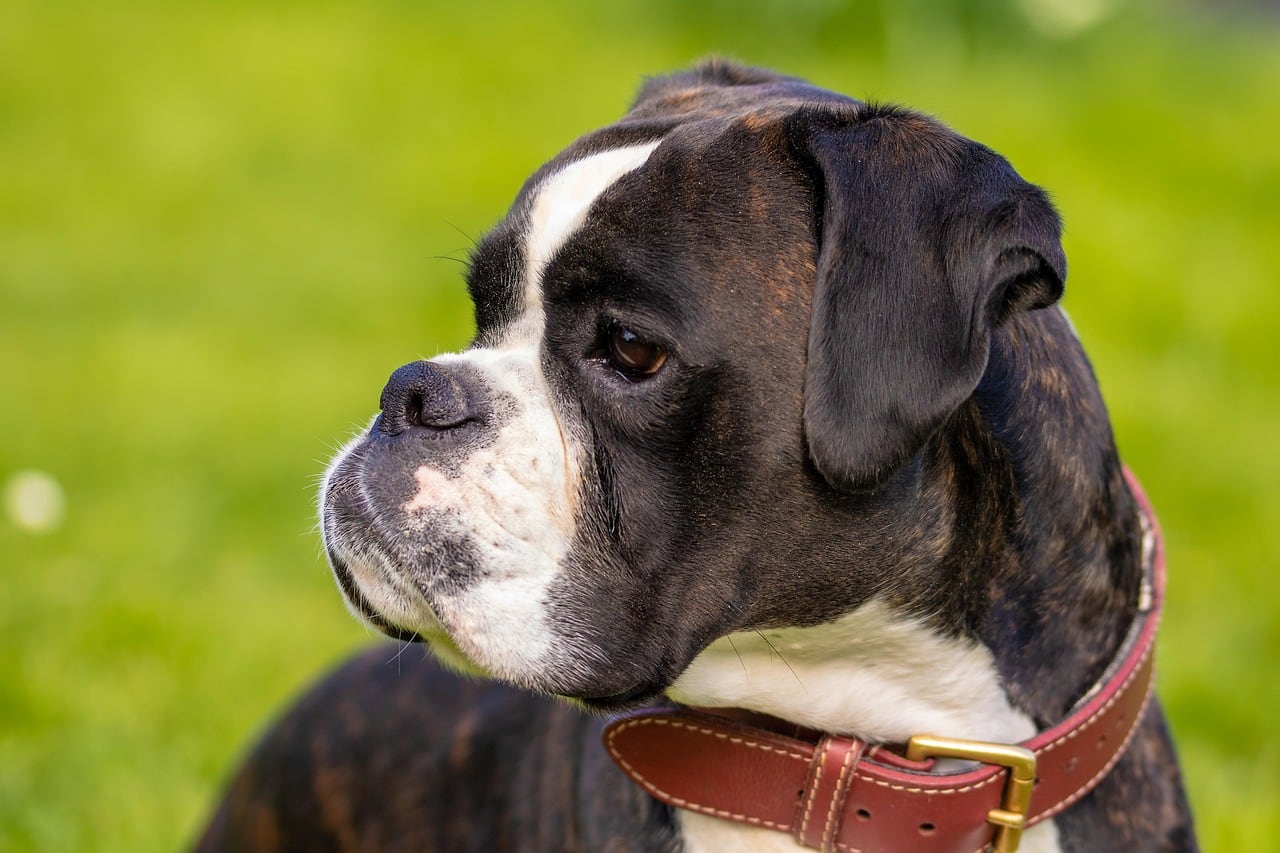
Boxer Colors
The FCI standard for the boxer defines a precise list of recognized coat colors and their markings, however, the specific list of color variants and patterns is subject to the current wording of FCI standard No. 144 - we recommend checking it directly in the valid FCI/ČMKU document before choosing a puppy by color.
The nature of the Boxer
The Boxer is a lively, energetic dog with a strong bond with its owner and family, to whom it behaves devotedly and seeks their company - long-term isolation does not suit it. It combines high activity with keen intelligence, thanks to which it quickly understands what is wanted of it, but at the same time it can go its own way if the given task does not make sense to it or it does not enjoy it.
It can handle training at a medium level - it is not a dog that would obey automatically, but rather needs a motivated and consistent leader who can keep its attention and offer it interesting tasks. It does not tolerate boredom and lack of stimulation well, and this is manifested by increased activity in the form of disobedience or destructive behavior.
The Boxer is alert to strangers and can let them know that something is going on without being an overly barking dog - he is more to the point and in moderation. This alertness, combined with physical strength and courage, makes him a good guardian of home and family, without being aggressive.
Within the family, the Boxer is a sociable and playful dog that builds a good relationship with children - he is patient with them and likes to move and play with them. His attitude towards cats and other animals in the household varies depending on specific experience and socialization, there is no universal rule here.
It is typical for him to frequently seek contact with people, need physical and mental exertion, and a certain amount of stubbornness when trying to assert his own opinion. An owner who can offer him enough exercise, mental stimulation, and clear rules will find in him a balanced, loyal, and energetic companion.
Boxer and children
The Boxer is rather suitable for children, but his high energy and temperament require thoughtful involvement of the whole family in his upbringing and constant supervision by an adult. He is a strong, lively dog with a strong need for exercise and mental stimulation - without sufficient energy expenditure, he can be rough in play and in ordinary contact with small children, not out of ill will, but from an excess of strength and temperament.
The relationship of a Boxer to children depends significantly on the quality of socialization at an early age. A dog that learns different situations, sounds, strangers and children's behavior from a puppy will more easily adopt calmer and more considerate reactions. Education should be carried out consistently and with clear rules - given the medium difficulty of training, even a less experienced owner can master obedience, if he trains regularly and uncompromisingly insists on basic commands.
What to watch out for
- A Boxer is a large and strong dog, so even with good intentions, he can accidentally knock a small child over or pull them down while playing.
- Interactions between a dog and a child should always be supervised by an adult, especially in the first few years of living together.
- Regular exercise and sufficient mental stress help keep the dog balanced and in contact with children.
- Children should be taught to respect a dog's space and not abuse its patience.
Older children who can recognize dog signals and treat the dog with respect are usually easier to live with than toddlers. However, the breed's social nature and need to be part of the family make it an active companion for children who can exercise and play with it.
Boxer and other dogs and pets
The Boxer usually gets along well with other dogs, especially if he grows up in their company from puppyhood or is gradually accustomed to their presence. This is a breed with a strong bond with the pack and the human family, so living with another dog in the household suits him and often appreciates the company of another four-legged companion, especially due to his high need for contact and companionship.
The relationship with cats and small animals should be assessed individually. The Boxer was originally used as a versatile working dog - for hunting and restraining larger game as well as working with herds - which in some individuals is manifested by a stronger interest in the movement of smaller creatures. If he grows up with a cat from an early age, he can get used to it and respect it as part of the household. However, he may have an innate chasing tendency towards strange cats or small animals outside, so it is not recommended to leave him unattended in situations where he could chase a small animal.
Recommendations for coexistence
- Introduce your dog to other dogs and cats gradually and under control, ideally from puppyhood.
- For an adult boxer with no experience with cats, careful and patient socialization is appropriate.
- Outdoors, outside the home environment, be aware of possible interest in small animals and keep your dog on a leash.
Is the Boxer suitable for an apartment?
Keeping a boxer in an apartment is possible, but it is definitely not a carefree choice - it all depends on how much exercise and space the owner can provide him outside the home. The boxer is a large, muscular breed with a high need for activity, and an apartment without sufficiently long walks and physical exercise quickly means frustration for him, which can manifest itself in restlessness or destructive behavior.
If the owner lives an active life and is willing to spend several hours a day outdoors, a spacious apartment may not be a problem - the Boxer can curl up and rest at home after using up his energy. The problem arises when the dog is alone in a small space during the day without the opportunity to run and without the mental stimulation that this breed also needs in great quantities.
It is also important to consider the barking, which is at a medium level in a boxer - in a panel house with thin walls, it can become a source of conflict with neighbors, especially if the dog is often left alone and makes itself known loudly.
- The need for regular and vigorous exercise outside the apartment, ideally several times a day.
- Enough mental stimulation – games, training, olfactory activities to compensate for the lack of space.
- Consideration of acoustic insulation of the apartment due to the moderate tendency to bark.
- A house with a garden or an apartment with immediate access to the outside is more suitable if the owner does not have time for long walks.
How much exercise does it need?
The Boxer is a breed with high demands for exercise - he needs at least an hour or two of active exercise per day, ideally divided into several shorter walks supplemented with free movement without a leash. A casual walk around the neighborhood is not enough for him, he needs real physical exertion.
Suitable activities and sports
Thanks to their athletic build and energy, the boxer is suitable for a variety of physical activities:
- running and jogging with the owner (at a reasonable pace and taking into account the weather)
- agility and other agility sports
- canicross and bike escort (except in extreme heat)
- fetch games and various forms of obedience training
- swimming as a gentler form of exercise for the joints
In addition to physical exercise, the Boxer also needs plenty of mental stimulation - this is a bright breed that gets bored easily if it only gets empty exercise without tasks. Training elements, search games, work with the smell or practicing new commands, ideally in the form of shorter but regular training blocks, are proven.
Due to the head structure with a shorter muzzle, typical of this type of molossoid breed, the boxer does not tolerate intense exercise in high temperatures and humid air. On hot days, it is advisable to move more demanding activities to cooler parts of the day and during longer exercise, monitor whether the dog is panting excessively or showing signs of overheating.
Training and education
The Boxer is an intelligent and docile dog, but his temperament and strong will require patience and consistency from the owner - even a less experienced person can handle training, if they are willing to devote time and energy to it. He responds best to positive motivation and clearly set rules, while harsh or mechanical methods usually lead to stubbornness and refusal to cooperate.
What motivates a boxer?
This dog is driven forward primarily by movement, play and contact with humans. Praise, voice and physical rewards work better for the Boxer than strict drill - the dog likes to engage in activities that he perceives as a joint activity, not as an isolated command.
- Short, energetic training blocks work better than long, monotonous lessons.
- Alternating obedience and play will keep his attention longer.
- Praise and physical contact tend to be more effective motivators than treats alone.
Socialization and specifics
Due to their high need for companionship and mental stimulation, it is important to start socializing them as puppies - introducing them to different people, environments and other dogs, so that they build confidence and do not channel their energy into unwanted behaviors such as excessive jumping or pulling on the leash. Due to their alertness and loud behavior, basic training to stay calm on command is also useful, as the Boxer shows his reactions clearly and without inhibitions.
A regular, consistent approach and plenty of exercise before training helps to keep his attention – a tired Boxer will concentrate better than one with excess energy. Training should continue into adulthood, as a lack of mental stimulation often results in restlessness or destructive behavior in this breed.
Hair care and hygiene
The boxer's short coat requires minimal care - just brush it once a week with a rubber-tipped brush or a special glove, which will remove dead hair and promote a natural shine. Due to the moderate shedding rate, it is advisable to increase brushing to twice a week in the fall and spring.
Bathing is not necessary often - it is sufficient only in case of visible dirt or an unpleasant odor, ideally with a use of cosmetics intended for dogs with short hair, so as not to disrupt the natural protective layer of the skin.
Ears, eyes and teeth
The Boxer's ears are well ventilated due to their shape, but it is still a good idea to check them once a week and wipe them with a damp cloth if necessary to prevent a build-up of grease or dirt. It is advisable to monitor the eyes regularly and carefully wipe any discharge with a soft cloth. Dental care will be facilitated by regular cleaning with dog toothpaste or dental treats, which help reduce plaque formation.
Claws and skin folds
The nails should be trimmed as needed, usually every three to four weeks, unless they naturally wear down from running on harder surfaces. The Boxer does not have the prominent skin folds of brachycephalic breeds with deformed heads, but it is still worth taking a moment to dry the area around the muzzle after bathing or getting wet, where moisture can accumulate.
Feeding
The Boxer is a large and muscular breed with a high level of activity, so it needs a high-quality complete food that covers its energy needs without unnecessary overeating. The choice of food should always correspond to the age, size and level of movement of a particular individual - a puppy, an active adult dog and an older individual with a calmer regime have different nutritional needs.
Adaptation to life stage and activity
For puppies, it is advisable to choose a food designed for growing large breed dogs, which supports healthy bone and joint development without too rapid weight gain. An adult Boxer who is physically active will appreciate a food with sufficient quality protein and energy, while a less active or older individual should switch to a lower energy formula to prevent excessive weight gain.
Physical fitness check
Since the boxer is a robust dog with strong muscles, it may be difficult to recognize if he is overweight at first glance - therefore, it is advisable to regularly check his condition by touch (the ribs should be easily palpable, but not visible) and, if necessary, adjust the amount of food according to his current weight and level of movement.
- Choose food based on the dog's age, breed size, and actual level of activity, not just based on their taste.
- Regularly monitor your body condition and weight to prevent joint overload caused by excess weight.
- When changing food, proceed gradually to minimize the risk of digestive problems.
- Consult your veterinarian for the amount of food to be fed or follow the manufacturer's recommendations based on the dog's weight and activity level.
How long does a Boxer live?
The average Boxer lives 10 to 12 years, which is in line with the life expectancy of large breeds of similar constitution. The specific age a dog reaches is always influenced by a combination of genetic predisposition, diet and quality of care throughout its life.
What affects lifespan?
In a large, muscular and physically active breed like the Boxer, several factors play a role:
- Genetics: The puppy's background and the health history of the parents significantly influence the predispositions with which the dog enters life.
- Physical fitness: A boxer is built to move, and maintaining a lean, muscular physique without excess weight reduces the strain on the joints, heart, and other organs.
- Exercise: Due to the high activity required by the breed, it needs regular and sufficiently demanding exercise - its lack can manifest itself both physically and mentally.
- Preventive veterinary care: regular check-ups, vaccinations and early detection of potential health problems are among the basic prerequisites for longevity.
- Nutrition: a quality diet appropriate for age, weight and level of activity helps maintain a healthy body weight and supports overall vitality.
- Health predisposition: the breed may have an increased predisposition to certain health problems, so it is advisable to monitor the dog's health over the long term and consult with a veterinarian.
Who is the Boxer suitable for?
The Boxer is best suited to families and individuals who can provide him with enough exercise and who want to spend a lot of time with him - he is a very sociable dog that does not tolerate long-term loneliness. Given his high need for activity and mental stimulation, he will appreciate an owner who is willing to exercise regularly, go for longer walks or engage in some kind of dog activity.
Who is the breed suitable for?
- For active individuals or families who spend a lot of time outdoors and are interested in regular exercise with their dog.
- For households with children – the boxer is rather friendly towards children and tends to get along well with them.
- For owners who want to involve their dog in training and offer it mental stimulation, as the need for stimulation is high in this breed.
- For people looking for a dog with a more sociable nature who likes to participate in family activities.
- For households where no one will object to the moderate amount of drooling and shedding that is typical for the breed.
Who is the breed not suitable for?
- For seniors or people with limited physical fitness who may not be able to handle its energy and movement demands.
- For owners who expect their dog to be left alone most of the day - the high need for company does not allow this.
- For complete beginners with no training experience who don't have time to devote to their dog consistently from puppyhood.
- For households where the dog is supposed to spend time mainly in the apartment without the possibility of regular walks and exercise.
Interesting facts about the breed
The German name of the breed, Deutscher Boxer, refers to its origin in Germany, where the standard kept by the FCI in group 2 among molossoid types of dogs (section Molossian type, standard no. 144) also comes from. The Boxer is a large breed - males grow to 57–63 cm, females 53–59 cm.
Despite its short coat, which is easy to care for and does not require extensive grooming, the Boxer is a breed with a moderate tendency to shed and drool. It is a dog with a high need for exercise and mental stimulation, making it a companion for active owners rather than for a quiet home regime.
Among other representatives of FCI Group 2, we can also find other molossoid breeds, such as the Saint Bernard, Rottweiler or Dogue de Bordeaux - the boxer differs from them mainly in its shorter coat and significantly higher need for activity.
Boxer Health
The Boxer usually lives 10 to 12 years with good care. It is a large, muscular and very active breed, in which the main health aspects are adequate exercise, weight control and care appropriate to its body structure. Short hair means minimal grooming requirements, but at the same time less protection against cold and sun. Due to its classification as a molossoid type, the structure of the head and jaw differs from breeds with a long snout, which can also be reflected in sensitivity to temperature extremes. Responsible breeding and regular veterinary examinations are therefore as important for this breed as for other large dogs.
Musculoskeletal system and joints
As with most large and physically demanding breeds, the boxer's joints and ligaments are put under more strain during growth and high exercise than in smaller dogs. It is advisable to gradually build fitness, avoid overexertion during the growth period and maintain a lean body weight, which reduces the strain on the musculoskeletal system in the long term.
Breathing and body structure
The Boxer is a molossoid breed with a shorter and broader head, which can make some individuals more sensitive to high temperatures or humidity and less tolerant of prolonged exercise in the heat. Therefore, increased caution during physical activity in hot weather and ensuring plenty of shade and water are essential care requirements.
Fur and skin
The short coat is easy to groom and shedding remains moderate, but it is still worth monitoring the condition of the skin, as shorter hair provides less protection against abrasions, cold and sunlight.
What to look for when choosing a puppy
- Be interested in the health and age of the parents, as well as their physical fitness and overall constitution.
- Choose breeders who can document care for puppies from birth, including socialization and veterinary checks.
- Observe whether the puppy appears lively, breathing calmly and without excessive effort even after mild exertion.
- Ask about the breeder's experience with the line in question, in terms of musculoskeletal system and heat tolerance.
- Take your time with your selection and give preference to breeders who provide support and information even after the puppy is sold.
Known predispositions
The breed is described to have an increased predisposition to:
- to cardiac arrhythmia of the ARVC type (arrhythmogenic cardiomyopathy in boxers).
- to subaortic stenosis.
- to hip dysplasia.
- to mast cell tumors (mastocytoma).
- to gastric dilatation and volvulus (GDV).
- to upper airway obstruction in connection with brachycephalic head structure.
- to hypothyroidism.
- to degenerative myelopathy.
This overview is for informational purposes only and does not replace the examination or recommendations of a veterinarian.
What to buy for a Boxer
Practical basis that is suitable for this breed:
- Toys – Dog toys – fetching, chewing and interactive.
- Cosmetics – Shampoos, conditioners and hair care products.
- Bowls – Feed and water bowls, anti-swallow bowls and stands.
- Collars – Dog collars – leather, textile and semi-tight.
- Beds – Beds and mattresses for dogs of all sizes.
- Leashes – Leashes, switch leashes and tracking lines.
Useful guides
Practical tips that are useful when caring for a dog:
Frequently asked questions
Is a boxer suitable for an apartment?
The Boxer is suitable for an apartment only if it gets enough exercise outside, it is not a typical apartment dog. It needs a high dose of physical and mental activity, so an apartment without regular long walks is not suitable for it.
How is a boxer suitable for children?
The Boxer is rather suitable for children and tends to be very sociable and attached to the family. Due to his high need for company, he likes to play with children, but even so, with a large and temperamental dog, adult supervision is appropriate during play.
How much does an adult boxer weigh and how big is it?
The FCI standard does not specify exact weights, but the height at the withers is 57–63 cm for males and 53–59 cm for females. This is a large, muscular breed with a distinctive body structure.
How long does a boxer live?
The average lifespan of a Boxer is between 10 and 12 years. The specific lifespan depends on the genetics, care, and lifestyle of the individual.
How much exercise does a boxer need?
The Boxer has a high level of activity and needs regular, longer and more intense exercise every day. Short walks are not enough for him - he will appreciate running, games and activities that engage his mind.
Line boxer a lot?
The Boxer sheds moderately, but due to its short coat, grooming is usually less demanding than long-haired breeds. Regular brushing is sufficient for basic grooming.
Is Boxer suitable for beginners?
The suitability of the Boxer for beginners is rather neutral - it is a strong, temperamental dog with medium training requirements. New owners should expect consistent leadership and plenty of time for socialization and activity.
Why does a boxer drool a lot?
Drooling in the Boxer is moderate and is related to his short muzzle and lip structure, which are typical of the Molossoid breed type. It is not an extreme trait like some other mastiff breeds, but a certain amount of drooling is to be expected.
Why is a boxer called a boxer and what was he originally bred for?
The German Boxer (Deutscher Boxer) was bred in Germany as a versatile working and guard dog, strong and courageous. Its body structure and temperament correspond to its historical use in work requiring strength and determination.
Is the boxer prone to health problems associated with a short muzzle?
As a breed with a shorter muzzle, the Boxer may be more prone to respiratory problems in some individuals, especially in warmer temperatures or when under heavy strain. It is therefore advisable to avoid strenuous exercise in the heat and monitor for signs of fatigue.
Can a boxer get along with cats?
The Boxer's relationship with cats is rather neutral and depends a lot on socialization from puppyhood. With gradual and sensitive introduction, coexistence with a cat in the household can work.
Does the boxer bark a lot?
The Boxer's barking is moderate, so it is not a typically noisy breed, but it will bark if it feels the need to warn of something unusual. Proper training helps keep barking within reasonable limits.
Resources and further information
- FCI Standard No. 144 – Boxer – Fédération Cynologique Internationale
- Source of body measurements – fci.be
Professional cooperation
This breed overview was created in cooperation with the Veterinary Clinic VYVET sro and MVDr. Adam Hylák .