
Published 1. 9. 2026
The Italian Sighthound is the smallest representative of the sighthounds, which despite its small build – with a height of 32-38 cm and a weight of around 5 kg – remains at its core a true sighthound with a strong hunting instinct and a desire to move. It comes from Italy, where it has long been used more as a companion than a working dog, and its nature corresponds to this: it is sensitive, attached to its human and rather cautious in a strange environment.
Thanks to its short coat with low maintenance requirements and low shedding rate, it is suitable for an apartment, but it needs daily exercise and plenty of company - it does not tolerate loneliness well. It is more suitable for owners who can provide it with an active program and at the same time a calm, stable environment, than for families looking for a hardy dog for all weathers.
Professionally consulted
The content was created in cooperation with the veterinary clinic Veterinární klinika VYVET sro and MVDr. Adam Hylák.
Quick overview
What is the Italian Greyhound like?
The Italian Sighthound (Piccolo Levriero Italiano, Italian Sighthound) is the smallest representative of the sighthounds, classified in FCI group 10 among short-haired sighthounds. It measures 32–38 cm at the withers and weighs around 5 kg, yet it retains the typical sighthound silhouette – a slender body, long legs and light, elegant movement. It lives on average 14–15 years, which is a decent age for its size.
He is sensitive, affectionate and strongly attached to his family - he needs company very intensely and does not tolerate long periods of solitude. Despite his small stature, he has a high need for exercise and likes to run around, although at home he can be calm and undemanding to space.
Who is it suitable for?
- For people looking for a small dog with an active yet loving temperament
- For apartments and smaller homes thanks to low space requirements and shedding
- For seniors and owners willing to spend a lot of time with their dog
- Less suitable for households with very young children or for complete beginners without experience with more sensitive breeds
Origin and history of the Italian Greyhound
The Italian Greyhound is one of the oldest European breeds of sighthounds and its origins go back deep into antiquity – small smooth-haired greyhounds with a similar body structure are already depicted in ancient Greek and Roman depictions, from where they probably reached the Apennine Peninsula via the Mediterranean. It is assumed that it was created by downsizing larger greyhound breeds, perhaps related to today's greyhound or whippet, not for hunting large game, but primarily for hunting small game and as a companion dog.
The breed really flourished in Renaissance Italy, where it became a popular companion in the courts of the nobility – the small greyhounds were bred primarily for pleasure and as a symbol of a certain social status, not as working dogs. Their popularity spread from there to other European countries, where they can be found in paintings and period notes from the 16th to the 19th centuries.
A significant decrease in the number of individuals occurred during the 19th century, especially in connection with the wars in Europe, which required a systematic renewal of the breeding base. Purposeful breeding efforts, which led to the stabilization of a type close to today's appearance, took place mainly in Italy, but also in other European countries, where small greyhounds were kept in private breeding. Based on this material, a standard was subsequently drawn up, which classified the breed under the international organization FCI in the group of short-haired greyhounds, where it is listed under the name Piccolo Levriero Italiano.
Appearance and size
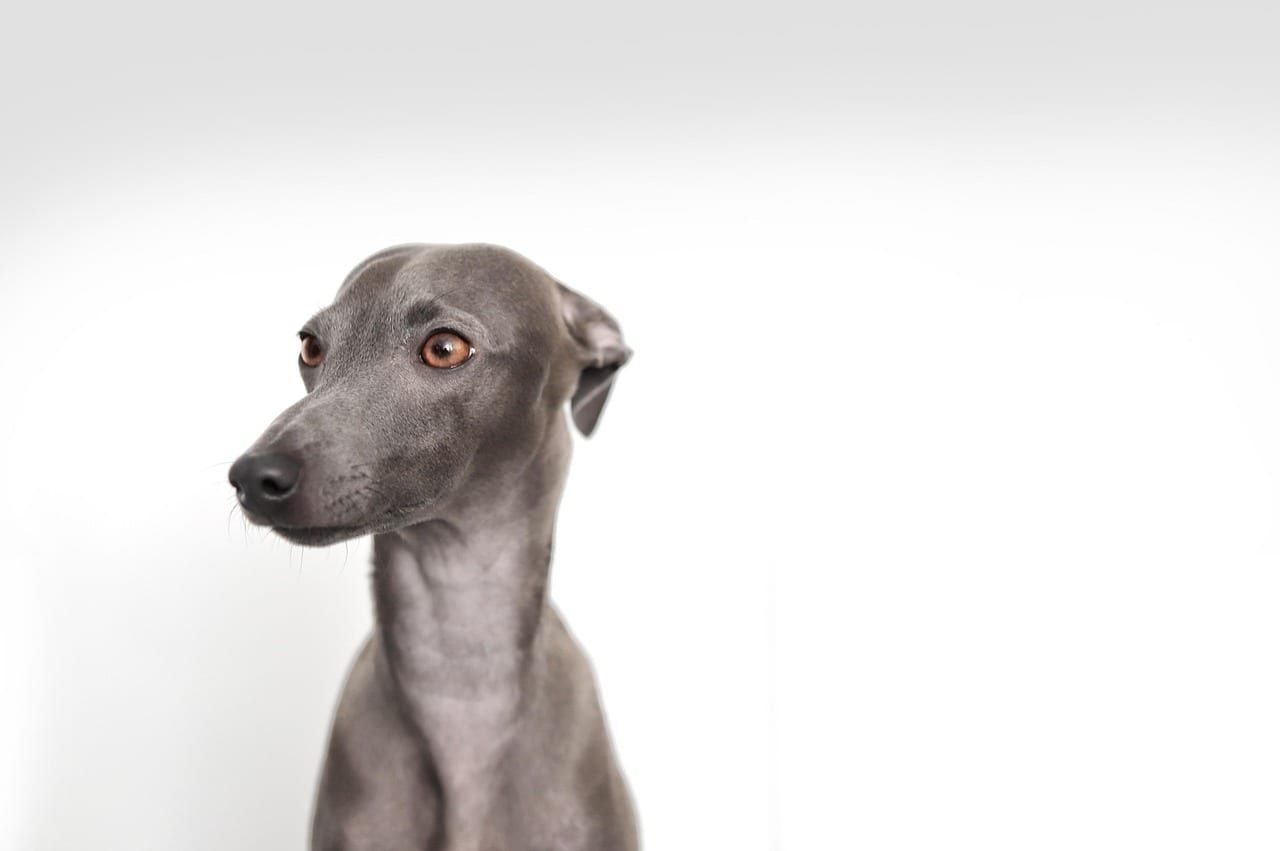
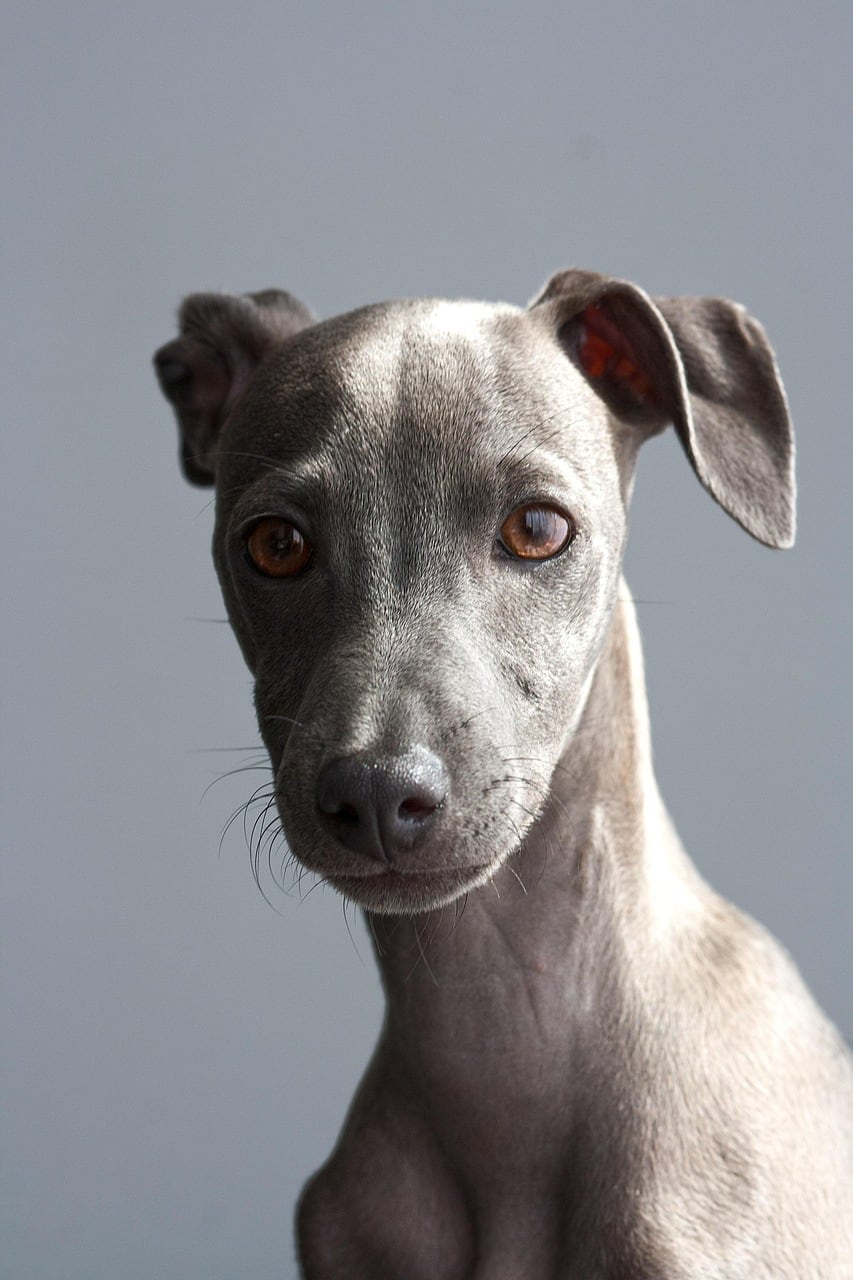
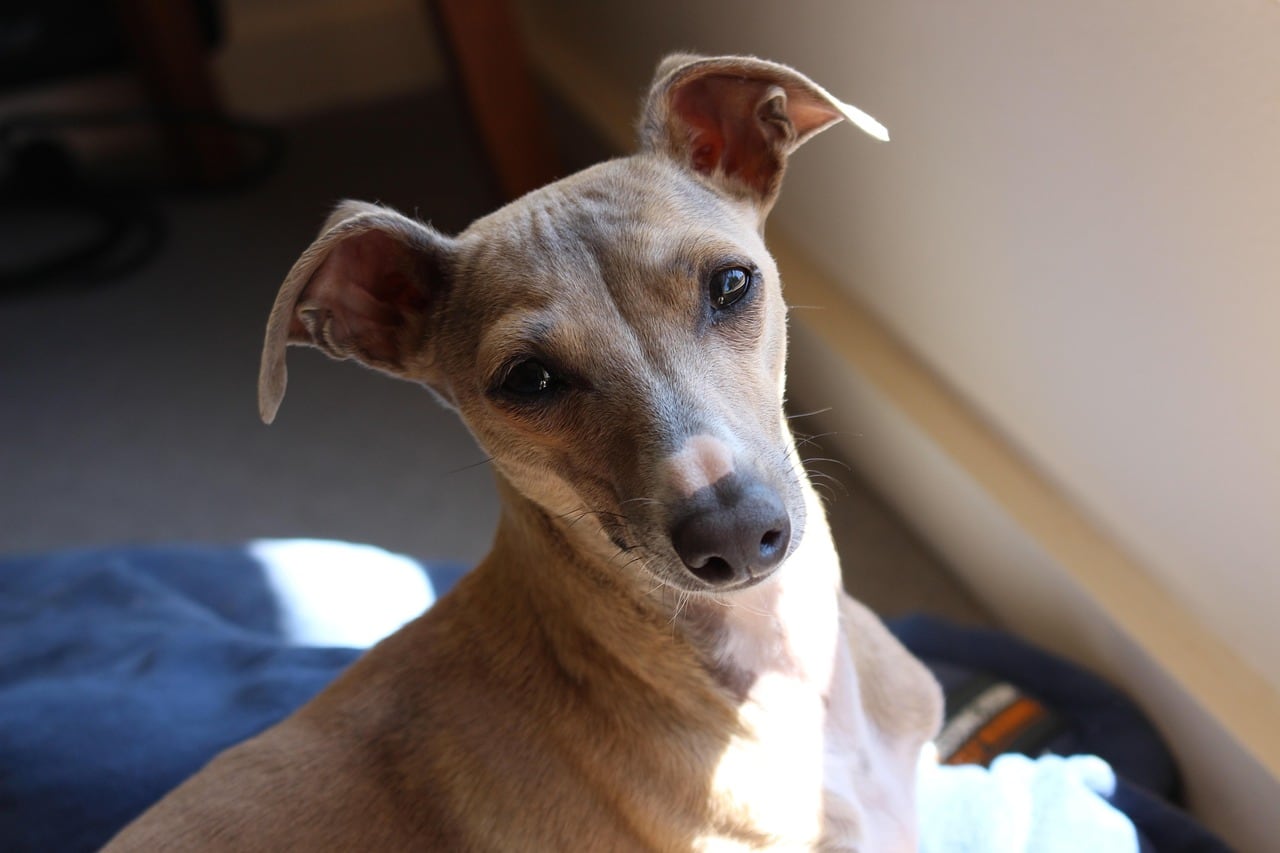
The Italian Greyhound is a slender, finely built sighthound with a height at the withers of 32–38 cm and a weight of around 5 kg – the dimensions are practically the same in males and females, so it is a sexually slightly dimorphic breed. The overall build resembles a smaller version of the greyhound, but with a significantly lighter skeleton and a high-set, slender chest.
The head is long and narrow, with a flat cranial profile and a slightly pronounced stop. The muzzle is elongated, smoothly merging into the head without a pronounced break. The eyes are rather large, round and dark, with a lively, attentive expression. The ears are set high, are small, thin and when calm they are folded back along the head, when excited they can be partially raised.
The body is elegant, with an arched back and a slightly sloping rump, which is a typical feature of sighthounds built for fast running. The chest is deep but narrow, the belly is significantly tucked up. The limbs are long, thin and dry, with flexible joints and oval paws. The tail is long, set low, tapering towards the end and hanging down when at rest, bending into a sickle shape when moving.
The coat is short, smooth and soft, lying close to the body and almost not hiding the visible outlines of the muscles and ribs – this is characteristic of the breed. A separate section is devoted to the color variants.
Italian Greyhound Colors
A specific list of the colors of the Italian Greyhound recognized and unrecognized by the standard is not available in the available documents, and therefore we do not provide it here in order not to risk inaccuracy. Those interested in the exact color palette are recommended to look directly at the current version of the FCI standard No. 200.
Italian Greyhound Personality
The Italian Greyhound is a dog with a strongly developed relationship with its owner, whom it seeks out and whose presence it cares about very much – it does not tolerate loneliness well and long-term isolation is not good for it. It is sensitive, attentive and intelligent, which is also reflected in its ability to learn quickly, although not always without its own judgment about what is and is not worth doing.
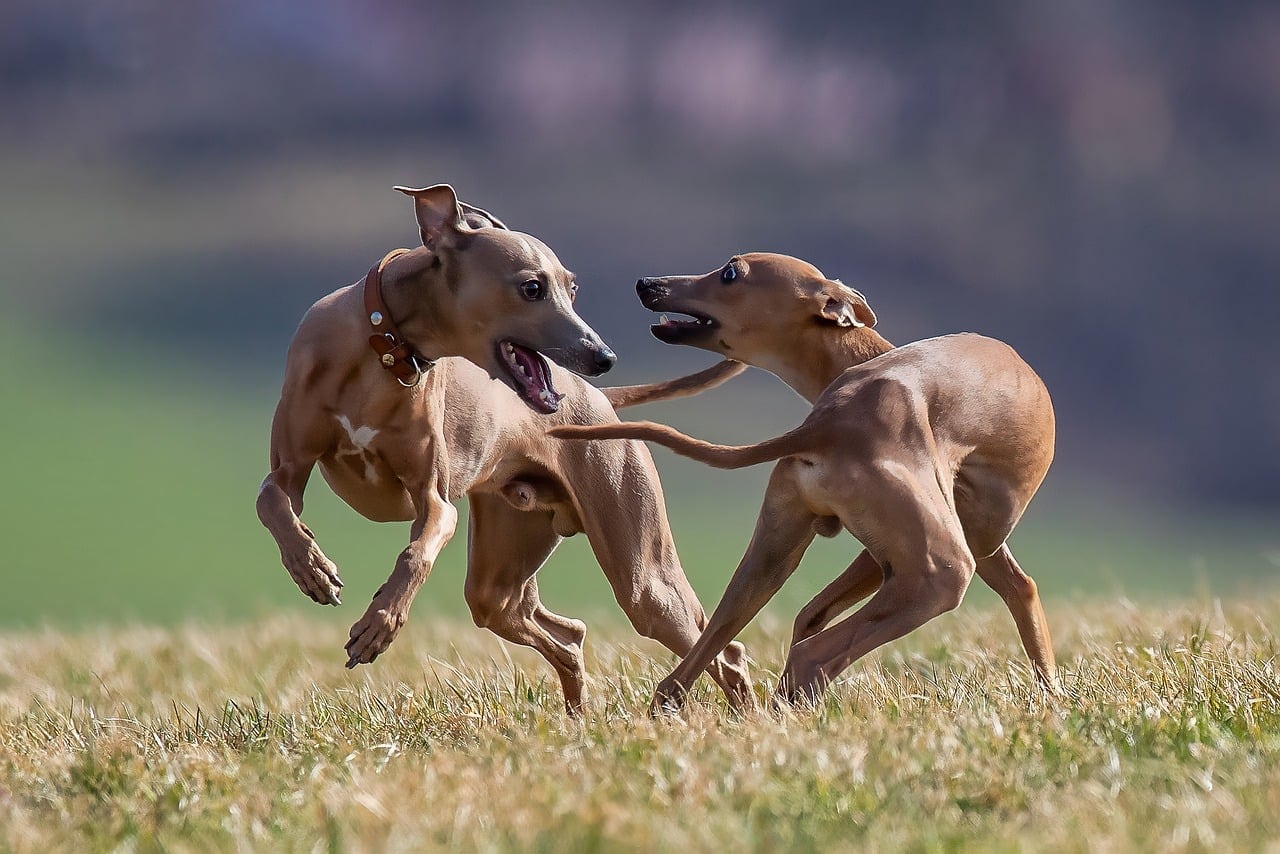
He is energetic on the move and likes to sprint after a moving stimulus - this is a typical manifestation of the greyhound's nature, where the hunting instinct can temporarily outweigh obedience. At home, on the other hand, he can curl up in a ball and rest for longer periods, alternating energy with calm phases.
He tends to be more reserved and less trusting with strangers, while he is warm with his family and seeks physical contact. He does not have strong guarding tendencies - he is more prone to watching his surroundings carefully than to giving a loud warning, and rarely uses barking.
Training requires patience and a sensitive approach, as the greyhound can be somewhat independent and makes decisions based on its own interests, not out of a desire to please. It responds best to positive motivation, and short, interesting lessons, rough methods, or pressure tend to reduce its willingness to cooperate.
Italian Greyhound and children
The Italian Greyhound's relationship with children is rated as neutral - it is not a breed that would automatically approach children and seek their company, but it is not a dog that would be hostile to them either. The decisive factor is rather the delicate and small body structure (around 5 kg and 32–38 cm at the withers), which makes this greyhound physically vulnerable and unsuitable for playing with small children who cannot yet estimate the strength of a grip or careless movements.
The Italian Greyhound has a sensitive nature and a high need for calm and security from its human. The noisy and unpredictable behavior of children can easily stress it out, which can manifest itself in shyness or an attempt to withdraw to safety. On the other hand, it can form a strong relationship with children who behave calmly and respect its need for personal space, especially if it grows up with them from puppyhood.
What helps to live together without problems
- Early and gradual socialization of the puppy with children of different ages, ideally in a calm and controlled environment.
- Explain to children that a greyhound is a physically sensitive dog that should not be handled roughly, grabbed, or jumped on.
- Constant adult supervision during any contact between the dog and small children, even in a household where the dog and the child know each other.
- Providing the dog with a quiet place where it can retreat if necessary, out of reach of children.
- Consistent but sensitive training that corresponds to the medium training difficulty of this breed and builds on positive motivation.
In families with older children who respect the rules of living with a dog and understand its nature, the relationship tends to be easier and more stable than in families with young children, where a higher level of supervision and patience is required.
Italian Greyhound and other dogs and pets
The Italian Greyhound usually gets along well with other dogs and prefers the company of its own kind - due to its high need for social contact, it is also comfortable living with another dog in the household. This is a greyhound whose ancestors were bred primarily as companions and hunters of small game using their eyesight and speed, which is still evident in its nature today.
The relationship with cats should be assessed individually. The innate hunting instinct, typical of sighthound breeds, can be awakened especially at the sight of a fast-moving small animal. If an Italian Greyhound grows up with a cat from a puppy, they can usually live together peacefully, but with an adult dog without experience with cats, coexistence cannot be guaranteed in advance.
Extra caution is advised when handling small animals such as rodents, caged birds or rabbits. Hunting small game was part of the breed's original mission, and the instinct to chase anything that moves quickly remains strongly embedded in today's social individuals.
- He gets along well with dogs and appreciates canine company.
- The relationship with cats is neutral, it depends on the joint upbringing from puppyhood.
- In small animals, it is advisable to take into account their innate hunting instinct.
Is the Italian Greyhound suitable for an apartment?
Rather yes - the Italian Greyhound is one of the breeds that is very well suited to apartment living, if the owner provides enough exercise and a quiet place to rest. Its small stature, low barking rate and minimal coat care requirements make it an undemanding roommate, even though it is a greyhound with a strongly developed hunting instinct.
Space and home environment
Thanks to its small size and low weight, the Italian Greyhound does not need a large apartment or garden - it can cope with a smaller space as long as it has a place to curl up in a soft spot. The short coat almost does not shed, so cleaning the household is not a big burden, and the very low level of drooling makes it suitable for households where the thick coat or saliva of other breeds would be a problem.
Calmness and sensitivity to the environment
This breed is sensitive to cold and noise, so it will appreciate an environment without unnecessary stress and with a warm corner to rest - it does not like cold floors or drafts in an apartment. It has a high need for company, so long periods of time alone without its owner do not suit it and may manifest as anxiety or destructive behavior.
Movement and mental exertion
Although it seems like a small indoor dog, it is a breed with a high need for exercise - regular free range and the opportunity to run are essential for its happiness. Without enough physical activity and at least moderate mental stimulation, it can be restless in an apartment, although thanks to its low barking rate, it does not disturb the surroundings with noise.
Barking and coexistence with neighbors
- Low tendency to bark – suitable for apartment buildings where a loud dog would be a problem.
- Calm behavior indoors, if he has had enough exercise outside.
- Sensitivity to loneliness can lead to expressions of dissatisfaction if they spend too much time alone.
How much exercise does it need?
The Italian Greyhound has a high level of activity and needs regular exercise spread over several short walks a day, ideally supplemented by the possibility of free spontaneous running in a secure area. As a sighthound (greyhound type), it is built for short but intense sprints, not endurance performances - after an energetic outing, it likes to retire to rest.
Suitable activities and dog sports
Due to its speed and flexible movement, activities that allow for short, intense sprints rather than long endurance exercises are suitable for the Italian Greyhound:
- free running in a fenced meadow or other secure place
- coursing and track sports simulating chasing (lure coursing)
- agility at a reasonable intensity, taking into account the small body structure
- longer walks in the field as a supplement to faster movement
Mental stimulation is just as important for this breed as physical exercise, although its need is more moderate compared to activity. It is appropriate to include sniffing games, simple observation tasks or elements of obedience, as training an Italian Greyhound requires patience and gradual building of motivation rather than hard drill.
Due to the short coat and almost zero subcutaneous insulation, the weather must be taken into account - in cold and damp conditions, the breed quickly gets cold and it is advisable to limit the time spent outdoors or use clothing, while in the hot summer months it is better to move more demanding exercise to cooler parts of the day.
Training and education
Training an Italian Greyhound requires patience and a sensitive approach rather than a hard hand - this is a highly intelligent dog, but at the same time has a sensitive nature that is quickly discouraged by rough methods. It responds best to short, frequently repeated lessons guided by positive motivation, where the reward is a treat or praise, not pressure.
What drives him to cooperate is food and the joy of movement - due to his high activity level, he can use the energy from training as a form of play. However, long and monotonous training sessions quickly lose his interest, so it is better to have several short blocks during the day than one exhausting lesson.
Socialization and specifics
Given the high need for human company, it is advisable to start socialization as early as possible - getting used to different environments, sounds and contact with other people helps him cope with the sensitivity that this breed often has. Meeting other dogs is usually without major problems, but it is advisable to monitor the reaction to cats and smaller animals individually, because the greyhound's instinct to chase can also manifest itself in everyday life.
Due to the thin coat and slender body structure, it is advisable to take the weather into account when walking and training and not overexert the dog in the cold. Basic obedience and recall should be a priority from puppyhood, because the Italian Greyhound has a strongly developed hunting instinct and in the field without a leash can easily react to a moving stimulus before the owner can call it.
Hair care and hygiene
The Italian Greyhound's short, fine coat requires minimal care - an occasional brush with a rubber brush or smooth glove will remove dead hair and promote its natural shine. The breed sheds very little, so it doesn't add much to the household's coat.
Due to the thin skin without subcutaneous fat, however, it is necessary to pay attention to protection against cold and mechanical damage - after a walk in bad weather, it is advisable to dry the dog with a towel and in winter use clothes. Bathing is only necessary occasionally, only when the dog is really dirty, because frequent washing could unnecessarily dry the coat and skin.
Ears, eyes, teeth and claws
It is advisable to check the ears regularly and, if necessary, wipe them gently to prevent accumulation of grease or dirt. It is enough to monitor the eyes and wipe away any discharge with a damp cloth. It is good to take regular care of the teeth in the form of cleaning or dental aids, because tartar and related problems are more common in smaller breeds. The claws should be cut according to how fast they grow - in a dog that moves a lot on hard surfaces, they naturally wear out less, so checking and possible shortening should not be neglected.
Feeding
Due to the Italian Greyhound's low body weight and slender build, it is crucial to choose a high-quality complete food that is appropriate for its size, age and high activity level. The energy value of the food should cover the needs of an active dog without leading to excessive calorie intake.
Due to the small frame and low body fat percentage, it is important to regularly monitor the body condition of this breed - the ribs should be easily palpable and the waistline of the hips should be visible under the thin layer of subcutaneous tissue. Excess weight puts a strain on the joints and musculoskeletal system, which in greyhound breeds are not built to carry excess weight.
Adapting feeding to life stage
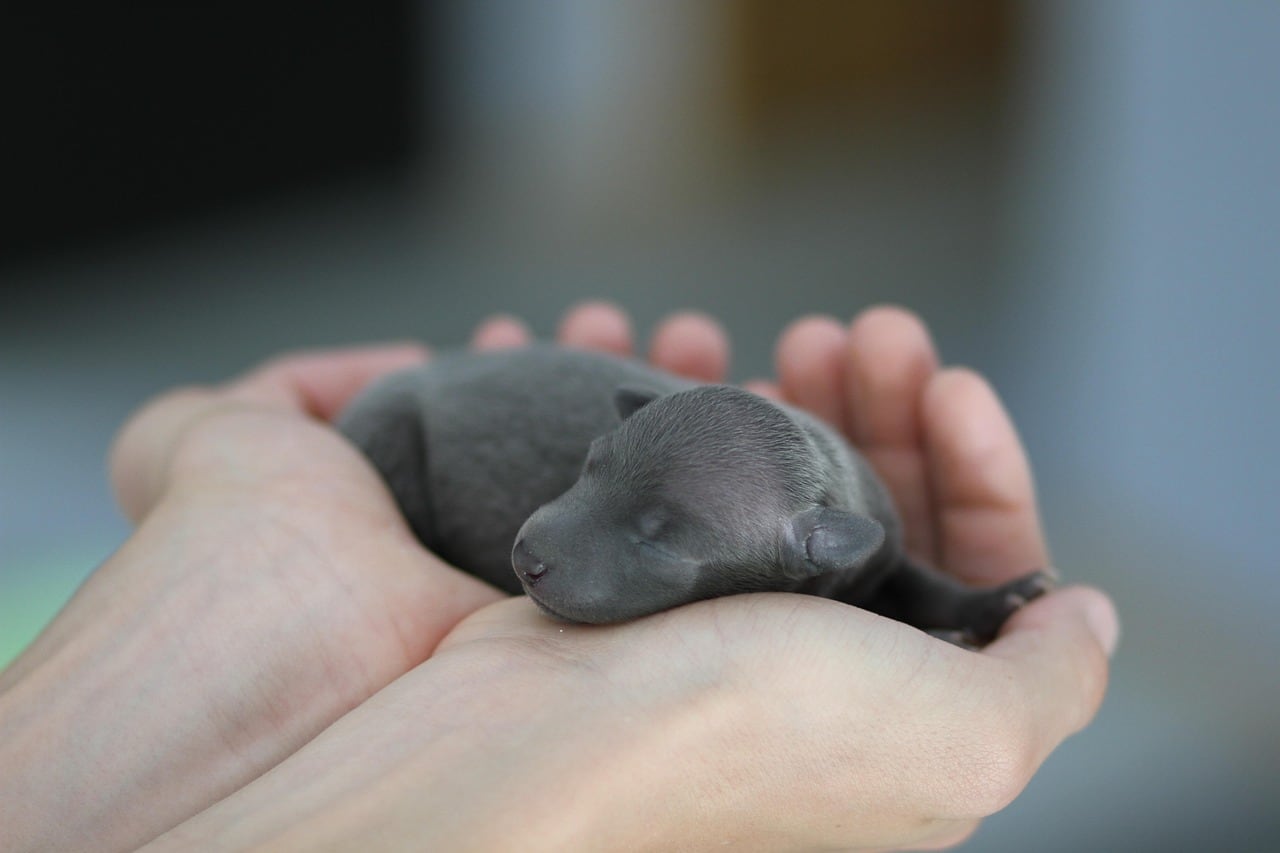
- Puppies need food that supports gradual and even growth, without unnecessarily rapid weight gain.
- Adult dogs require food that is appropriate for their activity level - the Italian Greyhound usually has a higher energy expenditure due to its active nature.
- For older individuals, it is advisable to adjust the food to take into account lower activity and possible metabolic changes associated with aging.
Due to the short coat and low shedding rate, the diet does not directly affect the volume of the coat, but the high-quality composition of the food supports the overall condition of the skin and coat. It is advisable to consult a veterinarian about the amount of food, who can adjust the dosage to the specific dog according to its condition and lifestyle.
How long does an Italian Greyhound live?
The Italian Greyhound lives an average of 14–15 years, which makes it one of the long-lived breeds - its small constitution and generally undemanding physiology contribute to its long life.
However, the lifespan of a particular individual always depends on a combination of multiple factors that the owner can largely influence.
What affects lifespan?
- Genetics: Origin from a responsible breeder and health-tested parents reduce the risk of hereditary burdens and support reaching the upper limit of expected lifespan.
- Physical condition: A slim build is typical for this breed, but it is important to keep the dog at an optimal weight - excess weight puts a strain on the joints and heart and shortens the active years of life.
- Exercise: The Italian Greyhound needs regular exercise appropriate to its high activity level, including the opportunity to run freely, which promotes muscle tone and overall vitality.
- Prevention: Regular veterinary checkups, vaccinations, and early detection of health problems play a key role in longevity.
- Nutrition: A quality diet adapted to age, activity level, and small body constitution helps prevent metabolic and joint problems.
- Health predisposition: The breed may have an increased predisposition to problems with the musculoskeletal system and to thin, cold-sensitive skin, which should be taken into account when caring for and choosing the environment where the dog lives.
Who is the Italian Greyhound suitable for?
The Italian Greyhound is best suited to a household where it will have constant human company and the opportunity for daily exercise without extreme demands on performance. It is a sensitive dog with a high need for contact, which is best suited to owners willing to respect its fragile body structure and lower resistance to cold.
Who is the breed suitable for?
- For people living in an apartment who can provide regular exercise outdoors - thanks to the low rate of shedding and undemanding coat care, breeding in a smaller space is realistic.
- For seniors and quieter households, where its low barking rate and undemanding nature to loud traffic are appreciated.
- For owners who are home most of the day or can take the dog with them - the Italian Greyhound does not tolerate long periods of solitude.
- For more active people who give him the opportunity to run around and at the same time have quiet relaxing moments on the couch or in a warm bed.
- For households with another dog, with whom the Italian Greyhound usually gets along well and likes to form a dog pair or group.
Who is the breed not suitable for?
- For families looking for a hardy "outdoor" dog for the garden - the Italian Greyhound is not very resistant to cold and damp and needs a warm home environment.
- For households with small children who could accidentally injure him with rough handling - his body structure is delicate and prone to injury.
- For owners looking for a dog suitable for running around freely near small animals or cats without prior socialization, as this is a greyhound with a strong hunting instinct.
- For complete beginners with no interest in training and socialization - mastering safe movement outdoors without a leash requires patience and consistency.
- For people who leave their dog home alone for long hours – the high need for companionship makes loneliness a big burden for this breed.
Interesting facts about the breed
The breed's Italian name, Piccolo Levriero Italiano, translates into Czech as "little Italian greyhound" - the epithet accurately describes its position among greyhounds: it is a smaller, slimmer variant weighing around 5 kg, a fraction of the weight of a greyhound or sloughi, with which it shares the same FCI group.
In the international environment, the breed is known under the English name Italian Sighthound, although in Czech and in everyday speech the name Italian Greyhound has become common.
Despite his small stature, he has retained his typical greyhound temperament - he is one of the dogs with a high need for exercise and likes to sprint if the opportunity arises, which is good to keep in mind when moving around without a leash in an open space.
Italian Greyhound Health
The Italian Greyhound is a small, slender breed with a very low body fat percentage and thin bone structure, which is reflected in its health characteristics. With appropriate care and diet, it can live to a relatively old age, usually 14 to 15 years. The short coat and minimal subcutaneous fat mean that the breed is less tolerant of cold and is more sensitive to mechanical injuries than more robust dogs. The breed may be predisposed to certain joint, dental and skin diseases, which should be monitored throughout the dog's life. The following overview summarizes the areas that are usually highlighted in connection with this breed.
Musculoskeletal system and limbs
Thin, slender leg bones are a typical feature of the Italian Greyhound, but they also pose an increased risk of fractures in the event of a careless landing or fall, especially in puppyhood, when the skeleton is not yet fully developed. The breed may also have an increased predisposition to patellar luxation (dislocation of the kneecap), so it is advisable to monitor the quality of movement and any lameness. It is advisable to limit sudden jumps from heights (from the sofa, from the lap) in the long term.
Teeth and oral cavity
Smaller breeds of greyhounds are often described as having an increased tendency to develop tartar and premature periodontal problems, which is related to the arrangement of the teeth and the smaller spacing between the teeth. Regular dental care is therefore an important part of prevention for this breed.
Skin and thermoregulation
The short coat, with no undercoat, and low levels of subcutaneous fat mean that the Italian Greyhound has limited natural protection against the cold and mechanical damage to the skin. The skin can therefore be more susceptible to abrasions and superficial injuries, and in colder weather the breed needs additional protection in the form of clothing.
Eyes
The breed is mentioned in the professional literature as having a possible increased predisposition to certain eye diseases related to the gradual degeneration of the retina or lens, which may only manifest themselves at a later age. Regular eye checks by a veterinarian help to detect any changes in time.
What to look for when choosing a puppy
- Be interested in the health status and possible examinations of the parents, especially in terms of joints and eyes.
- Monitor whether the puppy appears alert, has adequate condition, and shows no signs of pain in its limbs.
- Ask the breeder about their experience with the musculoskeletal system and any fractures in the line.
- Verify how the breeder socializes the puppies and prepares them for careful handling, considering the fragility of young bones.
- After purchasing a puppy, schedule an initial veterinary check-up and set up regular dental care.
Known predispositions
The breed is described to have an increased predisposition to:
- to Legg-Calvé-Perthes disease, a disease of the hip joint caused by insufficient blood supply to the head of the femur, which occurs in young individuals.
- to the eye defect progressive retinal atrophy (PRA), a hereditary degeneration of the retina leading to vision loss.
- to cataracts.
- to glaucoma.
- to patellar luxation (dislocation of the kneecap).
- to periodontal (dental) disease.
- to epilepsy.
- to autoimmune thyroid disorders (hypothyroidism).
Discussed risks
- The breed may be more prone to limb fractures due to its fragile bone structure.
- The breed may be more prone to minor skin injuries and skin problems due to its delicate skin.
This overview is for informational purposes only and does not replace the examination or recommendations of a veterinarian.
What to buy for an Italian Greyhound
Practical basis that is suitable for this breed:
- Car seats for dogs – Car seats and safety equipment for transporting a dog by car.
- Toys – Dog toys – fetching, chewing and interactive.
- Cosmetics – Shampoos, conditioners and hair care products.
- Bowls – Feed and water bowls, anti-swallow bowls and stands.
- Collars – Dog collars – leather, textile and semi-tight.
- Beds – Beds and mattresses for dogs of all sizes.
- Leashes – Leashes, switch leashes and tracking lines.
Useful guides
Practical tips that are useful when caring for a dog:
Frequently asked questions
Is the Italian Greyhound suitable for an apartment?
Yes, the Italian Greyhound is suitable for an apartment, although it needs a high level of exercise. Thanks to its short coat with low shedding and very low drooling, it is also easy to clean in the home.
How much does an Italian Greyhound weigh and how big is it?
The Italian Greyhound measures 32–38 cm at the withers and weighs around 5 kg, with minimal differences between males and females. It is a medium-sized breed, although its small build makes it look more like a small dog.
How long does an Italian Greyhound live?
The average lifespan of the Italian Greyhound is 14–15 years, which is one of the higher values among dog breeds.
Does the Italian Greyhound bark a lot?
No, the Italian Greyhound sheds very little and is very easy to care for. The short coat does not require frequent brushing or special grooming.
Is the Italian Greyhound suitable for beginners?
The Italian Greyhound is a neutral choice in this regard – it is not an extremely easy breed, but it is not extremely demanding either. Training requires a medium-demanding approach and the owner should expect the dog to have a high need for company.
How does the Italian Greyhound get along with children?
The relationship with children is rated as neutral, so it depends on the specific nature of the dog and the attitude of the children. The small body structure means that rougher treatment may not suit him.
Can Italian Greyhounds get along with cats?
Cohabitation with cats is neutral for this breed, so the outcome depends on socialization and the nature of the specific animals. As a sighthound, it may have an innate interest in tracking and chasing fast-moving objects.
Why does the Italian Greyhound often wear clothes and freeze easily?
The combination of short hair, low weight of around 5 kg and slender body makes the Italian Greyhound less tolerant of the cold. Therefore, clothing during the winter months is a common practice for this breed.
What was the Italian Greyhound originally used for?
The Italian Greyhound (Piccolo Levriero Italiano) originates from Italy and belongs to the FCI sighthound group. Its body structure corresponds to breeds built for fast sprinting, such as the Greyhound or Whippet.
Is training an Italian Greyhound difficult?
The training difficulty is rated as medium, so the Italian Greyhound is not extremely difficult, but of course not obedient either. The high need for company means that it may not handle long periods of time alone without its owner well.
Does the Italian Greyhound need a lot of exercise?
Yes, the activity level of this breed is high and is more suited to active owners. As a sighthound, it prefers short, intense sprints rather than long, endurance walks with rest in between.
Does the Italian Greyhound have any specific health risks?
Due to their slim build and low weight, the Italian Greyhound may be more prone to musculoskeletal problems. Specific health conditions should always be assessed individually with a veterinarian, ideally based on professional sources focused on this breed.
Resources and further information
- FCI Standard No. 200 - Italian Sighthound - Fédération Cynologique Internationale
- FCI-Standard N°200 – Piccolo Levriero Italiano (Italian Sighthound) – Fédération Cynologique Internationale (FCI)
- Body Measurement Source – petmd.com
- Expert source – webmd.com
- Expert resource - southerncrossvet.com.au
Professional cooperation
This breed overview was created in cooperation with the Veterinary Clinic VYVET sro and MVDr. Adam Hylák .