
Published 11. 9. 2026
The Greyhound is a large breed of sighthound originating from Great Britain, classified in FCI Group 10 among short-haired sighthounds. The dog measures 71–76 cm at the withers, the bitch 68–71 cm, and despite its tall stature and renowned speed, it is a rather calm and peaceful companion at home. The short, smooth coat requires almost no care, little shedding and low barking make it an undemanding roommate.
The Greyhound has a high need for exercise, but it typically expends its energy in short, intense sprints, after which it likes to rest - which is why it is more suitable for an apartment. It is friendly with children, gets along well with dogs, but has a rather reserved relationship with cats due to its hunting past. It will appreciate an active owner who will give it regular exercise and enough peace and quiet to rest.
Professionally consulted
The content was created in cooperation with the veterinary clinic Veterinární klinika VYVET sro and MVDr. Adam Hylák.
Quick overview
What is a Greyhound like?
The Greyhound is a large British sighthound bred primarily for sprinting - its body is built for short, extremely fast runs followed by long rest periods. Males measure 71–76 cm at the withers, females 68–71 cm, and despite its robust appearance, it is a calm and even-tempered breed. At home, it is surprisingly easygoing and likes to rest, but outside it needs regular space to run freely.
The short coat means minimal grooming requirements, it barks little and drools only rarely, so despite its size it is surprisingly undemanding to live with at home and can cope with apartment life. It usually gets along well with dogs, but cats need to be approached with caution. It is suitable for more active owners who give it enough exercise and peace, and it is also relatively suitable for children.
Origin and history of the Greyhound
The Greyhound is one of the oldest known breeds of sighthounds and its roots go back deep into antiquity – depictions of slender dogs of a similar type appear in Egyptian paintings and objects thousands of years old, which suggests that sighthounds accompanied humans in ancient Egypt and the Middle East. This type of dog probably reached Europe with trade and migration routes and gradually settled mainly in the British Isles, where it acquired the form we know today.
In the English countryside, the greyhound was bred for centuries primarily as a hunting dog for hares and other small game - its body build, long legs and deep chest were purposefully developed for maximum speed and visual tracking of prey on open plains. This method of hunting, called coursing, shaped the greyhound for generations and became the basis for its later sporting use - horse racing, which developed in Britain in the 19th and 20th centuries and made the breed famous throughout the world.
Breeding was gradually systematized in England by breeders who emphasized performance and typical appearance, which created a stable form of the breed recognized by British cynological institutions. The standard was subsequently adopted by the FCI, which included the greyhound in the sighthound group. From Great Britain, the breed spread to other countries, where it is still valued today both for its racing talents and as a calm companion dog.
Appearance and size
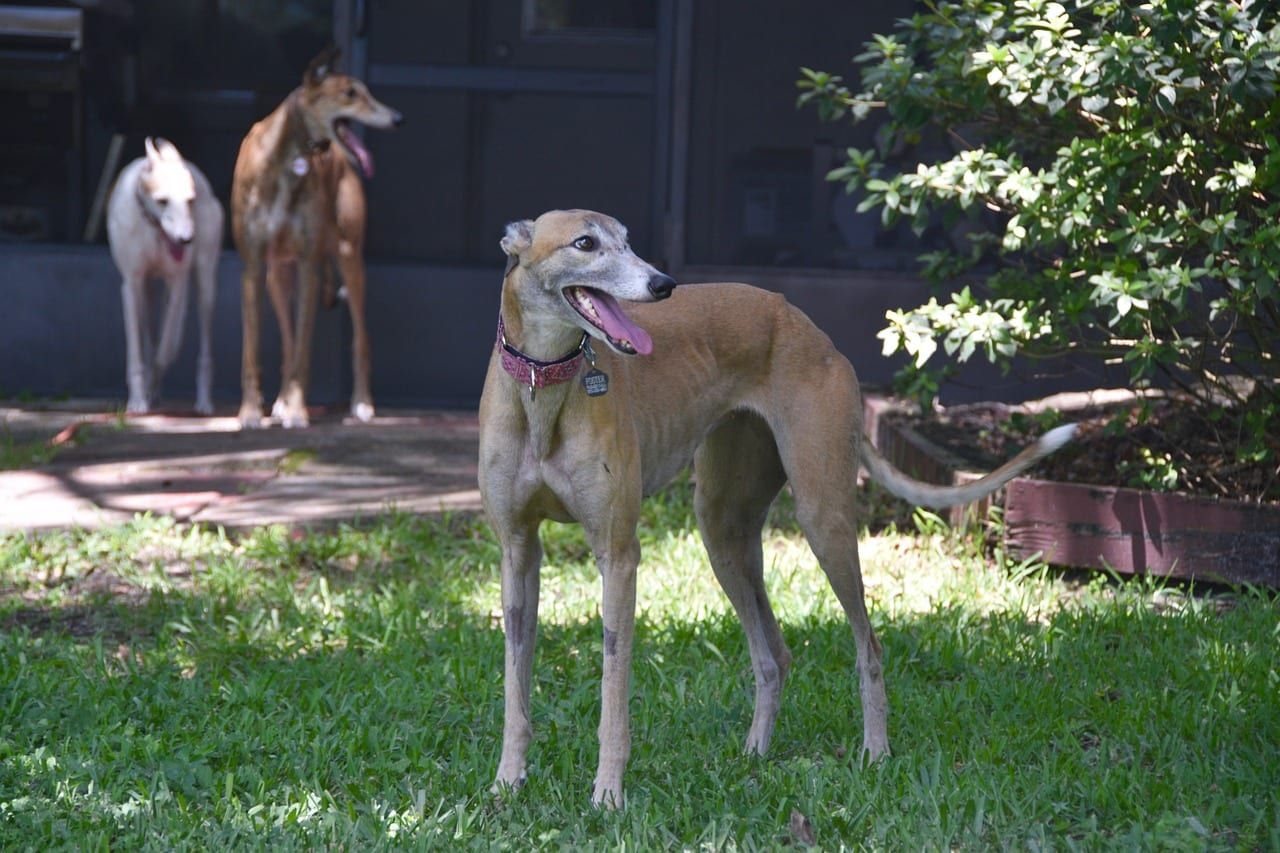
The Greyhound is a tall, slender dog with a distinctly aerodynamic body structure, adapted to high speed. The male dog stands 71–76 cm at the withers, the female dog is slightly smaller, standing 68–71 cm tall. The overall build is symmetrical, strong and muscular, yet appears light and elegant – there should be no unnecessary mass anywhere on the body that would hinder movement.
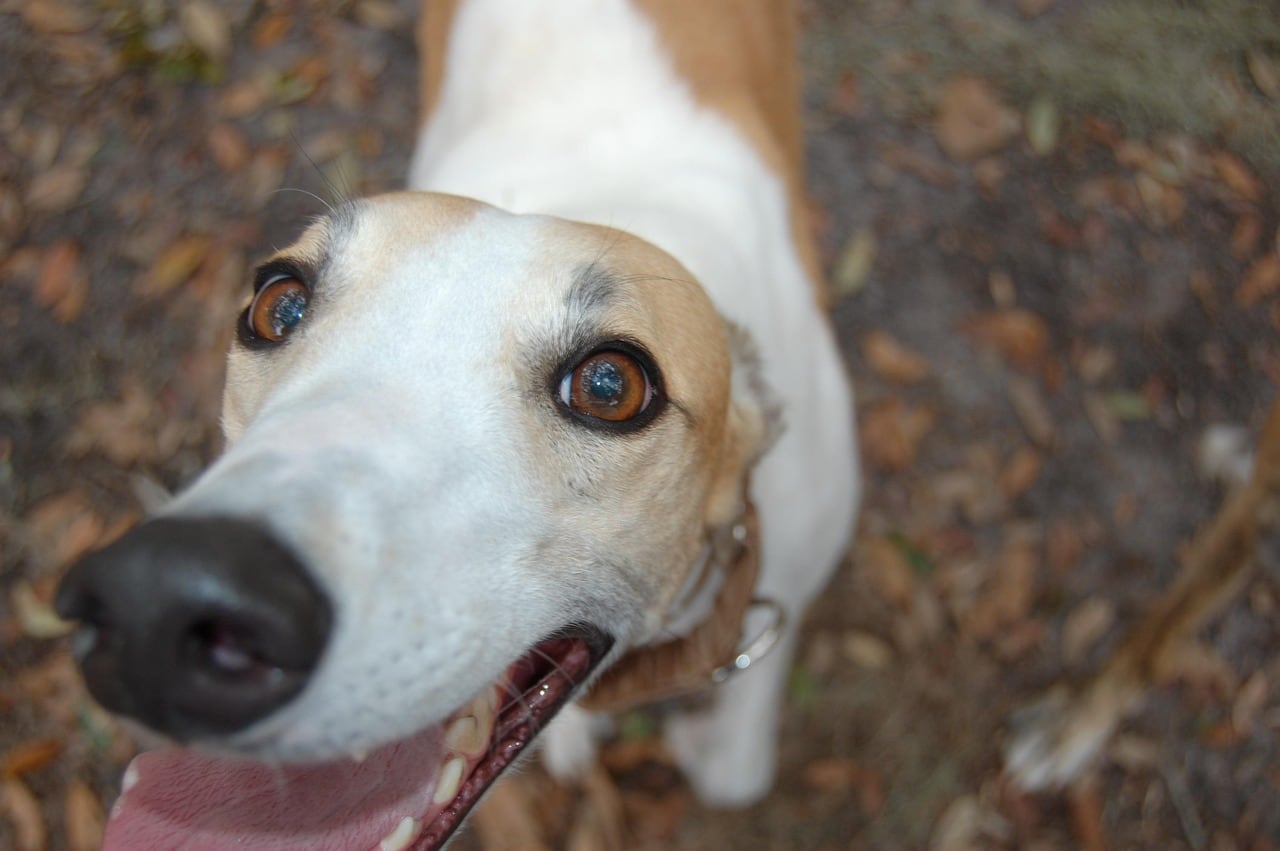
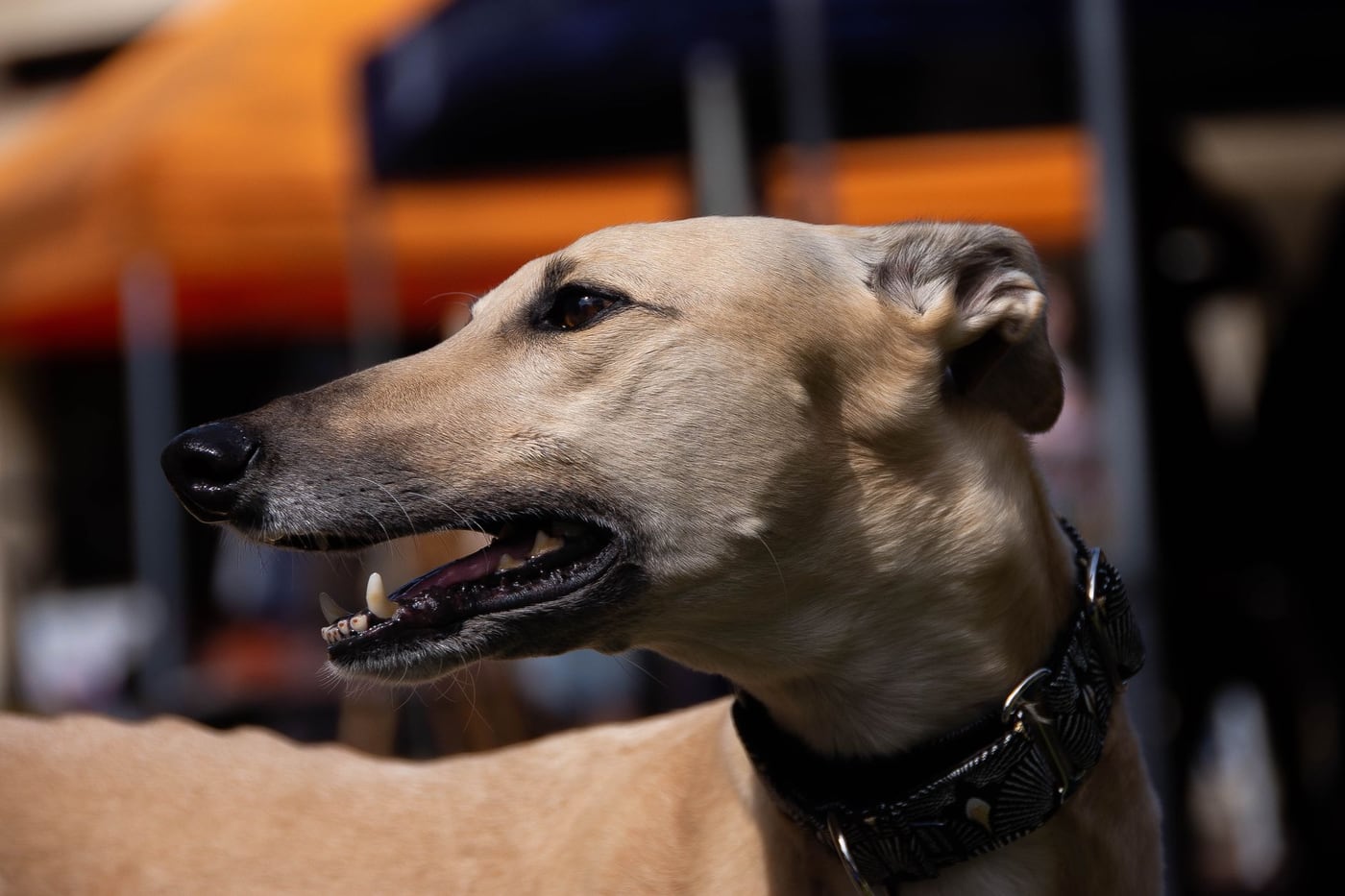
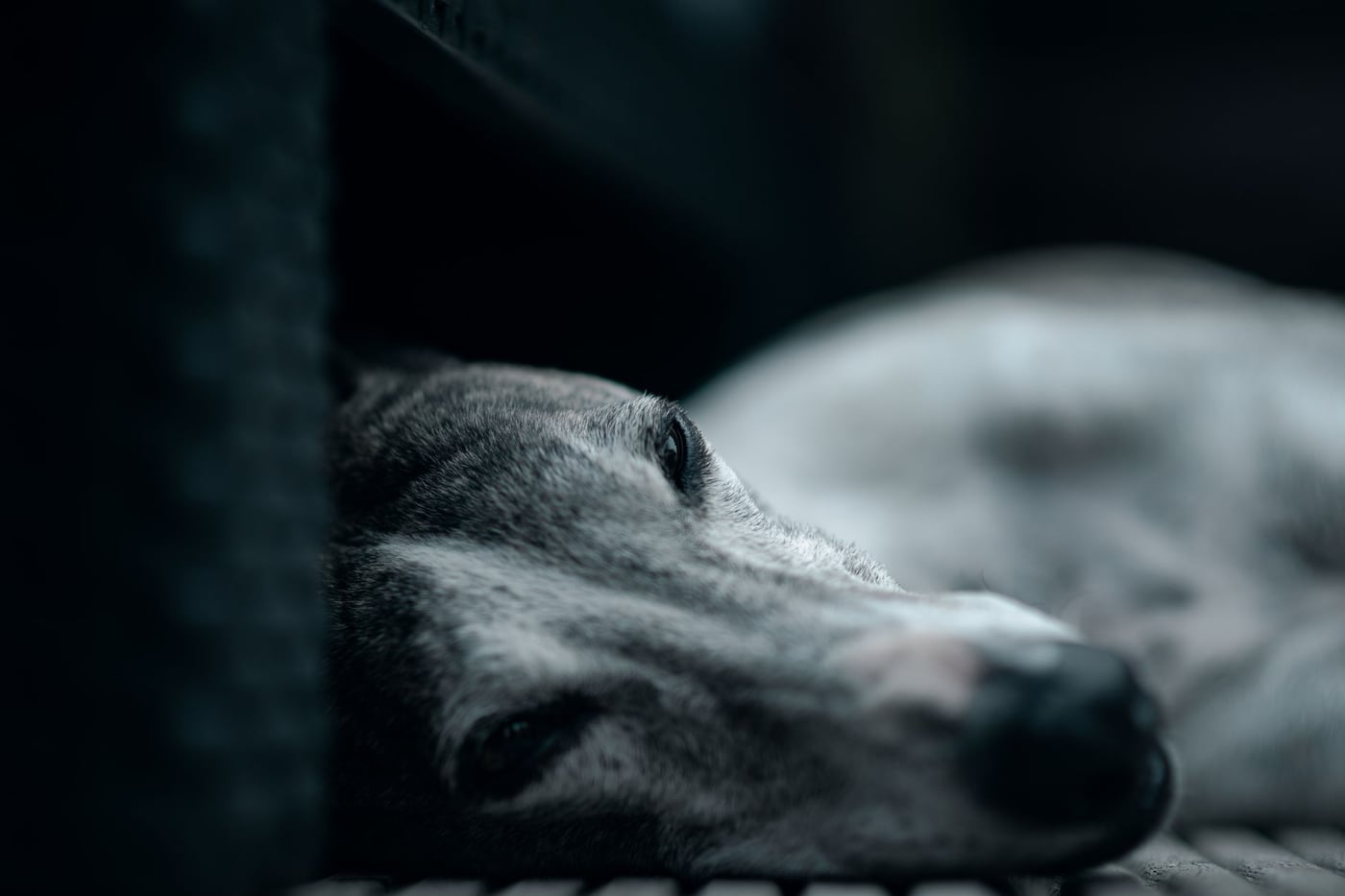
The head is long and narrow, with a flat forehead and only a slightly set stop. The jaw is strong, but always proportional to the total length of the head. The eyes are dark, oval, with a sharp and attentive expression. The ears of the greyhound are small, rose-shaped, set close to the head - when alert, they are slightly raised and give the face a characteristic alert look.
The neck is long and slightly arched, smoothly connecting to a deep, spacious chest, which provides enough space for the heart and lungs. The back is arched, the belly is significantly tucked up - this profile is typical for greyhounds and is related to their endurance and speed. The tail is long, set low, tapering towards the end and hanging down when at rest.
The coat is short, smooth and close-fitting to the body, so it does not obscure the muscles or body lines. The color variations of this breed are quite wide and you can find an overview of them in a separate section on colors.
The differences between the sexes in greyhounds are mainly manifested in height and overall robustness - males tend to be slightly taller and more powerful, females more delicate and slender, without detracting from the typical greyhound strength.
Greyhound Colors
A specific list of colors and color markings recognized by the standard for Greyhounds is not available in the materials for this atlas, and therefore we do not include it here - we recommend that you draw precise information directly from the current version of FCI standard No. 158.
Greyhound personality
Despite its hunting background, the Greyhound is a surprisingly calm and composed dog, described by many owners as easygoing – spending most of the day at home resting and saving energy for short, intense runs. This contrast between calmness at home and ferocity on the move is typical of the breed and distinguishes it from dogs that need constant exercise.
It forms a strong bond with its owner and likes to be near him, although it is not one of the dogs that requires constant attention - it can be happy even alone, if it has enough exercise and opportunities to rest. The relationship with the family is sensitive and calm, the greyhound does not seek stormy displays of affection, but rather a quiet presence by the side of a person.
Intelligence in this breed is associated with a certain independence of thought - the greyhound can quickly assess the situation, but training requires patience and a sensitive approach, as the dog easily gets bored with repetitive exercises. It responds best to positive motivation and short, interestingly conducted training sessions.
Barking is not a typical manifestation of this breed, the greyhound rarely barks, which makes it an undemanding neighbor and roommate. Guarding tendencies are minimal - it is more of a social dog than a territorial guardian, it is reserved towards strangers, but rarely aggressive.
In relation to other dogs, the greyhound is usually friendly and does well in pack life, especially if socialized from puppyhood. However, towards small animals, including cats, it can show a strong hunting instinct, which is given by its origin - this instinct should be taken into account when introducing it to other pets.
Typical behavioral manifestations
- Alternating long periods of rest with short bursts of energy while moving outside
- Sensitive bond with the owner without the need for constant contact
- Low barking and calm demeanor in the home environment
- Strong hunting instinct towards fast moving smaller animals
- Good socialization ability with other dogs
Greyhound and children
The Greyhound is suitable as a companion for families with children, but its reaction depends on upbringing, socialization and how sensitively the child can respect its boundaries. At home, this greyhound usually behaves calmly and quietly - its low barking and balanced nature make it a dog that does not seek out conflicts and would rather withdraw into peace than react loudly or restlessly to stimuli.
However, it is important to note that the greyhound has a strong hunting instinct and the speed it can reach is enormous. Sudden movements, shouting or children running away can trigger this instinct, so any encounter between the dog and small children should always be supervised by an adult. It is equally important to teach children that the greyhound needs a quiet space to rest and that it should not be disturbed in its sleep or forced into contact that it does not want.
What to watch out for
- Supervise time spent with young children, especially when playing outdoors, where rapid movement can trigger a chasing reaction.
- Teach children to recognize when a dog needs to rest and to respect its need for peace.
- Pay attention to socializing both the puppy and the adult dog with children of different ages so that they gradually get used to their presence, sounds, and movement.
- Due to the medium difficulty of the training, older children can also be involved in leading the dog, but always under the supervision of an adult family member.
If these principles are followed, the coexistence of a greyhound with children can work without major problems - this is a breed that, by its nature, seeks peace and closeness to the family rather than being a source of conflict.
Greyhound and other dogs and pets
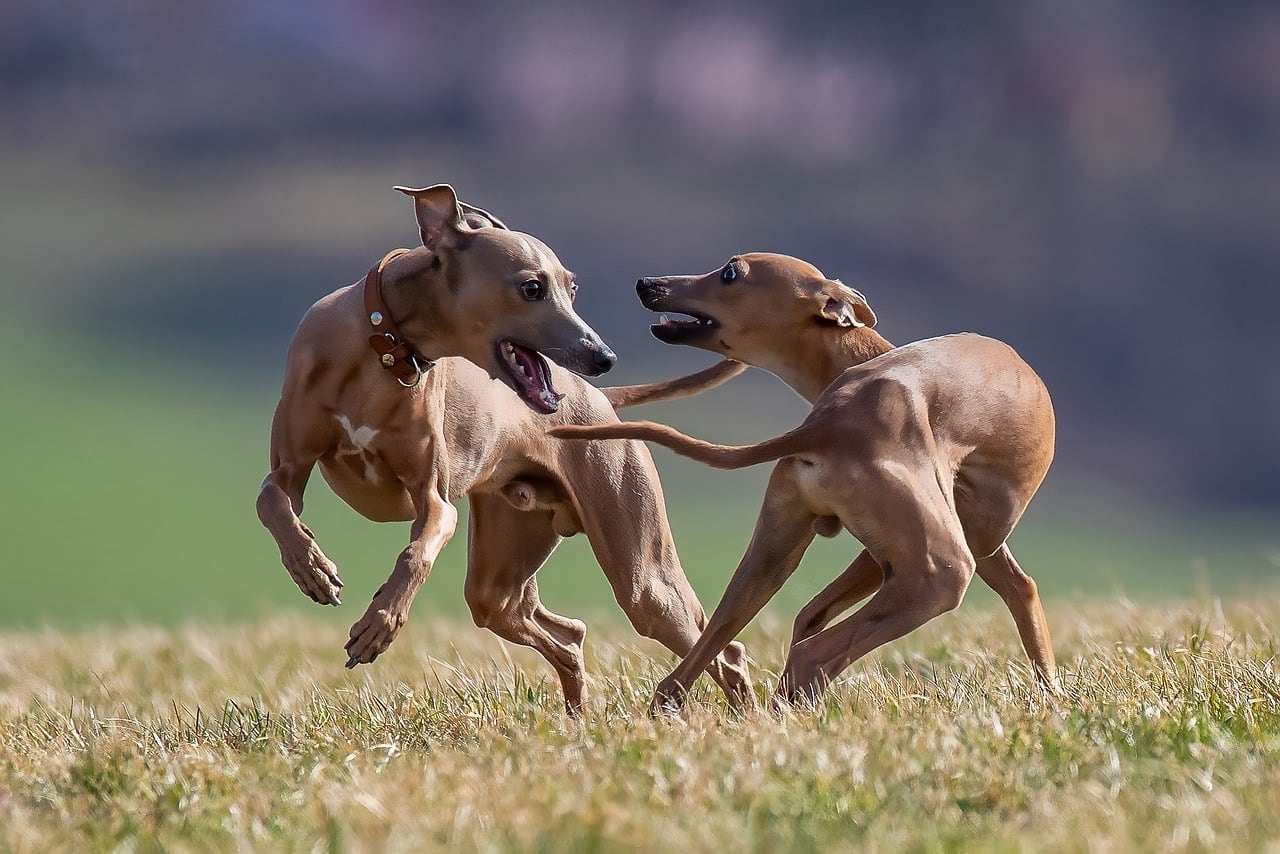
Greyhounds usually get along well with other dogs and easily integrate into a canine team – they tend not to be confrontational towards their peers. However, the situation is different with cats and small animals: as a breed bred for centuries to chase and catch up with fast prey, they have a strongly developed visual hunting instinct, which is easily triggered by the movement of a small animal in their field of vision.
For this reason, a greyhound is generally not recommended for a household with a cat or other small animal unless it has been specifically trained to do so since puppyhood – even then, there is a risk that a sudden movement of a cat or rodent will trigger a chase before the dog can react to a command. For individuals without experience with small animals, it is therefore wise to consider a separate space rather than unsupervised cohabitation.
What to watch out for
- Encounters with unknown small dog breeds or puppies should be supervised initially until the greyhound classifies the animal as a "dog", not as potential prey.
- Walking without a leash near free-roaming cats, rabbits or poultry carries the risk of a sudden and very fast chase that is difficult to stop with a command.
- Gradual and patient introduction from an early age increases the chances of peaceful coexistence with a domestic cat, but the result may vary from dog to dog.
Is a Greyhound suitable for an apartment?
Rather, yes – despite its size, the greyhound is surprisingly apartment-friendly. It spends most of its time resting in a comfortable spot during the day, and its low barking rate means it won't disturb neighbors even in more densely populated homes.
For a happy life in an apartment, several conditions need to be met:
- Space to lie down: a greyhound needs a soft and large enough place to rest rather than a large apartment as such - due to its low body fat percentage, a hard floor may not be comfortable for it.
- Daily outdoor exercise: this is a dog with a high level of activity that needs regular, intensive exercise, ideally the opportunity to run freely in a secure area. An apartment alone will not replace exercise.
- Peace in the household: after a run, the greyhound is typically a calm and undemanding companion who can sleep for a large part of the day.
- Mental stimulation: his mental demands are moderate, yet he appreciates varied walks and opportunities to sniff and explore.
Apartment breeding therefore works well where the owner has the opportunity to regularly ensure sufficient exercise outdoors - the apartment itself then serves the greyhound primarily as a quiet place to relax.
How much exercise does it need?
The Greyhound is a breed with a high level of activity, but a specific nature of movement - it is a sprinter, not an endurance runner. The ideal combination is a shorter intensive run with the opportunity to run at full speed, supplemented by a longer walk at a calmer pace. Outside of these moments, the greyhound is usually very calm and can sleep a surprisingly large part of the day at home.
Given its hunting past and body structure, it is advisable to choose a fenced area for free movement - after seeing a fast-moving stimulus (hare, cat, cyclist), the greyhound may react with an immediate and very fast driving instinct, which makes it difficult to call it back at that moment.
Suitable activities and sports
- Free running in a secure area
- Coursing and track racing for greyhounds
- Lure coursing
- Longer walks on a leash at a normal pace
Mental stimulation plays a more supplementary role for the greyhound - its need in this regard is moderate. Common stimuli such as sniffing games, new walking routes or short obedience training, which also promotes reliable recall, will suffice.
The short coat and low body fat mean that the greyhound is less tolerant of the cold - they will appreciate clothing when exercising outdoors in winter. On hot days, it is advisable to limit intense sprints to the cooler parts of the day to avoid overheating after intense physical exertion.
Training and education
Training a greyhound requires patience and the ability to keep it interested – it is a dog that gets tired easily from repetition and responds better to short, clearly structured lessons than to a long drill. It is motivated by movement, chasing and prey instinct, so it is good to include elements in training that make meaningful use of this natural desire to run – for example, recalling combined with play or training in the form of short stretches on a long leash.
Positive motivation in the form of treats and praise works much better with greyhounds than harsher methods - they are sensitive to unpleasant stimuli and react to pressure by closing themselves off rather than trying to comply. Consistency is key: the rules should always apply the same, otherwise the dog will quickly learn that it can be negotiated.
Summoning and security
Due to the strongly developed hunting instinct, training a reliable recall is one of the priorities. A Greyhound can run after a moving object – be it a rabbit, a cat or a cyclist – before the owner has time to react, and its speed then does not allow for physical control of the situation. Therefore, free movement without a leash is recommended only in fenced or otherwise secured areas until the owner is sure that the dog actually responds to the signal.
Socialization
Early and gradual socialization with different stimuli, people and situations helps the greyhound to cope with new environments calmly. Meeting other dogs usually goes without problems, the greyhound gets along well with its own kind. However, with cats and smaller animals, it is necessary to proceed with caution and to adjust any coexistence with them gradually, taking into account the above-mentioned instinct.
- Short, frequent training sessions instead of long ones.
- Positive motivation – treats, play, exercise.
- Emphasis on reliable recall due to the hunting instinct.
- Gradual socialization with people, the environment and other animals.
Hair care and hygiene
Caring for a greyhound's coat is one of the least demanding aspects of keeping this breed. The short, smooth coat does not require regular brushing or grooming - an occasional brush with a rubber brush or glove is enough to remove dead hair and at the same time increase blood circulation to the skin. Shedding is low, so the coat does not leave a noticeable mark on furniture or clothing, which is also appreciated by owners in an apartment. Bathing is only necessary when necessary, for example after soiling during a walk - frequent bathing is not necessary and the short coat dries quickly.
Teeth
Greyhounds are known to be predisposed to gum disease and tartar formation, so it is worth paying extra attention to dental care. Regular brushing with a dog toothpaste and toothbrush, or chewing aids that support mechanical cleaning, help keep the oral cavity healthy and prevent complications that dental problems can cause.
Claws, ears and eyes
Due to their high activity, the claws of dogs that spend a lot of time outdoors and on harder surfaces wear down naturally, but it is still advisable to check their length regularly and trim them if necessary to avoid discomfort when walking or running. The ears and eyes can be inspected during a routine hygiene check and gently wiped with a damp cloth if they are dirty - this breed does not require increased care compared to other types of dogs.
Feeding
The Greyhound needs a high-quality complete food adapted to its high activity, lean muscular constitution and age. Given the typical body structure with minimal subcutaneous fat, it is important for this breed to monitor the energy content of the diet so that it corresponds to the actual output - for individuals who are busy with work or sports, a higher proportion of proteins and fats is needed, while for less active dogs living in an apartment, it is appropriate to moderate the food ration.
Due to the greyhound's slender build, both malnutrition and overweight are easily visible, which makes it easier to monitor its condition on an ongoing basis. However, overweight can still occur, especially after the transition from a sporting career to civilian life, when physical activity decreases significantly and the owner does not reduce the amount of food accordingly.
What to consider when choosing food
- Choose food that matches the age category – puppy, adult, senior – because the ratio of nutrients and energy value differ.
- Adapt the amount and composition of the diet to the current level of physical activity, not just to the table values for large breeds.
- Regularly check the body condition by feeling the ribs and watching the waist, as the greyhound's thick coat does not hide the skin underneath and deviations from optimal weight are easily detected.
- Divide the food ration into several smaller portions per day, which is usually easier on digestion for lean and highly active breeds.
- Ensure constant access to clean water, especially after physical exertion.
It is advisable to consult a veterinarian about any changes in food or solutions to overweight or underweight, who can recommend a procedure tailored to the specific dog.
How long does a Greyhound live?
The Greyhound lives for approximately 10 to 13 years, which is relatively good for such a large breed. However, the actual lifespan of a particular individual depends on a number of factors that the owner can largely influence.
What affects the lifespan of a greyhound?
- Genetics: The health of the parents and the overall genetic load of the line play a key role - it pays to be interested in the health of the ancestors when choosing a puppy.
- Physical condition: The Greyhound is built to sprint and a light, lean body without excess weight benefits it - excess pounds unnecessarily put a strain on the joints and heart.
- Exercise: As a breed with a high level of activity, it needs regular exercise, including the possibility of short intensive runs. Enough free movement keeps the muscular system and psyche in balance.
- Prevention: Regular veterinary check-ups, vaccinations, and early detection of potential problems significantly increase the chance of a long and quality life.
- Nutrition: Quality food appropriate for age, weight and activity helps keep a greyhound in optimal condition throughout its life.
- Health predisposition: The breed may have an increased predisposition to oral and dental diseases, so it is advisable to pay attention to regular dental care.
Who is Greyhound suitable for?
The Greyhound is more suited to a household where the owner provides it with regular, intensive exercise, but also respects its calm nature at home - it is a dog with a high need for exercise, which likes to rest on the sofa for a long time after a walk. Thanks to its low barking and undemanding coat care, it adapts well to apartment living, as long as it gets enough free exercise outdoors.
Who is the breed suitable for?
- For active people who can ensure regular intensive exercise, ideally with the possibility of free running in a safe space.
- For households that appreciate a dog with low grooming requirements and a low shedding rate.
- For families with children, where the greyhound is used to peaceful coexistence and balanced behavior.
- For owners of dogs of other breeds, because greyhounds usually get along well with other dogs.
- For apartment living, if the owner expects sufficient outdoor activity - at home the dog is calm and quiet.
Who is the breed not suitable for?
- For households with cats or small animals, as living with them is not always problem-free.
- For owners looking for a dog suitable for intensive obedience training without experience - the greyhound requires a patient and consistent approach of medium difficulty.
- For people who only want a dog for short walks without the possibility of a regular run.
- For inexperienced owners looking for a universally simple breed - experience with greyhounds or similar types of dogs is an advantage.
Interesting facts about the breed
The Greyhound is one of the fastest dogs ever – its body structure, powered by long legs and a flexible spine, is adapted for short but very fast sprints. Although it is typically associated with the racetrack, in everyday life it is more of a calm and undemanding companion who sleeps most of the day.
An interesting discrepancy between his physical endurance and temperament is that he is a dog with a high level of activity, but at the same time with a low need for constant exercise on a regular basis. He often lasts longer on short, intense runs than long walks, which makes him an unexpectedly suitable candidate for apartment life.
Expert sources point out that greyhounds may have an increased predisposition to oral and dental diseases, which is also being monitored in veterinary research for this breed.
Greyhound Health
The Greyhound is a breed with a relatively good overall constitution and, with appropriate care, lives for 10–13 years. Due to its slender body structure and low body fat, it is more sensitive to cold and the effects of some anesthetics and medications, which must be taken into account when performing veterinary procedures. Professional sources point out in particular the increased incidence of oral cavity diseases in this breed. Outside of this area, no significantly specific health predispositions have been described for the Greyhound that would distinguish it from other breeds of similar size and build.
Teeth and oral cavity
Greyhounds have been described to be prone to tartar buildup and gum disease, even in relatively young individuals. Regular dental care and veterinary check-ups are therefore important parts of preventive care for this breed.
What to look for when choosing a puppy
- Ask the breeder about the health history of the parents, or for documents about veterinary examinations.
- Monitor whether the puppy is in good condition, active and without signs of malnutrition or excessive thinness.
- Find out how the breeder takes care of the puppies' teeth and whether basic oral hygiene is part of the breeding process.
- For dogs originating from a racing environment, inquire about the method and duration of their previous use and the course of the transition to civilian life.
Known predispositions
- to hip dysplasia.
- to dilated cardiomyopathy and other heart diseases.
- to the formation of calluses (corns) on the paws.
- A breed may have different levels of thyroid hormones compared to reference values in other breeds, which can complicate the diagnosis of hypothyroidism.
Discussed risks
- to osteosarcoma (bone tumor), especially in the growth plate area of long bones.
- to bloat and gastric volvulus (GDV) associated with the deep chest typical of greyhounds.
- to gum disease and periodontitis, which has been identified in veterinary studies as the most common health problem in pet greyhounds.
- The breed may have an increased sensitivity to some anesthetics, which is related to the different metabolism of these substances in sighthounds.
This overview is for informational purposes only and does not replace the examination or recommendations of a veterinarian.
What to buy for a Greyhound
Practical basis that is suitable for this breed:
- Toys – Dog toys – fetching, chewing and interactive.
- Cosmetics – Shampoos, conditioners and hair care products.
- Bowls – Feed and water bowls, anti-swallow bowls and stands.
- Collars – Dog collars – leather, textile and semi-tight.
- Beds – Beds and mattresses for dogs of all sizes.
- Leashes – Leashes, switch leashes and tracking lines.
Useful instructions
Practical tips that are useful when caring for a dog:
Frequently asked questions
Is a greyhound suitable for an apartment?
Yes, the greyhound is quite suitable for an apartment, as it is usually calm and relaxed at home. However, it needs plenty of daily exercise outside so that its high activity level can find a suitable outlet.
How much does a greyhound weigh and how big is it?
The Greyhound is a large breed – the male measures 71–76 cm at the withers, the female 68–71 cm. The standard does not specify the exact weight, but it is a slender, athletically built dog.
How long does a greyhound live?
The average lifespan of a greyhound is between 10 and 13 years. This is a typical lifespan for a large breed.
Is a greyhound suitable for children?
Rather yes, the greyhound is usually calm and tolerant towards children. However, due to its size and speed, it is advisable to supervise joint games, especially with small children.
Why do greyhounds sleep so much and are so calm at home?
The Greyhound was originally bred as a racing and hunting dog for short, extremely fast sprints, not for endurance work. Therefore, it needs a long rest after an intense run, which is reflected in its typical calmness in the home.
Can a greyhound get along with cats and other small animals?
Probably not – due to its strongly developed hunting instinct, the greyhound may perceive cats and other small animals as prey. Coexistence is individual and depends on the socialization of the particular individual.
What about greyhounds and other dogs?
Greyhounds get along well with dogs, especially if they are used to their presence from puppyhood. However, due to their hunting heritage, it is a good idea to monitor interactions with very small breeds.
Is caring for a greyhound's coat difficult?
No, the greyhound's coat is short and smooth, easy to care for and sheds very little. Occasional brushing is all that is needed.
Is a greyhound suitable for beginners?
The greyhound is neutral for beginners - it is a sensitive breed with specific needs for exercise and rest. The training difficulty is medium, so new owners should familiarize themselves with its nature in advance.
Does a greyhound need a lot of exercise?
Yes, the greyhound is very active, even though its calm behavior at home may not seem like it. It will appreciate regular, intensive running, ideally in a secure area, supplemented by calmer walks.
Do greyhounds suffer from any typical health issues?
The breed may be predisposed to dental disease, as pointed out by professional sources. Regular dental care is therefore an important part of prevention for greyhounds.
Is the greyhound a noisy breed?
No, the Greyhound's barking rate is low, as is its tendency to drool. It is a relatively quiet dog, which makes it a suitable candidate for apartment living.
Resources and further information
- FCI Standard No. 158 – Greyhound – Fédération Cynologique Internationale
- Source of body measurements – fci.be
- Expert resource – petmd.com
- Expert resource - bristol.ac.uk
- Expert resource - ncbi.nlm.nih.gov
Professional cooperation
This breed overview was created in cooperation with the Veterinary Clinic VYVET sro and MVDr. Adam Hylák .