
Published 11. 9. 2026
The Spanish Greyhound is a medium-sized breed from Spain, classified in FCI Group 10 among short-haired sighthounds (standard no. 285). Originally used for hunting in open country, its slender, hardy build and short, undemanding coat correspond to this. It sheds and drools very little, as does its barking - so it does not appear noisy or untidy in the household.
In terms of temperament, this dog is rather calm and independent, with a moderate need for human company and mental stimulation. It usually behaves peacefully towards other dogs, but is more cautious towards cats. Due to its high activity level, it needs regular exercise and space to run freely, so it is especially suitable for owners who can offer it an active regime. It may not be an ideal choice for complete beginners in dog breeding, as training requires patience and consistency.
Professionally consulted
The content was created in cooperation with the veterinary clinic Veterinární klinika VYVET sro and MVDr. Adam Hylák.

Quick overview
What is the Spanish Greyhound like?
The Spanish Greyhound is a slender, medium-sized sighthound originating from Spain, where it has long been used to hunt hares. Its short coat gives it an elegant, square appearance without demanding maintenance, and despite its athletic appearance, it is a breed with low shedding, drooling and barking rates.
It is a dog with two faces in temperament - at home it is calm and rather reserved, but outside it has a strong instinct to chase anything that moves quickly. It needs a lot of exercise and regular space to run freely, and requires moderate mental stimulation. Training can be handled by a more experienced owner who respects its more independent nature and does not try to break it with a harsh approach.
It gets along well with dogs, but its hunting instinct is a risk with cats, so we usually do not recommend living with them. It is suitable for active households that give it enough exercise - with children, seniors and apartment breeds, it depends mainly on the specific conditions and experience of the owner.
Origin and history of the Spanish Greyhound
The Galgo Español has its roots in the Iberian Peninsula, where similar greyhounds were probably brought by the Celts in the pre-Roman period, and later the blood of greyhounds imported with the Arab and Moorish expansion mixed into the local population. This crossbreeding of old European and oriental greyhounds resulted in a type of dog adapted to the harsh conditions of the Spanish plateau – hardy, resilient and capable of short high-speed sprints.
The breed was bred for centuries primarily as a hunting dog for hare hunting, using a method called coursing, which values vision, agility, and the ability to respond immediately to squirming prey rather than sheer endurance over long distances. It was bred mainly by peasants and minor nobles in central and southern Spain, where it served as a versatile working dog for both subsistence and hunting pleasure, in contrast to the more ostentatious greyhounds bred at European courts.
Due to its practical purpose, the Spanish Greyhound has long maintained a great genetic diversity and less emphasis on a uniform appearance - the type varied according to the region and the purpose for which the individual was bred. It was only in the twentieth century that the breed received formal recognition and the establishment of a breeding standard under the auspices of the Spanish cynological organization, on the basis of which it was gradually accepted by the FCI. Even after standardization, however, the Galgo Español has retained its reputation as a working, not a showy breed, closely linked to the tradition of Spanish rural hunting.
Appearance and size
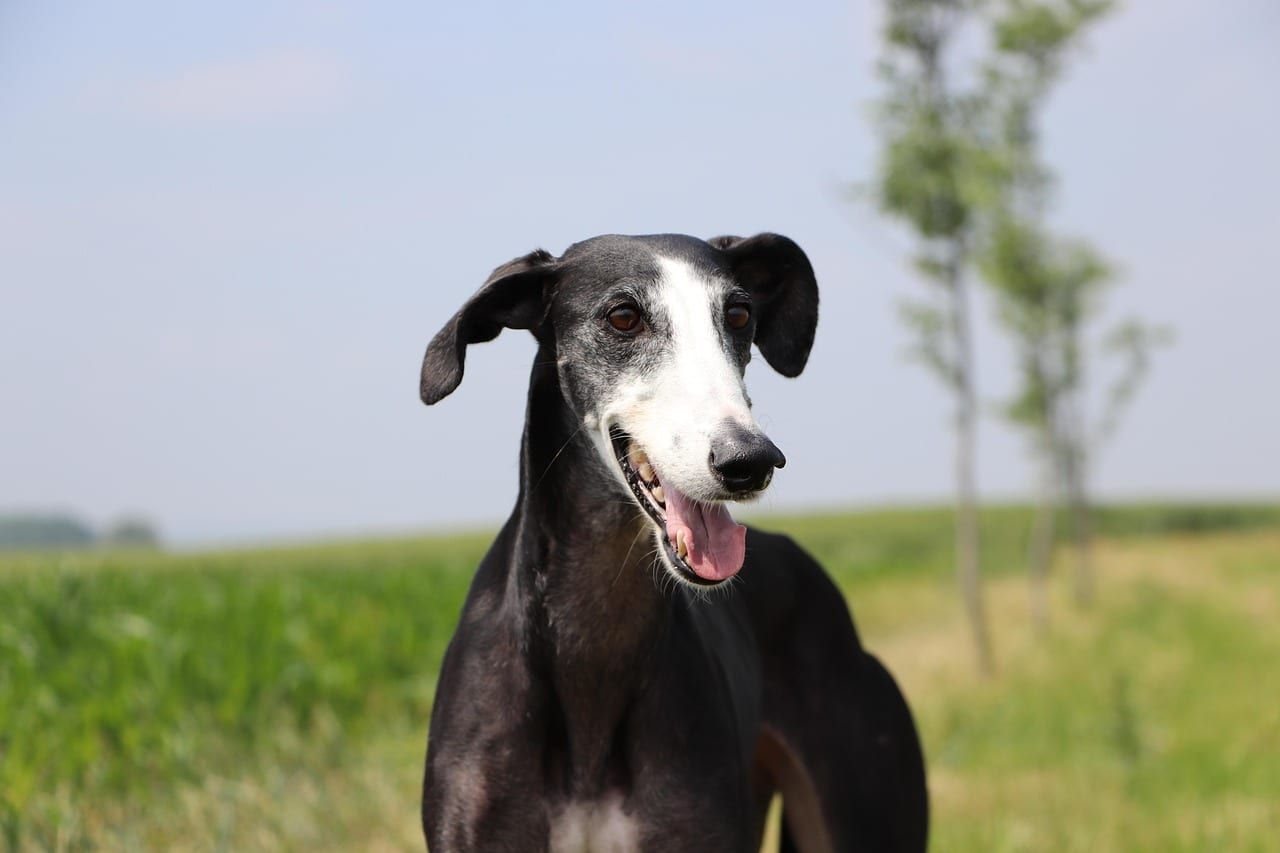
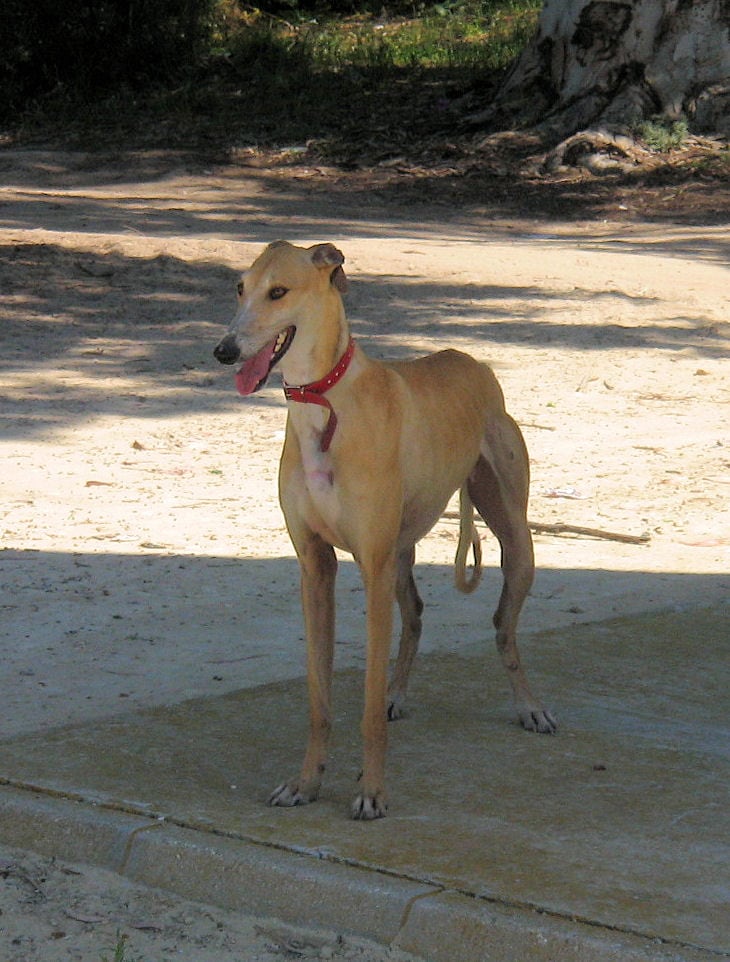
The Spanish Greyhound is a slender, athletically built, medium-sized dog, whose body is designed for fast running. It is characterized by a light, almost dry skeleton, a deep chest and a distinctly drawn-out belly, which gives the body the typical greyhound silhouette.
The head is long and narrow, with a flat skull and only a slight stop between the forehead and the slightly hooked bridge of the nose. The ears are medium-sized, set high, folded back along the neck when at rest, but may be raised when alert. The eyes are small, slightly slanted, with an attentive and somewhat shy expression, which is typical of the breed.
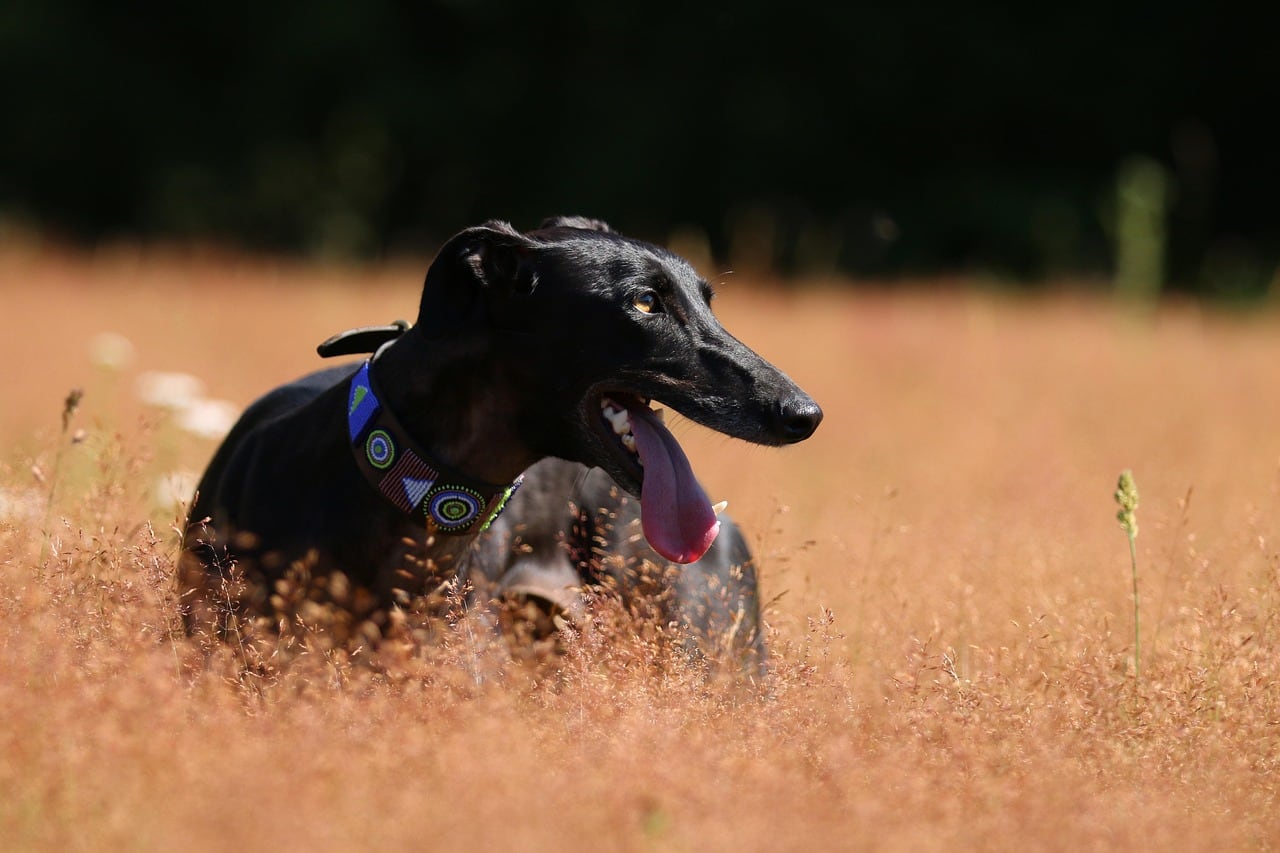
The coat is short, dense and close-fitting, without an undercoat, which also corresponds to the low demand for coat care and low shedding rate. The coat color variants of this breed vary and you can find an overview of them in a separate section on colors.
The tail is long, set low, tapering towards the end and carried hanging between the hind legs when at rest, rising slightly into a sickle shape when in motion. Typical body features include long, sinewy limbs with pronounced angulation of the hind legs, which allow for a long, flexible stride and rapid acceleration.
The standard does not prescribe significantly different dimensions for dogs and bitches, but bitches are generally slightly lighter and more delicately built, while dogs appear more robust in both bone and muscle mass.
Spanish Greyhound Colors
The FCI standard for the Spanish Greyhound allows a very wide range of coat colors and their combinations, including coat and piebald patterns - however, the standard does not specify the exact list of individual shades and characteristics in sufficient detail to be reliably described here. Those interested in a specific assessment of the color of a particular individual are advised to check the current version of the standard with the Czech Kennel Club or the FCI.
Spanish Greyhound Personality
The Spanish Greyhound is a dog with a calm and reserved nature, but can be awakened by a sudden burst of energy - a typical feature of greyhounds, which instantly notice the movement of prey and go after it at full speed. Outside of these moments, it is rather a balanced and discreet companion, not looking for conflicts or unnecessary noise - it only resorts to barking exceptionally.
It builds a relationship with its owner gradually, often being shy and withdrawn towards strangers at first, but it forms a strong bond with close people and seeks their closeness. Its need for company is at a medium level - it is not a dog that can survive without contact with its family for a long time, but it can also rest peacefully on its own.
The intelligence of this breed is undeniable, but it is manifested more by independent judgment than by an attempt to blindly follow commands. Training therefore requires patience and a sensitive approach - rudeness or harsh methods will usually turn against the owner in such a sensitive dog. Short, motivational lessons based on positive experiences that respect its slightly independent nature work better.
This greyhound's energy is focused on short, intense sprints, not continuous movement - after a run, he can rest for a long time. This makes him an interesting combination of high demands on exercise and the ability to spend the rest of the day in peace. He will appreciate mental stimulation, but he does not need it to an extreme extent - adequate stimuli and the opportunity to run at full speed from time to time will be enough.
This greyhound usually gets along well with dogs and likes to move in a pack or with other canine friends. However, when it comes to cats and other small animals, it is necessary to take into account a strong hunting instinct, which can override learned patterns of behavior - therefore, living with a cat is definitely not a given. The guarding tendencies of this breed are not strong, it rather stays aside and evaluates the situation without conflict, rather than actively defending its territory.
Spanish Greyhound and children
The relationship with children of this breed is based more on its overall nature than on specific experience with families - the official assessment ranks suitability for children as neutral, meaning coexistence is individual and depends on the specific individual and the conditions of breeding. The Galgo Español is a calm and rather reserved dog that approaches its surroundings with a certain amount of caution, and the boisterous, unpredictable expressions of small children may not be pleasant for it.
Low barking and a generally quiet nature make it a dog that does not seek conflict, but like a greyhound it reacts strongly to fast movement - a running or screaming child can trigger its hunting instinct, which is important to keep in mind especially outdoors. At home, in a quiet environment, it tends to be rather inconspicuous and restful.
Socialization and the role of an adult
Early and consistent socialization of the puppy with children of different ages is key, ideally in situations that the dog perceives as safe and predictable. Given the medium level of training, it is advisable to conduct training patiently and consistently, with an emphasis on clear boundaries and calm leadership.
- Adult supervision should be a given whenever a dog comes into contact with small children.
- It is advisable to explain to children that sudden movements, shouting or chasing can overstimulate the dog.
- The dog should always have the opportunity to go to a quiet area where no one will disturb him.
- Older children who respect the animal's need for calm and boundaries usually find a more balanced relationship with this breed than preschoolers.
Given his moderate need for companionship and mental stimulation, it is best to engage children in shared activities, such as a slow walk or quiet play, which strengthen mutual trust without unnecessary excitement.
Spanish Greyhound and other dogs and pets
Galgos usually get along well with dogs and are more adaptable in their presence – in fact, they are often kept in packs. The situation is different with cats and small animals: as a hunting breed, traditionally used in Spain to hunt hares by sight and speed, they have a strongly developed instinct to chase anything that moves quickly. Therefore, living with a cat is not a given and depends on the individual's specific nature and how they are socialized from puppyhood.
Recommendations for households with other animals
- Meeting a cat or other small animal is always advisable to try gradually and under control, ideally with a puppy.
- When walking outside a secure area, it is reasonable to assume that the dog may react to the movement of small game and go after it.
- The galgo is usually tolerant of other dogs, which makes it easier to keep in a multi-dog household.
Is the Spanish Greyhound suitable for an apartment?
It is suitable for an apartment only conditionally - the decisive factor is how much exercise the owner can provide, not the size of the housing. Due to its high need for activity and its greyhound constitution, it needs enough space to run freely, ideally in the form of regular outdoor runs, not for permanent residence in a small area.
Indoors, however, it behaves inconspicuously and calmly - it spends most of its time at home resting and is not a barking breed, so it does not cause noise pollution to neighbors or households. The problem is not the apartment itself, but whether the dog can run off its accumulated energy outside.
- It needs sufficiently long and energetic outdoor activities, not just short walks.
- The apartment is peaceful, quiet and undemanding in terms of space to relax.
- It requires an active owner who will really ensure regular exercise.
- A moderate need for mental stimulation means that physical movement alone without head involvement may not be enough.
How much exercise does it need?
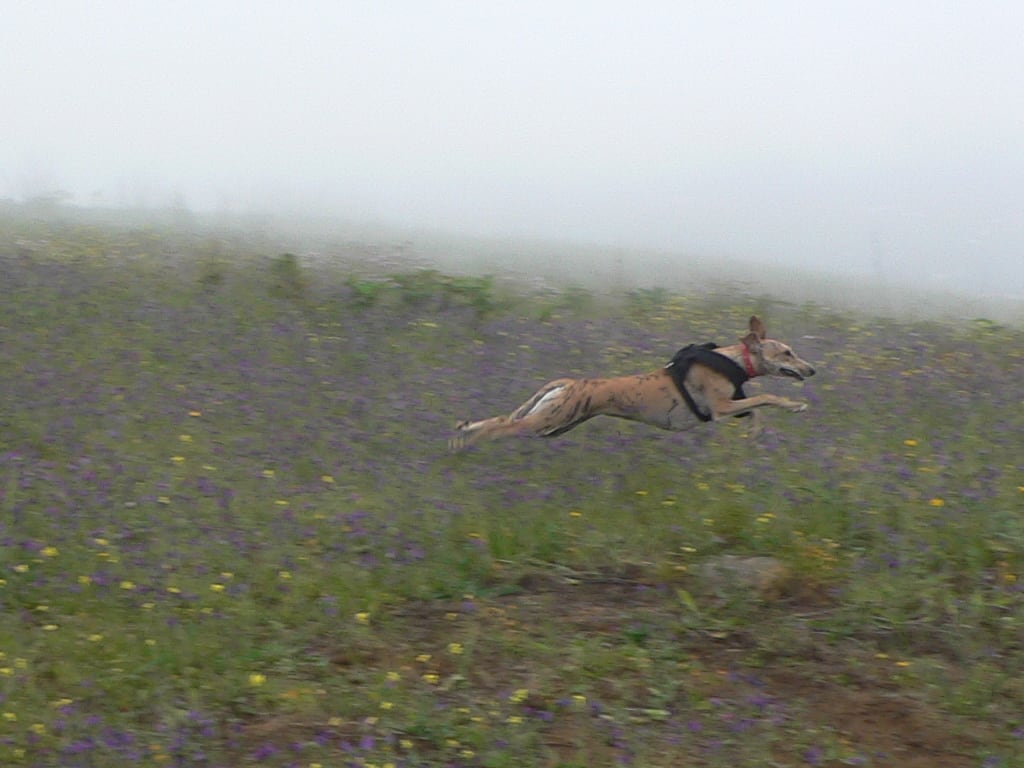
The Spanish Greyhound is a high-activity dog and quickly becomes restless and frustrated without regular exercise. It is a typical sprinter – its body is built for short, intense bursts of high speed, not for long-distance endurance running. Therefore, a combination of longer walks with short intervals, where it can fully utilize its speed in a safe and fenced area, is ideal.
It should be allowed to exercise regularly, ideally every day, because the opportunity to run is crucial for this breed - without it, the energy it has available will just accumulate.
Suitable activities and sports
- Coursing and track sports that utilize the natural hunting instinct
- Free movement in a secure area (fenced garden, reserved meadow)
- Longer walks and more leisurely outings outside of intense sprints
- Cycling support – taking into account fitness and temperature
Mental stimulation plays a moderate role for this breed – they will appreciate variety in their environment, new routes and opportunities to use their sense of smell and sight, rather than demanding training tasks. Given the moderate level of training, a patient, motivational approach is recommended, where activity and learning naturally intertwine.
Short hair without an undercoat means that the breed is less tolerant of cold and extreme heat - when planning exercise, it is advisable to take the weather into account and adjust the intensity and duration of activity on hot or frosty days.
Training and education
Training a Spanish Greyhound requires patience and a sensitive approach rather than harsh discipline – this is a breed with a more independent nature that learns better through positive reinforcement than repeated drill. Short, consistent training blocks work better than long sessions, as the greyhound quickly loses interest in monotonous repetition of commands.
Motivation is usually movement, smell and visual stimulation – not necessarily treats or praise as in breeds bred to work closely with humans. Recall training therefore needs to be built up systematically and from puppyhood, ideally in a confined space, as the strongly developed hunting instinct in this breed can easily outweigh the response to a command, especially when an object is moving rapidly away.
Socialization and specifics
Early socialization with people, other dogs, and common urban stimuli is important for the Spanish Greyhound, as its more sensitive nature can lead to shyness without sufficient experience. It usually gets along well with dogs, but caution and gradual, controlled introductions are necessary with cats and small animals.
Due to their high need for exercise and hunting motivation, this breed is not suitable for complete beginners - mastering reliable recall and safe off-leash walking requires experience and consistency. On the other hand, aggressive or loud training is counterproductive; the greyhound responds better to calm, clear rules and respect for its natural independence.
Hair care and hygiene
The short, close-fitting coat requires minimal care – an occasional brushing with a rubber brush or glove is enough to remove loose hair and stimulate blood flow to the skin. Shedding is low, so this breed does not burden the household with excessive grooming.
Bathing should only be done exceptionally, depending on the actual pollution - thin fur without an undercoat dries quickly and does not require special cosmetics. Given the low layer of subcutaneous fat and minimal fur, it is advisable to dry the dog thoroughly after bathing and after being outside in cold weather, or to buy him clothes in winter, because greyhounds generally do not tolerate low temperatures well.
Ears, eyes, teeth and claws
- It is advisable to check the ears regularly and wipe them gently if necessary to prevent dirt buildup.
- It is enough to monitor the eyes during normal handling and keep the area clean of any discharge.
- Teeth will appreciate regular care - cleaning or suitable chewing aids help maintain healthy teeth.
- Claws need to be trimmed from time to time, especially if the dog does not get enough exercise on harder surfaces that would naturally wear them down.
Thanks to the short, crease-free coat, there is no need for trimming or caring for skin lashes, so overall maintenance remains easy and quick.
Feeding
Due to their high physical activity and slim, athletic body structure, the Spanish Greyhound requires a high-quality complete food that will cover their energy needs without leading to excessive weight gain. The choice of food should correspond to the age, size and level of physical activity of the individual - a puppy, an active adult dog and an older individual have different nutritional needs.
Greyhounds generally have minimal body fat and visible ribs are a natural sign of good condition, not malnutrition. However, it is advisable to regularly check the body condition and adjust the amount of food according to the dog's actual activity - after a more demanding period, the amount may need to be increased slightly, and on calmer days, on the contrary, reduced.
What to focus on
- Adapt the food to the life stage (puppy, adult, senior) and level of physical activity.
- Regularly monitor the dog's physical condition by sight and touch to ensure that it does not gain or lose weight unnecessarily.
- Feed in appropriate portions divided into several doses per day, ideally away from intense exercise.
- Ensure constant access to fresh water, especially after physical activity.
Although the risk of overweight in this breed is lower than in less active types of dogs, it is also true that long-term unbalanced energy intake compared to exercise can negatively affect the dog's condition.
How long does a Spanish Greyhound live?
The exact average lifespan of this breed cannot be stated without a reliable source, but in general, greyhounds with a similar body structure and temperament are among the dogs with a longer life expectancy within the larger breeds. Therefore, we prefer not to give a specific number and focus on the factors that really affect the length and quality of life.
What affects lifespan?
- Genetics: the health of the parents and the responsible selection of a breeding pair have a fundamental influence on how long and in what condition a dog will live.
- Physical condition: the lean, muscular build typical of greyhounds should be maintained throughout life - excess weight puts a strain on the joints and heart and shortens active years.
- Exercise: Due to the breed's high activity level, it needs regular and sufficiently intense exercise, including the opportunity to run freely in a secure area.
- Prevention: regular veterinary check-ups, vaccinations and deworming help detect potential problems early.
- Nutrition: A quality diet appropriate to the age, energy expenditure and lean constitution of the breed supports good health throughout life.
- Health predisposition: due to the type of body structure, the breed may have an increased predisposition to musculoskeletal problems, however, it is advisable to consult a veterinarian or breeder directly for specific diagnoses.
Who is the Spanish Greyhound suitable for?
The Spanish Greyhound is best suited to people with an active lifestyle who can offer it regular exercise while respecting its rather independent, calm nature in the home environment. It is a breed with a high need for exercise but low demands on coat care, so it is more suitable for owners who appreciate the combination of a sporty dog and low maintenance.
Who is the breed suitable for?
- For owners who regularly play sports or spend a lot of time outdoors and can offer their dog enough exercise.
- For more experienced breeders who already have experience with greyhounds or similar separate breeds.
- For households where the dog has secure, fenced areas for free movement.
- For people who appreciate a quiet dog with a low barking rate and easy care for short fur.
- For owners of multiple dogs – the Spanish Greyhound gets along well with dogs.
Who is the breed not suitable for?
- For complete beginners with no experience training a more independent-minded breed.
- For households with cats or small animals where there is a risk of conflict due to hunting instincts.
- For owners who do not have the time or space for regular exercise and want a rather undemanding social dog.
- For people looking for a breed with a clearly high need for physical contact and companionship – in the Spanish Greyhound, this need is more moderate.
Interesting facts about the breed
The Galgo Español is one of the oldest sighthound breeds on the European continent and according to the FCI standard it belongs to the short-haired sighthound section (group 10, standard no. 285). In Spain it was traditionally used for hunting, especially hare, for which it is predisposed by a combination of high speed and endurance.
Although it is a medium-sized breed, it is a typical sighthound – a dog that hunts by sight and sprints quickly. Its relatives in terms of structure and use include the greyhound, whippet, sloughi, Italian greyhound, Hungarian greyhound or Azawakh, with which it shares the basic characteristics of the group.
The short coat requires minimal care and the breed is a dog with a low rate of shedding and drooling, which makes it a relatively low-maintenance companion - in contrast to its high demands on exercise and physical activity.
Spanish Greyhound Health
The FCI standard for the Spanish Greyhound focuses on the exterior and performance characteristics of the breed, specific health risks are not specified in the documents. It is an athletic dog with a lean, muscular build and a short, close-fitting coat, which are typical features of sighthounds in general and are also reflected in the overall care requirements. The high level of activity and the need for regular exercise mean that the physical condition of the dog is closely related to how it is exercised and rested throughout its life. The low demand for coat care and low shedding make routine home care easier, but the health of the individual depends primarily on the origin and breeding lines.
Body structure and musculoskeletal system
The slender, light skeleton and developed muscles give the Spanish Greyhound the prerequisites for fast running, but at the same time it means that the musculoskeletal system should be developed carefully, especially during the puppy's growth period. For active breeds of this type, it is recommended to gradually increase the load and choose the appropriate surface for movement and games to avoid overloading the joints and tendons.
Coat and thermoregulation
The short coat without undercoat provides minimal thermal insulation, so the breed is less tolerant of cold and damp weather and may need additional protection in winter. The low percentage of subcutaneous fat, typical of slender greyhound types, is another reason why it is advisable to monitor how the dog reacts to low temperatures.
What to look for when choosing a puppy
- Ask about the health and condition of the parents, or about documents from the breeder regarding the examinations performed.
- Observe the environment in which the puppies grew up - plenty of space to move supports the healthy development of muscles and joints.
- Verify that the puppy is used to normal handling and is in reasonable physical condition, not too thin or overgrown.
- Keep in mind that this is an active breed with high demands on exercise, which should be taken into account when choosing a breeder and the breeding environment.
Known predispositions
The breed is described to have an increased predisposition to:
- to increased sensitivity to some anesthetics (typical for greyhounds with low body fat and different liver metabolism).
- to hip dysplasia.
- to bone tumors (osteosarcoma), as is often described in large greyhound breeds.
- to progressive retinal atrophy.
- to hypothyroidism.
- to gastric dilatation and torsion (GDV) due to the deep chest structure typical of greyhound breeds.
Discussed risks
The breed is described to have an increased predisposition to:
- to dilated cardiomyopathy, as described in some greyhound breeds.
- to injury to the tail and skin due to the thin skin structure and low proportion of subcutaneous fat typical of greyhounds.
This overview is for informational purposes only and does not replace the examination or recommendations of a veterinarian.
What to buy for a Spanish Greyhound
A practical basis that is suitable for this breed:
- Toys – Dog toys – fetching, chewing and interactive.
- Cosmetics – Shampoos, conditioners and hair care products.
- Bowls – Feed and water bowls, anti-swallow bowls and stands.
- Collars – Dog collars – leather, textile and semi-tight.
- Beds – Beds and mattresses for dogs of all sizes.
- Leashes – Leashes, switch leashes and tracking lines.
Useful instructions
Practical tips that are useful when caring for a dog:
Frequently asked questions
Is the Spanish Greyhound suitable for an apartment?
Yes, thanks to their low shedding rate and calm nature indoors, they don't mind living in an apartment as long as they get enough exercise outdoors. They are a breed with a high activity level, so an apartment must be supplemented with sufficiently long outdoor activities.
Can Spanish Greyhounds get along with cats?
Probably not - as a greyhound with a strong hunting instinct, it may perceive smaller animals as prey. Living with a cat is individual and depends on socialization from puppyhood.
Is the Spanish Greyhound suitable for beginners?
Probably not, because training him requires moderate experience and a sensitive approach to his nature. He will appreciate an owner who understands the specifics of greyhound breeds.
How much exercise does a Spanish Greyhound need?
This is a high activity breed that needs regular, intense exercise, ideally with the option of free running. Mental stimulation is at a moderate level, but physical output is key.
Does the Spanish Greyhound bark a lot?
No, thanks to their short coat, they are a breed with a low shedding rate. This makes coat care easy and basic regular grooming is sufficient.
Is the Spanish Greyhound suitable for children?
The relationship with children is neutral in this breed, so it depends on the specific individual and the way of socialization. Given its temperament and body structure, it is advisable to live with children always under supervision.
What was the Spanish Greyhound originally used for?
The Galgo Español originates from Spain and was bred as a hunting hound, which is still reflected in its high level of activity and strong hunting instinct. This origin also explains its more cautious attitude towards smaller animals.
Is the Spanish Greyhound noisy?
No, they are a breed with low barking rates, so they usually do not cause any disturbance in the household with their vocalizations.
Does the Spanish Greyhound get along with other dogs?
Rather, yes, he usually gets along well with dogs, especially if he is properly socialized from puppyhood. This makes him a suitable candidate for a household with another dog.
What breeds are similar to the Spanish Greyhound?
Related and similar breeds include the Greyhound, Whippet, Sloughi, Italian Greyhound, Hungarian Greyhound, and Azawakh. All fall into the sighthound group with similar body structure and uses.
Is caring for a Spanish Greyhound difficult?
Grooming is low due to the short coat, but it is more challenging to provide enough exercise and mental stimulation to match its active temperament. Training requires a moderate level of experience and patience.
Resources and further information
- FCI Standard No. 285 - Spanish Greyhound - Fédération Cynologique Internationale
- Source of body measurements – fci.be
Professional cooperation
This breed overview was created in cooperation with the Veterinary Clinic VYVET sro and MVDr. Adam Hylák .