
Published 17. 9. 2026
The Hungarian Greyhound is a large, slender breed originating from Hungary, where it has been used for centuries for hunting on open plains and for chasing game on flat terrain. It is classified in Group 10 of the FCI short-haired sighthounds. It reaches a height of 62–70 cm depending on the sex and usually lives for 12 to 14 years. The short coat requires only minimal care and the breed hardly drools or barks excessively.
In temperament, this is a dog that is calm and balanced in the home environment, but with a strong need for exercise and opportunities to run fast outside. It is friendly with children and gets along well with other dogs, but cats and smaller animals can awaken a hunting passion in it. Thanks to its more reserved, independent character, it is more suitable for active owners with previous experience with greyhound breeds than for complete beginners or for apartment breeding.
Professionally consulted
The content was created in cooperation with the veterinary clinic Veterinární klinika VYVET sro and MVDr. Adam Hylák.
Quick overview
What is the Hungarian Greyhound like?
The Hungarian Greyhound is a large, slender breed from Hungary, classified as a short-haired greyhound. The male dog measures 65–70 cm at the withers, the female is slightly smaller, 62–67 cm, and usually lives to be 12–14 years old. It is a typical sighthound – a fast, persistent runner with a strong hunting instinct, which at home is dominated by calmness and ease of movement in the apartment.
The Hungarian Greyhound is rather calm and balanced in temperament, family-friendly and adaptable to children, although not particularly boisterous. It requires a moderate level of companionship and mental stimulation, and is moderately demanding in training - it is not an extremely obedient breed, but it cooperates well with a patient approach. It is tolerant of dogs, but caution is needed with small animals, including cats, due to its hunting instinct.
The coat requires virtually no care, shedding and drooling are minimal, and it barks only exceptionally. It is best suited to active owners with plenty of space for regular exercise and the possibility of free range in a safe environment - on the contrary, it is more of a compromise choice for an apartment, seniors, or complete beginners.
Origin and history of the Hungarian Greyhound
The Hungarian Greyhound originates from the Pannonian Plain, where, since the arrival of the Hungarian tribes, it has been shaped as a hunting dog adapted to hunting hares, foxes and other small game in the open steppe landscape. Its ancestors were sighthounds brought by nomadic peoples from the Central Asian steppes, who gradually crossed with domestic dogs settled in the territory of today's Hungary. This created a type of greyhound resistant to the harsh continental climate, with a coarser body structure than that of Western European greyhounds, but with the retained speed and endurance needed for long chases on horseback.
For centuries, it served the Hungarian nobility and the rural population as a versatile hunting dog, bred for working utility rather than a uniform ideal of appearance. This approach led to the preservation of a more robust constitution that distinguishes the Hungarian Greyhound from its more slender relatives, such as the Greyhound or Whippet. With the advancement of industrialization and the decline of traditional horse hunting, the breed's use shifted to racing and coursing, which helped maintain its population well into the 20th century.
The breed standard is under the umbrella of the Hungarian Cynological Organization and is registered with the FCI under number 240 in the tenth group of sighthounds. Outside Hungary, the sighthound has spread to other European countries, where breeders appreciate it as a lesser-known but functionally preserved variant of sighthound breeds with a strong connection to its original working purpose.
Appearance and size
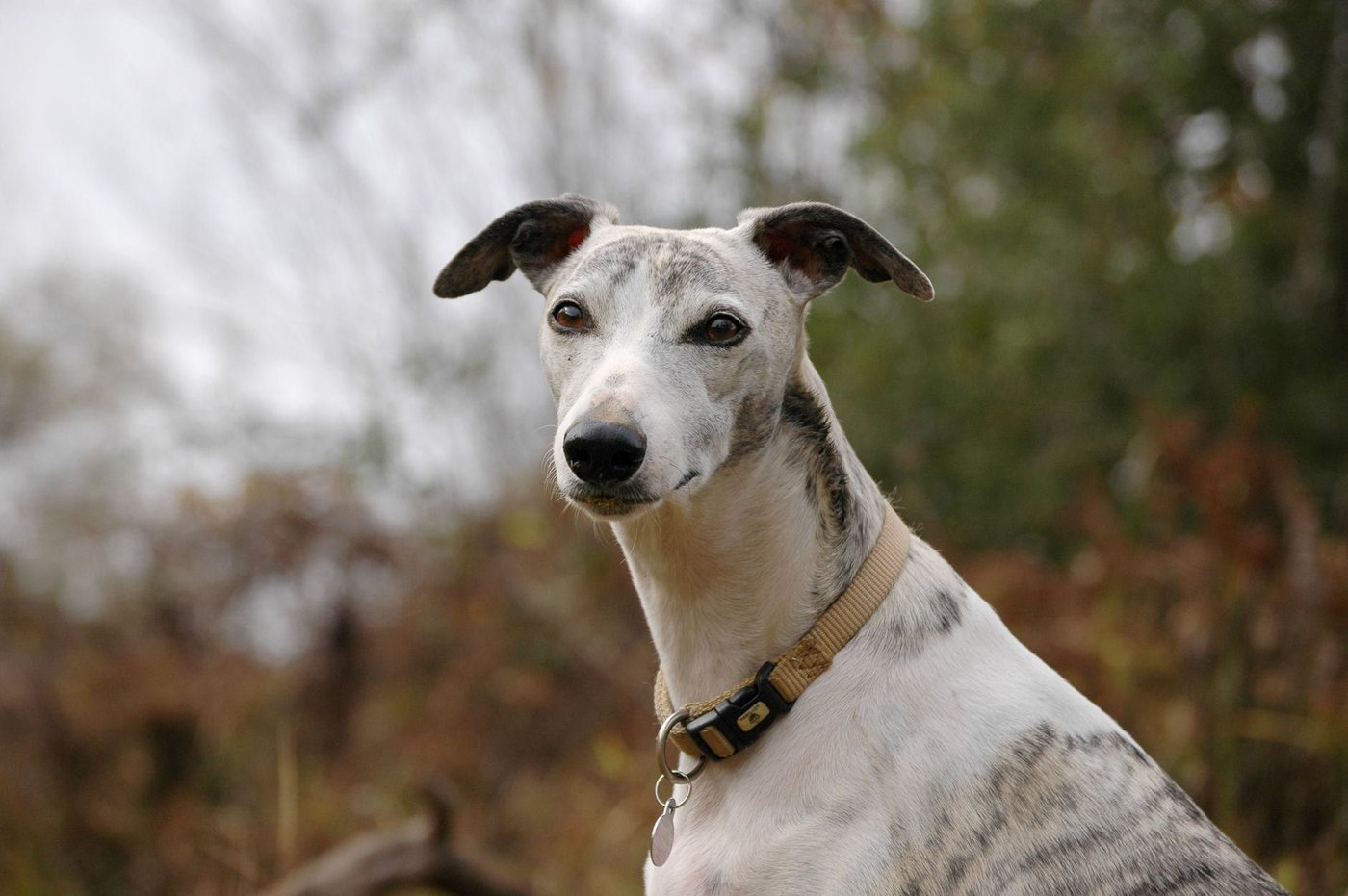
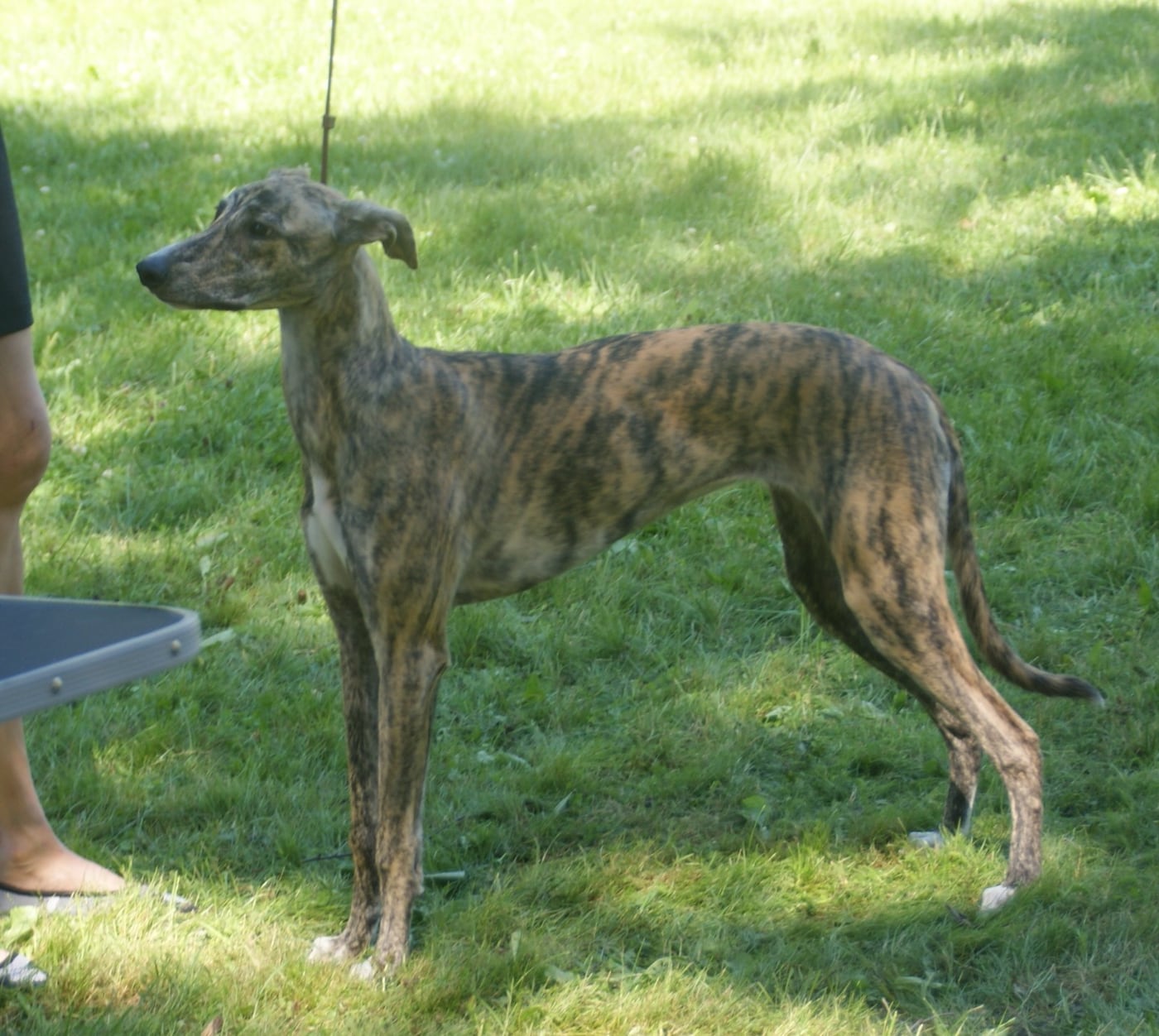
The Hungarian Greyhound is a slender, athletically built dog with a distinctly sporty silhouette typical of greyhound breeds. The male dog stands 65–70 cm at the withers, the female is slightly smaller at 62–67 cm – the difference between the sexes is more noticeable in the overall build and height, the females tend to be slimmer.
The body is muscular, but does not appear cumbersome - the chest is deep, spacious for sufficient lung capacity, the belly is tucked in, the back is firm and slightly arched in the lumbar region, which is characteristic of greyhound breeds and allows for a long, spacious stride when running.
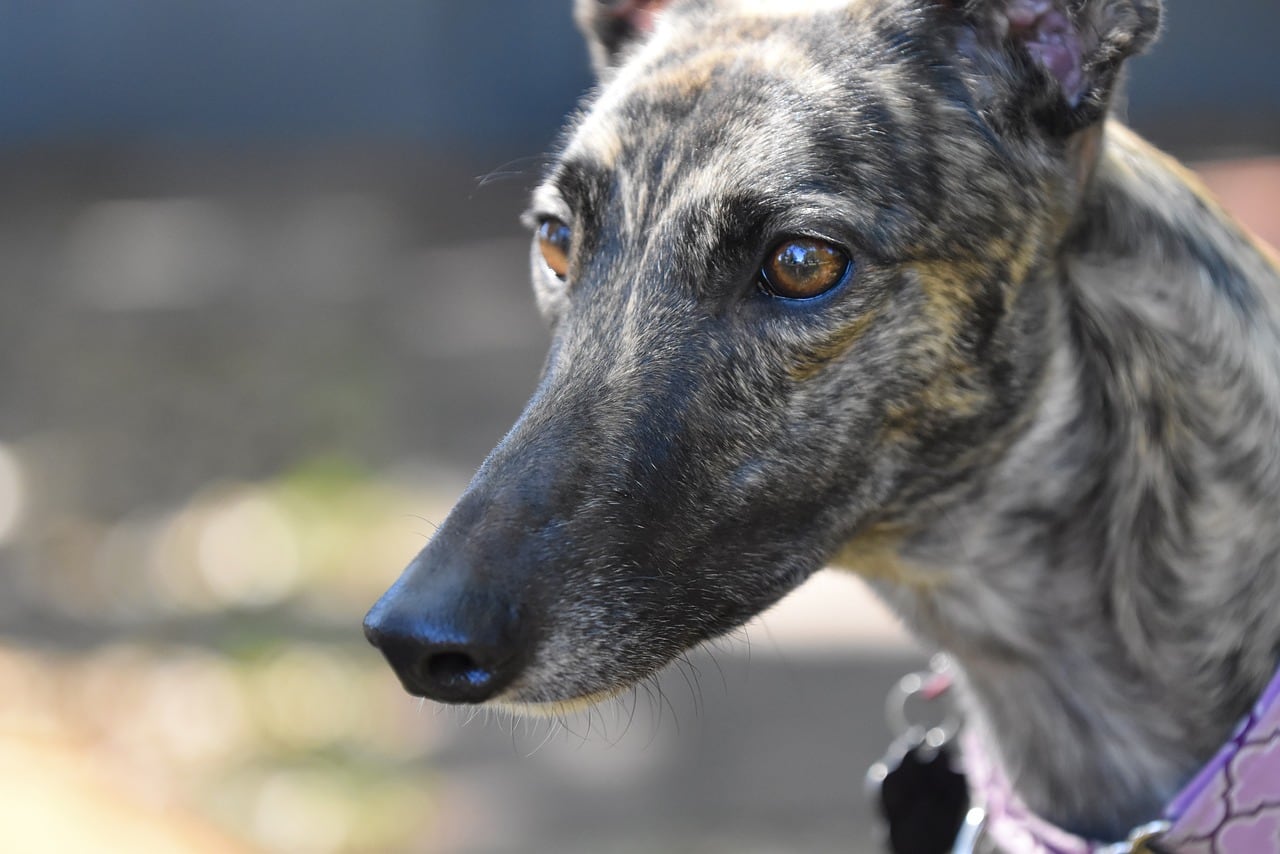
The head is elongated, dry, without excess skin, with a flat skull and a slightly pronounced stop. The muzzle is relatively long, making the silhouette of the head elegant and functional at the same time. The eyes are rather small, dark, with a lively expression. The ears are set high, medium in size, folded back when at rest, and can be raised when alert.
The coat is short, lies close to the body, and has no undercoat, making it easy to care for. Color variations and their distribution are described in a separate section on color.
The tail is set low, long, tapering towards the end and when at rest it is carried downwards with a curve at the end, when moving it is raised higher.
Typical traits of the breed include:
- elongated, dry head without lobes
- deep chest and pulled-in stomach
- long, muscular limbs built for fast running
- low grooming requirements
Hungarian Greyhound Colors
I do not have a specific overview of the recognized color variants and their representation in the standard in such detail that it would be possible to list them here without the risk of inaccuracy. In general, the range of coat colors in greyhound breeds is wide and the standard usually allows most natural shades, including various combinations with white.
Since the Hungarian Greyhound has a short and undemanding coat, the color itself plays a more aesthetic role than a practical one when choosing a puppy - the color of the coat itself does not affect the nature or activity level, which should be considered high for this breed.
Hungarian Greyhound Personality
The Hungarian Greyhound is a calm, balanced dog with a strong bond with its owner - at home it seems rather quiet and inconspicuous, but outside it turns into a purposeful and fast hunter. This contrast between domestic comfort and ferocity in movement is typical for the breed and owners should take it into account.
It is devoted and sociable towards its family, but rather reserved and measured towards strangers, without being aggressive. Thanks to this caution, it also has a slight guarding tendency - it can alert to unknown stimuli, although it is definitely not a loud breed. It barks little and is rather reserved in its expressions.
It is an intelligent dog with independent thinking, which is also manifested by a certain degree of stubbornness. Training therefore requires patience and consistency - the Hungarian Greyhound responds better to a calm, motivating approach than to harsh methods or mechanical repetition of commands. A strongly developed hunting instinct means that when looking at a moving small animal, it can easily ignore even well-established commands, so it is advisable to train the recall systematically and in a safe environment.
The energy of this breed is high, but specific - it is not a dog that needs constant exercise all day long, but rather alternates long periods of rest with intense, fast runs. It needs a reasonable amount of mental stimulation, and will appreciate a variety of walks and the opportunity to run freely in a safe place.
He usually gets along well with dogs and can form relationships even within a pack, but caution is advised with cats and other small animals due to his strong hunting instinct. He is usually friendly and patient with children, although he will appreciate calmer interaction rather than noisy games.
Hungarian Greyhound and children
According to available data, this breed is rather good with children, but it should always be supervised by an adult. It is a calm, balanced dog with relatively little barking, which does not seek out conflicts at home, but at the same time has a strong hunting instinct and a quick reaction to sudden movement - characteristics typical of greyhound breeds in general.
Small children should be taught that running, screaming or pulling the fur is not pleasant for this type of dog and may cause a startle reaction by running away or defensive behavior. Given the size and strength of an adult, it is advisable that interactions with smaller children always take place under the control of a parent.
The role of socialization and upbringing
The training difficulty of this breed is rated as medium, which in practice means that it responds well to a patient and consistent approach, but it is not a dog that will be mindlessly obedient like some working types. Early and gradual socialization with children from puppyhood helps build trust and calm in their presence even in situations when the home is busy.
- Introduce the dog to children gradually and in a calm environment, without forcing contact.
- Teach children basic rules of behavior towards dogs – no pulling, no pulling by the tail or fur.
- Provide the dog with the opportunity to leave in peace if the interaction is uncomfortable.
- Supervise free movement outdoors, as a strong hunting instinct can lead to a sudden run after a moving object.
Due to its high need for exercise and energy, this dog will also be appreciated by older children, who can actively engage in running or playing in the garden with it, of course, with respect for its more sensitive nature.
Hungarian Greyhound and other dogs and pets
The Hungarian Greyhound gets along well with other dogs and is calm and adaptable in their presence, making it a suitable candidate for a household with another dog. The situation is different with cats and small animals - as a typical greyhound, it has been bred for generations to hunt hares and other small game in open countryside, and the instinct to chase fast-moving objects is deeply rooted. This also translates into coexistence with cats, which we do not recommend without careful and gradual socialization from puppyhood.
Cats and small household animals
The rapid movement of a small animal – from a cat to a rodent to a small dog – can immediately trigger the Hungarian Greyhound's hunting instinct. Even a dog that grew up with a cat since puppyhood and learned to perceive it as part of the pack may react differently to a strange cat on a walk. Owners should therefore take into account that this greyhound belongs outdoors on a leash, or in a secure area where there is no risk of collision with small animals running around freely.
Socialization with dogs
- Thanks to its low barking rate and rather calm nature, it fits into the pack without unnecessary conflicts.
- Regular socialization from puppyhood is recommended to get him used to different sizes and types of dogs.
- His hunting instincts can also be seen in his play with other dogs – fast chasing is natural for him and dogs with a similar temperament (e.g. greyhound or whippet) tend to be pleasant companions.
Is the Hungarian Greyhound suitable for an apartment?
Probably not. The Hungarian Greyhound is a large, slender breed built for fast running, and an apartment therefore does not offer him the space he needs to live a happy life. The ideal home for him is a house with a garden, where he has enough space to move freely and rest.
While his calm nature indoors is a plus – he is usually content at home and does not require constant activity indoors – that does not mean he can do well in a small space. He needs plenty of daily exercise outdoors, ideally the opportunity to run freely in a safe environment, as this is a highly active breed with a strong instinct to chase moving objects.
If he/she still lives in an apartment, the owner would have to ensure:
- sufficiently long walks and the possibility of regular free movement outside the city
- a quiet environment without unnecessary disturbance, as this is a more sensitive breed
- a space where he can stretch out and relax without restrictions – small rooms do not suit him
What does not prevent apartment breeding is barking - the Hungarian Greyhound is one of the dogs that rarely barks loudly, so from this point of view it is not a burden for the neighbors.
How much exercise does it need?
The Hungarian Greyhound is a highly active dog and needs at least one longer demanding activity per day, ideally a combination of free movement and controlled sprinting in a secure area. It is a typical hunting greyhound, in which short but intense runs are balanced by slower walks - leash walks alone will not cover its need for exercise.
Suitable activities
- Free running in a fenced or otherwise secured area
- Coursing and track sports for greyhounds
- Longer walks in the field as a complement to fast-paced activities
- Movement in a pair or group with other greyhounds that get along with them
It needs moderate mental stimulation – it will appreciate variety and the opportunity to observe its surroundings rather than demanding intellectual tasks. Due to its strong hunting instinct, it is advisable to ensure secure fencing and be careful around small animals or cats, with which this breed usually does not get along well.
Due to its short coat and low subcutaneous fat, the Hungarian Greyhound is less able to tolerate cold and damp weather, so it is advisable to consider a protective suit in winter. In hot weather, on the other hand, it is necessary to monitor the intensity of the exercise and provide enough rest in the shade.
Training and education
Training a Hungarian Greyhound requires patience and a sensitive approach rather than harsh discipline – it is an independent-minded dog that responds willingly to commands if it sees sense in them, but does not tolerate mechanical repetition and pressure. Short, positively guided lessons work more reliably than long training blocks, as they will keep its attention and prevent frustration on both sides.
The strongest motivation for this breed is movement and the ability to follow or chase moving stimuli - the hunting instinct is deeply encoded and must be taken into account in training. Rewards in the form of play, praise and occasional free running in a safe environment work well, while harsher methods usually only lead to the dog withdrawing into itself.
Summoning and working with the instinct
Due to the strong hunting instinct, recall is one of the most demanding skills - the moment a dog spots a fast-moving animal, it can immediately lose interest in its surroundings and run after it. Training reliable recall therefore requires a gradual increase in difficulty, working on a long line and training in an environment with distracting stimuli, ideally under the guidance of a more experienced owner or trainer.
Socialization
Early and consistent socialization helps to overcome the natural shyness towards unfamiliar people and situations that this breed can exhibit. Gradually introducing them to different environments, sounds and people from puppyhood reduces the risk of anxious behavior in adulthood and promotes their poise.
Since he gets along well with other dogs, but his relationship with cats and small animals is often problematic due to his hunting instinct, it is advisable to pay attention to socialization with other types of animals and not rely on him to form a relationship on his own.
Hair care and hygiene
The Hungarian Greyhound's short, close-fitting coat is one of the most low-maintenance of all breeds - a weekly brushing with a rubber brush or mitt is enough to remove loose hair and keep the coat shiny. Shedding is low, so it doesn't burden the household with excessive hair cleaning.
Bathing should be exceptional and based on real need, not on a fixed schedule - frequent bathing could disrupt the natural protective layer of the skin. Due to the low layer of subcutaneous fat and thin skin, it is advisable to consider clothing in colder weather, as the dog reacts more sensitively to the cold than breeds with thicker coats.
Ears, eyes, teeth and claws
It is a good idea to check the ears regularly and clean them gently if necessary, and you can simply watch the eyes for signs of redness or discharge. The teeth will appreciate regular cleaning or chewing aids that reduce tartar buildup. The claws of this active breed need to be trimmed depending on how quickly they naturally wear out during exercise - dogs that run outside regularly tend to need trimming less, while less active individuals need to have their claws trimmed more often.
There is no need to deal with skin folds or special hair trimming in the Hungarian Greyhound - it is a type with a smooth, simple coat without an undercoat, and care is limited to basic hygiene and regular, but undemanding checks.
Feeding
Due to their high activity and athletic body structure, they require high-quality complete food with sufficient animal protein and energy corresponding to their actual expenditure - a greyhound with a sports or work load will have a significantly higher energy requirement than an individual who lives as a companion dog with a normal walking load.
It is advisable to adapt the choice of food to the age and stage of development: a large breed puppy needs food that is controlled for gradual, not too rapid growth of the skeleton and joints, an adult needs a balanced diet according to the level of movement, and an older dog usually needs a less caloric option due to decreasing activity.
Physical fitness check
Thanks to the slender, muscular constitution, the Hungarian Greyhound's ribs and waist are easy to check regularly by touch and sight - slightly visible ribs and a significantly pulled-in belly are the norm for this type of greyhound, not a sign of malnutrition. On the contrary, even a small increase in weight can noticeably limit speed, agility and put a strain on the joints, so it is recommended to monitor the condition continuously and adjust the amount of food and treats according to the dog's current performance and exercise regimen.
- Choose food according to age, size and activity level, not in a blanket way.
- Observe the silhouette and palpability of the ribs as an indicator of proper weight.
- After physically demanding days, the amount of feed can be slightly increased, and during calmer periods, the amount can be reduced.
- Transitions between feeds should be made gradually to avoid digestive problems.
How long does a Hungarian Hound live?
The Hungarian Greyhound lives an average of 12 to 14 years , which is a solid value for a large breed and ranks it alongside other greyhound breeds with a similar constitution.
Life expectancy is influenced by a number of factors that the owner can largely influence:
- Genetics and origin of the puppy - the health of the parents and responsible breeding significantly affect the predisposition to diseases and the overall vitality of the offspring.
- Physical fitness – the greyhound body type requires maintaining a lean, athletic build; excess weight puts unnecessary strain on the joints and heart.
- Exercise – this is a breed with a high level of activity that needs regular, sufficient exercise and the opportunity to run freely, otherwise it suffers both physically and mentally.
- Preventive veterinary care – regular check-ups, vaccinations and deworming help detect potential problems early.
- Nutrition – a balanced diet that meets the energy needs of an active greyhound supports the health of its coat, muscles and internal organs.
- Health predisposition - as with other greyhound breeds, sensitivities associated with body structure may occur, such as thinner skin more prone to injury or sensitivity to anesthetics, which is why it is advisable to consult a veterinarian before any procedure.
The combination of quality breeding, adequate exercise, and responsible care gives the Hungarian Greyhound a good chance of living to the upper limit of the above range.
Who is the Hungarian Greyhound suitable for?
The Hungarian Greyhound is best suited to families with a spacious home and an active approach to life - it will appreciate plenty of exercise and opportunities to run freely, while at home it can behave calmly and discreetly. It is a dog with a strong hunting instinct, which affects both its relationship with other animals and its requirements for a secure outdoor space.
Who is the breed suitable for?
- For active owners who will ensure regular exercise and the opportunity to run freely in a safe environment
- For households with a garden or a sufficiently large space - an apartment is not an ideal choice
- For families with children, to whom he is usually friendly and tolerant
- For owners of other dogs with whom they usually get along well
- For those looking for a dog with low maintenance and low shedding
Who is the breed not suitable for?
- For apartment keepers or people without access to a larger outdoor area
- For households with cats or other small animals where hunting instincts could lead to conflicts
- For seniors who might find the breed's high activity and energy difficult
- For complete beginners expecting a dog without the need for guidance and training experience
- For owners who want a dog more as a quiet companion without the need for regular exercise
Interesting facts about the breed
The Hungarian Greyhound originates from Hungary and is also known by its original name Magyar Agar or in English Hungarian Greyhound. It is one of the sighthound breeds classified in the 10th FCI group (shorthaired sighthound section), under standard no. 240.
Related breeds to which the Hungarian greyhound is often compared include the greyhound, Polish greyhound, whippet, sloughi, Italian greyhound and Spanish greyhound - all of which share a typical greyhound body structure and use for long-distance and sprint hunting.
By its nature, it is a dog with a strong connection to active movement - combined with low demands on coat care and a low tendency to drool and bark, it is a typical representative of greyhounds, which are low-maintenance but more demanding in terms of space and movement.
Hungarian Greyhound Health
The Hungarian Greyhound is one of the long-lived large breeds – it lives on average 12 to 14 years, which is above average for its size. It is a breed bred for endurance and fast running, so its health is closely related to the body structure and lifestyle that the owner provides it. Greyhound breeds generally have a slim body with a minimum of subcutaneous fat, which affects their resistance to cold and mechanical stress. The specific health predispositions of this breed are not mapped in detail in the professional literature, so it is advisable to be careful and rely on a reputable breeder.
Musculoskeletal system and load
The Hungarian Greyhound is built for fast and steady movement, which is matched by a high need for activity. The long limbs and light skeleton of this type of greyhound are efficient for running, but they also mean that sudden starts, sharp turns or impacts at high speed can put more strain on the joints and ligaments than in more compact breeds. Gradual building of fitness and adequate exercise in young individuals, whose skeleton is still maturing, are among the basic principles of caring for this type of dog.
Coat and thermoregulation
The short and fine coat of the Hungarian Greyhound is almost non-shedding and easy to care for, but it does not provide significant thermal insulation. Combined with the slender body structure and low percentage of subcutaneous fat, this means that the dog can be more sensitive to cold and damp than breeds with a thicker undercoat. When walking in winter, it is worth considering that this greyhound gets cold more quickly.
What to look for when choosing a puppy
- Be interested in the kennel and how the puppy's parents are physically built and how they handle the load.
- Monitor the movement of the puppy and its parents - for a breed built to run, symmetrical and light movement is an important clue.
- Ask about the breeding conditions, because a spacious enclosure and the possibility of natural movement support the proper development of the musculoskeletal system.
- Verify whether the breeder provides information about the health status and possible testing of the parents, if available at the kennel.
Known predispositions
The breed is described to have an increased predisposition to:
- to hip dysplasia, as is common in larger dog breeds.
- to gastric distension and enlargement associated with gastric torsion (GDV), a risk typical of deep-chested sighthound breeds.
- to dilated cardiomyopathy, a heart muscle disease described in a number of large and sighthound breeds.
- to fractures and limb injuries due to high speed and slender body structure typical of sighthound breeds.
- to anesthetic complications due to the low body fat percentage, which is characteristic of lean sighthound breeds.
- to progressive retinal atrophy, a hereditary retinal disease described in a number of dog breeds.
- to cancer, as is generally described in larger breeds of dogs with shorter lifespans.
This overview is for informational purposes only and does not replace the examination or recommendations of a veterinarian.
What to buy for a Hungarian Greyhound
Practical basis that is suitable for this breed:
- Toys – Dog toys – fetching, chewing and interactive.
- Cosmetics – Shampoos, conditioners and hair care products.
- Bowls – Feed and water bowls, anti-swallow bowls and stands.
- Collars – Dog collars – leather, textile and semi-tight.
- Beds – Beds and mattresses for dogs of all sizes.
- Leashes – Leashes, switch leashes and tracking lines.
Useful instructions
Practical tips that are useful when caring for a dog:
Frequently asked questions
Is the Hungarian Greyhound suitable for an apartment?
Rather not - it needs enough space and, above all, the possibility of regular free movement, which an apartment alone cannot provide. If the owner has a garden and takes him on sufficiently long walks with a run, coexistence in a smaller space can be managed, but it is not an ideal condition.
How much does a Hungarian Greyhound weigh and how big is it?
It is a large breed - the male measures 65–70 cm at the withers, the female 62–67 cm. The exact weight is not given in the standard, but the body is typically slim and muscular, as is usual for greyhounds.
How long does a Hungarian Greyhound live?
The average lifespan is between 12-14 years, which is a solid value for a large breed. This is also due to the relatively low burden on the skin and coat, which eliminates many problems associated with thick fur.
Is the Hungarian Greyhound suitable for beginners?
The rating is neutral – it is not an extremely demanding breed, but it requires understanding the nature of the greyhound, respecting its strong hunting instinct and ensuring sufficient exercise. A beginner who prepares for these specifics can work with the Hungarian Greyhound without any problems.
Does the Hungarian Hound get along with cats and other small animals?
Probably not – as a typical greyhound, it has a strongly developed instinct to chase fast-moving objects, which also applies to cats or rodents. In individuals socialized from puppyhood with a specific cat, coexistence is sometimes successful, but it is generally a risky combination.
How much does a Hungarian Greyhound shed and how difficult is the care of its coat?
Shedding is low and coat care is easy, as it is a short-haired breed with no undercoat. Occasional brushing is sufficient, frequent bathing is not necessary.
How much exercise does a Hungarian Greyhound need?
Activity level is high – this breed was bred to run fast when hunting, so it needs regular, intense exercise, ideally with the possibility of free running in a safe fenced area. Just short walks are not enough for it in the long term.
Is the Hungarian Greyhound noisy, does it bark a lot?
No, the barking rate of this breed is low. It is a dog that is rather calm and does not seek out vocal expressions unnecessarily.
Is the Hungarian Greyhound suitable for children?
Rather yes, he is friendly towards children and tolerates their presence well, especially if he grows up with them from puppyhood. However, due to his size and temperament, supervision is advisable with small children to prevent him from being accidentally carried away while playing.
Why does the Hungarian Greyhound have a problem running around without a leash?
Due to the strong hunting instinct typical of greyhound breeds originally used to hunt game on open plains, once it registers a fast-moving animal, it may chase it regardless of commands, so free movement is recommended only in a secure area.
Is the Hungarian Greyhound suitable for seniors?
Probably not – its high demands for exercise and energy are difficult for many seniors to handle. A less physically active owner might not provide it with the amount of exercise this breed needs to be happy.
How is the Hungarian Greyhound different from the Greyhound and other sighthound breeds?
The Hungarian Greyhound originates from Hungary and was originally bred to hunt on the open plains, while the Greyhound is of British origin. They are similar in body structure and use, but differ in the details of the standard and genetic background - related breeds include the Polish Greyhound or the Spanish Greyhound.
Resources and further information
- Hungarian Greyhound (Magyar Agar) – Official Breed Standard – United Kennel Club (UKC)
- FCI Standard No. 240 – Hungarian Greyhound – Fédération Cynologique Internationale
- Source of body measurements – fci.be
- Hungarian Greyhound – Wikipedia
Professional cooperation
This breed overview was created in cooperation with the Veterinary Clinic VYVET sro and MVDr. Adam Hylák .