
Published 1. 9. 2026
The American Foxhound is a large hunting breed from the United States, classified in FCI Group 6 among hounds (Scent hounds section, standard no. 303). It reaches 53–64 cm at the withers, depending on the sex, and weighs 29–34 kg. Its short coat requires almost no care, but its temperament and working nature place high demands on its owner – it is a dog bred for pack fox hunting, capable of running for hours without stopping.
The American Foxhound is sociable and friendly towards children, gets along well with other dogs, but may not respect cats. It requires a high level of exercise and mental stimulation, and without it it shows itself as a significant barking. It is not suitable for an apartment or for beginners or seniors - it will be appreciated by an active owner with experience in training hounds and the opportunity to give it space and regular exercise.
Professionally consulted
The content was created in cooperation with the veterinary clinic Veterinární klinika VYVET sro and MVDr. Adam Hylák.
Quick overview
What is the American Foxhound like?
The American Foxhound is a large hunting breed from the United States, classified in FCI Group 6 among hounds (Scent hounds section, standard no. 303). Males reach a height of 56–64 cm, females 53–61 cm, and weigh around 29–34 kg for both sexes. It is a hardy, energetic dog with a strongly developed hunting instinct, a loud voice and an almost inexhaustible supply of energy.
The American Foxhound is friendly, sociable and enjoys spending time around people and other dogs, but tends to avoid cats. It requires a lot of exercise and mental activity, otherwise it easily becomes bored and destructive. Training tends to be more demanding due to its independence and hunting absent-mindedness, so it is best suited to experienced and active owners with sufficient outdoor activities.
- This breed is not very suitable for apartments or for seniors.
- He is generally friendly towards children and gets along well with dogs.
- The coat is short and easy to care for, but the barking is pronounced.
Origin and history of the American Foxhound
The American Foxhound originated in colonial America in the 17th and 18th centuries, when settlers on the East Coast imported foxhounds from England and France. The foundation was formed by English foxhounds, which were gradually mixed with the blood of French hounds and other European hunting dogs imported to Virginia and the surrounding colonies. The goal of breeders was to develop a dog that was faster and more enduring than its European ancestors, capable of conquering the vast and rugged terrain of the American countryside during long hours of hunting.
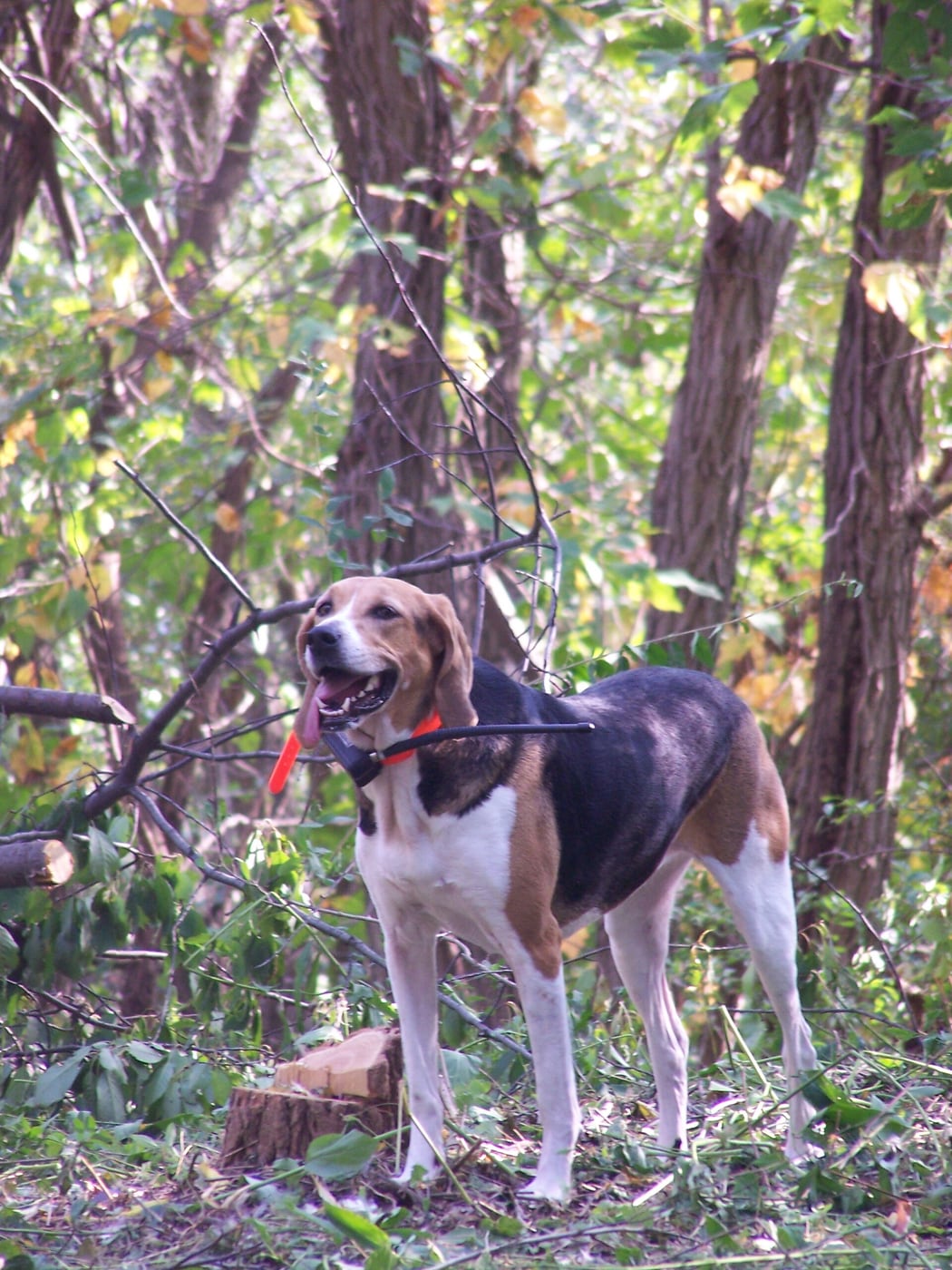
Breeding in individual areas took place relatively independently, so that in America several regional lines with slightly different types gradually emerged, with the American Foxhound being the most widespread and oldest of them. For generations, dogs were selected primarily for their hunting performance, not for their uniform appearance, which led to greater variability in exterior within the breed than in many European hounds. They were hunted mainly in packs, where loudness, endurance and the ability to follow a trail over a long period of time were valued.
The breed's popularity grew especially in the southern states of the USA, where it became part of traditional hunting on horseback and on foot. The breed standard was formulated by American canine organizations only after its inception, when there was a need to unify the description of the exterior for the purposes of exhibitions and breeding, although utility characteristics remained the priority.
Appearance and size
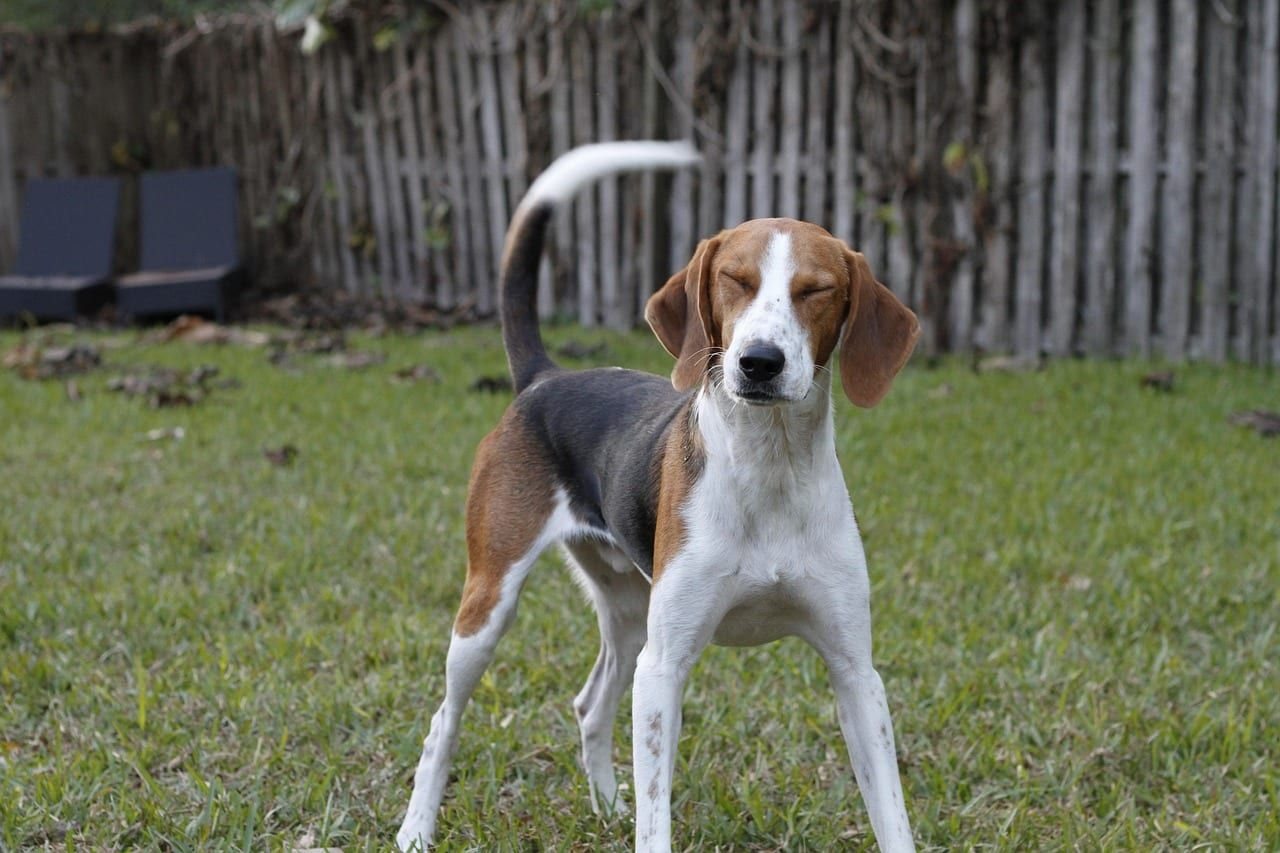
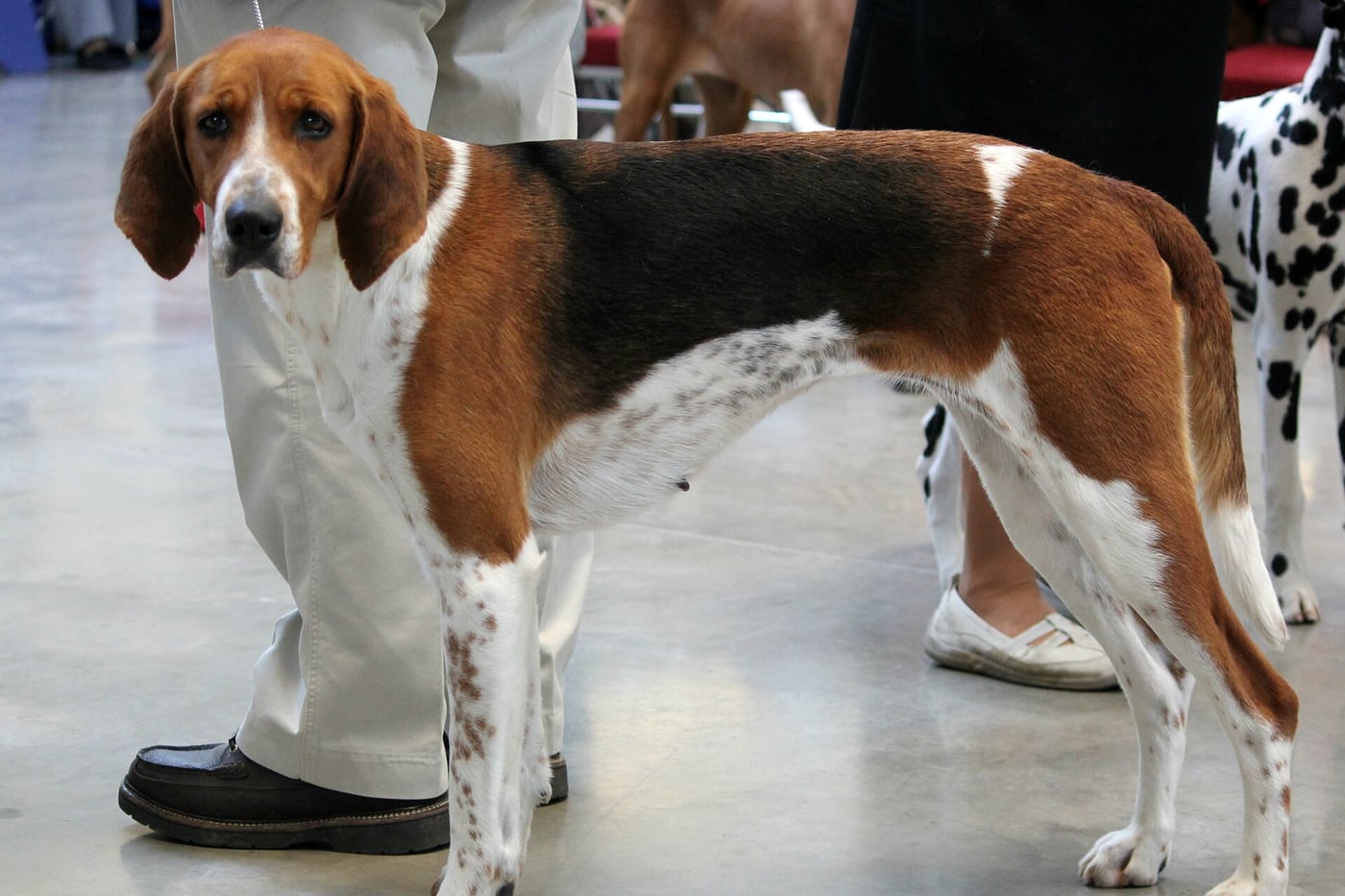
The American Foxhound is a tall, slender hound with long legs and a slightly arched back, whose overall appearance corresponds to the need for long, persistent work in the field. The male reaches a height at the withers of 56–64 cm, the female is slightly smaller, 53–61 cm, the weight of both sexes is the same, ranging from 29–34 kg.
The head is proportionately slightly domed, with a prominent, long muzzle and a gentle expression, complemented by large, dark eyes with a slightly sad, yet attentive look. The ears are long, set low, tapering towards the tip and hanging loosely along the cheeks - a typical feature of hounds working with their noses close to the ground.
The body is slender but muscular, with a deep chest that allows for sustained breathing during long runs. The back is firm, straight, smoothly transitioning into a slightly arched lumbar region. The tail is set high, slightly curved, carried upright, never curled over the back.
The coat is short, dense and close to the body, without an undercoat, which corresponds to low grooming requirements and moderate shedding. Color variants and their distribution are described in a separate section dedicated to color.
The overall impression is that of an athletic, hardy dog built for long hunts, not for showy exterior display - the body structure is functional and subordinate to performance in the field.
American Foxhound Colors
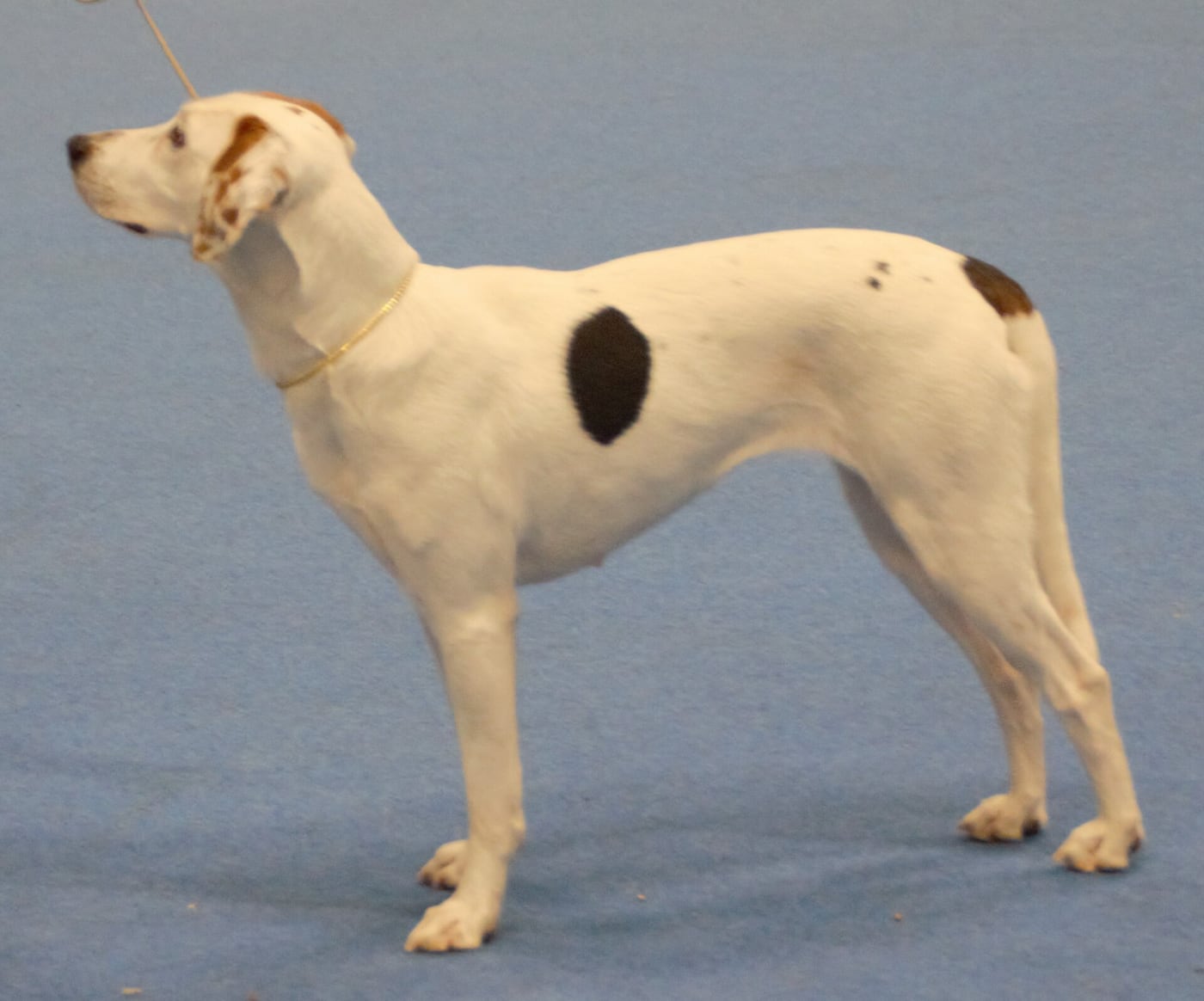
The FCI standard for the American Foxhound does not formally define a closed list of permitted colors - any coat color that is traditionally found in hounds is recognized. In practice, a wide range of combinations can be encountered, the most common of which are:
- tricolor color (combination of black, brown/tan and white)
- bicolor variants, for example white with brown or white with black
- solid shades from light fawn to dark red
Because the standard does not restrict color in any way, this breed practically does not encounter the term "non-standard color" in the sense that is common in breeds with a precisely defined palette. Furthermore, no specific genetic color variant is associated with a health risk in the American Foxhound.
American Foxhound Personality
The American Foxhound is an energetic and sociable hound that needs to be in close contact with its family or pack - it does not tolerate loneliness well and can easily become bored without enough stimulation. It is a dog with a strongly developed hunting instinct, which works independently in the field and persistently follows a trail, which is reflected in its nature in the home environment - it can be stubborn and follow its own judgment rather than the instructions of its owner.
Intelligence is definitely lacking in this breed, but it is associated with a strong independence that hunters value in hounds, but which can complicate training for the average owner. The dog needs patient, consistent guidance and a lot of motivation, because blind obedience to commands is not its nature.
The American Foxhound is friendly towards children and gets along well with other dogs, with whom it can function in a group - after all, it was bred to work in a pack. On the other hand, cats and small animals need to be approached with caution, because the hunting instinct can easily outweigh the learned rules of coexistence.
A typical expression of the breed is a loud bark and strong vocalizations - the American Foxhound demands attention or reports a discovered trail with a characteristic howl, which is a good thing to consider when deciding to breed in a more densely populated area. Guarding tendencies are minimal, because this is a dog oriented towards hunting and companionship, not territorial protection.
A high need for exercise and mental stimulation is part of their basic equipment - without sufficient use, energy turns into restlessness, destruction of things or the aforementioned excessive barking. This is therefore a breed more suitable for active owners who can offer them enough exercise, nose work and patient guidance.
American Foxhound and children
Living with children is usually relatively easy for this breed, but it is worth knowing its temperament. It is a pack hound bred for persistent pursuit of prey in the field, which is manifested by high energy and a need for constant movement - qualities that are also transferred to the home environment. It usually gets along well with children who respect its need to let off steam outside and can be a patient companion during games.
Due to its strong barking and hunting instinct, it is advisable to expect that the dog will react to stimuli - moving small animals, sudden noises or quick movements of children during play can trigger its hunting instinct. Therefore, it is important to teach children how to behave calmly and predictably around the dog, and at the same time, to consistently explain the boundaries in contact with the smallest family members from the puppy stage.
The role of socialization and supervision
Due to the high level of training required and the strong will of this breed, it is not recommended to rely on it to resolve its relationship with children on its own. Important:
- early and ongoing socialization with children of different ages, ideally from puppyhood;
- patient education focused on mastering basic obedience and impulsiveness resulting from a hunting background;
- sufficient physical and mental stress, because an exhausted dog tends to be more restless and harder to handle even in contact with children;
- permanent adult supervision whenever the dog meets small children, even if they get along well.
Due to the breed's size, energy, and loud expressions, it is not recommended to leave the dog with children unattended, even if the individual exhibits a calm and friendly nature.
American Foxhound and other dogs and pets
The American Foxhound usually gets along well with dogs - the breed was bred to work in a pack, so cooperation with other dogs is natural to it and coexistence with another canine companion in the household is usually problem-free. On the other hand, the relationship with cats and small animals needs to be taken with a grain of salt, because the strong hunting instinct is focused on tracking and chasing game.
Living with other dogs
Thanks to its original use in hunting, where several individuals worked in a pack at the same time, the American Foxhound usually has no problem accepting another dog as a partner. It appreciates company rather than solitary mode - its need for company is high, and this applies to its relationship with a pack of other dogs as well.
Cats and small pets
- Since it is a scent-driven hunting hound, it can easily become agitated and chase small animals, including cats.
- Living with a cat in the same household can work if the dog grows up with the cat from puppyhood, but it is not reliable for every individual.
- Increased caution is advisable with rodents, small rodents or other small domestic animals, as the instinct to track and pursue them remains strongly present even outside of hunting.
Anyone considering an American Foxhound for a household with small animals should expect consistent training and controlled introductions, as the hunting past of this breed can never be completely ruled out for a specific individual.
Is the American Foxhound suitable for an apartment?
No, they are not suitable for an apartment. This is a breed built for all-day movement in the field and with a significant need for space, which suffers both physically and mentally in a small, enclosed environment.
A house with a garden, ideally large enough and securely fenced, is more suitable for him - thanks to his strong hunting instinct and fondness for following tracks, he tends to follow the scent if he gets the chance. The daily routine should include long walks, runs or other more demanding exercise, because simply running around in the garden will not cover his need for activity.
Another factor is the high barking rate of this hound – in an apartment building with thin walls, it could easily lead to conflicts with neighbors. The combination of limited space, noise, and unmet need for exercise makes apartment living an unsuitable choice for this breed.
How much exercise does it need?
The American Foxhound needs long, vigorous exercise every day – a short walk on a leash is not enough, but rather several hours of activity spread throughout the day, ideally with the opportunity to run free in a secure area. This breed was bred for all-day, sustained hunting, and its high energy level and stamina are consistent with this.
Suitable activities
- Long walks and runs, ideally in nature with the possibility of following a trail
- Cycling accompaniment (canicross, bikejoring) for more experienced owners
- Tracking and scent games that will utilize his natural hunting instincts
- Dog sports focused on endurance and scent, such as tracking
In addition to physical exercise, the American Foxhound also needs plenty of mental stimulation - he can suffer from boredom and lack of stimulation as well as lack of exercise. Suitable scent games, obedience training and tasks that give him space to use his excellent sense of smell and endurance are suitable.
Due to its short coat and body type, this is not a brachycephalic breed prone to overheating, but it is still advisable to adjust the intensity and duration of activity on hot summer days and provide the dog with plenty of water and shade.
Training and education
Training an American Foxhound is one of the more challenging tasks, as it is a hound bred to work independently in the hunt, not to mindlessly follow commands. The dog is used to following its own nose and instinct, so obedience at the first call - especially in terrain full of scent trails - requires patience and consistency over months, not days.
The strongest motivation for him is his sense of smell and the ability to follow the trail, which is why classic rewards in the form of treats only work until an interesting scent appears. Training is therefore more effective if it works with what the dog naturally enjoys - scent games, tracking and tasks that simulate a hunting context keep his attention much better than repeated exercises on the spot.
How to approach training
- Short, frequent training blocks work better than long lessons - the dog gets bored easily and wanders off into other areas (both physically and mentally).
- Positive motivation and calm consistency bring results faster than pressure or punishment, to which he reacts more by closing himself off.
- Recall needs to be trained systematically and over the long term, ideally first in a secure area, because a strong tracking instinct can overpower even a well-mastered command.
- Consistency in rules among all household members is key – a inconsistent approach unnecessarily prolongs training.
Socialization should begin as early as possible and include contact with other dogs, as the American Foxhound is a pack breed used to working in a group and usually gets along well with dogs. On the other hand, encounters with cats and small animals need to be managed with caution due to its hunting instincts. Given its high need for mental and physical exercise, training is best combined with plenty of exercise - a tired dog concentrates better than one with excess energy.
Hair care and hygiene
The American Foxhound's short, dense coat requires minimal grooming - a weekly brushing with a rubber brush or fine-toothed comb is sufficient to remove dead hair and keep the skin in good condition. Due to the moderate shedding rate, it is advisable to increase the brushing frequency to twice a week during the spring and fall moulting periods to prevent excessive hair from entering the home.
Bathing should only be done when necessary, typically after hunting or when the dog gets dirty - frequent bathing could damage the natural protective layer of the skin. Since this is a breed that works in the field, it is advisable to check the coat and skin for ticks or minor injuries after each walk in nature.
Ears, eyes and teeth
The hanging ears of the American Foxhound restrict airflow, so it is advisable to check and clean them regularly to prevent the accumulation of moisture and dirt. The eyes can be wiped occasionally with a damp cloth to remove any discharge. It is a good idea to brush the teeth several times a week - in active hunting breeds, this reduces the risk of tartar, which occurs regardless of the type of diet.
Claws
The claws need to be trimmed regularly if they are not naturally worn down by sufficient outdoor exercise, which this breed is used to due to its hunting activity.
Feeding
Due to its very high physical activity, the American Foxhound needs a nutritionally rich food that will cover its energy expenditure - high-quality complete kibble or other full-fledged food selected according to the age, size and level of stress of the individual. A dog that is working or doing intense sports will have significantly higher energy requirements than a Foxhound living in a calmer mode.
Given that this breed is characterized by focused working endurance, it is advisable to divide the food into several smaller portions per day instead of one large meal - this will reduce the risk of digestive problems associated with high workload.
Physical fitness check
Regular monitoring of body condition is especially important for this breed during periods of reduced physical activity, such as injury or old age. Lower energy expenditure should always be accompanied by appropriate adjustment of the amount of food to avoid overweight, which puts a strain on the dog's joints and overall endurance.
- Choose food according to the dog's age, size and current activity level.
- Regularly check your ribs and waist by sight and touch to keep your weight under control.
- Adjust the amount of feed to seasonal fluctuations in exercise load.
- Ensure sufficient access to fresh water, especially after physical exertion.
How long does an American Foxhound live?
The average lifespan of an American Foxhound is 11 to 13 years, which is a solid value for a large breed with a high workload. However, the specific lifespan varies from individual to individual, depending on genetics, overall condition, and the care provided by the owner throughout their life.
What affects lifespan?
For a breed with a significantly high need for exercise and mental stimulation, sufficient activity plays a key role - the American Foxhound was bred as a hardy hound and lack of exercise will affect not only its psyche but also its physical condition. Conversely, inappropriate overtraining or excessive stress on the joints of a rapidly growing individual can lead to problems that will only become apparent later in life.
- Genetics: the health of the parents and responsible breeding have a major influence on how many years a dog will live without serious limitations.
- Physical fitness: maintaining an optimal weight reduces the burden on joints and the cardiovascular system throughout life.
- Exercise: due to its very high level of activity, it needs regular and sufficiently long energy expenditure, otherwise it will suffer from frustration, even physically.
- Prevention: regular veterinary check-ups allow for early detection of potential health complications.
- Nutrition: a quality diet appropriate to age and stress supports good health in the long term.
- Health predisposition: the breed may have an increased predisposition to certain diseases, so it is advisable to monitor the overall health throughout its life.
Who is the American Foxhound suitable for?
The American Foxhound is best suited to families and households where it will spend most of the day with active people and will have access to a large garden area - it is a breed built for long hunts in the field, not for a quiet life in an apartment.
Who is the breed suitable for?
- For homeowners with a garden, ideally with a securely fenced plot
- For active people who can provide their dog with long daily walks - running, hiking or dog sports
- For more experienced breeders who can handle consistent and patient training of a hound
- For families with children, where the dog is led and socialized from puppyhood
- For households where the dog will have the company of another dog – it does not tolerate loneliness well
- For those interested in hunting or tracking work using scent trails
Who is the breed not suitable for?
- For owners of apartments or households without the possibility of regular outdoor exercise
- For beginners with no experience in training hunting breeds
- For seniors who may find the high need for exercise and energy physically demanding
- For households requiring a quiet dog – the American Foxhound does not hide its loud barking and vocalization when tracking
- For owners of cats or small animals that may not be easy to live with
- For people who leave their dog alone most of the day
Interesting facts about the breed
The American Foxhound originates from the United States of America, where it is a typical representative of pack hounds used for fox hunting – hence its English name American Foxhound. It is classified in FCI Group 6, among hounds and sighthounds (Scent hounds section, standard no. 303).
Breeds of similar type and use include French hounds such as the Nivernais Wirehaired Hound, the Briquet Griffon Vendéen, the Ariège Hound, the Gascon-Saintongeois Hound, the Large Blue Gascon Hound or the Poitevin - all of these breeds share an origin in hunting cynology and work in the territory, although each has its own specifics.
A characteristic feature of the breed is its pronounced barking, which has a practical origin in hounds - the vocalization served hunters to track the pack in the field. This characteristic persists even in dogs bred outside of hunting and must be taken into account when deciding on breeding in residential areas.
American Foxhound Health
The American Foxhound is a robust hound with a short coat and high physical fitness, which generally gives it a good chance of longevity without major health complications. It is a breed bred primarily for endurance running in the field, and its body structure corresponds to this - it is functional, without extreme proportions. Even so, it is worth paying attention to several areas related to its body type and method of use. Specific diagnoses should always be assessed by a veterinarian, these are just general points to consider.
Ears and their care
The long, drooping ears, typical of hounds including the American Foxhound, restrict airflow into the ear canal. This type of ear can generally be more prone to ear infections, so it is important to check and keep the ears clean regularly.
Musculoskeletal system and load
Since this is a breed built for long and persistent movement, its musculoskeletal system may be exposed to higher stress, especially if the dog does not have enough regular but adequate exercise appropriate to its age and condition. For active hounds, it is recommended to monitor the condition of the joints and tendons throughout their lives.
What to look for when choosing a puppy
- Be interested in the health status and temperament of the parents, or other relatives in the breeding.
- Verify whether the breeder provides the puppies with enough stimulation and early socialization, which is key for later manageability in an energetic hound.
- Monitor the overall condition and mobility of the puppy and the litter as a whole.
- Keep in mind that this is a breed with high demands on exercise and mental exertion from puppyhood.
Known predispositions
The breed is described to have an increased predisposition to:
- to hip dysplasia.
- to cancer, as is generally the case in older dogs.
- to thyroid dysfunction (hypothyroidism).
- to epilepsy.
Discussed risks
The breed is described to have an increased predisposition to:
- to inflammation of the external ear canal (otitis externa) related to the shape and size of hanging ears.
- to hereditary platelet dysfunction (thrombocytopathy), which is manifested by prolonged bleeding and poor blood clotting.
Individual / uncommon
The breed is described to have an increased predisposition to:
- to excess weight and obesity due to lack of exercise, which can further strain the joint system.
This overview is for informational purposes only and does not replace the examination or recommendations of a veterinarian.
What to buy for an American Foxhound
Practical basis that is suitable for this breed:
- Toys – Dog toys – fetching, chewing and interactive.
- Cosmetics – Shampoos, conditioners and hair care products.
- Bowls – Feed and water bowls, anti-swallow bowls and stands.
- Collars – Dog collars – leather, textile and semi-tight.
- Beds – Beds and mattresses for dogs of all sizes.
- Leashes – Leashes, switch leashes and tracking lines.
Useful guides
Practical tips that are useful when caring for a dog:
Frequently asked questions
Is the American Foxhound suitable for an apartment?
No, the American Foxhound is not suitable for apartment living. He needs plenty of space and regular exercise outdoors, ideally with a garden where he can exercise his hunting instinct.
How much does an American Foxhound bark?
The American Foxhound is one of the louder breeds and its barking is high. As a hound, it was bred to make a strong call when hunting, which is also reflected in everyday life.
Is the American Foxhound suitable for beginners?
Probably not, because it requires a high level of training and a very high level of activity. Experience with leading hunting breeds and consistency are a great advantage when raising it.
Does the American Foxhound get along with cats and other animals?
He gets along well with dogs, but is less so with cats due to his strong hunting instinct. Small animals can easily look like prey to him.
Is the American Foxhound good with children?
Yes, he is rather suitable for children and usually gets along well with his family. Due to his high need for company, he seeks contact with people and does not like to be left alone.
How much exercise does an American Foxhound need?
It needs a very high dose of physical activity every day, ideally long walks, runs or participation in hunting or sporting activities. Without sufficient exercise, it can be restless and destructive.
How difficult is it to care for an American Foxhound's coat?
Grooming is low as it is a short coat with no special grooming required. Shedding is moderate so regular brushing is enough to keep the coat in good condition.
Why is training an American Foxhound difficult?
Training is challenging due to their strong hunting instincts, which can easily lead them to lose track of their scent and lose their ability to respond to commands. They require a patient, consistent approach and plenty of mental stimulation to prevent unwanted behavior.
What to watch out for in the health of an American Foxhound?
The breed may be predisposed to certain health problems, according to professional sources ( petmd.com ). A veterinarian should always be consulted for accurate diagnoses.
What was the American Foxhound originally bred for?
It was bred in the United States as a pack hunting hound, primarily for hunting foxes. Its endurance, scenting ability, and loud track reporting are a testament to this.
Is the American Foxhound suitable for seniors?
No, this breed is not suitable for seniors. Its very high demands for exercise and mental stimulation are difficult to manage for a calmer lifestyle.
Resources and further information
- FCI Standard No. 303 – American Foxhound – Fédération Cynologique Internationale
- Source of body measurements – fci.be
- Predisposition Source - petmd.com
Professional cooperation
This breed overview was created in cooperation with the Veterinary Clinic VYVET sro and MVDr. Adam Hylák .