
Published 31. 8. 2026
The Beagle is a medium-sized hound from Great Britain, classified in FCI Group 6 among sighthounds and related breeds (standard no. 161). It measures 33–40 cm at the withers, regardless of gender, and usually lives for 12–15 years. The short, dense coat does not require demanding care, but its temperament and hunting origin place other demands on the owner – it is a dog with a high need for exercise and mental stimulation.
The beagle is sociable, inquisitive and friendly towards children, and usually gets along well with other dogs. Its distinctive feature is its barking and strong sense of smell, which can outweigh commands during walks - training is therefore more demanding and will be appreciated by more experienced owners with time to spend their days actively. It is only suitable for apartment living if it is given enough walks and work.
Professionally consulted
The content was created in cooperation with the veterinary clinic Veterinární klinika VYVET sro and MVDr. Adam Hylák.
Quick overview
What is a Beagle like?
The Beagle is a medium-sized hunting dog originally from Great Britain, belonging to the FCI group of hounds (Scent hounds section, standard no. 161). It reaches 33–40 cm at the withers regardless of gender, it usually lives for 12–15 years and its short, dense coat requires only minimal care. Behind its inconspicuous appearance lies a spirited, energetic dog with a strong need for exercise and mental occupation - it is a scent-driven hound that can easily become bored without sufficient stimulation.
The Beagle is sociable, friendly to children and usually gets along well with other dogs. However, its training is more demanding, as it can easily get carried away and tends to bark a lot. It is more suitable for active owners with time for regular exercise and patience in training, and less suitable for complete beginners.
Origin and history of the Beagle
The roots of the beagle go back to England, where small hounds that hunted on foot with the help of a pack had been developing for centuries - mentions of similar dogs appear in British sources as early as the Middle Ages, but the name "beagle" at that time was used loosely for various smaller hounds without a single type. The true ancestor of the modern breed was formed only in the 19th century, when English breeders purposefully crossed older hound lines with the aim of obtaining a dog small enough and hardy enough to allow the hunter to follow the pack on foot, unlike larger hounds intended for hunting on horseback. The key use was hunting hares, where an excellent sense of smell, a loud voice when following the track and the ability to work in a pack were valued. The gradual unification of the type gave rise to a breed line that spread beyond the borders of Britain in the second half of the 19th century, especially to North America, where the beagle quickly found a place as both a hunting and companion dog. Kennel clubs in England and the USA began to advocate for a uniform standard that described the ideal proportions, coat and temperament needed for persistent field work. In the 20th century, the beagle established itself as an internationally recognized breed within the hound group (FCI Group 6), while its popularity outside hunting circles increased significantly due to its even-tempered nature and attractive appearance. Today, it is bred all over the world for both hunting and as a family companion.
Appearance and size
At the withers, the beagle reaches a height of 33–40 cm, and the standard does not distinguish between males and females - both sexes are in the same range and give a compact, muscular impression without signs of fragility or coarseness.
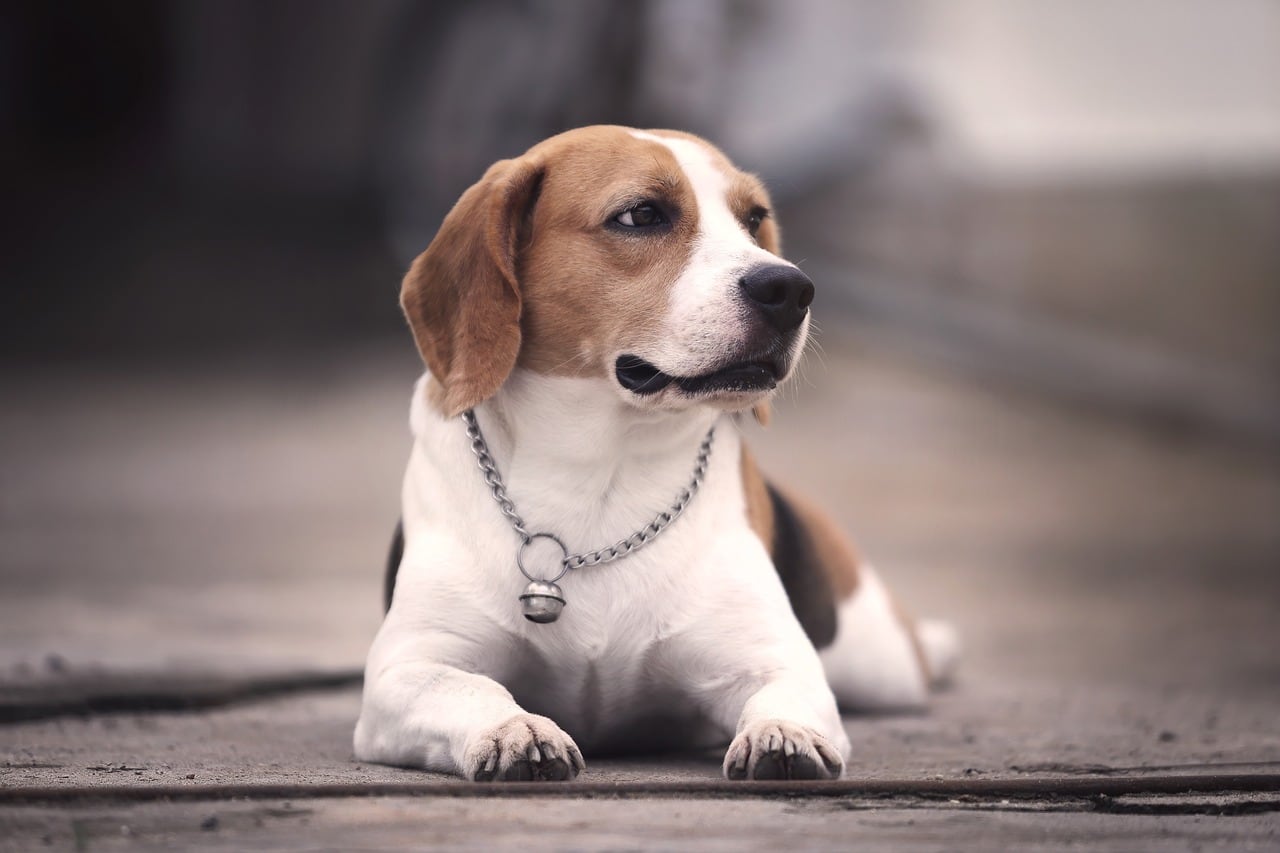
The body is slightly rectangular, with a well-arched chest reaching to the elbows and strong, straight legs supporting a solid but not heavy frame. The back is straight and short, the loins muscular, giving the overall appearance the impression of a hardy hound capable of long range movement over terrain.
Head and senses
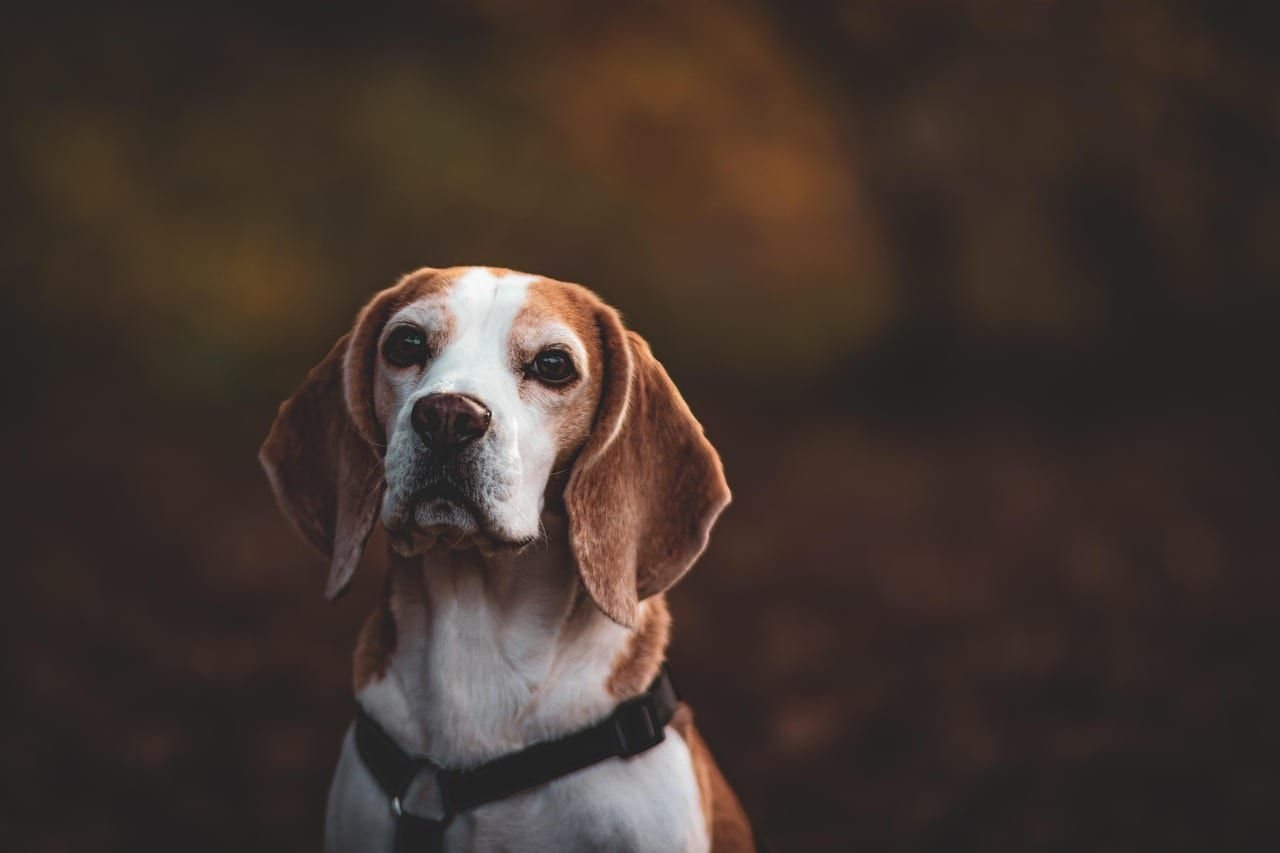
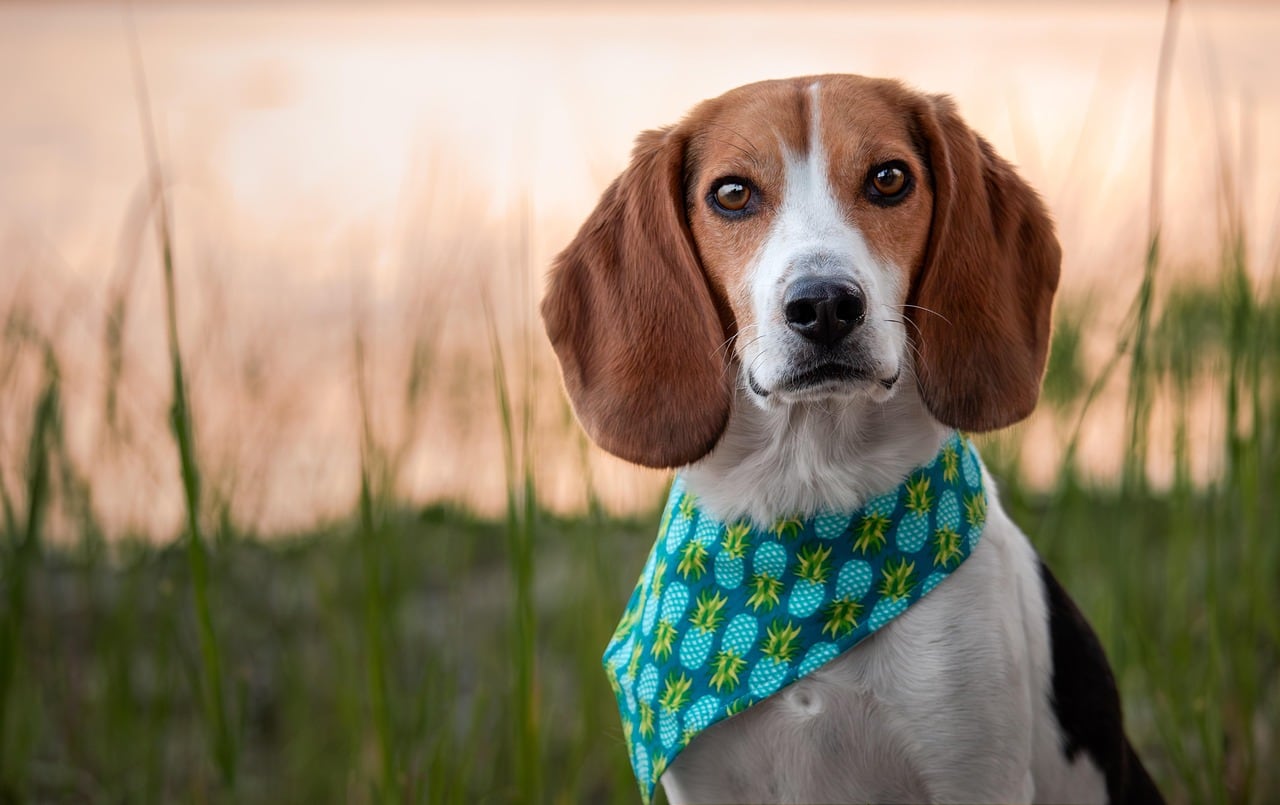
The head is of medium length, without pronounced wrinkles, with a domed skull and a distinct but not too sharp stop. The muzzle is wide with open nostrils, which supports the excellent sense of smell for which the breed was originally bred. The eyes are brown or hazel, of sufficient size, with a gentle, pleading expression, which is typical of the Beagle. The ears are long, set low, rounded at the tip and lying flush against the cheeks - they sway gently when the head is moved.
Fur and tail
The coat is short and dense, close to the body, resistant to adverse weather conditions and easy to maintain. Color variants and their combinations are described in a separate section dedicated to color.
The tail is medium long, set rather high, carried erect but never curled over the back, and usually ends with a white tip, which made it easier to follow the dog in tall grass while hunting.
Beagle Colors
The FCI standard for the beagle does not define a single fixed range of color variants with a binding table of shades, as is the case with some other breeds - it recognizes a wide range of two-color and three-color combinations with a white background, typical of English hounds, with the tip of the tail being white. We do not provide a specific list of standardized and non-standard color traits of the beagle according to the current FCI/CMKU version here without a verified source, in order to avoid distortion of information.
Beagle personality
The Beagle is an energetic, scent-obsessed hound with a strongly developed hunting instinct, which is evident in its nature at every step - as soon as it catches an interesting trail, the world around it ceases to exist. It is a sociable, friendly and trusting dog, building its bond with the whole family rather than with one specific person.
The intelligence of the beagle is undeniable, but it goes hand in hand with a strong independence - he thinks practically and willingly, but he will not always do what his owner wants if it does not make sense to him or if he is more interested in the smell on the ground. This combination of intelligence and stubbornness makes training a discipline that requires patience, consistency and, most importantly, motivation - the beagle works best for a treat or a game, not out of obedience itself.
This is a breed with a high need for exercise and mental stimulation. A bored beagle can find his own entertainment, and the results are often unpleasant for the owner - from dug up gardens to chewed shoes. The lack of stimuli is often manifested in increased vocal activity, as beagles are among the breeds that are very vocal, whether it is barking or the typical howling when following a trail.
He is usually tolerant of other dogs and has been used to working in a pack of hunting hounds since he was a puppy, which is also reflected in his nature in the household - he does not tolerate long-term loneliness and actively seeks company, whether human or canine. His relationship with cats and smaller animals must be assessed individually, because the Beagle has a deep-rooted hunting instinct.
It is not suitable as a watchdog - it tends to be more friendly than alert towards strangers, and its barking signals excitement or the discovery of something interesting rather than an attempt to defend its territory.
Beagle and children
The Beagle is usually well-tolerated with children – its temperament is playful, sociable and resistant to a busier environment, which makes it a suitable candidate for a family with children. However, this is not a rule without exceptions: specific behavior always depends on the nature of the individual, on upbringing and on how the coexistence between the dog and the child is set up.
As a hunting dog bred for long pack hunts, the Beagle has a high need for exercise and mental stimulation. If this energy is not channeled, it can become restless or vocal – Beagles are among the dogs with a pronounced barking habit, which is a good thing to consider when planning to live with small children who may be sensitive to noise.
The role of socialization and upbringing
The training requirements for a beagle are higher than for many other breeds, because it is a dog with a strongly developed sense of smell and independent judgment, which can easily be carried away by a trail. Therefore, consistent and patient training from a puppy is key - not only for the dog's obedience itself, but also for it to learn to respond appropriately to stimuli typical of child behavior, such as running around, screaming or sudden movements.
Early and varied socialization helps the Beagle get used to the presence of children as a normal part of life and reduces the risk of adverse reactions. It is recommended:
- gradually introduce the puppy to different situations, sounds and behavior of children
- teach the child the basic rules of contact with the dog – do not disturb it while it is eating or resting
- provide the dog with the opportunity to retreat to a quiet place if it needs to rest
- Dedicate enough space for walks and games so that the dog's energy is not directed into the home.
Despite the breed's friendly nature, it is advisable for contact between a beagle and younger children to be supervised by an adult. This principle applies to all breeds in general, and the beagle is no exception - supervision reduces the risk of misunderstandings on both sides and helps build a relationship based on mutual respect.
Beagle and other dogs and pets
The Beagle usually gets along well with other dogs - it originated as a pack hound that hunted in groups, and is therefore well accustomed to the company of other dogs by nature of its origin. In practice, this means that it usually does not cause problems in a household with another dog, but rather appreciates a companion with whom it can spend time when the owner is away.
The relationship with cats and small animals needs to be assessed more carefully. The Beagle was bred to hunt hares and other small game by scent and chase, so a strong hunting instinct is deeply rooted in it. If it grows up with a cat from puppyhood, it can usually live with it in peace, but with animals such as rodents, rabbits or birds, it risks seeing them as prey rather than a roommate. Therefore, when walking, it is advisable to take into account that the dog may, after catching a trace or movement of a small creature, start following it without responding to the call - this needs to be taken into account when choosing places for free movement and when training the call.
Due to their high need for companionship, the beagle generally tolerates the presence of other animals in the household well, as long as they have enough attention and do not feel pushed away. On the other hand, their weakness remains their strong barking and tendency to speak loudly when they notice something interesting - this is also a good thing to take into account in households with multiple animals, so that mutual stimulation of reactions does not lead to permanent restlessness.
Is the Beagle suitable for an apartment?
The beagle is suitable for an apartment only conditionally - it depends on how much exercise and mental stress the owner can provide him daily. He is not a dog that would be able to do well with a small space and peace on the couch, because he is a hound with a strongly developed instinct to follow a trail and the need to actively relieve himself.
Apartment life can work if the Beagle has enough long walks, ideally with the opportunity to move freely and sniff around in the field. Without regular exercise and mental stimulation, he will easily show dissatisfaction, which he expresses loudly and persistently - he is one of the dogs with a strong tendency to bark and emit characteristic persistent vocal expressions when following a scent trail. In apartment buildings with thin walls or close neighbors, this can be a problem.
Another factor is their need for company – the beagle does not tolerate long periods of solitude and boredom, which is even more pronounced in the confined space of an apartment. Therefore, suitable housing includes:
- access to regular and longer outdoor exercise, not just short "walks in the backyard",
- owners who are home often enough or provide company in some other way,
- an environment tolerant of louder dog expressions,
- and thoughtful daily mental stress, for example in the form of scent games or training.
A house with a garden is naturally a more comfortable option for a beagle, but it can also live happily in an apartment - what matters is the active approach of the owner, not the size of the home itself.
How much exercise does it need?
The Beagle is a dog with a high level of activity and an equally high need for mental stimulation, which in practice means at least two longer walks a day, supplemented by the opportunity to move freely, sniff and follow tracks. It is a hunting dog bred for field work, so a short walk on a leash around the house will not cover its needs.
Suitable activities
- Scent and tracking games – use the breed’s natural predispositions and are mentally tiring at the same time
- Long walks in nature with space to sniff and explore the surroundings
- Games of finding treats or burrows, canicross and other endurance sports for physically fit individuals
- Training games that develop obedience, as the beagle is easily carried away by the trail and requires reliable recall
Due to the distinctive nature of a sniffer dog, it is advisable to consider free movement without a leash only in secure places or after mastering a reliable recall - once the beagle picks up an interesting trail, it can fully concentrate on following it and ceases to perceive its surroundings.
Lack of exercise and mental stimulation in this breed often results in undesirable behaviors such as excessive barking, digging, or destructive behavior out of boredom. Therefore, a combination of physical activity and sniffing games is often more effective than long walks alone.
Training and education
Training a beagle is one of the more challenging tasks a dog owner can face, even though it is an intelligent and docile breed. The problem is not a lack of ability, but rather a strongly developed sense of smell and independent thinking, with which the beagle has been bred for generations to work in a hunting pack without constant instructions from a human. Once it picks up an interesting trail, the world around it - including the owner's call - ceases to exist for it at that moment.
What motivates a beagle?
The strongest motivators are food and smell. Training based on quality treats and playing with scent games (treat hunting, tracking, scent toys) works significantly better than training based on praise alone or pressure. The Beagle will quickly understand what is wanted from him if the reward is sufficiently tempting and comes immediately after the correct behavior.
Recommended approach
- Short training blocks (5-10 minutes) repeated several times a day - long lessons bore the beagle and his attention span quickly fades.
- Consistent positive motivation without punishments, which often lead to stubbornness rather than obedience in this breed.
- Complete consistency of rules throughout the household – the beagle will quickly detect exceptions and will try them again and again.
- Recall training should first take place in enclosed spaces without disturbing odors, and then gradually outside in a secure area or on a long leash.
Socialization
Since the Beagle was originally bred to work in packs, it usually gets along well with other dogs, and early socialization furthers this trait. It is equally important to accustom the puppy to the common stimuli of urban and rural environments, strangers and different situations, so that natural curiosity does not later turn into excessive shyness or over-reactivity.
Breed specifics
The Beagle needs plenty of mental and physical stimulation - without it, it can easily succumb to undesirable behaviors such as excessive barking or destructive behavior out of boredom. Due to its strong independence and strong sense of smell, this breed is not recommended for complete beginners without experience in training hunting or hound breeds; patience and the ability to keep the dog motivated are key.
Hair care and hygiene
The short and thick coat of the Beagle is easy to care for - just brush it once a week with a rubber brush or glove to remove dead hair and keep the coat shiny. During the spring and autumn shedding season, which is more pronounced, it is advisable to brush it a little more often, ideally twice a week, so that the hair does not end up all over the apartment and on clothes.
Beagles can handle bathing without any problems, but it should not be too frequent - only in case of visible dirt or an unpleasant odor, which in hunting dogs appears after field trips. Excessive bathing can disrupt the natural protective layer of the skin.
Ears, eyes and teeth
The Beagle has typical long, floppy ears that lie close to the head and restrict airflow into the ear canal – so it is advisable to check and clean them regularly to prevent moisture and dirt from accumulating. This should be done at least once a week, and more often for dogs that spend a lot of time outdoors.
It is enough to occasionally wipe the eyes with a damp cloth to remove any dirt in the corners. It is advisable to brush the teeth regularly, ideally several times a week, to prevent tartar formation and gum problems.
Claws
Due to their high activity and frequent outdoor activities, the claws of active beagle dogs wear down naturally, but it is still a good idea to check them regularly and trim them if necessary to prevent them from breaking or deforming the toes.
Feeding
The Beagle is one of the breeds with a strong tendency to overeat and become overweight, which is related to its original function as a pack hound fed in large groups and with an unquenchable interest in food. The basis should therefore be a high-quality complete food appropriate to the age, size and level of movement of a particular individual - a puppy, an active adult dog and an older Beagle have different energy requirements and the food should be adapted to this.
Due to the high level of physical activity that this breed requires, it is advisable to continuously adjust the amount of food according to the actual energy expenditure - a dog that has intensive training or long walks needs a different supply than an individual with a calmer regime. Regular monitoring of the body condition is more important for the beagle than for many other breeds, because its agility and ability to "beg" for a treat can easily disrupt even a well-adjusted diet.
What to watch out for
- Regularly check the ribs and waist by feeling and looking - excess weight in a beagle can easily be hidden under its thick coat.
- Treats and rewards during training should be counted as part of the daily ration, not as an extra supplement.
- Adjust the feed ration with age and changes in activity, for example when movement is restricted due to injury or in old age.
- Avoid free access to food – offer regular, controlled portions rather than a bowl constantly full of kibble.
How long do Beagles live?
The Beagle lives an average of 12 to 15 years with good care, which makes it one of the breeds with relatively long lifespans typical of medium-sized dogs. The specific lifespan is always individual and depends on a combination of genetic predispositions and the way the dog is raised throughout its life.
What affects lifespan?
Several interrelated factors influence how many years a beagle will live:
- Genetics and origin - the health of the parents and the responsible approach of the breeder influence the predispositions with which a dog enters life.
- Physical condition – beagles tend to overeat and become overweight, which puts a long-term strain on joints and internal organs and can shorten their active old age.
- Exercise – this is a breed with a high need for activity; regular, sufficient exercise maintains muscle mass, cardiovascular health and psychological well-being.
- Preventive veterinary care - regular check-ups, vaccinations and early detection of potential health problems help extend quality years of life.
- Nutrition – a quality diet appropriate for age, weight and activity reduces the risk of obesity and its associated complications.
- Health predisposition – the breed may have an increased predisposition to hip problems or epilepsy; monitoring these areas in a specific individual can contribute to a longer and better quality of life.
Who is the Beagle suitable for?
The Beagle is best suited to people who have the time for regular exercise and can handle consistent, patient training – it is a hunting dog with a strong sense of smell that is not always easy to recall from a trail. The high need for companionship and mental stimulation means that the Beagle gets along well with active families or individuals who can include it in a daily program, not just short walks.
Who is the breed suitable for?
- For active owners who spend a lot of time outdoors and offer their dog plenty of exercise and olfactory activities.
- For families with children – the beagle is usually friendly with children and gets along well with other dogs.
- For more experienced breeders who can handle consistent upbringing and are willing to invest time in training.
- For households where occasional louder barking is okay, as beagle is one of the more barking breeds.
- For owners with enough space or the possibility of regular outdoor walks, although living in an apartment is not out of the question.
Who is the breed not suitable for?
- For complete beginners with no training experience, as the beagle requires a patient and consistent approach.
- For people who leave their dog alone for long hours – the high need for companionship and mental stimulation easily leads to restlessness and barking in an abandoned beagle.
- For owners looking for a calm, undemanding companion without interest in regular exercise and activities.
- For noise-sensitive households where frequent barking could be a problem.
Interesting facts about the breed
The Beagle belongs to FCI Group 6 among hounds, specifically to the Scent hounds section - its main advantage is its sense of smell and ability to follow a scent trail, for which it was originally bred in Britain.
The FCI standard for this breed bears the number 161 and originated in Great Britain, from where the beagle gradually spread to other countries as a popular hunting and companion dog.
Breeds related by their focus on scent and tracking include the Nivernais Wirehaired Hound, the Briquet Griffon Vendéen, or the Ariège Hound - all of these breeds share a similar way of working, even though they come from different parts of Europe.
Beagle Health
The Beagle is a robust hound with a medium build and, if well cared for, can live to be 12 to 15 years old. It is a breed without extreme body proportions that would in itself pose serious health risks, but it is described as having an increased predisposition to several specific problems. It is crucial to keep the dog in proper condition, as a tendency to be overweight increases the strain on the joints. Regular veterinary examinations and monitoring of movement and neurological symptoms help to detect potential problems early.
Joints and musculoskeletal system
Beagles may be at increased risk for hip dysplasia, a developmental defect in which the joint head does not fit snugly into the socket. The risk is also related to body weight, so maintaining a lean and muscular physique is an important part of prevention. For dogs intended for intensive exercise, it is advisable to pay attention to gradual load, especially during the growth period.
Nervous system
The Beagle is one of the breeds described to have an increased predisposition to idiopathic epilepsy – a seizure disorder whose exact cause is unknown. It is manifested by repeated episodes of seizures and its monitoring and possible treatment is dealt with by veterinary neurology.
What to look for when choosing a puppy
- Find out the health history of your parents, or their ancestors, with a focus on joint and neurological problems.
- Ask the breeder if there have been any seizures or musculoskeletal problems in the breeding line.
- Watch how the puppy moves and whether it shows any signs of pain or uncoordinated movement.
- Prefer breeders who regularly vet the puppies' parents and are willing to provide documentation of their health.
- Keep in mind that maintaining a slim figure throughout life is an important way to prevent stress on the joints in this breed.
Known predispositions
The breed is described to have an increased predisposition to:
- to hip dysplasia.
- to idiopathic epilepsy.
- to hypothyroidism.
- to hereditary deficiency of coagulation factor VII, manifested by a tendency to bleeding.
Discussed risks
The breed is described to have an increased predisposition to:
- to overweight and obesity due to a strong appetite.
- to inflammation of the external auditory canal related to the structure of hanging ears.
- to intervertebral disc disease (IVDD).
- to eye problems such as prolapse of the third eyelid gland (so-called cherry eye).
This overview is for informational purposes only and does not replace the examination or recommendations of a veterinarian.
What to buy for a Beagle
Practical basis that is suitable for this breed:
- Car seats for dogs – Car seats and safety equipment for transporting a dog by car.
- Toys – Dog toys – fetching, chewing and interactive.
- Cosmetics – Shampoos, conditioners and hair care products.
- Bowls – Feed and water bowls, anti-swallow bowls and stands.
- Collars – Dog collars – leather, textile and semi-tight.
- Beds – Beds and mattresses for dogs of all sizes.
- Leashes – Leashes, switch leashes and tracking lines.
Useful instructions
Practical tips that are useful when caring for a dog:
Frequently asked questions
Is a beagle suitable for an apartment?
The Beagle can live in an apartment if it gets enough daily exercise and mental stimulation outside. However, without enough exercise, it can become bored and noisy in a small space due to its high activity and barking.
How much does a beagle weigh and how long does it live?
The exact weight is not specified in the standard, the height ranges from 33–40 cm for both males and females. The average lifespan is 12–15 years.
Why does a beagle bark and howl so much?
This is a hunting breed bred to track game by scent, which included loudly announcing the chase - that is why the beagle has a high barking rate and a tendency to howl. This behavior is part of its original working function, not a defect in upbringing.
Is training a beagle easy?
No, the training requirement for this breed is rated as high. The Beagle is a scent-driven, independent hunter, so it is easy to get carried away by the trail and obedience requires patience and consistency.
Are beagle dogs suitable for beginners?
Rather not – the combination of high activity, demanding training and a strong instinct to follow the trail places higher demands on the owner. They will do better with more experienced people who can handle consistent leadership and plenty of exercise.
Do beagles get along with children and other dogs?
The beagle is considered to be rather suitable for children and gets along well with dogs, which is also due to the fact that it was originally bred and hunted in packs. Its relationship with cats is neutral and depends on socialization.
How much exercise does a beagle need?
This is a breed with a high level of activity and a need for mental stimulation, so a short walk on a leash is not enough. Longer exercise combined with sniffing games or scent trails that take advantage of their hunting nature is ideal.
How difficult is it to care for a beagle's coat?
Grooming is low – the short, dense coat requires only occasional brushing. Shedding is rated as moderate, so hair still appears regularly in the household.
What health problems should you watch out for in a beagle?
The breed may be predisposed to hip problems and epilepsy. Specific health conditions should always be discussed with a veterinarian, ideally before purchasing a puppy from a reputable breeder.
What was the beagle originally bred for?
The Beagle originated in Great Britain and was bred as a pack hound to hunt hares and other small game thanks to its excellent sense of smell. This classification in FCI Group 6 between sighthounds and hounds is reflected in its current nature – a strong instinct to follow a trail.
Resources and further information
- FCI Standard No. 161 – Beagle – Fédération Cynologique Internationale
- Source for predisposition - seapet.com
- Source for predisposition – bonza.dog
- Source of body measurements – kutya-tar.hu
- Resource on predisposition - pmc.ncbi.nlm.nih.gov
- Predisposition Resource - vet.cornell.edu
- Source for predisposition - vetericyn.com
Professional cooperation
This breed overview was created in cooperation with the Veterinary Clinic VYVET sro and MVDr. Adam Hylák .