
Published 1. 9. 2026
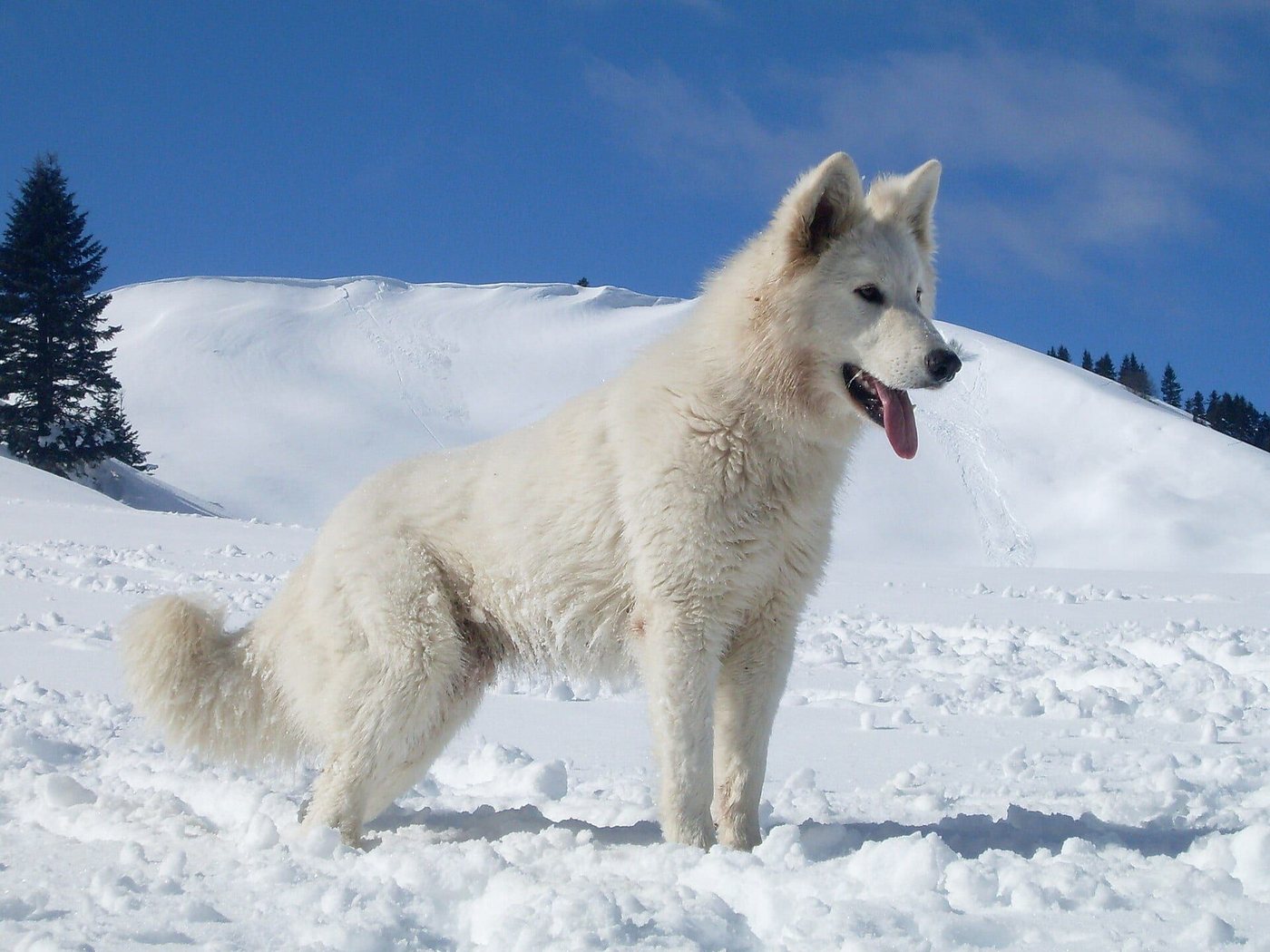
The White Swiss Shepherd Dog is a large breed from Switzerland, classified in FCI Group 1 among cattle and sheepdogs (Sheepdogs section, standard no. 347). The male stands 60–66 cm at the withers, the female 55–61 cm. It is striking with its thick, long to semi-long coat with a pure white undercoat, which sheds significantly during the year. In terms of temperament, it is a balanced, attentive dog with a strong bond with its family – it does not tolerate loneliness or being sidelined well.
The high need for exercise and mental stress makes it a companion for active households rather than for a quiet retirement program. It is rather friendly with children and usually gets along well with dogs, with cats it depends on the specific nature and socialization. It is moderately difficult to train - it is docile, but will appreciate a patient and consistent approach. It does not mind or particularly like living in an apartment, enough outdoor activities are crucial.
Professionally consulted
The content was created in cooperation with the veterinary clinic Veterinární klinika VYVET sro and MVDr. Adam Hylák.
Quick overview
What is the White Swiss Shepherd like?
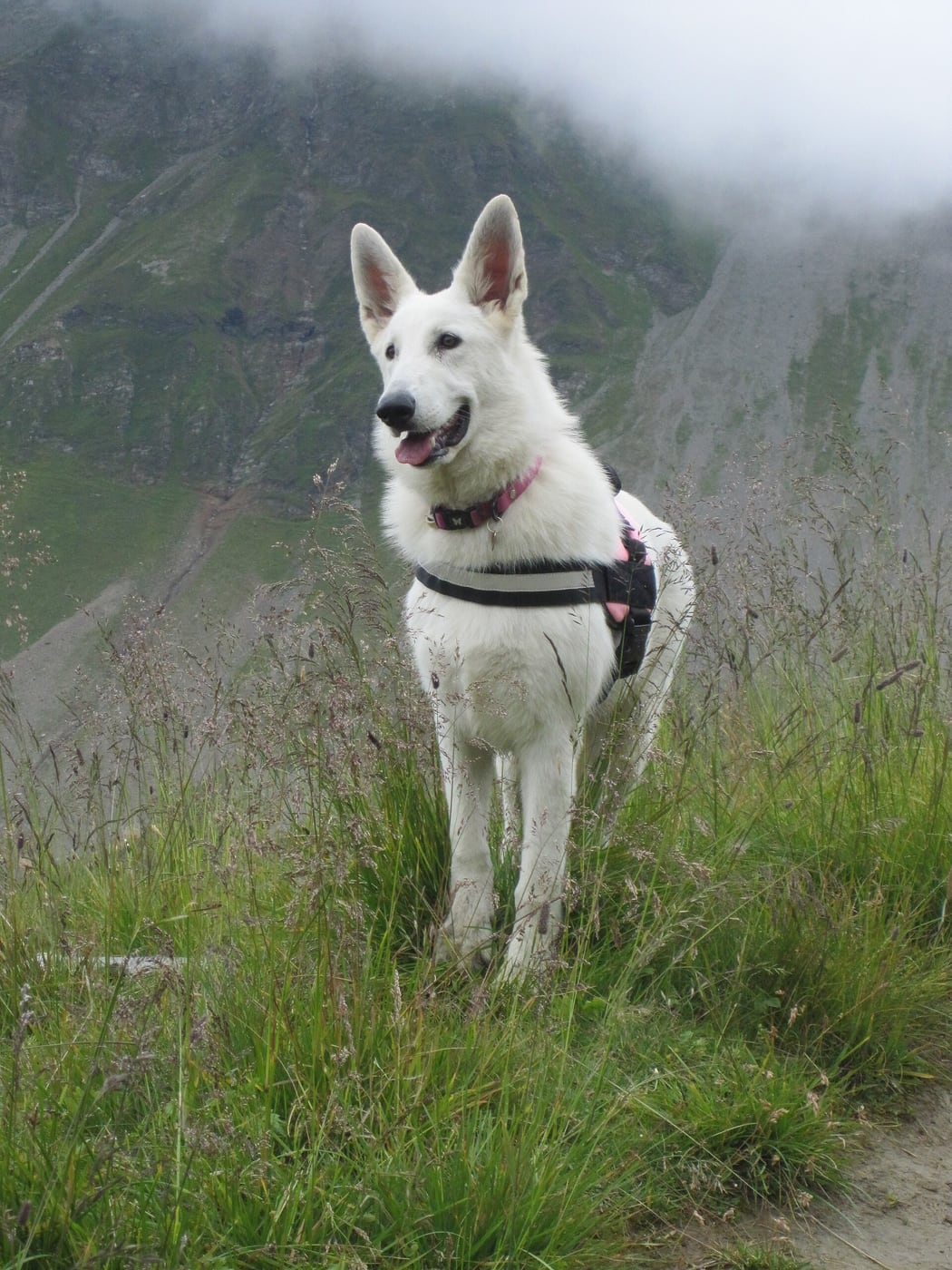
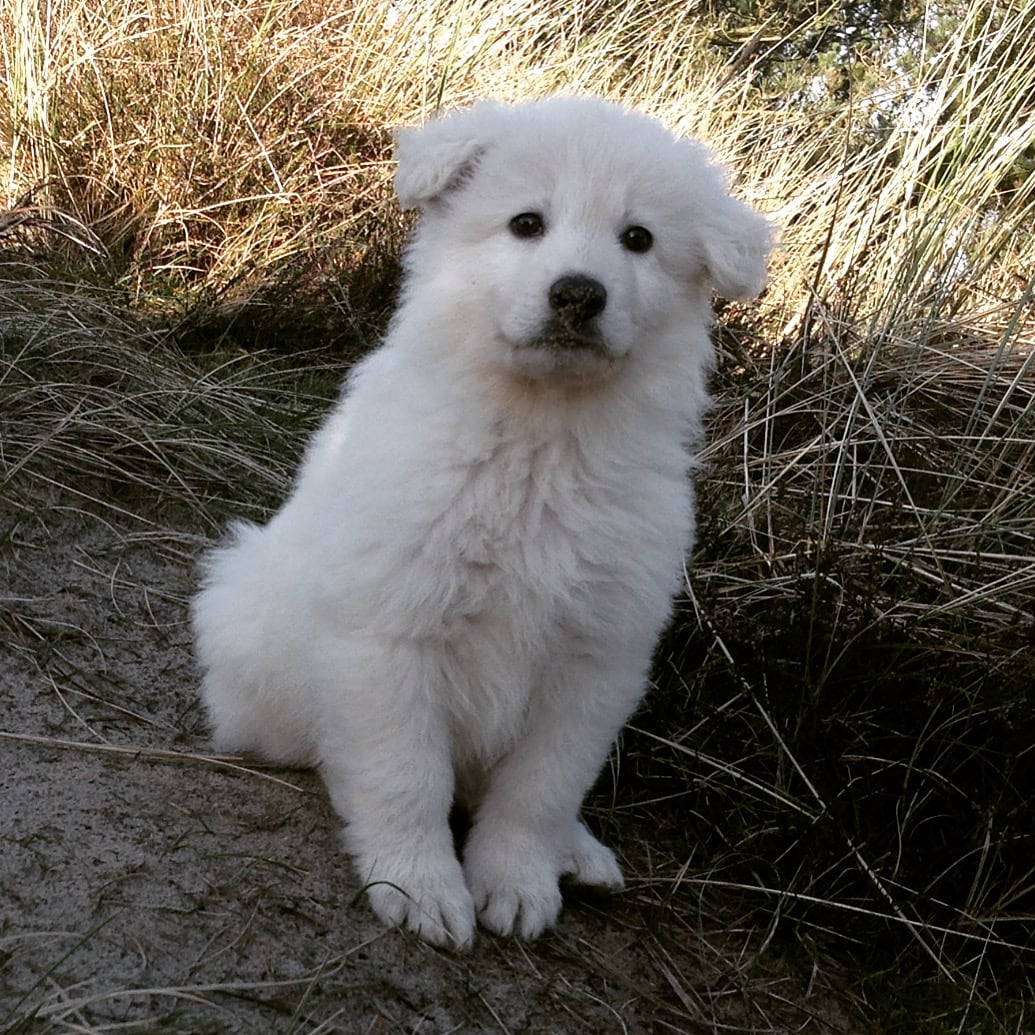
The White Swiss Shepherd (Berger Blanc Suisse) is a large breed originating from Switzerland, notable for its thick white long to semi-long coat with an undercoat. Males reach 60–66 cm at the withers, females 55–61 cm. It is a breed with a high need for exercise and mental stimulation, which learns well, but training requires a more experienced approach and systematic approach. It is sociable in nature, attached to its family and gets along well with children, and gets along well with dogs. Due to its strong bond with its owner and need for activities, it is not suitable for seniors or for an apartment without enough exercise. The coat requires regular care and the breed sheds significantly, which must be taken into account in daily care. The ideal owner is an active person or family who can offer the dog enough exercise, mental work and regular company.
Origin and history
The White Swiss Shepherd has its roots in the same population as the German Shepherd - white fur has been present in German Shepherds since the beginning of the breed, but breeders later removed white individuals from the standard because they were considered an undesirable deviation. While in Europe white dogs practically disappeared from breeding, in North America there were enthusiasts who deliberately continued to breed them and valued their different coloring, temperament and working abilities.
From this North American base, an independent breeding line developed in the second half of the 20th century, which gradually returned to Europe. Here, it was most taken up by breeders in Switzerland, who developed a comprehensive concept of the breed, unified the type and began to promote its recognition as a separate breed distinct from the German Shepherd. It is after Switzerland, where the founding standard was created, that the breed bears its international name Berger Blanc Suisse.
Originally, the breed was bred for versatile herding and guarding work with the herd, which also influenced its current physical constitution, high physical activity and significant need for mental stress. Over time, it became a rather universal social and sporting dog, which, however, retained its working nature and ability to learn more complex tasks to this day. The International Cynological Federation FCI formally recognized the breed only after some time had passed since its actual spread, thus confirming its position as an independent breed within the group of sheep and cattle dogs.
Appearance and size
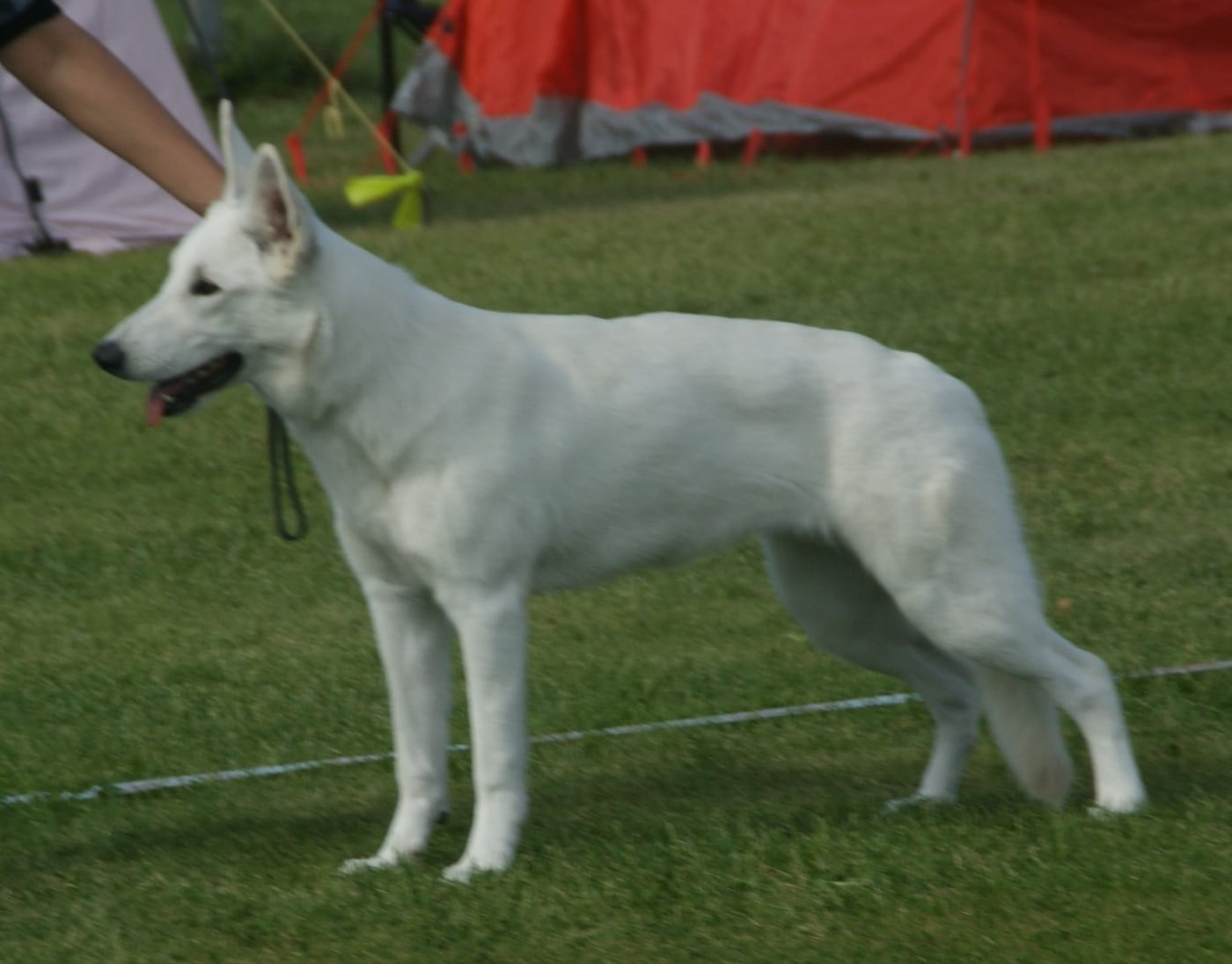
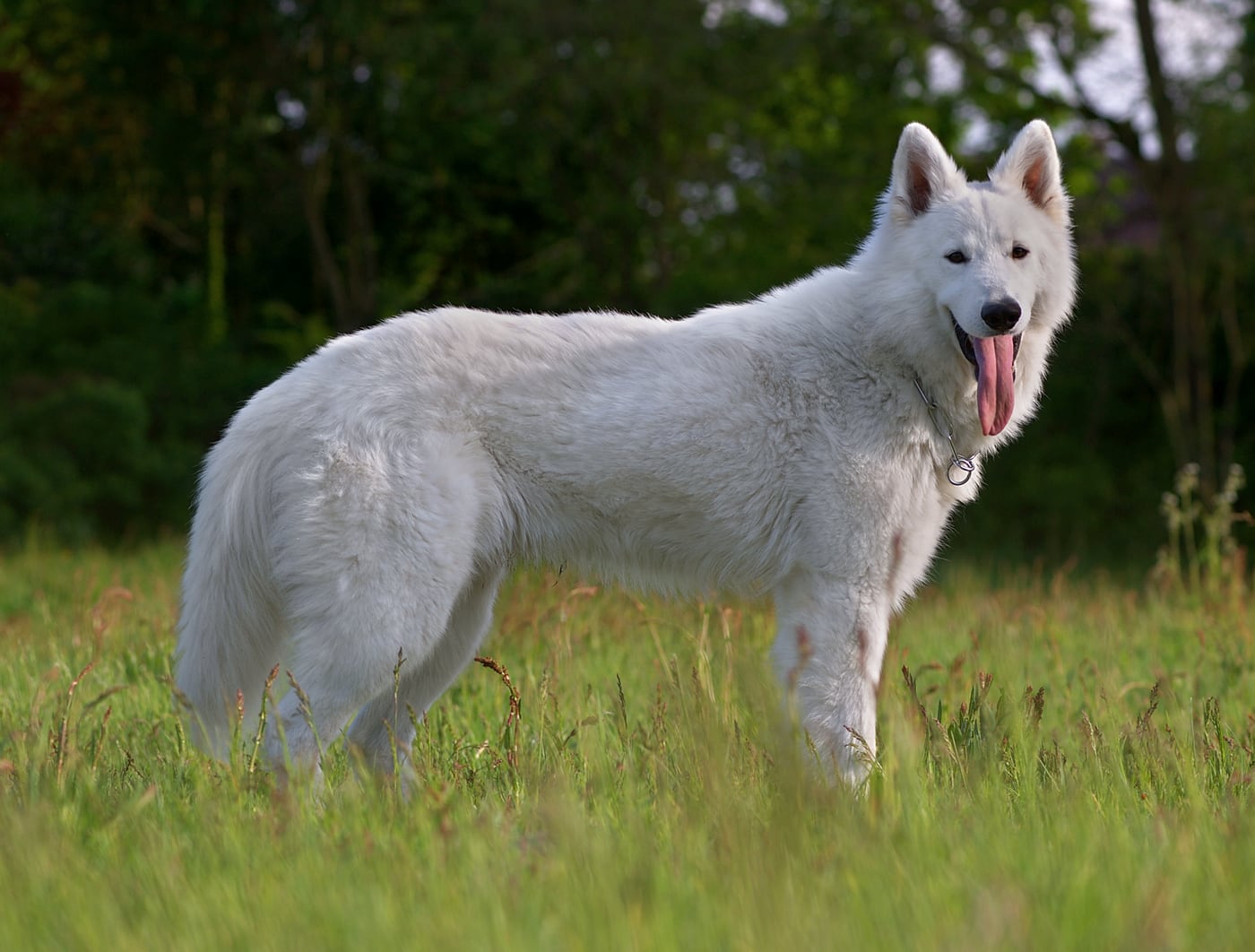
The White Swiss Shepherd is a sturdy, harmoniously built dog with a rectangular body frame and proud, flexible movement. The dog reaches 60–66 cm at the withers, the bitch is smaller, 55–61 cm – the weight is not explicitly stated in the standard. The body is solid, but not heavy, with a straight back and a slightly sloping back line, which gives it an elegant silhouette without unnecessary massiveness.
The head is wedge-shaped, symmetrical, with a flat forehead and a gently arched skull, the muzzle gradually tapering towards the nose. The ears are erect, medium-sized, carried erect and set high, giving the expression alert and focused. The eyes are almond-shaped, not too prominent, with an attentive and intelligent look.
Fur and tail
The coat is long or semi-long, with a distinct undercoat, which makes the breed well adapted to colder weather. The topcoat is medium in length, slightly longer on the neck and back of the legs, creating a soft "collar" and feathered legs. The tail is richly furred, set on level with the back, hanging down in a slight curve at rest, and raised higher when moving, but not folded over the back.
Coat color variations and their recognized shades are described in a separate section on colors.
White Swiss Shepherd Colors
The standard recognizes only white coat color for this breed. This is the only permissible shade, while the pigmentation of the nose, lips and eye rim should remain black - this contrast of the white coat with the dark eye mask and muzzle is a typical feature that is taken into account when judging.
Shades of white
Within the standard white color, individuals may show slight variations in shade – from pure white to a yellowish or cream tinge to the coat, especially on the back and on the earlobes. These subtle differences are tolerated by the standard and are not considered a defect.
Non-standard coloring
Occasionally, individuals with a color other than white appear in the breed, for example with brown or gray spots or an overall darker coat. Such animals do not meet the standard and cannot be shown at shows or included in breeding. However, this does not in itself mean that the dog is in poor health - deviation from the standard color is a question of show and breeding suitability, not automatically an indicator of health risk.
Personality of the White Swiss Shepherd
The White Swiss Shepherd is a dog with a balanced but highly active nature - it needs plenty of exercise and mental exertion, otherwise its energy will start to manifest itself in restlessness or undesirable behavior. It forms a strong bond with its owner and the entire family, and the company of people is one of its key needs, so it does not tolerate loneliness well.
This is an intelligent and docile dog, quick to make connections and able to adapt to different situations. Training is more a matter of consistency and clear guidance than a firm hand - it responds better to a calm, motivating approach than to directive commands. However, it can show a certain degree of independence in its thinking, so it appreciates when the owner can capture and hold its attention.
The White Swiss Shepherd is usually open to society, is friendly towards children and gets along with dogs without any problems. He is initially more wary of strangers and carefully monitors what is happening around him, which is manifested by milder guarding tendencies - he barks more often than he is aggressive. He uses barking as a normal means of communication, not excessively, but he can be expected to respond vocally to unusual stimuli.
It is typical for him to constantly monitor his surroundings and need to have a task or activity - he suffers from boredom and without sufficient stimulation can be restless or destructive. On the contrary, when his physical and mental demands are met, he is a balanced, sociable dog that likes to get involved in family activities and tolerates the presence of other dogs in the household well.
White Swiss Shepherd and children
The White Swiss Shepherd is generally friendly with children and not overly aggressive, but it is a lively and energetic breed with a high need for exercise and mental stimulation, which should be taken into account when living with young children. Its alert and sensitive nature makes it a dog that reacts quickly to family events and likes to join in games, but needs clear rules and enough space to burn off energy.
A key role is played by consistent and early socialization of the puppy - getting the dog used to loud noises, sudden movements and children's behavior helps prevent unwanted reactions in adulthood. Given the medium difficulty of training, the owner will appreciate it if he regularly spends time with the dog and teaches it basic obedience and self-control in situations with children.
- Interactions between a dog and small children should always be supervised by an adult, even with dogs with a balanced temperament.
- Children should be taught to respect the dog - not to disturb it while it is eating or resting and not to touch its fur roughly.
- Regular exercise and mental activity help prevent frustration, which could otherwise manifest itself in inappropriate behavior towards children.
- Older children who actively participate in education and games usually find this breed a reliable companion.
Due to the high need for company, it is not advisable to leave the dog without contact with the family for a long time - isolation can lead to restlessness, which will also affect the relationship with children.
White Swiss Shepherd and other dogs and pets
The White Swiss Shepherd gets along with dogs without any problems, which is also due to its original use as a herding and companion dog working in close contact with humans and other dogs in the pack. A well-socialized individual usually behaves calmly and communicatively in a group of dogs, although gradual and thoughtful introduction is recommended for this breed, especially for adult individuals with no experience with foreign dogs.
The relationship with cats and small animals is individual - the breed does not show a clearly defined behavior in this regard. Due to its herding origin, the White Swiss Shepherd has a developed sense of tracking movement and guarding territory, which can be manifested by increased attention to smaller animals, especially if it has not grown up with them since puppyhood. Cohabitation with a cat or small rodent therefore usually works best where the introduction occurs at an early age and under control.
Recommendations for households with multiple animals
- Socialize your puppy gradually with other dogs and other pets, ideally in the first months of life.
- Always ensure that new encounters with cats or rodents are supervised until you are sure of your dog's reactions.
- Given the high need for mental stimulation and companionship, consider whether the dog has enough stimulation in the household and does not focus excessively on watching other animals.
- For adult individuals from a shelter or without a known history, proceed with more caution when introducing them than with a puppy.
Is the White Swiss Shepherd suitable for an apartment?
Living in an apartment is more of a compromise than an ideal solution for this breed - it depends on how much exercise and space the owner can offer outside the home. The dog does not mind an apartment as a space in itself, but the problem arises if it replaces outdoor activities and exercise.
This is a dog with a high need for activity and mental stimulation, so an apartment without access to regular running, walking and engaging in some activity will practically never be enough for him. Ideally, he should also have a garden or at least the opportunity to go out into nature daily, where he can use his natural need for movement and observation of his surroundings.
What to watch out for
- Space: A smaller apartment can only handle it in combination with plenty of outdoor activities; four walls alone are not enough.
- Peace at home: needs closeness to family - long periods of being alone in an apartment without company are harder to bear.
- Exercise: requires regular physical activity, ideally in the form of longer walks or dog sports, not just short walks around the house.
- Barking: manifests itself at a moderate volume, which can be a sensitive issue for neighbors in a panel house with thin walls.
In practice, it is therefore more suitable for households that can provide it with enough exercise and a program outside the apartment, than for owners looking for an undemanding roommate for a small city apartment.
How much exercise does it need?
The White Swiss Shepherd needs at least one to two hours of active exercise per day, ideally divided into multiple walks with space to run freely. This breed is derived from working herding lines, so a short walk on a leash is not enough to satisfy him - he needs to really run around and use his stamina.
Suitable activities and sports
Thanks to its high level of activity and willingness to cooperate, it is suitable for a wide range of canine disciplines. It appreciates a regular program where physical exertion alternates with obedience and concentration tasks.
- Agility and agility courses
- Dog trekking and running with a dog (canicross)
- Herding trials or at least remote control training
- Accompanying you when cycling or running on longer routes
- Obedience and sporting cynology (obedience, IGP)
In addition to physical exercise, the White Swiss Shepherd also needs plenty of mental stimulation - a bored individual without using his abilities can become restless or destructive. It is advisable to include sniffing games, training elements and tasks where he has to think independently, not just mechanically obey commands.
The thick double coat provides good protection against the cold, but on hot summer days it is advisable to move intensive activities to cooler parts of the day and ensure plenty of water and shade - long-term exertion in the heat does not suit him as well as in milder weather.
Training and education
The White Swiss Shepherd is an intelligent dog that learns quickly, but training only works when it is conducted positively and without harsh methods - to rudeness or pressure, he reacts with distrust and withdrawal, while to praise, treats and play, he responds with willing cooperation. Short, frequent and consistent lessons work best, because this shepherd gets bored easily and long repetition of the same exercise tends to demotivate him.
The main motivation for him is contact with his owner and a sense of meaningful activity - given his high need for mental stimulation, he will appreciate training that combines obedience with searching, following tracks or other tasks involving smell and judgment. Boring work without a connection to a person will quickly reduce his performance and desire to cooperate.
Socialization
Thorough and early socialization is key for this breed - as a dog with a high need for company and a more sensitive nature, it needs to get to know different situations, people and environments from a puppy age in order to build confidence and not be shy or distrustful of unfamiliar stimuli in adulthood. Gradual and calm introduction to new stimuli is preferable to sudden exposure to stressful situations.
Specifics of access
- He prefers a partnership approach based on trust, not dominance or pressure.
- They will appreciate the varied program – in addition to classic obedience, olfactory and physical activities.
- Due to their high need for companionship, they do not train well in isolation; training works best as a joint activity with the owner.
- Due to his high activity level and need for stimulation, obedience training alone is usually not enough to fully develop him.
Hair care and hygiene
The long to semi-long coat with a rich undercoat requires regular brushing, ideally two to three times a week, to prevent tangles, especially behind the ears, on the back of the legs and in the panty area. The undercoat is dense and sheds a lot during the molting period, so it is advisable to have a good quality comb with denser teeth and a glove to remove dead hair.
Molting and seasonal care
This breed is one of the dogs with a significant rate of shedding, which increases in spring and autumn. During these periods, it is advisable to increase the frequency of combing on a daily basis, otherwise the fur can clog the entire home. Outside the shedding season, care in the usual weekly rhythm is sufficient.
Bathing and skin
Thanks to the naturally self-cleaning coat and dense undercoat, there is no need to bathe frequently - only when there is visible dirt or an unpleasant odor. Frequent bathing can disrupt the natural oils in the coat, which protect it from moisture and dirt.
Ears, eyes, teeth and claws
- It is advisable to regularly check the ears for redness or excessive dirt, and if necessary, wipe them gently with a damp cloth.
- You just need to check your eyes occasionally and wipe away any morning discharge.
- It is a good idea to brush their teeth regularly to prevent tartar buildup, which is generally true for most breeds of this type.
- Claws should be trimmed according to how quickly they grow, especially if the dog walks less on hard surfaces that would naturally wear them down.
Feeding
Due to their high physical activity, they need a complete food with sufficient quality protein and energy corresponding to their actual output - a dog that spends hours running and doing demanding training has different requirements than an individual with a calmer regime. The choice of food should always correspond to the age, body weight and level of stress of a particular dog.
Life stage adaptation
A growing puppy needs a food with a balanced calcium and phosphorus ratio, which supports healthy bone and joint development without the risk of growing too fast. An adult will appreciate a food aimed at maintaining muscle mass and energy for all-day activity, while an older dog with decreasing mobility usually requires a lower energy value and a composition that is gentler on the joints and digestion.
Fitness control and prevention of overweight
Despite the significant need for exercise, less active individuals may have a tendency to become overweight if energy intake does not match actual expenditure. It is recommended to regularly check body condition – the ribs should be easily palpable under a thin layer of fat and the waist should be visible behind the chest when viewed from above.
- Choose food according to age, weight and level of physical activity.
- Adjust the amount of feed to seasonal fluctuations in activity (e.g. less movement in winter).
- Treats used during training should be counted towards the total daily intake.
- Regularly assess physical condition by sight and touch.
If you have any doubts about the appropriate composition or amount of food, it is advisable to consult a veterinarian who can tailor the recommendation to the specific individual.
How long does a White Swiss Shepherd live?
The exact lifespan of this breed cannot be stated without a reliable source, but in general, dogs of this size and body type tend to live in the upper range of medium-sized breeds. The specific number for an individual depends on a combination of genetics, living conditions, and the care provided by the owner.
What affects lifespan?
The White Swiss Shepherd is a dog with a high need for exercise and mental stimulation, and these factors play a crucial role in its life - a lack of activity in such a temperamental breed often affects not only its psyche, but also its overall condition.
- Genetics: The puppy's background and the health history of the parents significantly influence the predispositions with which the dog enters life.
- Physical fitness: maintaining optimal weight and muscle tone reduces the strain on the joints and musculoskeletal system throughout the dog's life.
- Exercise: Due to the breed's high activity level, it needs regular and sufficiently long exercise, ideally combined with the possibility of free running.
- Prevention: regular veterinary examinations, vaccinations and preventive deworming are among the basics of care that can detect potential problems early.
- Nutrition: a quality diet appropriate to the dog's age, weight and level of exercise supports both physical fitness and the functioning of the immune system.
- Health predisposition: the breed may have an increased predisposition to certain diseases of the musculoskeletal system or eyes, so it is advisable to monitor the dog's overall health and consult a veterinarian about any symptoms.
Who is the White Swiss Shepherd suitable for?
The White Swiss Shepherd is best suited to people who can offer it enough exercise and regular mental stress - it is a highly active dog with a strong need for both physical exercise and human closeness. It is not a breed to be kept in the garden "for its own sake", but a companion that wants to be part of the family's daily routine.
Who is the breed suitable for?
- For active owners who spend a lot of time outdoors and like to involve their dog in sports, training or long walks.
- For families with children, where the dog is perceived as a full member of the pack and has enough contact with people.
- For households where the dog is not left alone for long hours - its need for company is high.
- For owners willing to regularly devote time to their coat, as its care is moderately demanding and shedding is significant.
- For those interested in cynological disciplines where their intelligence and need for mental stimulation can be utilized.
Who is the breed not suitable for?
- For seniors or people with limited physical capabilities who would not be able to cover their movement needs.
- For complete beginners with no experience in training medium-demanding dogs.
- For households where the dog would spend most of the day alone without human contact.
- For people who are bothered by increased shedding and regular grooming.
- For apartments without sufficient outdoor activities - although living in an apartment is not out of the question, the breed suffers without enough exercise.
Interesting facts about the breed
Despite its name, the White Swiss Shepherd is a separate breed recognized under number 347 in the Swiss FCI cynological nomenclature, classified in the cattle and sheepdog group. Although its appearance with its white coat evokes a connection with the German Shepherd, it is a separate standardized breed with its own name Berger Blanc Suisse.
Also interesting is its inclusion in the FCI Sheepdogs section, which refers to its original use in working with livestock - the breed's disposition for herding work, alertness, and need for close contact with humans are still evident today, although today it serves primarily as a companion and sporting dog.
White Swiss Shepherd Health
The White Swiss Shepherd is a relatively young breed that was separated from the German Shepherd primarily on the basis of coat color, not targeted health breeding. Specific data on the typical health predispositions of this breed are not sufficiently substantiated in professional sources, so we do not provide any specific diagnoses here. In general, for large active breeds with a similar body structure, it is advisable to pay attention to responsible breeding and regular veterinary care throughout the dog's life. Due to the high rate of shedding and denser undercoat, it is also appropriate to pay attention to the condition of the coat and skin during regular care.
What to look for when choosing a puppy
When choosing a puppy, it is advisable to visit the breeding station in person and familiarize yourself with the conditions of breeding and the puppy's parents. A responsible breeder should be able to provide evidence of a health examination of the parent pair and provide information about the veterinary history of the litter. Given the high need for exercise and mental stimulation of this breed, it is a good idea to check with the breeder how the puppies have been socialized and whether they show an appropriate level of energy and curiosity appropriate to their age. It is also recommended to continuously monitor the development of the puppy's musculoskeletal system in the first months of life and, in case of any doubts, consult a veterinarian.
Known predispositions
The breed is described to have an increased predisposition to:
- to hip dysplasia.
- to elbow dysplasia.
- to cancer.
Discussed risks
The breed is described to have an increased predisposition to:
- to degenerative myelopathy.
- to epilepsy.
- to autoimmune diseases such as hypothyroidism.
- to a mutation in the MDR1 gene affecting sensitivity to certain drugs.
- to panosteitis in growing individuals.
This overview is for informational purposes only and does not replace the examination or recommendations of a veterinarian.
What to buy for a White Swiss Shepherd
Practical basis that is suitable for this breed:
- Toys – Dog toys – fetching, chewing and interactive.
- Cosmetics – Shampoos, conditioners and hair care products.
- Bowls – Feed and water bowls, anti-swallow bowls and stands.
- Collars – Dog collars – leather, textile and semi-tight.
- Beds – Beds and mattresses for dogs of all sizes.
- Leashes – Leashes, switch leashes and tracking lines.
Useful instructions
Practical tips that are useful when caring for a dog:
Frequently asked questions
Is the White Swiss Shepherd suitable for an apartment?
Apartment living does not give way to or completely suits him - it is more of a neutral choice, the key is enough exercise and mental stimulation, not the size of the housing. Without daily exercise and activities, he easily gets bored in an apartment and this is manifested in undesirable behavior.
Is the White Swiss Shepherd good with children?
Yes, they are quite good with children and tend to be loyal and sensitive to their family. However, as with any large, active breed, they should always be supervised when living with young children.
Is it suitable for beginners?
Its suitability for beginners is neutral – even a less experienced owner can handle it if they are willing to devote time to training and plenty of exercise. However, it can be more challenging without experience with an active working breed.
How much hair does a White Swiss Shepherd shed and how difficult is it to care for?
This breed sheds a lot, the coat is long to semi-long with a dense undercoat. Grooming is moderate, but regular brushing is necessary, especially during the seasonal shedding period.
How much exercise does a White Swiss Shepherd need?
It needs a high level of exercise and mental stimulation, it is a very active breed. It can find its fulfillment, for example, in working and sporting canine disciplines or long walks associated with training.
Is the White Swiss Shepherd a noisy dog?
His barking is moderate, so he is not typically overly vocal, but he will bark if he feels the need to warn of something unusual. His drooling is low.
Can a White Swiss Shepherd tolerate loneliness?
Not very well – they have a high need for companionship and do not like being left alone for long periods of time. They are a breed that is strongly attached to their family and can suffer from stress without enough contact.
Does the White Swiss Shepherd require demanding training?
The training requirement is medium, the breed is intelligent and willing to cooperate, but needs consistency and mental stimulation. Coming from a working line of sheepdogs, they will appreciate clearly structured training and tasks.
Does the White Swiss Shepherd get along with other dogs and cats?
They get along well with dogs, especially if properly socialized from puppyhood. Their relationship with cats is rather neutral and depends on the individual and their habit of living together.
Is the White Swiss Shepherd suitable for seniors?
Probably not – his high demands for exercise, mental stimulation and coat care can be challenging for a senior lifestyle. He is better suited to active owners who can provide him with plenty of exercise.
Where does the White Swiss Shepherd breed come from and what was it originally used for?
The breed was developed in Switzerland and belongs to the FCI group of Cattle and Sheepdogs (Sheepdogs section). It is therefore a breed with working, herding origins, which is reflected in its high need for activity and mental stimulation.
What breeds are similar to the White Swiss Shepherd?
Similar breeds include the Border Collie, Australian Shepherd, and German Shepherd, with whom it shares some history. The Bobtail, Puli, and Pumi are also mentioned as other representatives of the thick-coated shepherd breeds.
Resources and further information
- FCI Standard No. 347 - White Swiss Shepherd Dog - Fédération Cynologique Internationale
- Source of body measurements – kutya-tar.hu
Professional cooperation
This breed overview was created in cooperation with the Veterinary Clinic VYVET sro and MVDr. Adam Hylák .