
Published 1. 9. 2026
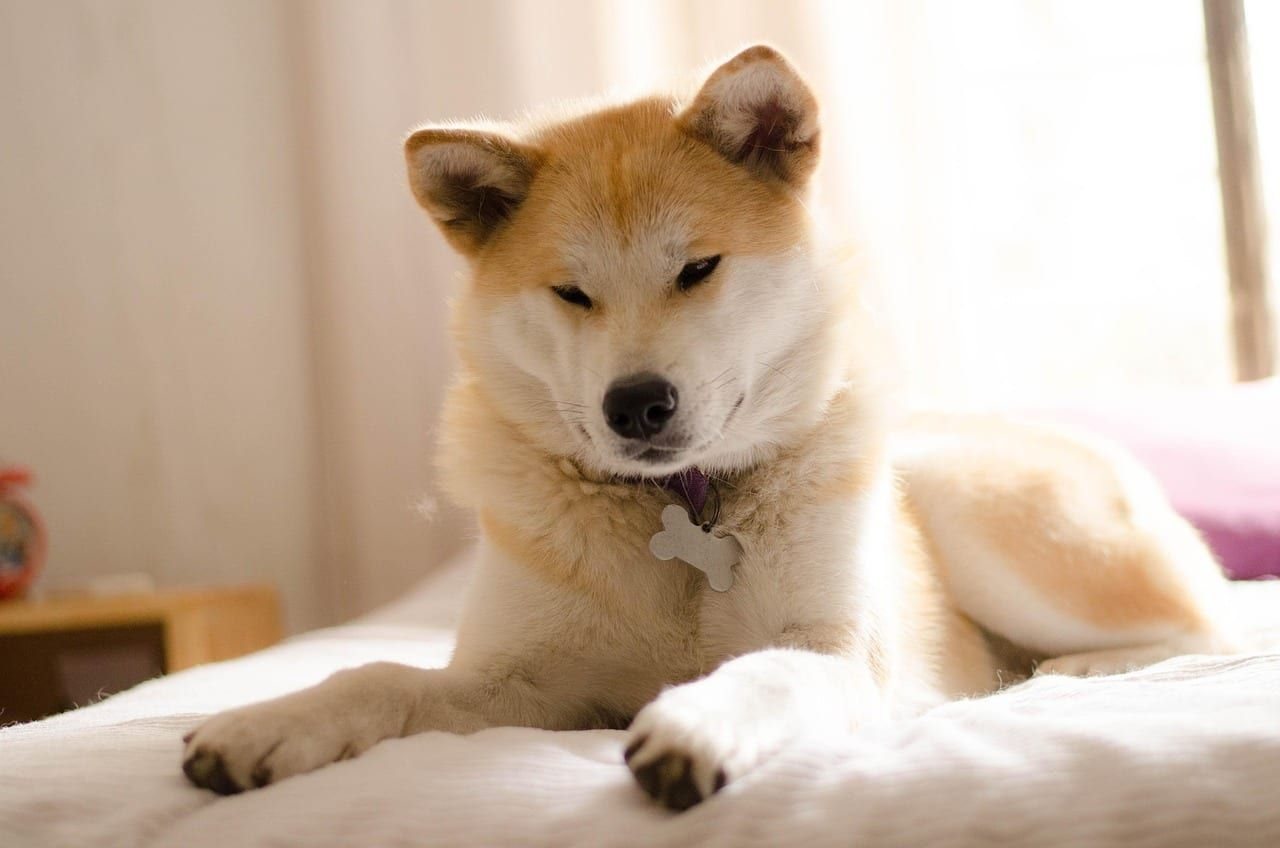
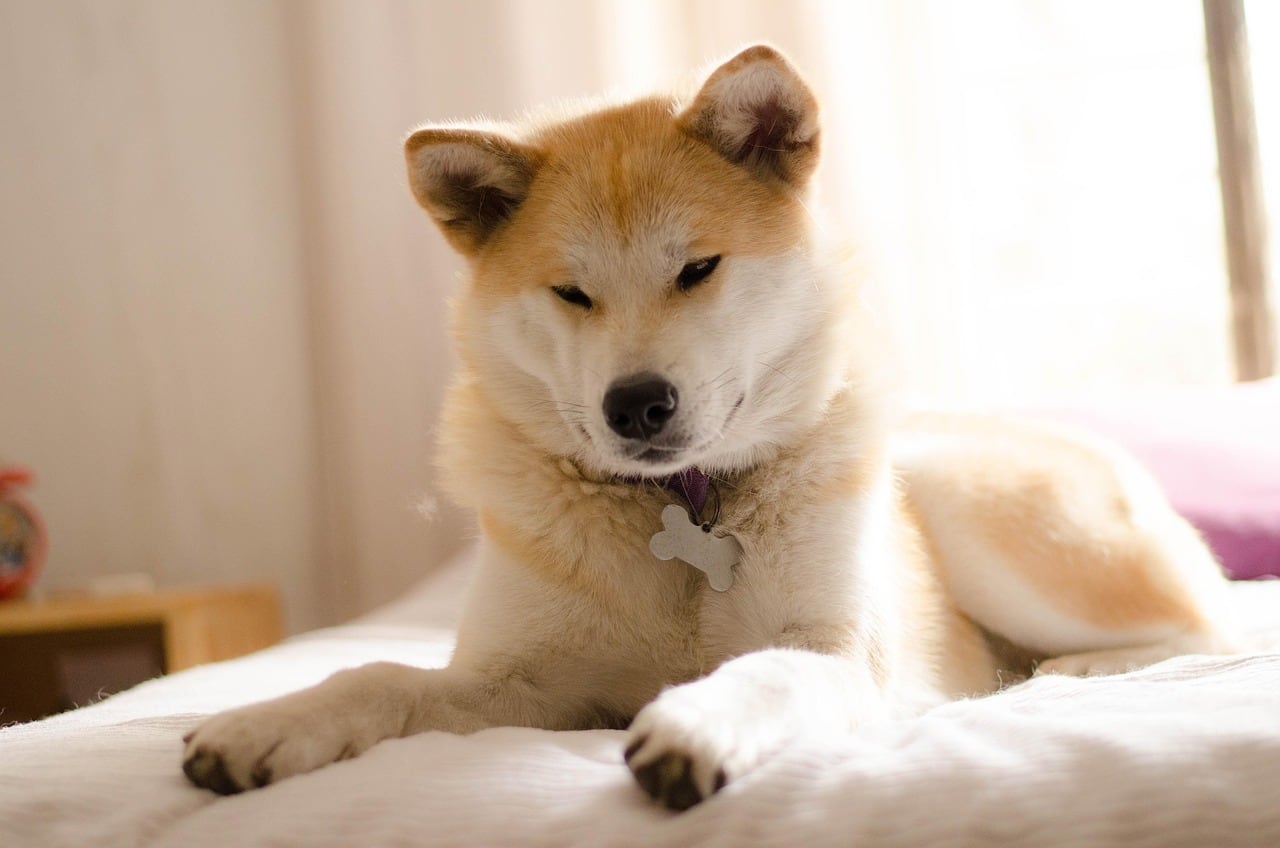
The Akita Inu (Akita) is a large Japanese breed belonging to FCI Group 5, Asian Spitz section (standard no. 255). Males reach 64–70 cm at the withers, females are smaller, 58–64 cm. The dog is distinguished by its dense short coat with an undercoat that sheds profusely, and its characteristic calm, dignified expression, for which the Akita Inu has been valued in Japan for generations.
In terms of temperament, it is an independent and self-confident dog with high training requirements - it is definitely not intended for beginners. It tends to be strongly attached to its family, but it can be distrustful and even conflictive towards foreign dogs and cats, which is why it is not suitable for a household with other animals. It will appreciate owners who can offer it firm leadership, plenty of exercise and mental occupation. The Akita Inu is not completely unsuitable for an apartment or with children, but is more suitable for experienced breeders who understand Nordic and Spitz breeds.
Professionally consulted
The content was created in cooperation with the veterinary clinic Veterinární klinika VYVET sro and MVDr. Adam Hylák.
Quick overview
What is the Akita inu like?
The Akita Inu is a large Japanese breed with a thick coat and undercoat, reaching 58–70 cm at the withers, depending on the sex. It is a dog with a calm, reserved temperament that does not appear dramatic on the outside – it does not bark unnecessarily and drools only minimally, yet it requires an experienced owner. Its nature is independent and stubborn, so training is one of the more demanding and without consistent guidance it can easily assert itself.
This is a dog with medium demands for exercise and mental exertion, which will appreciate a more active program, but does not need extreme stress like working breeds. It tends to be strongly attached to its owner, and is rather reserved and distrustful towards strangers and other animals - living with other dogs or cats therefore requires sensitive socialization and cannot be taken for granted.
- Suitable for experienced and active owners, not for complete beginners.
- The relationship with children and suitability for seniors depends on the specific nature of the individual and upbringing.
- Apartment breeding is possible, but care for the coat with significant seasonal shedding requires regularity.
Origin and history of the Akita inu
The Akita Inu originates from the mountainous region of Akita Prefecture in the north of the Japanese island of Honshu, where it evolved from local hunting spitz-like dogs bred by mountain people called matagi. These dogs were used to hunt large game – wild boars and bears – and had to be strong, hardy and courageous, able to restrain the animal and hold it in place until the hunter arrived.
Over time, the region's breeding also focused on another function: dogs began to be used for organized dog fighting, a popular pastime of Japanese society at the time. To increase their fighting ability and weight, local Spitz dogs were crossed with imported fighting breeds, including the Tosa Inu and various mastiffs. This crossing temporarily changed the breed's character, bringing a larger skeleton and stronger jaws, but weakened the original Spitz type.
In the 20th century, the breed was deliberately returned to the original Japanese type - the features of the Spitz were emphasized, such as erect ears, a coat with an upright structure and a curled tail. During World War II, the breed's population declined significantly, partly due to food shortages and regulations related to the war economy. After the war, breeding was resumed from surviving lines and the breed began to spread outside Japan, where a slightly different breed developed in the USA and Europe, today known as the American Akita breed.
The Japanese Akita Inu was recognized as a national cultural monument in its home country, and the standard for international canine organizations was gradually formalized in the second half of the 20th century, which led to the breed being registered with the FCI.
Appearance and size
The Akita is a robust, well-balanced dog with a pronounced height at the withers of 64–70 cm in males and 58–64 cm in females - the difference between the sexes is therefore noticeable at first glance, and females also have a softer, more feminine expression, while males are clearly more powerful and masculine.
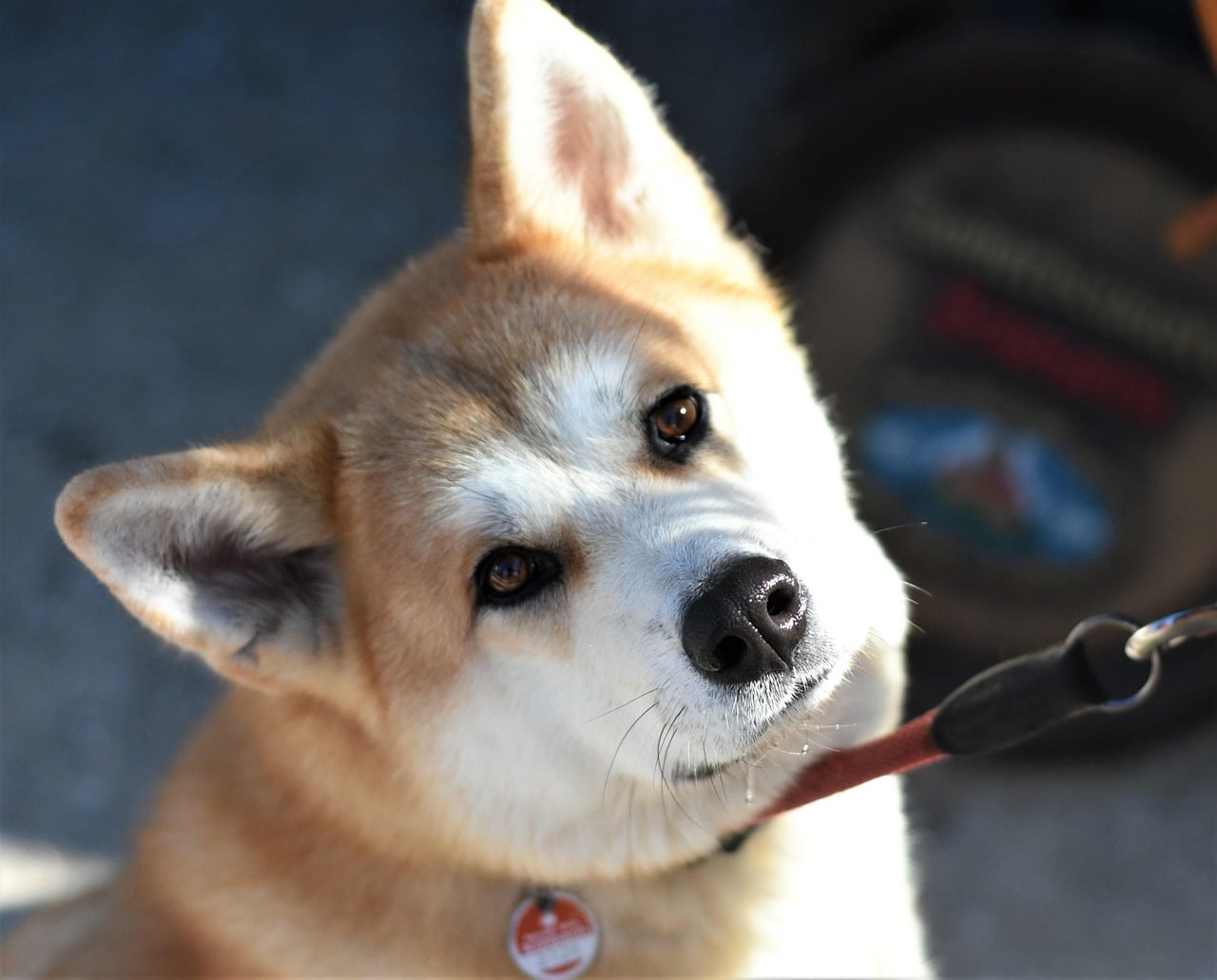
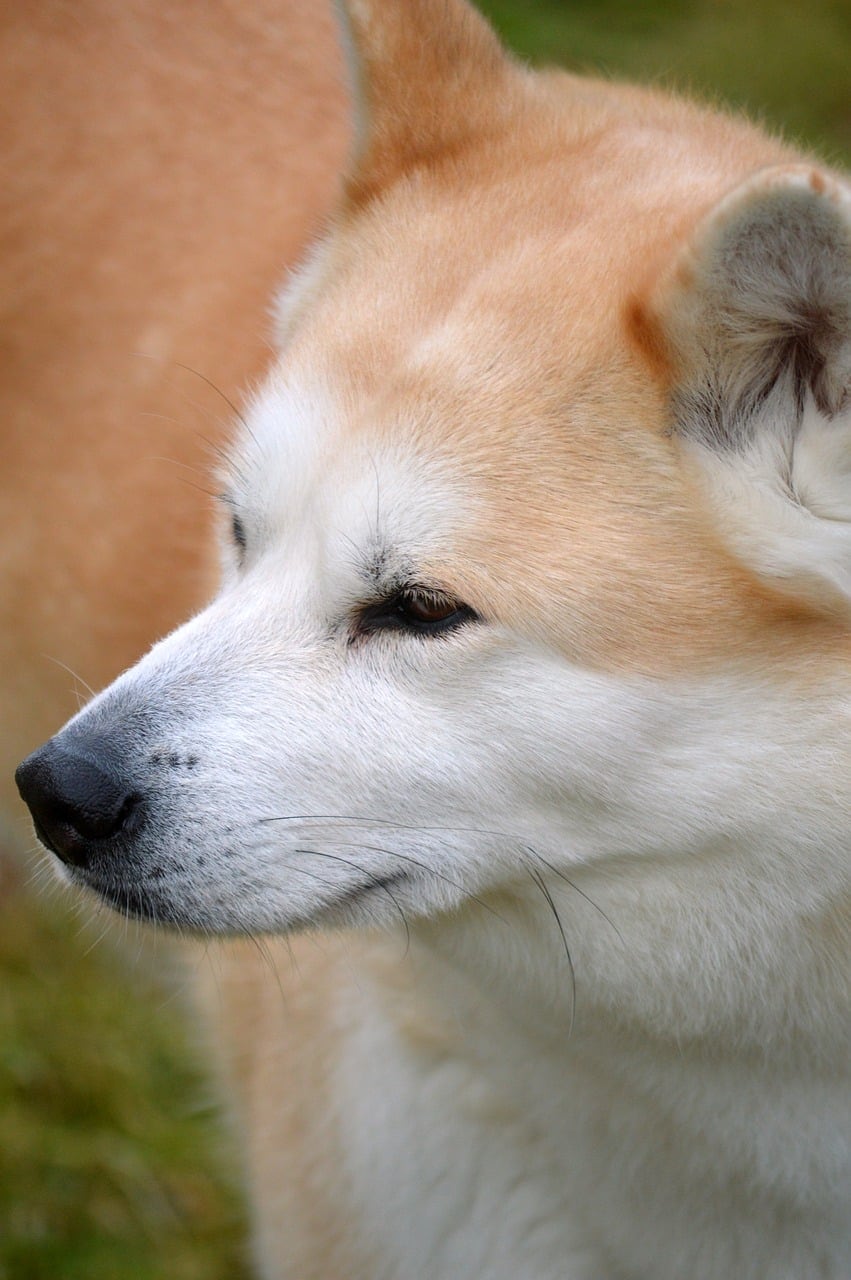
The body is solid and muscular, with a deep chest and a straight back, which gives the overall impression of dignity and calm. The head is large and triangular in shape, with a flat forehead and a relatively broad skull. The ears are small, triangular, erect and slightly tilted forward - their position is one of the characteristic features of the breed. The eyes are small, dark, slightly triangular in shape and set somewhat obliquely, which gives the expression of alertness.
The coat is short to medium length, dense and with a rich undercoat, which protects the Akita well from the cold. This coat structure also explains why the breed sheds intensively - especially during seasonal shedding, a large amount of undercoat is shed. The color variations of the coat are so specific that it is more appropriate to discuss them separately in the section dedicated to color.
A typical feature is the tail – thick, richly furred and carried curled over the back, which underlines the dog's overall compact and confident stance. Other striking features include robust limb bone and strong, well-arched paws, which reflect the breed's original use in demanding mountainous terrain.
Akita Inu Colors
The FCI standard for the Akita Inu defines a specific list of recognized colors and markings in detail, but the exact color variants and their specifics are not available in this overview. Those interested in details about the color character are recommended to consult the current version of the breed standard.
Akita Inu personality
The Akita Inu is a mentally balanced, but also very independent-minded dog lady - she is strongly devoted to her owner, but she approaches strangers and new situations with reserve and perspective. Outwardly, she appears calm and has little need to be heard loudly, which makes her a dog that observes and evaluates rather than reacting impulsively.
Training an Akita requires patience and consistency – this is not a breed that will automatically obey out of a desire to please, but rather it needs to be shown why a particular behavior is worth doing. This individuality is also evident in everyday life: the Akita makes its own decisions and expects clear, but not harsh, leadership from its owner.
It has a medium level of energy, so it is not a dog that needs constant exercise, but it still appreciates a regular program and a significant dose of mental activity - due to boredom and lack of stimulation, it can easily start to fill its time in undesirable ways.
In relation to other animals, the Akita tends to be rather reserved and even conflictive, especially towards other dogs and cats, which is related to its strongly defined territorial and hierarchical mindset. Thanks to its natural alertness and distrust of unknown stimuli, it also exhibits guarding tendencies, even if it is not accompanied by excessive barking.
It is neutral towards children - it is not a typically playful family dog that would seek interaction, but rather coexists quietly and respects established household rules. Its need for company is medium, so it can be independent, but permanent isolation from the family does not suit it.
Akita inu and children
The Akita's relationship with children is described as neutral, which means that the breed cannot be automatically classified as a dog that is strictly for children, but neither as a problematic one. It all depends on the specific nature of the individual, the quality of socialization, and the family's approach.
The Akita is a dog with a calm, dignified and relatively independent temperament. It does not seek out boisterous play in the same way as breeds bred primarily as children's companions, and may react with detachment to noisy or unpredictable behavior from young children. Its low barking rate and rather reserved nature mean that it does not need to signal its displeasure loudly - making it all the more important to read its body language.
Socialization and upbringing
Given the high training requirements and strong will of the breed, it is crucial to start socialization as early as possible and to systematically develop it even in adulthood. The dog should have positive but calm experiences with children of different ages from puppyhood, so that it gets used to their presence, movement and sounds and does not perceive them as a disturbing or threatening element.
- Gradually introduce the dog to common situations in a household with children (noise, sudden movements, touch).
- Teach children basic rules of behavior towards dogs – do not disturb them while they are eating and resting, do not touch them without permission.
- Maintain consistent training, as the Akita's strong nature requires clearly defined boundaries.
The role of adult supervision
Even with a dog with a balanced temperament, it is not recommended for a child and a dog to stay together without adult supervision. An adult should be able to recognize signals of discomfort on the part of the dog and inappropriate behavior on the part of the child and intervene in time before an undesirable situation occurs. This approach is all the more important with the Akita, as it is a strong and temperamentally independent breed, and it is not worth relying on automatic tolerance.
Akita inu and other dogs and pets
Akita Inu is rather difficult to get along with other dogs and its relationship with cats is also problematic. It is a breed with a strong independence and strong will, which even in adulthood maintains a tendency to dominance, especially towards individuals of the same sex. Therefore, it is not recommended to deal with coexistence with another dog without thorough and gradual socialization from an early age, ideally under the guidance of an experienced breeder or cynologist.
Low barking does not mean that the Akita is indifferent to its surroundings - on the contrary, it is an attentive and independent-thinking breed that evaluates the situation in its own way. With small animals such as rodents or domestic birds, it is therefore advisable to take into account that the dog's reaction can be unpredictable and coexistence should be built very cautiously, ideally under constant supervision.
If a family plans to keep an Akita together with another animal, it is recommended to acquire both animals together when they are young, let them grow up next to each other, and carefully control all contact initially. In adults that have grown up without contact with other dogs or cats, the likelihood of problem-free coexistence is lower.
Is the Akita Inu suitable for an apartment?
The Akita Inu can also live in an apartment, but it depends on how much exercise and peace the owner can provide for it. It is a large, sturdy breed with a medium level of activity, so an apartment in itself is not an obstacle - what is more important is enough space for rest and regular walks outside the home.
Due to the high training requirements and moderate need for mental stimulation, it is more suitable for owners who can offer it a structured regime and regular outdoor exercise, not just a limited space in the apartment without further exercise. Low barking is an advantage for living in an apartment building - the Akita Inu does not disturb the surroundings with unnecessary barking and gives a rather calm, reserved impression.
On the other hand, a high rate of shedding should be expected, which in a smaller apartment means more frequent cleaning of the coat, especially during periods of lightening of the undercoat. Practical conditions for keeping in an apartment include:
- plenty of daily exercise outdoors to replace limited indoor space
- a quiet place to rest where the dog is not exposed to constant noise
- regular combing of the coat due to significant shedding
- a consistent and patient approach to training, even if the dog lives in a smaller apartment
How much exercise does it need?
The Akita Inu has a medium-high exercise requirement – it can handle regular longer walks, but it is not a dog that needs the extreme daily workload of working breeds. Its calm nature is combined with the ability to perform when needed, so it will appreciate a combination of walks and occasional more intense activity.
Due to its strong temperament and independent nature, it is advisable to combine exercise with mental work. Running alone without mental stimulation may not be enough to keep the Akita Inu balanced and happy.
Suitable activities
- Longer walks in varying terrain, ideally with the possibility of free movement in a secure area
- Obedience training and the basics of dog trekking as a form of engaging both the head and body
- Search games and olfactory activities that match her natural independence
- Hikes and longer walks in nature, as long as the dog is well-behaved around other dogs on a leash
Because the Akita Inu generally does not get along with other dogs, free movement and socialization on the training ground or dog playground should be carefully considered and it is better to choose quieter locations or individual training. Training that requires patience and consistency is also reflected in physical activities - motivation should be based on respect for the handler, not pressure.
A thick coat with an undercoat means that in the hot summer months it is advisable to move more intense movement to cooler parts of the day and to be careful about overheating, especially during higher physical exertion.
Training and education
Training an Akita requires patience and experience - it is a breed with a strong sense of independence and will, which does not work on command just because a person wants it to. It is not interested in mechanical repetition of exercises, it is more motivated by meaningful cooperation, where it sees a clear reason to do a given thing.
Positively guided training based on consistency and respect, rather than harsh dominance, works best. Short, regular lessons with clear rules and no unnecessary repetition are more effective than long training blocks. The Akita quickly learns what is expected of her, but is just as quick to recognize inconsistent leadership and stop responding to instructions.
Socialization
Early and thorough socialization is key for this breed. Since it tends to be less friendly with other dogs and more reserved with cats, it is advisable to introduce the dog to different stimuli, environments and individuals gradually and in a controlled manner from puppyhood. The goal is not to turn the Akita into an overly social breed, but to teach it to handle everyday situations calmly and without conflict.
Specifics of access
- Entrust training to a person with patience and experience with similarly independent breeds.
- Build a relationship based on trust, not force or pressure.
- Make sure to have consistent rules – the Akita will quickly recognize inconsistency in approach.
- Contact with other dogs and animals should be handled gradually and under control, not in the form of random encounters.
Due to the aforementioned traits, this breed is generally not recommended as a first dog for inexperienced breeders.
Hair care and hygiene
The Akita's coat is short and dense, with a prominent undercoat that protects it from both cold and overheating. It is precisely because of the undercoat that coat care is one of the types where the main attention needs to be paid to the molting period - this is usually significant in this breed and care must be intensified at that time to remove dead hairs before they are left to fly around the household.
Combing and shedding
Outside of the main shedding season, it is sufficient to brush the Akita's coat once or twice a week to remove dirt and promote its natural shine. During the shedding season, it is advisable to brush it more frequently - otherwise, dead hair will accumulate in the carpet, on clothing and upholstery. A brush that reaches the bottom layer of the coat is suitable, not just a surface comb.
Bathing and skin
Due to the density and structure of the coat, the Akita does not usually get dirty as easily as breeds with fine coats without undercoat, so bathing is only necessary when absolutely necessary. Skin folds that require special care are not typical of this breed.
Ears, eyes, teeth and claws
- It is advisable to regularly check the ears and remove dirt to prevent ear canal inflammation.
- It is enough to occasionally wipe the eyes to remove any discharge.
- It is good to brush your teeth to prevent tartar and gum problems.
- Claws need to be trimmed if they are not naturally worn down by sufficient movement on hard surfaces.
Feeding
A high-quality complete food adapted to the age, size and activity level is essential for the Akita. Given its medium level of physical activity, it is advisable to choose a food that corresponds to its actual energy expenditure - i.e. do not feed it to the level of working or highly active breeds.
Physical fitness check
It is advisable to regularly monitor the body condition of the Akita by sight and touch - the ribs should be slightly palpable but not visible, and there should be a noticeable narrowing of the figure in the lumbar region. If there are signs of overweight, it is wise to adjust the amount of food or consider consulting a veterinarian about an appropriate diet.
Life stage adaptation
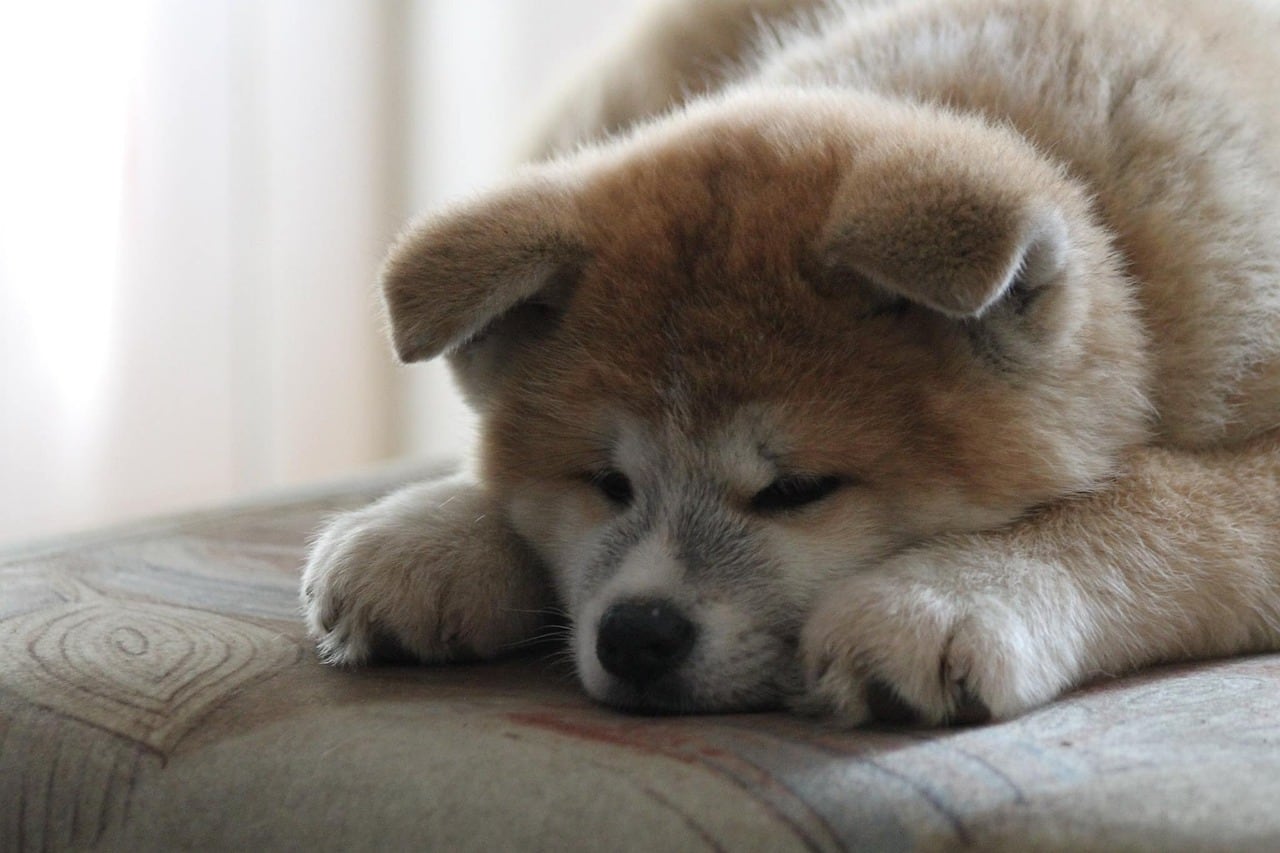
- Puppies need food designed for medium breed growth that supports gradual and even skeletal development.
- Adult individuals should receive food appropriate to their age, size and level of exercise to prevent excess energy and associated weight gain.
- For older dogs, it is advisable to take into account lower activity and, if necessary, adjust the energy value of the food to prevent overweight.
Since the Akita is not a breed with high exercise requirements, the risk of being overweight is real if the feeding regimen is set inappropriately - therefore, regular weighing and adjusting the rations according to the dog's current condition, not according to universal tables, is recommended.
How long does an Akita Inu live?
The exact average lifespan of an Akita Inu cannot be stated based on the available data, as none of the verified sources provide this number. In general, for medium-sized breeds of similar build and genetic makeup, lifespan is influenced by a combination of factors rather than a fixed number - the genetics of the specific individual, its physical condition and the care it receives from its owner are key.
What affects lifespan?
- Genetics: The puppy's background and the health history of the parents play a crucial role - so it pays to choose breeders who monitor the health of the parent pairs.
- Physical fitness: Maintaining an optimal weight without being overweight reduces the strain on joints and internal organs.
- Exercise: The Akita Inu has a moderately high need for activity - regular but reasonably dosed exercise helps maintain the muscular system and fitness without unnecessary overload.
- Prevention: Regular veterinary check-ups and early detection of potential health problems can positively affect the overall length and quality of life.
- Nutrition: A quality diet appropriate to the dog's age, size and activity level supports a healthy coat, digestion and immune system.
- Health predisposition: The breed may have an increased predisposition to certain diseases, so it is advisable to consult the breeder or veterinarian about specific risks when choosing a puppy.
Who is the Akita Inu suitable for?
The Akita Inu is best suited to experienced dog owners who can handle consistent and patient training - it is a breed with a strong personality and a low willingness to mindlessly obey, so training commands and socialization requires time and a consistent approach. It is suitable for people who can offer it regular exercise while respecting its somewhat independent nature.
Who is the breed suitable for?
- For owners with previous experience training more independent breeds.
- For active people who provide regular physical activity and plenty of stimulation.
- For households where he will be the only dog in the family.
- For homeowners with a garden where the Akita Inu has more space and peace.
- For those who are looking for a dog that is more socially bonded to their family than a universally friendly dog to everyone.
Who is the breed not suitable for?
- For complete beginners with no experience in raising a dog.
- For households that want to keep multiple dogs or a cat under one roof.
- For owners who expect an easily manageable and unconditionally obedient dog.
- For people who don't have time for consistent socialization and long-term training.
- For owners who do not want to deal with increased demands on coat care during the shedding period.
Interesting facts about the breed
The Akita Inu comes from Japan, where it is considered a national breed and is considered a symbol of loyalty - in its country of origin, it is associated with wishes for good health and a happy life, which is why Akita figurines are traditionally given as gifts to newborns or people recovering from illness.
Among the Japanese Spitz, which also include the Shiba Inu, Hokkaido, Kai, Kishu, and Shikoku, the Akita Inu is the only medium-sized breed - the other representatives of this group tend to be smaller.
Within the FCI, the Akita is classified in Group 5 (Asiatic Spitz and related breeds section) under standard No. 255, with the international name of the breed being simply "Akita", without the suffix "inu" (which simply means "dog" in Japanese).
Akita Inu Health
The Akita Inu is a robust Japanese breed with a strong skeleton and a thick double coat, which has been bred for generations for physical endurance. The specific health risks specific to this breed are not described in detail in the available breeding and professional materials, so it is advisable to rely primarily on the recommendations of breed clubs and on the health examination of the puppy's parents. In general, it is advisable to pay attention to the condition of the joints and overall condition throughout life in large and strongly built breeds. Regular veterinary examinations and an appropriate exercise regimen help to keep the dog in good condition throughout its life.
Coat and skin care
The dense undercoat combined with significant seasonal hair changes requires regular brushing, especially during periods of intense shedding. Neglected hair care can lead to matting and impaired thermoregulation, which indirectly affects the dog's overall well-being.
What to look for when choosing a puppy
When choosing a puppy, it is advisable to visit the breeder in person, review the breeding conditions and meet the puppy's parents. The seriousness of the breeder is usually confirmed by the breeder's willingness to provide information about the health status of the parent couple and any preventive examinations. It is also recommended to check whether the breeder is registered with one of the breeder's clubs, for example the Akita Inu Czech Club, which brings together breeders of this breed in the Czech Republic.
Known predispositions
The breed is described to have an increased predisposition to:
- to hip dysplasia.
- to elbow dysplasia.
- to progressive retinal atrophy (PRA).
- to hypothyroidism (reduced thyroid function), often of autoimmune origin.
- to gastric dilatation and volvulus (torsion of the stomach), which is related to the breed's deep chest.
- to entropion or ectropion (incorrect position of the eyelids).
Discussed risks
The breed is described to have an increased predisposition to:
- to uveodermatological syndrome (a disease similar to Vogt-Koyanagi-Harada syndrome), which affects the eyes and skin.
- to sebaceous adenitis (inflammatory disease of the sebaceous glands).
- to autoimmune skin diseases such as pemphigus foliaceus.
This overview is for informational purposes only and does not replace the examination or recommendations of a veterinarian.
What to buy for an Akita inu
Practical basis that is suitable for this breed:
- Toys – Dog toys – fetching, chewing and interactive.
- Cosmetics – Shampoos, conditioners and hair care products.
- Bowls – Feed and water bowls, anti-swallow bowls and stands.
- Collars – Dog collars – leather, textile and semi-tight.
- Beds – Beds and mattresses for dogs of all sizes.
- Leashes – Leashes, switch leashes and tracking lines.
Useful instructions
Practical tips that are useful when caring for a dog:
Frequently asked questions
Is the Akita Inu suitable for beginners?
Probably not – the Akita Inu has a high level of training requirements and a strong character that requires an experienced and consistent owner. Without clear leadership, it can be independent and even dominant.
Does the Akita Inu get along with other dogs?
They tend to get along worse with dogs, especially with individuals of the same sex, which can cause tension. Socialization from puppyhood is therefore key, but even then, living with other dogs is not always problem-free.
Is the Akita Inu suitable for children?
The relationship with children is neutral - suitability depends on the specific nature of the dog and the method of socialization. Given the strong nature of the breed, adult supervision is appropriate when in contact with small children.
Why is the Akita Inu said to be independent?
The breed was used in Japan as a guard and hunting dog, which shaped its independent and decisive nature. The Akita Inu often acts according to its own judgment, which is also evident in training.
How many Akita inu lines?
The shedding rate is high, the coat has a thick undercoat, which is significantly renewed especially during the seasonal flowering. Regular brushing during this time will significantly reduce the amount of hair in the household.
Is the Akita Inu suitable for an apartment?
Apartment suitability is neutral, the breed can adapt to a smaller space if it has enough exercise and mental stimulation. The key is the overall activity of the owner rather than the size of the housing.
Is the Akita Inu suitable for seniors?
Suitability for seniors is neutral – the breed can handle moderately demanding exercise, but the high level of training and strong nature may be difficult for a less experienced or physically weaker owner to handle.
Why is the Akita Inu so independent in training?
The training requirements for this breed are high because the Akita Inu was bred as an independent guard and hunting dog. It requires a patient, consistent approach and motivation rather than harsh methods.
Can Akita Inu get along with cats?
Living with cats is rather problematic, the breed has a strong hunting instinct inherited from its original use in Japan. If the Akita Inu is used to cats from a puppy, coexistence may work better, but it is not a guarantee.
How difficult is it to care for an Akita Inu's coat?
Coat care is moderately demanding – the short, dense coat with undercoat does not require complex grooming, but it does need regular brushing, especially during the shedding period.
Is the Akita Inu a noisy breed?
The barking rate of this breed is low, the Akita Inu generally does not bark without reason and has a rather quiet, confident nature. This makes it a calm dog in terms of volume, although it has a strong character.
Resources and further information
- Akita Inu Czech Club
- Akita – list of breeds ČMKU – Czech-Moravian Cynological Union
- FCI Standard No. 255 - Akita - Fédération Cynologique Internationale
- FCI-Standard N° 255 – Akita – Fédération Cynologique Internationale (FCI)
- Body measurements source – wuac.info
- Akita Inu - Wikipedia - Wikipedia
Professional cooperation
This breed overview was created in cooperation with the Veterinary Clinic VYVET sro and MVDr. Adam Hylák .