
Published 1. 9. 2026
The Brazilian Terrier is a small breed originating from Brazil, classified in FCI Group 3 among terriers (section Large and medium sized Terriers, standard no. 341). The male measures 35–40 cm at the withers, the female 33–38 cm, the weight of both sexes is around 10 kg. The short coat is easy to maintain and the low shedding will be appreciated by owners who are bothered by hair around the apartment.
In terms of temperament, it is an active, temperamental dog with a high need for exercise and mental stimulation - it does not like to be bored and can find its own program without employment. It is strongly attached to the company of people and dogs, so it does not tolerate loneliness well. It is suitable for an apartment due to its size and low demand for coat care, and even a less experienced owner can handle training, if they give it enough activities and consistency. It is friendly with children, usually friendly with other dogs, and its relationship with cats depends on the specific experience of the individual.
Professionally consulted
The content was created in cooperation with the veterinary clinic Veterinární klinika VYVET sro and MVDr. Adam Hylák.

Quick overview
What is the Brazilian Terrier like?
The Brazilian Terrier, known in Brazil as the Terrier Brasileiro, is a small breed belonging to FCI Group 3 Terriers. It stands 33–40 cm at the withers, depending on the sex, and weighs around 10 kg, making it a compact dog with a short, undemanding coat that sheds easily.
By temperament, it is a lively, energetic terrier with a high need for exercise and mental exertion - it does not tolerate boredom and inactivity well. It is strongly attached to its people and requires a lot of company, it is definitely not a solitary type. It can handle training at a medium level, and will appreciate consistency and variety.
Suitable for:
- active individuals and families with children
- living in an apartment or a house, if it gets enough exercise
- owners looking for a dog suitable for their first experience with the breed
- households with other dogs that they get along well with
Origin and history
The Brazilian Terrier (Terrier Brasileiro) originated on rural estates in southeastern Brazil, where European immigrants brought small terriers and pinschers from the second half of the 19th century - the influence of the fox terrier and smaller French and Portuguese terrier-like breeds is mainly mentioned. These dogs crossed with each other and with local greyhounds and dogs on Brazilian fazendas, gradually creating a distinctive type adapted to the local climate and farm life.
The breed's original purpose was to hunt rodents and snakes around farm buildings and guard the homestead - its agility, courage and low maintenance short coat suited this work. Unlike many European terriers, which were bred specifically to hunt specific game underground, the Brazilian Terrier was shaped more by free selection based on performance and temperament in rural farm conditions, especially in areas such as Minas Gerais and São Paulo.
The breed retained the character of a local Brazilian variety for a long time and was practically unknown outside its home country. Only the gradual systematization of breeding and the writing of a breed standard in Brazil allowed its official recognition by the International Cynological Federation FCI, which lists it under number 341 in the Terrier group. Even today, the Brazilian Terrier remains a rather rarely bred breed outside South America.
Appearance and size
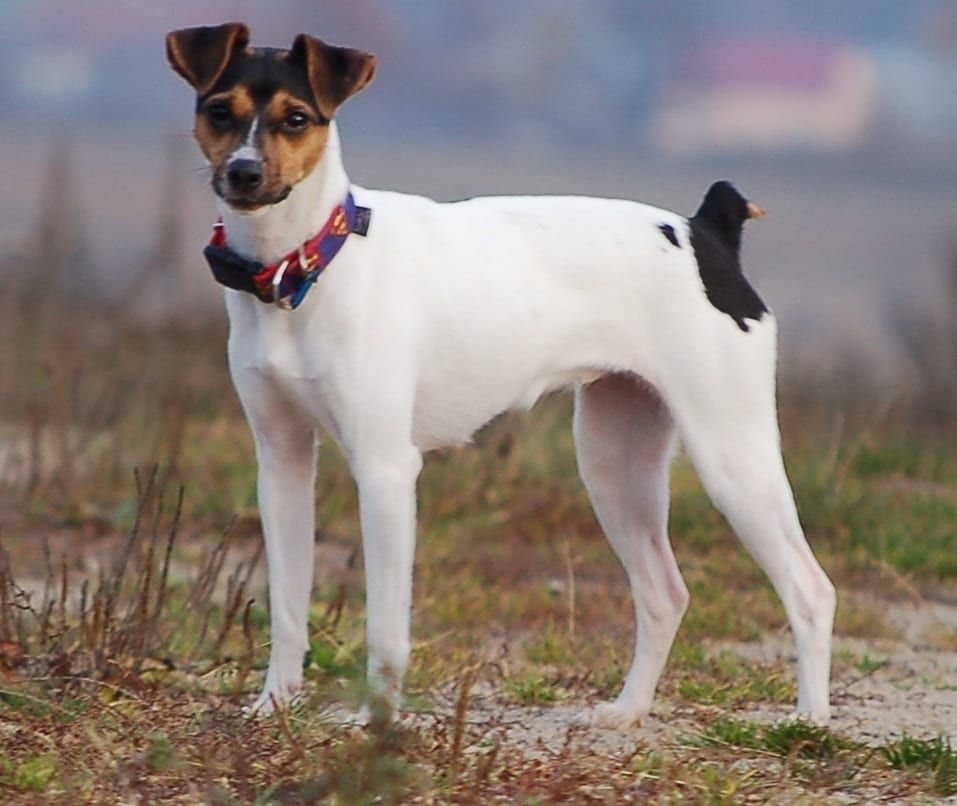
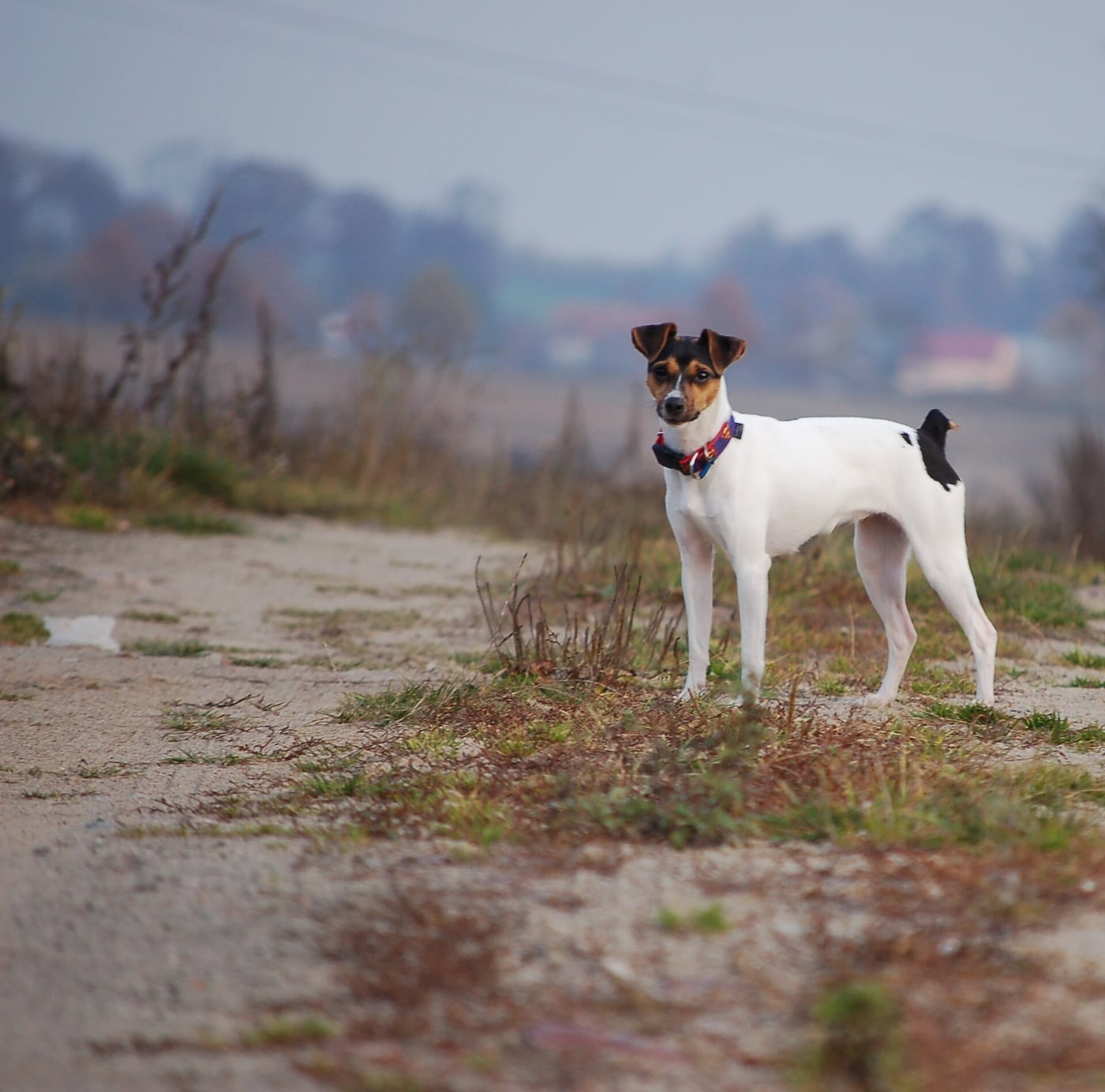
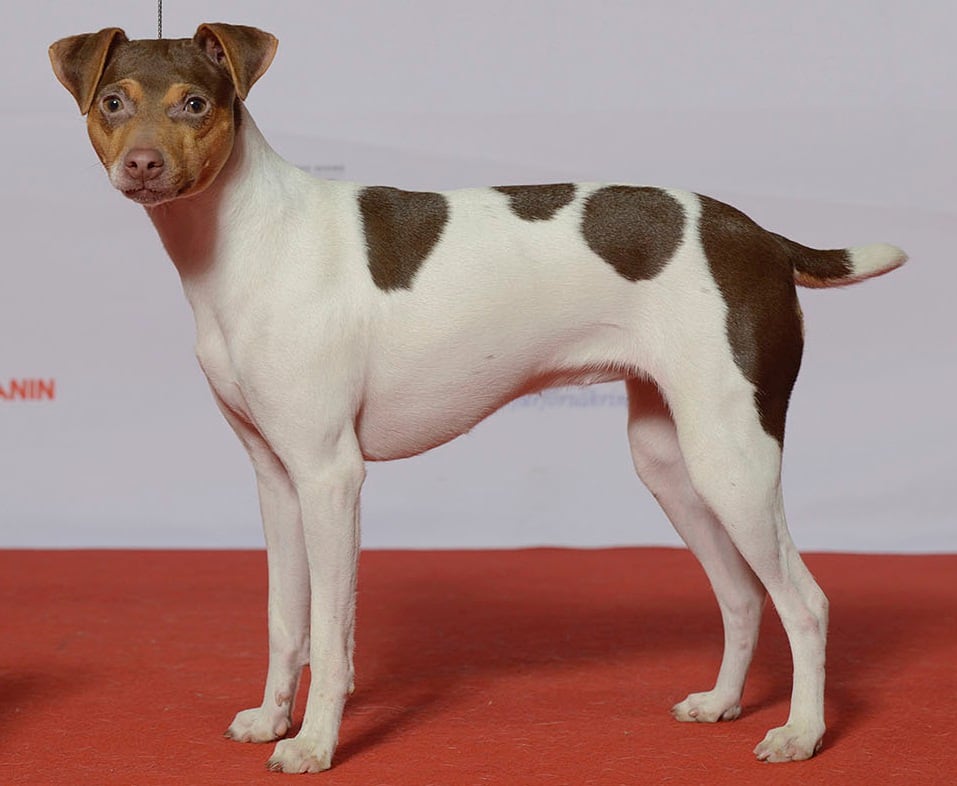
The Brazilian Terrier (Terrier Brasileiro) is a small, yet solidly built breed with an elegant, athletic body. The male dog stands 35–40 cm at the withers, the female is slightly smaller, 33–38 cm, and weighs around 10 kg for both sexes. The body is proportionally balanced, with a straight back and a dry, muscular build, which corresponds to its origin as an active hunting and social terrier.
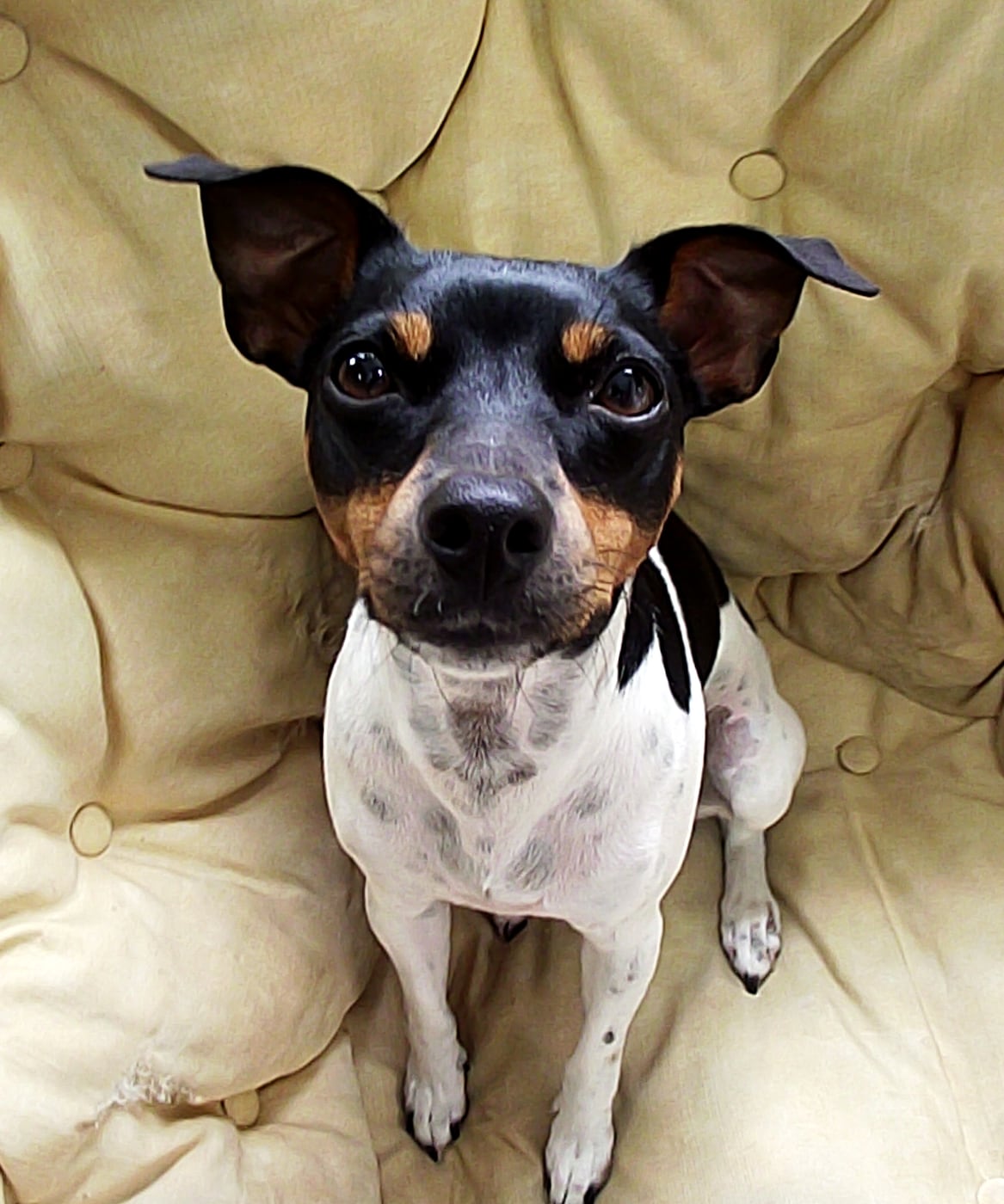
The head is wedge-shaped, with a prominent but not excessively broad forehead and a gradual transition to the bridge of the nose. The ears are erect or partially drooped, set high, which gives the expression alertness and liveliness. The eyes are medium-sized, almond-shaped, with an attentive and intelligent look, which is characteristic of this breed.
The coat is short, smooth and close to the body, without an undercoat, making it easy to care for. The standard deals with coat color variants separately and you can find an overview of them in the Colors section.
The tail is set in an extension of the back line, carried horizontally or slightly above the back when moving, never curled.
Typical physical signs
- Dry, muscular constitution without a tendency to heaviness
- Erect or drooping ears with a pronounced set
- Short coat without undercoat, low grooming requirements
- Smaller difference between a male and a female – they differ mainly in height, weight is usually comparable
Brazilian Terrier Colors
The Brazilian Terrier standard specifies coat color precisely, but a specific list of recognized color variants and permitted markings is not part of the materials from which this atlas is based. Those interested in the exact color palette are recommended to consult the current version of the FCI standard No. 341.
Given that this is a breed with a clearly defined standard, it is advisable to always check the color of the puppy and adult directly with the breeder or in the pedigree, or consult with the breed club to see if the color corresponds to the standard.
Brazilian Terrier Personality
The Brazilian Terrier is a lively and very energetic dog, whose high physical activity is combined with an equally high need for mental stimulation. It quickly suffers from boredom or lack of stimulation and seeks its own entertainment, which is often manifested by restlessness or excessive vocalization.
It forms a strong bond with its owner and family and seeks out human company – it does not do well in long-term isolation. It is a bright and docile dog, which makes it able to handle even more demanding training tasks, but it can still show a certain degree of independent thinking and stubbornness. Therefore, consistent leadership and sufficient motivation are key in training.
It is alert to its surroundings and reacts to unknown stimuli by barking, which makes it a reliable alarm dog. It gets along well with dogs, but its relationship with cats or other smaller animals needs to be assessed individually and socialization should not be underestimated.
Typical behavioral manifestations include:
- lively temperament and constant need for exercise and mental exertion
- strong attachment to family and dislike of long-term solitude
- alertness towards strangers and noises, accompanied by barking
- quick wit and quick learning combined with a certain amount of independence
Brazilian Terrier and children
The Brazilian Terrier is generally good with children, which means that coexistence usually works well if it is accompanied by appropriate upbringing and adult supervision. It is a lively, energetic breed with a high need for exercise and mental stimulation, so it likes to play active games with children, but at the same time it needs clearly set rules so that its liveliness does not turn into unruliness.
Due to its terrier nature and high need for company, the dog feels best where it is a full-fledged member of the family and has enough stimulation - boredom and lack of exercise can manifest itself in increased vocalization or restlessness, which also needs to be taken into account in relation to small children.
Socialization and upbringing
Early and consistent socialization of the puppy with children of different ages and with common household situations is important. The training requirement for this breed is medium, so it responds well to consistent guidance and positive motivation, but requires patience and regularity from the owner.
- Teach both the child and the dog the basic rules of mutual contact (calmness while eating, respecting the dog's rest).
- Ensure the dog has enough exercise and mental stress so that excess energy does not go into unwanted behavior.
- Never leave a small child and a dog unattended by an adult, even with breeds with a good reputation for being around children.
By respecting these principles, the Brazilian Terrier can be a lively and social companion for a family with children, with the final match always depending on the specific nature of the individual, upbringing and the attitude of the entire family.
Brazilian Terrier and other dogs and pets
The Brazilian Terrier usually gets along well with dogs and is not a problem in a family with another dog - after all, its high need for company plays in its favor of living in a pack. However, its relationship with cats and small animals needs to be assessed individually: the breed is among the terriers in which the hunting instinct and interest in small moving prey tend to be more strongly rooted, and this can also be manifested in individuals growing up in an ordinary household.
Living with other dogs
Due to its high need for contact with a sibling dog or other four-legged companion, the Brazilian Terrier usually welcomes living in a multi-family household. However, it is temperamental and loud, so when introducing it to a more dominant or, conversely, shy dog, it pays to proceed gradually and give both animals time to adapt.
Cats and small pets
The relationship with cats is not clear-cut for this breed - a lot depends on upbringing, socialization from puppyhood and the nature of the specific feline roommate. If the dog grows up with a cat from a young age, coexistence usually works. However, caution is in order with small rodents, birds or other small animals: the terrier origin means a tendency to react to fast movement and chase smaller creatures, so it is not recommended to leave them together unsupervised.
Practical recommendations
- Introduce your dog or cat to another dog or cat gradually and in a calm environment.
- Keep small animals (rodents, birds) separately or under constant supervision.
- Plenty of exercise and mental stimulation helps to curb excessive interest in chasing.
Is the Brazilian Terrier suitable for an apartment?
Rather, yes - thanks to its small size and low space requirements, the Brazilian Terrier is well suited to an apartment, as long as the owner can provide enough exercise and mental stimulation that this breed needs.
The space of the apartment itself is not a limiting factor - low demands on coat care and only very light drooling mean minimal cleaning even in a smaller home. However, what follows after entering the house is key: the Brazilian Terrier has a high need for activity and the company of its human, and without regular walks and mental occupation, it quickly gets bored in the apartment. Boredom is often manifested in destructive behavior or excessive barking.
What to prepare for
- Daily exercise in addition to staying at home – walks, games, or dog sports that require the energy of this breed.
- Mental stimulation - intelligence toys, training or olfactory games will reduce unwanted behavior due to lack of stimulation.
- Moderate tendency to bark – in an apartment building with thin walls, it is advisable to address barking from puppyhood.
- High need for human contact – it is inappropriate to leave him alone for long hours.
For seniors, the suitability of this breed for an apartment is neutral - it depends on whether they can keep up a pace appropriate to its active nature.
How much exercise does it need?
The Brazilian Terrier is a high-activity dog and needs at least an hour of active exercise per day, ideally divided into several walks supplemented with free movement without a leash in a secure area. It is a temperamental and energetic breed, for which a short walk on a leash is not enough to meet its needs.
Suitable activities are those that combine physical exertion with the use of smell and speed - searching for scent trails, retrieving, playing with a ball or running on a long leash. Thanks to their agility and docility, they are also suitable for dog sports such as agility, dog frisbee or obedience, where they can make use of the natural alertness typical of terriers.
Mental stimulation is just as important as physical exercise for this breed. Without enough stimulation, the Brazilian Terrier can easily become bored, which can lead to undesirable behaviors such as excessive barking or destructive play. It is therefore advisable to include training elements, search games or interactive toys that will keep the dog mentally occupied.
What to watch out for
The short coat does not protect the breed from cold or excessive heat, so it is advisable to limit intense activities in extreme temperatures and adapt the length and intensity of movement to the current weather.
Training and education
The Brazilian Terrier is a docile dog with a medium level of training – even an owner with no previous terrier experience can handle it, as long as they approach training consistently and patiently. Their high activity level and need for mental stimulation mean that physical exercise alone is not enough – they also need “mental work”.
He is motivated by praise, treats and, most importantly, variety – repeating the same exercise over and over again will quickly bore him. Short, dynamic training blocks that end in success work best, rather than long lessons with one topic. Thanks to his terrier nature, he has a mind of his own, so harsh or mechanical methods tend to be counterproductive – positive leadership based on motivation and clear, consistent rules works better.
Socialization and specifics
Due to its high need for companionship, the Brazilian Terrier does not tolerate long-term isolation and loneliness should be gradually taught from puppyhood. Early socialization with people and other dogs helps to manage its moderate barking and promotes balanced behavior in various situations - in the city and among strangers.
- Short, frequent training sessions instead of one long lesson.
- Alternating exercises and games to avoid loss of interest.
- A consistent and calm hand without harsh corrections.
- Gradual getting used to solitude and new stimuli from puppyhood.
Hair care and hygiene
The Brazilian Terrier's short, smooth coat requires little grooming - a weekly brushing is all it takes to remove loose hair and keep the coat in good condition. Thanks to its low shedding rate, this dog doesn't leave a lot of hair around the house, making it a practical choice for apartment living.
Bathing is only necessary when necessary, for example after soiling during a walk - frequent washing could dry out the coat and skin. Trimming or other special coat treatments are not necessary for this breed.
Ears, eyes, teeth and claws
- It is advisable to check the ears regularly and clean them gently if necessary to prevent a build-up of dirt or grease.
- It is enough to occasionally check and wipe the eyes if there are small discharges in the corners.
- It is good to brush your teeth at regular intervals, which reduces the formation of tartar.
- Claws should be trimmed according to how quickly they grow - especially in dogs that move more on soft surfaces and do not naturally wear down.
The Brazilian Terrier does not have skin folds that require special care.
Feeding
The food should correspond to the quality of a complete food with a sufficient proportion of animal protein and should be selected according to the age, size and activity of the specific individual - a puppy, an adult dog and a senior have different requirements for energy value and diet composition.
Since the Brazilian Terrier is a breed with a high level of activity, it needs a food that covers its energy expenditure without creating a surplus of calories during periods of lower activity. The amount of food should be adjusted continuously according to the dog's actual movement and work load, not according to a fixed schedule.
Physical fitness check
It is recommended to regularly monitor the body condition of this breed by palpating the ribs and visually checking the waist - thanks to the short coat, deviations from the optimal weight are relatively easy to recognize. Excess weight unnecessarily burdens the joints and musculoskeletal system of an active dog, so it is better to adjust the dosage in time rather than let the weight increase.
- Food adapted to the age category and breed size
- Amount of feed derived from current movement and activity level
- Regular weight and fitness checks
- Limited amount of treats, especially during intensive training
How long does a Brazilian Terrier live?
We do not have a precise life expectancy based on reliable data, but in general, breeds of similar size and constitution are expected to have a lifespan typical of medium-sized terriers - usually over ten years with appropriate care. The specific lifespan of an individual dog always depends on a combination of genetics, lifestyle and health care.
What affects lifespan?
- The puppy's genetics and background - the health of the parents and responsible breeding have a major impact on how long a dog lives and how well it copes with aging without serious problems.
- Physical fitness – the Brazilian Terrier is an active breed with a high need for exercise, maintaining a slim figure and muscle tone reduces the strain on the joints and internal organs.
- Regular exercise and mental stimulation – due to the high need for activity and mental exertion, regular exercise combined with training or games is beneficial, which prevents frustration and the associated health and behavioral problems.
- Preventive veterinary care – regular check-ups, vaccinations and deworming help to detect potential problems early.
- Nutrition – a quality diet appropriate to the dog's age, weight and activity level supports good health in the long term.
- Health predispositions – as with any breed, the Brazilian Terrier may have certain hereditary predispositions. Knowing and monitoring them in a specific individual helps to respond to potential complications in a timely manner.
Who is the Brazilian Terrier suitable for?
The Brazilian Terrier is more suited to more active owners who can offer him enough exercise and mental stimulation - he is a lively, spirited breed with a high need for activity and mental stimulation. Thanks to his low coat care requirements and low shedding, he is low maintenance, but certainly not for the time spent together.
Who is the breed suitable for?
- For people who can provide him with enough exercise and dog sports or other activities every day
- For owners looking for a social dog who wants to spend time with family and hates long-term loneliness
- For households with children, where an energetic and playful dog is expected
- For those interested in a terrier with short hair and easy care, who will appreciate low shedding
- For apartment dwellers, if they are able to compensate for the smaller space with plenty of outdoor activities
- For first-time dog owners who are willing to dedicate time to basic training and socialization
Who is the breed not suitable for?
- For people looking for a quiet couch companion without demanding exercise
- For households where the dog would spend a large part of the day alone – its high need for company does not allow it
- For owners who don't want to dedicate time to mental stimulation and training
- For seniors looking for an easy-going, low-activity dog if they are not sure they can handle his energy
Interesting facts about the breed
The Brazilian Terrier originated in Brazil and is one of the few dog breeds originating from South America that the FCI recognizes within the global nomenclature – in the international classification it bears number 341 and falls into the terrier group, specifically in the large and medium-sized terrier section. Its original name Terrier Brasileiro refers directly to its country of origin.
The combination of appearance and temperament is interesting - although it resembles a fox terrier in size and tri-colored short coat, it is a separate breed with specifically South American roots, not a derivative of European terriers. In its country of origin, it was and is still used primarily for rodent control and as a vigilant guard of farms, which corresponds to its high need for exercise and mental exertion.
Brazilian Terrier Health
The specific health predispositions of the Brazilian Terrier are not specified in detail in the official FCI documents, and therefore no specific diagnoses can be given to the breed without the risk of distortion. This is a small, athletic breed with short hair, which can generally be expected to have a health profile typical of active terriers of similar constitution. Given its high activity and energetic temperament, it is advisable to pay attention to the overall condition and the gradual build-up of stress in growing individuals. When choosing a breeding pair and a specific puppy, it is therefore worth relying primarily on a reputable breeder and available health documentation of the parents.
Musculoskeletal system and load
As a lively and active breed, the Brazilian Terrier needs regular but adequate exercise appropriate to the age and physical maturity of the individual. In growing puppies, it is recommended to avoid excessive and one-sided exercise, which could strain the joints and growth zones of the bones before the organism is fully developed.
What to look for when choosing a puppy
- Choose a breeder who provides information about the health and temperament of the puppy's parents.
- Monitor the puppy's overall vitality, mobility, and body structure from an early age.
- Ask about the conditions of breeding and socialization, because in an active and social breed, early experience has an impact on the future balance of character.
- If you have any questions about the health status, please consult your breeder or veterinarian directly.
Known predispositions
- to mucopolysaccharidosis VII (MPS VII), an inherited metabolic disorder caused by a mutation in the GUSB gene that leads to severe skeletal abnormalities.
- MPS VII disease is inherited in an autosomal recessive manner in the Brazilian Terrier, and mating two carriers can result in the birth of affected puppies.
- to patellar luxation (dislocation of the kneecap).
- to hip dysplasia.
- to epilepsy.
- to congenital deafness, which is more common in individuals with a distinctly white coat color.
- to skin allergies.
- to repeated inflammation of the external auditory canal (ear infections).
This overview is for informational purposes only and does not replace the examination or recommendations of a veterinarian.
What to buy for a Brazilian Terrier
Practical basis that is suitable for this breed:
- Car seats for dogs – Car seats and safety equipment for transporting a dog by car.
- Toys – Dog toys – fetching, chewing and interactive.
- Cosmetics – Shampoos, conditioners and hair care products.
- Bowls – Feed and water bowls, anti-swallow bowls and stands.
- Collars – Dog collars – leather, textile and semi-tight.
- Beds – Beds and mattresses for dogs of all sizes.
- Leashes – Leashes, switch leashes and tracking lines.
Useful instructions
Practical tips that are useful when caring for a dog:
Frequently asked questions
Is the Brazilian Terrier suitable for an apartment?
Yes, the Brazilian Terrier is more suitable for an apartment, even though it is a medium-sized and very active breed. The condition is enough exercise and mental stimulation outside the home, otherwise the energy can be directed towards undesirable behavior.
Can a Brazilian Terrier live with children?
The Brazilian Terrier is rather suitable for children. It is a lively and sociable breed that will appreciate an active family, but coexistence always needs to be adapted to the nature of the specific individual and to lead children to it.
Is the Brazilian Terrier suitable for beginners?
Yes, the Brazilian Terrier is considered a breed that is more suitable for beginners. Training is moderately demanding, so new owners should expect patience and consistent preparation.
How much exercise does a Brazilian Terrier need?
The Brazilian Terrier has a high level of activity and needs regular, sufficiently demanding exercise every day. In addition to physical exercise, it also requires a high level of mental stimulation, for example in the form of search games or training.
How difficult is it to care for a Brazilian Terrier's coat and how much does it shed?
The Brazilian Terrier's coat is short and low maintenance, requiring only basic regular brushing. The breed has a low shedding rate and very low drooling.
Does the Brazilian Terrier bark a lot?
The Brazilian Terrier has a medium barking rate, meaning it is neither excessively quiet nor extremely noisy. A typical terrier can be expected to respond more loudly to stimuli from its surroundings.
Will the Brazilian Terrier get along with other dogs and cats?
The Brazilian Terrier gets along well with dogs, but its relationship with cats is described as neutral. The specific coexistence always depends on the socialization and nature of the individual animals.
How difficult is training a Brazilian Terrier?
Training the Brazilian Terrier is rated as moderately challenging. The breed has a high need for mental stimulation, so it does well in training that keeps it mentally engaged as well as physically.
Where does the Brazilian Terrier come from and what does its classification as a terrier mean?
The Brazilian Terrier, originally Terrier Brasileiro, comes from Brazil and is classified in FCI Group 3 (Terriers), section of larger and medium-sized terriers, under standard No. 341. Its classification as a terrier also reflects its lively, energetic nature.
Is the Brazilian Terrier suitable for seniors?
The Brazilian Terrier's senior-friendly nature is neutral. Its high need for exercise and mental stimulation may be more challenging for a less active owner to manage.
Can a Brazilian Terrier be left alone at home?
The Brazilian Terrier has a high need for companionship, so it does not tolerate long-term loneliness. It is better suited to a household where someone can spend time with it most of the day.
What breeds are similar to the Brazilian Terrier?
Breeds with similar character or classification include, for example, the Kerry Blue Terrier, Airedale Terrier, Bedlington Terrier, Border Terrier, Smooth Fox Terrier or Irish Soft Coated Wheaten Terrier.
Resources and further information
- Brazilian Terrier - We Love Dogz
- Brazilian Terrier – Czech-Moravian Cynological Union (CMKU) breed list
- FCI Standard No. 341 – Brazilian Terrier – Fédération Cynologique Internationale
- Source of body measurements – fci.be
- FCI Breed Standard No. 341 (KUSA mirror) – Kennel Union of Southern Africa (adopts FCI standard)
- Brazilian Terrier - Wikipedia
- Expert resource - ncbi.nlm.nih.gov
- Brazilian Terrier - Veterinary Genetics Laboratory - UC Davis Veterinary Genetics Laboratory
- Brazilian Terrier Health Panel - UC Davis Veterinary Genetics Laboratory
Professional cooperation
This breed overview was created in cooperation with the Veterinary Clinic VYVET sro and MVDr. Adam Hylák .