
Published 30. 8. 2026
Border Collie is a large breed of herding dog from Great Britain, classified in FCI Group 1 (Sheepdogs section, standard No. 297). The male dog measures 48–56 cm at the withers and weighs 14–20 kg, the female is smaller – 46–53 cm and 12–19 kg. The double coat can be smooth or rough, of medium length, and requires increased attention during the molting period.
By nature, it is an extremely intelligent and hardworking dog with a very high need for exercise and mental stimulation - it suffers from boredom more quickly than most other breeds. It handles training easily and with gusto, which makes it a popular partner for agility, dog frisbee or herding trials. It is suitable for active owners who can offer it enough tasks and company, but it is not suitable for an apartment or for seniors and its energy and demands may be too much for beginners. It is rather friendly with children, gets along well with dogs, and remains neutral towards cats.
Professionally consulted
The content was created in cooperation with the veterinary clinic Veterinární klinika VYVET sro and MVDr. Adam Hylák.
Quick overview
What is a Border Collie like?
The Border Collie is a herding breed from Great Britain, classified in FCI Group 1 (Sheepdogs section, standard no. 297). It was created as a working dog to control flocks of sheep and this function has shaped it to this day - it is a dog with extraordinary intelligence, keen observation and an almost tireless need to have something to occupy itself with. The dog grows to 48–56 cm and weighs 14–20 kg, the bitch is slightly smaller (46–53 cm, 12–19 kg). The coat is double, smooth or rough, medium length, with a high rate of shedding.
By nature, this is a very active dog, adaptable in training and strongly attached to its owner. The Border Collie needs not only physical exercise, but above all mental stimulation - without it, it quickly gets bored and looks for its own, not always desirable, activity. It is rather conciliatory towards dogs, neutral towards cats, and is suitable for children if the family can handle its activity and demands. It is not suitable for an apartment and a quiet, unstimulating home does not suit it. This is a breed for more experienced and active owners who can offer it meaningful work or sports.
Origin and history
The Border Collie comes from Great Britain, specifically from the border area between England and Scotland, from where it gets its name - "border" means border. The breed is registered with the International Cynological Organization FCI under standard no. 297, in the first group (sheep and herding breeds), section Sheepdogs.
The Border Collie was bred primarily as a working dog for herding sheep. This is reflected in its nature and abilities - high intelligence, alertness and a specific style of working with the herd, thanks to which it is still one of the most sought-after sheepdogs in the world. Working use was also reflected in its physical abilities: the breed is built for persistent movement and quick reactions, which is also used in modern canine sports such as agility or dog frisbee, where the Border Collie excels thanks to a combination of physical fitness and the ability to learn quickly.
Appearance and size
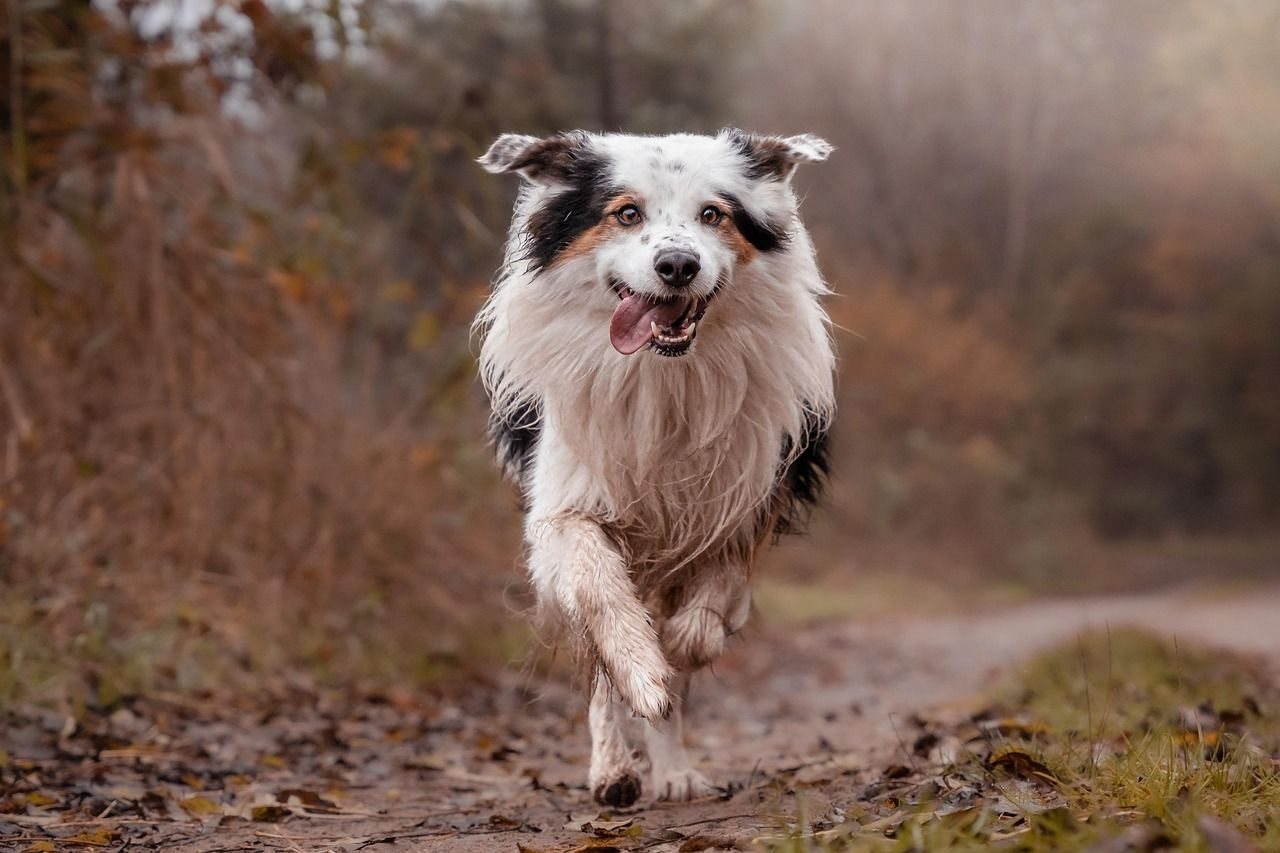
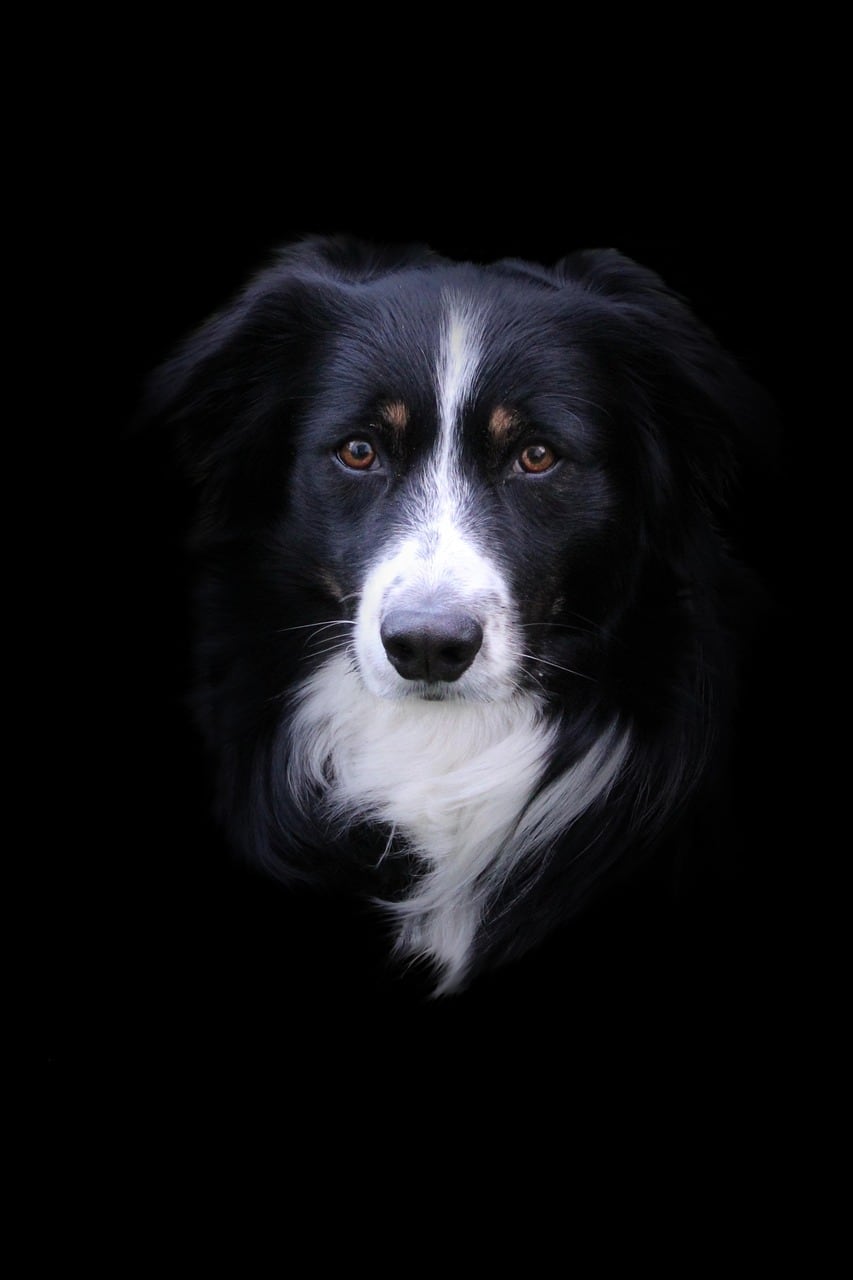
The Border Collie is a medium to large dog with an athletic, flexible build that reflects its working herding dog origins. The body is slightly longer than the height at the withers, the chest is spacious and allows for sustained movement. The male dog grows to a height of 48–56 cm and weighs 14–20 kg, the female is slightly smaller – 46–53 cm and 12–19 kg.
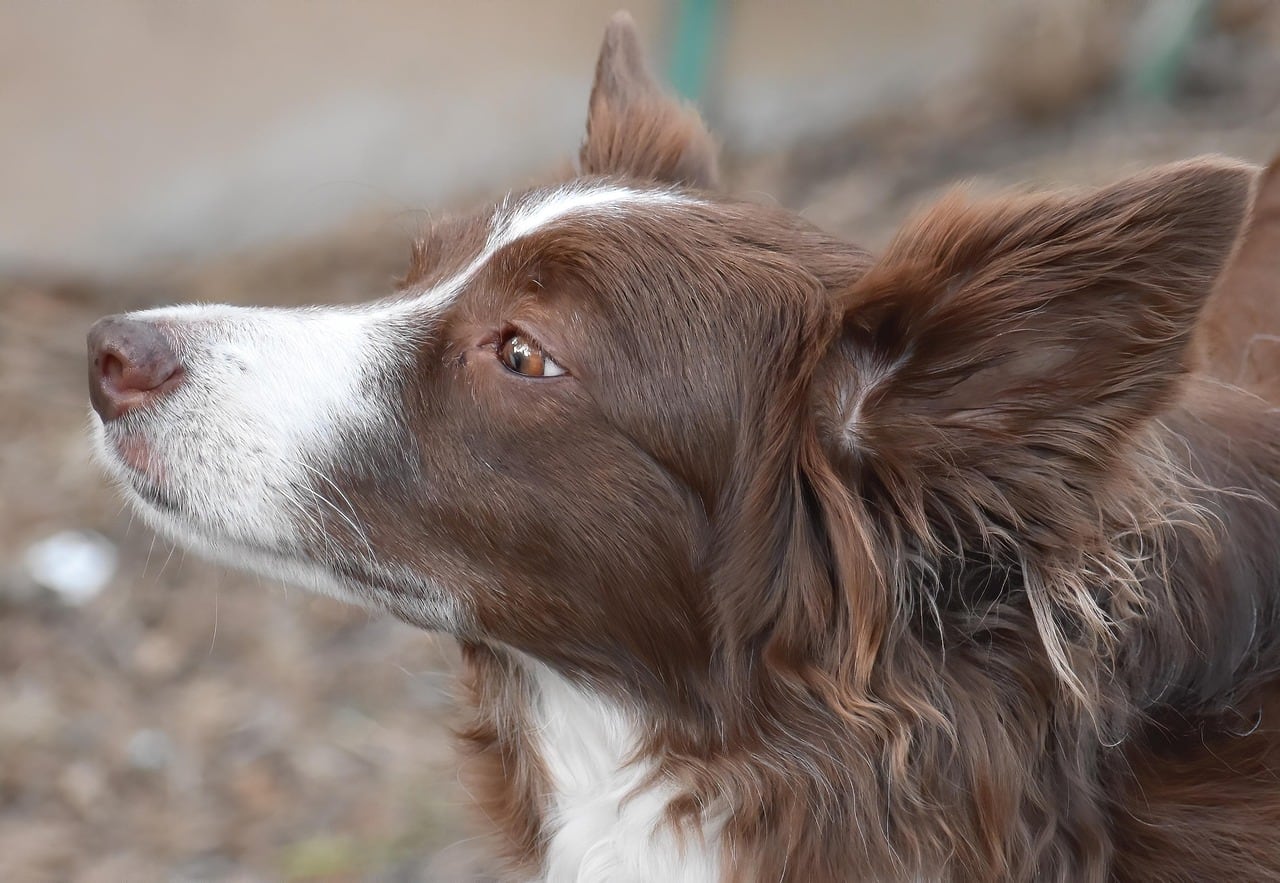
The head is moderately broad with a prominent stop and an intelligent, attentive expression that gives the Border Collie its characteristic "herding look". The ears are erect or half-set, the eyes are medium-sized and slightly obliquely set.
The coat is double, with a soft undercoat and a topcoat that can be smooth or rougher, always of medium length. It tends to be longer and denser on the neck, chest and back of the legs, forming a fine ruff, while it remains short on the head and front of the legs. The tail is well-furred, carried low with a slight curve at the end, never curled over the back. The overall impression is of a balanced, functional dog built for speed, agility and long hours of field work, not for showiness.
Border Collie Colors
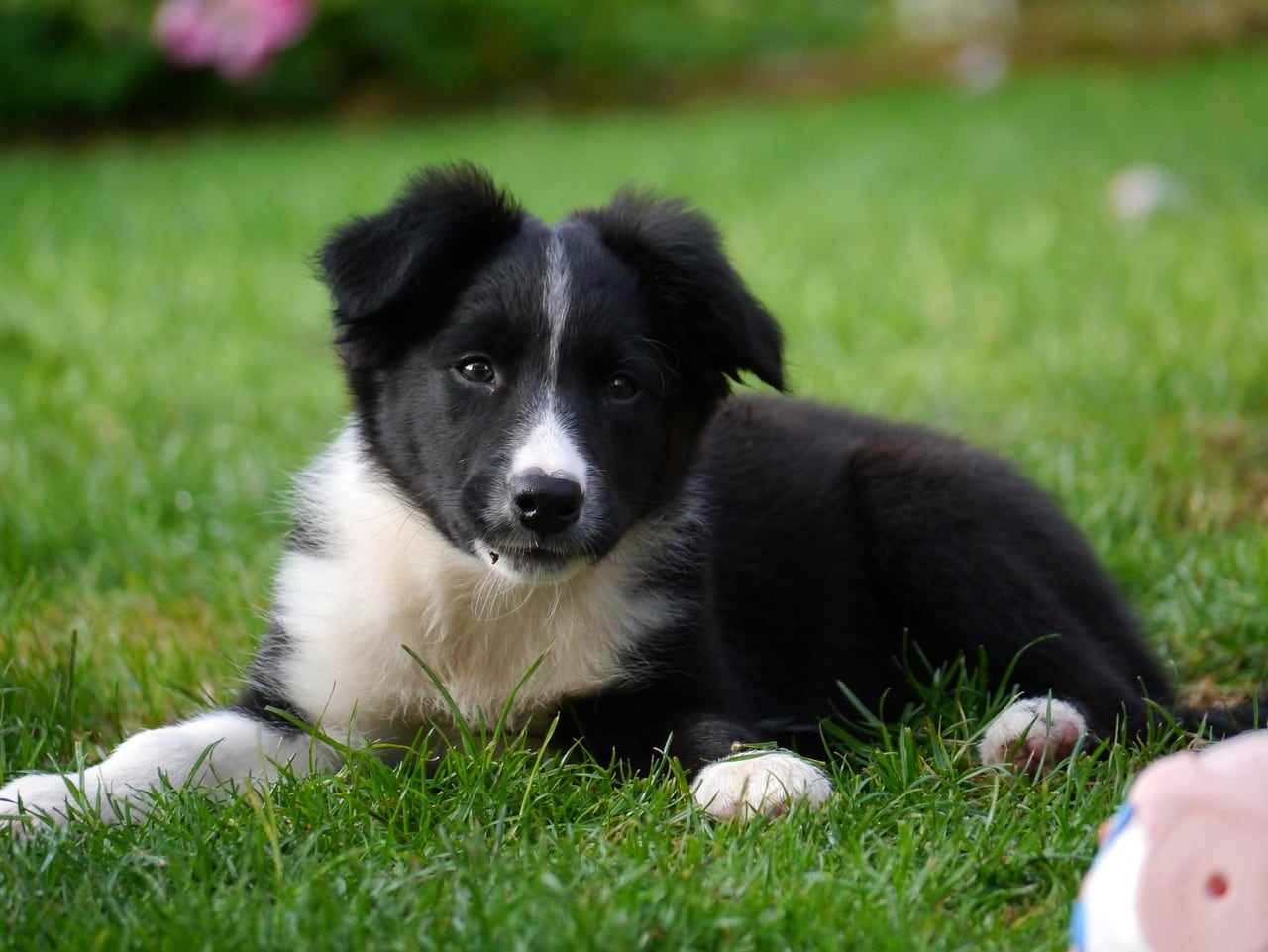
FCI standard No. 297 for the Border Collie does not specify one binding color, but allows a wide range of colors and patterns - from classic black and white to brown and white, tricolor to other natural combinations. The basic condition is that the white color must never prevail over the other shades in the coat.
Puppies in shades that are not covered by the standard or are associated with a higher risk are commonly offered on the market today - typically merle patterns, but also fashionable "exclusive" colors promoted more for marketing than breeding. With merle coloring, it should be remembered that if a merle individual mates with another carrier of this gene, the probability of congenital hearing and eye defects in the offspring increases significantly. Therefore, an interested party should not judge the quality of a breeding pair only by the color of the puppy, but should ask about the genetic tests of the parents and their health background.
The color of the coat itself does not indicate the character or working qualities of a border collie - these depend on the line and training, not on the shade of the coat.
Border Collie personality
The Border Collie is a working dog in body and mind - all of its behavior is driven by the need to have a task. Without regular mental exercise, it quickly becomes frustrated, which manifests itself in excessive barking, tail chasing, or obsessive tracking of moving objects. On the other hand, a busy dog is balanced, focused, and extremely trainable.
Border Collies tend to be loyal and emotionally attached to their family, often choosing one person as their main point of reference. They have a high need for company - long-term loneliness is not good for them. They tend to get along with children, but due to their herding instinct, they tend to "group" moving people into a group, which manifests itself in the form of gentle nudging or prodding with smaller children.
It gets along well with dogs, its relationship with cats is individual and depends on socialization. It may be reserved with strangers at first, but not aggressive. A penetrating gaze and an upright stance when concentrating on movement are typical - a legacy of generations of herding dogs, although the Border Collie lives today mainly as a sporting and family companion.
Border Collies and Children
The Border Collie is rather suitable for children, but with one condition - it needs a family that can offer it enough exercise and mental stress. If these needs are not met, it can redirect its excess energy in an undesirable direction, for example by chasing running children or barking at their play. This is because it is a working sheep breed with a strongly encoded herding instinct, which manifests itself even without sheep - on children, bicycles or cars.
In an active family where the Border Collie enjoys walks, fetching or training games with children, it is a loyal and attentive companion. It is recommended to teach children the basic rules of coexistence with the dog and not to leave small children with it unsupervised - not because of its aggressiveness, but because of its tendency to "control" the movement around it.
The Border Collie responds well to training due to its low training requirements, which can also be used to teach it how to behave in the presence of children. On the other hand, it is not suitable for families with seniors or a less active schedule - its high demands for movement and stimulation would remain unfulfilled in such an environment.
Border Collies and other dogs and pets
The Border Collie gets along well with other dogs, especially if it has enough exercise and mental stimulation - excess energy is often the cause of conflicts in the pack or on the playground. However, due to its working nature, it may show a tendency towards herding behavior towards other dogs - chasing, circling around them or trying to "match" their movements. This behavior should be directed from the puppy onwards so that it does not become a source of tension during walks.
The relationship with cats and other pets is neutral in Border Collies - they are not a breed with a strong hunting instinct, but their hunting instinct can lead to them chasing fast-moving animals, including small rodents or domestic poultry. However, with gradual and controlled introduction, Border Collies usually cope with a cat in the household without any problems.
The Border Collie is usually more suitable for children, and thanks to its sensitivity and ability to respond to commands, it can also function as a companion during games. However, it is also necessary to watch out for the tendency to "sheep herding" - that is, chasing or biting running children like a herd.
Is the Border Collie suitable for an apartment?
The Border Collie is not suitable for an apartment. It is a breed with a very high level of activity and a very high need for mental stimulation, which needs enough space to move around every day and the opportunity to actively work with both head and body. An apartment without access to a garden or regular walks in open terrain does not provide the conditions in which this dog could discharge its energy.
If a Border Collie does not have enough exercise and stimulation, it often manifests itself in undesirable behavior - destruction of equipment, excessive barking or restlessness. Therefore, a house with a garden, where the dog can move freely even outside of planned walks, or an apartment with a very active owner who will provide him with long walks, training and dog sports every day, is more suitable.
This breed is not interested in quiet as much as a constant supply of tasks and activities, making the Border Collie a better choice for active households with plenty of outdoor space than for city living.
How much exercise does it need?
Border Collies are among the breeds with the highest need for exercise. A short walk on a leash is not enough for them - they need several hours of active exercise a day, ideally a combination of free movement, play and supervised activities. Moreover, physical exercise alone is not enough, because the Border Collie also has a very high need for mental stimulation. A dog that just runs around aimlessly remains dissatisfied and can easily develop undesirable behaviors.
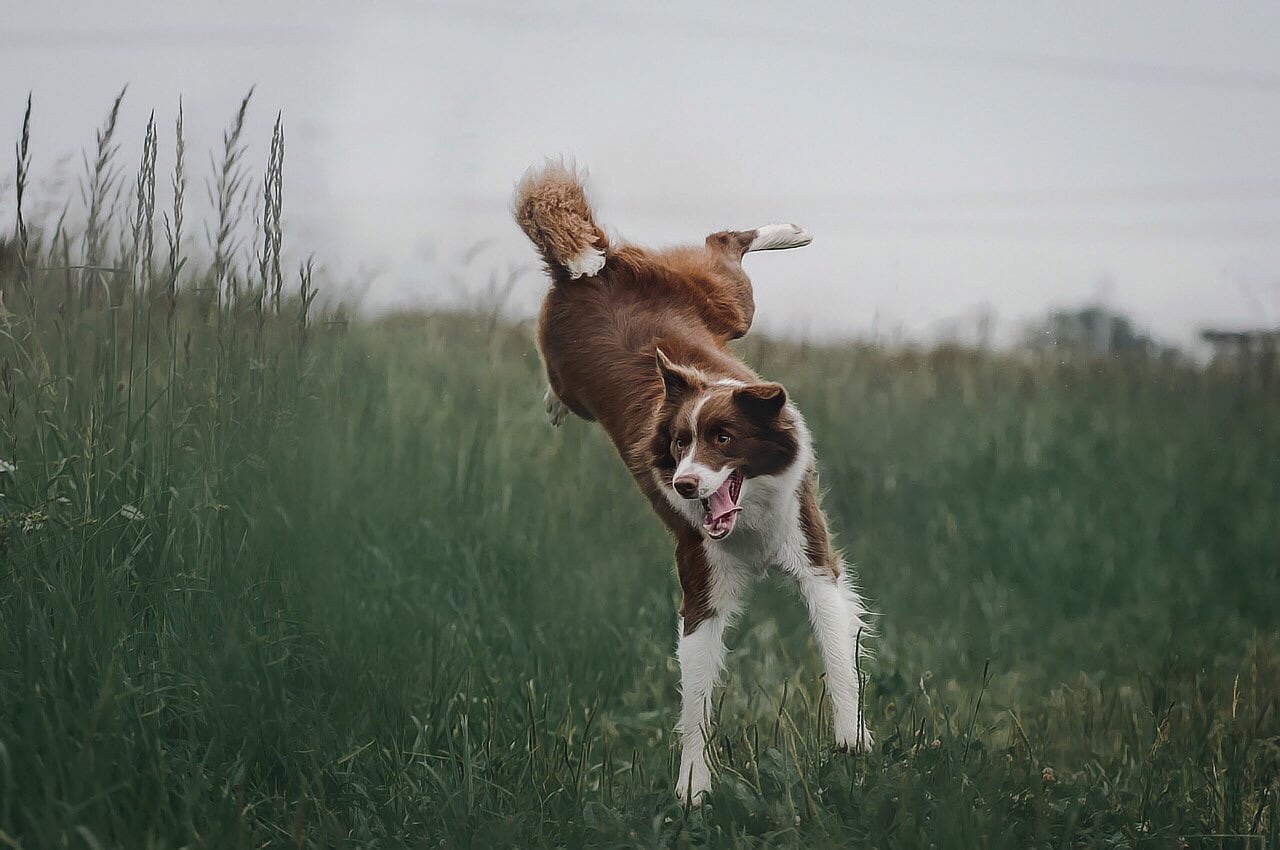
Due to its working origin and low training requirements, the Border Collie is an ideal candidate for dog sports that combine movement with thinking. It excels in agility, where it is one of the most successful breeds thanks to its speed and agility. It is also great for obedience, dog frisbee, flyball or herding tests, which correspond to its natural instinct.
Scent work, trick training, or long walks involving searching and commands are also suitable. Border Collies need to have a regular daily routine - without sufficient activity and occupation, they get bored easily, which will manifest itself in destructive behavior or excessive reactivity.
Training and education
Border Collies are among the breeds with the lowest training requirements – they learn new exercises quickly and willingly cooperate with humans. However, this easy trainability does not mean that they are a dog suitable for beginners. Quite the opposite: without experience with an active working breed, the owner can easily underestimate how much stimulation and tasks the Border Collie needs, and the dog then looks for its own – often undesirable – ways to discharge its energy and mind.
Education should start from puppyhood and be based on clear rules, consistency and positive motivation. Thanks to its high intelligence, the Border Collie quickly understands what is required of it, but it will also quickly learn the mistakes in the system if the owner is not consistent. Given the very high need for mental stimulation, it is advisable to include other disciplines in addition to obedience - for example, finding objects, agility, dogfrisbee or herding tests, which will use the natural instinct to follow and control movement.
Training should be regular and long enough, short one-off walks are not enough to meet the needs of this breed. A bored Border Collie without exercise for both mind and body often develops undesirable behaviors, including increased barking or chasing moving objects.
Hair care and hygiene
The Border Collie has a double coat – a dense undercoat and a longer topcoat, smooth or slightly rougher. Thanks to the undercoat, it is resistant to adverse weather conditions, but at the same time it belongs to the breeds with a high rate of shedding, so regular combing should not be missed. Brushing two to three times a week is enough to remove dead hair and prevent tangles, especially in the area behind the ears, on the chest and on the back of the legs. During the spring and autumn shedding periods, it is advisable to increase the frequency of combing.
Border Collies can handle bathing without any problems, but only occasionally - after a walk in the field, rinsing or brushing off the mud after it dries is often enough to avoid unnecessarily disturbing the natural oiliness of the coat.
It is a good idea to check the ears regularly for redness or unpleasant odors, and to clean them gently if necessary. The claws of active dogs that run a lot on hard surfaces often wear down naturally, while those that are less worn out should be trimmed regularly. Dental care through regular brushing or appropriate chewing aids helps prevent tartar buildup.
Feeding
Border Collies are a breed with a very high level of activity, which is also reflected in their energy requirements for feeding. Given their weight of 12–20 kg and their intensive work, they need high-quality food with sufficient protein and fat content to cover the energy expenditure during long walks, agility or herding work.
The amount of food should be adjusted to the actual level of movement of the individual - a Border Collie used for active sports or working with the herd has significantly higher demands than a dog with a calmer regime. It is recommended to divide the daily ration into two portions to avoid straining the digestive system and reduce the risk of overeating before or after physical exertion.
Due to the type of coat and the high rate of shedding, a sufficient supply of quality fats and animal proteins can have a positive effect on the quality of the coat. It is advisable to monitor the body condition of the Border Collie and continuously adjust its weight - excess weight unnecessarily burdens the joints and musculoskeletal system of such a mobile breed.
Switching to a different type of food should be done gradually, over a few days, to avoid digestive problems. It is always advisable to consult a veterinarian for a specific feeding plan and amount based on the age, weight and level of stress of the particular dog.
How long does a Border Collie live?
The average lifespan of a Border Collie is 12 to 15 years , making this breed one of the longest-lived large dogs. However, the actual lifespan of a particular individual depends on several factors – genetics, quality of breeding, diet and overall lifestyle.
Given that Border Collies require a high level of physical activity and mental stimulation, dogs that do not have these needs met over a long period of time are more prone to frustration and related health and behavioral problems. On the contrary, sufficient exercise and meaningful work contribute to overall fitness and probably also to the length and quality of life.
The breed may be predisposed to hip dysplasia and hereditary eye defects, including the so-called Collie eye anomaly. Responsible breeding with proven parents and regular veterinary check-ups therefore play an important role in prevention and can affect how long and in what quality a dog lives.
Who is the Border Collie suitable for?
The Border Collie needs an owner who can offer him a truly demanding daily routine – not just long walks, but also regular mental exercise. Without enough exercise and tasks, this breed can easily become frustrated, overactive, or exhibit undesirable behaviors.
This breed may be right for you if…
- You lead an active life and have time for several hours of exercise a day
- Do you want to take care of your dog from a psychological perspective – training, brain training games, dog sports?
- You live in a house with a garden, not an apartment
- You are looking for a dog that learns quickly and is highly manageable
- You have children and can ensure that cohabitation takes place under supervision
- You don't mind more intense shedding and regular coat care
Consider another breed if…
- Are you looking for an easy-going dog for beginners?
- You tend to be less active at home or often away from home
- You live in an apartment without the possibility of sufficient exercise
- You are a senior and looking for a calmer companion
- You don't have the time or inclination to devote yourself to regular training and stimulation of your dog
Interesting facts about the breed
The Border Collie carries FCI standard No. 297 and belongs to Group 1 (Herding Dogs), Sheepdog Section. It originates from Great Britain, specifically from the border area between England and Scotland, from where the breed got its name - "border" means border.
Among its most striking features is its extremely low training requirements compared to other breeds – Border Collies are among the dogs that learn new commands and tasks extremely quickly. This ability goes hand in hand with a very high need for mental stimulation, without which the dog can easily become bored.
The combination of dense fur and high shedding rate is also interesting – the double coat protects the breed from both cold and moisture, which is consistent with its herding origins in the rugged British hills.
The Border Collie is a large breed, although its build seems rather light and agile - males measure 48-56 cm and weigh 14-20 kg, females tend to be slightly smaller. Due to its versatility, it is often compared to other herding breeds, such as the Australian Shepherd or the Catalan Sheepdog.
Border Collie Health
Due to their high activity and work commitment, Border Collies are among the breeds that pay attention to the condition of their joints and eyesight – both areas are often mentioned in connection with hereditary conditions in this breed. An average lifespan of 12–15 years is realistic for healthy individuals, provided that the owner maintains regular veterinary check-ups and adequate exercise appropriate to the dog's age and physical condition.
A responsible breeder should provide evidence of basic vision and hip testing for the puppy's parents - Border Collies are one of the breeds where testing for these areas is routinely performed before the dog is placed in a breeding program. It is therefore worth asking about the breeder's documentation and any genetic tests when choosing a puppy.
A balanced diet, adequate mental and physical exercise, and regular preventive check-ups with a veterinarian, ideally at least once a year, help keep your dog in good condition throughout his life. Early detection of any problems makes them easier to solve and helps the Border Collie maintain its characteristic vitality and working commitment for a long time.
Known predispositions
The breed is described to have an increased predisposition to:
- Collie Eye Anomaly (CEA), a hereditary defect affecting the development of the retina and choroid.
- to other hereditary eye diseases, such as progressive retinal atrophy.
- to hip dysplasia.
- to a neurological disease called ceroid lipofuscinosis (NCL), characterized by progressive degeneration of nerve tissue.
- to a hereditary metabolic disorder called trimethylaminuria (so-called fish odor syndrome).
- to a hereditary vision disorder associated with abnormal retinal development, described within the broader group of collies.
Discussed risks
The breed is described to have an increased predisposition to:
- to sensitivity to certain drugs in connection with a mutation in the MDR1 gene, which affects drug metabolism.
- to epilepsy with a possible genetic basis.
This overview is for informational purposes only and does not replace the examination or recommendations of a veterinarian.
What to buy for a Border Collie
A practical basis that is suitable for this breed:
- Toys – Dog toys – fetching, chewing and interactive.
- Cosmetics – Shampoos, conditioners and hair care products.
- Bowls – Feed and water bowls, anti-swallow bowls and stands.
- Collars – Dog collars – leather, textile and semi-tight.
- Beds – Beds and mattresses for dogs of all sizes.
- Leads – Leads, switching leads and tracking lines.
Useful instructions
Practical tips that are useful when caring for a dog:
Frequently asked questions
Is a Border Collie suitable for an apartment?
The Border Collie is not suitable for an apartment. It needs plenty of space and, most importantly, regular, intense exercise, which a small apartment will not provide.
How much exercise does a Border Collie need?
This is a breed with a very high level of activity and a very high need for mental stimulation. Long walks are not enough - they also need tasks, training or dog sports that keep their mind occupied.
How long does a border collie live?
The average lifespan of a Border Collie is 12–15 years.
Is the Border Collie good with children?
The Border Collie is rather suitable for children. However, it is a working breed with herding instincts, so it is better to always supervise small children when living with them.
Is a Border Collie suitable for beginners?
Probably not. The training requirements are low thanks to their high intelligence and docility, but the high demands on activity and mental stimulation can be better handled by a more experienced and active owner.
How much does a border collie weigh?
Border Collie males weigh 14–20 kg, females are slightly lighter, 12–19 kg. Height at the withers ranges between 46–56 cm depending on gender.
Line border collie a lot?
Yes, the Border Collie sheds a lot. The coat is double and medium-length, so regular brushing is necessary, especially in the fall and spring.
Is the border collie difficult to train?
On the contrary, the training requirements for the Border Collie are low - they are among the most trainable breeds of all. It is more difficult to ensure enough mental stress so that energy and intelligence are not directed into undesirable behavior.
Does a Border Collie get along with other dogs and cats?
Border Collies get along well with other dogs. Their relationship with cats is neutral and depends mainly on socialization and the specific nature of the individual.
Is the Border Collie suitable for seniors?
No, a Border Collie is not a suitable choice for seniors. Their high demands for exercise, mental stimulation, and companionship require an active owner who can devote enough time to them every day.
Resources and further information
- FCI Standard No. 297 – Border Collie – Fédération Cynologique Internationale
- Source for predisposition - en.wikipedia.org
- Predisposition Source - thrivepetcare.com
- Source for predisposition - zoomadog.co.uk
- Predisposition resource - bordercolliefoundation.org
- Predisposition Resource - pawprintgenetics.com
- Predisposition resource - vgl.ucdavis.edu
- Source for predisposition - sciencedirect.com
- Resource on predisposition - ncbi.nlm.nih.gov
Professional cooperation
This breed overview was created in cooperation with the Veterinary Clinic VYVET sro and MVDr. Adam Hylák .