
Published 11. 9. 2026
The Bull Terrier is a medium-sized breed originating from Great Britain, unmistakable for its egg-shaped head without a pronounced muzzle and its massive body structure. It belongs to FCI Group 3 among bull terriers, although its nature and temperament differ from the classic vermin-hunting terriers - it is rather a quirky companion with its own mind. It is characterized by high energy, a need for mental stimulation and a strong bond with its family, where it requires constant presence and involvement in events.
Training a Bull Terrier requires experience, consistency and patience - stubbornness is one of its typical traits. Therefore, it is not an ideal choice for beginners or seniors who are looking for a calmer dog. The relationship with children and other animals depends on upbringing and socialization, it gets along unpredictably with dogs and cats. The coat is short and low-maintenance, which will be appreciated by owners who prefer simple care, but it must compensate for the high need for movement and activities.
Professionally consulted
The content was created in cooperation with the veterinary clinic Veterinární klinika VYVET sro and MVDr. Adam Hylák.
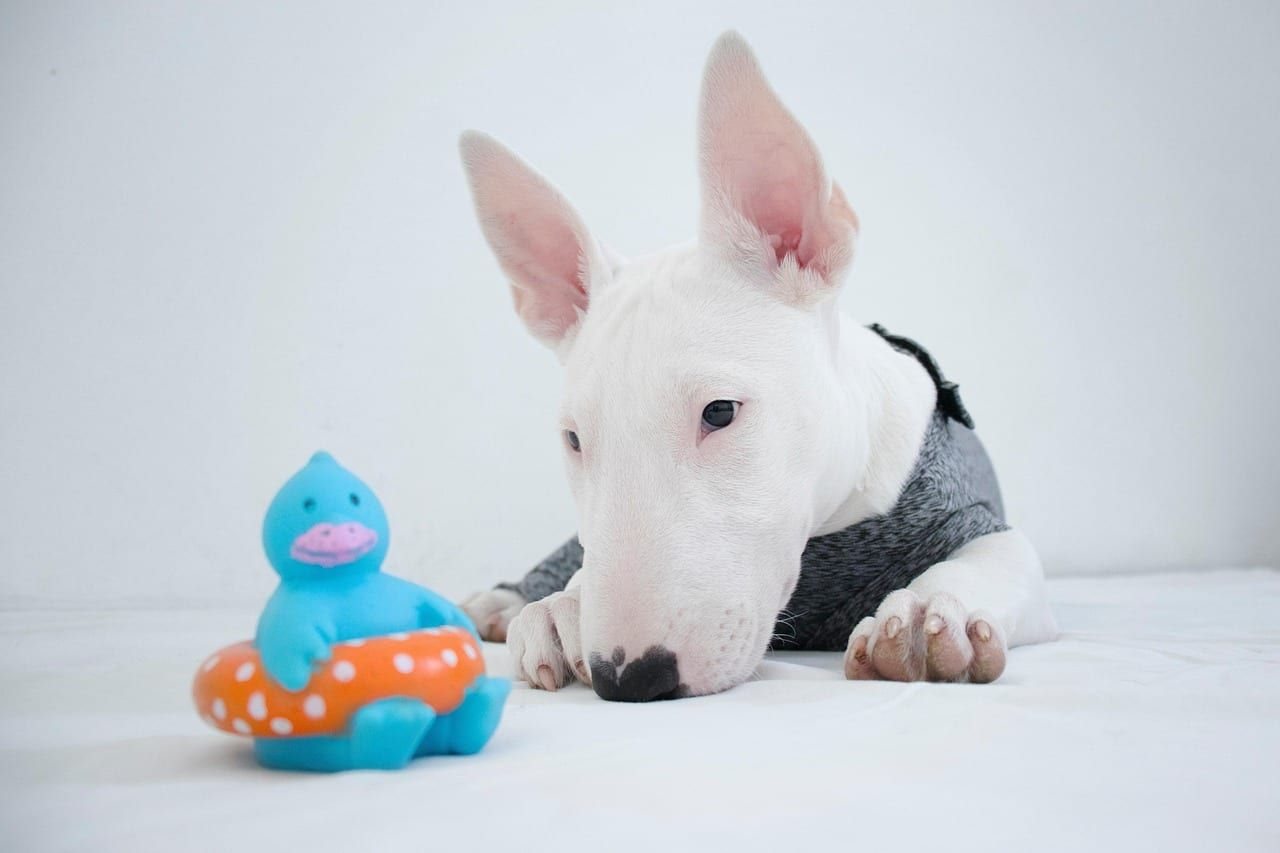

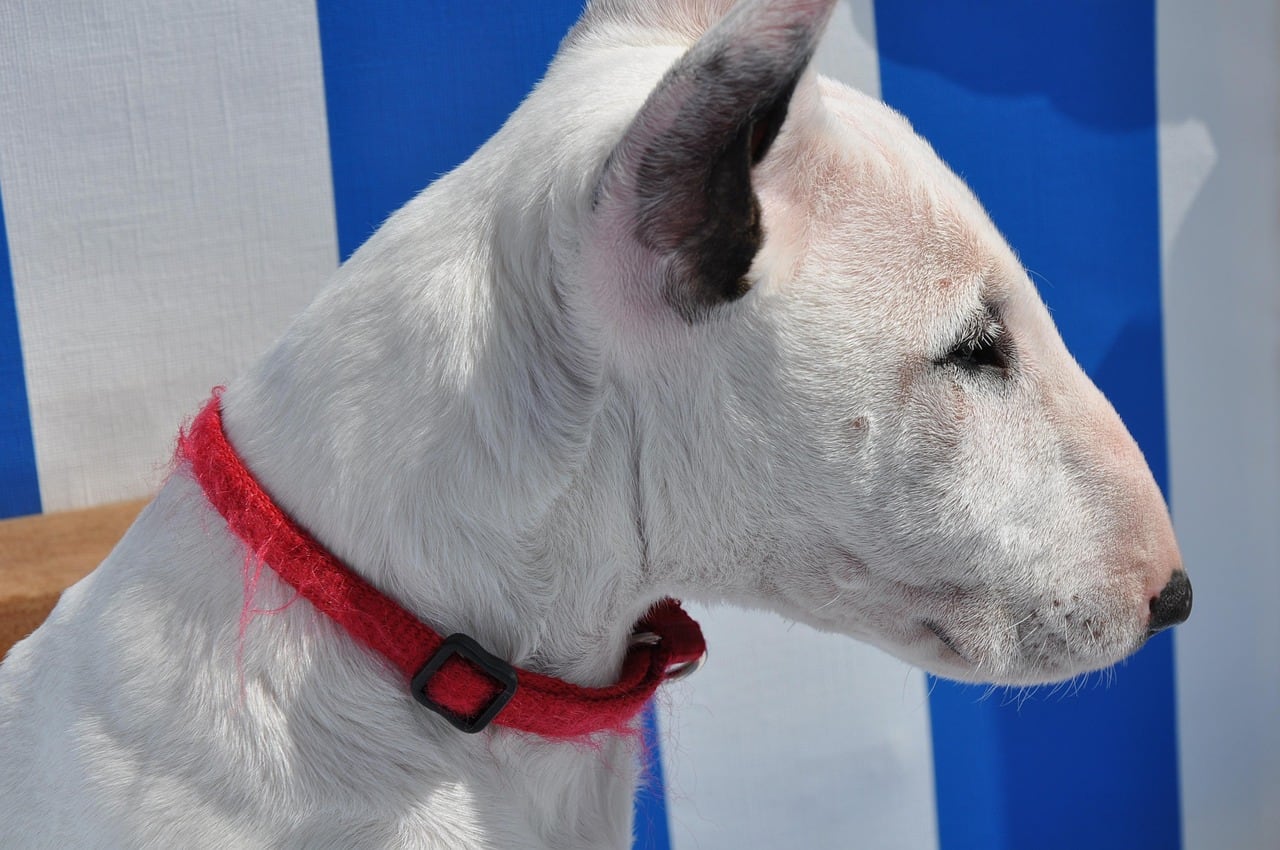
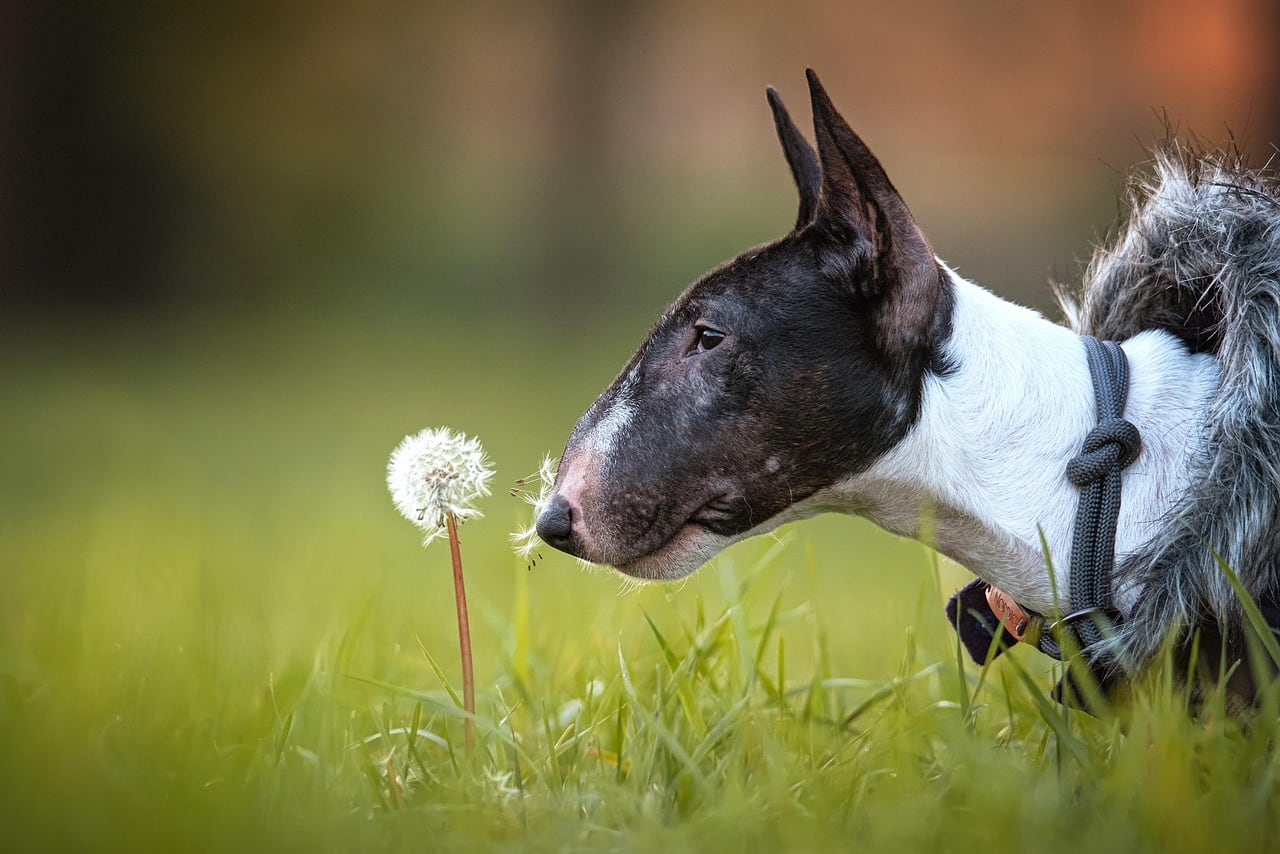
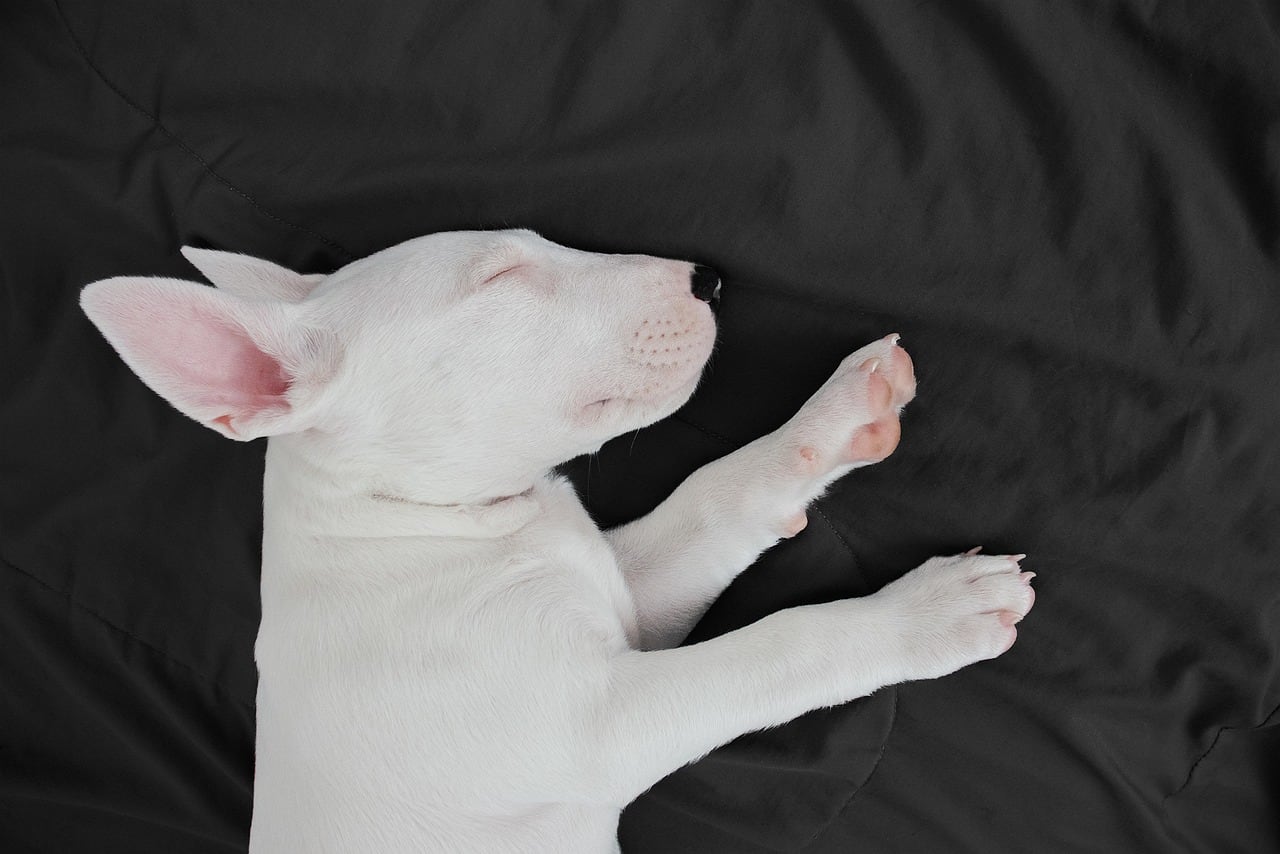
Quick overview
What is a Bull Terrier like?
The Bull Terrier is a medium-sized terrier-type breed from Great Britain, belonging to FCI Group 3, section bull type terriers. It is characterized by a typical egg-shaped head, a muscular body and a short coat that is easy to maintain. It is a dog with a high level of energy and an equally high need for mental stimulation - it gets bored easily and likes to find an activity to develop.
The Bull Terrier is temperamental, tenacious and strongly attached to its family, with whom it wants to be in close contact. It can be trained, but requires patient and consistent leadership, so it is not suitable for complete beginners or for seniors looking for a calmer companion.
It is suitable for active households that can offer it enough exercise and mental stress. Its relationship with children and other animals, including cats, depends a lot on upbringing and socialization - in this respect, it cannot be relied on to be automatically problem-free.
Origin and history of the Bull Terrier
The Bull Terrier originated in Great Britain in the 19th century by crossing bulldogs with various terriers, with its predecessor being the so-called bull and terrier – a dog bred for blood sports such as dog fighting and bull and bear hunting. After their ban, attention shifted to pit fighting, i.e. dog fights between dogs in a closed arena, where courage, strength and resistance to pain were valued.
Through gradual breeding, which also included crossing with the white English terrier and probably the Dalmatian (to whom the Bull Terrier is said to owe its more elegant, longer muzzle and white coat), a type of dog emerged that was different from the original, rougher Bull and Terrier. The aim was to breed a dog that would combine the fighting spirit of the terrier with the resilience of the bulldog, but at the same time have a cleaner and more noble appearance, suitable for showing at shows.
The characteristic egg-shaped head, which makes the Bull Terrier unmistakable to this day, only gradually gained ground in breeding and became one of the distinguishing features of the breed compared to related types, such as the Staffordshire Bull Terrier or the American Staffordshire Terrier. In addition to the white variant, a color line was later recognized, which was bred in parallel and still forms the second recognized color group of the breed.
The breed standard was established in Great Britain and was adopted internationally by the FCI, which placed the Bull Terrier in the third group among bull-type terriers.
Appearance and size
The Bull Terrier is a medium-sized breed, built for strength and athletic movement – a high level of activity that the breed requires. The coat is short, smooth and close-fitting, which means minimal grooming requirements, but also less protection against the cold.
The exact dimensions, proportions of the head, ear position, eye shape and tail set are set out in the official FCI standard No. 11 under the heading Bull Terrier – those interested in exact numbers and proportions are recommended to refer directly to this document, as we only list verified and generally valid characteristics here. The coat colour variants are described separately in the section dedicated to colouring.
The standard distinguishes the differences between dogs and bitches in terms of height or weight, but we do not provide specific values in this overview to avoid distortions.
Bull Terrier Colors
The FCI standard for this breed distinguishes two basic color varieties - white and colored, while a specific list of shades and permitted characteristics is not part of the documents provided here, and therefore Chrápátko does not list it in order to avoid distortion compared to the current wording of the standard.
Bull Terrier Personality
The Bull Terrier is an energetic, confident dog with a high need for human contact - it is strongly attached to its family and the company of its owner is an essential part of its well-being. The combination of high activity and strong character makes it a dog that needs clear leadership, otherwise it will assert its own mind.
The intelligence of the Bull Terrier is undeniable, but it is manifested more by independent thinking than by an attempt to mindlessly carry out commands. This is also reflected in the training, which tends to be more demanding - the dog quickly understands what is wanted from him, but decides whether it is worth it. It requires a patient owner who can motivate and at the same time act consistently, without unnecessary pressure.
Typical is a high temperament and the need for mental and physical exercise - an unoccupied bull terrier will find entertainment on its own, often in a way that does not suit the owner (destructive behavior, digging, excessive activity in the apartment). Barking is moderate, so it does not draw attention to the surroundings unnecessarily often, but it is alert to foreign stimuli and can naturally guard the house and property, without being a distinctly guard breed.
In relation to other dogs, the Bull Terrier's nature is variable - it gets along well with some individuals, but can be uncompromising with others, especially those of the same sex. It tends to be rather distrustful of cats and smaller animals. It is neutral towards children; coexistence works if it is set up with respect for the rules and without underestimating the dog's strength and temperament.
Summary of typical features
- Strong bond with owner and high need for closeness
- Independent thinking, tendency towards stubbornness
- High energy and need for mental stimulation
- Natural alertness without unnecessary barking
- Variable relationship with other dogs, cautious with cats
Bull Terrier and children
The Bull Terrier's relationship with children is rated in the database as neutral - i.e. neither explicitly recommended nor inappropriate. The decisive factor here is the dog's character, upbringing and setting of rules in the household rather than breed predisposition. The Bull Terrier is a strong, temperamental and tenacious dog with a strong need for exercise and mental stimulation, which is also reflected in its behavior in contact with children - it is lively, playful and easily drawn into more intense activities.
The combination of high energy and physical strength is why living with children should always be supervised by an adult. The Bull Terrier is not a breed suitable for beginners or less experienced owners, and this is doubly true in a household with small children - consistent upbringing and clearly guided training are essential here, as a dog with insufficiently directed energy and insufficient stimulation can be difficult to handle.
Socialization and upbringing
The key role is played by the early and thorough socialization of the puppy to children's voices, movements and unpredictable behavior, to which the Bull Terrier, like other strong breeds, must be gradually and patiently accustomed. Given the high level of training, it is advisable to systematically focus on socialization and basic obedience from an early age, ideally with the help of an experienced dog trainer.
- Adult supervision during any contact between the dog and children, especially in the first years of living together.
- Teach children the basic rules of behavior towards dogs – respect for their rest and space.
- Ensure the dog gets enough exercise and mental stress so that it doesn't release energy in an inappropriate way.
- Gradual and consistent socialization of the puppy to common situations in a family with children.
The suitability of a Bull Terrier living with children depends primarily on whether the owner is willing to invest time in upbringing and training and whether he can provide the dog with enough physical and mental exercise.
Bull Terrier and other dogs and pets
In relation to other dogs, the Bull Terrier is unpredictable and its reactions vary significantly depending on the individual and its upbringing - it is definitely not a breed that can be automatically counted on to coexist without problems in a multi-dog household or to be calmly tolerant of strange dogs on a walk. This breed was historically bred for dog and other game fighting, which in its nature is reflected in a higher combativeness and a lower threshold for conflict if it gets into a tense situation.
The Bull Terrier is not usually suited to cats and small animals. A strongly developed hunting instinct can lead to the dog perceiving small animals as potential prey, not as members of the household. Living with a cat is therefore always uncertain and depends on the specific combination of temperaments, or whether the dog grew up with a cat from a young age.
What does this mean for breeders?
- It is advisable to always strictly control encounters with strange dogs and not rely on the situation to "resolve itself".
- Small mammals, rodents, or birds should not be exposed to a Bull Terrier unattended.
- Any coexistence with a cat should be built gradually and carefully, ideally from puppyhood.
- Socialization and consistent training from an early age significantly reduce the risk of conflict situations.
Is the Bull Terrier suitable for an apartment?
The Bull Terrier is more suited to an apartment to a limited extent - it mainly depends on how much exercise and mental stress the owner is able to provide daily. This is a breed with a high level of activity and an equally high need for mental stimulation, so an apartment in itself is not a problem if it is supplemented by plenty of outdoor activities.
The following is particularly key:
- Space: a bull terrier doesn't necessarily need a large house with a garden, but without regular, longer walks and an active schedule, they will quickly get bored in a small apartment.
- Peace in the home: the breed has a high need for company and does not tolerate long-term loneliness, which needs to be taken into account in a residential environment where people are away from home during the day.
- Exercise: due to their high activity level and need for mental stimulation, it is necessary to plan for a more demanding daily routine - just short walks around the house are not enough.
- Barking: manifests itself at a medium level, which in a panel house with thinner walls may be relevant from the point of view of the neighbors.
In practice, a bull terrier can handle apartment living well where the owner can offer enough exercise and care for the dog's psyche - without this, there is a risk of restlessness and problematic behavior.
How much exercise does it need?
The Bull Terrier is a highly active dog, so it needs plenty of exercise spread over several walks a day, ideally supplemented by free movement without a leash in a safe environment. A short walk around the corner is not enough for it - it is a strong, energetic dog that needs to regularly discharge its muscle mass and temperament.
Mental stimulation is just as important as physical exercise for this breed. The Bull Terrier is intelligent and inquisitive, and if not given enough stimulation, it will easily find its own – often unwanted – way of having fun. Suitable are:
- search games and olfactory activities that engage the sense of smell and the brain
- obedience training and practicing new commands
- intelligence training toys (e.g. treat dispensers)
- pulling sports or agility for physically fit individuals
Due to the high training requirements, it is worth combining exercise with targeted training - the Bull Terrier responds well to clear rules and consistency, which also helps to manage its strong will.
The short coat and head structure of the Bull Terrier do not mean breathing problems like in brachycephalic breeds, but it is still advisable to adjust the intensity and duration of exercise on hot summer days and provide the dog with plenty of shade and water.
Training and education
Training a Bull Terrier requires an experienced owner who can consistently and patiently lead a strong and stubborn dog with his own mind. The Bull Terrier is one of the breeds where the training is at a high level - it is not about obedience without resistance, but about long-term cooperation based on mutual trust.
This terrier is primarily motivated by play, exercise and the opportunity to do something active - boring repetitive exercises will quickly tire him and this will manifest itself in a loss of interest and stubbornness. Positive leadership with strong praise, treats or a favorite toy as a reward works best. Punishments and a tough approach are counterproductive for this breed - the bull terrier reacts to them more stubbornly than willingly to cooperate.
How to conduct training
- Short, intense training blocks – better several five-minute sessions a day than one long lesson.
- Clear and consistent rules that all household members agree on.
- Enough mental stress in the form of search games, fetch or simple tasks, because a bored dog seeks entertainment on its own and often inappropriately.
- Patience and calmness – the Bull Terrier tests boundaries and needs to be maintained without unnecessary tension.
Socialization should begin as soon as possible after the puppy arrives in the household. Since the Bull Terrier is rather neutral to reserved towards its canine and feline companions, it is advisable to gradually and sensitively introduce it to other animals and people in order to establish calm reactions. Thanks to its high need for human company, it learns well within ordinary family situations, where it is regularly involved in events and is not left alone for long.
Hair care and hygiene
The Bull Terrier's short, smooth coat requires minimal grooming - a weekly brushing with a rubber brush or mitt is enough to remove loose hair and keep the coat shiny. Shedding is manageable with regular brushing, but is usually more noticeable in the spring and fall.
Bathing is only necessary occasionally, as needed - frequent bathing could damage the natural protective layer of the skin. Due to the firm, wrinkle-free skin without folds, there is no need for special care of the skin eyelashes, as is the case with some other breeds.
Ears, eyes, teeth and claws
It is advisable to check the ears regularly and clean them if necessary to prevent the accumulation of sebum and dirt. The eyes should remain clean without discharge - their regular inspection is also advisable because the breed may have an increased predisposition to hereditary eye defects, including lens luxation. It is good to brush the teeth to prevent tartar, and trim the claws regularly so that they do not grow and cause discomfort when walking.
Feeding
Due to their high activity level, the Bull Terrier needs a high-quality complete food that is balanced to meet their energy needs – for an adult, this means a food for medium-sized, muscular and active breeds. The choice should always reflect the age, size and activity level of the particular dog, not the general recommendation on the packaging.
Life stage adaptation
A puppy and young dog in the growth phase require a different ratio of nutrients than an adult dog, so it is advisable to gradually switch between feeds intended for a given age category. For a bull terrier, which is very physically active, it is also important to monitor whether the feed covers the increased energy needs during more demanding training or more intense exercise.
Physical fitness check
Regular body condition assessments are in order for this breed – the muscular build can mask the onset of excess weight, which is easier to detect by feeling the ribs than by looking at them. If the dog's activity temporarily decreases (for example, after an injury or in old age), it is advisable to adjust the amount of food accordingly to prevent weight gain.
- Choose food according to age, size and current activity level.
- Regularly check your physical condition by touch, not just visually.
- Adjust the amount of food when activity or health status changes.
- Ensure constant access to fresh water, especially during increased physical exertion.
How long does a Bull Terrier live?
The average lifespan of a Bull Terrier is 12-13 years, which is within the normal range for medium-sized breeds. However, the specific lifespan of each individual depends on a combination of genetic predisposition, quality of care, and the lifestyle that the owner sets for it.
What affects lifespan?
- Genetics: Descending from healthy parents with a proven history of stress reduces the risk of hereditary problems and provides the prerequisite for reaching the upper limit of expected age.
- Physical condition: The Bull Terrier is a muscular and physically fit dog, for which it is important to maintain an optimal weight - excess weight puts unnecessary strain on the joints and heart.
- Exercise: Due to its high activity level, it needs regular and sufficiently demanding exercise that supports cardiovascular health and psychological well-being.
- Prevention: Regular veterinary check-ups, vaccinations, and early detection of any health abnormalities are among the basics that can extend a dog's quality life in the long term.
- Nutrition: A balanced diet appropriate to the dog's age, activity level and health status helps maintain proper weight and overall vitality.
- Health Predisposition: The breed may be predisposed to certain hereditary diseases, such as lens luxation disorders. An informed breeder should therefore ensure that the puppy's parents undergo appropriate genetic testing.
Who is the Bull Terrier suitable for?
The Bull Terrier is best suited to owners with previous experience with terriers or other strong breeds who can provide clear leadership, plenty of exercise, and regular mental stimulation. Without active involvement in family life and consistent training, it can easily become a problem dog.
Who is the breed suitable for?
- For experienced dog owners who have already mastered training a more demanding or stronger breed.
- For active people or families who provide him with enough exercise and mental stimulation every day.
- For households where the bull terrier will really be part of the action - he needs intense contact with people and does not tolerate long-term isolation.
- For owners willing to invest time in consistent and patient training from puppyhood.
Who is the breed not suitable for?
- For complete beginners with no experience in raising a dog - the high level of training requires a firm hand and knowledge.
- For seniors or people looking for a calm, undemanding companion for a less active life.
- For households with cats, with whom the Bull Terrier usually does not get along well.
- For owners who leave their dog unattended – in a breed with a high need for companionship, this leads to frustration and unwanted behavior.
Interesting facts about the breed
The Bull Terrier has an unmistakable egg-shaped head without a pronounced stop (transition between the muzzle and forehead), which makes it distinguishable at first glance from most other breeds - this head shape is one of the key features that FCI standard No. 11 emphasizes.
The breed was classified in FCI Group 3 among bull terriers (Bull type Terriers section) and its origin is linked to Great Britain.
Bull Terriers are tested for genetically determined primary lens luxation, for which there is a DNA test - this indicates that this is a predisposition that breeders monitor in the breed and try to prevent through targeted selection of breeding individuals.
Bull Terrier Health
The Bull Terrier is a breed with a relatively good overall constitution and lives an average of 12-13 years. The short coat does not require demanding care, but health attention needs to be paid to specific genetic predispositions that have been observed in the breed for many decades. This includes in particular the condition of the eyes, hearing and, last but not least, psychological well-being, because the Bull Terrier has a high need for mental stimulation and does not tolerate long-term boredom or isolation. Regular veterinary examinations and information about the breeding of the puppy's parents are therefore in order.
Eyes
Bull Terriers have been described to have an increased predisposition to primary lens luxation, a hereditary eye defect in which the lens becomes loose from its natural position. There is a genetic test that can be used to determine whether a particular individual carries the risk mutation, and responsible breeders should use it in breeding dogs.
Hearing
The breed may be at higher risk of congenital deafness, especially in individuals with predominantly white fur. It is therefore advisable to have hearing checked specifically in puppies with a prominent white coat, ideally through an objective examination.
Behavior and psychological well-being
The Bull Terrier is an energetic and intelligent dog with high demands for mental activity. If these needs are not met over the long term, the breed may develop a tendency towards stereotypical or compulsive behavior, such as repetitive tail chasing. Therefore, sufficient meaningful activity and regular training are not only a matter of dog satisfaction, but also of prevention.
What to look for when choosing a puppy
- Request information about genetic testing for primary lens luxation in the puppy's parents.
- In puppies with significantly white fur, check the condition of their hearing.
- Be interested in the nature and temperament of the parents, and possibly their involvement in training or activities.
- Choose breeders who provide puppies with plenty of stimulation and socialization from an early age.
Known predispositions
The breed is described to have an increased predisposition to:
- to primary lens luxation (PLL), a hereditary eye defect caused by a weakening of the lens's suspension apparatus.
- to hereditary nephritis, a genetically determined kidney disease with autosomal dominant inheritance.
- to polycystic kidney disease (PKD).
- to congenital deafness, with a higher incidence being described in white-colored individuals.
- to compulsive tail chasing, which is classified as a compulsive behavioral disorder.
- to heart defects such as mitral valve dysplasia.
- to patellar luxation (dislocation of the kneecap).
- to skin allergies and atopic dermatitis.
This overview is for informational purposes only and does not replace the examination or recommendations of a veterinarian.
What to buy for a Bull Terrier
Practical basis that is suitable for this breed:
- Car seats for dogs – Car seats and safety equipment for transporting a dog by car.
- Toys – Dog toys – fetching, chewing and interactive.
- Cosmetics – Shampoos, conditioners and hair care products.
- Bowls – Feed and water bowls, anti-swallow bowls and stands.
- Collars – Dog collars – leather, textile and semi-tight.
- Beds – Beds and mattresses for dogs of all sizes.
- Leashes – Leashes, switch leashes and tracking lines.
Useful guides
Practical tips that are useful when caring for a dog:
Frequently asked questions
Is a Bull Terrier suitable for beginners?
Probably not – the Bull Terrier requires rigorous training and an experienced handler who can handle his strong nature and high need for mental stimulation. Without consistent leadership, he can be difficult to handle.
How long does a bull terrier live?
The average lifespan of a Bull Terrier is 12–13 years, which is typical for a breed of its size.
Does the Bull Terrier get along with cats and other animals?
Cohabitation with cats is rather problematic, with other dogs the relationship is neutral and depends on socialization from puppyhood. Given its terrier origin, it is advisable not to underestimate the introduction to other animals.
Is the Bull Terrier suitable for children?
The relationship with children is neutral - it all depends on the dog's upbringing and how children learn to treat the dog. Given the breed's strong nature, adult supervision is appropriate during every contact.
Why does the Bull Terrier have such a specific head shape?
The egg-shaped, slightly domed head without a pronounced trace is one of the main features of the FCI standard No. 11 and distinguishes the Bull Terrier from other terriers. This head shape is considered a typical feature of the breed.
How much exercise does a Bull Terrier need per day?
The Bull Terrier has a high level of activity and needs regular, sufficiently long exercise and mental stimulation. A lack of stimulation can manifest itself in restlessness or undesirable behavior.
Is caring for a Bull Terrier's coat difficult?
No, the care of the short coat of the Bull Terrier is easy, regular brushing is enough. The rate of shedding is moderate, so you need to count on occasional cleaning of the hair.
Does the Bull Terrier have any typical health predispositions?
The breed may be predisposed to lens luxation, for which there is a genetic test (according to UC Davis). Specific health conditions should always be discussed with a veterinarian.
Is a bull terrier suitable for an apartment?
Apartment suitability is neutral for this breed – the key is to provide plenty of exercise and mental stimulation regardless of the size of the home. The space of the apartment itself is not limiting, as long as the owner meets its high activity requirements.
Does a bull terrier bark a lot?
The Bull Terrier's barking rate is rated as moderate, meaning it is not an extremely noisy breed. However, the rate of barking can vary from one individual to another depending on their upbringing and level of stimulation.
Is the Bull Terrier suitable for seniors?
Rather not - the high need for activity, mental stimulation, and demanding training place physical and time demands on the owner, which may not be easy for seniors to handle.
What is the difference between a Bull Terrier and a Staffordshire Bull Terrier?
They are different breeds - the Bull Terrier is classified under FCI standard No. 11, while the Staffordshire Bull Terrier has its own standard and differs in head structure and overall appearance. Both breeds are bull type terriers, but they are not the same.
Resources and further information
- FCI Standard No. 11 – Bull Terrier – Fédération Cynologique Internationale
- Source of body measurements – fci.be
- Expert resource - vgl.ucdavis.edu
- Expert resource - pubmed.ncbi.nlm.nih.gov
- Expert resource - ncbi.nlm.nih.gov
Professional cooperation
This breed overview was created in cooperation with the Veterinary Clinic VYVET sro and MVDr. Adam Hylák .