
Published 9. 9. 2026
The Poodle originates from France and belongs to FCI group 9 among companion breeds (Poodle section, standard no. 172). Despite the widespread idea of a decorative dog, it is a dog with a high level of activity and a strong need for mental stimulation - historically it was also used as a working and hunting dog. The height of 45–62 cm applies equally to dogs and bitches, and it lives to a relatively high age of 10–18 years.
The poodle is intelligent, adaptable and very attached to its family, it does not tolerate loneliness well. It is easy to train, which makes it a good choice even for owners without previous experience. The curly coat almost does not shed, but it requires regular and relatively demanding care. Thanks to the combination of a gentle nature and a low rate of shedding, it is suitable for an apartment, for children and for seniors, and usually gets along well with dogs.
Professionally consulted
The content was created in cooperation with the veterinary clinic Veterinární klinika VYVET sro and MVDr. Adam Hylák.


Quick overview
What is a Poodle like?
The Poodle is a medium-sized breed with curly hair that originates from France and belongs to the 9th FCI group among companion dogs. It reaches 45–62 cm at the withers, with the dimensions of the male and female practically not overlapping with any significant difference. It lives for 10–18 years, which makes it a long-lived companion.
It has a lively, smart and sociable temperament - it needs both exercise and plenty of mental stimulation, otherwise it will easily get bored. It can be trained without any problems, as it is docile and likes to cooperate with people. It does not tolerate long-term loneliness and requires closeness to its family.
Suitable for:
- households with children and seniors
- residential housing, if the owner ensures enough activity
- beginners who are willing to invest time in coat care
- active people looking for a dog to keep in the company of other dogs
The advantage is minimal shedding and drooling, but the disadvantage is demanding coat care, which requires regular cutting and grooming.
Origin and history of the Poodle
The Poodle has its roots in water hunting work - its ancestors served as waterfowl bringers in the Central European region, with its original homeland shared by France and Germany. The very name "Poodle" and the German "Pudelhund" refer to the word "pudeln", meaning to splash in the water, which confirms its original role as a retriever working in ponds and rivers. The French name Caniche is related to the word "cane" (duck) and recalls the hunting of waterfowl, which the Poodle assisted in.
The characteristic curly coat, thick and waterproof, made the poodle an ideal swimmer in cold water. The typical haircut with exposed joints and chest areas, today perceived more as a show curiosity, originally had a practical purpose - it protected vital organs and joints from the cold, while the lighter areas allowed for easier movement in the water.
Over time, the Poodle moved from a working dog to social circles, where its docility and striking appearance made it popular with European nobility. This popularity led to the gradual breeding of smaller variants alongside the original large working form, allowing the Poodle to be used both as a hunting assistant and as a popular companion dog in households and yards.
The breed is covered by the FCI international standard within the 9th group (companion and toy dogs), Poodle section, and is recognized across size varieties while maintaining the same type and character.
Appearance and size
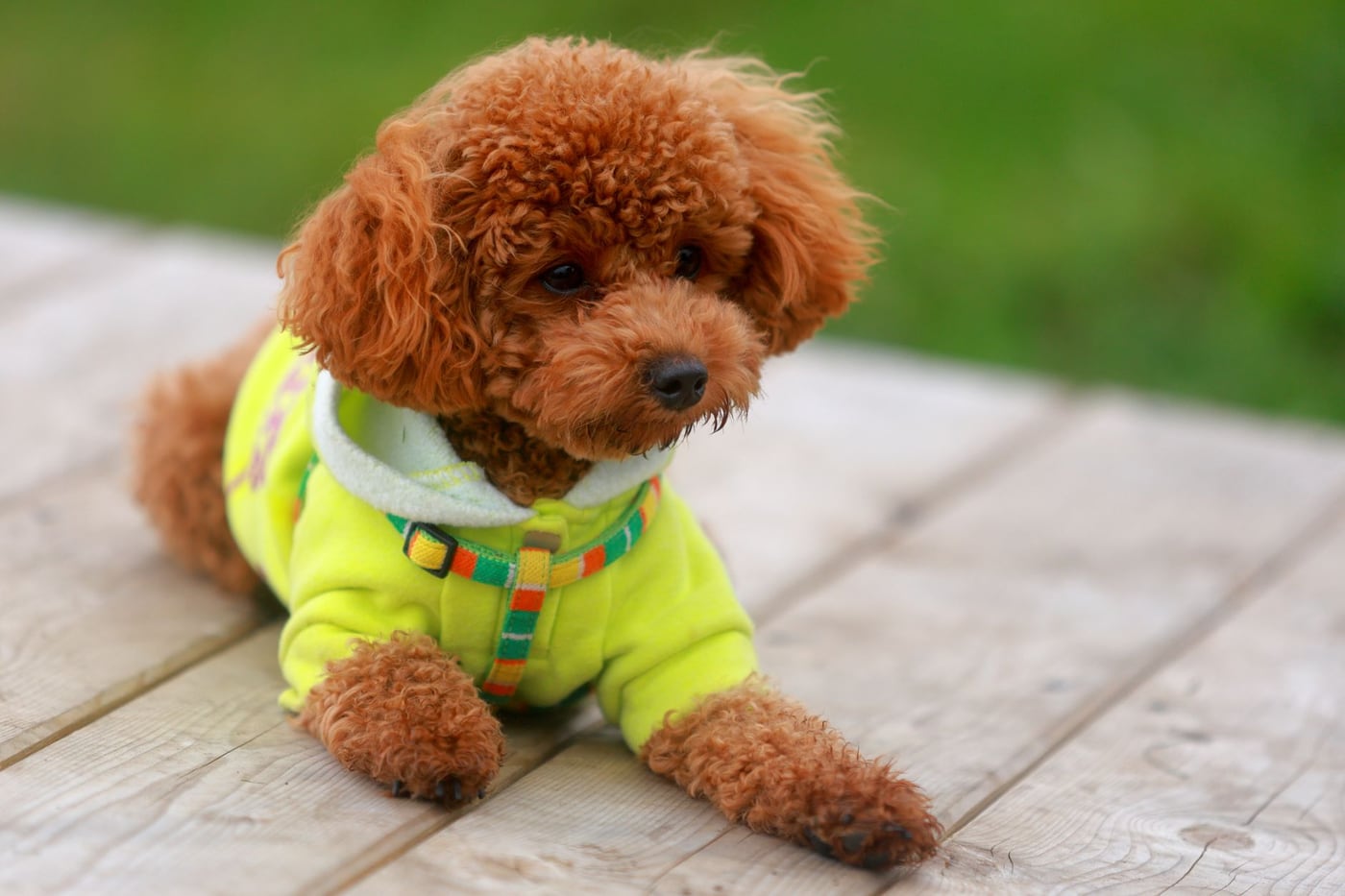
The Poodle is a medium-sized breed and according to the standard reaches 45–62 cm at the withers, with this range applying equally to both males and females – the standard does not distinguish between genders in height. Within this range, various sizes of Poodles are bred, which differ from each other in overall height, but share the same body structure and proportions.
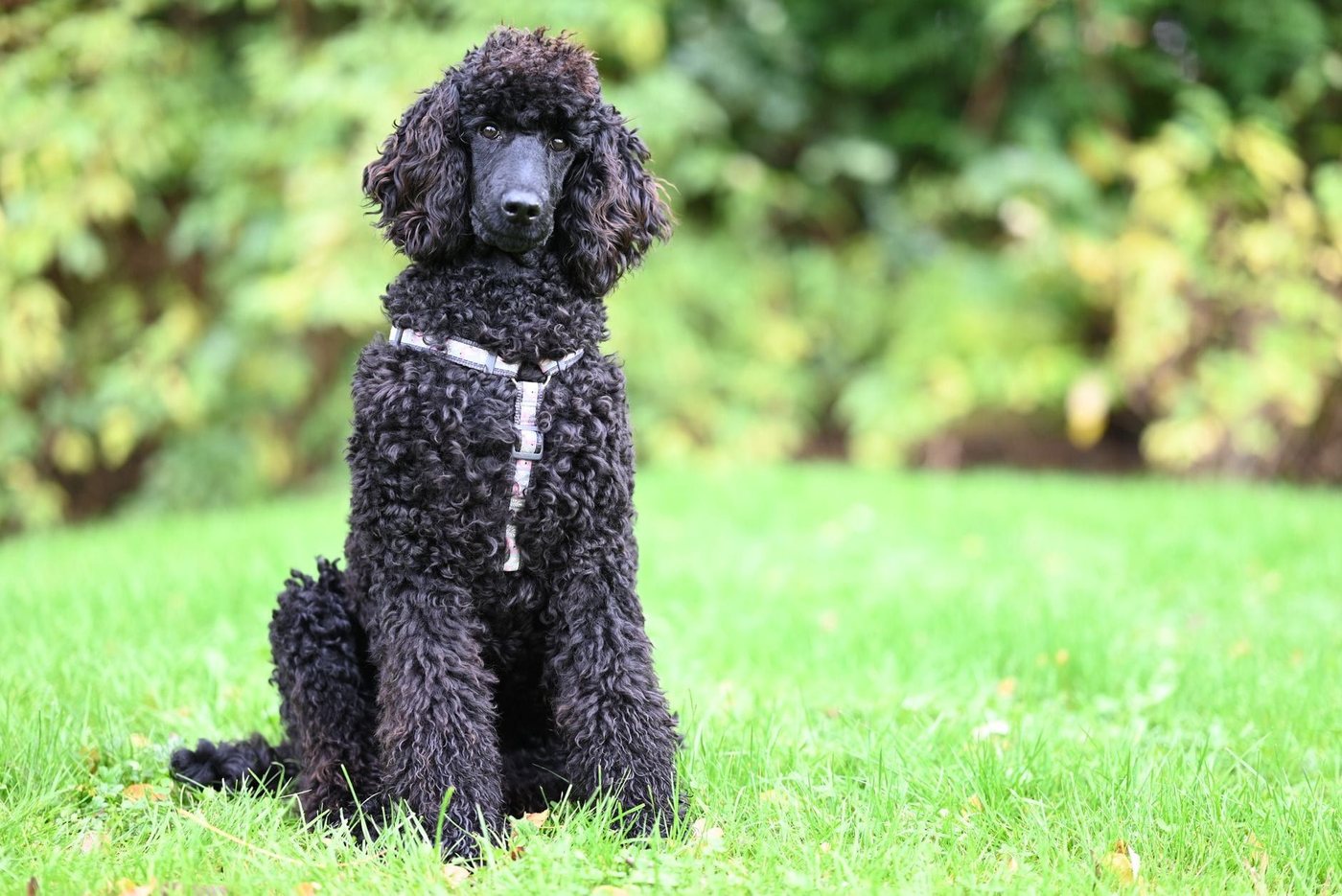
The body is harmonious, elegant and slightly rectangular in shape, with a straight back and a well-muscled croup. The head is slender and lean, with a slightly domed skull and a long, straight bridge of the nose. The ears are long, flat, hanging close to the cheeks and set at or slightly below the eye level. The eyes are dark, almond-shaped, with a lively and intelligent expression typical of the Poodle.
The coat is dense, fine and distinctly curly, of medium length, making the breed almost non-shedding – this characteristic predisposes it to intensive, regular maintenance, which is discussed in a separate section on coat care. The tail is set rather high, carried upright and lively in movement.
Typical physical signs
- Elegant, dry construction without rough features
- Long, hanging ears set in line with the eyes
- Dark, expressive eyes with a sharp expression
- Dense, curly, medium-length coat
- High-set, erect tail
Coat color variations are described in a separate section dedicated to poodle coloration.
Poodle Colors
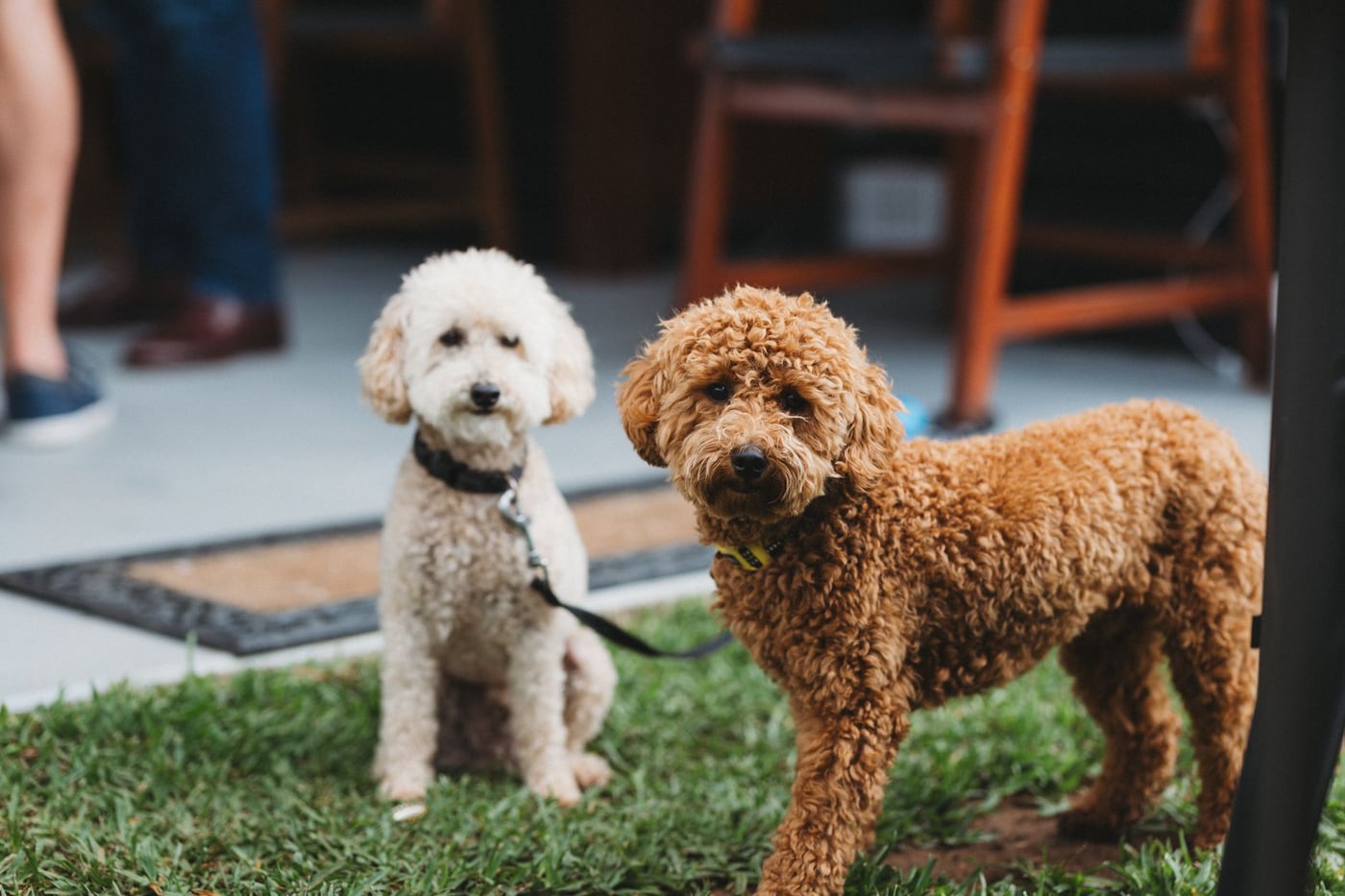
The FCI standard for poodles (No. 172) defines the coat color as solid, with the color having to be uniform and saturated throughout the dog. The specific palette of shades and their exact deviations are determined by the current version of the standard, which is a binding document for judging at exhibitions and breeding shows.
In practice, Poodles also show deviations from the standard shades, such as color combinations or atypical coat coloring. These variations in themselves may not pose a health risk - it is primarily a matter of compliance with the breed standard, not automatically a health indicator.
Poodle Personality
The Poodle is one of the most intelligent breeds of all, and this trait permeates its entire nature - it learns quickly, understands context and can deduce what its owner wants from it. It is thanks to this intelligence that training is usually handled without much difficulty, and it learns new exercises or commands after several repetitions.
The poodle has a very close relationship with its owner and needs to spend time with him - long-term solitude does not suit him and he wants to be constantly part of the household. He is not a dog that can manage on his own in the garden, on the contrary, he seeks contact and actively participates in family life.
Poodles have high energy levels and need mental stimulation – a bored poodle can find his own entertainment that may not be to the owner's taste. It is advisable to offer him a variety of activities, whether it is exercise, search games or practicing new exercises, because he will soon get bored with monotony.
Stubbornness in the true sense of the word is not typical for the Poodle, rather a certain independence of thought can be manifested - the dog can form its own opinion on the situation and sometimes tries to enforce its own solution instead of what the owner asks of it. However, thanks to its intelligence, this can be easily controlled with a consistent and thorough approach.
Barking is used moderately often, typically to attract attention or in response to an unusual stimulus in the environment. The guarding tendencies of the poodle are not particularly pronounced, however, they usually warn of visitors or strange sounds.
In the company of other dogs, the poodle is usually friendly and easily joins in pack play. Its attitude towards cats and other pets is rather neutral and depends on the specific experience and socialization of the individual.
Poodle and children
The Poodle is often considered a good companion for children, due to its high need for human contact and natural sensitivity to its surroundings. However, its high activity level and need for mental stimulation mean that living with children works best where the dog is regularly involved in games, learning and shared activities - a bored Poodle will often find his own entertainment, which may not meet the family's expectations.
The low training requirements make it a breed that can be relatively easily taught the basic rules of coexistence with children, including boundaries in contact and calmness during play. However, this does not mean that education and socialization are unnecessary - on the contrary, targeted familiarization with child behavior (sudden movements, loud crying, pulling on the fur) needs to be included from puppyhood so that the dog reacts calmly even in unexpected situations.
What to watch out for
- Adult supervision of small children is necessary even for temperamentally suitable breeds - no dog should be left alone with a child without supervision.
- Curly fur requires regular, demanding care, which it is appropriate to gradually involve children in so that they understand that a dog is not a "toy to play with", but a living creature with needs.
- The high need for company means that the poodle does not tolerate long-term isolation well - in families with children, it is more of an active member of the household than a dog confined to the garden or kennel.
Overall coexistence depends primarily on how the dog is socialized from a young age and how consistently the family follows the rules of mutual respect between the child and the dog.
Poodle and other dogs and pets
The Poodle gets along well with other dogs and is open and adaptable in contact with them, making it a suitable candidate for a household with more than one canine member. The relationship with cats and other small animals is rather neutral - this is not a breed with a strong hunting instinct, so the reaction depends mainly on socialization from puppyhood and the specific nature of the individual.
Due to its high need for human company and overall social disposition, the Poodle usually easily integrates into a pack and multi-species household. Moderate barking means that it reacts more loudly to the presence of other animals or strange dogs, but without a tendency to bark excessively.
Coexistence with other animals in a nutshell
- With dogs: gets along rather well, suitable for a multi-dog household
- With cats: neutral relationship, requires gradual introduction
- Small mammals and rodents: careful socialization and supervision during first contacts is recommended
Is the Poodle suitable for an apartment?
Rather yes – the Poodle is suitable for an apartment, even though it is a medium-sized breed with a high need for exercise and mental stimulation. The key is not the size of the apartment, but how much energy the owner can discharge outside every day.
Thanks to its very low shedding and drooling rate, the Poodle is easy to clean in the home and its fur does not remain on the carpet or clothes. This makes it a practically problem-free roommate if it goes for regular walks and has enough stimuli in the apartment to work on - toys for food, training games or at least short training sessions.
The poodle's barking is at a moderate level, so in a panel house with thin walls, he may occasionally make it clear loudly that something is happening - whether it's a sound at the door or a long absence of the owner. Regular exercise and company also reduce the risk of him barking out of boredom or frustration.
- High need for company – hates long, lonely waits in an empty apartment.
- High need for mental stimulation – easily becomes bored without employment.
- Low training requirements – they quickly learn house rules and signals for going outside.
- High demands on coat care – curly coat requires frequent brushing and grooming, otherwise it will easily become matted indoors.
How much exercise does it need?
The Poodle is a highly active breed, so it requires regular and sufficiently long exercise every day - a short walk around the block is not enough. In addition to physical exercise, it also needs significant mental stimulation, as it is a dog with sharp judgment and a desire to solve tasks.
Due to the low training requirements, it is well suited for obedience training and various tricks, which can be incorporated directly into daily exercise - a combination of walking with retrieving, finding treats or simple exercise elements will keep him entertained better than monotonous walking on a leash.
Suitable activities and dog sports
- Retrieving and playing with a ball or toy
- Agility and other agility sports
- Dog Frisbee
- Obedience and canine therapy activities, which they are suitable for thanks to their easy trainability and sociable nature.
- Swimming, which he is well-disposed to due to his constitution and nature
Due to their high need for companionship, they appreciate exercise with their owner, not alone in the garden. They are also suitable for more active households, where they can accompany them on longer trips or participate in regular sports training.
Specific recommendations for exercise in hot weather or other health restrictions on movement are not available in the documents, so it is advisable to adapt the pace and duration of activity to the current health condition of the individual after consulting a veterinarian.
Training and education
The Poodle is one of the breeds that learns easily and quickly - it is one of the most trainable dogs of all. This is due to a combination of high intelligence, willingness to cooperate and a strong bond with humans. It manages to understand new commands after a few repetitions, which makes it a grateful partner for obedience, dog frisbee, agility or canine therapy.
They respond best to positive motivation – treats, a toy or praise combined with precise timing. Harsh methods or pressure-based training do not suit the Poodle; more sensitive individuals are more likely to withdraw or stop cooperating when pressured, while with a playful and consistent approach they perform reliably.
How to grasp the training
- Short, frequent lessons – poodles quickly get tired of repeating the same exercise over and over, alternating tasks works better.
- Consistency and clear rules from a puppy - an intelligent dog will quickly learn even what the owner did not want to teach.
- Engaging in mental work - sniffing games, dog frisbee, obedience training or fetching keeps the dog mentally balanced and prevents unwanted behavior due to boredom.
- Regular exercise combined with training - due to the high need for activity, obedience exercises alone are usually not enough as the only form of exercise.
Socialization should begin as early as possible and be gradual - introducing the Poodle to different people, environments, sounds and other dogs helps to manage the Poodle's natural sociability so that it does not become overly attached to one person or nervous in new situations. Due to its strong need for contact with its family, the Poodle tolerates training best where it is perceived as an active part of the action, not as an observer from the next room.
Hair care and hygiene
The curly coat of the poodle does not shed in the usual sense, loose hairs remain trapped in the fur instead of falling to the floor - therefore it requires regular and thorough combing, ideally several times a week, otherwise the coat will quickly matt and form clumps close to the skin.
Regular trimming or clipping is a must for this breed, usually every six to eight weeks. Without professional grooming, the coat continues to grow and becomes unmanageable, so owners often combine home grooming with visits to the dog salon.
Bathing and skin care
Bathing should be done as needed, preferably in conjunction with clipping - wet fur is easier to cut and at the same time removes dead hairs trapped in the undercoat. Given the density of the coat, it is advisable to dry the dog thoroughly after bathing so that the skin under the curly fur does not remain damp.
Ears, eyes and teeth
- Ears should be checked regularly and the hair in the ear trimmed or plucked as needed to prevent moisture from remaining in them and impairing ventilation of the ear canal.
- The eyes are worth checking regularly - the hair around the eyes may need to be trimmed so that it does not irritate the area around the eyes and does not obstruct the view.
- It is advisable to brush your teeth regularly, ideally several times a week, to prevent tartar formation.
Claws
Claws need to be trimmed regularly, especially if the dog moves less on hard surfaces that would naturally wear them down.
Feeding
A complete food adapted to the age, size and level of exercise is the basis of a poodle's diet. Given their high activity level and need for mental stimulation, it is advisable to choose a food with sufficient energy content to cover the energy expenditure during regular exercise and training, but at the same time not to fill the bowl with unnecessary excess calories.
Since the poodle comes in three sizes (from small to large), the choice of food should correspond to the specific size category of the individual - kibble for small breeds has a different size and composition than the variants intended for larger dogs. It is also necessary to take into account the life stage - a puppy, an adult dog and a senior have different requirements for the ratio of proteins, fats and other nutrients.
Physical fitness check
Regular monitoring of body weight and condition is an important part of care. In highly active dogs that regularly exercise and engage in training or sports, there is a risk of malnutrition if energy intake is insufficient, as well as a risk of overweight if it is excessive. It is ideal to regularly assess whether the ribs are easily palpable and whether the dog has a visible waist when viewed from above.
- The feed ration should correspond to the current level of activity - during periods of more intense training or sports activity, the amount of feed can be slightly increased, and during calmer periods, on the contrary, it can be reduced.
- Given the demanding care of the coat, it is advisable to consider food that supports the quality of the skin and coat, for example with a balanced content of essential fatty acids.
- Treats used during training, which is common in poodles due to their low demands and high intelligence, should be included in the total energy intake to avoid unwanted feeding beyond needs.
How long does a Poodle live?
The Poodle is a long-lived breed - its average lifespan is between 10 and 18 years. The specific lifespan of individual dogs varies depending on the size variant, genetic makeup, overall condition and the care the dog receives during its life.
What affects the lifespan of a poodle?
A number of interrelated factors influence how long a poodle will live:
- Genetics: Origin from proven breeding with responsible selection of parent pairs reduces the risk of hereditary health problems and contributes to an overall longer and healthier life.
- Physical fitness: Maintaining an appropriate weight without being overweight relieves stress on joints and internal organs and reduces the risk of premature wear and tear on the body.
- Exercise: The Poodle is a breed with high demands on activity; regular and sufficient exercise keeps the muscles, circulatory system and psyche in good condition.
- Preventive veterinary care: Regular check-ups, vaccinations, and early detection of potential health problems allow them to be addressed before they affect the quality and length of life.
- Nutrition: A quality diet appropriate to the dog's age, size and activity level supports a healthy coat, digestion and immune system.
- Health predisposition: The breed may have an increased predisposition to retinal diseases, specifically progressive retinal atrophy, so it is recommended to monitor the dog's eyesight and possibly use genetic testing.
Who is the Poodle suitable for?
The Poodle is an ideal choice for owners who can devote regular time to it – whether it is physical exercise, mental activity, or coat care. It is an intelligent and sociable dog that is easy to train, but at the same time it needs plenty of stimulation and close contact with the family. Without these needs being met, it may develop behavioral problems.
Who is the breed suitable for?
- For active people or families who will offer him plenty of exercise and mental stimulation.
- For owners willing to invest time and money in regular grooming of curly hair.
- For families with children, where proper contact between the dog and children is ensured.
- For beginners looking for an easy-to-train breed that responds well to training.
- For seniors who can provide the poodle with enough company and adequate exercise.
- For households where someone is present most of the day – the poodle does not tolerate long-term loneliness.
- For owners of other dogs, as the poodle usually gets along well with them.
- For allergy sufferers sensitive to fur - thanks to very low shedding, the poodle is a suitable choice, although there is no 100% hypoallergenic breed.
Who is the breed not suitable for?
- For people who don't have the time or inclination to deal with demanding coat care including regular cutting and grooming.
- For owners who prefer an undemanding, "low-maintenance" dog without the need for regular salon visits or self-haircuts.
- For households where the dog would spend most of the day alone - its high need for company does not allow it.
- For owners looking for a calm couch dog without demands for mental stimulation and activity.
- For those who expect trouble-free coexistence with cats without gradual socialization - the relationship to them is rather neutral and depends on upbringing.
Interesting facts about the breed
The French name for the poodle, caniche, refers to its historical use in hunting waterfowl - its curly coat protected it when swimming in cold water. Internationally, the breed is known as the Poodle and the FCI classifies it in Group 9, i.e. among companion dogs, despite its working roots.
What is interesting is the range that the FCI 172 standard for poodles allows - from small to large individuals, which makes it one of the few breeds that covers multiple size characteristics under one standard.
The characteristic curly coat also has a practical consequence: the poodle is one of the breeds with a very low shedding rate, which makes it popular with people who deal with allergies or do not want dog hair at home - but in exchange, it requires regular and demanding coat care.
Poodle Health
Among the best documented health issues in the poodle is the condition of the eyes – specifically hereditary retinal diseases. The breed is one of the dogs with a relatively long average lifespan, which does not mean that it is without genetic burden. In addition, the curly coat requires regular and thorough care, the neglect of which can have a negative impact on the condition of the skin. The existence of targeted genetic tests shows that the breeding community is actively monitoring the issue and trying to prevent it already at the level of selection of breeding individuals.
Vision
Poodles may be predisposed to progressive retinal atrophy (PRA), a disease that gradually leads to vision loss. Two forms of the disease have been described in the breed – rcd4-PRA and PRA-prcd, and genetic tests are available for both to detect carriers of the condition before clinical signs appear. This allows individuals with a proven genetic condition to be included in breeding and reduces the risk of passing the disease on to offspring.
Hair and skin care
The curly coat of the poodle does not shed in the usual sense, but without regular combing and trimming it easily tangles and creates clumps that can irritate the skin and prevent its natural ventilation. Therefore, consistent care of the coat is not only a matter of appearance, but also of preventing irritated skin.
What to look for when choosing a puppy
- Ask the breeder about the results of the parents' genetic testing for PRA (rcd4-PRA and PRA-prcd), or for documents about an eye examination.
- Be interested in whether the breeding pair was tested before mating and what the specific results are, not just a general assurance of a "healthy breeding".
- Verify whether the breeder is a member of a recognized breed club that oversees compliance with health conditions.
- Pay attention to the puppy's overall vitality, eye clarity, and coat condition when inspecting the litter.
Known predispositions
- Poodles may have an increased predisposition to progressive retinal atrophy (PRA), a hereditary retinal disease leading to gradual vision loss.
- to hip dysplasia.
- Miniature and miniature poodles may have an increased predisposition to patellar luxation (dislocation of the kneecap).
- Standard Poodles may have an increased predisposition to bloat and gastric torsion (gastric dilatation-volvulus).
Discussed risks
- Standard Poodles may have an increased predisposition to Addison's disease (hypoadrenocorticism).
- Poodles may have an increased predisposition to sebaceous adenitis, an inflammatory disease of the sebaceous glands of the skin.
- Miniature Poodles may have an increased predisposition to Legg-Calvé-Perthes disease, a hip joint disease affecting young small breed dogs.
- Poodles may have an increased predisposition to idiopathic epilepsy.
- Poodles may have an increased predisposition to von Willebrand's disease, an inherited blood clotting disorder.
This overview is for informational purposes only and does not replace the examination or recommendations of a veterinarian.
What to buy for a Poodle
Practical basis that is suitable for this breed:
- Car seats for dogs – Car seats and safety equipment for transporting a dog by car.
- Toys – Dog toys – fetching, chewing and interactive.
- Cosmetics – Shampoos, conditioners and hair care products.
- Bowls – Feed and water bowls, anti-swallow bowls and stands.
- Collars – Dog collars – leather, textile and semi-tight.
- Beds – Beds and mattresses for dogs of all sizes.
- Leashes – Leashes, switch leashes and tracking lines.
Useful guides
Practical tips that are useful when caring for a dog:
Frequently asked questions
Is a poodle suitable for an apartment?
Yes, the Poodle is suitable for an apartment because it sheds little and its coat has virtually no odor. However, it needs daily exercise and plenty of mental stimulation, otherwise it can get bored.
How much does a poodle weigh and how big is it?
The Poodle is a medium breed with a height at the withers of 45–62 cm for both males and females, the specific weight varies according to the size variety. The FCI standard distinguishes several size types of the Poodle, which differ significantly in height.
How long does a poodle live?
The average lifespan of a poodle is between 10 and 18 years. The exact lifespan depends on the size variety, specific line, and overall care.
Why doesn't the poodle shed so much?
The Poodle has a curly coat that traps loose hairs inside the curls instead of falling to the ground – so shedding is very low. However, this trait takes its toll in the form of regular and demanding brushing, otherwise the coat will tangle.
Is caring for a poodle's coat difficult?
Yes, the Poodle's coat is one of the most demanding of all breeds. The curly, medium-length coat requires regular brushing, bathing, and professional trimming to prevent matting.
Is the Poodle smart and easy to train?
The Poodle is considered a very docile breed with low training requirements, as it quickly understands new tasks and cooperates willingly. Due to its high need for mental stimulation, it is well suited to obedience exercises, agility or search games.
Can a poodle tolerate being alone when the owner is at work?
The Poodle has a high need for companionship, so it does not tolerate long-term loneliness. It is a breed built for close contact with humans, and without sufficient attention, it can suffer from stress or undesirable behavior.
Is the Poodle suitable for beginners and seniors?
The Poodle is suitable for beginners and seniors due to its low training requirements and friendly nature. However, it requires a high level of activity, mental stimulation, and regular grooming.
Does the Poodle get along well with children and other dogs?
The Poodle is rather suitable for children and other dogs and tends to be sociable with its surroundings. It is neutral towards cats, so coexistence depends mainly on the specific socialization and nature of the individual.
What is the PRA genetic test for in poodles and why is it done?
The genetic test for progressive retinal atrophy (PRA-prcd and rcd4-PRA) is used to detect a predisposition to a hereditary retinal disease that may occur in the breed. Testing is used in breeding to limit the transmission of risk genes to offspring.
Where did the poodle come from and what was it originally used for?
The Poodle originates from France, where it is known under the original name Caniche and is classified in FCI Group 9, Poodle section. It is historically associated with water work, as indicated by its typical curly coat that resists moisture.
Does a poodle bark a lot?
The barking rate of the Poodle is rated as medium, so it is not an extremely noisy breed, but it is not a completely quiet dog either. The level of barking also depends on the upbringing and the amount of stimulation the owner provides.
Resources and further information
- Poodle Breeders Club Prague zs
- Poodle – Czech-Moravian Cynological Union (CMKU) breed list
- FCI Standard No. 172 - Poodle - Fédération Cynologique Internationale
- FCI Standard No. 172 – Caniche (Poodle) – Fédération Cynologique Internationale (FCI)
- Source of body measurements – jelenadogshows.com
- Poodle - Wikipedia - Wikipedia (Czech version)
- Pudlinfo.cz – Breeding clubs
- Progressive Retinal Atrophy (rcd4-PRA) genetic test - Veterinary Genetics Laboratory, University of California, Davis
- Progressive Rod-Cone Degeneration (PRA-prcd) genetic test - Veterinary Genetics Laboratory, University of California, Davis
- Progressive retinal atrophy in the miniature poodle: an electrophysiologic study - PubMed (National Library of Medicine)
Professional cooperation
This breed overview was created in cooperation with the Veterinary Clinic VYVET sro and MVDr. Adam Hylák .