
Published 1. 9. 2026
The American Cocker Spaniel is a small breed from the United States, classified in FCI Group 8 among the hunting dogs (Flushing Dogs section, standard No. 167). The male measures 36.8–39.4 cm at the withers, the female is slightly smaller – 34.3–36.8 cm. The most distinctive feature is the long, silky and slightly wavy coat, which requires regular and rather demanding care, including frequent brushing and grooming.
By nature, it is a social dog with a high need for human proximity - it does not tolerate long-term loneliness. Training is usually undemanding, because it learns easily and is willing to cooperate. Thanks to its medium activity level and low need for physically exhausting exercise, it is also suitable for an apartment, it is rather friendly towards children and gets along with dogs without any major problems. Due to its hunting past, it retains an interest in scent trails and small game, although today it serves mainly as a family dog.
Professionally consulted
The content was created in cooperation with the veterinary clinic Veterinární klinika VYVET sro and MVDr. Adam Hylák.

Quick overview
What is the American Cocker Spaniel like?
The American Cocker Spaniel is a small breed of hunting blood originating from the United States, classified in FCI Group 8 among hunting dogs. The male dog is around 37–39 cm at the withers, the female is slightly smaller, around 34–37 cm. Despite its compact size, it is still a dog with a preserved hunting instinct, although today it is used mainly as a family companion.
He is affectionate, sociable and sensitively attached to his human - loneliness is not good for him. Even less experienced owners can handle training, because he is docile and willing to cooperate. He needs a moderate amount of exercise and mental activity, which is reflected in his energy during the day.
- Suitable for apartments and children
- He tolerates the presence of other dogs well.
- Easy to train, demanding on coat care
Origin and history of the American Cocker Spaniel
The American Cocker Spaniel was developed in the United States from smaller English Cocker Spaniels that had arrived in America with British immigrants in the 19th century. While in England the breed was bred primarily as a hunting dog for small game birds and the ability to work in dense undergrowth remained a priority, American breeders gradually preferred a smaller stature, a rounder head and a more abundant coat, which made the type visibly different from its British ancestor.
The differences between the American and English lines deepened so much that breeders in the USA began to consider both variants as separate breeds. The American type earned its own name and gradually its own recognition - the official division into two breeds occurred in the 20th century, when the American cynological organizations and international federations confirmed their differences with separate standards. The original working purpose - driving and tracking game for hunters - in the American type, however, faded into the background in favor of appearance qualities and temperaments suitable for family and show breeding.
Despite the emphasis on the exterior, the breed has retained the natural talents of retrievers and sniffer breeds, which is reflected in its classification in FCI group 8 among hunting dog breeds specialized in searching for and bringing in game. The standard is administered by the FCI, the mother country of the breed remains the United States of America, from where the American Cocker Spaniel gradually spread to Europe and other parts of the world as a popular companion dog.
Appearance and size
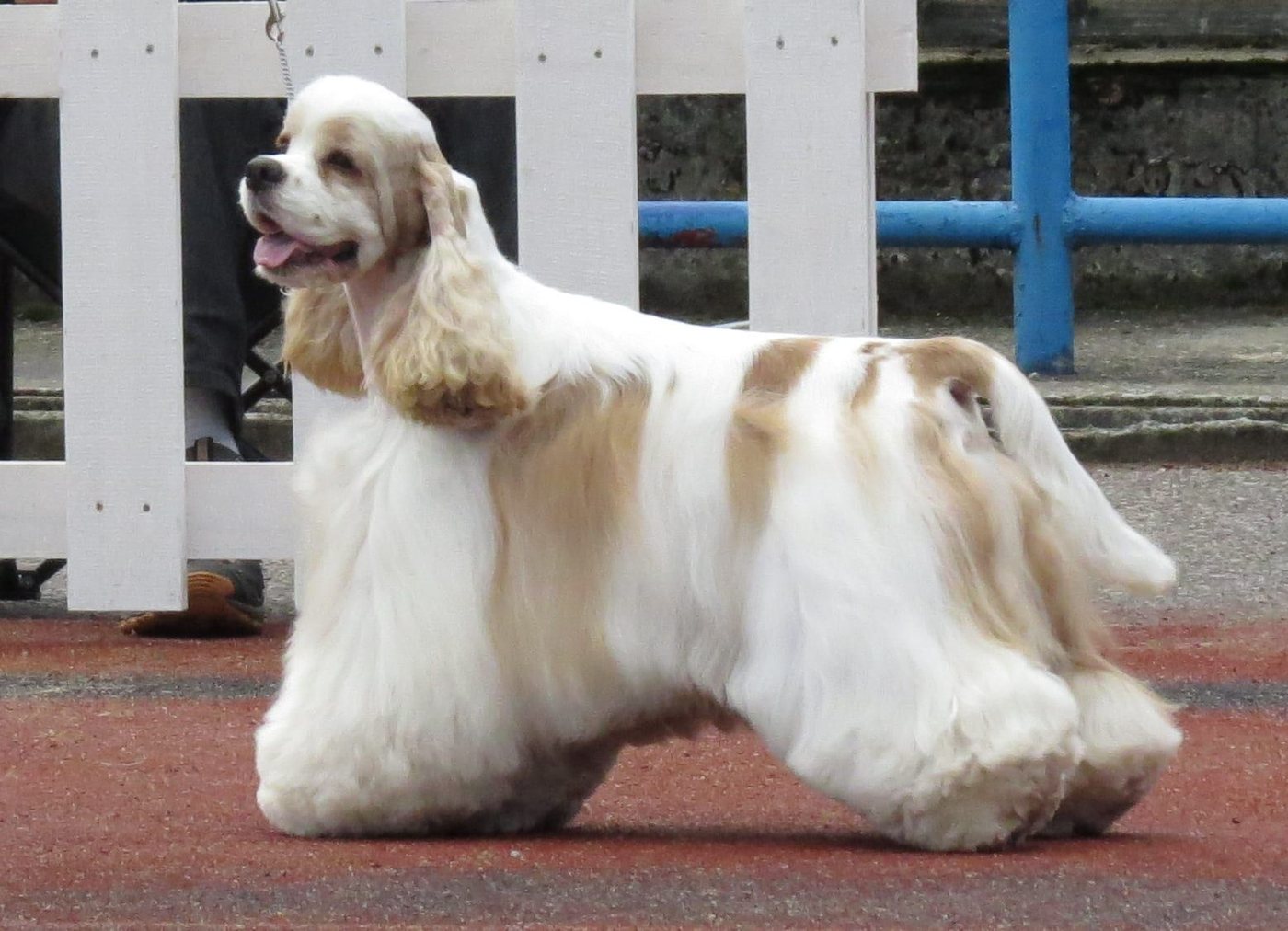
The American Cocker Spaniel is a small, compact breed with a height at the withers of 36.8–39.4 cm for males and 34.3–36.8 cm for females – the difference between the sexes is therefore only slight, the female remaining generally smaller and finer in line. The body is short and deep, with a well-arched chest and a firm, muscular back, which gives it a compact, harmonious appearance without the impression of being heavy.
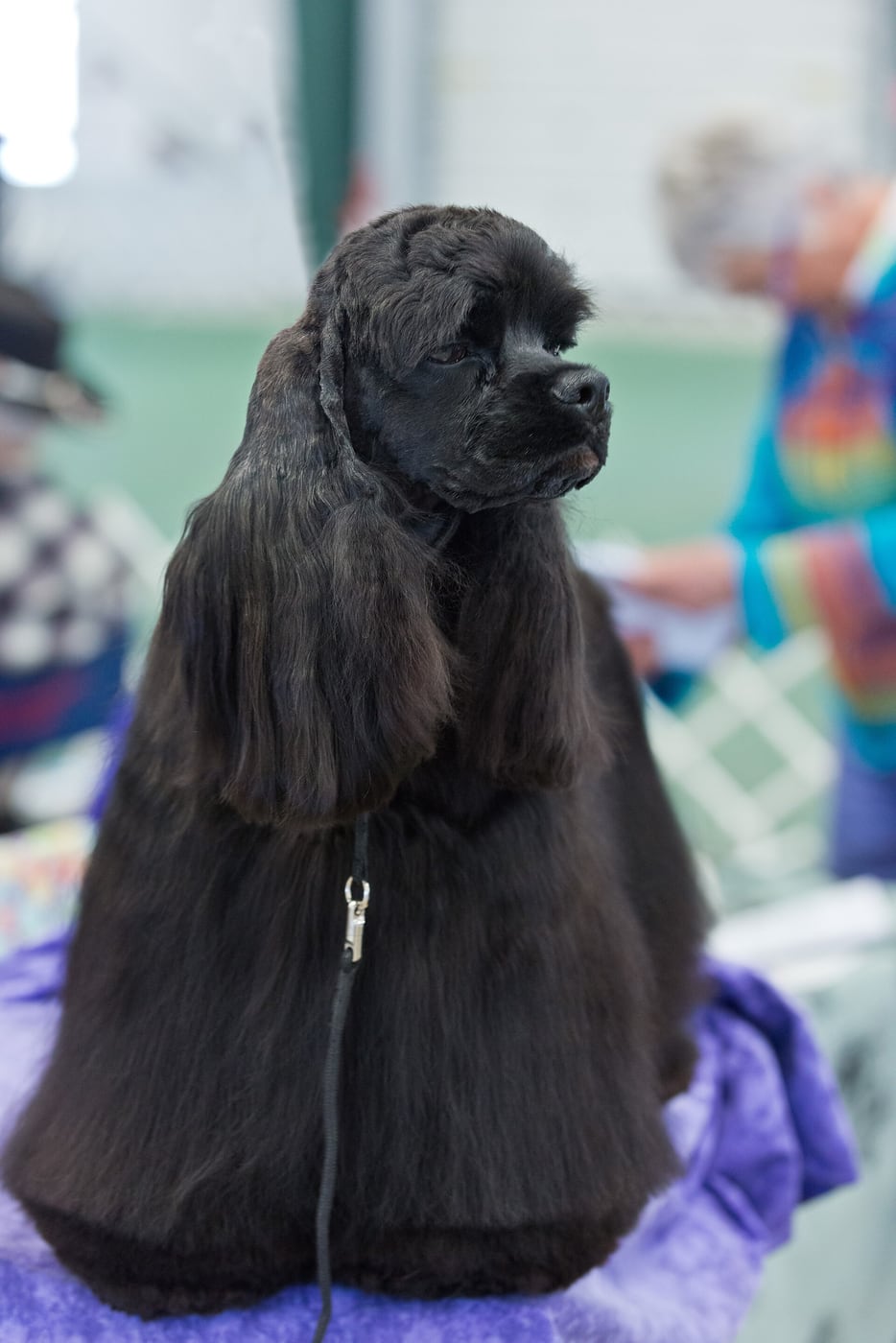
The head is one of the most distinctive features of the breed – a round skull with a prominent stop and a deep, square muzzle. The eyes are large, round and dark, with a kind, attentive expression typical of the breed. The ears are set low, long and pendulous, and are richly covered with long, wavy hair that falls almost to the ground.
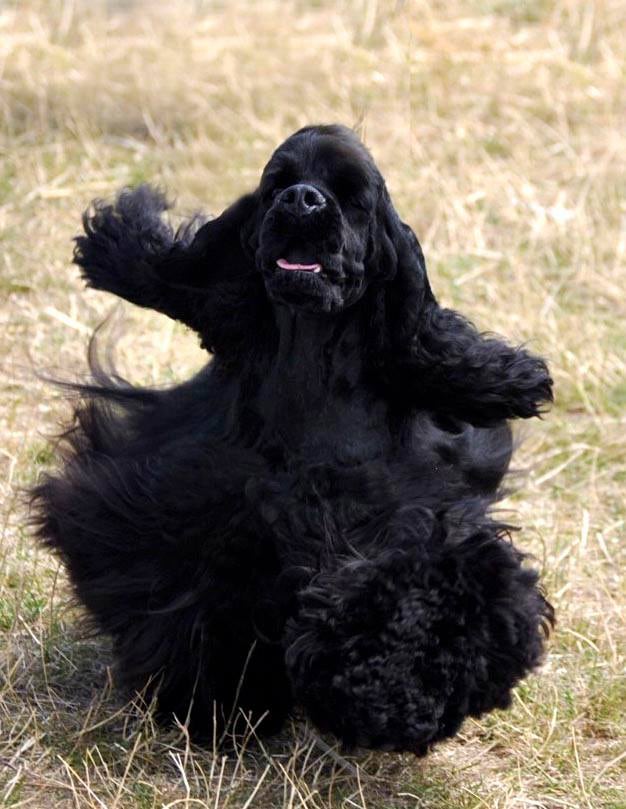
The coat is long, silky and slightly wavy, shorter and smoother on the head, while on the ears, chest, belly and legs it forms rich, flowing areas. It is this coat that requires regular and relatively demanding care to prevent matting. The tail is set at the level of the back, carried horizontally or slightly above the back line, often docked in working individuals.
Color variants and their standardized combinations are described in a separate section on coloration.
American Cocker Spaniel Colors
A specific list of color traits recognized by the standard and their exact definitions for the American Cocker Spaniel are not documented by a verified source in this atlas, so we do not list them here in order to avoid spreading inaccurate information. Those interested in a detailed color standard are recommended to look directly at the valid text of FCI standard No. 167.
American Cocker Spaniel Personality
The American Cocker Spaniel is a sociable and friendly dog that forms a strong bond with its owner and does not tolerate long-term loneliness. It belongs to the breeds with a high need for human company - it thrives best where it spends time directly in family activities.
He handles training without much difficulty because he is docile and willing to cooperate, stubbornness is not a typical trait for him. However, he appreciates a patient and kind approach, because he reacts to harsh treatment by withdrawing rather than resisting.
He has a medium-high energy level - he needs regular exercise, but he is not a dog that requires extreme exertion. Likewise, he needs a reasonable amount of mental stimulation, for example in the form of sniffing games or small obedience training.
He barks moderately often, usually when he wants to warn of a visitor or an unusual sound, but his guarding instinct in the true sense of the word is not significantly developed. He gets along well with other dogs, but his relationship with cats is individual and depends on the socialization and experience of the individual.
American Cocker Spaniel and children
The American Cocker Spaniel is rather suitable for children, thanks to its high need for human company and friendly nature, it usually likes to play with them and seeks their closeness. However, coexistence should always take place under the supervision of an adult, as it is a relatively sensitive dog that may not tolerate rough treatment, pulling on its fur or sudden noisy expressions from small children.
Due to the low training requirements, this dog usually adapts well to family rules and learns basic commands without much difficulty. However, this does not mean that socialization and consistent training from puppyhood are not important - the sooner the dog gets used to the presence of children, their movements and voices, the calmer it will react to common situations even in adulthood.
What to watch out for
- Children should be taught to treat the dog with respect, especially to care for its long coat, which is susceptible to pulling and tangling.
- Given the hunting nature of the breed, it is advisable to inform children that the dog may react to quick movements or running around with increased attention or chasing.
- Even though this is a dog with a medium need for mental stimulation, playing with children can naturally fulfill this need if it is conducted with respect for its boundaries.
- Adult supervision is especially useful during first encounters and in situations where the dog is tired or feels insecure.
American Cocker Spaniel and other dogs and pets
The American Cocker Spaniel usually gets along well with other dogs and easily integrates into a group of dogs, especially if he is used to their presence from a puppy. His high need for company applies not only to people, but also to canine companions - loneliness does him no good, whether he is at home alone or with another dog.
The relationship with cats and small animals should be assessed individually. This is a hunting dog bred to search for and drive out feathered game from thickets, so the hunting instinct remains present in it even in the role of a companion. With cats, the result therefore depends on the specific nature of the individual, the habituation from childhood and the experience it has with animals in the household - problem-free coexistence or conflict cannot be automatically anticipated.
With small animals such as rodents or birds, caution and gradual, controlled introductions are appropriate, given the breed's original hunting purpose. It is definitely not recommended to leave such contacts unattended until you are sure how the dog reacts to the animal.
Is the American Cocker Spaniel suitable for an apartment?
Rather, yes - its small stature and moderate need for exercise make it a dog that will do well in apartment living if the owner meets a few basic conditions.
Due to its size, the American Cocker Spaniel does not need a large house with a garden, an apartment is fully suitable for it. However, regular walks and the opportunity to run outside are key - this is a hunting dog with a medium-high need for activity, so moving around the apartment alone is not enough for it. The lack of walks and lack of stimuli can manifest itself in dissatisfaction or excessive barking, because this is a breed with a medium level of barking and a relatively high need for contact with people.
For peaceful coexistence in an apartment, it is advisable to take into account that this dog does not tolerate long-term solitude - it needs to have a family nearby and does not like being locked up alone for many hours during the day. On the contrary, aggressive or nervous manifestations are not typical, so even in more densely populated houses or housing estates, it usually does not cause problems for neighbors, as long as it has enough exercise.
In a residential environment, coat care is more of an organizational issue than a question of space - the long, silky coat requires frequent brushing and grooming, otherwise it easily tangles and sheds around the home.
How much exercise does it need?
The American Cocker Spaniel is a breed with medium exercise requirements - it can do with a regular daily walk combined with free running without needing hours of intense exercise. Its activity should be spread out over several shorter walks rather than one exhausting exercise session.
Thanks to his hunting background, he likes activities that engage his nose and natural instincts - searching for treats in the field, tracking or retrieving are more natural and fun for him than purely physical exertion.
Suitable activities
- Walks in the field with the possibility of free movement
- Fetching and playing with a ball or toy
- Basics of dog trekking or lighter agility
- Nosework and scent games developing natural talents
Mental stimulation is just as important for this breed as physical exercise. Short training sessions, fetch toys, or interactive toys can help burn off energy without the need for long runs, which is especially appreciated by owners with limited time.
Due to the long and thick coat, it is advisable to adjust the intensity and duration of exercise on hot summer days - it is better to move more strenuous activities to cooler parts of the day and provide plenty of shade and water in hot weather.
Training and education
The American Cocker Spaniel is one of the breeds that learn obedience without much difficulty - it responds willingly to basic commands and quickly understands what is expected of it. The key to success is motivation: praise, treats and a kind but consistent approach work best. Harsh methods or a raised voice will lead to fear rather than cooperation.
Training should be done in short, regular blocks – long, monotonous training sessions will quickly wear down his attention. It is best to break up the learning of a new command into several short sessions throughout the day, ending each with success, so that the dog leaves with a positive experience.
What to focus on
- A consistent but sensitive guiding hand – no harsh punishments, just consistent rules.
- Short training units with a clear goal and a positive ending.
- Early and varied socialization of the puppy - encounters with people, other dogs, and common stimuli of urban and rural environments.
- Gradual getting used to loneliness, as a high need for company can lead to signs of separation without training.
- Using hunting skills and sense of smell in games and retrieving exercises as a natural form of mental stimulation.
Thanks to the lower training requirements, the American Cocker Spaniel is a suitable choice even for beginner owners who adhere to the principles of positive leadership and devote enough time to socialization from an early age.
Hair care and hygiene
The long, silky and slightly wavy coat requires regular and thorough care - without it, it quickly matts, especially on the ears, chest, belly and legs, where it is the softest and longest. Combing two to three times a week with a brush and a comb with denser teeth should be a matter of course, and more often for dogs with thicker fur.
Trimming and grooming
To keep the coat healthy and tangle-free, the American Cocker Spaniel should be taken to the groomer regularly to have the undercoat trimmed and combed out. Typically, the coat is shorter on the back and longer, more heavily furred areas on the ears, chest and legs, which need to be maintained to prevent tangling and dirt from sticking to the outside.
Bathing and skin care
Bathing should be done as needed, with a suitable shampoo for long-haired dogs, so that the coat does not dry out. After a walk, especially in wet weather or in the field, it is advisable to check and, if necessary, wash the hairy areas on the legs and belly, where mud and small dirt easily collect.
Ears
Long, drooping, and heavily furred ears have limited airflow, which increases the risk of ear infections and excessive sebum production. Therefore, the ears need to be checked and cleaned regularly, and the fur around the ear opening kept trimmed and dry.
Eyes, teeth and claws
The fur around the eyes should be trimmed regularly to prevent irritation and vision. Teeth should be brushed regularly to prevent tartar buildup, and claws should be trimmed according to how quickly they naturally wear down - usually more often for a dog that spends a lot of time on soft surfaces.
Molting
The amount of loose hair during the year is moderate, but more extensive combing of the dead undercoat is advisable during periods when the dog sheds more intensively, so that the hair on the body does not tangle with the remains of older growth.
Feeding
The basis of the diet should be a high-quality complete food appropriate to the age, size and activity level of the dog - i.e. a special formula for puppies, adults and seniors, or a variant for dogs with reduced energy expenditure. Given the medium level of activity, this is not a breed with high energy requirements, and therefore the amount of food should be monitored rather than increased.
The American Cocker Spaniel has a tendency to gain weight if the energy intake is not adjusted to the dog's actual activity and aging. Regular body condition checks - i.e. palpability of the ribs and visible passability when viewed from above - are therefore a better guide than a fixed ration poured into a bowl.
- Divide the feed ration into two portions a day to prevent overeating and unnecessary digestive strain.
- Treats used during training should be included in the total daily energy intake.
- Long hanging ears can fall into the bowl when eating - a deeper or narrower container, or a bowl with a higher rim, is suitable.
- Make changes to the feed gradually to avoid digestive problems.
If you have any doubts about the appropriate composition or amount of food, the most reliable way is to consult a veterinarian, who will take into account the current condition, age and health status of the particular dog.
How long does an American Cocker Spaniel live?
The exact average lifespan of this breed cannot be stated without a reliable source, but in general, small and medium-sized dogs of a similar type live within the range typical for their size category, i.e. approximately 12-15 years. The specific lifespan is always individual and depends on a combination of genetics, lifestyle and the care that the dog receives from the owner.
What affects lifespan?
- Genetics and origin of the puppy: the health of the parents and the responsibility of the breeder play a crucial role - choosing a puppy from a proven breeder reduces the risk of hereditary burdens.
- Physical fitness: maintaining an appropriate weight without being overweight relieves stress on joints and internal organs and contributes to better health in the long term.
- Exercise: due to its medium level of activity, it needs regular, but not extreme, exercise - walks and play, which will keep its muscles and fitness in good condition.
- Prevention: regular veterinary check-ups, vaccinations and deworming help detect potential problems early.
- Nutrition: a quality diet appropriate to the dog's age and activity level supports the proper functioning of the organism throughout its life.
- Health predisposition: The breed may be predisposed to external auditory canal problems, which are related to the long, densely furred, drooping ears, and to eye problems. Regular ear and eye checks are therefore an important part of preventative care.
Due to the high demands of coat care, it is also important to keep the coat clean and regularly groomed - neglected coat can lead to skin problems, which indirectly affect the dog's overall condition.
Who is the American Cocker Spaniel suitable for?
The American Cocker Spaniel is best suited to families that can devote time and regular care to its coat - it requires a lot of care and cannot be done without regular combing and cutting. It is a social dog with a high need for human closeness, which does not tolerate long periods of isolation without contact with the family.
Who is the breed suitable for?
- For families with children, where the dog is perceived as a full-fledged member of the household with constant contact with people.
- For apartment owners – thanks to its small size and moderate activity level, it can handle a smaller space as long as it gets enough walks.
- For beginners, because training is usually easy and the dog is docile and willing to cooperate.
- For those interested in hunting in the field, where it can fulfill its original purpose as a search and chaser of game birds.
- For people who have the time and desire to regularly care for their long, silky coat, or are willing to invest in grooming.
Who is the breed not suitable for?
- For those looking for a dog with minimal coat care – frequent brushing and grooming are a necessity, not an option, with this breed.
- For households where the dog is expected to spend most of the day alone - a high need for company can lead to signs of dissatisfaction.
- For owners who expect a completely quiet dog - moderate barking means that vocalizations are common, not exceptional.
- For households with cats, if they are not willing to spend time gradually and sensitively introducing the animals.
Interesting facts about the breed
The American Cocker Spaniel was bred from the English Cocker Spaniel, which American breeders gradually modified to their own liking - the result is a smaller, more compact dog with a significantly thicker and longer coat than its British ancestor. In the United States, where the breed originated, it eventually developed into a separate variety recognized by the International Cynological Organization FCI under number 167.
The inclusion in the Flushing Dogs section of the eighth FCI group refers to its original working purpose - it is a hunting dog, whose task was to drive game out of the thickets in front of the hunter. Today's American Cocker Spaniel has largely retained its hunting abilities, although we currently encounter it mainly as a companion dog.
American Cocker Spaniel Health
The American Cocker Spaniel is one of the smaller breeds without significant extremes in body structure, which generally does not pose as serious risks as breeds with an exaggerated body constitution. Nevertheless, it has its own specifics given by the type of coat and the structure of the ears, which should be taken into account during routine care. The health of the dog largely affects the regularity of coat and ear maintenance, because neglected care will manifest itself more quickly in this breed than in dogs with short hair. Regular veterinary examinations and a responsible approach by the breeder are the basis for the dog to fully utilize its potential for a long and active life.
Fur and skin
Dense, long and slightly wavy fur requires intensive and consistent care - without regular brushing, tangles form, which can irritate the skin and create a suitable environment for the overgrowth of bacteria or yeast. Dogs with such demanding fur may therefore be more prone to skin irritation in areas where the fur is most matted, typically behind the ears, in the armpits and in the groin area.
Ears
The long, low-set, and hairy ears typical of this breed restrict airflow into the ear canal, which can make some individuals more prone to ear infections. Regular ear cleaning and inspection is therefore an important part of your dog's health care.
What to look for when choosing a puppy
- Request from the breeder documents about the health status of the parents and information about any hereditary predispositions in the line.
- Check the condition of your puppy's coat and skin - it should not show signs of irritation, dandruff or excessive sebum.
- Inspect your puppy's ears for any signs of odor, redness, or discharge.
- Monitor the puppy's overall activity and condition compared to its littermates.
Known predispositions
The breed is described to have an increased predisposition to:
- to progressive retinal atrophy (PRA).
- to hip dysplasia.
- to inflammation of the external ear canal (otitis externa) in connection with the shape and hairiness of the ears.
- to hypothyroidism (reduced thyroid function).
- to primary seborrheic dermatitis.
- to the formation of cataracts.
- to patellar luxation (displacement of the kneecap).
Discussed risks
The breed is described to have an increased predisposition to:
- to immune-mediated hemolytic anemia.
This overview is for informational purposes only and does not replace the examination or recommendations of a veterinarian.
What to buy for an American Cocker Spaniel
Practical basis that is suitable for this breed:
- Car seats for dogs – Car seats and safety equipment for transporting a dog by car.
- Toys – Dog toys – fetching, chewing and interactive.
- Cosmetics – Shampoos, conditioners and hair care products.
- Bowls – Feed and water bowls, anti-swallow bowls and stands.
- Collars – Dog collars – leather, textile and semi-tight.
- Beds – Beds and mattresses for dogs of all sizes.
- Leashes – Leashes, switch leashes and tracking lines.
Useful instructions
Practical tips that are useful when caring for a dog:
Frequently asked questions
Is the American Cocker Spaniel suitable for an apartment?
Yes, it is rather well suited to an apartment, as it is a medium-sized breed with a medium need for exercise. However, it needs to be regularly provided with daily walks and the opportunity to run around even in apartment conditions.
How difficult is it to care for an American Cocker Spaniel's coat?
Grooming is a high-demanding task, as the long, silky, slightly wavy coat tangles easily and requires frequent grooming. Without regular brushing and professional clipping, the coat quickly forms knots, especially on the ears and legs.
Is the American Cocker Spaniel suitable for beginners?
Rather yes, thanks to its low training requirements and friendly nature, it is also suitable for owners without previous experience with dog training. However, demanding coat care requires regularity and a willingness to devote time to it or to regularly visit a salon.
Does the American Cocker Spaniel get along with children?
Yes, it is more suitable for children, as it is a social and adaptable breed with a high need for contact with people. Given its size, it is advisable to supervise interactions with small children, as with any dog.
How much does an American Cocker Spaniel weigh and how big is it?
It is a medium-sized breed - males measure 36.8–39.4 cm at the withers, females are smaller, measuring 34.3–36.8 cm. The exact weight is not uniformly stated in recognized standards.
How much does an American Cocker Spaniel shed?
Shedding is moderate for this breed, but the long coat requires regular brushing to remove dead hair. The combination of moderate shedding and high maintenance means that grooming will take more time than short-coated breeds.
Why does the American Cocker Spaniel have long, floppy ears?
The long, drooping ears are a typical feature of the breed and are related to its origin as a hunting dog for searching and bringing in game birds. Due to the limited access of air to the ear canal, it is advisable to regularly check and keep the ears clean.
Is the American Cocker Spaniel suitable for seniors?
Suitability for seniors is neutral – the breed is sociable and easy to train, but the highly demanding coat care may be time- and physically demanding for some older owners.
Does the American Cocker Spaniel get along with cats and other dogs?
They get along well with dogs due to their friendly and sociable nature, while their coexistence with cats is rated as neutral and depends on the specific individuals and socialization from puppyhood.
Is the American Cocker Spaniel still suitable as a hunting dog today?
Yes, it is a hunting dog from FCI Group 8 (Flushing Dogs), originally bred in the USA to search for and drive away game birds. The breed retains its hunting nature and sense of smell even as a companion dog in the household.
Does the American Cocker Spaniel need a lot of mental stimulation?
Their need for mental stimulation is moderate, so they are happy with regular play, sniffing activities or simple training tasks. Combined with their high need for human companionship, they thrive best when they spend time actively with their owner.
Resources and further information
- FCI Standard No. 167 - American Cocker Spaniel - Fédération Cynologique Internationale
- Source of body measurements – american-cocker-spaniel.fr
Professional cooperation
This breed overview was created in cooperation with the Veterinary Clinic VYVET sro and MVDr. Adam Hylák .