
Published 1. 9. 2026
Cane Corso (Italian Cane Corso) is a large Italian breed from FCI group 2, belonging to the molossoid type of dogs. The male reaches a height of 64–68 cm and weighs 45–50 kg, the female is slightly smaller. It has a short, undemanding coat, but its nature requires an experienced owner – it is alert, strongly attached to the family and needs enough mental and physical exercise.
Training a Cane Corsa is one of the more demanding disciplines of cynology, as it combines intelligence with a strong will to assert itself. It behaves neutrally towards children and other animals, which means that coexistence must be built gradually and with consideration. It is rather exceptionally suitable for an apartment and is not a suitable choice for beginners or seniors. On the contrary, it will be appreciated by active owners who can offer it clear leadership, plenty of exercise and stable social contact.
Professionally consulted
The content was created in cooperation with the veterinary clinic Veterinární klinika VYVET sro and MVDr. Adam Hylák.
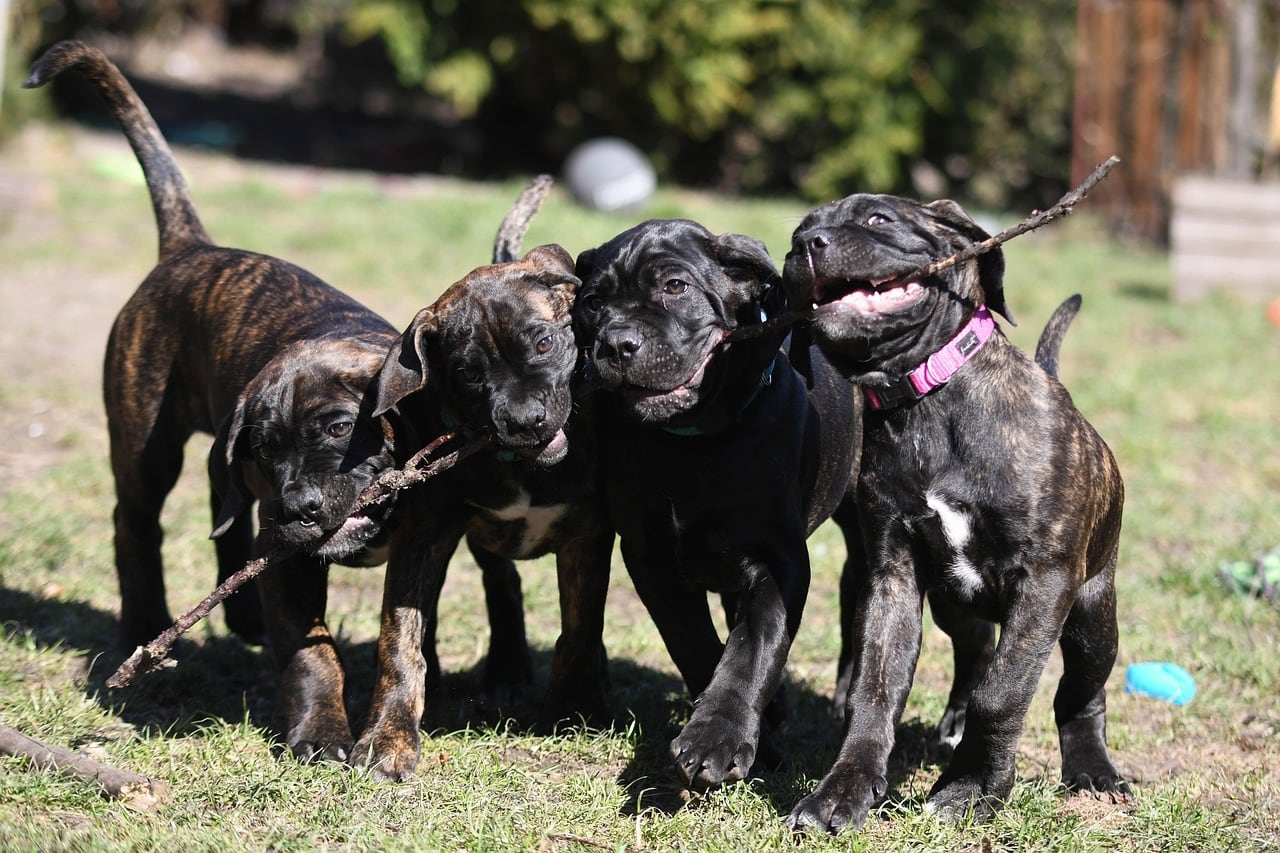
Quick overview
What is a Cane Corso like?
Cane Corso (Italian Cane Corso) is a large Italian breed from the molossoid group, bred primarily as a guard and companion dog. It reaches a height of 60–68 cm and a weight of 40–50 kg depending on the sex, while under the short, undemanding coat there is a strong, athletic build. In terms of temperament, it is a dog that is alert, calmly self-confident and very attached to its family - it is neutral to reserved towards strangers and other animals, not aggressive. It requires firm, consistent leadership and sufficient physical and mental exertion, otherwise it will easily slip into undesirable manifestations of dominance or boredom.
It is suitable for a family with experience with large breeds, an active owner with time for regular training and exercise. On the other hand, it is not suitable for beginners, seniors or a small apartment without a garden.
Origin and history
The Cane Corso originates from southern Italy, especially from Puglia, where it has been bred for centuries as a versatile farm and guard dog. Its ancestors are the ancient Roman Molossians - war and guard dogs, which spread throughout the Apennine Peninsula during antiquity and gradually crossed with local working dogs. From this base, a type of dog developed that was used on rural estates to guard property, accompany livestock and, in the past, also to hunt large game, such as wild boar.
Unlike its distant relative, the Neapolitan Mastiff, the Cane Corso remained a working dog, more agile and less cumbersome – its role was not only to deter intruders, but also to actively assist in farm work. This versatility shaped its physique and temperament throughout centuries of rural breeding, when the breed was bred strictly for purpose, without regard for a uniform appearance.
In the 20th century, the Cane Corso population declined significantly due to the mechanization of agriculture and the decline of the traditional farming methods that required its use. The breed survived thanks to breeders in remote areas of southern Italy, and its rescue and systematic reconstruction only occurred in the second half of the 20th century. Subsequent efforts by Italian cynologists led to the unification of the type and international recognition of the breed by the FCI federation under the name Cane Corso Italiano, which formally established the breed's current form.
Appearance and size
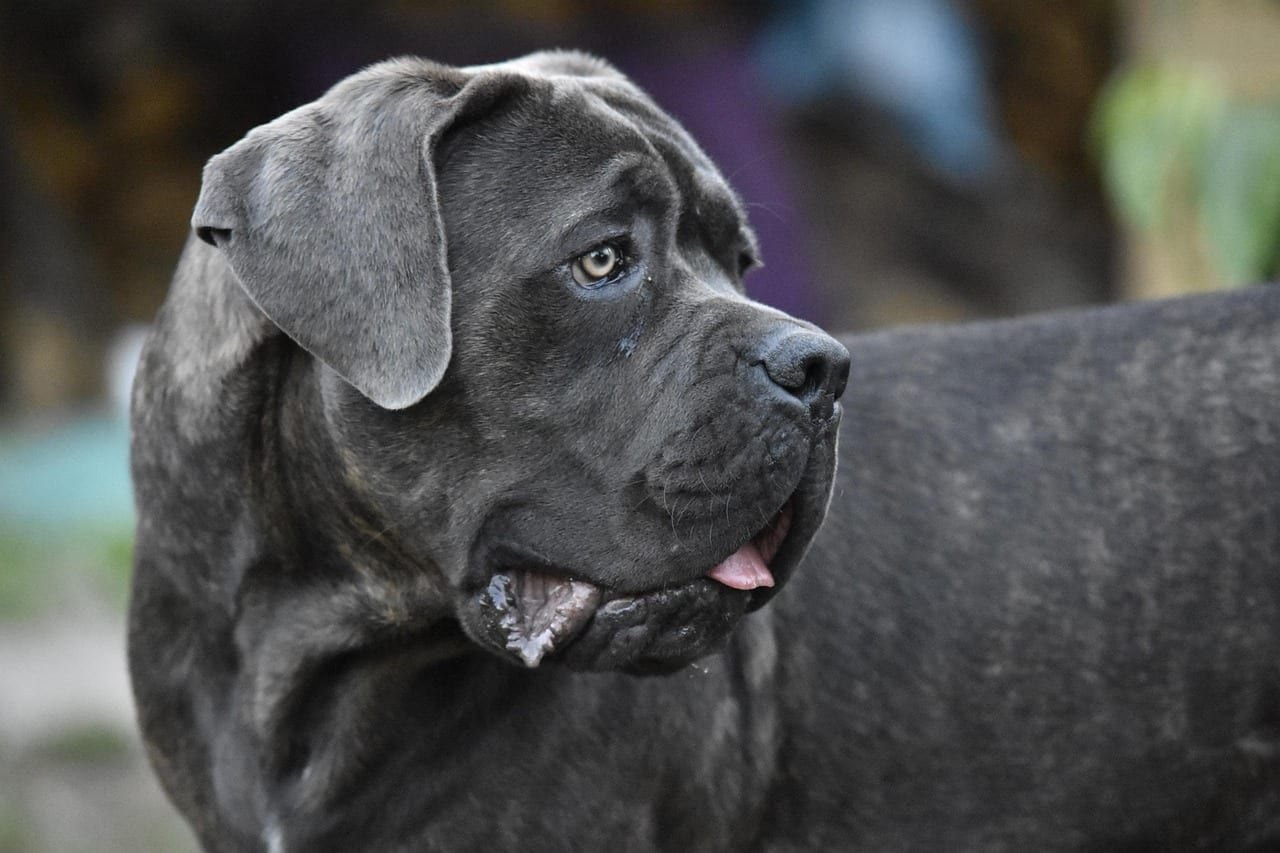
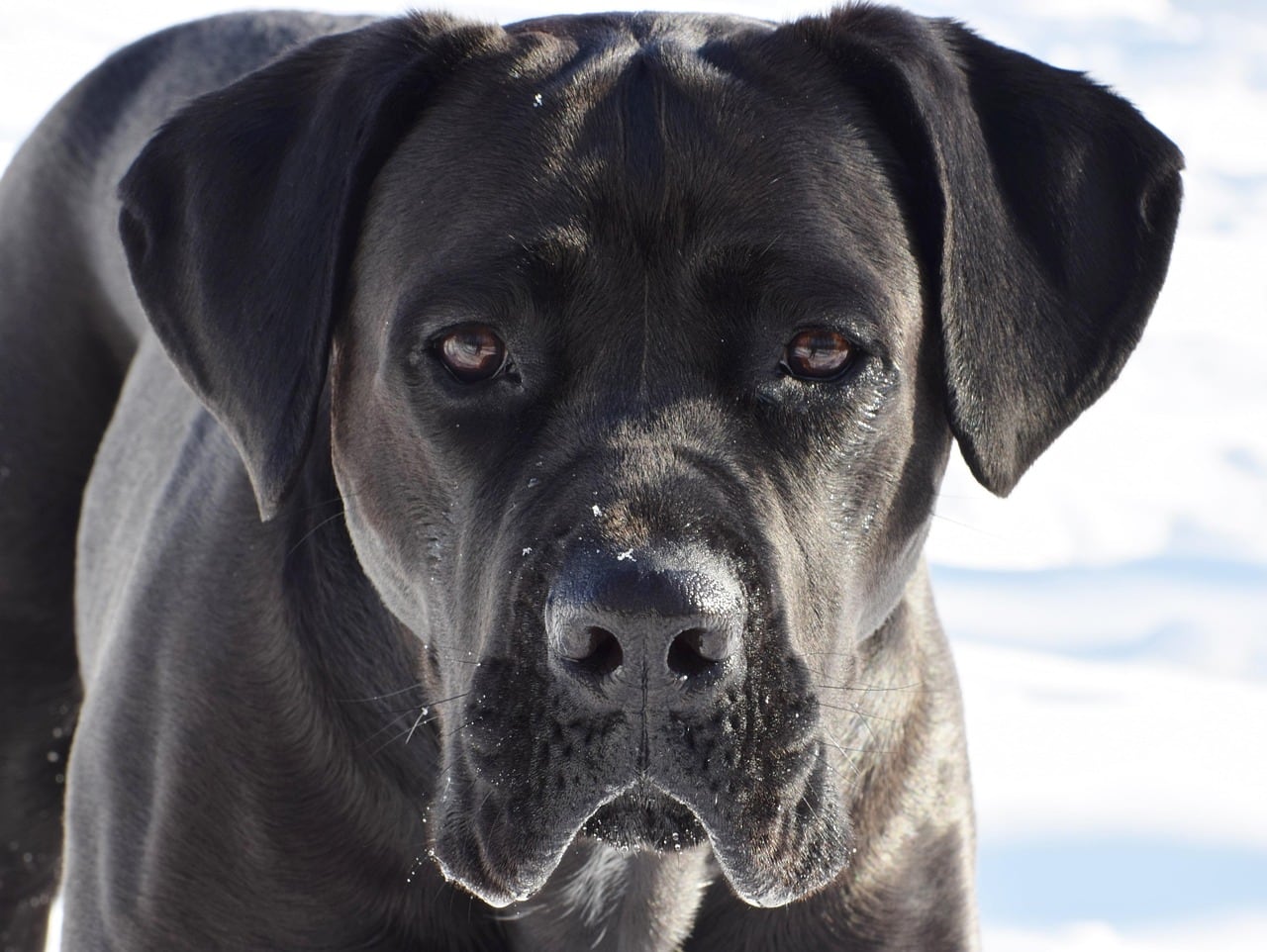
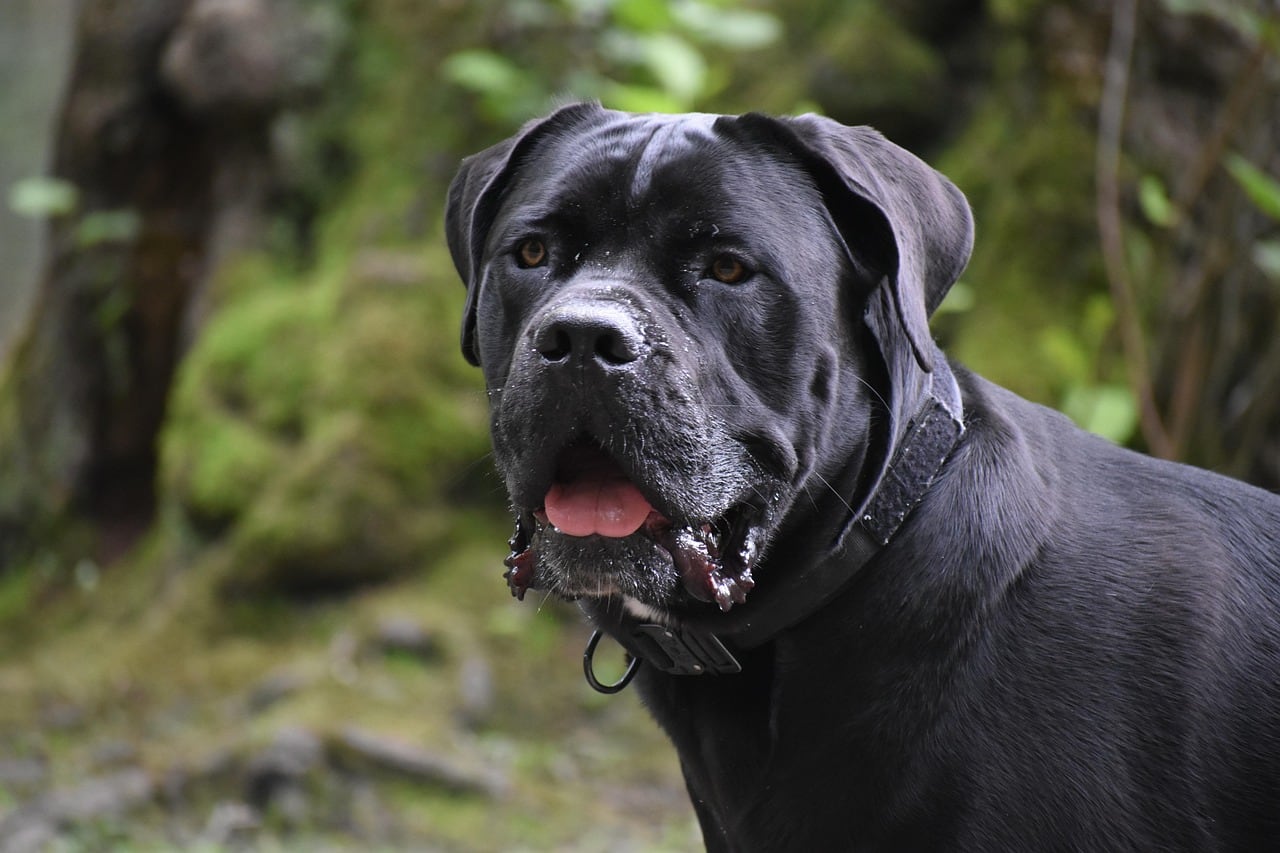
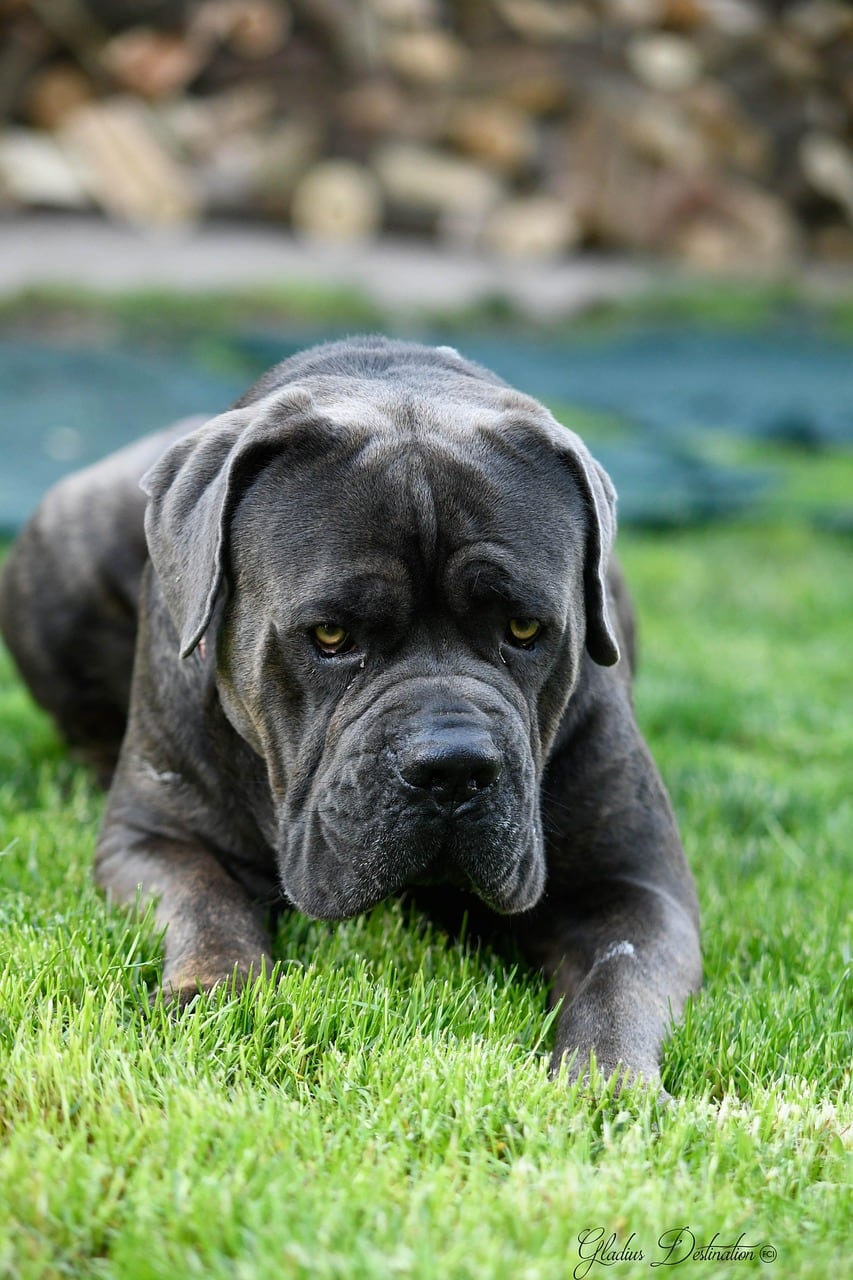
The Cane Corso is a massive molossoid with a height at the withers of 64–68 cm for males and 60–64 cm for females. The weight ranges between 45–50 kg for males and 40–45 kg for females, making it one of the more prominent representatives of the Italian molossoid breeds. The body is compact, muscular and gives the impression of strength without unnecessary weight - the build corresponds more to the athletic than the cumbersome type.
The head is large, broad in the frontal part and characterized by a pronounced, relatively short muzzle. The overall expression is focused and alert, which is reflected in the medium-sized, somewhat obliquely set eyes. The ears are naturally relatively large and triangular, set high on the head; in countries where ear cropping was previously practiced, cropped ears may also appear in exhibited individuals, but the standard is to have a natural appearance.
The Cane Corsa's coat is short, dense and close-fitting, with no undercoat, making it a low-maintenance type. The coat's color variations are so rich that they deserve a separate section on colors.
The tail is set high, thick at the root and tapering towards the tip; when at rest it is carried low, when in motion and excitement it is carried high. There is a clear difference in the overall frame between the male and female – the male is taller, heavier and has a more massive head, the female is more subtle, although still within the framework of a large breed.
Cane Corso Colors
The specific list of colors recognized by the standard and permitted markings for the Cane Corso is set out in the current FCI standard No. 343, which maintains the studbook for this Italian breed. Color variants and possible deviations should always be verified in the current version of the standard, as this is information that may be specified over time.
The nature of the Cane Corso
The Cane Corso is a dog with a balanced, confident temperament and a strong bond with its owner - it is intensely attached to the family and requires to be a permanent part of it, not just a watchman in the yard. It is an intelligent breed that quickly understands context and can independently evaluate situations, which is manifested both in its excellent learning ability and a certain degree of its own judgment - this can easily turn into stubbornness with less experienced management.
The energy level of this breed is high, and the need for mental stimulation is high too – a bored Cane Corso will seek out his own programs, which are usually not to the owner's liking. Without enough exercise and tasks, he may show restlessness, destructive behavior, or increased vocalization. On the other hand, a sufficiently exercised individual is calm, attentive, and surprisingly balanced in the home environment.
The relationship with people outside the family is usually measured and even wary, which, together with the natural guarding tendencies, makes the Cane Corso a very reliable guardian of the territory. It reacts to unknown stimuli attentively, but not hysterically - its manifestations include silent control of the situation rather than unnecessary barking, although it resorts to it when assessing a threat. It is neutral towards children, and similarly towards other dogs and cats - certainly without negativity, but not with unconditional enthusiastic friendliness, so coexistence needs to be built gradually and with consideration.
Independence and a strong personality mean that the Cane Corso needs clear leadership from the puppy - not because of aggression, but because without clear rules, he will set them himself, and not always in the way the owner would like. With experienced, consistent leadership, this is a dog that is reliable, calm in society and very loyal.
Cane Corso and children
The Cane Corsa's relationship with children is described as neutral - this does not mean hostility, but the fact that the breed is not the type of dog that would automatically submit to children or tolerate them without inhibitions as a natural part of the pack. It is a powerful and strong dog with a strong need for leadership, for which upbringing, socialization and setting rules in the household are the main factors, not an innate "childish" nature.
Socialization and education as the foundation
The Cane Corso requires consistent and early socialization – it should be exposed to common situations, sounds and children's behavior from a puppy stage so that it gets used to them and does not perceive them as an unknown or disturbing element. Given the high training requirements and strong nature, it is not recommended to leave upbringing to chance; the dog needs a clearly guided owner who will set boundaries and teach it basic obedience even before it reaches adult size and strength.
Adult supervision is necessary
Even with a well-behaved and socialized dog, children should always be supervised by an adult. This is not due to aggression, but rather the breed's physical strength - even an unintentional bump or playful push can easily knock a smaller child to the ground. Supervision is also useful to prevent situations where a child unknowingly provokes the dog or disrespects its space, for example when eating or resting.
- A high need for mental stimulation and activity means that a bored or under-exercised dog may be more restless around children.
- The breed is not recommended for beginners - experience with managing a strong dog is essential for problem-free coexistence with children.
- Children should be taught from an early age to respect a dog's space and signals.
Cane Corso and other dogs and pets
The Cane Corsa's relationship with other animals is described as neutral - neither outright conflictual nor friendly per se. This is based on its historical role as a watchdog and guard dog, which was bred to make independent decisions and be alert to strange animals rather than to live carefree in a pack. For both dogs and cats, it is therefore primarily a matter of how the individual is socialized from puppyhood.
Relationship with other dogs
The Cane Corso is mostly neutral towards its companions - it does not seek out conflicts, but it is not the type of dog that would automatically establish contact with unknown individuals. Given its size and strength, it is advisable to pay consistent attention to socialization from puppyhood so that the dog gets used to meeting other dogs in various situations and knows how to remain calm in them.
Relationship with cats and small animals
The relationship with cats is also rather neutral, which means that coexistence is usually possible if the dog has known the animal since childhood and has had positive experiences with it. Increased caution is advisable with small animals - as with many powerful breeds with historical use for guarding and hunting larger animals, a more pronounced reaction to the rapid movement of a small creature can be expected, and therefore it is not recommended to leave initial contacts unattended.
Recommendations for households with multiple animals
- Start socializing your puppy with other dogs and pets as soon as possible.
- Always hold new meetings under control and in a calm environment.
- Never leave first contacts with small animals (rodents, poultry) unattended.
- Due to the breed's strength, make sure that even playful interactions with dogs of similar size are supervised.
Is Cane Corso suitable for an apartment?
Probably not – it is not suitable for an apartment. It is a sturdy molossoid with a high need for exercise and mental stimulation, which does not suit a small space without the possibility of regular exercise.
If he were to live in the apartment, strict conditions would have to be met:
- Space: a house with a garden is ideal, where there is enough space to move around freely and relax.
- Exercise: due to its high activity level, it needs long walks and more demanding physical activity; staying in an apartment alone would not be enough for it.
- Peace and privacy: they will appreciate their own quiet place to retreat to, which can be difficult to provide in a smaller apartment.
- Barking: He has a moderate tendency to bark, which can be annoying in a block of flats with neighbors.
Due to his high need for company, he also hates long periods of solitary confinement - whether in an apartment or a house with a garden, he needs to be in contact with his family.
How much exercise does it need?
The Cane Corso is one of the dogs with a high need for exercise - a short walk around the corner is not enough for him, but longer walks supplemented with an active program during the day. This is a breed built for endurance and strength, so regular physical activity is a necessity for him, not a bonus.
Suitable activities
Due to their high activity level, they will appreciate a combination of free movement and supervised activities. Suitable are:
- longer walks and hikes in the field
- obedience and sporting cynology focused on obedience and controllability
- defensive and work disciplines under the guidance of an experienced coach
- search and smell games that engage both the nose and the head
Due to his strength and temperament, sports with sharp jumps and high-intensity impacts to the joints without gradual preparation are not suitable.
Mental stimulation
Physical exercise alone is not enough - the Cane Corso also needs mental exercise. A bored dog without sufficient mental exercise can become restless or difficult to handle. It is advisable to include elements of training, mental work and decision-making tasks in the daily program.
Limitations and caution
Short hair and a massive build mean that exercise should be adapted to the weather - in high temperatures, it is advisable to move activity to cooler parts of the day and give the dog enough time to rest and drink.
Training and education
Training a Cane Corso requires an experienced owner who can set clear rules for it from puppyhood – it is a strong and intelligent dog, and improvisation or postponing training until “when it grows up” is not worth it. Cane Corso learns well if the leadership is consistent and understandable, but it can just as easily find its own solution to the situation if the owner hesitates or is inconsistent.
What motivates a dog?
Positively guided training based on praise, play and rewards for desirable behaviour works best. Cane Corso appreciates clearly defined work and the feeling of doing something meaningful – boring repetition without a goal will quickly become boring. Short but regular training blocks work better than long and exhausting lessons.
Socialization
Since the breed is neutral to wary of strangers and other animals, early and extensive socialization is key. The puppy should be gradually and safely exposed to a variety of people, environments, sounds, and other dogs to maintain balanced and predictable behavior as an adult.
Specifics of training
- A high need for mental stimulation means that physical exercise alone is not enough for a dog - it also needs "mental work", such as obedience, sniffing games or training specific tasks.
- An inconsistent or overly harsh approach does not pay off with this breed – it leads to distrust or stubbornness rather than obedience.
- Due to the dog's strength and temperament, it is recommended to master basic obedience and leash behavior before it reaches adult size and strength.
- For owners without previous experience with similarly demanding breeds, it is advisable to keep them under the supervision of an experienced trainer or a kennel club.
Hair care and hygiene
The short, close-fitting coat makes the Cane Corso a low-maintenance breed – regular brushing with a rubber brush or glove once a week is sufficient to remove dead hair and keep the coat shiny. Due to the moderate shedding rate, it is advisable to increase the frequency of brushing during the spring and autumn moulting periods to reduce the amount of hair deposited on clothing and furniture.
Bathing is only necessary occasionally, when the dog is really dirty - frequent washing could disrupt the natural protective layer of the skin. Since this is a breed with a moderately high level of drooling, it is practical to regularly check and wipe the mouth and lip area after eating and drinking to prevent skin irritation or unpleasant odor.
Ears, eyes, teeth and claws
- It is advisable to check the ears at regular intervals and, if necessary, clean them gently to prevent excessive accumulation of grease or dirt.
- It is enough to wipe the eyes occasionally with a damp cloth if small dirt appears in the corners.
- Due to the powerful jaw and strong bite, brushing teeth is an important part of care - regular brushing or chewing aids help reduce tartar buildup.
- Claws need to be trimmed or sharpened depending on how quickly they naturally wear down during movement, so that they do not hinder the dog when walking.
Feeding
The Cane Corso is a large, strong breed with a high level of activity, and its diet should reflect this. A high-quality complete food (either kibble or a properly formulated meaty diet) designed for large and powerful breeds is suitable, as it takes into account the slower development of the skeleton and joints in puppies and the energy requirements of an adult with significant muscle mass.
The amount of food always depends on the age, body weight, level of exercise and overall condition of a particular dog - there is no universal dose and it needs to be adjusted individually, ideally after consulting with a breeder or veterinarian.
What to watch out for
- It is important not to overfeed puppies and young dogs with an energy-rich diet - rapid weight gain puts a strain on the joints of the growing skeleton.
- An adult Cane Corso should have a food ration that is in line with its physical activity; a less active dog is at real risk of becoming overweight, which puts a strain on the musculoskeletal system and heart.
- Regular body condition checks (visibility of the waist, palpability of the ribs) help to detect early that the dose or type of feed needs to be adjusted.
- Due to the massive body structure, it is advisable to divide the daily dose into several smaller portions and avoid intense exercise immediately after eating.
How long does a Cane Corso live?
The exact life expectancy range for the Cane Corso is not given in the available literature. As with other large molossoid-type breeds, life expectancy is mainly influenced by genetics, physical condition, and the care the dog receives throughout its life.
What affects lifespan?
- Genetics: the puppy's origin and the health of the parents play a crucial role - responsible breeding with the selection of healthy individuals reduces the risk of hereditary burdens.
- Physical condition: maintaining a lean, muscular physique without being overweight is key to relieving the joints and heart of such a powerful breed.
- Exercise: Due to its high activity level, the Cane Corso needs regular, sufficiently long and varied exercise, ideally combined with mental stress, to remain balanced physically and mentally.
- Prevention: regular veterinary check-ups, vaccinations and early detection of health problems help extend an active and quality part of life.
- Nutrition: a quality diet adapted to the dog's age, size and workload supports the health of the joints, heart and digestive system.
- Health predisposition: the breed may have an increased predisposition to musculoskeletal problems and other health complications typical of large and heavy breeds, which should be taken into account when choosing a breeder and subsequent care.
Who is the Cane Corso suitable for?
The Cane Corso is best suited to experienced dog owners who can provide consistent training, plenty of physical exercise, and mental stimulation. It is a breed with a high need for activity and demanding training, making it unsuitable for apartment living or for people looking for an easy-going companion.
Who is the breed suitable for?
- For experienced breeders who already have experience raising large and strong breeds.
- For active owners who are able to provide regular exercise and dog sports or other more demanding activities.
- For people living in a house with a garden where the dog has plenty of space.
- For owners willing to dedicate time to rigorous and consistent training.
- For those who can provide the dog with enough company - the Cane Corso does not tolerate long-term loneliness.
Who is the breed not suitable for?
- For beginners with no experience raising large breeds.
- For seniors who might have problems with the dog's strength and temperament.
- For residents of apartments or households without access to outdoor space.
- For people looking for a dog with low activity needs or minimal training requirements.
- For households where the dog is often alone without sufficient care and stimulation.
Interesting facts about the breed
The original Italian name of the breed is Cane Corso Italiano and its classification under FCI number 343 falls under the molossoid breed section within the second group. Historically, it is a dog associated with Italy, where it developed as a versatile working and guarding type.
The Cane Corso has an interesting combination of characteristics that make it a dog for experienced breeders: it is a breed with a high need for exercise and mental stimulation, which also requires a more consistent approach to training. Despite its robust build, it has a short, low-maintenance coat, so grooming the body surface takes up little time compared to the demands of training and socialization.
Dogs with a similar molossoid character that are often mentioned in the same context include the Neapolitan Mastiff, the Spanish Mastiff, or the Saint Bernard - all of these breeds share a massive build and a historical role as guard and farm dogs.
Cane Corso Health
The Cane Corso is a large, strongly built breed of the molossoid type, whose health care is closely linked to its physical constitution and intensive exercise regime. Given its robust skeleton and high level of activity, it is appropriate to emphasize gradual building of fitness and adequate exercise, especially during the growth period. The short coat simplifies basic care, but does not mean that the skin does not require attention. Regular veterinary checks and monitoring of movement are essential elements of care for this breed.
Locomotor system
In large and heavier breeds, such as the Cane Corso, there is generally an increased emphasis on joint and spine health, as the body weight places higher demands on the musculoskeletal system than in smaller dogs. In young individuals, a gentle approach to exercise is recommended, especially avoiding long, exhausting activities and jumping from heights until the skeleton is fully developed.
Skin and short fur
The short coat is easy to groom, but it is worth paying attention to the condition of the skin, especially in the folds around the head and neck, which are common in molossoid breeds. Regular inspection of these areas helps to detect any irritation early.
What to look for when choosing a puppy
- Be interested in the health and movement of the puppy's parents, and possibly obtain available veterinary examinations of the hip and elbow joints.
- Observe whether the puppy appears alert, has an appropriate body structure and walks normally without any visible difficulties.
- Ask the breeder about the conditions of raising, socialization, and how the puppies were used to contact with people.
- Choose breeders who are willing to provide documents about the parent pair's lineage and health examinations.
Known predispositions
The breed is described to have an increased predisposition to:
- to hip dysplasia.
- to elbow dysplasia.
- to acute enlargement and twisting of the stomach (gastric dilatation-volvulus, so-called bloat).
Discussed risks
The breed is described to have an increased predisposition to:
- to dilated cardiomyopathy.
- to congenital neurological disorders affecting movement coordination.
- to eye problems related to the shape of the eyelids, such as entropion or ectropion.
- to demodicosis (overgrowth of Demodex mites in the skin).
- to idiopathic epilepsy.
This overview is for informational purposes only and does not replace the examination or recommendations of a veterinarian.
What to buy for a Cane Corso
Practical basis that is suitable for this breed:
- Toys – Dog toys – fetching, chewing and interactive.
- Cosmetics – Shampoos, conditioners and hair care products.
- Bowls – Feed and water bowls, anti-swallow bowls and stands.
- Collars – Dog collars – leather, textile and semi-tight.
- Beds – Beds and mattresses for dogs of all sizes.
- Leashes – Leashes, switch leashes and tracking lines.
Useful guides
Practical tips that are useful when caring for a dog:
Frequently asked questions
Is the Cane Corso suitable for beginners?
No, the Cane Corso is not suitable for beginners. It is a strong and dominant breed with high training requirements that require an experienced and consistent owner.
Is a Cane Corso suitable for an apartment?
Probably not. The Cane Corso is a large and active dog that needs plenty of space and regular exercise, so a house with a garden is better suited to it than a small apartment.
How much does a Cane Corso shed?
The Cane Corso sheds moderately, despite its short coat. Hair care is low, regular brushing is enough to keep the household clean.
Is the Cane Corso suitable for children?
The relationship with children is neutral in this breed, it depends on the socialization and upbringing of the specific individual. Given the size and strength of the dog, adult supervision is always necessary.
What was the Cane Corso breed originally used for?
The Cane Corso originates from Italy and belongs to the FCI Molossoid breed group. Historically, it was a versatile guard and working dog used on rural estates.
How much exercise does a Cane Corso need per day?
The Cane Corso has a high activity level and needs intense daily exercise and mental stimulation. A short walk is not enough for him, he will appreciate longer walks and an active program.
Does the Cane Corso get along with other dogs and cats?
The Cane Corso's relationship with other dogs and cats is neutral and depends a lot on socialization from puppyhood. Without it, the dog can be reserved or territorial with other animals.
Is cane corsa training difficult?
Yes, training a Cane Corsa is challenging. The breed needs consistent but fair training from puppyhood, ideally with the help of an experienced dog trainer.
Does the Cane Corso bark a lot?
The Cane Corso barks moderately, more as a watchdog, alerting to unusual stimuli. This is not a breed that barks for no reason or excessively.
Is the Cane Corso suitable for seniors?
No, the Cane Corso is not suitable for seniors. Its strength, need for consistent leadership, and high activity requirements are difficult for older or less physically fit owners to manage.
Does a Cane Corso drool a lot?
Drooling is moderate in the Cane Corso, which is common for a molossoid breed with looser skin on the muzzle. It is not as extreme as in some other mastiff-like breeds.
What breeds are similar to the Cane Corso?
Related or similarly focused breeds include the Neapolitan Mastiff, the Yugoslav Shepherd Dog, or the Spanish and Pyrenean Mastiff. All of these breeds share a robust build and guarding nature.
Resources and further information
- Cane Corso Club Czech Republic (information via eCanis.cz) – eCanis.cz / Cane Corso Club Czech Republic
- Società Amatori Cane Corso (SACC) – official Italian breeders' club – Società Amatori Cane Corso, ENCI
- FCI Standard No. 343 – Italian Cane Corso – Fédération Cynologique Internationale
- Source of body measurements – fci.be
- Italian Corso Dog - Wikipedia - Wikipedia (Czech version)
- Cane Corso - Wikipedia (English version)
- Cane Corso – standard, MOLOSS CLUB CZ
- FCI-Standard N° 343 – Italian version (ENCI) – National Association of Italian Cynology (ENCI)
- Expert resource - researchgate.net
- Expert resource – acvs.org
- Expert resource – petmd.com
- Cane Corso – Britannica (with reference to the scientific study Korec 2017) – Encyclopaedia Britannica
- Expert resource - ncbi.nlm.nih.gov
- Expert resource - pubmed.ncbi.nlm.nih.gov
Professional cooperation
This breed overview was created in cooperation with the Veterinary Clinic VYVET sro and MVDr. Adam Hylák .