
Published 30. 8. 2026
The Bernese Mountain Dog, nicknamed the Bernese Mountain Dog, is a large Swiss breed from FCI group 2 (standard no. 45). The dog measures 64–70 cm at the withers and weighs 38–50 kg, the female is slightly smaller – 58–66 cm and 36–48 kg. The most striking feature is the tri-colored, long coat with a light undercoat, which, however, requires regular care and the breed sheds a lot.
In terms of temperament, it is a calm, balanced dog with low training requirements - it is obedient and willing to cooperate. However, it needs a lot of human company and does not tolerate loneliness well. It gets along well with children, other dogs and cats, which makes it suitable even for novice owners who can provide it with enough space - it is not suitable for an apartment due to its size and coat. It needs medium activity, so it is more suitable for more active families than for seniors looking for an undemanding companion.
Professionally consulted
The content was created in cooperation with the veterinary clinic Veterinární klinika VYVET sro and MVDr. Adam Hylák.
Quick overview
What is a Bernese Mountain Dog like?
The Bernese Mountain Dog originates from Switzerland, where it originally served as a versatile farm helper - guarding farms, accompanying livestock and pulling carts with milk or goods to market. It is a large breed with a powerful but not cumbersome body structure, which is revealed at first glance by its long tri-colored coat with a smooth surface and a light undercoat.
In terms of temperament, this is a calm and balanced dog with low training requirements - it is docile and willing to cooperate, so mastering the basics of obedience is usually not difficult even for beginners. It needs moderate activity, it is definitely not a dog that requires sports, but rather appreciates regular walks and time spent with the family.
Its relationship with people is typical - the Bernese Mountain Dog is a social dog with a high need for human presence, which does not tolerate long-term loneliness. It is friendly with children and other dogs, and usually gets along well with cats. Due to its size and need for space, it is not suitable for an apartment, it feels better in a house with a garden, where it has enough space to move and rest.
Origin and history
The Bernese Mountain Dog, or Berner Sennenhund in Swiss, originates from Switzerland and its name refers to the canton of Bern, with which the breed is associated. The FCI classifies it in Group 2, in the Swiss Mountain and Herding Dogs section, which corresponds to its original designation among the farm dogs of the Alpine regions.
Its inclusion in this section, along with other Swiss breeds – the Greater Swiss Mountain Dog, the Appenzell Mountain Dog and the Entlebuch Mountain Dog – points to their common roots as versatile helpers on rural farms. The Bernese Mountain Dog is the only one of the four with long hair, which sets it apart even within an otherwise related group.
Specific documented information about the origin of the breed, its exact age, or the people behind its formation is not included in the available documents, so we do not present it here.
Appearance and size
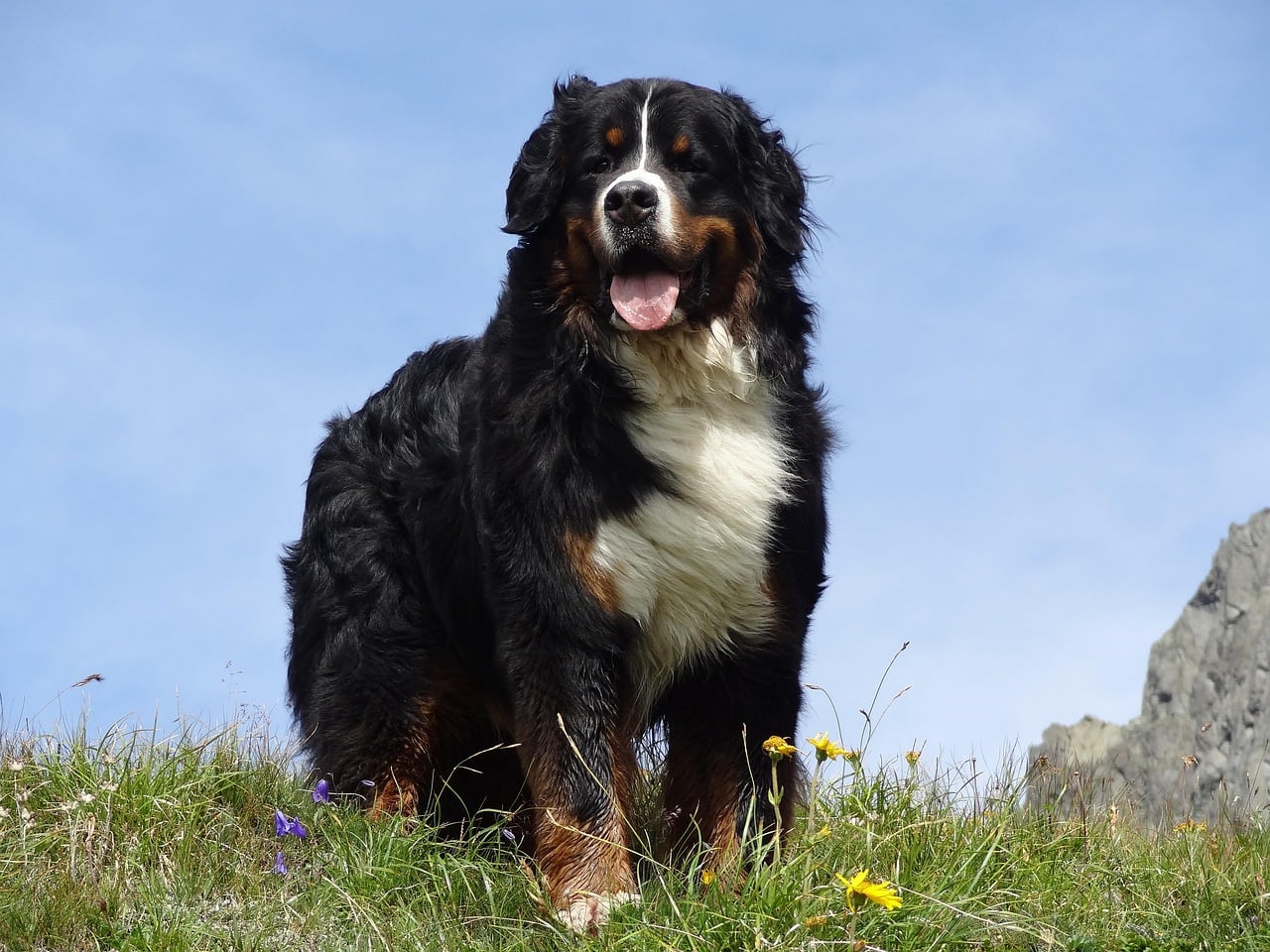
The Bernese Mountain Dog is a large, well-muscled dog with balanced proportions and a calm, dignified expression. It is a large breed - males stand 64–70 cm at the withers and weigh 38–50 kg, while females are slightly smaller, standing 58–66 cm and weighing 36–48 kg.
The body is robust, with a solid bone and a broad chest, which gives it a characteristic impression of strength without being heavy. The head is relatively large, with a pronounced skull and a slightly sloping stop, the eyes are dark, almond-shaped and give the expression a friendly, intelligent touch. The ears are triangular, set high and close to the head.
The coat is long, smooth, with a light undercoat - at first glance it appears thick and shiny, but is not curly or wiry. Due to the longer coat and undercoat, it requires regular care, as the breed is one of those with a high rate of shedding. The tail is richly furred and hangs down at rest, it may be slightly raised when moving or excited, but never curled over the back.
Overall, the Bernese Mountain Dog is an example of a harmonious combination of strength and elegance - the body structure is consistent with its origins as a working dog from the mountainous regions of Switzerland.
Bernese Mountain Dog Colors
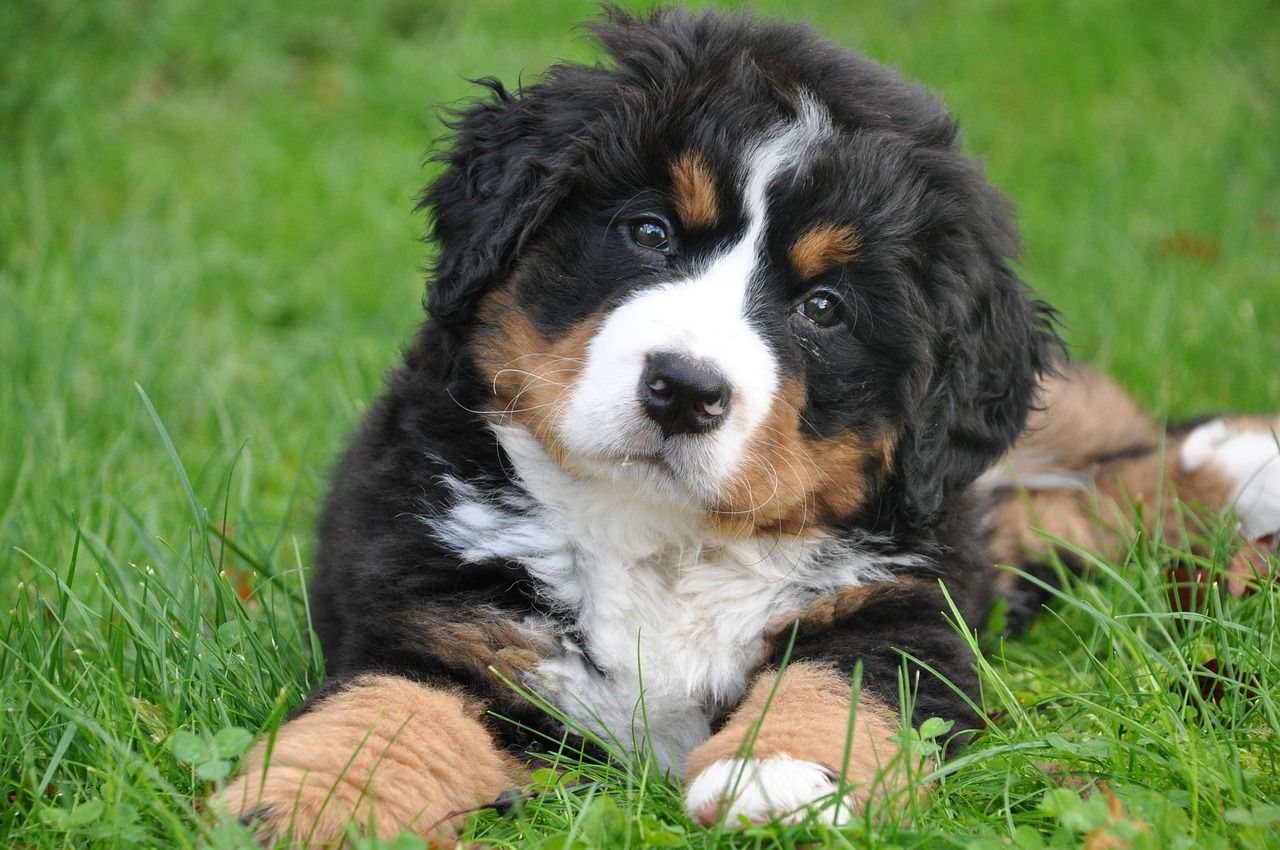
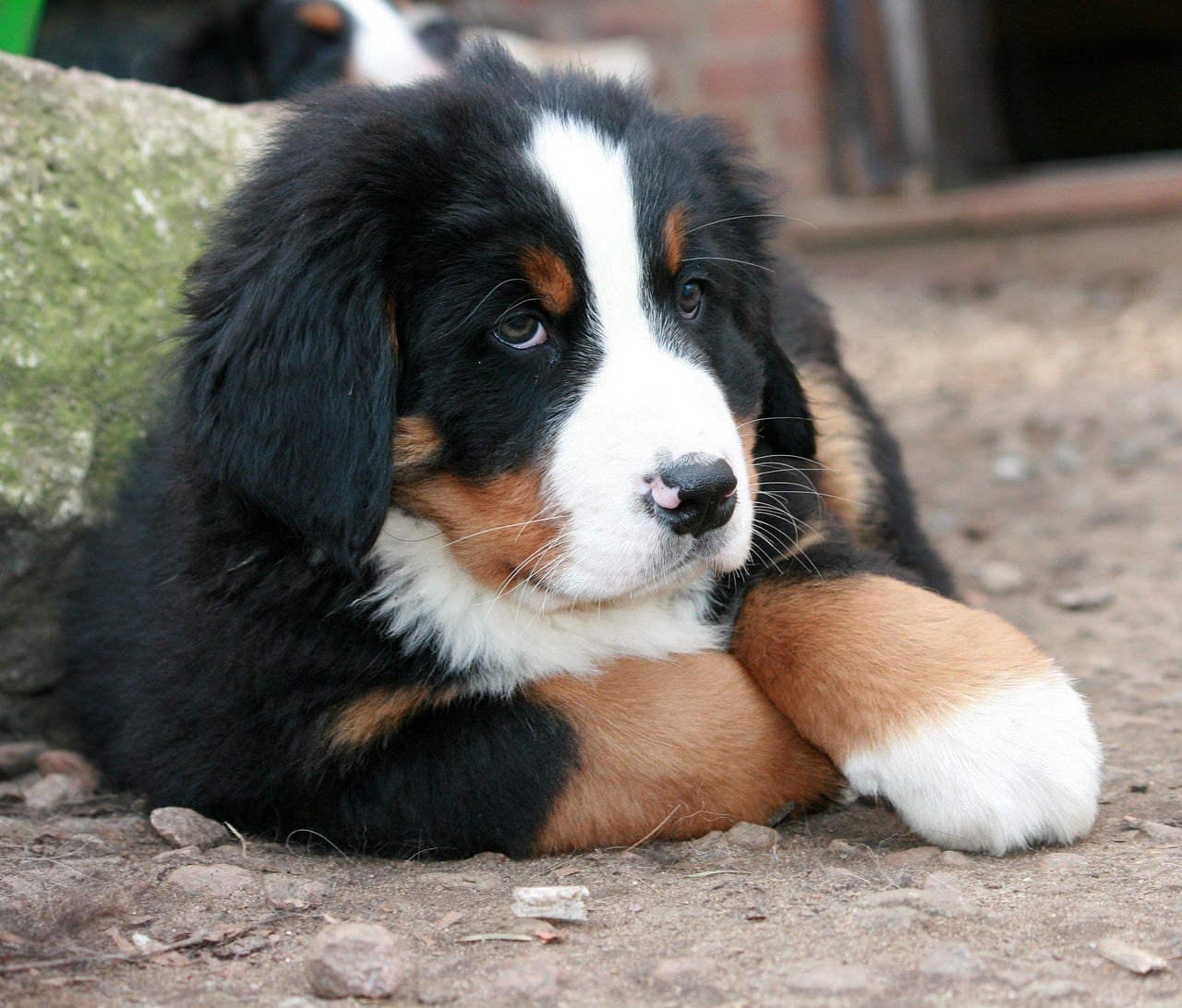
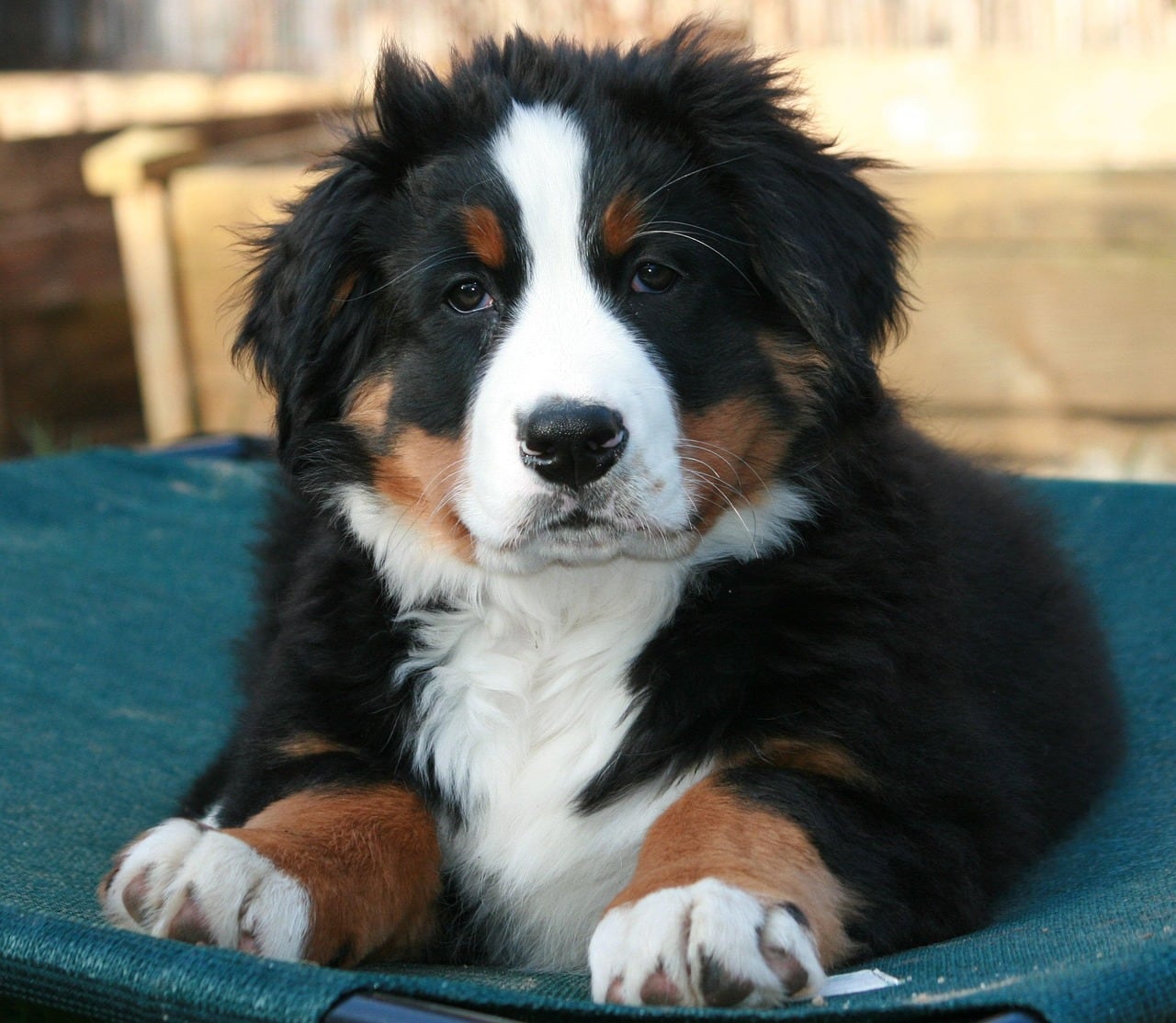
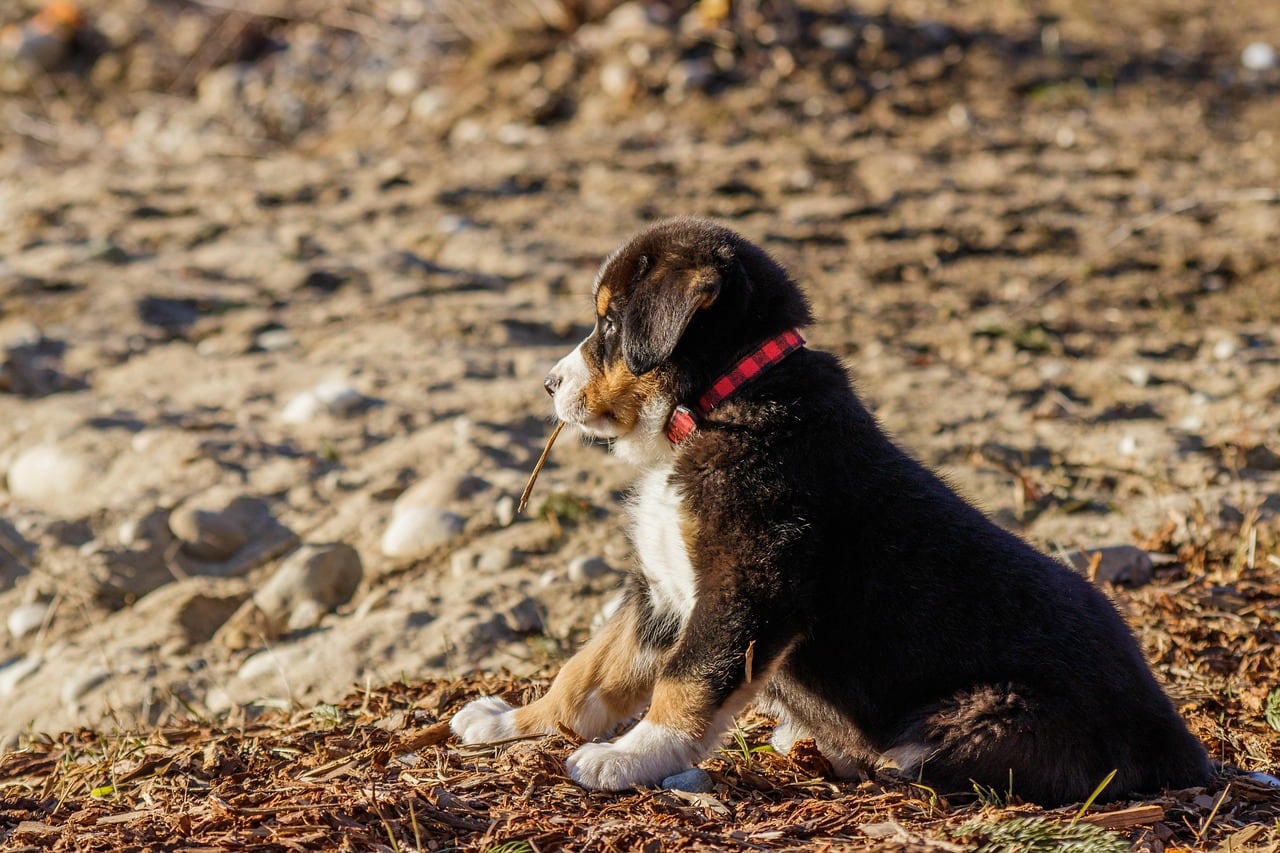
The FCI standard for the Bernese Mountain Dog allows only one color variant - tricolor coloration based on deep black. The basic black color is complemented by rusty brown (tan) markings above the eyes, on the cheeks, on the sides of the chest, on the legs and under the tail and white markings - a prominent white mark on the head, a white collar or spot on the chest, white paws and a white tip of the tail. The distribution and symmetry of these markings are typical features of the breed and are also judged at shows. Puppies offered as "exclusive" blue, chocolate or merle colors sometimes appear on the market. The FCI/ČMKU standard does not recognize such colors for this breed and their targeted breeding is associated with close inbreeding and an increased risk of hereditary defects. Interested parties are therefore advised to choose breeders who adhere to the recognized standard and to approach offers of unusual colors with caution.
Bernese Mountain Dog Personality
The Bernese Mountain Dog is calm, composed, and deeply devoted to its people. It takes its bond with its family seriously - it needs to be a true member of the family and does not tolerate prolonged isolation or being alone. Its need for companionship is one of the highest among large breeds, which is also reflected in its preference for "watching over" household activities up close, rather than from a distance.
The Bernese Mountain Dog is friendly and patient with children, and thanks to its size and calm nature, it can handle more lively contact without unnecessary nervousness. It tends to be more reserved with strangers, but not anxious or aggressive - it tends to "check out" the person first and then open up. It gets along with dogs without much problem and is also friendly with cats, especially if it grows up with them from puppyhood.
It has a rather mild temperament, it is not the type of dog that seeks conflict or barks excessively - it is more manifested by moderate barking and calm, prudent behavior in the household. The training requirement is low for this breed, because it is willing to cooperate and likes to please. However, it will appreciate mental stimulation, although not to the same extent as working breeds.
Bernese Mountain Dog and children
The Bernese Mountain Dog is one of the breeds that gets along very well with children. Its calm and sociable nature makes it a suitable family dog that seeks contact with people and enjoys spending time near the whole family.
Despite its balanced nature, its size and weight must be taken into account - an adult dog can weigh over 40 kg, and therefore it is advisable to teach smaller children how to handle the dog correctly to avoid unintentionally pulling it down or tipping it over during play. Given the slower physical development of large breeds, it is also wise to regulate the puppy's load during play with children to avoid overloading the joints during the growth period.
It is recommended:
- teach children to respect the dog's space, especially when eating or resting,
- Supervise joint play until the dog and child build mutual trust,
- Involve children in coat care in an age-appropriate manner, which strengthens the relationship between dog and child.
Thanks to its high need for companionship, the Bernese Mountain Dog fits well into family life and is usually patient and tolerant of children.
Bernese Mountain Dog and other dogs and pets
The Bernese Mountain Dog usually gets along very well with other dogs. Its calm and balanced nature makes it a suitable companion even in a multi-dog household - it rarely seeks conflict and prefers to resolve situations peacefully rather than confront. Thanks to its high need for companionship, the presence of another dog in the household often suits it and helps it avoid boredom when its owner is away from home.
The Bernese Mountain Dog gets along well with cats and other pets, especially if it grows up with them from a puppy or if the introduction is gradual and calm. Its non-conflict nature and low training requirements make it relatively easy to set rules for coexistence. Given its size and strength, it is still advisable to always insure the first meeting with smaller animals and not leave them unattended until both parties are sure.
The Bernese Mountain Dog's positive relationship with other animals makes it a good choice for households where one dog or other pet already lives, or where the family is expected to expand with another animal in the future.
Is the Bernese Mountain Dog suitable for an apartment?
The Bernese Mountain Dog is a large, heavy dog, standing over 60 cm tall and weighing around 40-50 kg for males. With this body frame, it is not well suited to a small apartment - it needs space where it can stretch out, turn around comfortably and have its own quiet corner away from the main household traffic.
A house with a garden is more suitable for him, where he can move freely and relax outside. Although his activity level is only medium and he is not one of the dogs that requires a demanding exercise program, the space requirements resulting from his body size remain essential.
Another factor is the high rate of shedding and long coat with undercoat - in a smaller apartment this will significantly affect cleaning. The Bernese also has a high need for company, so isolation in one room without contact with the family does not suit him, no matter where you live.
If you are considering an apartment, it should be a more spacious home with access to the outside and plenty of peace and quiet - this dog needs a place to rest without being constantly disturbed by the noise of the house.
How much exercise does it need?
The Bernese Mountain Dog has a medium activity level – it is not a dog that needs hours of intense running, but regular exercise is important for it. Given its size and weight, it is better suited to longer walks at a reasonable pace than short, hard sprints that put strain on its joints.
A combination of walks in nature, where he can sniff and explore his surroundings, with occasional physical exertion appropriate to his body type is ideal. The Bernese Mountain Dog is built to pull and carry loads, so activities such as:
- skijoring or carting (canicross and pulling sports) to a reasonable extent
- longer hikes and walks in the field
- Swimming as a gentle form of exercise for the joints
- basic obedience and search games for mental exercise
Due to the massive body structure, it is advisable to avoid excessive exercise and jumping in young individuals until the skeletal growth is complete. For an adult dog, one to two longer walks a day supplemented with free movement are sufficient to keep it happy and in shape. The training requirements of this breed are low, so it can handle obedience-oriented dog sports without much difficulty.
Training and education
The Bernese Mountain Dog is one of the breeds with low training requirements – it is receptive, willing to cooperate and does not tend to stubbornly assert its will. This makes it a suitable choice even for owners who are just starting to train a large dog.
However, training a Bernese Mountain Dog requires patience, as it is a slower-maturing breed – it takes longer for it to mature physically and temperamentally than smaller dogs. It responds best to a calm, consistent and kind approach based on positive motivation. Harsh methods or unnecessary pressure are counterproductive for this sensitive dog and can lead to insecurity.
Given the high need for companionship, it is advisable to include training in daily contact with the family - the Bernese Mountain Dog likes to learn if he feels that he is doing things together with people, not in isolation. Socialization with the puppy should be gradual and without haste, considering its large size in adulthood.
The medium need for mental stimulation means that regular, not too long training blocks supplemented with walks and joint activities will be sufficient. Due to its nature, the Bernese Mountain Dog is also suitable for families with children, as long as training is consistent from puppyhood.
Hair care and hygiene
The Bernese Mountain Dog's long coat with undercoat requires regular brushing - ideally two to three times a week, or every other day during the shedding season. This will help remove dead hair and prevent matting, especially behind the ears, on the chest and on the hind legs, where the fur is thickest. Given the high rate of shedding, it is advisable to expect hair to be a normal part of life around the home.
Bathing a Bernese Mountain Dog is only necessary when necessary, for example after it gets very dirty - frequent bathing could damage the natural protective layer of the coat. After bathing, the coat needs to be dried thoroughly to prevent the undercoat from getting damp.
It is a good idea to check the ears regularly and wipe them gently if they are dirty, as increased attention to the ear canal helps prevent unpleasant inflammation. The claws are trimmed depending on how quickly they wear out - for less active individuals, usually once every three to four weeks. Dental care should include regular cleaning or at least chewing aids that reduce tartar formation.
Feeding
The Bernese Mountain Dog is a large breed with a medium level of activity, which is reflected in the diet. A quality food should correspond to the large breed and take into account its growth phase - for puppies, a food with a slower weight gain is suitable, which protects the joints and skeleton during growth to a final weight of 36–50 kg.
Due to their body size and weight, it is recommended that this breed be fed two or more small meals per day instead of one large meal. This helps prevent overeating and reduces the risk of digestive problems associated with eating large amounts of food at once. After eating, it is advisable to allow the dog to rest without strenuous exercise.
Because the Bernese Mountain Dog only has a moderate need for exercise, energy intake must be adjusted to the actual load to avoid excessive weight gain - excess weight puts a strain on the joints and musculoskeletal system of a large dog. Regular physical condition checks and adjusting portions according to age, activity and health are among the basics of caring for this breed.
Fresh water should be available to the dog throughout the day, especially in the warmer months when the dog's thick coat with undercoat increases the risk of overheating.
How long does a Bernese Mountain Dog live?
The Bernese Mountain Dog lives an average of 7–10 years , which is a normal range for a large breed, but rather on the shorter end. Lifespan is closely related to body size - larger breeds generally age faster and have a shorter life expectancy than small dogs.
The overall lifespan is influenced by the genetics of the breeding pair, the quality of the breeding, and the health examination of the parents before mating. The breed may have an increased predisposition to blood clotting disorders, such as von Willebrand's disease, so it is advisable to ask the breeder about the puppy's health background.
In addition to genetics, lifestyle also influences the length - appropriate weight, regular exercise without unnecessary stress on the joints during the growth period, quality food and timely veterinary care. Due to the large body structure, it is also important not to overload the Bernese Mountain Dog at a young age, when the skeleton and joints are still developing.
Who is the Bernese Mountain Dog suitable for?
The Bernese Mountain Dog is a large, calm, family-oriented dog that needs a lot of company and space appropriate to its size. Due to its high need for human contact and the demanding care of its long coat, it is more suited to a house with a garden than an apartment.
This breed may be right for you if…
- you live in a house with a garden or have another option for outdoor space
- you are looking for a social dog that prefers to spend time with family rather than alone
- you have children at home – the Bernese Mountain Dog is suitable for them
- Are you willing to comb the fur regularly and expect significant shedding?
- you are a beginner, because training the breed is usually easy
- you have other dogs or cats – Bernese Mountain Dogs usually get along well with them
Consider another breed if…
- you live in an apartment without the possibility of regularly staying outside
- you don't want to deal with hair cleaning because the shedding rate is high
- you spend many hours a day away from home – Bernese Mountain Dogs do not tolerate prolonged solitude well
- you are looking for a dog with a longevity of over 10 years, because the average lifespan of a Bernese Mountain Dog is 7–10 years
- you prefer only moderate activities and don't want a dog that still needs moderate exercise
Interesting facts about the breed
The Bernese Mountain Dog is one of the four Swiss mountain dog breeds recognized by the FCI – the other two being the Greater Swiss Mountain Dog , the Appenzell Mountain Dog and the Entlebuch Mountain Dog . Of the four, it is the only one with long hair, which has given it the Czech name Bernese Mountain Dog, by which it is perhaps even more known than by its official name.
The name Berner Sennenhund refers to the canton of Bern, where the breed originates and where dogs of this type have been used for centuries to work on mountain farms - to guard farms and pull smaller carts.
Another interesting fact is their lower average lifespan compared to other large breeds, usually 7–10 years. According to available studies, Bernese Mountain Dogs may have an increased predisposition to certain cancers and blood clotting disorders, such as von Willebrand's disease, which is a topic that veterinary research has been focusing on for a long time.
Despite its impressive size, the Bernese Mountain Dog is considered a sociable and calm breed that gets along well with children and other dogs in the household.
Bernese Mountain Dog Health
The average lifespan of a Bernese Mountain Dog is between 7-10 years, which is a relatively short time for a large breed, and health should therefore be one of the main priorities of every breeder and owner. Given the body constitution and weight, which in dogs reaches up to 50 kg, it is advisable to pay attention to adequate exercise, especially during the puppy's growth period, when the skeletal and joint apparatus is forming.
Regular veterinary check-ups are essential for this breed – they allow you to detect any problems early and adjust your lifestyle, exercise regimen and diet accordingly. It is also advisable to monitor your body weight, as being overweight unnecessarily puts a strain on your joints and shortens your overall quality of life. Before buying a puppy, it is worth taking a look at the health of the parents and any results of genetic or orthopedic examinations that the breeder can provide.
Quality nutrition appropriate to age and activity, adequate exercise without overexertion, and timely response to any changes in the dog's behavior or movement are the simplest steps to support the longevity and well-being of a Bernese Mountain Dog throughout its life.
Known predispositions
The breed is described to have an increased predisposition to:
- to histiocytic sarcoma, an aggressive tumor disease that is described in Bernese Mountain Dogs with a significantly higher frequency of occurrence (approximately 25%) than in other breeds.
Discussed risks
The breed is described to have an increased predisposition to:
- to cancer in general, which the Swiss study of causes of death links to the lower average life expectancy of the population.
- to hip dysplasia and elbow dysplasia, with genetic analyses in this breed demonstrating a hereditary component of both diseases.
- to von Willebrand disease type I, a blood clotting disorder, of which the Bernese Mountain Dog is one of the affected breeds.
- to Borrelia burgdorferi infection, where the study found a significantly higher seroprevalence of antibodies in Bernese Mountain Dogs compared to a control group of other large breeds.
This overview is for informational purposes only and does not replace the examination or advice of a veterinarian.
What to buy for a Bernese Mountain Dog
A practical basis that is suitable for this breed:
- Toys – Dog toys – fetching, chewing and interactive.
- Cosmetics – Shampoos, conditioners and hair care products.
- Bowls – Feed and water bowls, anti-swallow bowls and stands.
- Collars – Dog collars – leather, textile and semi-tight.
- Beds – Beds and mattresses for dogs of all sizes.
- Leashes – Leashes, switch leashes and tracking lines.
Useful instructions
Practical tips that are useful when caring for a dog:
Frequently asked questions
Is the Bernese Mountain Dog suitable for an apartment?
Probably not – it is a large breed with a high rate of shedding and a need for exercise, which is better suited to housing with access to a garden. In addition, the Bernese Mountain Dog needs enough space for rest and exercise.
How long does a Bernese Mountain Dog live?
The average lifespan of a Bernese Mountain Dog is 7–10 years, which is a fairly common range for large breeds.
Is the Bernese Mountain Dog suitable for children?
Yes, the Bernese Mountain Dog is considered a suitable breed for children, it is a sociable and calm dog with a high need for contact with people.
Can a beginner handle a Bernese Mountain Dog?
Rather yes - the breed has low training requirements, so it is suitable even for owners without previous experience with large dogs.
How much does a Bernese Mountain Dog weigh?
Males usually weigh 38–50 kg, while females tend to be slightly lighter, weighing 36–48 kg.
Does the Bernese Mountain Dog shed a lot?
Yes, the shedding rate is high for this breed due to its long coat with undercoat, so regular brushing is a must.
How much exercise does a Bernese Mountain Dog need?
The breed's activity level is medium - the Bernese Mountain Dog will appreciate regular walks and exercise, but it is not an extremely athletic dog requiring hours of intense exercise daily.
Does the Bernese Mountain Dog get along with other animals?
Yes, he gets along well with other dogs and even better with cats, making him suitable for households with multiple animals.
Is caring for a Bernese Mountain Dog's coat difficult?
Coat care is rated as moderately demanding - the long coat requires regular brushing to prevent tangles and excessive cleaning of hair around the house.
Resources and further information
- FCI Standard No. 45 - Bernese Mountain Dog - Fédération Cynologique Internationale
- Source on predisposition - pubmed.ncbi.nlm.nih.gov
- Resource on predisposition - pmc.ncbi.nlm.nih.gov
- Predisposition resource - vet.cornell.edu
Professional cooperation
This breed overview was created in cooperation with the Veterinary Clinic VYVET sro and MVDr. Adam Hylák .