
Published 30. 8. 2026
The Golden Retriever is a large breed from Great Britain, classified in FCI Group 8 among retrievers (Retrievers section, standard no. 111). Males measure 56–61 cm at the withers and weigh 30–34 kg, females are slightly smaller – 51–56 cm and 25–32 kg. Its long, straight to wavy coat with golden feathers on the legs, tail and chest is unmistakable, but it requires regular care and the breed sheds a lot.
In terms of temperament, it is a friendly, calm and extremely adaptable dog - its low training requirements and low barking make it a good choice even for beginners. The Golden Retriever needs a lot of exercise and mental stimulation and does not tolerate loneliness very well, so an apartment is not its natural environment. It gets along well with children, other dogs and cats, which makes it suitable for families and active individuals who can offer it enough company and exercise.
Professionally consulted
The content was created in cooperation with the veterinary clinic Veterinární klinika VYVET sro and MVDr. Adam Hylák.
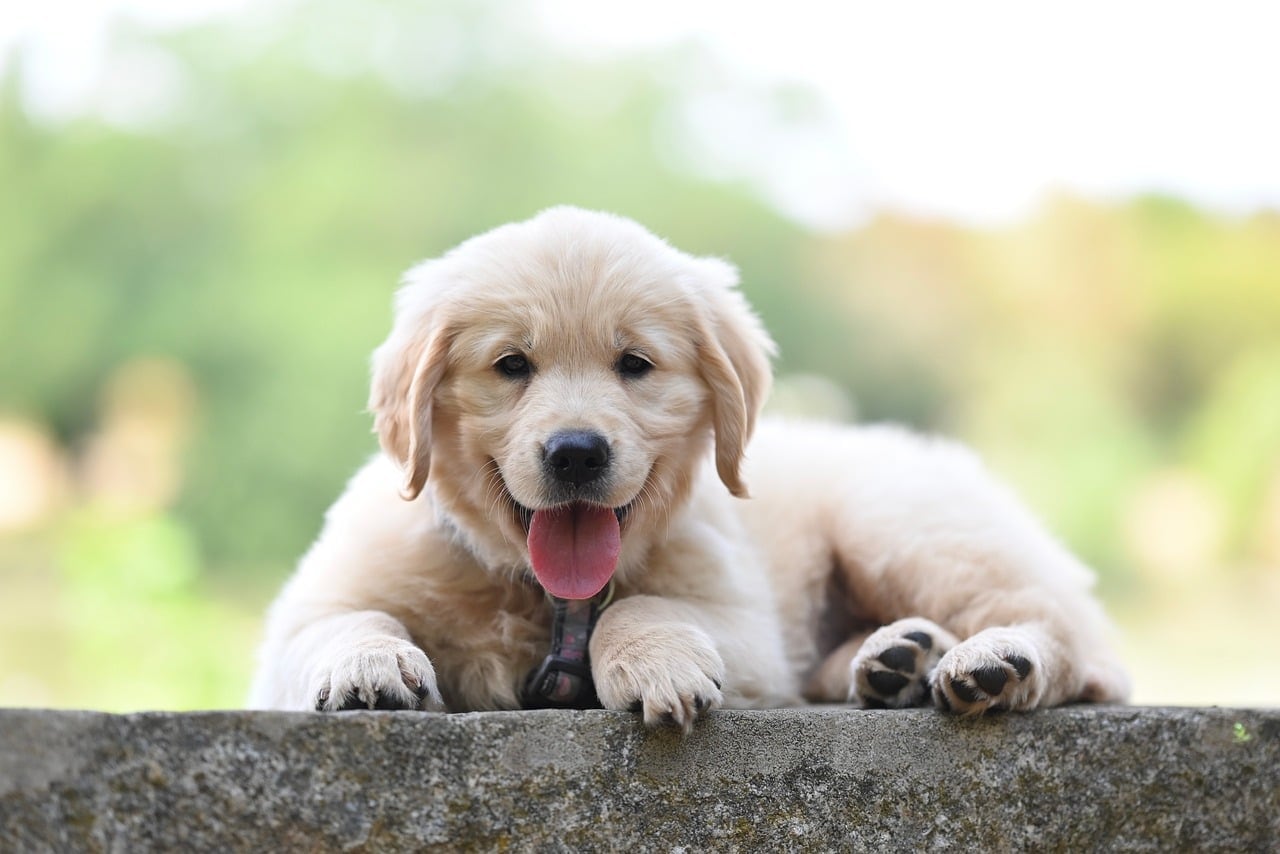
Quick overview
What is a Golden Retriever like?
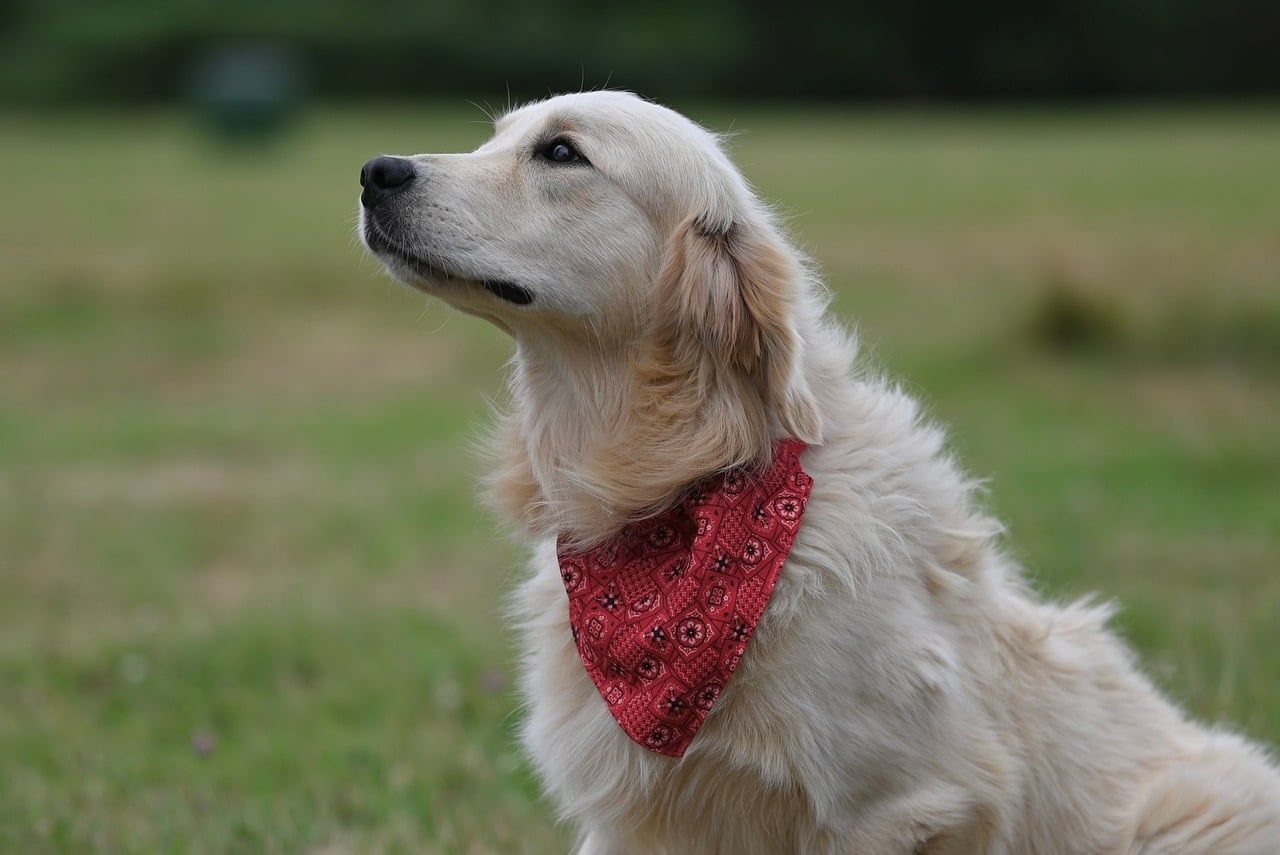
The Golden Retriever originates from Great Britain and belongs to FCI Group 8 among retrievers, where it carries standard No. 111. It is a large breed - males measure 56–61 cm at the withers and weigh 30–34 kg, females are slightly smaller, 51–56 cm and 25–32 kg. The most striking feature is the long coat with feathers on the ears, chest and limbs, straight to slightly wavy, in golden shades, from which the breed got its name.
The Golden Retriever is a calm, friendly and low-barking dog, originally bred as a hunting and delivery dog. Its temperament corresponds to this - it is highly active, needs plenty of exercise and mental stimulation, but at the same time it is non-conflicting and easily adapts to family life. The training requirements are low, as it is a breed very willing to cooperate and learn.
It is a very sociable dog with a high need for contact with people, which makes it a suitable companion for families with children and for novice owners. It is less suitable for an apartment due to its size and the amount of fur that sheds significantly. It usually gets along well with dogs and cats, which makes it a versatile family dog with hunting roots.
Origin and history
The Golden Retriever comes from Great Britain and belongs to FCI Group 8, Retriever Section, where it is classified under standard No. 111. The very fact that it is classified as a retriever suggests what this dog was originally intended for – to track down and bring back game, especially when hunting waterfowl. Its thick, water-repellent coat and love of water made it a reliable helper even in colder and wetter terrain.
The Golden is a typical example of a breed that has retained its hunting instincts to this day – even dogs living purely as family companions often show a strong need to carry something in their mouth and retrieve. Over time, it has evolved from a working dog to one of the most popular companion breeds in the world, thanks to a combination of its calm nature, willingness to cooperate with humans, and easy training.
Appearance and size
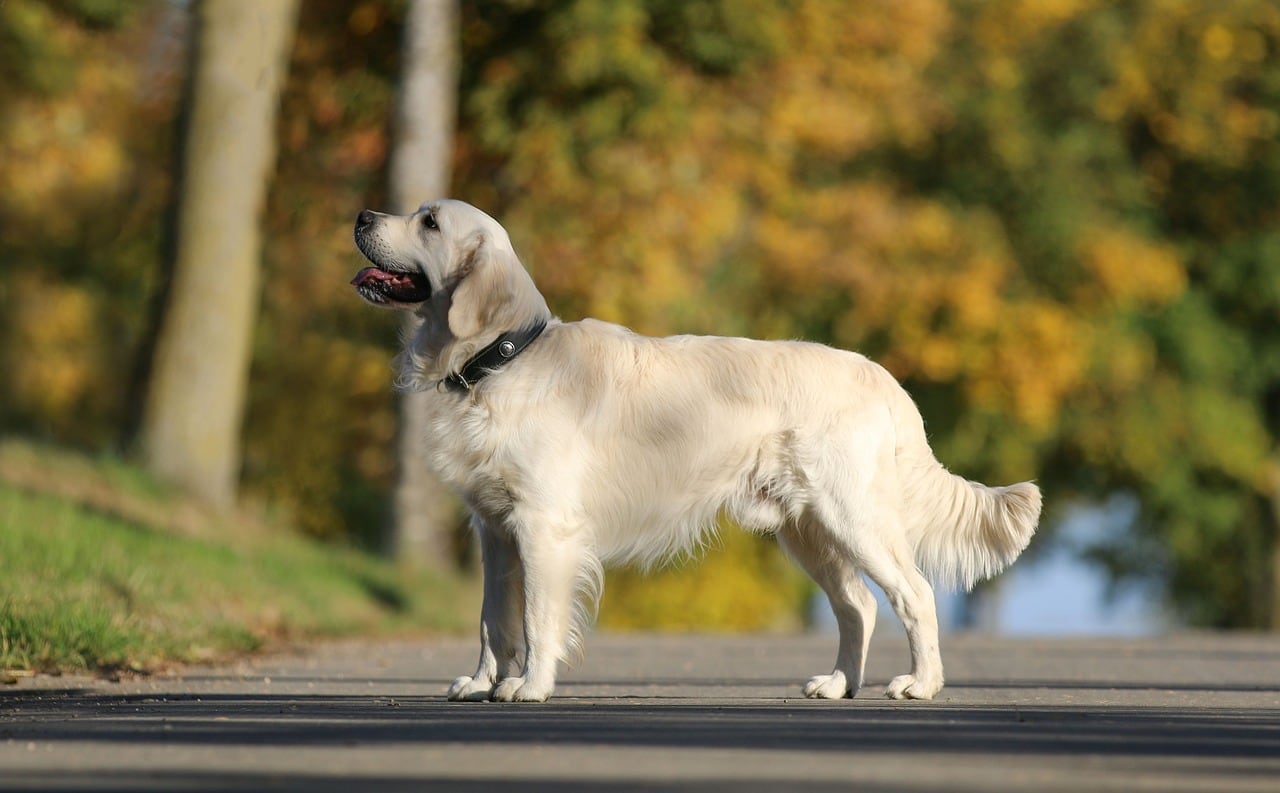
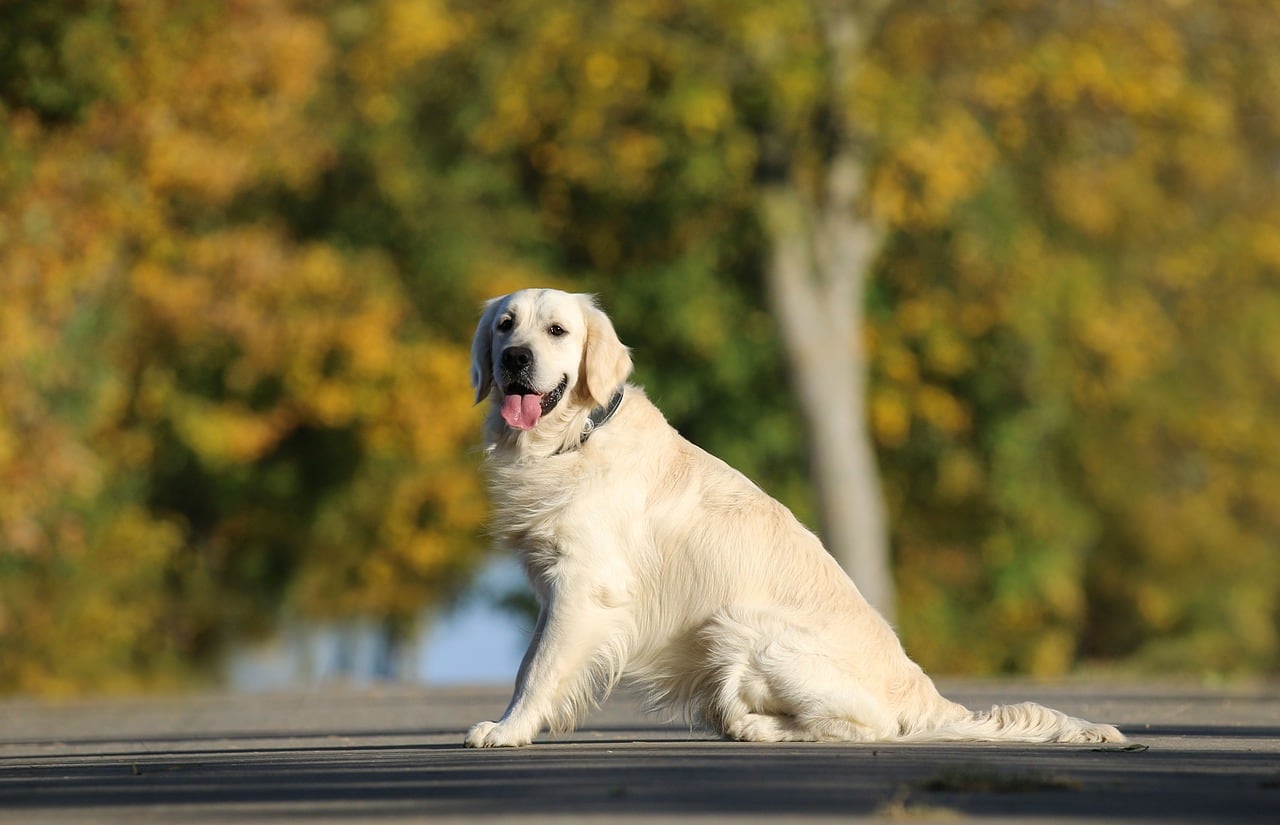
The Golden Retriever is a large, harmoniously built breed with a strong skeleton and well-developed muscles, which nevertheless looks elegant and never heavy. The male dog measures 56–61 cm at the withers and weighs 30–34 kg, the female is slightly smaller – 51–56 cm and 25–32 kg. The body is slightly rectangular, the chest is deep and spacious, the back is straight and strong, which gives it the necessary endurance when moving in the field.
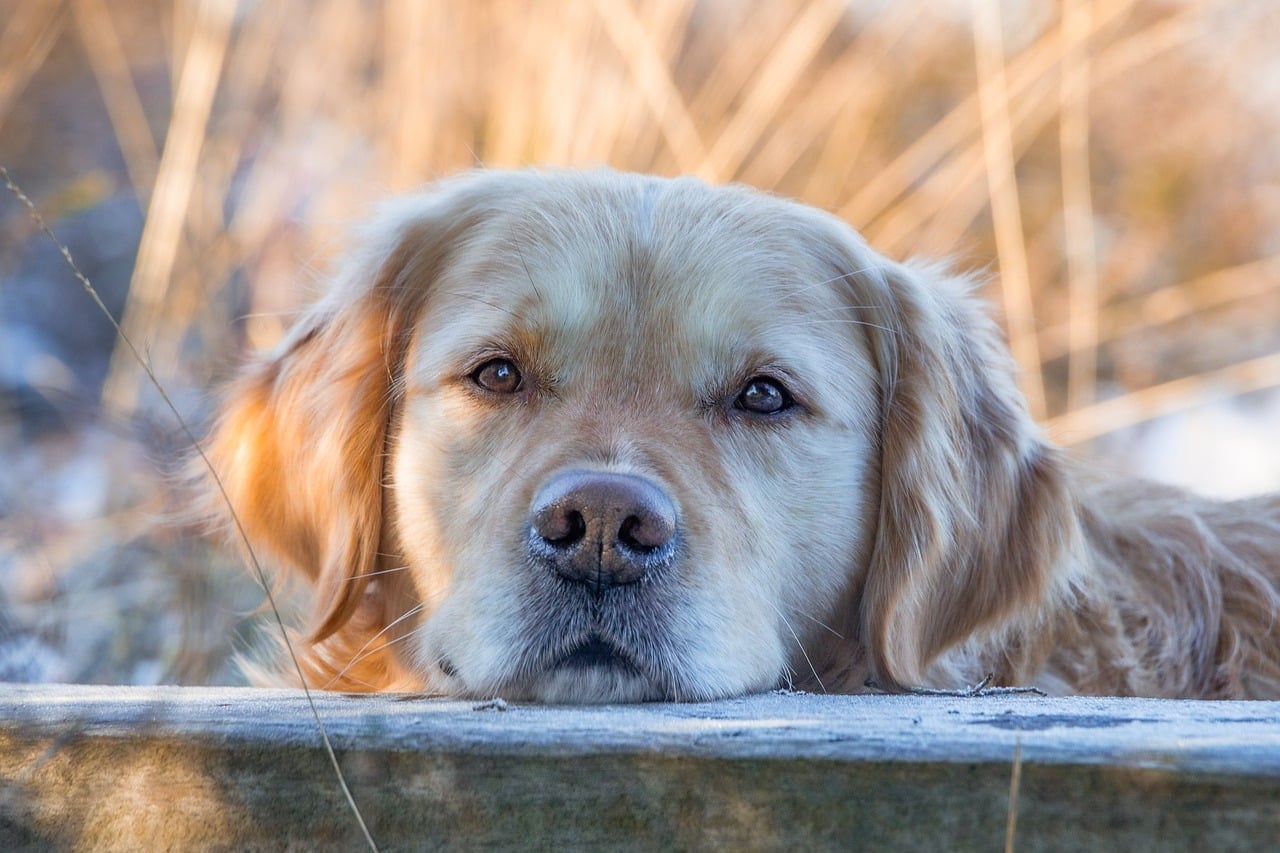
The head is symmetrical, with a prominent but not coarse stop and a kind, intelligent expression in the eyes. The ears are medium in size and close-set, the tail carried at the level of the back or just slightly above it, never curled.
A typical feature is a long coat with abundant feathers on the neck, chest, legs and tail, which is either straight or slightly wavy. The undercoat is dense and water-repellent, which predisposes the breed to work in water and in colder weather. Due to the length and texture of the coat, the Golden Retriever is easily recognizable at first glance, although the color and shade of the coat may vary from individual to individual.
Golden Retriever Colors
The FCI standard for the Golden Retriever was not provided in detail in the supporting documents for this article, so it is not possible to list the specific shades and markings it permits without risk of inaccuracy.
In general, if a breeder offers a Golden Retriever in a color that is significantly different from the typical golden color (e.g. chocolate, blue or merle pattern), this is a color outside the breed standard. Such individuals are often the result of crossing with other breeds or targeted selection of rare genetic variants, which may be associated with an increased risk of health complications and also calls into question the purity of the individual. When choosing a puppy, it is therefore wise to verify the origin and documentation of the standard color with the breeder using a pedigree and membership in a recognized breeding organization.
Golden Retriever temperament
The Golden Retriever is a dog with a balanced and friendly nature, which does not tolerate conflicts and approaches its surroundings with trust. Its high need for companionship makes it a companion who wants to spend time with the family - it does not like being left alone for long periods of time. This is why it is better suited to a household where someone has the space to devote time to it every day.
He is suitable for children and can handle a more active household, gets along well with dogs and cats, if they get used to each other. Low barking is one of his typical features - he does not use his voice unnecessarily, but rather shows joy by wagging his tail and overall enthusiasm when meeting.
The temperament is lively, but at the same time it can be easily controlled, as it willingly submits and likes to cooperate. The high need for mental stimulation means that movement alone is not enough for it - it also needs tasks that keep its mind busy, otherwise boredom will manifest itself in restlessness or destructive behavior. As a hunting dog, it has a hard-wired desire to retrieve and carry objects in its mouth, which is also manifested in everyday life outside of hunting.
Golden Retriever and children
The Golden Retriever is one of the breeds that is very good with children. Its nature is balanced and friendly, it barks very little and is not aggressive towards people. Thanks to its low training requirements, it can also be relatively easily taught the basic rules of behavior in a household with children.
However, it should be remembered that this is a large and strong breed - an adult dog weighs over 30 kg and is lively and impulsive in its youth. A small child can easily be knocked to the ground by an unintentional push or jump, even if the dog has no bad intentions. It is therefore advisable to always mediate the meeting of a dog with small children and not leave them unattended, especially until the dog has undergone basic training and has acquired the necessary self-control.
Due to their high need for companionship and mental stimulation, the Golden Retriever will appreciate a family that will actively engage with them - playing together, walking, and simple training are natural parts of their daily routine. For families with children looking for a sociable and adaptable dog, the Golden Retriever is a proven choice.
Golden Retriever and other dogs and pets
The Golden Retriever is a breed with a very friendly and non-conflicting nature, which is also evident in contact with other dogs. It usually gets along well with its own kind - whether it is meeting on a walk or living in the same household with another dog. Its low barking and calm nature reduce the risk of friction, which in other breeds arises from territoriality or dominance.
Goldens usually have a similar friendly attitude towards cats, especially if they grow up together from puppyhood or if the introduction is gradual and deliberate. Although their hunting origins mean they have a natural interest in the movement of smaller animals, in practice this breed usually has a gentle nature that outweighs the hunting instinct, so living with a cat is not usually a problem.
Due to their high need for companionship, the Golden Retriever generally welcomes the presence of other animals in the household – they do not like being alone, whether human or canine. This breed is therefore a good choice even for households where another dog or cat already lives.
Is the Golden Retriever suitable for an apartment?
The Golden Retriever is a large dog with a high level of activity and a high need for mental stimulation, which makes it a rather unsuitable candidate for purely apartment living. It needs space to move around and plenty of opportunities to exercise daily - not only walks, but also retrieving, searching or other activities that keep its mind and body busy.
If the owner lives in an apartment, he should expect to have to compensate for the lack of space with longer and more intense outdoor activities several times a day. In addition, the Golden Retriever has a high need for company - it does not tolerate long-term loneliness and can be restless in a small apartment without sufficient exercise.
Another factor is the high rate of shedding and demanding coat care. In apartment conditions, this means more frequent cleaning of the hair, especially during seasonal shedding periods, when the coat falls out significantly more.
The ideal environment for this breed is a family house with a garden, where the dog has the opportunity to move freely and where its presence is not limited by a confined space. An apartment is not completely excluded, but it places high demands on the owner's activity and regular, sufficiently long outdoor exercise.
How much exercise does it need?
The Golden Retriever has a high activity level and needs at least an hour or two of exercise per day, ideally divided into several shorter walks supplemented with free movement off-leash. As a hunting dog bred for long work in the field and in the water, he will appreciate a combination of endurance walking or trotting with more intense activities such as retrieving or swimming.
In addition to physical exercise, the Golden Retriever also needs sufficient mental stimulation - a bored dog without a release of energy can become restless or destructive. Therefore, sniffing games, finding objects or obedience training are suitable, which, thanks to the low training requirements, he quickly masters and likes to cooperate.
Thanks to its nature and physical abilities, the Golden Retriever is also suitable for organized dog sports - it excels in dog trekking, obedience, canicross or in fetching trials, where it puts its natural hunting instinct to good use. Swimming is also popular, which is gentler on the joints than running and is also a great way to burn off energy. However, owners should keep in mind that this is a dog for active families - a Golden Retriever will not excel in an apartment without regular exercise outdoors.
Training and education
The Golden Retriever is one of the breeds with low training requirements - it is a dog that learns quickly and willingly, because cooperation with humans is naturally motivating for it. The combination of high intelligence and a strong need for company makes it a grateful partner for obedience and more demanding canine disciplines.
Positive motivation works best – praise, play and treats. Harsh methods are not necessary and can do more harm than good to the Golden Retriever's sensitive nature. Thanks to its hunting origins, it responds well to fetch and nose work, which can also be used in regular training as a reward for a completed task.
Because this is a breed with a high need for mental stimulation, the commands "sit" and "down" alone are not enough for him over time. It is advisable to include obedience exercises, search games or retrieval training so that the dog does not resort to undesirable behavior out of boredom.
Training should start from puppyhood and be consistent – the Golden Retriever likes to listen, but without clear boundaries, it can remain impulsive even in adulthood, especially when it comes to jumping on people for joy or pulling on the leash. Due to the low training requirements, it is also suitable for beginner owners.
Hair care and hygiene
The long coat with dense feathers on the chest, tail and legs requires regular care - brushing 2-3 times a week is the minimum for a Golden Retriever, and during the shedding season, which is significant, daily brushing is also suitable. Without regular brushing of the undercoat, the coat will become matted, especially behind the ears, in the armpits and on the back of the thighs.
Bathing is only necessary when the dog is visibly dirty or smells bad - the Golden Retriever likes to get into water and mud, so bathing may be necessary more often than is usual for other breeds. After bathing and after being outside in the damp, it is advisable to dry the coat thoroughly, as the damp undercoat at the base of the tail and on the chest can irritate the skin.
Drop ears have limited ventilation, so it is a good idea to check and clean them regularly - especially if the dog goes into the water, where moisture can easily get into the ear canal. The claws are trimmed according to wear, usually once every 3-4 weeks, more often for less active dogs. It is advisable to brush the teeth several times a week or at least check the condition of the tartar, because dental care is part of normal hygiene for all large breeds.
Feeding
The Golden Retriever is a large breed with a high level of activity, which is reflected in the feeding requirements. The daily ration of food should correspond to the energy expenditure of a particular individual - an active working or sports-intensive dog needs more calories than one that spends most of the day resting. Since this is a breed prone to overweight, it is advisable to regularly monitor the body condition and continuously adjust the amount of food, rather than strictly adhering to the table values on the package.
Slower and controlled growth is important for puppies, as rapid weight gain can put a strain on the developing joints and skeleton of a large breed. The food ration should therefore be divided into several smaller portions per day, for adult dogs two feedings are usually sufficient instead of one large one, which can reduce the risk of digestive problems.
Due to the high need for mental stimulation, feeding can also be used as a form of activity – for example, using toys that dispense kibble or olfactory games, which will slow down food intake and at the same time keep the dog entertained. Fresh water should be available throughout the day, especially after physical exertion.
How long does a Golden Retriever live?
The average lifespan of a Golden Retriever is 10 to 12 years, which is in line with the life expectancy of large breeds of its size. The specific lifespan varies from dog to dog and is influenced by a number of factors – genetics, quality of diet, body weight, level of exercise and regularity of veterinary care.
The breed may be predisposed to certain health problems, such as thyroid disease or cancer, which can affect the overall length and quality of life. Therefore, regular veterinary monitoring is recommended, especially in older age, when the risk of these problems increases.
How a dog is physically maintained also affects longevity – the Golden Retriever is an active breed with a high need for exercise and mental stimulation, and maintaining an appropriate weight is one of the basic requirements for longevity. Excess weight puts a strain on joints and internal organs and can shorten the active part of a dog's life.
Responsible breeding with an emphasis on health screening of the parents before mating is another factor that contributes to a Golden Retriever puppy reaching the upper limit of the stated range in good condition as an adult.
Who is the Golden Retriever suitable for?
The Golden Retriever is best suited to families and individuals who can offer him an active schedule and enough time spent together. It is a breed suitable for beginners due to its low training requirements, but at the same time has a high need for mental stimulation and companionship, which means that a solitary or passive lifestyle does not suit him.
This breed may be right for you if…
- Do you have a house with a garden or at least enough space outside the apartment?
- you lead an active life and like to spend time outdoors – walking, running, swimming or fetching
- Are you looking for a dog that is suitable for children and gets along well with other dogs?
- you will appreciate a breed with low training requirements, suitable even for the first dog experience
- Are you willing to regularly dedicate time to caring for a long coat with a high shedding rate?
- you want a dog that is sociable and doesn't like to be left alone for long periods of time
Consider another breed if…
- you live in a smaller apartment without the possibility of regular walks and exercise
- you don't have time for intensive hair care or you are bothered by increased shedding
- Are you looking for a dog that can handle being alone for long hours?
- you prefer a breed with lower demands on daily mental stress and activity
Interesting facts about the breed
The Golden Retriever is registered under the FCI standard No. 111 in the Retrievers section (group 8) and its country of origin is Great Britain. Although it is a hunting dog, its use today is mainly directed towards a social role - the combination of high activity and low training requirements is rather an exception among large breeds, which makes it a sought-after companion even for owners with no previous experience with dogs.
The contrast in its behavior is also interesting: the Golden Retriever barks little and drools little, but it is still one of the breeds with a significantly higher need for human company and mental stimulation - so physical exercise alone is not enough for it, but it also needs "work for its mind". Its long coat with characteristic feathers on its legs, tail and chest is attractive to look at, but at the same time it is one of the breeds with a high rate of shedding and demanding care.
The Golden Retriever is one of the breeds that gets along well with both dogs and (more likely) cats, which, together with its relationship with children, explains why it is so often a recommended breed for families.
Golden Retriever Health
The Golden Retriever can live for 10-12 years if well cared for, which is about average for large breeds. Like most purebred dogs, they can have certain health conditions due to genetics, so it makes sense to choose a puppy from a breeder who tests their offspring and is interested in the health history of the parents.
Regular preventive check-ups with a veterinarian are important for this breed – ideally once a year for an adult dog, more often for older individuals. Thanks to them, many problems can be caught early, before they become more noticeable on the outside. Care should also include attention to the joints and musculoskeletal system, as this is a robust dog with a high level of activity, in which long-term overexertion can affect its overall condition.
Due to the thick and long coat, it is advisable to check the condition of the skin and ears during examinations, where moisture and dirt can accumulate more easily due to hanging earlobes. Reasonable prevention consists of a combination of a balanced diet, adequate exercise appropriate to the dog's age, and regular communication with the veterinarian about appropriate preventive examinations at individual life stages.
Known predispositions
The breed is described to have an increased predisposition to:
- to hip dysplasia.
- to congenital subvalvular aortic stenosis, a heart defect with a proven hereditary component in this breed.
- to progressive retinal atrophy, with specific causal mutations in the SLC4A3 and PRCD genes being described in golden retrievers.
- to pigmentary uveitis (so-called golden retriever pigmentary uveitis), an eye disease described almost exclusively in this breed.
- to a hereditary form of ichthyosis caused by a mutation in the PNPLA1 gene.
- to lymphoma.
Discussed risks
The breed is described to have an increased predisposition to:
- to elbow dysplasia.
- to cancer, including hemangiosarcoma.
- to the development of mast cell tumors (mastocytomas) of the skin.
- to hypothyroidism.
This overview is for informational purposes only and does not replace the examination or recommendations of a veterinarian.
What to buy for a Golden Retriever
Practical basis that is suitable for this breed:
- Toys – Dog toys – fetching, chewing and interactive.
- Cosmetics – Shampoos, conditioners and hair care products.
- Bowls – Feed and water bowls, anti-swallow bowls and stands.
- Collars – Dog collars – leather, textile and semi-tight.
- Beds – Beds and mattresses for dogs of all sizes.
- Leashes – Leashes, switch leashes and tracking lines.
Useful instructions
Practical tips that are useful when caring for a dog:
Frequently asked questions
Is a Golden Retriever suitable for an apartment?
Probably not – this is a large breed with a high need for exercise and mental stimulation, so it will do better in a house with a garden. It can only function in an apartment with an owner who provides it with enough daily walks and activities.
How long does a golden retriever live?
The average lifespan of a Golden Retriever is 10–12 years.
Is the Golden Retriever good with children?
Yes, it is a breed that is suitable for children and is a popular family dog due to its nature and low barking rate.
Can even a beginner handle a Golden Retriever?
Yes, the Golden is suitable for beginners as it is easy to train and generally adaptable. However, it does require regular grooming and plenty of exercise.
How much does a golden retriever weigh?
Males weigh 30–34 kg, females are slightly lighter, 25–32 kg. The height at the withers ranges between 56–61 cm for males and 51–56 cm for females.
Does the Golden Retriever shed a lot?
Yes, the shedding rate is high for this breed and coat care is demanding – the long, feathery coat requires regular brushing.
How difficult is training a Golden Retriever?
The training requirement is low, the Golden Retriever is one of the easily trained breeds. However, it needs high mental stimulation to avoid boredom.
Does a Golden Retriever get along with other dogs and cats?
He gets along well with dogs and gets along well with cats, so he is also suitable for households with other animals.
Are there any health risks with the Golden Retriever?
The breed may be predisposed to skeletal and ophthalmological diseases, or thyroid disorders. Always consult a veterinarian for specific health conditions.
Does a Golden Retriever need a lot of exercise?
Yes, it is a breed with a high level of activity that appreciates regular exercise and is suitable for active owners who can provide it with enough exercise.
Resources and further information
- FCI Standard No. 111 – Golden Retriever – Fédération Cynologique Internationale
- Source for predisposition - dvm360.com
- Source on predisposition - pubmed.ncbi.nlm.nih.gov
- Resource on predisposition - pmc.ncbi.nlm.nih.gov
- Resource on predisposition - ncbi.nlm.nih.gov
- Source for predisposition - link.springer.com
- Source for predisposition - onlinelibrary.wiley.com
Professional cooperation
This breed overview was created in cooperation with the Veterinary Clinic VYVET sro and MVDr. Adam Hylák .