
Published 30. 8. 2026
The Labrador Retriever is a large breed originating from Great Britain, classified in FCI Group 8 among retrievers (Retrievers section, FCI No. 122). Males measure 56–57 cm at the withers and weigh 29–36 kg, females are slightly smaller – 54–56 cm and 25–32 kg. The typical coat is short, dense and water-repellent, but sheds intensively throughout the year. It usually lives for 10–13 years.
By nature, it is a friendly, sociable and very active dog, with a high need for mental stimulation and exercise. It is easy to train thanks to its low training requirements and willingness to cooperate, which makes it a suitable choice even for beginners. The Labrador Retriever gets along well with children, other dogs and cats, and is therefore popular as a family dog. It is less suitable for an apartment - it needs space and plenty of exercise, ideally with active owners who will provide it with activities corresponding to its hunting roots.
Professionally consulted
The content was created in cooperation with the veterinary clinic Veterinární klinika VYVET sro and MVDr. Adam Hylák.



Quick overview
What is a Labrador Retriever like?
The Labrador Retriever, also known as the Lab, is a large breed originating from Great Britain, classified in FCI Group 8 (Retrievers). Males measure 56–57 cm at the withers and weigh 29–36 kg, while females are slightly smaller – 54–56 cm and 25–32 kg. They live an average of 10 to 13 years.
It is a hunting dog with a balanced, friendly temperament. Its activity level is high, as is its need for mental stimulation - it suffers from boredom and can be destructive if left unoccupied. At the same time, it is one of the dogs with low training requirements, which, together with its calm nature, makes it a suitable choice even for beginners.
The Labrador Retriever is strongly attached to human society and does not tolerate long-term loneliness. It is suitable for children, gets along well with dogs and gets along well with cats. Due to its nature, it is sought after as a companion and working dog. It is less suitable for an apartment - it needs enough exercise and space to use up its natural energy.
Origin and history
The Labrador Retriever originates from Great Britain and belongs to FCI Group 8, Retriever Section. Its inclusion in this group corresponds to its original purpose – it is a hunting dog, whose task was to track down and bring back game.
This is also reflected in the physical structure that the Labrador still has today: its thick, water-repellent coat protected it when working in water and thickets, and its strong body structure ensured its endurance during long hunting expeditions. These characteristics are not accidental, but reflect the function for which the breed was bred - bringing in game after shooting, including working in an aquatic environment.
Today, the Labrador Retriever is considered a companion dog, with its hunting roots reflected in its high need for exercise, mental stimulation, and desire to carry or retrieve. Related breeds such as the Golden Retriever and the Chesapeake Bay Retriever have also undergone a similar evolution from working hunting dog to companion breed.
Appearance and size
The Labrador Retriever is a sturdy dog with a solid skeleton and a strong, muscular body, which gives it a characteristic robustness without being heavy. The male dog grows to a height of 56–57 cm, the female dog is slightly smaller, 54–56 cm. The male dog weighs between 29–36 kg, the female dog weighs 25–32 kg – this makes it a large breed.
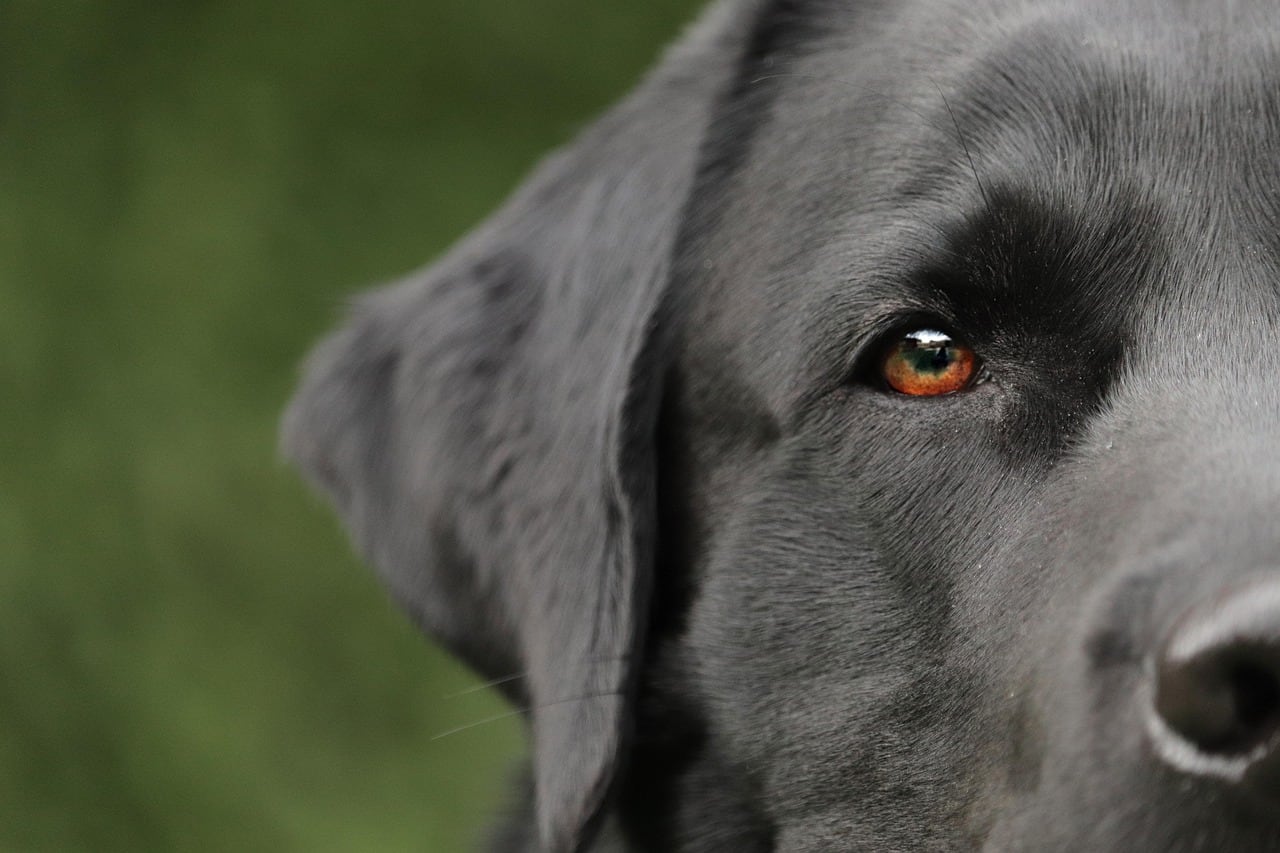
The body is compact, the chest is deep and the ribs are arched, which, together with the strong tail ("otter tail"), helps it when swimming. The head is broad, with a prominent skull and a medium-long snout, the eyes are kind and intelligent, and the ears hang close to the head.
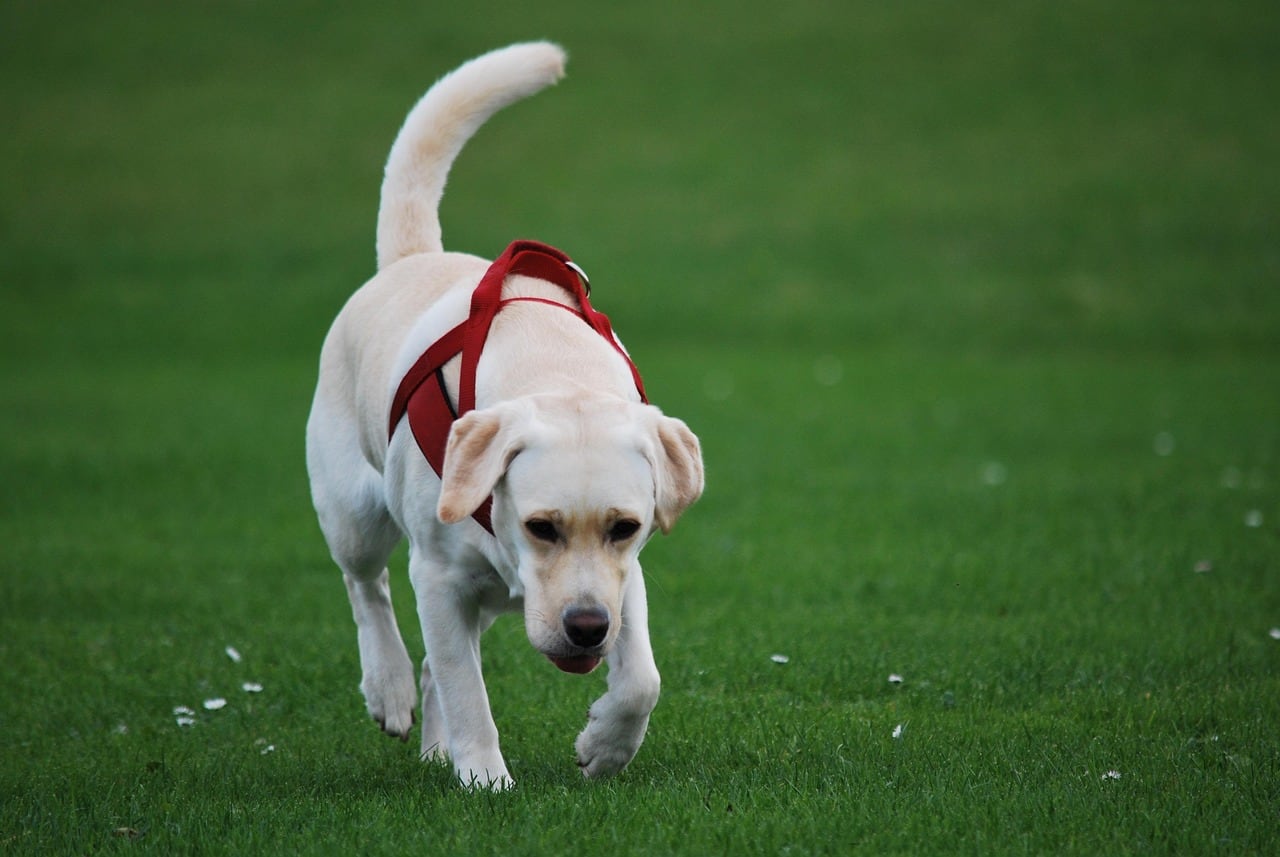
The coat is short, dense and water-repellent – it consists of two layers, a harsher top coat and a dense undercoat that protects the dog from the cold and water. This type of coat makes the Labrador well-equipped for work in water and on land, although it also means more pronounced seasonal shedding.
Labrador Retriever temperament
The Labrador Retriever is a social dog with a strong need for contact with people - it does not tolerate loneliness or isolation from its family well and works best where it spends most of the day with its owner. Its temperament is friendly and open, it approaches strangers with curiosity rather than alertness, which makes it a poor watchdog, but an excellent family companion.
It is suitable for children and is usually patient with them, which makes it one of the most popular breeds for families with children. It gets along equally well with other dogs, and gets along with cats without any problems, especially if it is used to their presence since it was a puppy.
This is a dog with a high need for mental stimulation and activity - it suffers from boredom and without enough stimuli, it can direct its energy in an undesirable direction, for example by excessive chewing. The training requirement is low for it, because it is docile and willing to cooperate, which makes it a suitable breed for beginners. It barks little, it is expressed more through physical contact and an enthusiastic temperament than by loud expressions.
Labrador Retriever and children
The Labrador Retriever is one of the breeds that gets along very well with children, making it a popular choice for families with children. Its personality traits – low barking, friendly attitude to its surroundings and low training requirements – make it a suitable companion for households where the dog is in daily contact with children of various ages.
However, it is important to note that this is a large and energetic breed with a high need for exercise and mental stimulation. A young, energetic Labrador may inadvertently knock over a small child or pull them down while playing, especially if they do not have enough space to release their excess energy. It is therefore recommended that interactions between the dog and smaller children are always supervised, even with such a good-natured breed.
Due to its high need for companionship, the Labrador forms a strong bond with its family and does not tolerate long-term loneliness. For families that can offer it enough active exercise, space and regular attention, it is a very reliable and patient canine companion for children.
Labrador Retriever and other dogs and pets
The Labrador Retriever is one of the breeds with very good conditions for coexistence with other animals in the household. It gets along with dogs in a friendly manner and without unnecessary dominance - its balanced nature and low barking contribute to the fact that conflicts at the pack level tend to be rather the exception. Thanks to this, the Labrador is often suitable for households where there is already one dog, or where the owner is planning to get a second dog.
Labradors tend to get along with cats, especially if they are introduced to them from a puppy age or if the cat was previously used to the company of dogs. However, it is good to keep in mind their hunting history - a strong hunting instinct for smaller domestic animals (rodents, birds) can lead to them seeing them as prey rather than roommates. Therefore, living with such small animals is always better supervised, at least in the initial stages of introduction.
In general, due to their high need for companionship, Labradors welcome any other living creature in the household – be it a dog, a cat, or a person. Sociability is one of their strongest character traits.
Is the Labrador Retriever suitable for an apartment?
The Labrador Retriever is not suited to an apartment, although it is possible provided that the owner can meet their high need for exercise and mental stimulation. This is a large, strong breed with a high level of activity - in a small apartment without enough daily exercise, they quickly become bored, which can manifest itself in undesirable behavior, such as destroying things or excessive vocalization, although their barking rate is low.
The ideal environment for him is a house with a garden, where he has space to move around even between walks. If the owner lives in an apartment, he must take into account that the Labrador needs at least one longer walk with more intense exercise per day and other activities focused on the head - finding treats, obedience, retrieving. Without this, he suffers psychologically.
It is also worth mentioning the high rate of shedding, which is more noticeable in apartment conditions than in a house with its own garden - the coat needs to be combed regularly, otherwise the hair ends up everywhere in the household. Due to the high need for company, the Labrador does not tolerate long-term loneliness, whether it lives in an apartment or a house.
How much exercise does it need?
The Labrador Retriever is a dog with a high level of activity and an equally high need for mental stimulation - a walk alone is often not enough for him. As a hunting dog, he was originally bred for long and persistent work in the field and in the water, which is still reflected in his nature today. He needs at least an hour or two of active exercise a day, ideally divided into several walks, and activities that also involve his head.
Thanks to its water-repellent coat and body structure, swimming is a natural activity for it - it is one of the activities that Labradors usually seek out. Also suitable are fetch games, scent tracking, dog trekking or canicross for owners who like to run themselves. It is not a problem to involve it in agility or obedience sports, where its low training requirements and willingness to cooperate will be put to good use.
Due to their high need for exercise and companionship, this breed is not suitable for staying in an apartment all day without sufficient walks. Lack of exercise and stimulation in a Labrador can manifest itself in restlessness or destructive behavior, so regular physical and mental stress is key to their happiness.
Training and education
The Labrador Retriever is one of the breeds with low training requirements - it is docile, willing to cooperate and motivated by treats and praise, which makes training much easier. Thanks to this, it is also suitable for beginners who have no experience with dog training.
However, training should not be underestimated. Labradors have a high need for mental stimulation and can become restless or destructive without enough stimulation. Short, regular training sessions work better than single long sessions – they will keep the dog focused and support his natural desire to learn new things.
Since it is a hunting dog bred to work with humans, it appreciates clear rules and consistency. Rough methods are neither necessary nor desirable - positive motivation brings faster and more stable results. Socialization from a puppy will make it easier to live with other dogs and people, with whom the Labrador usually gets along without problems.
A high level of activity means that obedience training alone is not enough - the dog also needs plenty of physical exercise, otherwise excess energy may manifest itself in unwanted behavior at home.
Hair care and hygiene
The Labrador Retriever has a short, dense, water-repellent coat that is easy to maintain - brushing once or twice a week is enough. However, the shedding rate is high, so in the fall and spring it is advisable to brush more often, even every other day, to remove dead undercoat and reduce hair on carpets and clothes at home.
Bathing is only necessary occasionally, for example after rolling in the mud or before a show - too frequent bathing could disrupt the natural water repellency of the coat. Since this is a hunting dog that likes to swim, it is a good idea to rinse the coat with clean water after bathing in outdoor waters and check that there is no dirt left in it.
It is advisable to check the ears regularly, especially if the dog often swims or moves in a humid environment - increased moisture in the ear can promote the development of inflammation. The claws of active dogs that spend a lot of time outdoors often wear down naturally, but it is still a good idea to monitor their length and trim them if necessary. Dental care in the form of regular cleaning or chewing aids helps prevent the formation of tartar.
Feeding
The Labrador Retriever is a large breed with a high level of activity, which is reflected in its feeding requirements. The daily ration should correspond to the dog's weight (29–36 kg for males, 25–32 kg for females) and its actual activity - a working or sports-intensive individual needs more energy than a Labrador living in a calmer mode.
Due to their size and robust body structure, food adapted to large breeds or different life stages (puppy, adult, senior) is recommended. It is advisable to divide the feeding into two smaller portions a day instead of one large dose - in larger dogs this reduces the burden on the digestive tract and the risk of excessive stress on the joints after eating.
Because this is a dog with a high need for mental stimulation, part of the food ration can also be used for training or fetch games - this saves extra calories compared to regular treats. For large breeds, it is also useful to regularly monitor body condition and weight to ensure that the load on the joints remains within reasonable limits throughout the dog's life.
It is always advisable to consult a veterinarian about the specific composition of the diet and the amount of feed, especially if there are changes in activity, age or health status.
How long does a Labrador Retriever live?
The average lifespan of a Labrador Retriever is 10–13 years , which is within the normal range for dogs of its size and build.
The specific lifespan varies from individual to individual and is influenced by a number of factors. These include genetics and selection of breeding pairs, quality of diet appropriate to the dog's age and activity level, regular exercise and preventive veterinary care including vaccinations and early detection of any health problems. For Labradors, which are breeds with a strong appetite, maintaining a healthy weight also plays an important role - being overweight puts a strain on the joints and heart and can significantly shorten the overall length and quality of life.
Due to their high need for exercise and mental stimulation, it is recommended to provide the Labrador with plenty of activity throughout its life, not just in its youth. Adequate exercise keeps the dog fit and reduces the risk of obesity, which is one of the most common factors affecting longevity in this breed.
Who is the Labrador Retriever suitable for?
The Labrador Retriever is suited to homes that can provide him with plenty of exercise and regular human contact. His high need for companionship and mental stimulation means he is not suited to people who want to leave him alone for long hours.
This breed may be right for you if…
- you have a family with children and are looking for a dog that gets along well with them
- you lead an active life and are willing to dedicate time to exercise and mental exertion every day
- you live in a house with a garden, or you have the opportunity to spend a lot of time outdoors with it
- you also keep other dogs or cats – Labradors usually get along well with them
- you are a beginner in training – the training requirement is low for this breed
- you don't mind a higher rate of shedding and regular vacuuming of the home
Consider another breed if…
- you live in a small apartment and cannot provide him with enough exercise
- you spend most of the day away from home and the dog would be left alone for a long time
- you are looking for a dog with minimal demands for attention and companionship
- Do you mind intense hair shedding?
- you prefer a smaller or less energetic breed suitable for a calmer lifestyle
Interesting facts about the breed
The Labrador Retriever is classified as number 122 in the FCI and falls into Group 8, Retriever Section – i.e. breeds bred primarily for retrieving game. Although its name refers to Labrador, the breed was formed in Great Britain, as evidenced by its official English name Labrador Retriever.
In Czech, the abbreviated forms "labrador" or "labík" are also commonly used, which can be encountered just as often as the full name of the breed.
Its coat is also interesting - the short, dense and water-repellent structure was developed as an adaptation to working in water while tracking game, which still makes the Labrador a tenacious swimmer. This characteristic is also shared with other retrievers in a similar section of the FCI, for example with the Chesapeake Bay Retriever, which was bred for similar conditions.
The Labrador Retriever is classified as both a hunting and companion dog, which is reflected in its nature - it combines working dedication with a high need for contact with people.
Labrador Retriever Colors
The FCI/CMKU standard for the Labrador Retriever allows only a limited range of solid-colored coat shades, or a small white spot on the chest. The exact list of colors and their shades is set out in the valid breed standard No. 122 - we recommend checking it directly with the CMKU or FCI before buying a puppy.
Puppies in colors that are not allowed by the standard sometimes appear on the market - typically colors described as silver, blue or spotted (merle). Such colors are not natural in purebred Labradors and their occurrence is usually related to either crossing with another breed or the targeted inclusion of a gene that does not occur in Labradors as standard. Breeding focused on these "exotic" colors is associated with a higher risk of health complications and ethical questions regarding the origin and inbreeding of breeding individuals. Those interested in a Labrador should therefore perceive color as an additional criterion and pay attention primarily to the health, character and seriousness of the breeder.
Labrador Retriever Health
The Labrador Retriever typically lives 10-13 years, which is in line with the expected lifespan for breeds of its size. With such a robust and active dog, it is worth monitoring the condition of its joints and overall physical condition - overexertion during the growth period or excess weight in adulthood is not good for it.
The breed may be predisposed to hereditary joint diseases such as hip or elbow dysplasia, and to certain eye defects, including progressive retinal degeneration. Responsible breeders therefore have their breeding animals tested and the results of the tests should be traceable.
Labradors are known for their voracious appetite and tendency to gain weight, which, if not exercised or fed incorrectly, quickly leads to overweight. This then puts a strain on the joints and heart, so it pays to regularly check the dog's weight and adjust the amount of food to its actual physical activity.
What to look for before buying a puppy
- Health examination of both parents – especially hips, elbows and eyes.
- Health history in the breeding line, if provided by the breeder.
- Physical condition and body structure of the puppy and parents.
Regular veterinary check-ups and a responsible approach to nutrition and exercise are essential prerequisites for a long and active life for this breed.
Known predispositions
The breed is described to have an increased predisposition to:
- to hip dysplasia.
- to elbow dysplasia and other musculoskeletal diseases associated with growth.
- to exercise-induced collapse (EIC), which is related to a specific genetic mutation.
- to progressive retinal atrophy (PRA), a hereditary retinal disease.
- to obesity, including in connection with the occurrence of a variant of the POMC gene affecting the feeling of satiety.
- to osteosarcoma (bone cancer) compared to other breeds.
- to inflammation of the external auditory canal (otitis externa), among other things in connection with the structure of hanging ears.
- to the development of cancer in general, for example lipomas or hemangiosarcoma.
- to dilatation and volvulus of the stomach (so-called stomach enlargement and twisting) in individuals with a deep chest.
This overview is for informational purposes only and does not replace the examination or recommendations of a veterinarian.
What to buy for a Labrador Retriever
Practical basis that is suitable for this breed:
- Toys – Dog toys – fetching, chewing and interactive.
- Cosmetics – Shampoos, conditioners and hair care products.
- Bowls – Feed and water bowls, anti-swallow bowls and stands.
- Collars – Dog collars – leather, textile and semi-tight.
- Beds – Beds and mattresses for dogs of all sizes.
- Leashes – Leashes, switch leashes and tracking lines.
Useful instructions
Practical tips that are useful when caring for a dog:
Frequently asked questions
Is a Labrador Retriever suitable for an apartment?
Rather not – it is a large, active breed with a high need for exercise and mental stimulation, which is better suited to living in a house with access to a garden. It can function in an apartment only if it is provided with enough daily walks and activities.
How long does a Labrador Retriever live?
The average lifespan of a Labrador Retriever is 10–13 years.
Is the Labrador Retriever good with children?
Yes, the Labrador Retriever is considered a suitable breed for children due to its sociable nature and low barking rate.
Can a beginner handle a Labrador Retriever?
Rather, yes – the training requirements for this breed are low, which makes it easier for even less experienced owners. Even so, it is necessary to take into account the high need for activity and mental stimulation.
How much does a Labrador Retriever weigh?
Males weigh 29–36 kg, females 25–32 kg.
Do Labrador Retrievers shed a lot?
Yes, the shedding rate is high in this breed, even though the coat is short and otherwise easy to care for.
How much exercise does a Labrador Retriever need?
The Labrador Retriever has a high activity level and a high need for mental stimulation, so it requires regular daily exercise and involvement in various activities.
Does the Labrador Retriever get along with other animals?
The Labrador Retriever gets along well with dogs and rather well with cats, especially with gradual and proper introduction.
Is a Labrador Retriever suitable for seniors?
The suitability for seniors is neutral for this breed – the size and high need for exercise may pose a physical burden for some older owners.
What health conditions can a Labrador Retriever have?
The breed may have an increased predisposition to certain hereditary diseases, as suggested by available scientific studies (source) . A veterinarian should always assess the specific diagnosis and health status.
Resources and further information
- ČMKU – breed nomenclature – Czech-Moravian Cynological Union
- FCI Standard No. 122 - Labrador Retriever - Fédération Cynologique Internationale
- FCI - Labrador Retriever (No. 122) - Fédération Cynologique Internationale
- Predisposition resource - vgl.ucdavis.edu
- Source on predisposition - pubmed.ncbi.nlm.nih.gov
- Source for predisposition - nature.com
- Source for predisposition - onlinelibrary.wiley.com
- Resource on predisposition - pmc.ncbi.nlm.nih.gov
Professional cooperation
This breed overview was created in cooperation with the Veterinary Clinic VYVET sro and MVDr. Adam Hylák .