
Published 31. 8. 2026 · Updated 1. 9. 2026
The American Akita is a large Japanese breed classified in FCI Group 5, Asian Spitz section, under standard No. 344. Males reach a height of 66–71 cm, females are slightly smaller at 61–66 cm, and usually live to be 10 to 14 years old. It is striking with its thick double-layered coat and calm, dignified appearance, which, however, hides a strong will and independent thinking. In terms of temperament, the American Akita is reserved, loyal to its owner, but not overly contactable towards strangers or other animals. Training requires patience and experience, so it is not suitable for the first dog experience. It will be appreciated by owners who can offer it clear rules, adequate exercise and a calm, stable environment.
Professionally consulted
The content was created in cooperation with the veterinary clinic Veterinární klinika VYVET sro and MVDr. Adam Hylák.
Quick overview
What is the American Akita like?
The American Akita is a large Japanese breed with a height at the withers of 61–71 cm depending on the sex, classified in FCI Group 5 among Asian Spitz and related breeds. It is a sturdy, calm and confident companion with a balanced temperament - outwardly it seems rather reserved, but it is devoted and attentive to its people.
It needs moderate activity, mental stimulation as well, so it is suitable for regular exercise and meaningful work, not necessarily extreme sports. Training requires patience and consistency, so the American Akita is not recommended for complete beginners. It can be reserved towards its territory and other animals, and it gets along better with dogs and cats. It barks little, drools minimally, but its fur sheds regularly and significantly.
- Suitable for more experienced owners with firm leadership
- Suitable for people who appreciate a calm but confident dog
- Not ideal for a household with other animals
Origin and history
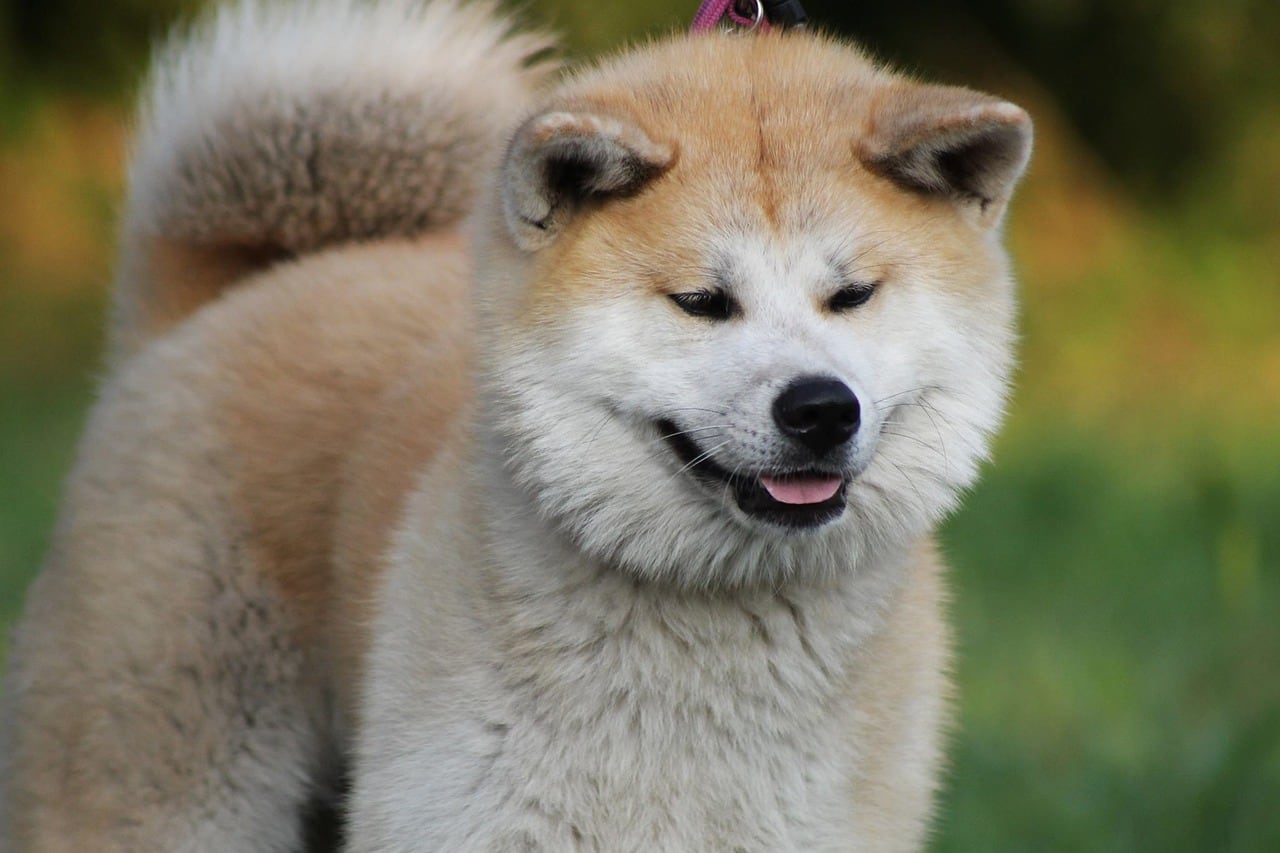
The American Akita evolved from the Japanese Akita Inu, a large, pointed dog bred in the mountainous regions of Japan for hunting large game and later as a guard dog. The split into two separate lines—Japanese and American—relate to the period after World War II, when dogs of Japanese origin were brought to the United States by American soldiers returning from Japan. These individuals in Japan differed from the ideal Akita Inu of the time: they were more robust, had a wider range of coat colors, including a mask resembling a Great Dane or Saint Bernard, which was the result of earlier crossbreeding with European breeds during the post-war revival of Japanese breeding.
In North America, this type continued to be bred independently of Japan and gradually established itself as a distinct population with its own phenotype – a more voluminous frame, a broader head and a permitted range of colours not recognised by the Japanese standard. While in Japan the Akita Inu remained protected as a national cultural monument with a strictly defined standard, the American branch developed towards a more robust, show-oriented type.
The differences between the two lines deepened over the years to the point that international canine organizations finally began to recognize them as two separate breeds – the Japanese Akita Inu and the American Akita. The American Akita today represents a modern, US-formed variant of the original Japanese breed, derived from the same roots, but with a different breeding history and exterior.
Appearance and size
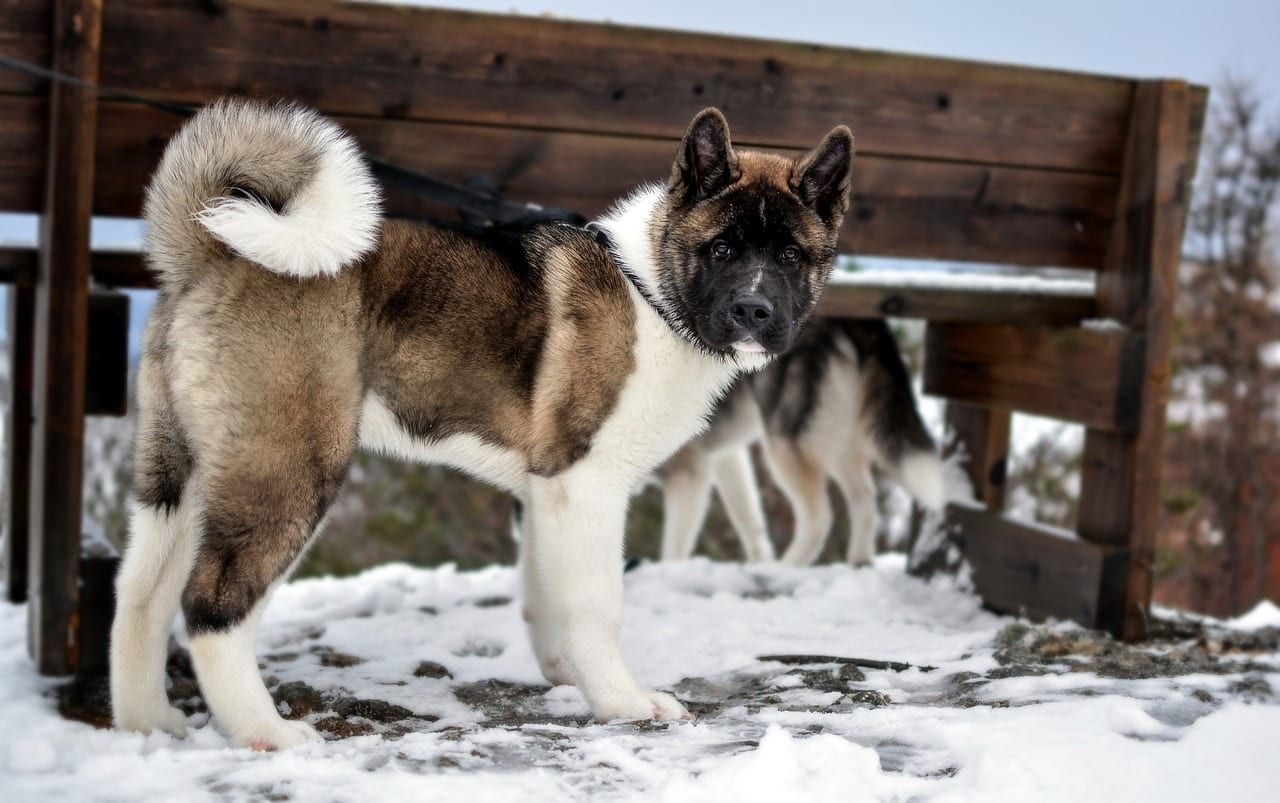
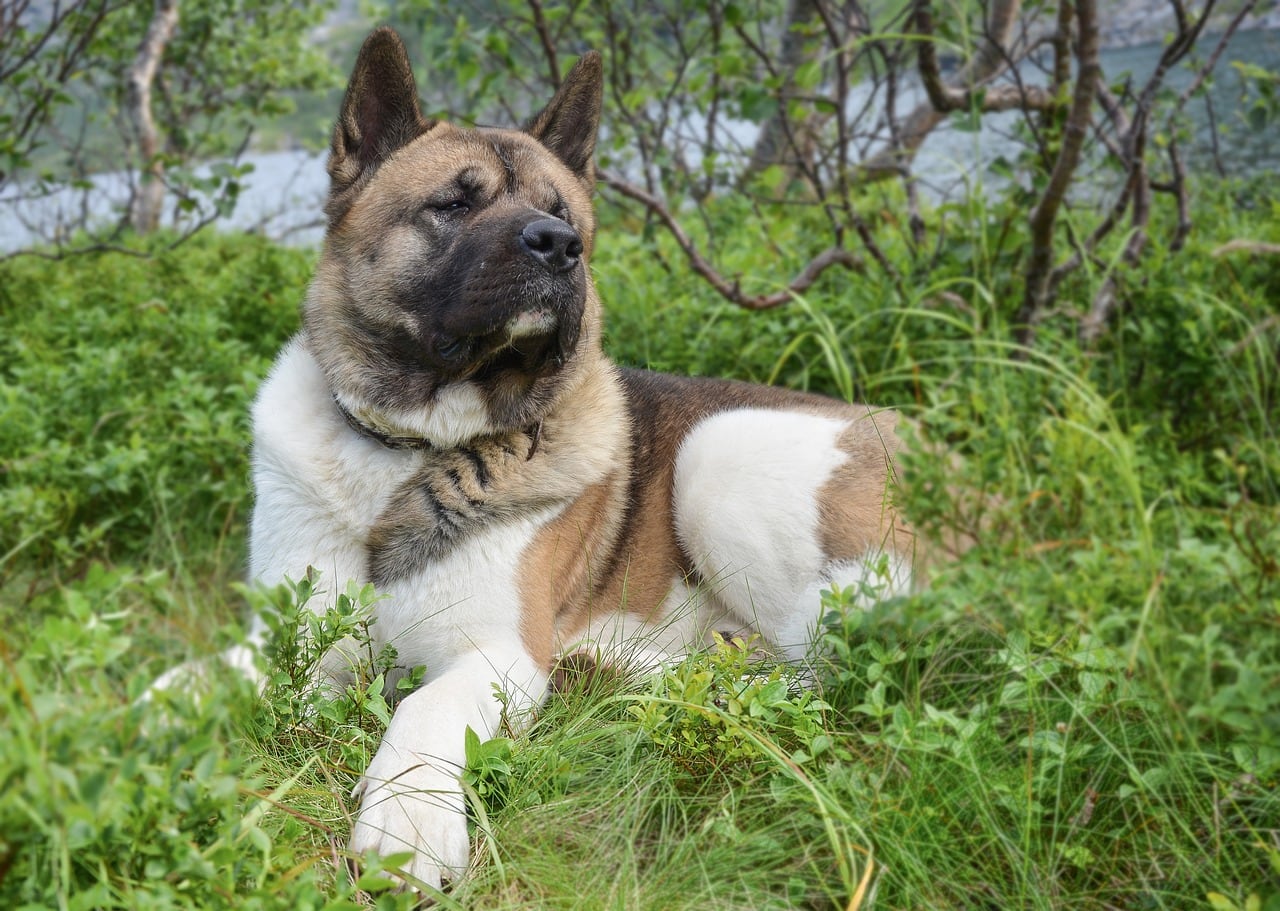
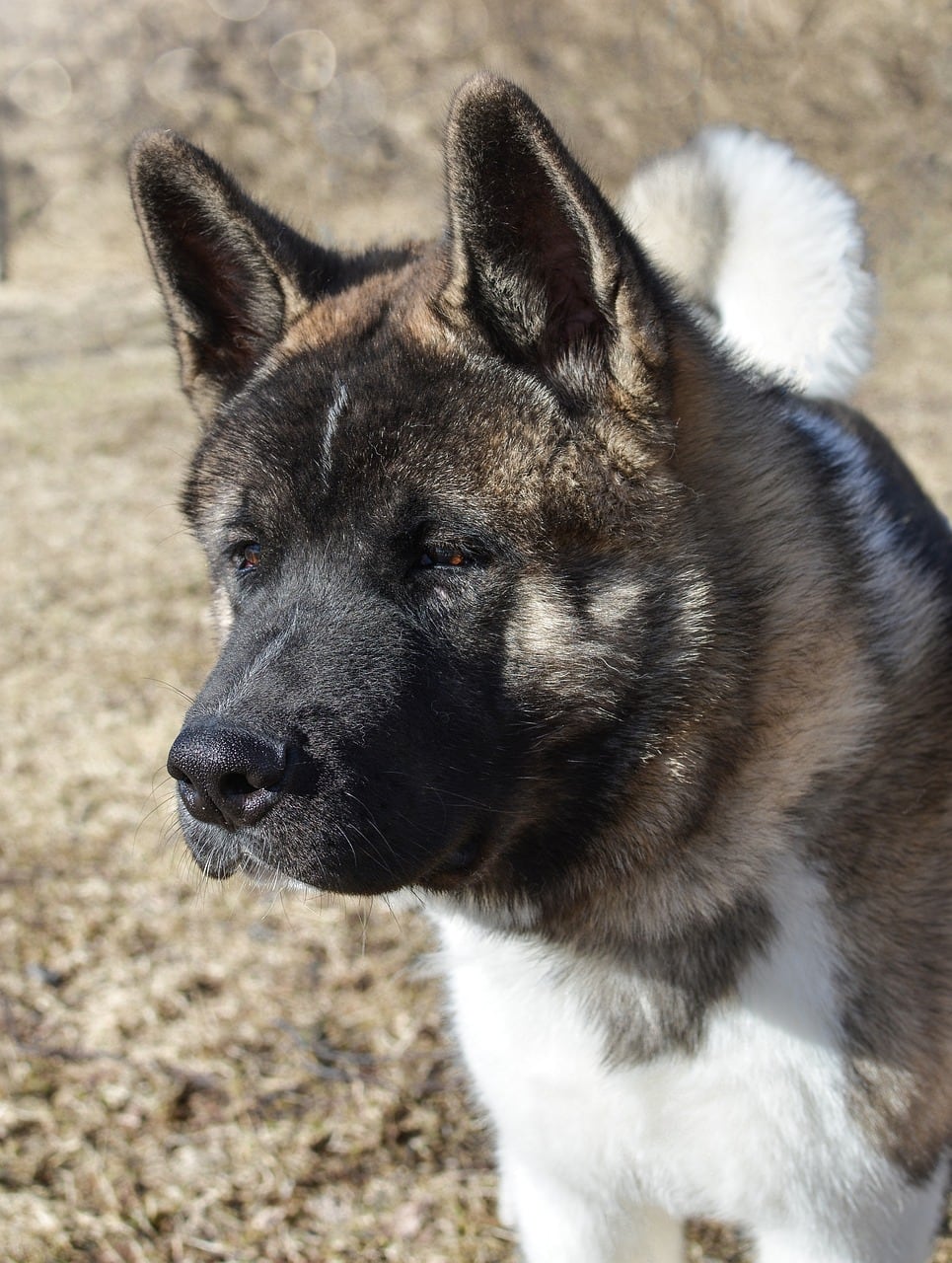
The American Akita is a powerful, well-muscled dog with a massive skeleton that looks dignified and balanced. The male stands 66–71 cm at the withers, the female is noticeably smaller, 61–66 cm – the difference between the sexes is noticeable at first glance, both in height and in the overall robustness of the build.
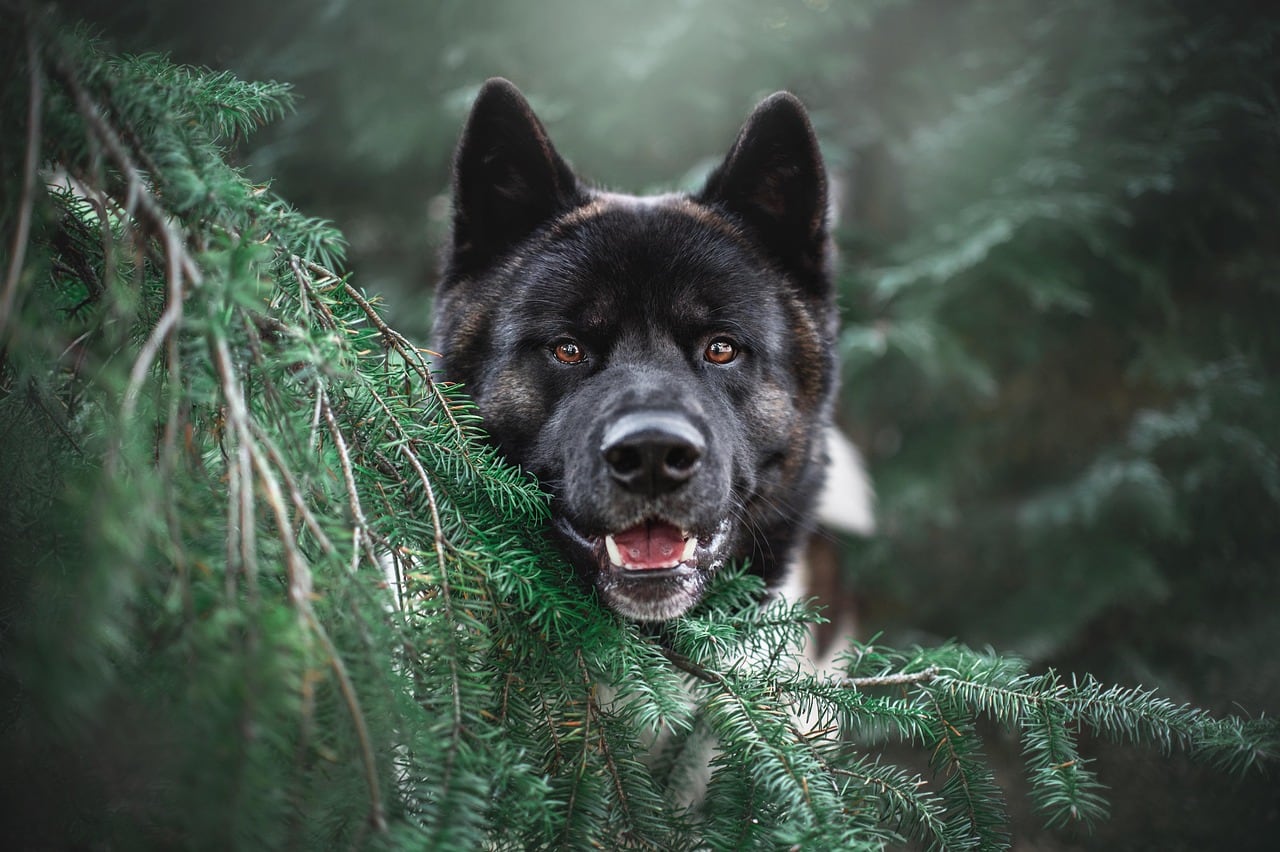
The head is large and massive, with a flat forehead and a prominent but not too long muzzle. The ears are relatively small for the size of the head, triangular in shape, erect and slightly tilted forward, which gives the Akita's expression its characteristic alertness. The eyes are small, dark and deep-set, with a calm, thoughtful expression.
The body is compact, the chest is deep and wide, the back is firm and straight. The tail is set high, strong, carried curled over the back or to the side - this is one of the most typical features of the breed.
The coat is double-layered and dense, with a thick undercoat and a coarser topcoat, and is medium in length - slightly longer on the tail and back of the thighs, where it creates soft "pants". Thanks to the thick undercoat, the American Akita intensively renews its coat during the shedding period, and outside of these periods, coat care is easy.
We describe coat color variations in detail in a separate section dedicated to color.
American Akita Colors
A specific list of colors and markings of the American Akita recognized by the standard is not available in the documents, and therefore we do not list it here - we recommend that those interested in breeding check the current version with the FCI or the relevant breed club.
American Akita Personality
The American Akita is mentally balanced, but internally strongly independent - it tends to be devoted and loyal to its owner and family, while approaching strangers and new stimuli with reserve and cold detachment. This combination of attachment to "its human" and independent thinking makes it a dog that needs clear leadership, but never rough dominance - it reacts to this more by becoming withdrawn and stubborn.
It is an intelligent breed that quickly connects cause and effect and can evaluate for itself whether a given activity is worthwhile. This is why training is often more demanding than in breeds oriented towards the constant pleasure of the owner - the Akita needs motivation, consistency and patience, the mechanical repetition of commands bores it and it quickly stops cooperating.
The energy of this breed is balanced rather than explosive – this is not a dog that needs hours of running, but it alternates periods of rest with periods of focused activity, when it appreciates walks, play or work with its smell. Boredom and lack of stimuli are more likely to manifest as apathy or, conversely, stubbornness than destructive restlessness.
The American Akita rarely barks, but its natural alertness is all the more pronounced. It closely watches strangers and unfamiliar situations and is naturally protective of its home and family without having to show it out loud - it is expressed more by a calm but unmistakable surveillance of what is happening around it.
The relationship with other dogs and especially cats can be problematic, because the breed still has a strong hunting and territorial instinct - meetings with strange animals therefore need to be managed with caution and consistent socialization is appropriate from the puppy. On the other hand, it can get along very well with its family, including children, although it is more of a calm companion than a playful partner for constant antics.
American Akita and children
The relationship with children in this breed cannot be generalized to "yes" or "no" - the combination of innate temperament, upbringing and the level of supervision that the family provides is decisive. The American Akita is usually calm and devoted to the family, but it is rather reserved towards strangers and unknown stimuli and does not seek out stormy contact. This basic feature needs to be taken into account when planning coexistence with children, especially when it comes to visiting friends or noisy games in the household.
What influences living with children?
Early and consistent socialization of the puppy plays a key role - familiarization with children's voices, movements and unexpected situations should be done gradually and without pressure. Given that the training requirements of this breed are high, it is advisable to take into account that the basics of obedience and impulse control will take more time and patience than in easier-to-handle breeds. Well-managed training also directly affects how the dog reacts to typical childish behavior - pulling the fur, sudden movements or loud expressions.
- Adult supervision is essential whenever a dog comes into contact with small children, even for a dog with a balanced temperament.
- Children should be taught to respect the dog's space - especially during feeding or resting.
- Due to the strong body structure, it is advisable to teach the child and the dog to communicate with each other without fear and without the risk of unintentional injury.
- Positive experiences from a puppy's early age facilitate peaceful coexistence in adulthood.
Families with older children who respect the rules set for the running of the household usually find this breed a stable and non-conflict companion. However, families with young children or without previous experience with guide breeds need to carefully consider whether they can provide the consistent training and constant supervision that living with this breed requires.
American Akita and other dogs and pets
Coexistence with other dogs or cats is not a given for this breed and the owner should take this into account when planning the household. The American Akita was originally bred as a strong, independent dog suitable for hunting and guarding, which is reflected in its relationship with other animals to this day.
Relationship with other dogs
It tends to be reserved and even conflictive towards other dogs, especially towards individuals of the same sex. This is not a breed that would seek contact on its own at a dog park or easily get used to a new dog in the household - meetings need to be carefully managed and long-term attention paid to socialization from puppyhood.
Relationship with cats and small animals
Cats and other small animals in the household should be treated with similar caution. The strong hunting instinct typical of this breed means that the rapid movement of a small animal can easily trigger a chase reaction. Safe coexistence is more realistic if the dog grows up with the animal in question from puppyhood, but it is still advisable to monitor the relationship over the long term and not rely on the situation to improve over time.
- It is advisable to always control encounters with strange dogs and not leave them to chance.
- Small animals and cats should not be left unattended with an Akita, especially in the first few years of living together.
- Early and consistent introduction to siblings or other pets reduces the risk of conflicts, but does not completely eliminate them.
Is the American Akita suitable for an apartment?
The American Akita can live in an apartment, but only if the owner provides it with enough regular exercise outdoors and a sufficiently spacious environment indoors - this is a sturdy dog with a medium need for activity, which also needs to find a place in the apartment where it can rest peacefully, without unnecessary disturbance.
The key factor is the balance of the daily routine: a lower barking rate makes the American Akita a quiet roommate who will not bother the neighbors with his barking, but this does not mean that he only needs space to lie down. He needs longer outdoor walks during which he can physically exercise, otherwise he may express his energy through restlessness or destructive behavior in the apartment.
What to consider when breeding in an apartment
- Ensure sufficiently long and regular walks, ideally with the possibility of free movement in a safe environment.
- Expect higher shedding – a thick double-layer coat requires more frequent household cleaning, especially during seasonal shedding.
- Create a quiet place for the dog to retreat to, as this is a breed with a medium need for company that will appreciate its own space.
- Please note that due to the low tolerance towards other dogs, it is necessary to consider when and where the dog will be walked if other dogs live in the vicinity of the apartment.
An apartment in a panel house does not matter to the American Akita in itself - what matters is whether the owner can regularly meet its exercise needs while respecting the fact that it is a dog that needs a clearly guided regimen and enough space to rest.
How much exercise does it need?
The American Akita can do with a regular daily walk combined with a shorter, more leisurely activity - it is a breed with medium exercise requirements, which, however, appreciates regularity and variety rather than extreme exertion. It is a good companion for owners with a more active lifestyle, but it does not ask for long miles on its own.
Suitable activities
Due to its strong, compact body structure, it benefits from activities that load the muscles and joints gradually and without unnecessary shocks.
- Longer walks in the field, ideally with the possibility of free movement in a safe space
- Calmer forms of pulling sports or canicross for physically fit individuals
- Obedience and tracking activities that combine movement with nose work
- Short runs or jogging at a moderate pace, as a supplement rather than the main activity
Mental stimulation
In addition to physical exercise, the American Akita also needs a reasonable amount of mental activity - moderately demanding decision-making tasks, finding treats, or training elements help to burn off energy even without the need for long runs.
What to watch out for
Thanks to its dense double-layered coat, it tolerates low temperatures better than heat - in the summer months, it is advisable to move activity to cooler parts of the day and avoid intense exercise in the midday heat.
Training and education
Training an American Akita requires a more experienced handler – this is a strong-willed breed that does not enjoy mindless repetition of commands and reacts to harsh methods with rejection rather than obedience. Results are achieved by a patient, positively guided approach with clear rules that apply from puppyhood and do not change according to the owner's mood.
Motivation is more likely to be a treat, a game, or the opportunity to work with a person the dog respects, rather than trying to please at all costs - this is a fundamental difference from breeds bred purely for cooperation with humans. Short, focused training blocks work better than long, repetitive lessons, because the Akita quickly gets bored and stops responding.
Socialization and specifics
Since the breed tends to get along poorly with other dogs and cats, early and consistent socialization is key - the sooner a puppy gets to know different situations, people and animals, the better it will cope with stimuli in adulthood to which it might otherwise react with distrust or conflict. Meetings with strange dogs should always be guided and not relied on to "somehow resolve the situation by itself".
- Consistency: the rules should be followed equally by all household members.
- Short and clearly structured training sessions without unnecessary repetition.
- Positive motivation instead of pressure – a dismissive approach tends to encourage stubbornness.
- Early socialization with a focus on contact with other dogs and animals.
- A leash and a secure space are recommended due to their lower tolerance for other dogs.
Training an American Akita may not be easy for beginners - previous experience with more dominant breeds or working with a dog trainer who specializes in similar temperaments is appreciated.
Hair care and hygiene
The American Akita's double-layered coat consists of a dense undercoat and a longer topcoat, which gives it a characteristic plush appearance, but also means regular brushing. During the year, it is enough to comb and brush the coat once or twice a week, but during the spring and autumn molting periods, brushing is necessary almost daily - the undercoat is then released in large quantities and without thorough brushing, tangles quickly form, especially on the sides and neck.
Bathing should be an exceptional event and only when necessary, as frequent washing will strip the coat of its natural oils, which protect it from moisture and dirt. Before bathing, it is advisable to comb the coat thoroughly to prevent the wet undercoat from matting.
Ears, eyes, teeth and claws
It is good to check the ears regularly and clean them gently as needed. Due to their upright shape, this breed is not prone to excessive moisture accumulation as in breeds with folded ears, but it is still worth including the check in your regular hygiene routine. It is enough to wipe the eyes with a damp cloth from time to time to remove any dirt. It is advisable to clean the teeth regularly to prevent tartar formation, and to shorten the claws depending on how quickly they wear out - in a dog that has enough exercise on a harder surface, the need for trimming may be less frequent.
Skin folds or special hair trimming are not an issue for the American Akita - it is a breed with a straight, close-fitting coat without similar requirements, so the main attention deserves managing intense shedding.
Feeding
The basis of the diet is a high-quality complete food appropriate to the age, size and life stage of the dog - i.e. different compositions for puppies, adult American Akitas and seniors. Given the medium activity level of this breed, the energy value of the food should not be set for sports load unless the dog really performs high performances; excess calories will quickly affect the weight of less mobile individuals.
Because the American Akita has a robust, muscular build, its tendency to be overweight may not be as obvious at first glance as in more slender breeds. Regular body condition checks – by feeling the ribs and looking at the waist from above – are therefore a better indicator than simply monitoring weight on the scale.
What to watch out for
- The feed ration should respond to the current level of movement, not remain the same year-round.
- It is advisable to make the transition between puppy, adult and senior food gradually to avoid digestive problems.
- For large breed puppies, a food with controlled energy and mineral content is recommended, which supports slower, more even skeletal growth.
- Regular access to fresh water is a given, especially with a thicker double-layer coat and higher stress in warm weather.
It is always advisable to consult a breeder or veterinarian about the specific type of food and its quantity, as they can take into account the individual condition of the particular dog.
How long does an American Akita live?
The American Akita has an average lifespan of 10 to 14 years, which is a solid lifespan for a large breed. The specific age a dog reaches is influenced by a combination of genetics, lifelong care, and health.
What affects lifespan?
- Genetics and background: The health of the parents and responsible selection of the breeding pair have a major impact on how long a puppy will live. Proven breeding reduces the risk of hereditary problems.
- Physical condition: Maintaining an optimal weight protects joints and internal organs from unnecessary strain, which is important throughout life for such a sturdy breed.
- Movement: Regular but moderate movement corresponding to a moderate level of activity helps maintain muscle tone and psychological well-being without overloading the joints.
- Preventive care: Regular veterinary checkups allow for early detection of potential health problems and addressing them before they affect the quality and length of life.
- Nutrition: A quality diet appropriate to the dog's age, size and activity level supports the health of the digestive tract, coat and overall vitality.
- Health predisposition: The breed may have an increased predisposition to certain hereditary diseases, so it is advisable to monitor the health history of the line and consult the breeder or veterinarian about any potential risks.
Who is the American Akita suitable for?
The American Akita is best suited to experienced dog owners who can provide consistent training and plenty of exercise and mental stimulation. It is a strong, independent-minded dog that requires patience and consistency in training - it is definitely not a breed for first-time dog owners.
Who is the breed suitable for?
- For owners with previous experience training more independent or dominant breeds.
- For people who have time for regular activity as well as training and socializing.
- For households where the dog will live as the only pet, or with children, but under adult supervision and with respect for the dog's space.
- For owners willing to regularly care for the thick double-layer coat, especially during periods of significant shedding.
- For those who are looking for a social dog tied to the family rather than a dog intended for free contact with strangers or animals.
Who is the breed not suitable for?
- For complete beginners without experience with more demanding training.
- For households that plan to keep multiple dogs or combine breeding with cats – the American Akita usually gets along with other animals only to a limited extent.
- For owners looking for a dog suitable for an apartment without the possibility of regular walks and activities.
- For those who don't want to invest time in coat care and managing increased shedding.
- For seniors or less active individuals who would not be able to handle the physical and mental aspects of managing this breed.
Interesting facts about the breed
The American Akita evolved independently from the Japanese Akita after individuals with a different head type and body structure than the standard later enforced by the Japanese Kennel Club arrived in the USA after World War II. While a slimmer and more delicate type (today's Akita Inu) prevailed in Japan, a more massive variant with a more pronounced skeleton and broader head continued to be bred in America - the FCI now recognizes both forms as two separate breeds, the American Akita carries standard No. 344.
The breed is classified in FCI Group 5 among Spitz and breeds of Asian origin, specifically in the section related to Japanese Spitz - as well as Akita Inu, Shiba Inu, Hokkaido, Japanese Spitz, Kai or Kishu, with which it shares common roots.
Health of American Akitas
The American Akita is a robust, large to stout breed with a thick double coat, and its health profile is typical of similarly built Asian Spitz breeds. Given its body structure and strong muscle mass, it is advisable to pay particular attention to the joints and musculoskeletal system, as well as the skin, eyes and thyroid function. The specific health status of individual dogs varies significantly depending on the genetic origin of the breeding line, and therefore responsible selection of a breeder is of paramount importance. The following overview summarizes the areas that, according to available veterinary sources, require increased attention in this breed.
Joints and musculoskeletal system
The breed may be predisposed to developmental disorders of the hip and elbow joints, which is related to a more massive skeleton and muscles. Adequate, gradually increased exercise during the growth period and maintaining an appropriate body weight in adulthood can reduce the risk of symptoms.
Skin and fur
The dense double-layered coat with a pronounced seasonal undercoat requires regular care, and the breed is also known to be predisposed to certain skin and autoimmune diseases affecting the skin. Regular skin checks when grooming help to detect any changes early.
Eyes
The breed is known to be predisposed to certain hereditary eye defects. Regular eye examinations for both adults and breeding animals are standard preventive measures.
Thyroid and metabolism
Expert sources indicate that the breed is predisposed to thyroid dysfunction, which can manifest as changes in weight, energy, or coat quality. This is a condition that can be confirmed in adult dogs with a simple laboratory test.
What to look for when choosing a puppy
- Request documents about the examination of the hip (or elbow) joints of the puppy's parents.
- Ask about eye examinations of breeding animals and the possible occurrence of skin or autoimmune problems in the line.
- Be interested in the health history of both puppies and parents in terms of thyroid function.
- Prefer a breeder who provides transparent information about the health status of the breeding pair and is willing to document it.
- Monitor the puppy's overall condition, behavior, and coat condition during a personal visit to the litter.
Known predispositions
The breed is described to have an increased predisposition to:
- to hip dysplasia.
- to elbow dysplasia.
- to autoimmune skin diseases such as pemphigus foliaceus.
- to sebaceous adenitis (inflammatory disease of the sebaceous glands of the skin).
- to von Willebrand's disease, a hereditary blood clotting disorder.
Discussed risks
The breed is described to have an increased predisposition to:
- to hypothyroidism (reduced thyroid function).
- to progressive retinal atrophy (PRA), a hereditary retinal disease.
- to the development of entropion or ectropion (improper position of the eyelids).
- to acute gastric dilatation and torsion (GDV, so-called "bloat"), especially due to the deep chest.
This overview is for informational purposes only and does not replace the examination or recommendations of a veterinarian.
What to buy for an American Akita
Practical basis that is suitable for this breed:
- Toys – Dog toys – fetching, chewing and interactive.
- Cosmetics – Shampoos, conditioners and hair care products.
- Bowls – Feed and water bowls, anti-swallow bowls and stands.
- Collars – Dog collars – leather, textile and semi-tight.
- Beds – Beds and mattresses for dogs of all sizes.
- Leashes – Leashes, switch leashes and tracking lines.
Useful guides
Practical tips that are useful when caring for a dog:
Frequently asked questions
Is the American Akita suitable for an apartment?
It is a breed rated as neutral for apartment behavior - with enough exercise and mental stimulation, it can adapt to a smaller space. It is key to ensure that it regularly expends its energy outdoors, as it is a dog with a medium level of activity.
Is the American Akita good with children?
The relationship with children is rated as neutral in this breed, so it depends on the specific individual, upbringing and socialization. Given its size and strong nature, adult supervision is appropriate when in contact with small children.
Does the American Akita get along reasonably well with other dogs?
Rather not - the breed is often described as less tolerant of other dogs, which is also related to its original use as a hunting and guard breed. Socialization from puppyhood is therefore essential, but even that may not guarantee trouble-free coexistence in a pack.
Can an American Akita live in a household with a cat?
Living with cats is rather problematic, the breed tends to have a strong hunting instinct towards smaller animals. If the household has a cat, it is advisable to introduce it gradually and with great caution from puppyhood.
Is the American Akita suitable for beginners?
Rather not – it is a breed with high training requirements that requires an experienced and consistent owner. A strong character and independent decision-making are typical traits that an inexperienced breeder can hardly cope with.
How much exercise does an American Akita need?
It has a medium level of activity, so it does not require extreme exercise, but it will appreciate regular walks and the opportunity to run. It is also advisable to supplement physical exercise with moderate mental stimulation to prevent boredom.
Does the American Akita breed a lot?
Yes, this breed has a high shedding rate, which is related to its thick double coat. During the shedding season, you should expect to comb the undercoat more intensively.
How difficult is it to care for an American Akita's coat?
Grooming is rated as medium – the medium-length double-layered coat requires regular brushing, especially during shedding periods. Outside of these periods, regular grooming is sufficient.
Why is training an American Akita considered difficult?
The breed is highly trainable due to its independent and strong nature, which has its roots in its original use as a guard and hunting dog in Japan. It requires a consistent, calm and patient approach from an experienced owner.
Is the American Akita a noisy breed?
No, the breed is rated as low in barking. However, this does not make it a quiet breed in every way – it is more characterized by a calm, dignified nature than excessive vocalization.
What health predispositions should you look out for in the American Akita?
The breed may be predisposed to certain health problems, as reported by foreign sources such as petmd.com or fetchpet.com . A specific diagnosis should always be confirmed by a veterinarian based on an examination of the individual.
How is the American Akita different from the Akita Inu?
It is a separate breed derived from the Japanese Akita, recognized by the FCI under its own standard No. 344, while the Akita Inu has its own standard. Both breeds share their origin in Japan and a similar type of spitz build, but they differ in standard, color varieties and partly also in type of temperament.
Resources and further information
- FCI Standard No. 344 – American Akita – Fédération Cynologique Internationale
- Source of body measurements – fci.be
- Predisposition Source - petmd.com
- Predisposition resource - fetchpet.com
Professional cooperation
This breed overview was created in cooperation with the Veterinary Clinic VYVET sro and MVDr. Adam Hylák .