
Published 10. 9. 2026
The Siberian Husky is a medium-sized breed belonging to FCI Group 5, the Nordic sled dog section, originating from the United States of America. It is unmistakable with its thick double coat and energetic, persistent movement - the legacy of a dog bred to pull sleds over long distances. It is a sociable and friendly breed, with a fair amount of independence and stubbornness.
The Siberian Husky needs a very high dose of exercise and mental stimulation, and without sufficient exercise, it easily becomes bored and seeks its own entertainment. Training therefore requires patience and consistency, and this breed is not recommended for beginners. Thanks to its low barking rate and friendly nature, it is suitable for children and living with other dogs, but it tends to avoid cats. It is especially suitable for active people with a house and garden, it is not very suitable for an apartment or for less mobile owners.
Professionally consulted
The content was created in cooperation with the veterinary clinic Veterinární klinika VYVET sro and MVDr. Adam Hylák.
Quick overview
What is a Siberian Husky like?
The Siberian Husky is a medium-sized breed bred in the United States, belonging to the Nordic draft breeds (FCI group 5). It is a dog with a thick double coat, built for endurance, not for ostentatious strength - it appears light and flexible in the field. By temperament, it is an independent, energetic and sociable creature that needs constant contact with its family and plenty of exercise and mental exertion.
Training requires patience and consistency, as the husky tends to be independent thinkers and gets bored easily with monotonous repetition. He is usually friendly with children, and is generally tolerant of other dogs, but caution is needed with cats.
Who is it suitable for?
- For active owners willing to dedicate time to long walks, jogging or pulling sports
- Probably not for beginners, seniors, or living in an apartment without a garden
- For households where the dog has plenty of company and is not left alone for long periods of time
Origin and history of the Siberian Husky
The Siberian Husky originates from the far north-east of Siberia, where it has been bred for thousands of years by the Chukchi people as a reliable draft dog for transportation in arctic conditions. The breed's ancestors were local Spitz dogs bred by Chukchi nomads solely for their working qualities - endurance, resistance to frost and the ability to pull lighter loads over long distances with low energy consumption. Unlike the heavier sled breeds, the Husky was not bred for maximum strength, but for efficiency and speed in team work.
The breed arrived on the North American continent in the early 20th century, when Chukchi dogs were imported to Alaska in connection with the gold rush and used in dog sledding in long-distance races. Their endurance and speed quickly earned them popularity among local sled breeders, who continued to develop lines suitable for both sporting and working purposes. A key role in the popularization of the breed was played by its use in transporting medicines to remote areas of Alaska, which solidified the husky's reputation as a reliable and hardy dog for extreme conditions.
Gradually, the working dog of the Nordic natives developed into a recognized breed with a stable standard, which retained its original sledge characteristics and typical appearance - a thick double coat and a body structure adapted to long journeys in the cold. Today, the Siberian Husky is bred both for sledding and dog sports, as well as as a companion dog, while retaining the strong working temperament of its Siberian ancestors.
Appearance and size
The Siberian Husky is a medium-sized breed with a sporty, harmonious body structure – it appears light and hardy, never cumbersome or coarse. The body is slightly longer than the height at the withers, the chest is deep and spacious, the back is firm and straight. The overall impression is given by the harmony of strength, speed and endurance, which the breed needed to pull light loads over long distances.
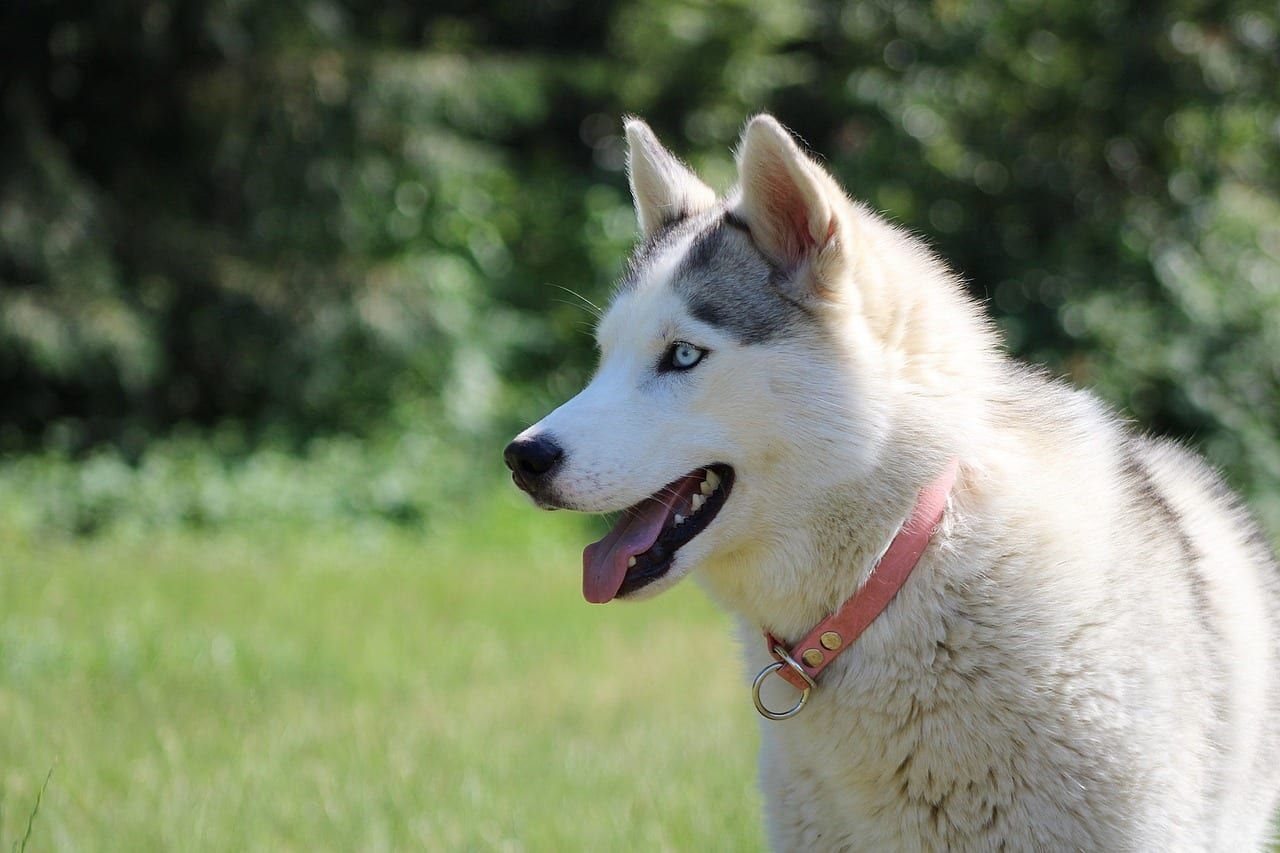
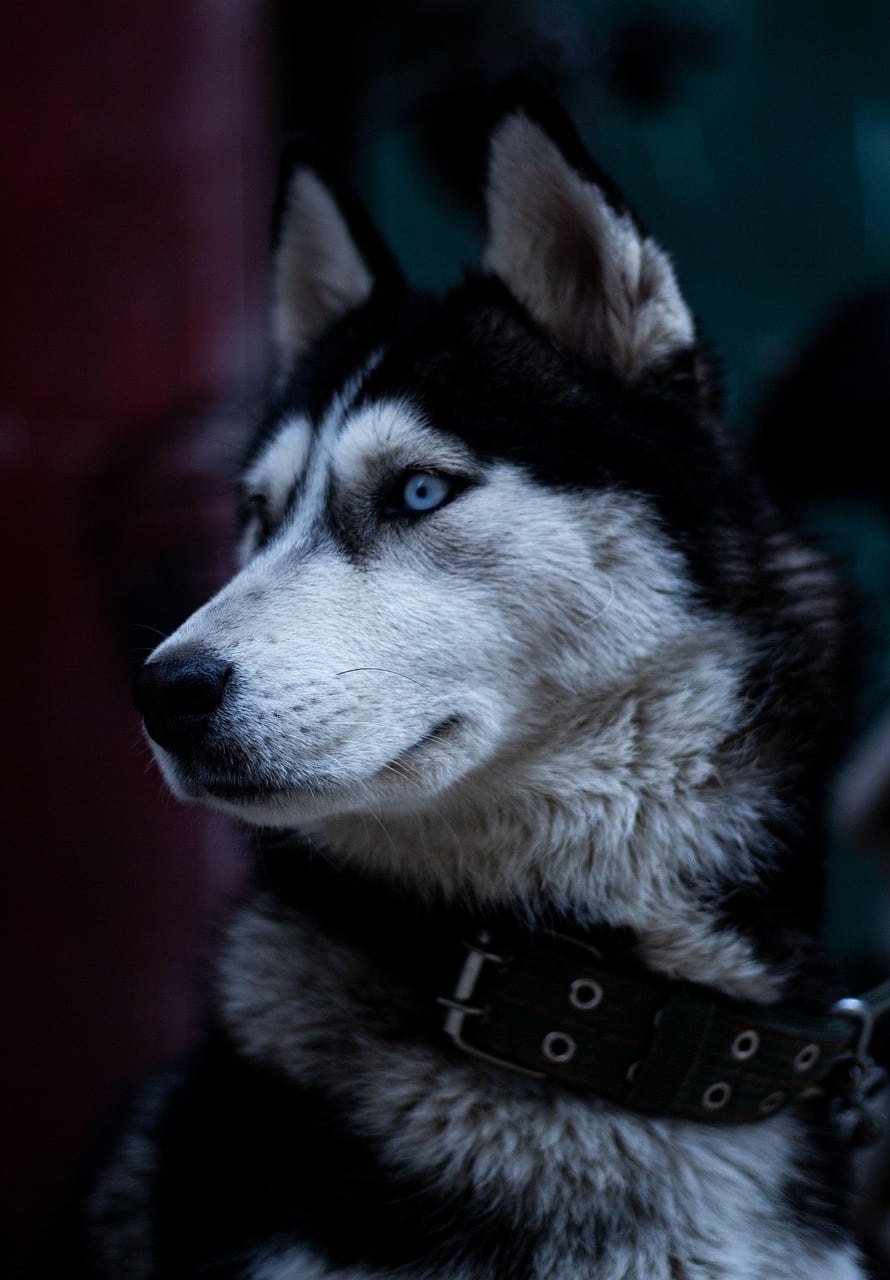
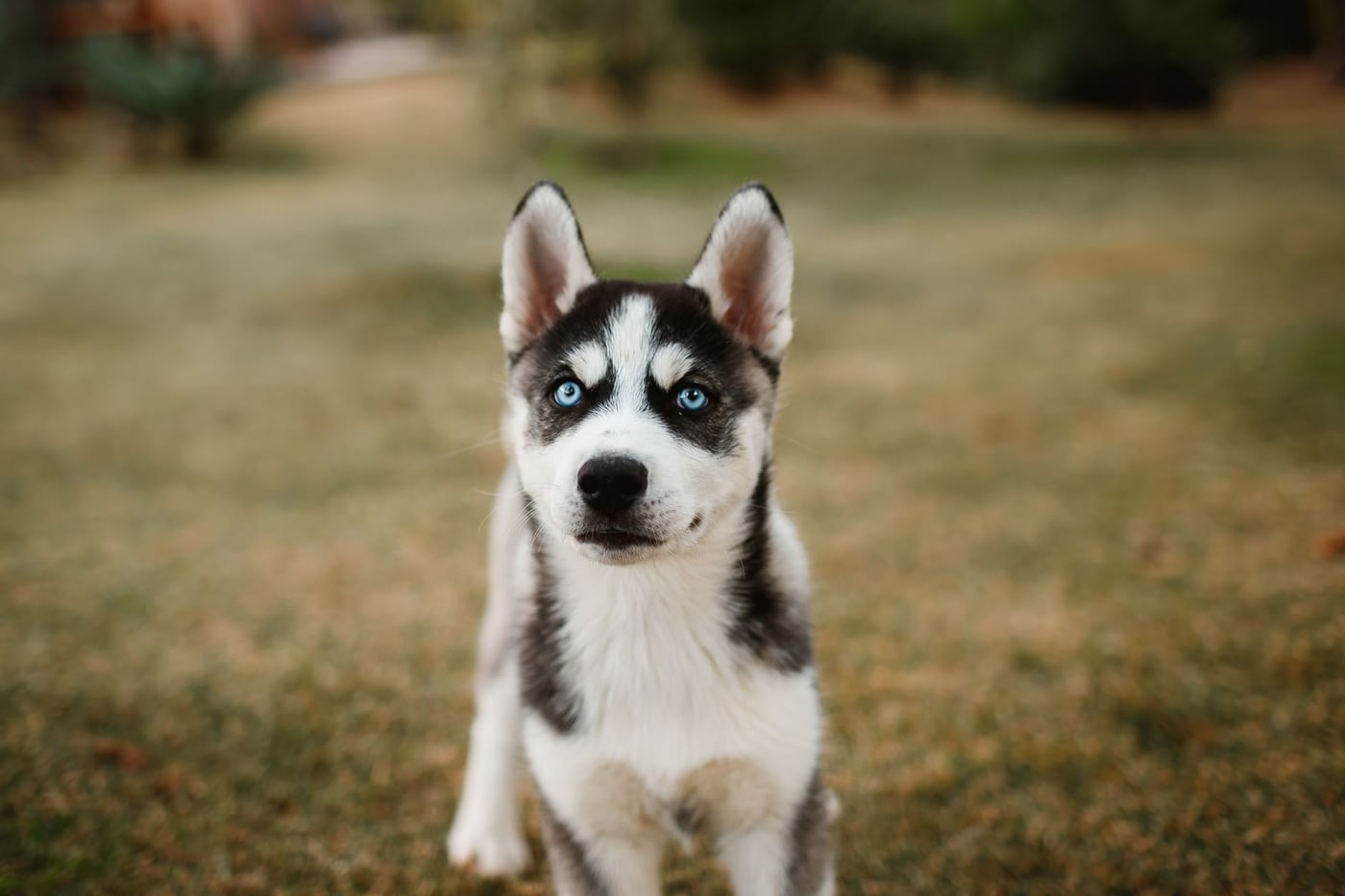
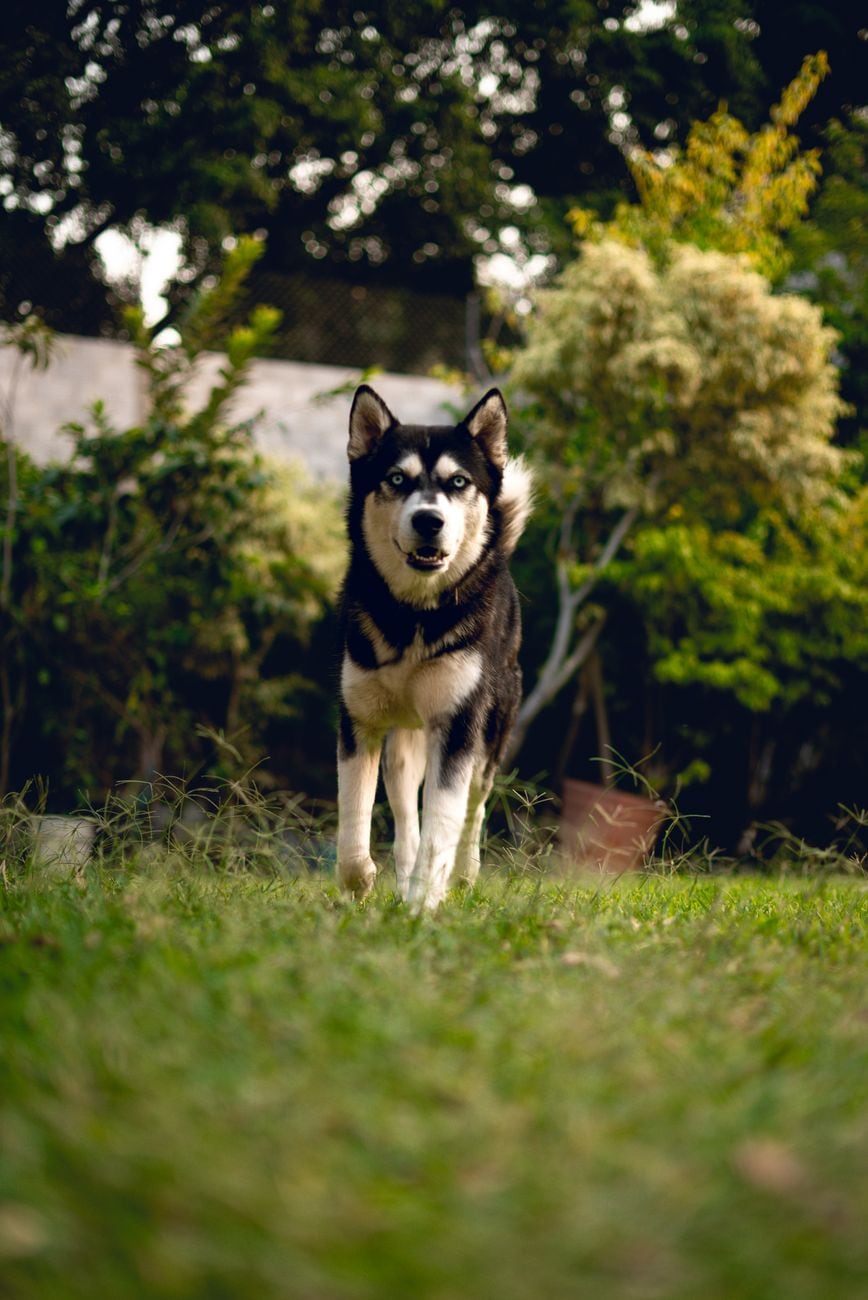
The head is moderately large, with a slightly domed skull and a smooth transition to the muzzle, which is of medium length and symmetrical. The ears are triangular, erect, set close together and very mobile when alert. The eyes are almond-shaped, slightly obliquely set, and are typical in that they can be brown, blue, or any other color (heterochromia) - this is quite common and standard for this breed.
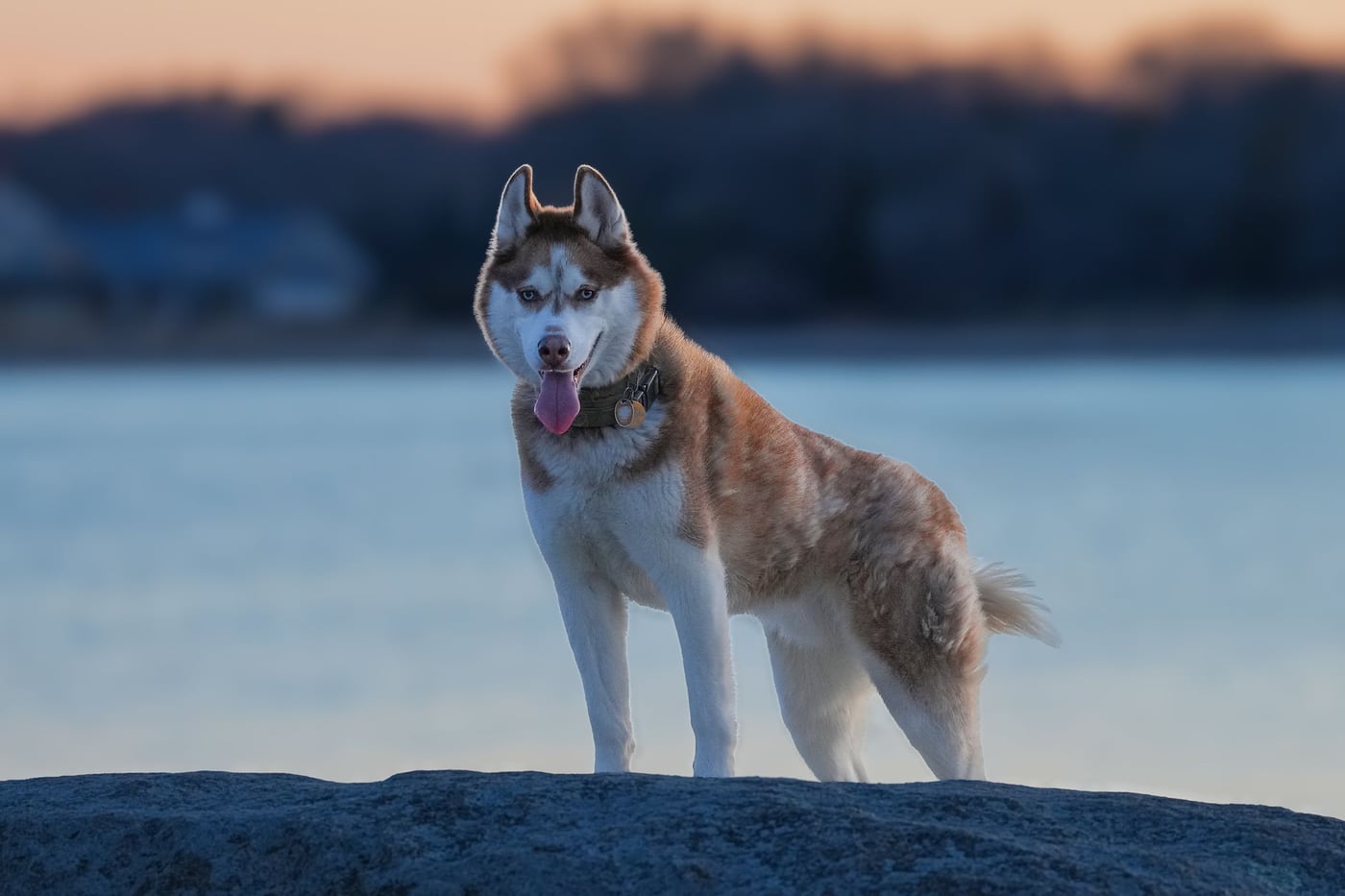
The coat is double and dense, with a soft undercoat and a longer topcoat that lies close to the body and does not appear limp or loose. The length can be described as medium, the coat never forming a long characteristic feathering like in some other breeds. The tail is richly furred, carried in harmony like a "fox brush" - freely hanging at rest, raised in a sickle-shaped arch when alert or in motion, never curled tightly over the back.
The differences between a male and a female are mainly manifested in the overall robustness and weight, females tend to be more delicate in the skeleton and lighter in the head. The color variations of the coat and mask are so rich that they deserve a separate treatment.
Siberian Husky Colors
The FCI standard for the Siberian Husky allows all coat colors from pure white to black, including many shades of gray, brown (red) and their combinations with or without a saddle. A typical feature of the breed are contrasting markings on the head - masks, glasses, interrupted eyebrows or spots - and the color variability also applies to the eyes, which can be brown, blue, amber, or each eye has a different color (heterochromia).
Standard recognized colors
- White
- Black and white
- Gray-white (including wolf gray)
- Agouti (wildly colored, "wolf sable")
- Brown-white (red)
- Sable
- A combination of the above colors with white, typically on the paws, chest and parts of the head
The standard does not prescribe a single mandatory color or pattern on the head - the overall appearance and coat type are assessed, not the exact shade. Therefore, within the recognized colors, a wide range of transitions and combinations are tolerated in the Siberian Husky.
Non-standard coloring
Outside the standard, individuals with colors that are not included in the breed description, such as pure brown without a white portion or significantly different shades outside the normal range, sometimes appear. Such dogs cannot participate in shows according to the standard, but this does not in itself mean that they have to be a health complication - it depends on the specific genetic basis of the deviation.
Siberian Husky personality
The Siberian Husky is a sociable, friendly dog with very high energy and a strong need for contact with people and other dogs. It is definitely not a watchdog in the classic sense of the word - it rarely barks and is more curious and open than wary of strangers.
Its intelligence is undeniable, but it also comes with a strong sense of independence and a trait that owners often describe as stubbornness. The Husky thinks for itself and obedience "at any cost" is not its nature - if it doesn't see the point in obeying a command, it will simply ignore it. This is reflected in the difficulty of training, which requires patience, consistency and, most importantly, imagination, because a dog quickly gets bored with a monotonous drill.
The relationship with the owner is warm and devoted, but the husky does not desire constant confirmation of the position of pack leader - it sees humans more as a partner in activities than as an authority figure to be unconditionally obeyed. The high need for mental stimulation means that it gets bored easily and boredom is typically expressed in undesirable behavior - curling up, running away or destructive biting.
Typical behavioral manifestations
- a strong urge to run after stimuli and explore the surroundings, which makes him a candidate for escapes if the garden is not sufficiently secure
- vocal expressions in the form of howling and "talking" rather than classic barking
- good compatibility with other dogs, but cats need to be aware of a higher hunting instinct
- He is friendly and playful with children, which makes him suitable for families with children.
Siberian Husky and children
The Siberian Husky is friendly with children and can tolerate more lively contact, and thanks to its low barking rate, it does not seem noisy in the household. It is a breed with a strong pack spirit that seeks company and is rarely aggressive towards family members - but this does not mean that living with children can do without rules and supervision.
The high need for exercise and mental stimulation means that the Husky needs a partner who will offer him enough activity - a small child cannot fill this role alone. A dog that does not have enough energy is likely to be restless and less manageable, which will manifest itself in playful unruliness rather than anger when in contact with children. Given the high level of training, it is advisable for a more experienced adult family member, not a child, to set basic obedience and behavioral boundaries.
What to watch out for
- Strong hunting instinct - supervision is appropriate in the presence of small animals and young children while playing, especially until the dog gets used to the normal running of the household.
- The breed's lively temperament and strength can inadvertently overpower a child during uncontrolled pulling on the leash or playing.
- Consistent socialization of your puppy with children of different ages helps prevent misunderstandings in adulthood.
- Children should learn to respect the dog's rest and not disturb it while eating or sleeping.
The Siberian Husky usually gets along well with older children who can respect the rules and join in on walks and games. For families with young children, it is crucial to ensure that all contact is supervised by an adult and that the dog has enough space to rest and burn off energy outside of children's games.
Siberian Husky and other dogs and pets
The Siberian Husky generally gets along well with other dogs - it has always been bred and worked in packs, so living with other dogs in the household is usually problem-free and is often even desirable for it due to its high need for company. A different situation occurs with cats and small animals, where it is necessary to take into account a strongly developed hunting instinct, which has its roots in its original use as a draft and endurance dog in harsh Nordic conditions, where it had to be able to cope on its own.
The relationship with cats therefore needs to be assessed individually and cautiously. If a Siberian Husky grows up with a cat from puppyhood and is properly socialized, he can get used to it and respect it as a member of the household. However, he reacts to strange cats or animals outside with a hunting instinct rather than friendly interest, and the same caution applies to small rodents, rabbits or birds - they should not be left unsupervised near him.
Recommendations for keeping with other animals
- The Siberian Husky usually gets along well with dogs in and outside the household, and will appreciate regular contact with the pack.
- It is advisable to approach cats and small animals with caution and not rely on them to automatically respect you, especially if you did not grow up with them.
- Due to its strong hunting instinct, it is necessary to provide a securely fenced area and not leave the dog unattended near small animals.
Is the Siberian Husky suitable for an apartment?
Probably not. They are only suitable for an apartment in exceptional cases and under demanding conditions – they are a dog with a very high need for exercise and mental stimulation, which is used to surviving in harsh conditions and carries this commitment into everyday family life.
The key problem with apartment breeding is not the volume – the husky barks little, rather communicates with howls and various sounds – but the space and energy it needs to discharge. A small apartment without a garden or without the opportunity to go for a long walk or run several times a day is not enough for it. The lack of exercise and stimulating activities will quickly manifest in this breed as restlessness, destructive behavior or attempts to escape.
- Space: a house with a garden is better than an apartment, ideally with the possibility of free movement in a secure space.
- Exercise: needs long and frequent walks, jogging or pulling sports - just a short walk around the house is not enough.
- Peace and guarding the household: thanks to its low barking rate, it does not disturb the neighbors with noise, but this does not mean that it is suitable as a guard dog inside the apartment.
- Mental stimulation: without enough stimulation and company, they quickly get bored and seek their own – often unwanted – way of having fun.
If the owner can provide enough daily exercise and does not leave the dog alone in a confined space for long hours, apartment living can be manageable. However, without this background, a husky is more likely to be frustrated and unhappy in an apartment.
How much exercise does it need?
The Siberian Husky needs hours of exercise a day, not just a short walk - this is a very high activity breed that was bred for long-distance endurance running. A short walk on a leash will not meet his needs, and lack of exercise will usually manifest itself in restlessness, destructive behavior, or attempts to escape.
Suitable activities and dog sports
Ideal are disciplines that utilize his endurance and natural desire to pull:
- Bikejoring and canicross
- Skijoring and mushing
- Long runs or bike rides
- Hiking and longer walks in the field
Free movement without a leash should be considered carefully and only in a secure area - a strong hunting instinct and tendency to wander are typical traits of the breed.
Mental stimulation
Physical exercise alone is not enough, the Siberian Husky also has a high need for mental stimulation. Training is more demanding for him, because he is an independent-thinking dog that does not have the innate motivation to obey unconditionally - therefore, a motivational, consistent approach is more appropriate than mechanical repetition of commands. Smell games, pulling training or longer training walks with elements of obedience are suitable.
Limitations
Due to its thick double coat, it does not tolerate high temperatures well, so it is advisable to move more demanding activities to cooler parts of the day during the hot summer months and avoid strenuous exercise in direct sunlight.
Training and education
The Husky is one of the breeds with high training requirements, which does not mean that it is unmanageable - rather, it requires a different approach than obedient shepherd or retriever types. It was bred to work independently in a team of draft dogs, not to unconditionally obey commands, and it retains this character trait to this day. The owner should expect the dog to often consider whether the command will "pay off".
What motivates huskies?
Classic reward with a treat works only to a limited extent - it is much more important to have the opportunity to move, run and explore the surroundings. Effective training therefore often relies on making obedience a condition for what the dog wants to do anyway (running out the door, letting go of the leash, playing). Short, dynamic lessons ending with an activity work better than long repetitions of one exercise.
How to conduct training
- Train in short, frequent blocks – the dog quickly rejects long, boring repetitions.
- Consistently build on the basics you have already mastered before moving on to the next step.
- Avoid harsh coercive methods - with this breed, they usually lead to the dog avoiding training, not improving.
- Training the recall systematically and over the long term, because a strong hunting and exploration instinct can lure even a trained individual away when they are free.
Socialization
Thanks to their low barking rate and generally friendly nature, socialization with people and other dogs is relatively easy, and frequent contact with puppies and adults helps maintain a balanced nature into adulthood. The situation is different with small animals and cats - the innate hunting instinct is often strong and the learned rule of "do not chase" cannot always be relied on, even after thorough training.
Due to the requirements described above, the husky is not a suitable first dog for a novice owner - mastering its specific nature usually requires patience, experience, and a willingness to devote time to training and mental stimulation regularly, not just occasionally.
Hair care and hygiene
The double dense undercoat, along with the medium-tough topcoat, is the main topic of Siberian Husky grooming – it is not a soft coat that requires clipping, but a dense insulating layer that needs to be brushed regularly. Brushing once or twice a week with a dense brush or rake that reaches the undercoat is recommended.
Shedding is very pronounced in this breed and typically occurs twice a year in the form of the so-called "undercoat blowout" - during this period, the fur falls out in large quantities for several weeks and combing should be intensified on a daily basis, ideally with the help of a hair blower. Outside this period, the usual weekly frequency is sufficient.
Bathing should be an exceptional event, as thick coats benefit from natural fatty oils that maintain insulating and water-repellent properties. Frequent shampooing disrupts this protective layer, so bathing is usually limited to truly necessary cases of heavy soiling.
Ears, eyes, teeth and claws
- It is advisable to regularly check the ears for redness or excessive oiliness, and wipe them gently if necessary.
- Just check your eyes occasionally and wipe away any cleaning residue in the corners.
- It is a good idea to brush your teeth regularly to prevent tartar buildup.
- Claws need to be trimmed depending on how quickly they grow, especially if the dog does not spend enough time on harder surfaces that naturally wear them down.
Trimming or adjusting the skin folds of the Siberian Husky is not necessary - this is a breed with a natural coat type that does not require aesthetic interventions.
Feeding
Given the high workload that this breed has historically handled as a draft dog, it needs a high-quality complete food with sufficient animal protein and fat to cover its energy needs. However, the amount of food needs to be adjusted individually - the husky is typically very economical in energy conversion and many individuals can get by with less food than would correspond to their size and activity.
It is advisable to choose food according to age, size and actual level of activity - a puppy, an active adult dog and a less active individual have different nutritional needs. In dogs that regularly exercise or pull, the energy requirement increases significantly, while in less active individuals there is a risk of overweight with the same food intake.
Physical fitness check
Due to the thick double coat, weight gain may not be noticeable at first glance, so it is advisable to regularly check the condition by touch - the ribs should be easily felt, but not visible. Excess weight puts a strain on the joints and musculoskeletal system, which needs to be taken seriously in an active breed like the Siberian Husky.
- The feed ration should correspond to the actual physical load, not just the table recommendations based on weight.
- When activity changes (e.g. in winter versus summer), it is advisable to continuously adjust the amount of feed.
- It is a good idea to count treats during training into the total daily intake to avoid unwanted overfeeding.
How long does a Siberian Husky live?
We do not have an exact figure on the lifespan of the Siberian Husky based on a reliable source, but in general, this breed is considered a dog with good vitality in active and well-managed breeding, provided that the owner provides adequate exercise and care.
Life expectancy is influenced by a number of factors that together determine how well and how long a dog lives:
- Genetics: the origin of the puppy and the breeder's responsibility in choosing the parents play a crucial role - the health of the parents is often reflected in the condition of the offspring.
- Physical condition: The husky is built as an endurance working dog, so maintaining a lean, muscular physique without being overweight significantly reduces the strain on the joints and heart.
- Exercise: due to its very high need for activity, it needs regular, sufficiently long and varied exercise - lack of exercise can have a negative impact on both its physical and mental state.
- Prevention: regular veterinary check-ups, vaccinations and deworming are among the basics that help detect potential health problems early.
- Nutrition: a quality diet that meets the energy requirements of an active breed supports proper metabolism and long-term good health.
- Health predisposition: the breed may have an increased predisposition to certain hereditary diseases, so it is advisable to inquire about the health examination of the puppy's parents before purchasing it.
Who is the Siberian Husky suitable for?
The Siberian Husky is best suited to experienced and very active owners who can provide him with plenty of exercise and mental stimulation and who can handle his independent, sometimes stubborn nature. He is definitely not suitable for an apartment without adequate daily exercise or for people looking for an undemanding couch companion.
Who is the breed suitable for?
- For active individuals or families who spend a lot of time outdoors and enjoy sports - running, cycling, and towing sports.
- For owners with previous experience in dog training, as the Siberian Husky requires a patient and consistent approach.
- For households that can provide him with enough mental stimulation so he doesn't get bored and seek out his own entertainment.
- For families with children, to whom he is usually helpful and friendly.
- For owners living in a house with a garden or near nature where they have space to move.
- For those who expect significant coat care during shedding periods.
Who is the breed not suitable for?
- For beginners with no experience with dogs who wouldn't be up to his training and energy.
- For residents of small apartments without the possibility of regular long walks.
- For seniors or people with limited physical fitness who would not be able to handle its high demands on movement.
- For households that leave the dog alone for long hours - it needs close contact with people.
- For owners of cats or small animals, because living with cats can be problematic.
- For those looking for an obedient dog without its own will and decisions.
Interesting facts about the breed
The Siberian Husky originates from the United States of America, although its ancestors were bred by the Siberian Chukchi as long-distance sled dogs. Within the FCI, it is classified in the Nordic Sledge Dogs group under standard no. 270.
Related breeds belonging to the same group of Nordic dogs include the Alaskan Malamute, Canadian Eskimo Dog, Samoyed, Greenland Dog, and Yakut Laika - all of these breeds share an origin in harsh Nordic conditions and use for pulling sleds.
Low barking is a typical trait of the Siberian Husky, but it manifests itself in other vocal expressions - this breed is known for howling rather than barking.
Siberian Husky Health
The Siberian Husky is a breed with relatively robust health, which is related to its working origin and long-term breeding focused on endurance and resistance in difficult climatic conditions. Specific health predispositions are not described in the official FCI standard, the standard focuses exclusively on the exterior and character traits of the breed. Therefore, when choosing a puppy, those interested in this breed should rely primarily on the reputation of the breeder and the health history of the parents, not on general claims about the breed. Given the dense double coat and high activity, it is advisable to pay attention to the overall condition and body structure of the dog throughout its life.
What to look for when choosing a puppy
- Choose a puppy from a breeder who is willing to provide health screenings for both parents and information about their health status.
- Inspect the environment in which the puppies grew up - cleanliness, space for movement and contact with the environment indicate the overall care of the kennel.
- Monitor the behavior and vitality of the puppy and other individuals in the litter, including the mother.
- Ask whether the litter has been monitored by a veterinarian and whether vaccinations and deworming have been carried out according to the standard schedule.
- Consider whether the household and lifestyle of the interested party are in line with the breed's high demands for exercise and mental exertion, because a lack of activity can have a long-term impact on the dog's overall satisfaction and condition.
Known predispositions
The breed is described to have an increased predisposition to:
- to hip dysplasia.
- to progressive retinal atrophy (PRA).
- to juvenile cataract.
- to corneal dystrophy.
- to hypothyroidism.
- to laryngeal paralysis.
- to zinc-responsive dermatosis.
- to uveodermatological syndrome (VKH-like syndrome).
This overview is for informational purposes only and does not replace the examination or recommendations of a veterinarian.
What to buy for a Siberian Husky
Practical basis that is suitable for this breed:
- Toys – Dog toys – fetching, chewing and interactive.
- Cosmetics – Shampoos, conditioners and hair care products.
- Bowls – Feed and water bowls, anti-swallow bowls and stands.
- Collars – Dog collars – leather, textile and semi-tight.
- Beds – Beds and mattresses for dogs of all sizes.
- Leads – Leads, switching leads and tracking lines.
Useful guides
Practical tips that are useful when caring for a dog:
Frequently asked questions
Is the Siberian Husky suitable for an apartment?
Probably not - he needs plenty of space and, above all, a lot of exercise, so an apartment without regular long walks is not enough for him. A house with a garden will offer better conditions, but it still requires daily strenuous exercise outside the property.
Why do huskies shed so much?
It has a double thick coat with an undercoat that changes massively twice a year, which is reflected in a very high rate of shedding. Outside this period, the coat sheds less, but care is needed all year round.
Can a husky run away or is he prone to running away?
Yes, the breed has a strong instinct to pull and explore, which makes it a dog prone to escape if the area is not securely fenced. It is recommended that walks outside of a secure fenced area be on a leash or in a secure enclosure.
Is the Siberian Husky suitable for beginners?
Probably not - the combination of high exercise needs, mental stimulation and more demanding training places high demands on the owner. He is best handled by more experienced, active people who can offer him enough exercise.
Is a husky suitable for children?
Rather yes, the breed tends to be friendly and sociable with children. However, due to its energy and strength, supervision is advisable when playing, especially with smaller children.
Why is husky training difficult?
Originally bred as a working dog working independently at a distance, the Husky has a low natural motivation to obey commands and gets bored easily. Training requires patience, consistency, and lots of motivation in the form of play or treats.
Do huskies get along well with cats?
Probably not – a strong hunting instinct can lead to chasing smaller animals, including cats. Coexistence is possible only with careful socialization from puppyhood, but success is not guaranteed.
Resources and further information
- FCI Standard No. 270 – Siberian Husky – Fédération Cynologique Internationale
- Source of body measurements – fci.be
Professional cooperation
This breed overview was created in cooperation with the Veterinary Clinic VYVET sro and MVDr. Adam Hylák .