
Published 1. 9. 2026
The Harrier is a medium-sized breed originating from Great Britain, classified in FCI Group 6 among hounds (Scent hounds section, standard no. 295). It was created as a pack hunting dog intended for hunting hares, which is reflected in its endurance, excellent sense of smell and strong hunting instinct. It has a short, low-maintenance coat, moderate shedding and minimal drooling.
The Harrier is lively, sociable and loud in nature - it barks often and happily. It needs a lot of exercise and mental exertion, otherwise it will find its own entertainment, usually in an undesirable way. It gets along well with dogs, but cats should be approached with caution due to its hunting instincts. It is suitable for children and active owners who can offer it enough space and more demanding training. On the other hand, it is not very suitable for apartments, seniors or beginners.
Professionally consulted
The content was created in cooperation with the veterinary clinic Veterinární klinika VYVET sro and MVDr. Adam Hylák.
Quick overview
What is Harrier like?
The Harrier is a medium-sized English hound (FCI Group 6, Scent hounds section), originally bred for pack hunting of hares. It is an energetic, tenacious dog with a high need for exercise and mental stimulation, for which a short walk is not enough - it needs real exercise, ideally in the form of long walks, jogging or dog sports based on tracking.
The Harrier is social by nature and strongly attached to its owner, it does not tolerate loneliness well. Training requires patience and consistency, as it is an independently thinking hunting breed with a tendency to follow scent trails regardless of the surroundings. It barks a lot, which needs to be taken into account when deciding on housing.
Suitable for:
- active owners who spend a lot of time outdoors
- households with a large garden, not for an apartment
- families with children where the dog is involved in the daily program
- more experienced breeders, not complete beginners
On the contrary, it is less suitable for seniors or households with cats, where it could show a hunting passion.
Origin and history of the Harrier
The Harrier originated in the British Isles as a pack hound designed to hunt hares, with its history dating back to the Middle Ages, when English nobility bred packs of dogs capable of persistently tracking small game all day long. The breed's name is derived from the English word for hare, which directly refers to its original hunting specialization.
The Harrier is believed to have originated from the crossing of various types of Old English Hounds, with the addition of blood from other hunting breeds over the centuries, including Foxhounds and possibly some Continental Hounds brought to England. The aim of the breeding was to create a dog that was smaller and more agile than the Foxhound, but also hardy and with an excellent sense of smell, capable of working in packs for long hours in the field, hunting on foot or on horseback.
For centuries, the Harrier was bred almost exclusively as a working dog in the hands of hunters who emphasized performance and endurance, not uniform appearance - therefore, the breed developed for a long time in various regional lines, which differed in size and build. It was only with the development of organized cynology in England during the 19th century that these packs gradually began to be unified and described as a distinct breed, distinct from both the foxhound and the smaller beagle.
International recognition came through the FCI, where the Harrier is included in the hound group with a standard based on the English cynological tradition. Outside the British Isles, the Harrier has always remained a relatively rare breed, used primarily as a pack hunting dog, and its spread to other countries has been limited.
Appearance and size
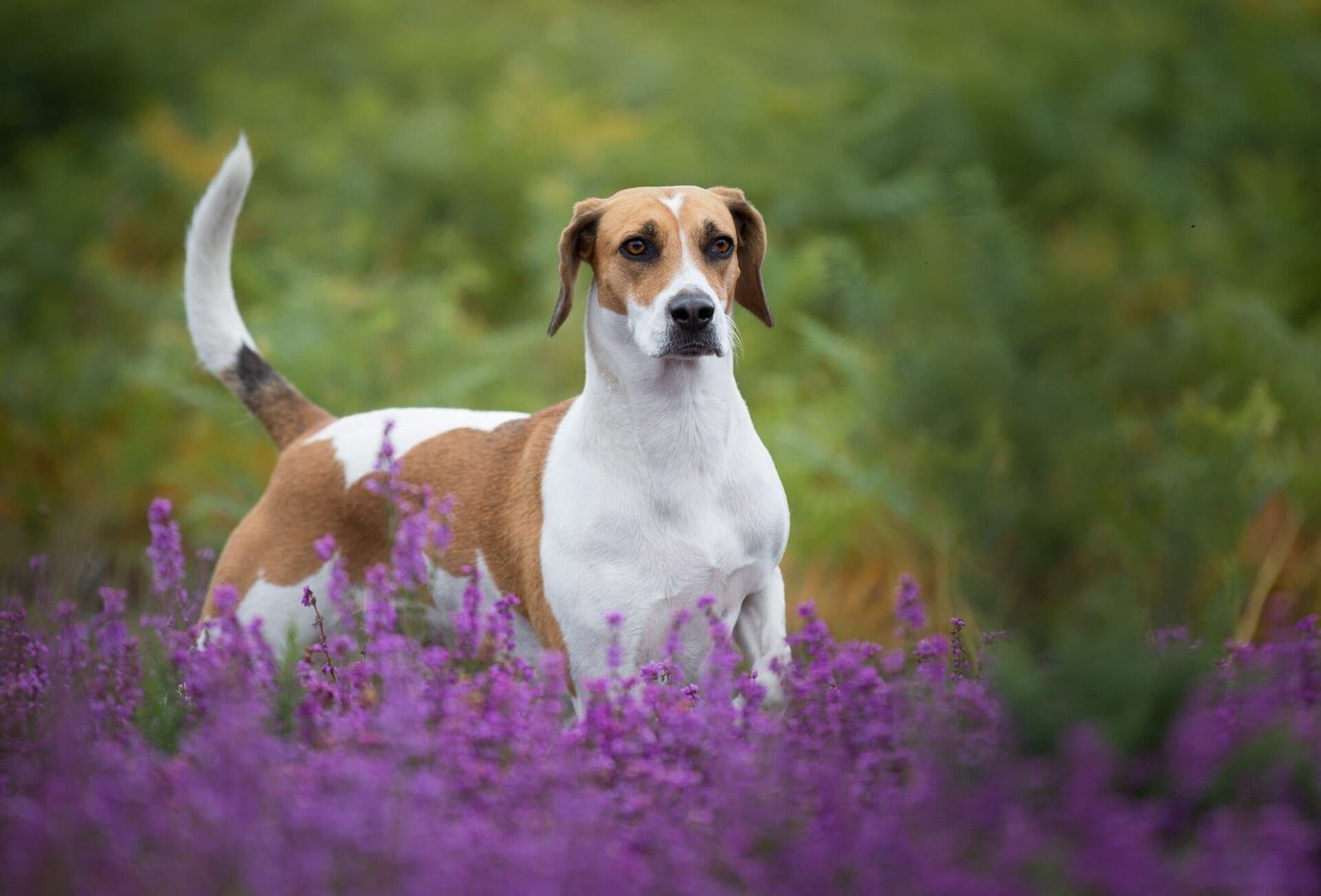
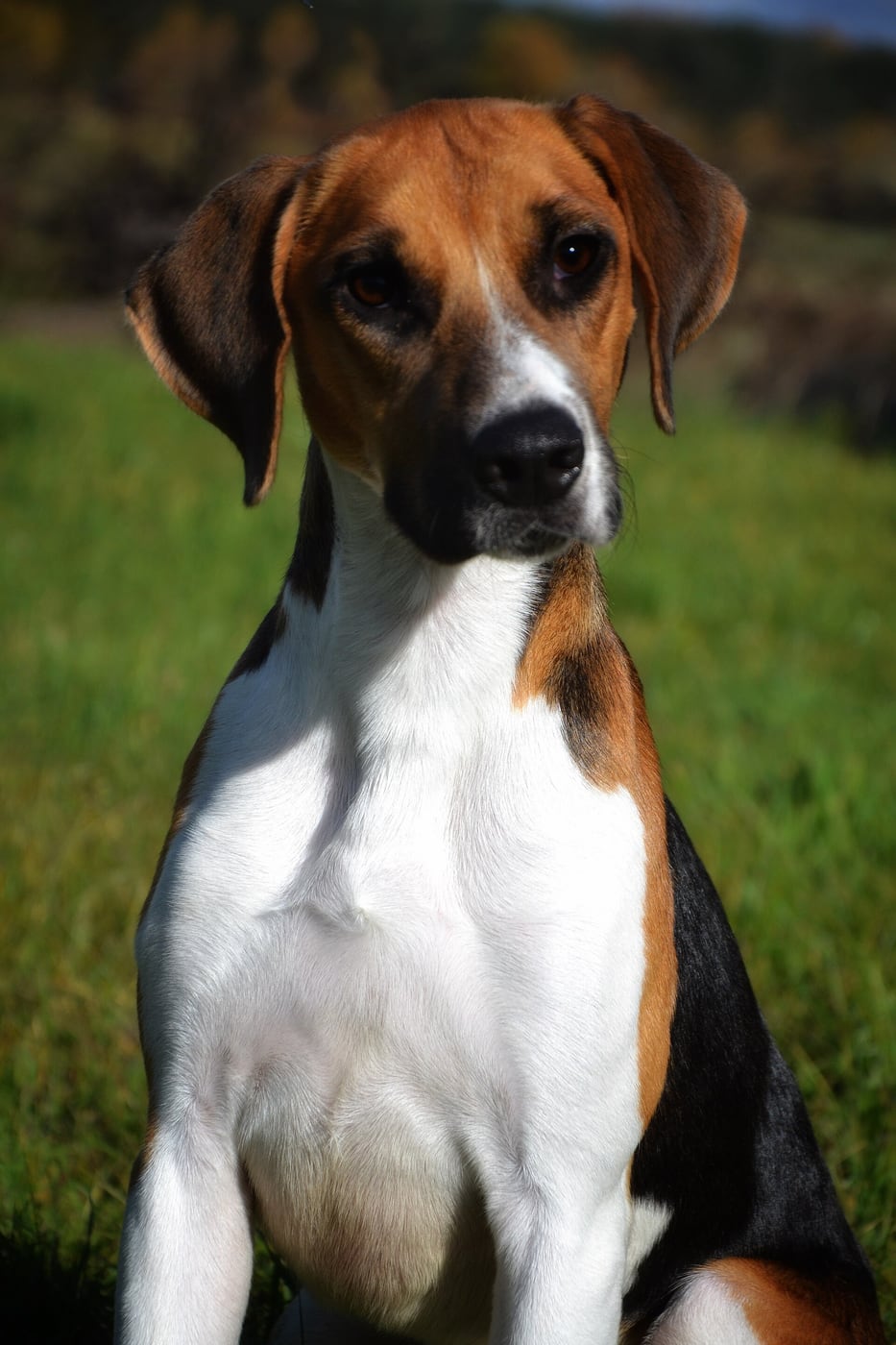
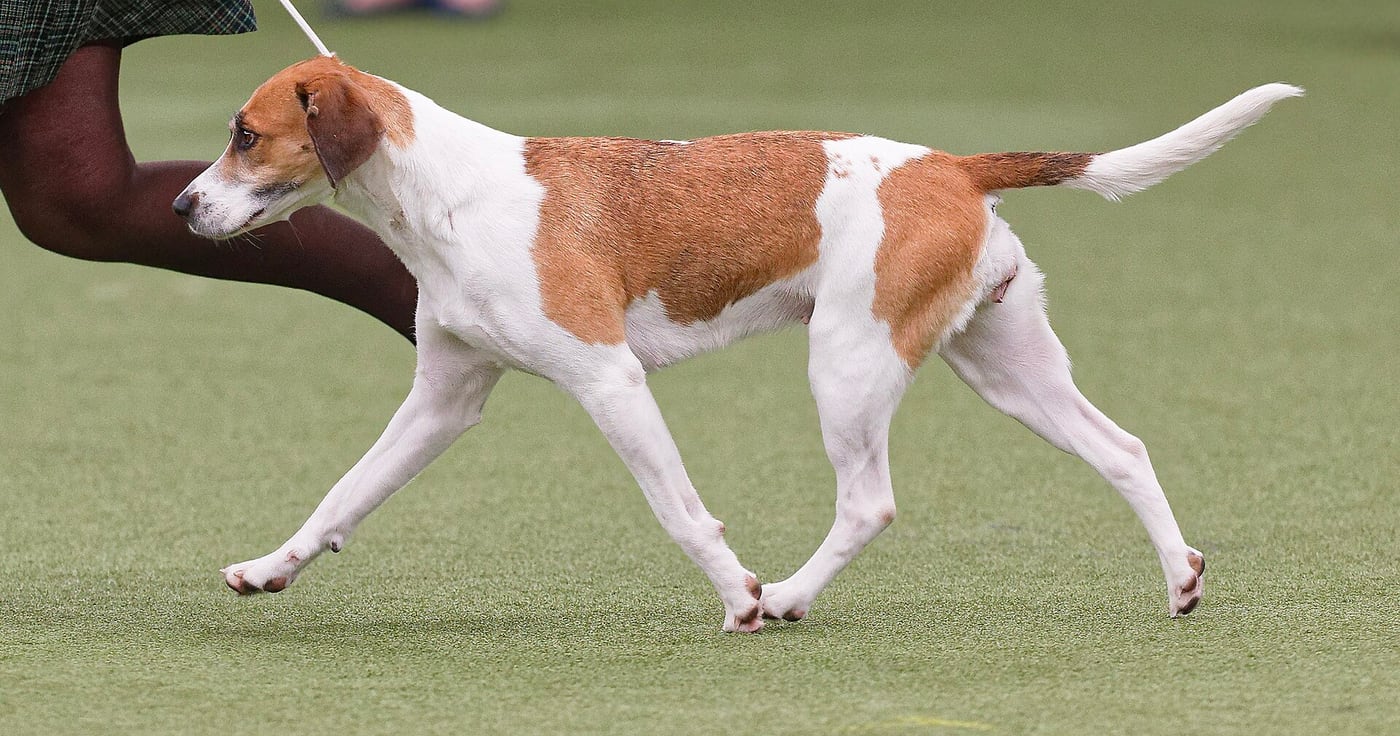
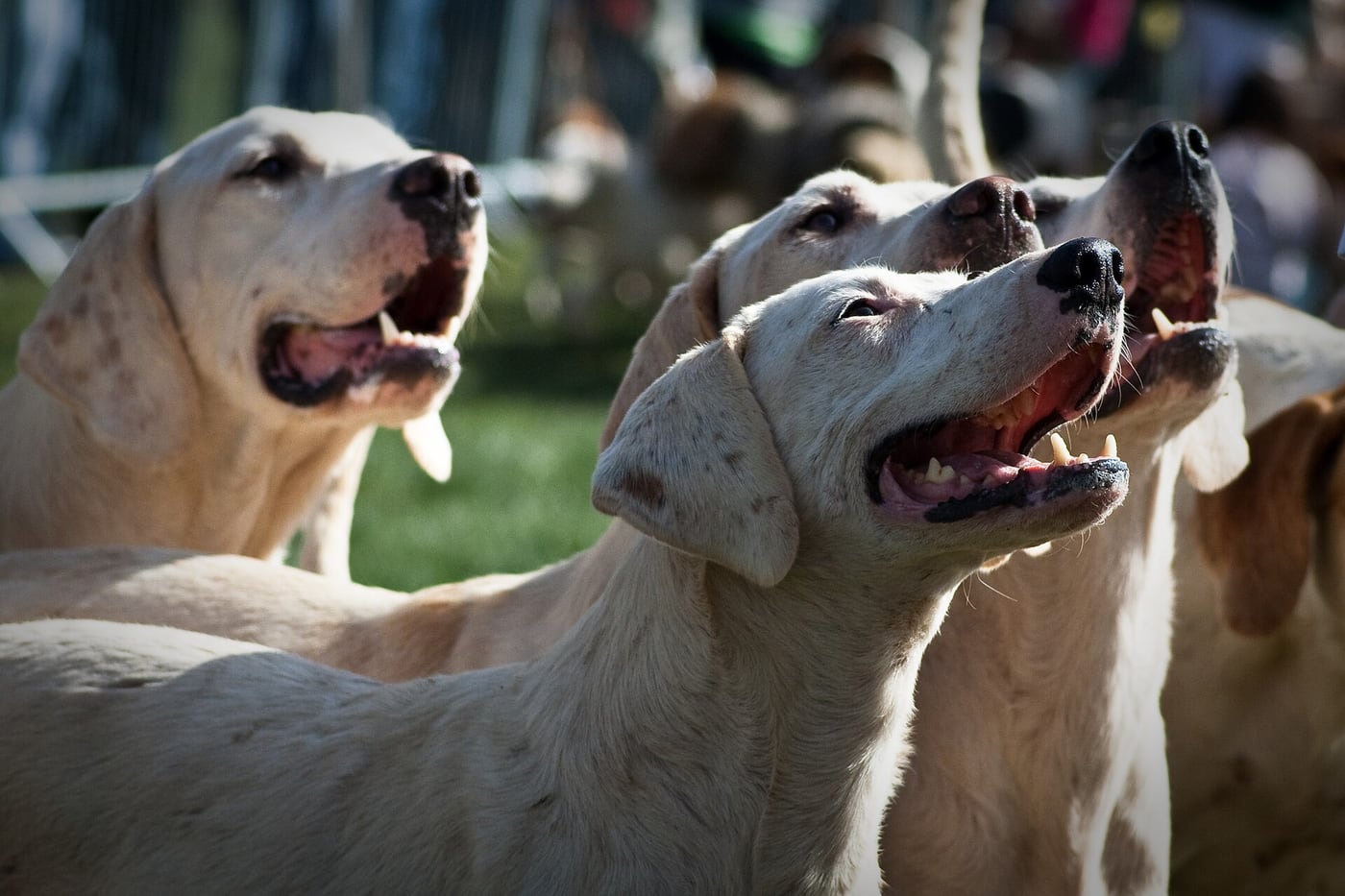
The Harrier is a medium-sized English hound with an athletic, compact build that reflects its origins as a dog designed to hunt in a pack. The body is solid and muscular, with enough bone to withstand long hours in the field, but without being heavy-handed - the overall impression is balanced and athletic.
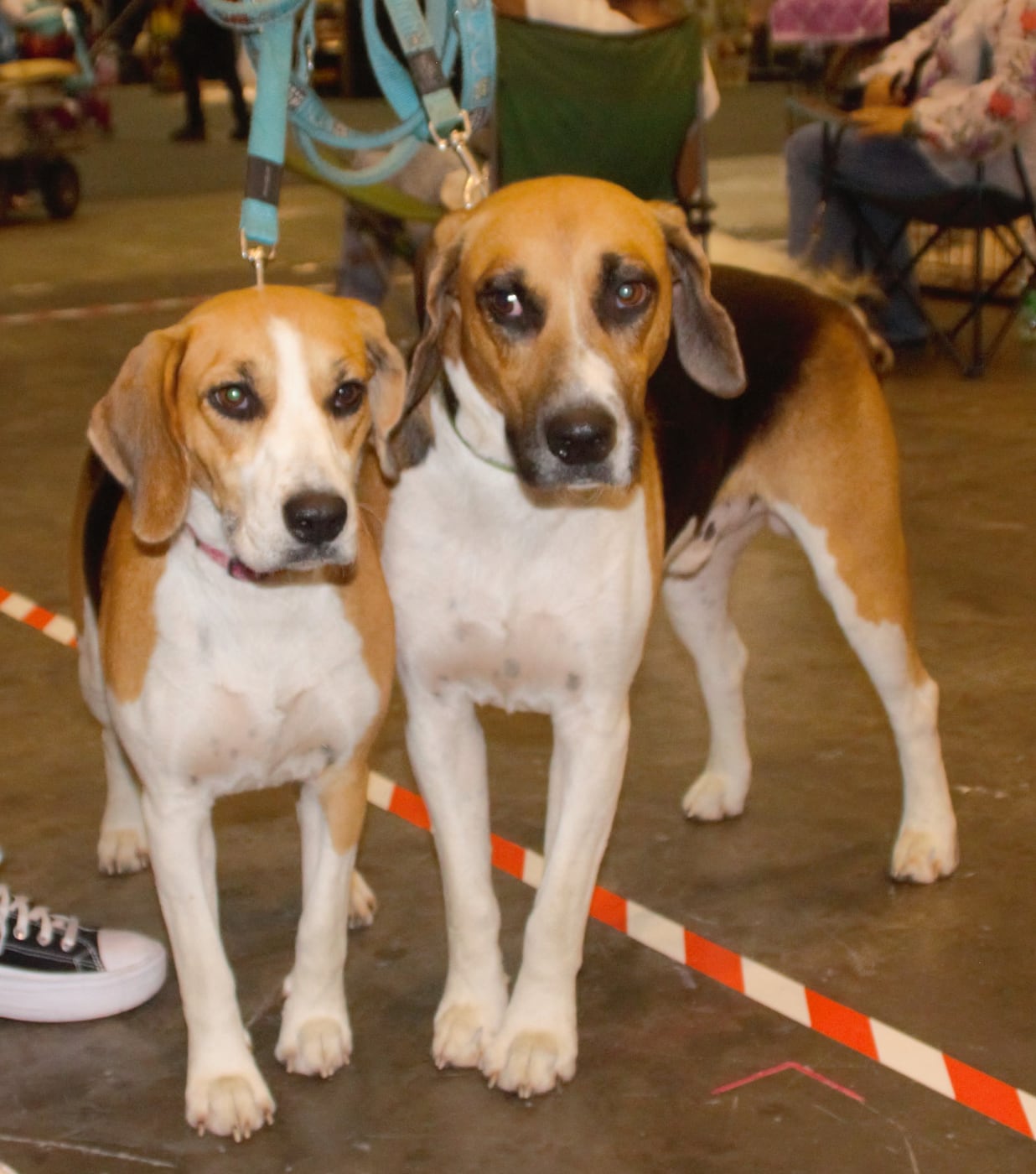
The head is moderately broad, with a strong but not overly massive expression, typical of scent hounds. The ears are set rather low, hanging to the sides of the head, a characteristic of this entire group of breeds. The eyes appear alert and lively, in keeping with the dog's nature of being constantly aware of its surroundings.
The Harrier's coat is short, dense and close to the body, making it a low-maintenance dog. The tail is carried high, but not curled over the back, and serves as a clearly visible "flag" for other pack members when the dog moves.
Differences between a dog and a bitch
The standard does not distinguish between the sexes in terms of significant differences in proportions - the differences tend to be in overall robustness and weight, with males usually appearing slightly more stocky than females.
Coat color variations are described in detail in a separate section dedicated to breed coloration.
Harrier colors
A specific list of color variants recognized by the standard is not available in the FCI documents in a detailed form, therefore it is not possible to list the exact shades and their combinations here. In general, in hounds of this type, to which Harrier belongs, the classic tricolor and bicolor combinations typical of English pack hounds are tolerated - the standard is relatively benevolent in this regard and emphasizes body structure, movement and overall expression rather than a precisely defined palette of colors.
We recommend that those interested in this breed check the current version of the FCI standard No. 295 directly with the breed club or breeding advisor, who can provide accurate information about permitted colors and any disqualifying marks.
Harrier's nature
The Harrier is an energetic and sociable hound that prefers exercise and mental stimulation over couch time. It is a pack dog bred to hunt persistently in a group, which is reflected in its nature - it needs contact with its family and other dogs and does not tolerate long-term loneliness.
The Harrier forms a strong bond with its owner, but it is not a submissive or easily controlled dog. It is intelligent and quick to understand context, but at the same time it retains its own judgment and a tendency to act independently - especially if it picks up a trail. This combination of intelligence and independence makes training a rather demanding discipline, requiring patience, consistency and the ability to offer the dog something more interesting than just obedience to command.
A sign of its hunting past is its loudness - the Harrier barks often and happily, whether when excited, bored or when it discovers an interesting scent. The guarding instinct in the classical sense is not at the forefront for it, it will bark to warn of an unusual stimulus rather than actively defending its territory.
He is friendly towards children and tolerates lively household activities well, and gets along well with other dogs, which is consistent with his pack origin. However, with cats and smaller animals, you need to take into account a strong hunting instinct, which can complicate his relationship with them. An untrained Harrier tends to seek entertainment on his own - whether through barking or attempts to escape on a trail - so sufficient physical and mental exercise is a basic condition for balanced behavior.
Harrier and children
The Harrier is rather well tolerated with children, but it is a hunting dog with high energy and a strong prey drive, which needs to be taken into account with small children - sudden movements and running around can easily provoke a chase in it, which the child will not be able to control. Therefore, coexistence works best in families that can provide it with enough exercise and at the same time set clear rules of mutual behavior between the dog and children.
Early and consistent socialization of the puppy plays a key role - getting used to a child's voice, touch, and unpredictable movements should be part of the upbringing from an early age. Given the high level of training, you cannot rely on the dog to "raise itself" - without targeted guidance, it can become stubborn and less willing to obey commands, which in practice means the need for patient and systematic training, even in the presence of children.
What to watch out for
- Adult supervision should be a given whenever a dog comes into contact with young children, especially in the first years of living together.
- A high need for exercise and mental stimulation means that an under-exercised dog can be restless and less patient – regular exercise outside prevents tension inside the household.
- Children should be taught not to tease the dog, yell at it, or force it into situations it does not understand.
- Due to the dog's pronounced barking, it is advisable to discuss with children that the dog's loud expressions are a natural part of its communication, not aggression.
The Harrier is generally not recommended as a first dog for families with young children who are inexperienced with the more demanding training of a hunting breed - it is better suited to households where someone is willing to actively and consistently care for it throughout its development.
Harrier and other dogs and pets
The Harrier was bred as a pack hound for hunting hares, and its relationship with other dogs is consistent with this - it usually gets along well with its companions and living in a multi-dog household is usually not a problem. Its pack origin makes it a dog that benefits from contact with other dogs and fulfills its need for companionship.
But it's different with cats and small animals. The strongly developed sense of smell and hunting instinct, thanks to which the Harrier was able to follow the trail of a hare for hours, is also reflected in his everyday life - small animals in motion can easily trigger his hunting instinct. Therefore, living with a cat is not a given and depends on the specific nature of the dog and whether they grew up together since puppyhood.
What to watch out for
- Small rodents, rabbits, or free-roaming poultry in the household pose a risk factor due to their strong hunting instinct.
- Meeting a cat should always be gradual and controlled, ideally from an early age.
- When walking outside a fenced area, it is important to note that the Harrier may react to the movement of small game and follow its trail.
- On the other hand, contact with other dogs is usually without major complications and pack behavior is part of the breed's nature.
Is the Harrier suitable for an apartment?
No, the Harrier is not suitable for an apartment. It is a pack hound bred for long hunts in the field, and its requirements for space and movement correspond to this - a closed apartment practically cannot offer it the conditions in which it would feel satisfied.
A house with a garden is ideal, but the dog needs to go outside for long and physically demanding walks. Without sufficient daily exercise, its high activity level and need for mental stimulation will quickly become apparent - an unused Harrier tends to be restless and difficult to handle.
Another factor is the high barking rate of this breed. In a densely built-up area or in an apartment building with thin walls, conflicts with neighbors can easily occur, while in a secluded area or in a house with sufficient privacy, this behavior is much less problematic.
Due to its high need for company, the Harrier does not tolerate long-term loneliness well - it needs owners who spend time with it actively and regularly, not just short walks around the house.
How much exercise does it need?
The Harrier is a pack hound bred for all-day running in the field, and its need for exercise corresponds to this - it belongs to the breeds with high demands on physical activity, which are definitely not satisfied with a short walk on a leash. The daily dose of exercise should be long, varied and, if possible, combined with the possibility of free running in a safe, fenced area - thanks to its strong hunting instinct, it will easily pick up a trail and set off after it regardless of commands.
Suitable activities
- Long walks and running in the field, ideally in combination with another dog - Harrier is used to working in a pack
- Accompanying dogs while cycling or running (canicross) for owners with endurance fitness
- Track and scent work that will utilize his innate predisposition to hunt by smell
- Agility or dog trekking as an organized form of exercise with clear rules
In addition to physical exercise, the Harrier also needs significant mental stimulation - it can suffer from boredom and lack of stimulation as well as lack of exercise, which often manifests itself in increased barking or an attempt to escape following a scent trail. Given the high level of training and strong hunting instinct, it is advisable to include training elements based on scent work and distance obedience.
This is a short-haired breed without predispositions to respiratory problems associated with brachycephaly, but it is still wise to adjust the intensity and duration of physical activity on hot summer days and avoid prolonged exposure to direct sunlight during the hottest part of the day.
Training and education
Training a Harrier is one of the more challenging tasks – it is a scent hound bred for independent work in the hunt, and this hereditary independence is also manifested in everyday life. The dog is easily carried away by the trail and at that moment ceases to perceive the owner's instructions, so reliable obedience in free time is the exception rather than the rule for this breed.
The number one motivation is smell and movement - exercises based on smell games, finding treats or tracking tend to be more effective than classic obedience drills. Rewards in the form of food work well, but it is necessary to take into account that it is difficult to beat the competition in the form of an interesting clue.
How to train
- Short, frequent and clearly structured lessons work better than long training blocks – Harriers get bored quickly if the same thing is repeated.
- Positive leadership with an emphasis on reward is preferable to harsher methods, which are more likely to provoke resistance or ignorance in this independently thinking breed.
- Recalling needs to be trained systematically and over the long term, ideally first in fenced areas - in open terrain with a tempting trail, reliability is significantly reduced.
- It is recommended to involve the dog's sense of smell in training in a targeted manner, for example in the form of scent games, which also serve as mental exercise.
Socialization should begin in puppyhood and be varied - meeting people, different environments and other dogs helps to manage the high need for company and reduces the risk of frustration from isolation. Given that the breed is rather friendly towards other dogs, group socialization is often beneficial, but caution is needed with cats and small animals due to hunting instincts.
Due to the combination of high energy, strong hunting instinct and need for constant mental stimulation, the Harrier is not suitable for owners without experience with similarly independent breeds. Consistency, patience and plenty of exercise combined with training are key with this dog - without them, disobedience and undesirable behaviors arising from boredom can easily develop.
Hair care and hygiene
The short, smooth coat of the Harrier requires minimal care – a weekly brushing with a rubber-tipped brush or glove is enough to remove dead hair and promote a natural shine. The breed sheds moderately, so during the spring and autumn moulting periods, it is advisable to increase the frequency of brushing to two to three days a week to prevent hair from ending up all over the house.
Bathing should be the exception rather than the rule – given their coat type, you should only bathe your Harrier when they get really dirty, such as after a field trip or a bog, which they like to encounter as a hunting dog. Frequent bathing will strip the coat of natural oils and could irritate the skin.
Ears, eyes, teeth and claws
The hanging ears of the Harrier deserve regular inspection, as they restrict airflow and allow moisture and dirt to accumulate more easily - especially after being outdoors or after a bath, it is a good idea to inspect the ears and wipe them gently if necessary. The eyes should be checked occasionally for redness or excessive watering. The teeth should be cleaned regularly to prevent tartar buildup, and the claws should be trimmed regularly if they do not wear down naturally with the sufficient outdoor exercise to which this active breed is accustomed.
Feeding
Due to its high activity and hunting nature, the Harrier needs a high-quality complete food with a sufficient proportion of animal proteins and energy to cover its exercise requirements. The choice of food should correspond to its age, weight and level of actual load - a hard-working individual consumes significantly more energy than a dog with a calmer regime.
Life stage adaptation
- A puppy requires food that supports gradual, even skeletal and muscle growth, not rapid weight gain.
- An active adult will appreciate a balanced diet with enough protein and fats corresponding to their physical performance.
- An older dog with a lower load needs food with adjusted energy value to prevent unwanted weight gain.
Physical fitness check
Because this is a breed built for sustained exercise, it is advisable to regularly monitor its physical condition by sight and touch - the ribs should be easily palpable, but not visible. If the dog's physical activity is temporarily limited, it is advisable to reduce the amount of food accordingly to avoid excess weight, which puts a strain on the joints and musculoskeletal system.
It is also advisable to divide the daily dose into two portions and ensure plenty of fresh water, especially after physically demanding training or hunting activities.
How long does a Harrier live?
Exact figures on the lifespan of the Harrier are not available, but in general, medium-sized hunting breeds with a balanced body structure and low joint stress tend to have a longer lifespan within the dog population. The Harrier is an active dog bred for persistent movement in the field, which, with appropriate care, supports good fitness even in later life.
What influences life expectancy the most?
- Genetics: the health of the parents and responsible breeding have a major influence on how long and in what condition a dog will live.
- Physical condition: The Harrier is built for endurance work, and maintaining a lean, muscular physique without excess weight significantly reduces the strain on the joints and heart.
- Exercise: due to its high level of activity, it needs regular and sufficiently long exercise - its lack will affect not only physically but also mentally.
- Prevention: regular veterinary check-ups, vaccinations and deworming help detect potential problems early.
- Nutrition: a quality diet appropriate for age, weight and energy expenditure supports good health in the long term.
- Health predisposition: as with other breeds from the hound group, the Harrier may have an increased predisposition to joint problems, especially with high stress in youth or, conversely, with a lack of exercise in adulthood.
Who is Harrier suitable for?
The Harrier is a pack hound bred for all-day field work, and its character as a pet reflects this. It is best suited to families or individuals who can offer enough exercise, space and time for training - without this, this breed can easily become a source of frustration for both dog and owner.
Who is the breed suitable for?
- For active owners who spend a lot of time outdoors and can offer their dog running, tracking or other demanding physical activities every day.
- For households with a garden or access to a large outdoor space – an apartment is not enough for a Harrier.
- For owners with experience in training hunting or hound breeds who can handle consistent and patient work with the dog.
- For families with children, where the dog is involved in family activities and is not left alone for long hours.
- For those looking for a pack companion or a dog that gets along well with other dogs.
Who is the breed not suitable for?
- For beginners without experience with more demanding training – Harrier requires firm leadership and patience.
- For seniors or people with limited mobility who would not be able to handle its high activity demands.
- For owners of apartments or smaller homes without the possibility of regular outdoor play.
- For households with cats or small animals, as the hunting instincts of this breed cannot be completely trusted.
- For people who spend most of the day away from home – Harriers do not tolerate long-term loneliness and need intense contact with people.
Interesting facts about the breed
The Harrier originated in Great Britain as a pack hound designed for hunting on horseback and on foot, which is still reflected in its nature today - it needs active exercise and company, a solitary life does not suit it.
The name of the breed and its classification in FCI Group 6 among scent hounds (Scent hounds) reveal the main purpose of its existence: following the trail by smell, not sight. This is also reflected in the pronounced barking that pack hounds have carried for generations as a means of communication during the hunt.
Among continental hounds, the Harrier is more closely related in spirit than in origin – for example, the Nivernais Wirehaired Hound, the Ariège Hound or the Poitevin work similarly, although each of these breeds developed in a completely different country and tradition.
Harrier Health
Specific health information about the Harrier is not detailed in the available sources – it is a breed kept in relatively small numbers outside the British Isles, and therefore extensive health studies are lacking. In general, however, it is a hardy pack hound with a medium-heavy, functional body build, which is associated with a lower risk of orthopedic problems typical of more extreme body proportions. As with most active hunting breeds, health is closely related to sufficient exercise and adequate physical fitness throughout life.
Musculoskeletal system and joints
In medium to large hunting breeds with high physical activity, it is generally recommended to monitor the condition of the hip and elbow joints, especially in individuals intended for intensive endurance use. In the Harrier, which is destined for long hours of field work, gradual loading of the joints during the growth period is important to prevent later problems.
Ears
The drooping ears, typical of hounds, can restrict natural ventilation of the ear canal in active dogs moving in undergrowth and water. Regular ear check-ups are essential for this breed.
Overweight and fitness
The Harrier is built for sustained movement and without sufficient exercise, it tends to consume excess energy relative to its expenditure, which in hunting breeds generally results in the risk of overweight. Maintaining a lean body condition reduces the strain on the joints and overall health in later life.
What to look for when choosing a puppy
- Be interested in the health status and physical activity of parents, especially the condition of joints in actively working individuals.
- Check to see if the puppy comes from a breed that emphasizes endurance and functional body structure, not just exterior.
- Examine the puppy's and parents' ears for signs of repeated inflammation.
- Ask the breeder about the temperament and energy of the litter - the Harrier puppy needs an owner who is prepared for high activity and mental stress.
Known predispositions
- The Harrier breed may have an increased predisposition to hip dysplasia.
- to cancer, as is common in many dog breeds.
Discussed risks
The breed is described to have an increased predisposition to:
- to epilepsy.
- to inflammation of the external ear canal (otitis externa) in connection with protruding ears.
- to overweight and obesity due to insufficient physical activity.
- to hypothyroidism (reduced thyroid function).
This overview is for informational purposes only and does not replace the examination or recommendations of a veterinarian.
What to buy for Harrier
Practical basis that is suitable for this breed:
- Car seats for dogs – Car seats and safety equipment for transporting a dog by car.
- Toys – Dog toys – fetching, chewing and interactive.
- Cosmetics – Shampoos, conditioners and hair care products.
- Bowls – Feed and water bowls, anti-swallow bowls and stands.
- Collars – Dog collars – leather, textile and semi-tight.
- Beds – Beds and mattresses for dogs of all sizes.
- Leashes – Leashes, switch leashes and tracking lines.
Useful guides
Practical tips that are useful when caring for a dog:
Frequently asked questions
Is the Harrier suitable for an apartment?
No, the Harrier is not suitable for an apartment. It is a hardy hound with a high need for exercise and space, which needs a garden and plenty of opportunities to run.
How difficult is it to care for a Harrier's coat?
Grooming is easy as the Harrier has a short coat with only moderate shedding. Regular brushing is sufficient without the need for professional trimming.
Is the Harrier suitable for beginners?
Probably not – the Harrier requires rigorous training and an experienced owner who can work with its hunting instincts and independent nature. Without consistent guidance, it can be difficult to control.
Does the Harrier get along with cats and other smaller animals?
Probably not, because it is a hunting breed with a strong predatory instinct. Therefore, there is a risk that it will perceive cats and small animals as prey, although individual socialization can improve the situation.
Why does Harrier bark a lot?
The high barking rate stems from its original use as a pack hound, where vocalization was used to communicate while hunting. This behavior is deeply ingrained and cannot be completely eliminated, only directed through training.
Is the Harrier suitable for children?
Rather yes, the Harrier is friendly towards children and can tolerate their lively expressions. However, due to its energy and size, supervision is advisable when playing, especially with smaller children.
Is the Harrier suitable for seniors?
No, this breed is not an ideal choice for seniors due to their high need for exercise, mental stimulation, and demanding training. The Harrier needs an active owner who will provide them with enough physical exercise.
What was the Harrier originally bred for?
The Harrier was bred in the UK as a pack hound primarily for hunting hares, hence its endurance, strong sense of smell and need to work in a group.
How much exercise does a Harrier need per day?
The Harrier needs a very high level of exercise, corresponding to his high activity level and hunting background. Short walks are not enough for him - he will appreciate long walks, jogging or dog sports.
Does the Harrier tolerate solitude well?
No, the Harrier has a high need for company and does not tolerate loneliness well. As a pack breed, he is used to contact with others and prolonged isolation can lead to undesirable behavior.
What similar breeds are there to the Harrier?
Related breeds include the Nivernais Wirehaired Pointer, the Ariège Pointer, and the Poitevin, other French and English hounds of a similar type. All of these breeds share a hunting use and a strong sense of smell.
Resources and further information
- FCI Standard No. 295 - Harrier - Fédération Cynologique Internationale
- Source of body measurements – fci.be
Professional cooperation
This breed overview was created in cooperation with the Veterinary Clinic VYVET sro and MVDr. Adam Hylák .