
Published 7. 9. 2026
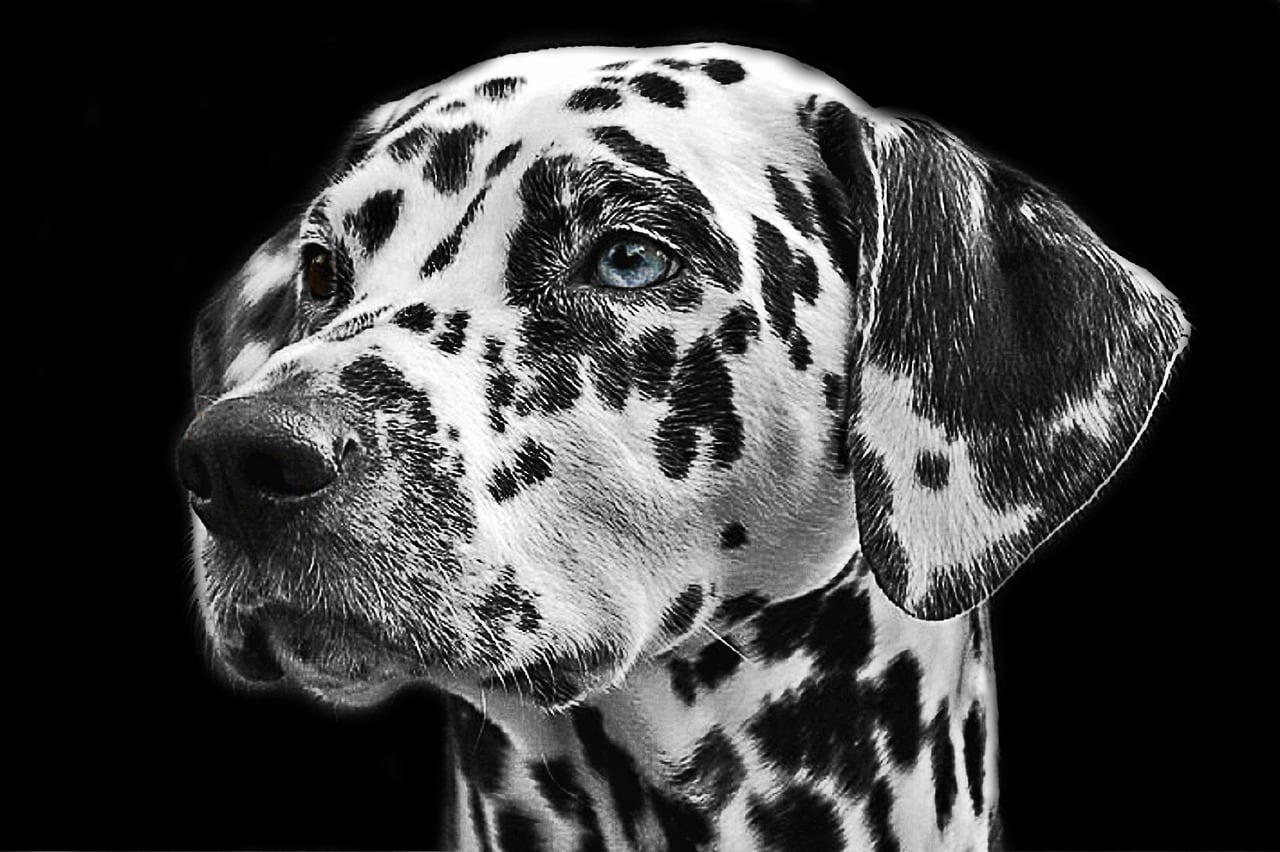
The Dalmatian is a large breed originating from Croatia, where it is called Dalmatinski pas in its original homeland. Its spotted appearance and short, dense coat, which, despite its low maintenance requirements, sheds quite heavily, are unmistakable. In the FCI, it is classified in Group 6 among related breeds, but historically it was also used as a companion dog for carriages and hunting.
In terms of temperament, this is an energetic, sociable dog that is strongly attached to its family - it does not tolerate loneliness or long separations well. It needs plenty of exercise and mental stress, which is why it is more suitable for active owners than for beginners or seniors looking for a calmer companion. The Dalmatian is friendly with children and usually gets along well with other dogs, but its behavior towards cats varies depending on its individual nature and socialization. An apartment as the only space is not enough for it, it needs regular energy output outside.
Professionally consulted
The content was created in cooperation with the veterinary clinic Veterinární klinika VYVET sro and MVDr. Adam Hylák.
Quick overview
What is a Dalmatian like?
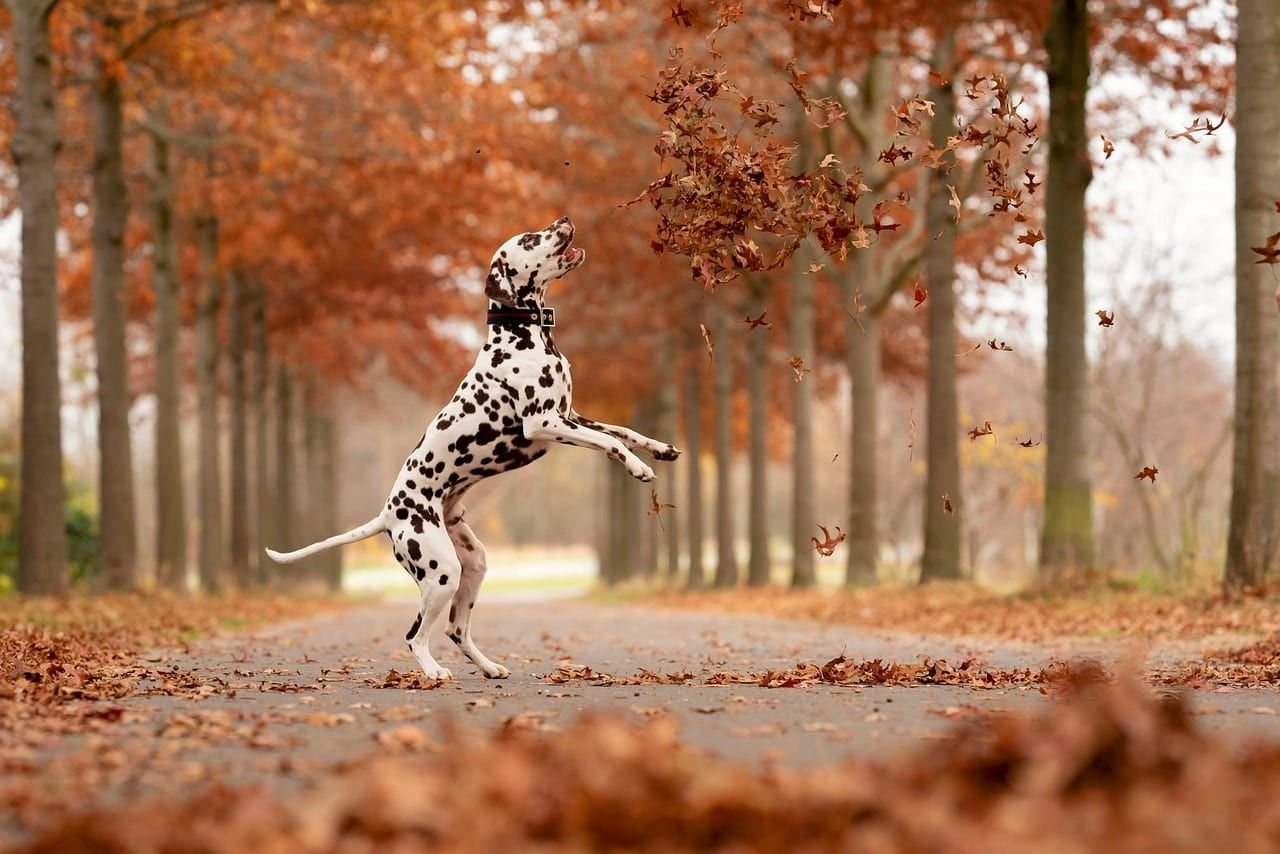
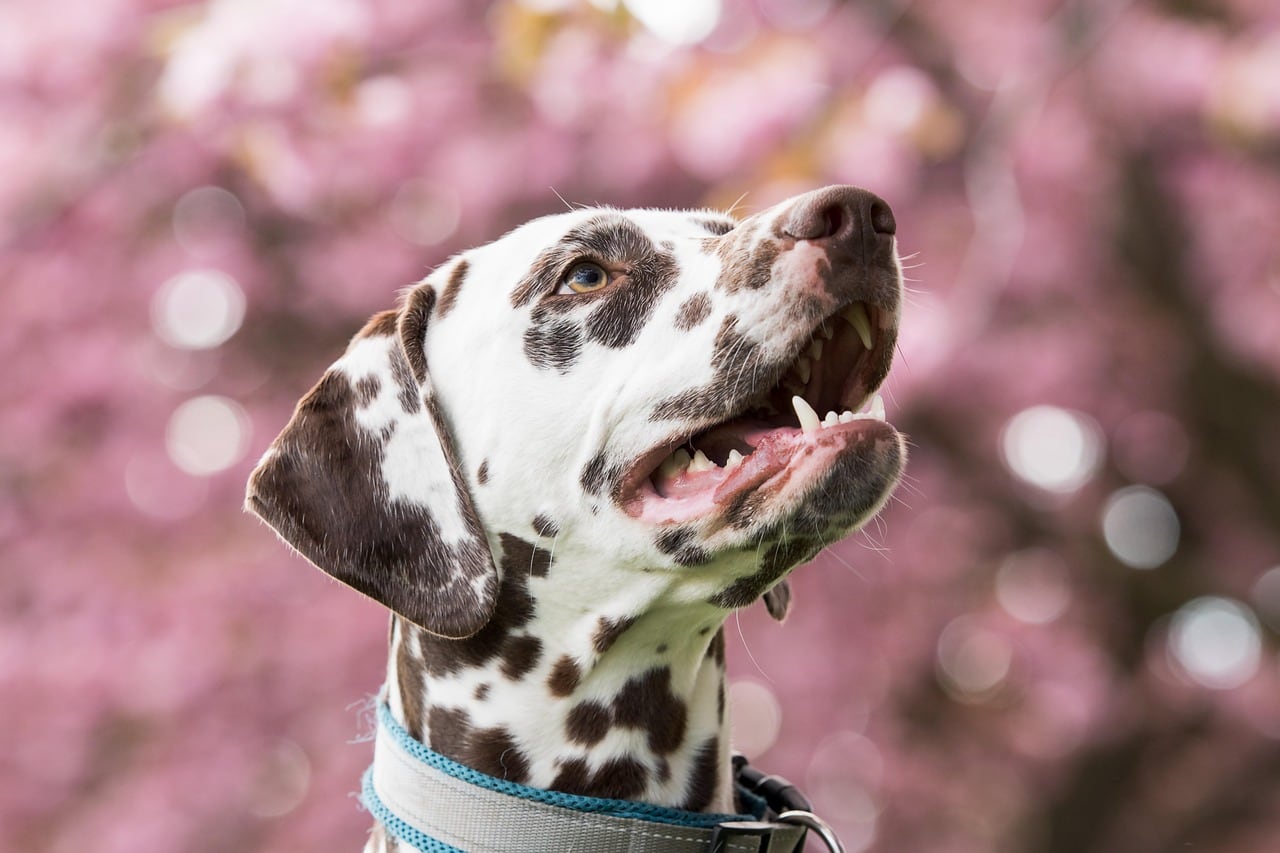
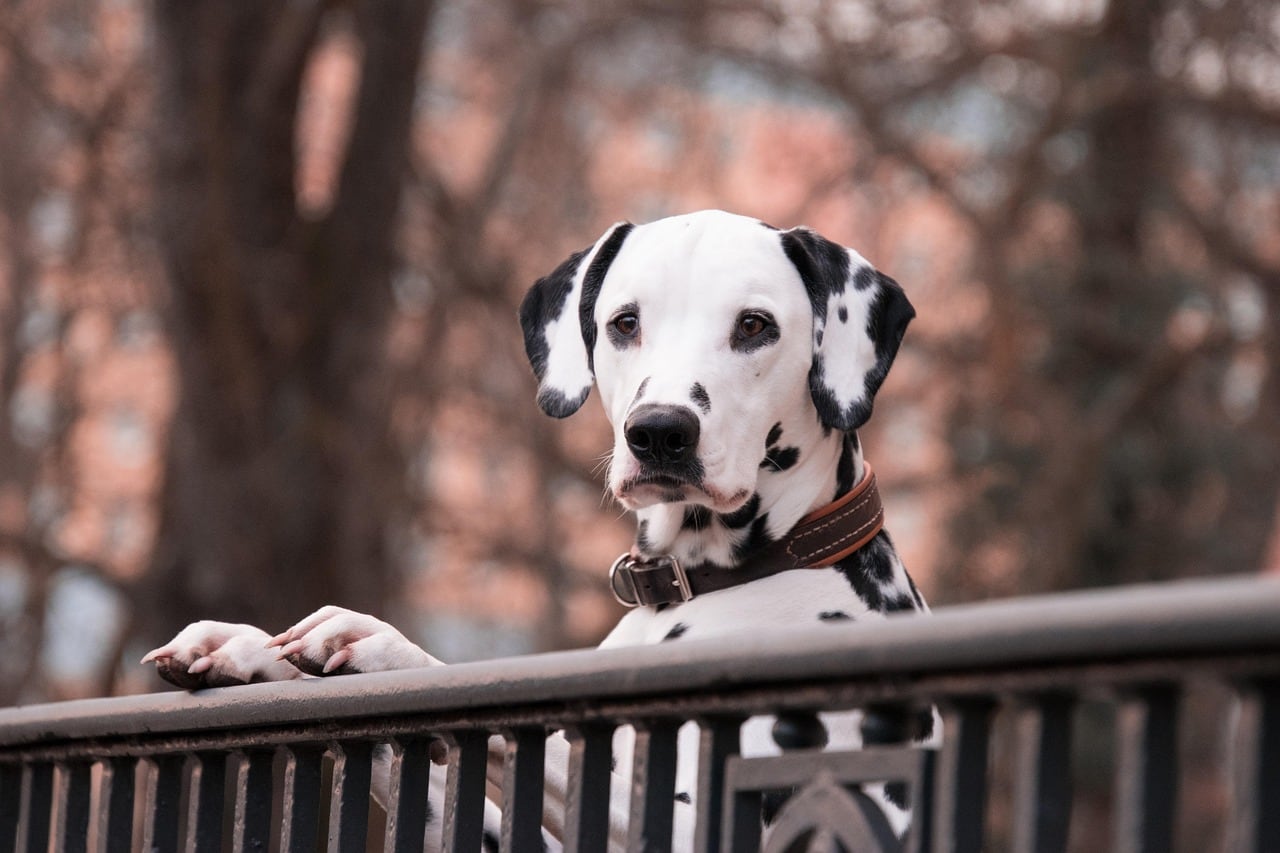
The Dalmatian (Croatian: Dalmatinski Pas) is a large, slender and athletic breed originating from Croatia, unmistakable for its short spotted coat. Males measure 56–61 cm at the withers, females 54–59 cm and weigh around 24–29 kg. It is a dog with a high need for exercise and mental stimulation – it was originally used as a companion and hunting dog with great stamina, which is still evident today.
It is sociable by nature, attached to its family and requires regular contact with people. It is moderately difficult to train – it needs patient, consistent guidance and plenty of stimuli, otherwise it gets bored easily. It is rather friendly towards children and gets along well with other dogs, its relationship with cats is individual.
It is mainly suitable for active owners with a house and garden; it is not an ideal choice for an apartment or for seniors or complete beginners.
Origin and history of the Dalmatian
The origin of the Dalmatian remains partly unclear after centuries of research, but the most likely theory connects its origin with the region of Dalmatia in present-day Croatia, from where the Czech and international names of the breed and its characteristic designation Dalmatinski Pas come from. Dogs with distinctively spotted fur appear in European paintings and written sources several centuries ago, which suggests that a similar type of dog accompanied man long before the modern standard was created.
The Dalmatian was used for much of its history as a versatile working dog - accompanying horse-drawn carriages and carriages, running alongside them and remaining calm even in the midst of noise and bustle, which was noticed by its owners, who subsequently kept it as a stable guard and companion dog for horses. In addition to this role, it also served as a hunting dog, which is reflected in its endurance, energy and ability to work in the field, which is still evident today. Its use as a property guard and traveling companion is also mentioned.
Gradually, the Dalmatian spread from continental Europe to Britain, where during the 19th century its type stabilized into a form close to its present appearance and where the first breed clubs were established striving for a unified standard. The International Cynological Federation FCI later included the breed within the group of dogs similar to cattle breeds and related breeds, which formally confirmed its status as a separate, well-defined breed with clearly described physical characteristics and temperament traits.
Appearance and size
The Dalmatian is a large, elegant and athletic breed with well-balanced proportions - its body looks sporty and without signs of heaviness. The male dog measures 56–61 cm at the withers, the female is slightly smaller, 54–59 cm, the female weighs around 24–29 kg. The difference between the sexes is therefore more noticeable in the finer frame of the female than in a fundamental difference in structure.
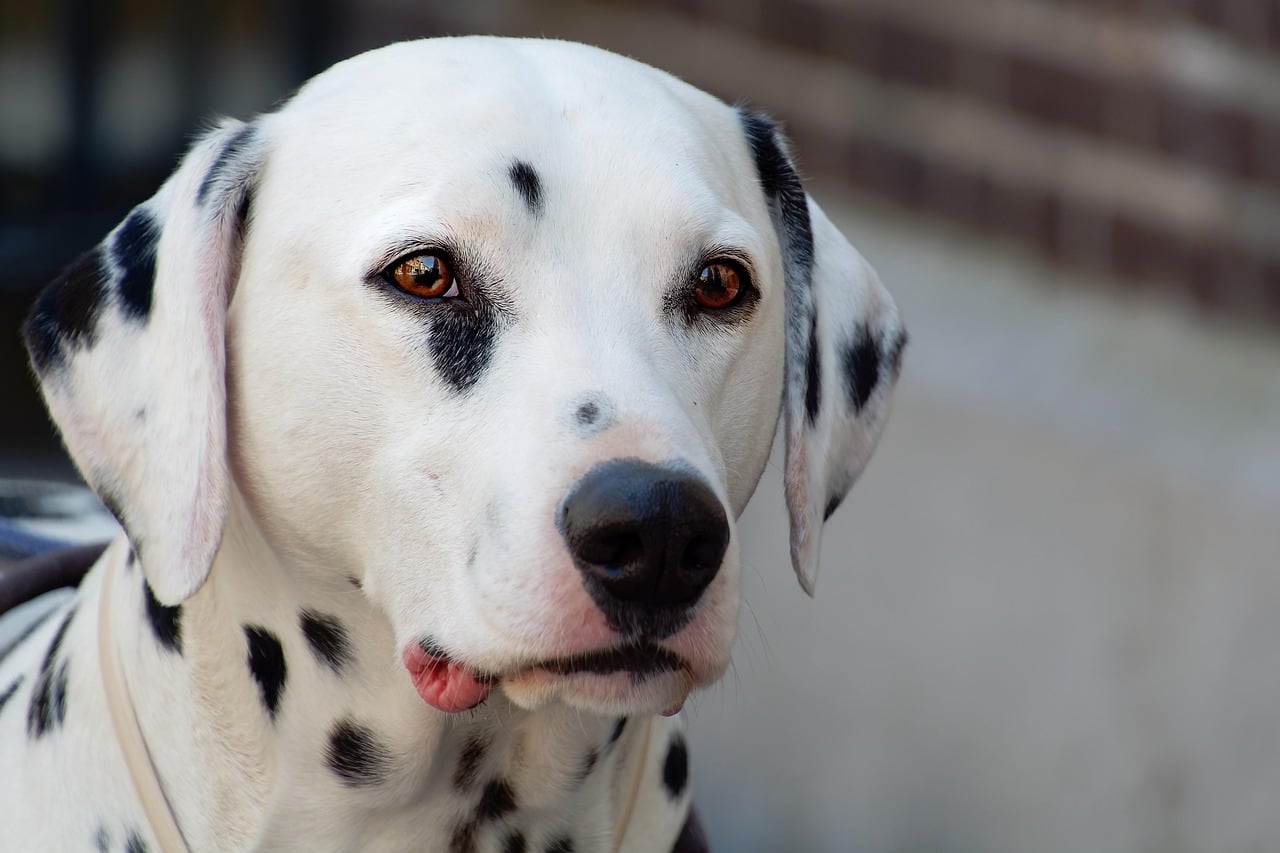
The head is symmetrical, with a flat skull and a well-marked but not abrupt stop. The muzzle is long and straight, giving the expression a calm, confident character. The ears are set relatively high, are medium in size, carried close to the head and taper towards the tip. The eyes are medium in size, round in shape, with a lively and intelligent expression.
The body is compact, with a deep chest reaching to the elbows and a slightly tucked-up belly, which gives the impression of an endurance runner. The back is strong and straight, the croup muscular. The tail is set rather low, tapering towards the tip and carried slightly curved upwards when moving, never curled over the back.
The coat is short, dense and close-fitting, soft to the touch, but with a significantly higher rate of shedding, which the owner should be prepared for. The characteristic spotted coloration, which makes the Dalmatian unmistakable at first glance, is described in detail in a separate section on colors.
- Dog height: 56–61 cm
- Height of female: 54–59 cm
- Female weight: 24–29 kg
- Coat: short, dense, close-fitting
Dalmatian Colors
The exact requirements for color and placement of spots are set out in FCI standard No. 153 for the Dalmatian breed, but the materials for this text do not contain a specific list of recognized and unrecognized color variants, so we do not list them here in order to avoid spreading unfounded information.
The nature of the Dalmatian
The Dalmatian is an energetic, intelligent dog with a strong bond with its owner and a need to spend time in the company of its family. It is a breed built for endurance - historically it accompanied horse-drawn carriages over long distances - and this endurance is reflected in its current nature. Without sufficient exercise, it tends to be restless and seeks its own activity, which can manifest itself in undesirable behavior in the household.
In relation to people, he is sociable and openly displays himself, but with strangers he may initially be more wary and will show when something is going on - his guarding tendencies are more in the form of barking warnings than in the form of aggressive territorial defense. On the other hand, he is often noticeably affectionate with his family and seeks contact.
The Dalmatian is highly intelligent, which makes it quick to learn new things, but at the same time it can form its own opinion about what and when to do. This independence manifests itself in practice as a slight stubbornness - training therefore requires patience, consistency and motivation rather than hard drill. Even a less experienced owner can handle it, if they are willing to invest time in regular work with the dog.
Typical behavioral manifestations
- High need for exercise and endurance – they will appreciate running, cycling or long walks.
- Strong bond with the owner and reluctance to spend long periods of time alone.
- Alertness to the surroundings, which is shown by barking.
- Fast learning combined with your own head – needs clear rules.
- Tendency to restlessness and undesirable behavior when there is insufficient mental and physical stimulation.
It usually gets along well with dogs, but its relationship with cats and other small animals is individual and depends on upbringing and socialization from puppyhood. Due to its nature, the Dalmatian is more suitable for active owners who can offer it enough exercise and mental stress.
Dalmatian and children
The Dalmatian is more suitable for older children who respect their boundaries and can move around in the presence of an energetic, highly active dog. It is a breed with a strong temperament and a high need for exercise and mental stimulation, which is reflected in its coexistence with children - calm cuddling alternates with periods when it needs to discharge energy, and smaller or very small children can easily be pulled to the ground by its liveliness and size, without it being a manifestation of aggression.
Socialization and upbringing
Given the medium level of training, it is worth giving your Dalmatian consistent training from puppyhood and gradually introducing him to common situations that a household with children brings – noise, sudden movements, toys on the floor. Well-conducted socialization helps the dog learn that the presence of children is a normal part of life, and reduces the risk of him reacting to unexpected stimuli with fright or being overly lively.
Adult supervision
Even with a good nature and friendly children, it is recommended that an adult family member monitor their interactions, especially in the first months of living together. The Dalmatian is a social breed with a high need for human presence, so long-term separation from the family is not good for him - this also applies to moments when children are alone with him without adult supervision.
- It is more suitable to live with older children who can respect the dog's signals of tiredness or lack of interest in playing.
- It is recommended to teach children basic rules of behavior towards dogs - not to disturb them while they are eating and resting, and not to approach their bowl too quickly.
- The high need for exercise means that joint activities (walks, games in the garden) can be beneficial for both the child and the dog if they are led and supervised by an adult.
Dalmatian and other dogs and pets
The Dalmatian usually gets along well with other dogs and does well with early socialization - its historical use as a companion dog for horse-drawn carriages has made it a breed accustomed to moving in packs and around strange animals. Furthermore, its high need for companionship means that the presence of another dog in the household can be more of an asset than a burden.
The relationship with cats and small animals needs to be assessed individually. The Dalmatian is considered a hunting breed and its hunting instinct may manifest itself in an interest in the movement of small animals - rodents, birds or unfamiliar cats, which is why it may perceive them as a stimulus to chase. If it grows up with a cat from a puppy, coexistence usually works without major problems, but with an adult dog without experience with cats, caution is advisable during the first meetings.
What to watch out for
- New encounters with dogs and other animals should be introduced gradually and under control, especially for individuals without prior socialization.
- It is advisable to secure small household animals (rodents, birds) to prevent uncontrolled contact.
- Enough exercise and mental stress reduces the risk that excess energy will manifest itself in chasing small game or cats.
Is a Dalmatian suitable for an apartment?
Rather not - the Dalmatian is a large, active dog that is not suited to an apartment environment, although with sufficient exercise compensation, its life in an apartment can be managed. The decisive factor is always how much exercise and stimulation the owner can offer it outside the home.
The high level of activity and need for mental stimulation mean that the Dalmatian needs long daily walks combined with running or other physical activity - a walk around the block is not enough for him. In an apartment without access to a garden or without the possibility of regular intensive exercise, he tends to be restless and has difficulty managing even quiet moments during the day.
The space requirements are also related to its size and temperament - it needs a place where it can move freely, stretch out and where it will not mind any noise. The breed is moderately barking, so in an apartment building with thin walls there may be occasional conflicts with neighbors if the dog is not sufficiently exercised and occupied.
When can apartment farming work?
- The owner is active and can provide several hours of exercise and stress daily.
- Thanks to its high need for company, the Dalmatian has plenty of contact with its family and is not alone for long periods of time during the day.
- Regular mental stimulation is provided – training, search games, sports activities.
- There is easy access to large areas for free movement around the residence.
The ideal environment remains a family house with a garden, where the Dalmatian has permanent access to the outdoors and space for spontaneous movement between organized walks.
How much exercise does it need?
The Dalmatian is an endurance breed with a high level of activity - historically it accompanied horse-drawn carriages and was able to run alongside them for long distances, which is reflected in its nature today. It needs at least an hour or two of exercise per day, ideally divided into several walks, at least part of which should include free movement and the opportunity to run around properly, not just short walks on a leash.
Suitable activities
- Running and accompanying cyclists – thanks to its endurance nature, it can handle long distances
- Agility and other dog sports requiring speed and agility
- Fetch and search games that will utilize his hunting talents
- Longer hikes and trips into nature where he can run off-leash
In addition to physical exercise, mental stimulation is equally important for the Dalmatian. This is a breed with medium training requirements that gets bored with monotonous activities - it is worth including training elements, obedience exercises or games of finding and solving problems. A lack of stimulation, whether physical or mental, in an active dog of this type can manifest itself in undesirable behaviors such as destructiveness or excessive barking.
Due to their short coat and low drooling, Dalmatians do not have significant breathing problems like brachycephalic breeds, but it is still advisable to adapt the intensity and length of activities to high temperatures in the summer months and ensure plenty of shade and water, especially during longer runs.
Training and education
Training a Dalmatian requires patience and, most importantly, consistency – it is an intelligent dog that quickly remembers learned commands, but it will also quickly acquire bad habits if the owner does not pay attention to them from the puppy. This is not a breed that would willingly obey just because someone wants it; it needs a reason to fulfill a command, and that reason is usually positive motivation.
What motivates a Dalmatian?
Rewarding with treats, praise and exercise works best – the Dalmatian is a dog with a strong motor and hunting foundation, so he enjoys fetching, searching and any activity where he can run and use his sense of smell. Physically demanding exercises combined with short but frequently repeated training blocks work better than long and monotonous lessons, during which he quickly loses concentration.
Appropriate approach
- Short training sessions, ideally multiple times a day, with a clear beginning and end
- Positive motivation in the form of treats, play and praise instead of harsh corrections
- Consistent rules – all household members should use the same commands and respond to unwanted behavior in the same way
- Incorporating movement and sniffing games into training to utilize natural energy and hunting instincts
Socialization is key for Dalmatians from an early age. The breed is social and needs regular contact with people and other dogs, with whom they get along quite well if they have enough experience in different environments and situations. Without thorough socialization and without sufficient mental stimulation, they can become restless or exhibit undesirable behaviors, such as excessive barking or destructive behavior out of boredom.
Due to their high need for activity and mental stimulation, the Dalmatian is not suitable for owners who cannot devote regular time to it - a lack of stimulation will manifest itself more quickly in this breed than in less energetic breeds. On the contrary, for active families who can offer enough exercise and consistent upbringing, the Dalmatian will repay its willing cooperation and loyalty.
Hair care and hygiene
The Dalmatian's short, dense coat does not require complex grooming, but care should not be underestimated due to its significant shedding. The hairs are short, sharp and firmly anchored to the skin, so they easily get stuck in carpets, upholstery and clothing, and their removal is often more laborious than combing the dog itself.
Combing and shedding
Regular brushing with a rubber brush or a special glove several times a week helps loosen dead hair before it ends up all over the house. Since the Dalmatian is a breed with a high shedding rate, during the spring and fall moulting periods, the frequency of brushing usually increases to a daily basis.
Bathing
Due to the short coat without undercoat, bathing is only necessary occasionally, usually in case of visible dirt or an unpleasant odor. Frequent washing tends to disrupt the natural protective layer of the skin, so it is advisable to choose a shampoo designed for dogs with short hair and not repeat bathing unnecessarily often.
Ears, eyes and teeth
It is advisable to check the ears regularly and, if necessary, wipe them gently with a damp cloth to prevent the accumulation of grease and dirt. The eyes should be checked occasionally and any discharge wiped away. Dental care in the form of regular cleaning or dental treats helps prevent the formation of tartar, which is generally true for all breeds regardless of coat length.
Claws
Claws need to be trimmed regularly, especially if the dog does not move much on hard surfaces that would naturally wear them down. In an active dog like the Dalmatian, claws that are too long can affect proper walking and movement.
Feeding
Due to the high activity and hunting nature of the Dalmatian, the food should be of high quality, complete and energetically appropriate to the dog's actual load - not the general recommendation on the package. A dog that runs on a bike or regularly plays sports needs a different diet than an individual with a calmer regime, and therefore it is worth adapting the amount and type of food to a specific lifestyle.
Age and life stage adaptation
Dalmatian puppies grow quickly and are a large breed, so it is advisable to choose a food designed for the growth of large breeds, which supports the gradual and even development of the skeleton and joints. For adult dogs, then switch to a maintenance food for large breeds with high exercise requirements, for older individuals it is advisable to monitor activity and possibly reduce the energy value of the diet.
Physical fitness check
The Dalmatian has a slim, athletic body structure, on which excess weight is relatively easy to see, but at the same time, it can develop subtly in a less active individual. It is recommended to regularly check the ribs by palpation and observe the dog's waist when viewed from above - if it is no longer noticeable, it is time to reconsider the dosage or amount of treats.
- The feeding ration should correspond to the current weight, age and level of exercise, not just the recommendations on the food packaging.
- It is advisable to count treats during training into the total daily energy intake, because the Dalmatian is more demanding in terms of mental stimulation and training and can eat quite a lot of treats during training.
- Regular exercise should go hand in hand with an appropriate diet - such an active breed is more likely to become overweight if exercise is restricted than if they are fed a normal diet.
If you have any doubts about the appropriate composition or amount of food, it is advisable to consult your dog's nutrition with a veterinarian, ideally taking into account its current condition and health status.
How long does a Dalmatian live?
The exact lifespan of a Dalmatian cannot be stated with certainty without a verified source, but in general, for large and athletic breeds of similar type, the lifespan is expected to be typical for this weight category. The specific age varies for each individual depending on the genetic makeup, living conditions and care received from the owner.
What affects lifespan?
- Genetics and origin of the puppy: the health of the parents and proven breeding significantly reduce the risk of hereditary burdens that can shorten the life of a Dalmatian.
- Physical fitness: maintaining a slim, muscular figure without being overweight relieves the joints and heart and is one of the most important factors in longevity.
- Exercise: Dalmatians have a high need for activity, regular and sufficiently long exercise supports cardiovascular health and psychological well-being.
- Prevention: regular veterinary check-ups, vaccinations, and early detection of health problems allow you to intervene before the problem worsens.
- Nutrition: For Dalmatians, food is recommended with regard to their specific purine metabolism, which is also related to the prevention of urinary tract problems.
- Health predisposition: the breed may have an increased predisposition to the formation of urinary stones and congenital deafness, which should be taken into account when choosing a puppy and subsequent care.
Who is a Dalmatian suitable for?
The Dalmatian is an energetic dog with high demands for exercise and mental exertion, so it is best suited to active families that can offer it enough daily exercise. It is a breed built for long distances - historically it accompanied horses and carriages - and it has retained this need for exercise to this day.
Who is the breed suitable for?
- For owners with an active lifestyle who routinely spend hours outdoors – running, cycling or taking longer trips.
- For families with children, where there is also enough space and exercise for the dog.
- For households with their own land or garden, as Dalmatians are less suited to an apartment.
- For owners willing to devote themselves to regular training and provide their dog with mental stimulation, for example in the form of canisports or sniffing games.
- For households where the dog has plenty of company – Dalmatians do not tolerate long-term solitude.
Who is the breed not suitable for?
- For seniors or people with limited physical fitness who would not be able to meet its high demands for movement.
- For owners looking for an easy-going "couch" dog - a Dalmatian without enough activity easily shows restlessness and frustration.
- For households where the dog would spend most of the day alone.
- For people who are bothered by the higher rate of shedding – the Dalmatian's short coat sheds despite low care.
- For complete beginners with no experience training an independent-minded breed, if they are not willing to seek professional help.
Interesting facts about the breed
The Dalmatian originates from Croatia, where it is known by its original name Dalmatinski Pas, and is the only breed with a characteristic black or brown spotted pattern, which puppies do not have from birth - they are born completely white and the spots only appear in the first weeks of life.
Historically, the Dalmatian has been associated with the role of a companion dog for carriages, which is related to its endurance and desire to run long distances alongside horses - therefore, to this day, it still has a strong need for exercise and mental exertion.
The breed is classified in FCI group 6 (Related breeds section) under standard no. 153, although its use and temperament resemble a hunting dog rather than a hound in the traditional sense.
Dalmatian Health
The health of the Dalmatian is closely linked to its unique metabolism - it is the only breed in which a different conversion of uric acid in the body is commonly described. This peculiarity is worth the attention of the professional public and breed clubs and is mainly reflected in the condition of the urinary tract. In addition, some lines have been mentioned as having liver sensitivity. The short coat of the Dalmatian does not complicate skin care, even though the breed is one of the most heavily haired lines. The following overview summarizes the areas that professional sources most often focus on for this breed.
Metabolism and urinary tract
The Dalmatian has been described to have a specific way of processing uric acid, which differs from most other breeds. In practice, this means that the breed may have an increased predisposition to the formation of a certain type of urinary stones (urate), regardless of gender. Professional sources therefore recommend monitoring the dog's behavior when urinating and noting any changes - more frequent urination, difficulty urinating or blood in the urine are a signal for a veterinary examination. The composition of the diet and sufficient fluid intake are often mentioned topics in this breed in connection with this metabolic peculiarity.
Liver
There are references in the literature to cases where Dalmatian litters have shown increased liver sensitivity to copper accumulation in the body. This is a topic that is the subject of further research, and it may manifest itself differently or not at all in individual dogs. Nevertheless, it is advisable for breeders and new owners to know that liver function is one of the areas to be monitored in this breed, and regular blood tests may be appropriate.
What to look for when choosing a puppy
- Ask the breeder whether and how uric acid levels and any urinary tract problems in parents or previous litters are monitored in the breeding program.
- Be interested in the health history of the line in terms of liver function, especially if the breeder has the results of professional examinations available.
- Observe whether the puppy and its siblings appear alert, have appropriate interest in their surroundings, and show no signs of digestive or urinary problems.
- Request information about the diet the puppy is used to - for Dalmatians, the composition of the food is a topic that breeders usually discuss with new owners in more detail than with other breeds.
- Check the conditions in which the puppies were raised - plenty of stimulation and contact with people are important given the high need for companionship and mental stimulation that this breed requires throughout its life.
Known predispositions
- The breed has a genetically determined hyperuricosuria and hyperuricemia (SLC2A9 gene mutation), which is homozygously present in Dalmatians and increases the risk of urate urinary stone formation.
- to congenital sensorineural deafness, with studies reporting a prevalence of around 16.5% (unilateral and bilateral forms).
- to atopic dermatitis and other skin allergic manifestations compared to other breeds.
- to cancer, as is generally the case with many purebred breeds.
Discussed risks
- to hip dysplasia, although according to available insurance statistics, Dalmatians are not among the breeds with a more severe course of this disease.
- The so-called laryngeal paralysis and polyneuropathy complex has been described in young Dalmatians, manifested by diffuse generalized polyneuropathy affecting the laryngeal and limb nerves.
- Copper-associated hepatopathy (excessive accumulation of copper in liver cells) has been described in the breed as one of the breeds with documented increased susceptibility to this liver disease.
This overview is for informational purposes only and does not replace the examination or recommendations of a veterinarian.
What to buy for a Dalmatian
Practical basis that is suitable for this breed:
- Toys – Dog toys – fetching, chewing and interactive.
- Cosmetics – Shampoos, conditioners and hair care products.
- Bowls – Feed and water bowls, anti-swallow bowls and stands.
- Collars – Dog collars – leather, textile and semi-tight.
- Beds – Beds and mattresses for dogs of all sizes.
- Leashes – Leashes, switch leashes and tracking lines.
Useful instructions
Practical tips that are useful when caring for a dog:
Frequently asked questions
Is a Dalmatian suitable for an apartment?
Rather not – it is a large and very active breed with a high need for exercise and mental stimulation, which suffers in an apartment without sufficient daily exercise. It thrives better in a house with a garden or with an owner who provides it with long walks.
Is the Dalmatian suitable for families with children?
Yes, the Dalmatian is rather suitable for children and tends to be sociable. However, due to its high need for activity and companionship, it will appreciate a family that will involve it in movement and will not leave it alone for long.
How much does a Dalmatian weigh?
A female Dalmatian usually weighs 24–29 kg, while a male Dalmatian weighs in a similar range, corresponding to its height of 56–61 cm. This is a large, athletic breed.
How much exercise does a Dalmatian need?
The Dalmatian has a high level of activity and needs plenty of exercise daily, ideally in the form of a run or a longer walk. Given its hunting origins, it also suits the company of a runner or cyclist.
Line Dalmatian a lot?
Yes, despite their short coat, Dalmatians shed a lot. The hairs are short and stiff, so they get caught in fabrics easily and removing them from clothing or upholstery can be more difficult than you might expect for a short-haired breed.
Is a Dalmatian suitable for beginners?
The rating is neutral – the Dalmatian requires medium training and, above all, consistent leadership, as it is an energetic and intelligent breed with a mind of its own. For a completely inexperienced owner with no experience with an active dog, this can be a challenge.
Does a Dalmatian get along with other dogs and cats?
They get along well with dogs, but their relationship with cats is rather neutral and depends on socialization and the individual nature of the individual. Due to their hunting background, they may be more interested in smaller, mobile animals.
What was the Dalmatian originally used for?
The Dalmatian is classified in FCI Group 6 and was historically used as a hunting and companion dog, including as a dog accompanying carriages and horses. This is reflected in its endurance and need for long-term exercise.
Is Dalmatian coat care difficult?
The coat itself is easy to care for, as it is short and does not require trimming. However, this is offset by the high rate of shedding, so regular brushing helps keep the amount of loose hair in the home under control.
Are there any specific health issues with the Dalmatian?
The breed may be predisposed to problems related to uric acid metabolism, which is also associated with the formation of urinary stones. Specific health conditions should always be discussed with a veterinarian.
Is the Dalmatian a noisy breed?
The Dalmatian's barking is rated as moderate, meaning it is not an extremely loud breed, but it is not a quiet one either. The amount of barking also depends on sufficient exercise and mental stimulation.
Is a Dalmatian suitable for seniors?
Rather not - the high need for exercise, mental stimulation, and companionship places physical and time demands on the owner, which may not be easy to manage for many seniors.
Resources and further information
- FCI Standard No. 153 – Dalmatian – Fédération Cynologique Internationale
- Source of body measurements – braquedubourbonnais.info
- Expert resource – wsava.org
- Expert Resource - tandfonline.com
- Expert Resource - uoguelph.ca
- Expert resource - ncbi.nlm.nih.gov
- Expert Resource - sciencedirect.com
- Expert resource - veterinarypartner.vin.com
Professional cooperation
This breed overview was created in cooperation with the Veterinary Clinic VYVET sro and MVDr. Adam Hylák .