
Published 1. 9. 2026
The Afghan Hound is a large sighthound breed originating from Afghanistan, classified in FCI group 10 among sighthounds with long or wavy hair. The male measures 68–74 cm at the withers, the female 63–69 cm, and at first glance it impresses with its silky, long coat, which requires very demanding and regular care. In terms of temperament, it is a dog that is rather independent, calm at home, but with a high need for exercise and opportunities to run freely.
The Afghan Hound is more suitable for active owners with previous experience - the training requirements are high and the breed is neutral towards children and strangers. It gets along well with dogs, but it is better to approach cats and other small animals with caution due to its hunting instincts. It is not an ideal choice for an apartment, even for complete beginners or seniors.
Professionally consulted
The content was created in cooperation with the veterinary clinic Veterinární klinika VYVET sro and MVDr. Adam Hylák.
Quick overview
What is the Afghan Hound like?
The Afghan Hound is a large, hardy breed of sighthound with a long silky coat, originating from Afghanistan and belonging to FCI Group 10 among sighthounds with long or feathery coat. Males reach 68–74 cm at the withers, bitches are slightly smaller, 63–69 cm. It is a breed with a high need for exercise and an independent, somewhat aloof nature – typical of sighthounds that hunt from a distance by sight.
Training requires patience and experience, because the Afghan Hound is intelligent, but at the same time independent and not very motivated to blindly obey. It is rather moderately attached to the company of people, neutral towards children and usually friendly towards other dogs, but cats can trigger its hunting instinct.
- It is suitable for an apartment only with reservations – it needs space and plenty of exercise.
- It is not an ideal choice for beginners or seniors.
- It is best suited to active owners who can handle the demanding care of its long coat.
Origin and history of the Afghan Hound
The Afghan Hound originates from the mountainous and desert regions of Afghanistan, particularly the Hindu Kush and adjacent highlands, where it has lived alongside nomadic and pastoralist tribes for centuries. It is an ancient sighthound type of Central and South Asia and is related to the Saluki and other oriental sighthounds, with whom it shares common ancestors adapted to hunting in open and rugged terrain.
The breed's original mission was to hunt gazelles, wild sheep, hares and, in mountainous areas, larger game, including the ability to stand up to a beast. The demanding climatic conditions – cold winters at high altitudes and rocky terrain – required a dog with endurance, speed and at the same time a thick, long coat that protected the body from cold and injury. For generations, local breeders selected animals based on their performance in the field, not on a uniform exterior ideal, which led to regional differences in coat type and body structure.
Journey to Europe and setting the standard
The breed became widely known outside of Asia thanks to the British working in Afghanistan and adjacent India in the late 19th and early 20th centuries, who brought the dogs home. In England, the Afghan Hound gradually established itself as a show and companion breed, and in the 1920s the first written standard was formulated there, unifying the previously diverse types. From there, the breed spread to Europe and the USA, where it gained great popularity mainly due to its striking appearance. The international standard was later adopted by the FCI.
Appearance and size
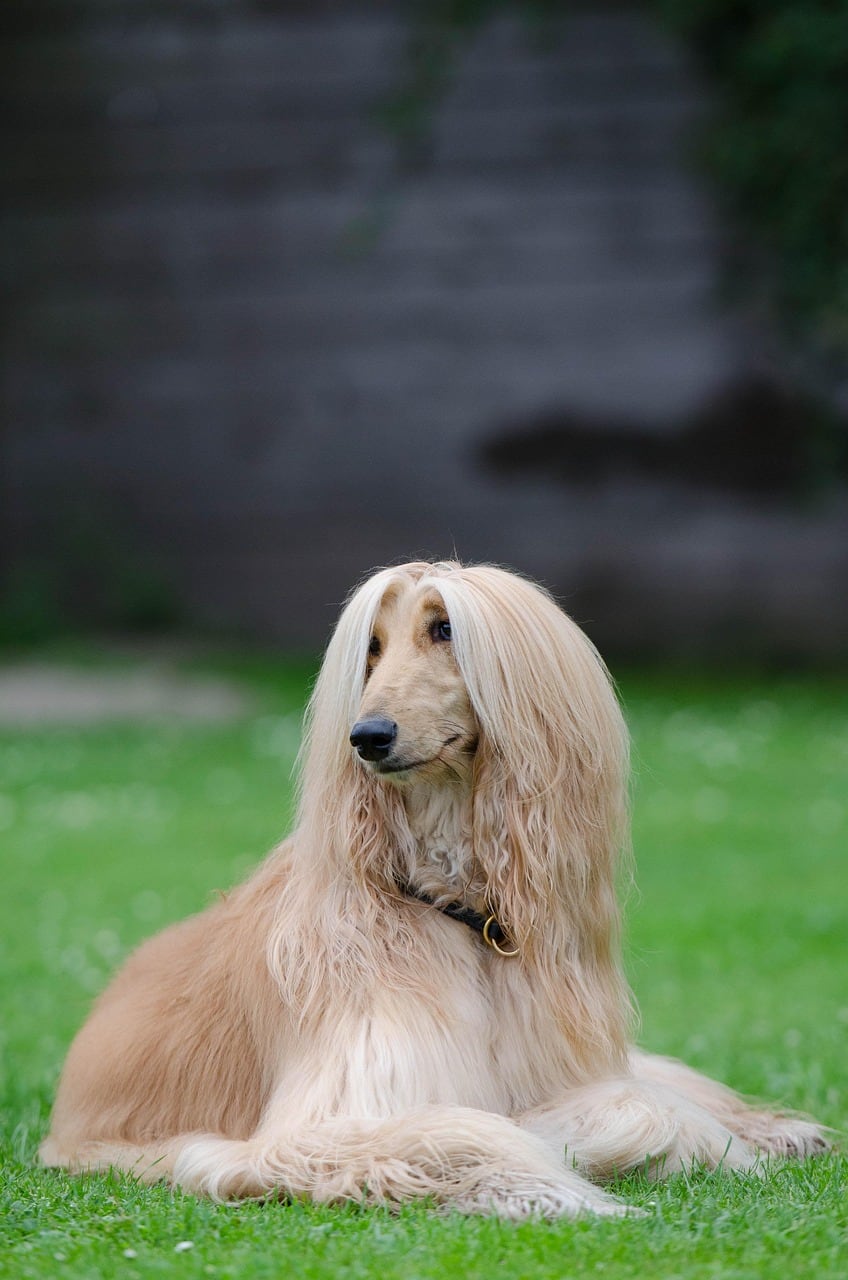
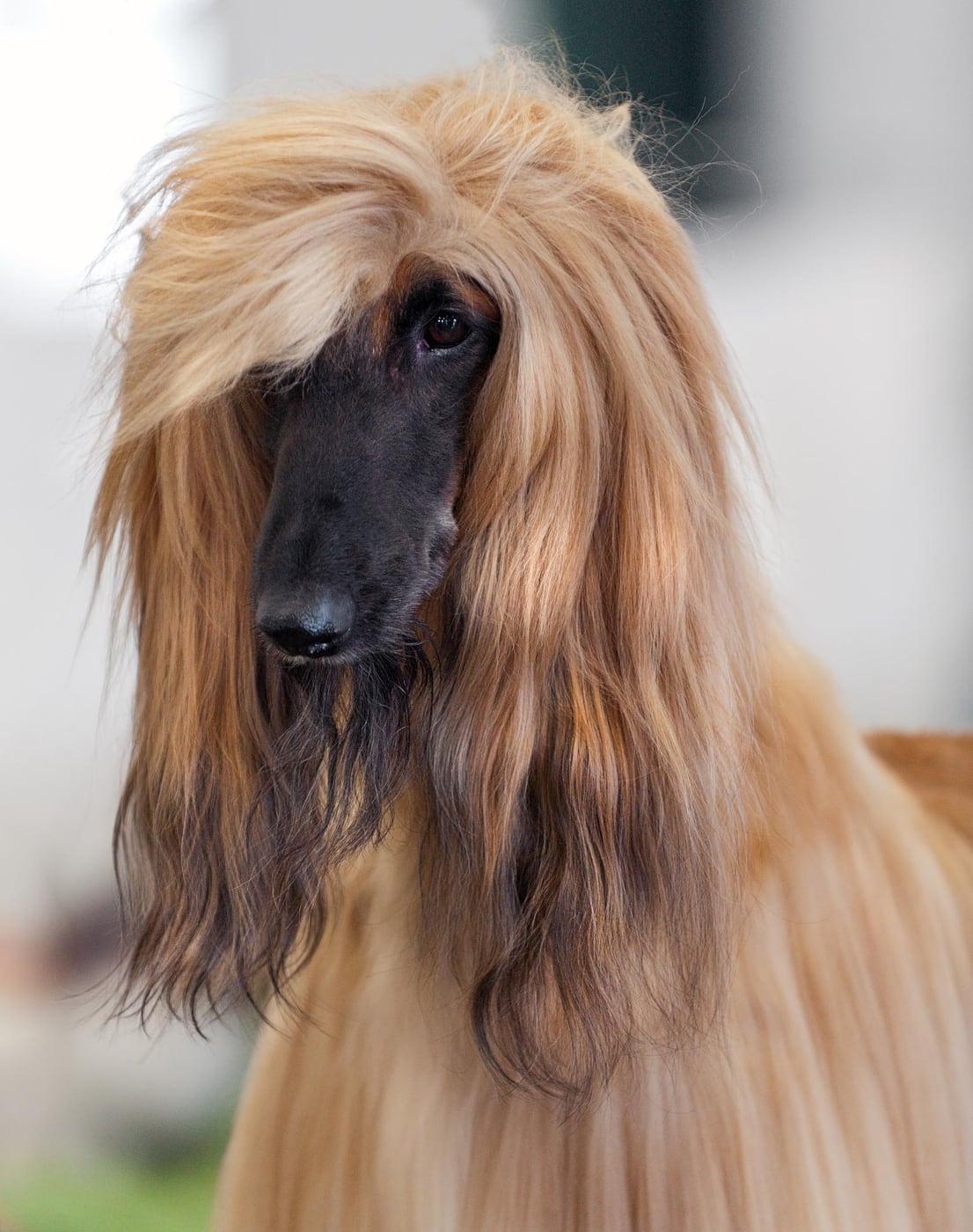
The Afghan Hound is a tall, slender dog with a significantly different body structure from males and females: the male reaches 68–74 cm at the withers, the female is slightly smaller, 63–69 cm. The overall appearance is typical of greyhounds – a light but strong skeleton, a deep chest and long legs adapted to fast running, yet at first glance the rich, silky coat covering the entire body dominates.
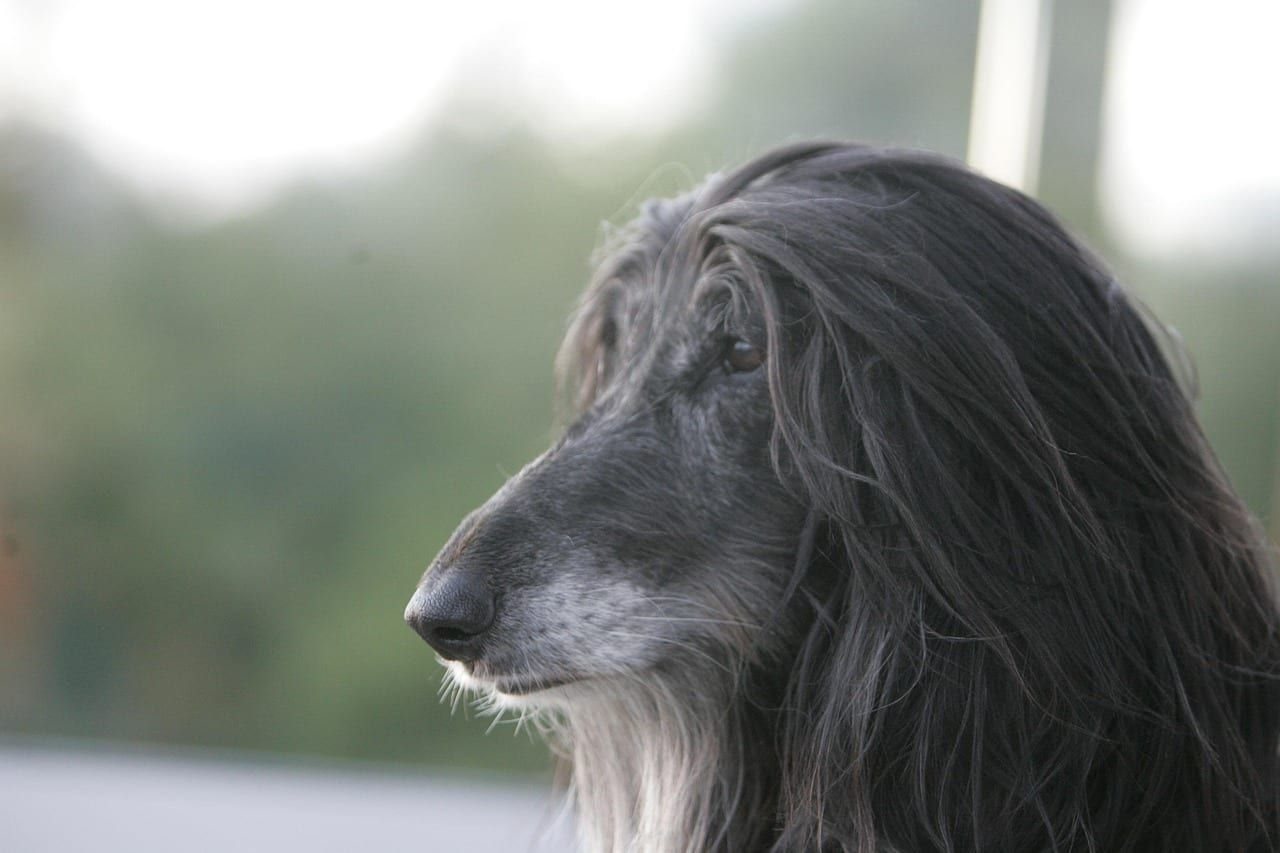
The head is long and relatively narrow, with a prominent, gently arched muzzle and a striking long "cap" of hair, which often creates a characteristic silky iridescence on the crown - the so-called "topknot" typical of this breed. The ears are long, low-set and hang close to the cheeks, covered with long, thick hair. The eyes are rather triangular in shape, dark, with a piercing, almost distant expression, which is often described as a typical "oriental" gaze for the Afghan Hound.
The coat is long and silky all over the body except on the back, where it tends to be shorter and smoother – this difference in coat length on the body is one of the breed's distinguishing features. The tail is set low, tapering towards the end and bearing a characteristic curl into a circle.
We describe coat color variants and their recognized shades in a separate section on colors.
Afghan Hound Colors
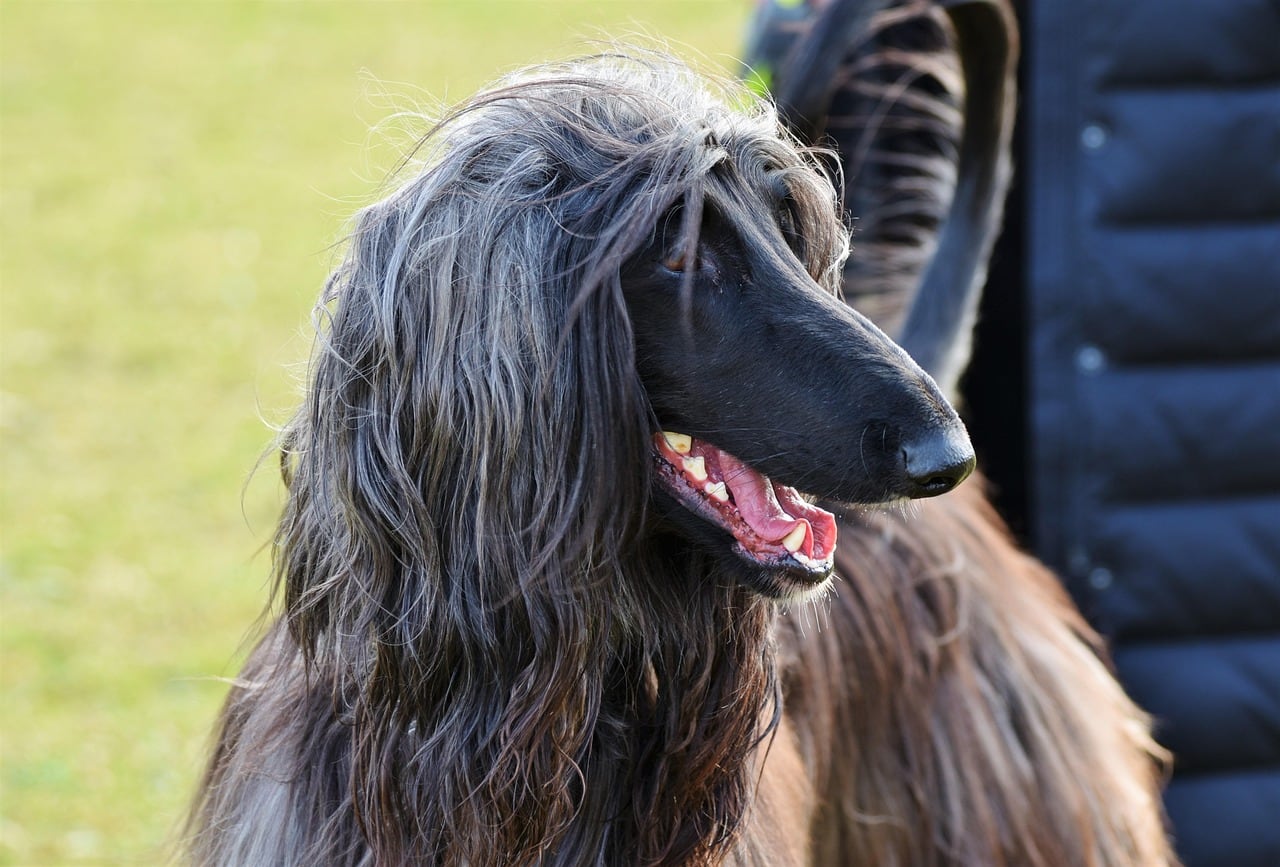
The FCI standard for the Afghan Hound allows a wide range of coat colors and does not set any restrictions on the shade - all colors are recognized, including white. The only exception is the prohibition of the mark, which is a white spot on the head (the so-called bald spot between the ears), which is considered a defect.
Standard coloring
The following coat variations are commonly found within the breed:
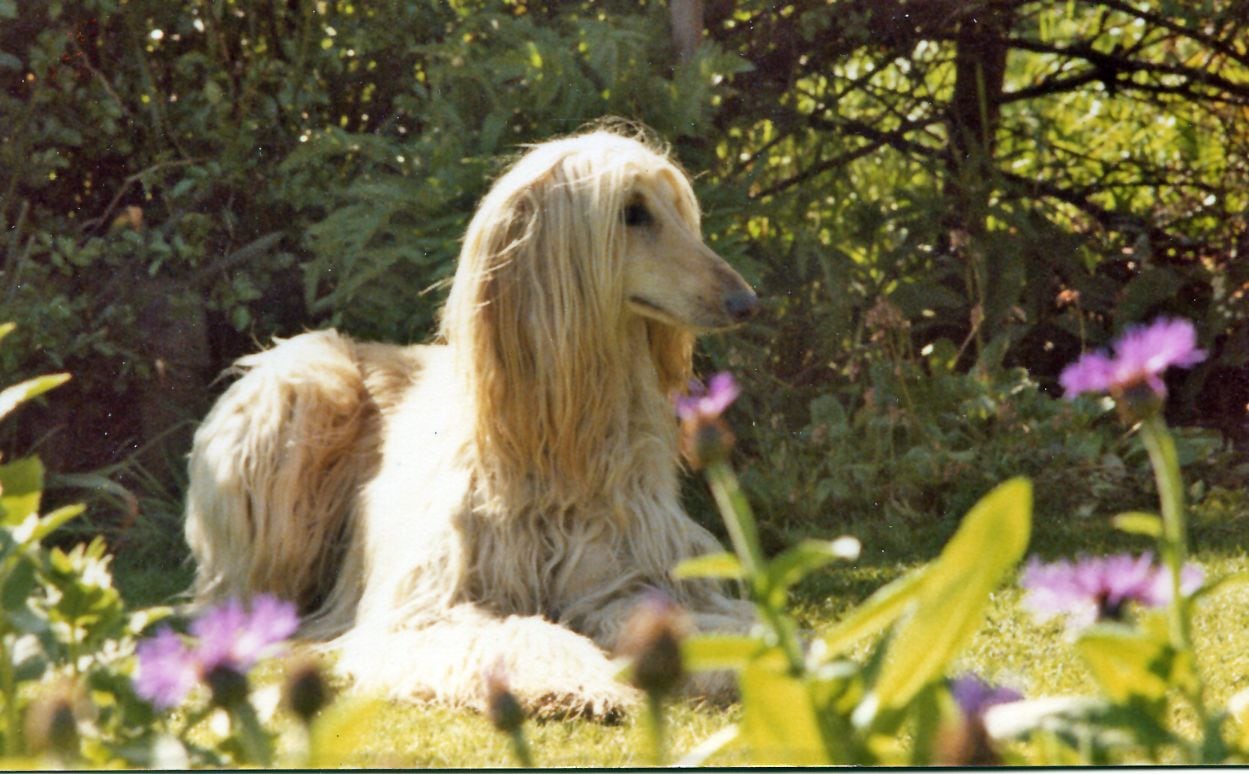
- fawn (cream to gold)
- red
- black
- black and tan (furry)
- blue
- silver
- white
- motley combination (domino)
- brindle
Because the standard does not limit color as such, the Afghan Hound is judged at shows primarily on the overall type, body structure, and coat quality, not on a specific shade of color.
Non-standard characters
The only explicitly excluded feature is a white spot on the head between the ears. Otherwise, you will not encounter a color in this breed that the standard would consider a defect - this makes the Afghan Hound a breed with one of the most diverse color ranges among the sighthounds.
Afghan Hound Personality
The Afghan Hound is a dog with an independent, dignified nature that is very different from the typical image of an obedient family pet. It is a sighthound breed bred for independent hunting in difficult terrain, which is reflected in its nature to this day - it is a dog with a strong will of its own, assessing situations on its own and responding to commands selectively rather than automatically.
The relationship with the owner is rather reserved and with a touch of aristocratic detachment - it shows affection gently, not violently. It behaves neutrally to measuredly towards strangers, it is not a dog that would throw itself into the arms of every visitor. It has minimal guarding tendencies, it rarely barks, so it does not serve as a danger detector.
The intelligence of this breed is undeniable, but it manifests itself differently than in working breeds - the Afghan Hound can quickly understand what is wanted of him, but decides whether it is really worth obeying. This combination of intelligence and independence is often interpreted as stubbornness, and training therefore requires patience, consistency and sensitive motivational methods without pressure.
His energy is high, but it manifests itself in bursts - after quiet moments at home, he can break out into a fierce, explosive run, especially if he sees a moving object. The tendency to chase fast-moving things due to his hunting instinct must be taken into account when walking and in contact with small animals.
In relation to other dogs, it is rather tolerant and often feels good in a pack or among other greyhounds. However, its relationship with cats and small animals is rather problematic due to its strong hunting instinct. The Afghan hound is neutral towards children - it is not typically playful or overly patient, but not aggressive either, it rather keeps its distance and its own pace.
This breed's need for human companionship is moderate - they appreciate the closeness of their family, but they are not one of those dogs that require constant attention. Similarly, mental stimulation does not need to be extremely intense; regular physical exercise and the opportunity to run in a safe environment are more important.
Afghan Hound and children
The Afghan Hound's relationship with children is characterized as neutral - it is not a breed that would seek out children and enthusiastically share all its time with them, but it is not a dog that would be hostile to them either. Its nature is rather independent and reserved, which is reflected in its relationship with the smallest members of the family.
The Afghan Hound is a dog with a distinctly independent and calmly confident temperament. It does not seek constant attention and is not a boisterous playmate - rather, it prefers its own space and decides when and with whom it will interact. For families with small children, this means that the dog may not readily tolerate spontaneous hugging, fur pulling or noisy running around, which smaller children may be prone to. Given the hound's strong build and strength, it is therefore advisable for a child to meet a dog under adult supervision, especially for preschool children.
Socialization and upbringing
A key role is played by consistent and early socialization of the puppy - getting used to the presence of children, their movements and sounds should be part of the upbringing from an early age. Given that this is a breed with high training requirements, it is advisable for the owner, with the help of experience or professional guidance, to create clear rules of coexistence - including how the child should behave towards the dog and when to give the dog space to rest.
- Children should be taught to respect the dog's space and that the dog is not a toy to be constantly petted.
- It is advisable for smaller children to meet an Afghan Hound under the supervision of an adult.
- Regular exercise and mental exercise for the dog reduce the risk of frustration, which could also manifest itself in living with children.
With older children who already understand the rules of treating animals properly, coexistence is usually calmer and more problem-free than with young children.
Afghan Hound and other dogs and pets
The Afghan Hound usually gets along well with other dogs and feels natural in a pack - in its original homeland it was also used to hunt in pairs or smaller groups, so the company of another dog does not bother it and it often seeks it out. However, it is different with small animals: this is a breed with a strongly developed visual hunting instinct, which was bred to independently pursue and kill fast game in difficult mountainous terrain. This instinct remains significantly present even in dogs living in the household.
Cats, rodents or small mammals are therefore potential prey for the Afghan Hound, not a companion. The quick movement of a small creature will trigger a hunting scenario before the owner has time to react, regardless of previous training. If a cat or other small animal already lives in the household, coexistence should be established gradually, with constant supervision and without the illusion that the instinct will be "trained" away over time.
What to watch out for
- On walks without a leash, he can go after a moving animal at any time - a fenced and safe space is a must.
- It is always advisable to supervise encounters with small breeds of dogs or other small animals, especially upon first contact.
- In families with cats or rodents, it is safer to count on permanent separation of spaces rather than relying on training.
Is the Afghan Hound suitable for an apartment?
Rather not – the Afghan Hound is not an ideal choice for an apartment, although it can be kept in apartment conditions if the owner can compensate for the space limitations with plenty of outdoor exercise. This is a highly active breed built for running, and an apartment alone will not offer it the necessary space to move around.
The key factor is regular and sufficiently long exercise outside the home - ideally the possibility of free running in a secure area. Without this, the dog's energy accumulates and manifests itself as restlessness inside the apartment. On the contrary, after a proper walk, the Afghan Hound is rather calm at home and does not require much space, which is partly in the way of apartment keeping.
The advantage for living in a more closed space is the low barking rate - the breed does not show excessive vocal accompaniment, so it does not burden the neighbors or the household with noise. However, this does not mean that it is suitable for everyone: the combination of very demanding care for the long coat and high training requirements makes the Afghan Hound a breed intended more for experienced and active owners than for beginners looking for a relaxed apartment dog.
- The need for regular, intensive exercise outdoors, ideally with the possibility of free running
- Low barking as a plus for peaceful apartment living
- The high level of coat care and training requires time and experience from the owner.
- Without enough exercise, the dog risks becoming restless and frustrated in a confined space.
How much exercise does it need?
The Afghan Hound is a highly active breed and is best suited to owners who can provide it with plenty of outdoor exercise – ideally long walks combined with free, fast runs in a secure area. This is a typical sighthound, whose body is built for sprinting, and therefore it will appreciate regular opportunities to let off some energy, not just leisurely walks on a leash.
Suitable activities and sports
Due to its hound build and natural hunting instinct, the Afghan Hound is well suited to activities that utilize its speed and agility. Since it tends to be less friendly with cats and other small animals, free range should always be carefully considered for safety reasons.
- Coursing and lure coursing – chasing an artificial lure that matches its natural instinct
- Free running in fenced or otherwise secured areas
- Longer walks and hikes in the field
- Canicross or running alongside a cyclist for physically fit and experienced owners
The breed has a medium level of mental stimulation, so it will appreciate activities that involve its head, not just its legs, such as obedience training or games focused on smell and search skills. Since the training is often demanding and the Afghan Hound retains a strong sense of independence, it is advisable to combine physical exercise with patient, consistent training.
When moving outdoors, it is advisable to take into account his long coat, which easily gets caught in undergrowth and requires inspection and maintenance after more demanding trips. In hot weather, it is wise to plan intensive activities for cooler parts of the day.
Training and education
Training the Afghan Hound is one of the most challenging of the sighthound breeds and requires patience and experience from the owner. This is a dog with a strong independent nature, which was not bred to obey humans, but to hunt independently over long distances - and this hereditary independence is also reflected in training, where the Afghan Hound rarely operates on the principle of "do it because I want it".
Classic motivational tools, such as mere praise or the desire to please the handler, do not work well with him. He responds better to short, well-structured lessons that are interesting to him - whether it is movement games, watching a moving object or training in an environment without distracting stimuli. Long and repetitive exercises quickly bore him and his willingness to cooperate then decreases.
Appropriate approach to training
Positively guided training based on consistency and calmness, without pressure and without expectations of quick results, is proven. The Afghan Hound will remember what is asked of him, but he needs to be motivated repeatedly to follow what he has learned - mastering a command once does not automatically mean that he will be willing to follow it in a week or in a different environment.
- Short training blocks, ideally several times a day instead of one long lesson.
- Training in a calm environment without tempting odor or movement stimuli to which the greyhound instinctively reacts.
- Emphasis on basic commands – recall and leash behavior – as a priority over more complex exercises.
- Avoiding harsh corrections, to which he reacts sensitively by refusing to cooperate.
Socialization is key for the Afghan Hound from puppyhood, as he is naturally aloof with strangers and dogs. Regular and gradual exposure to new situations, places and individuals helps build his confidence and reduces the risk of overly fearful or uncontrollable behavior in adulthood.
The breed's specific feature is its highly developed hunting instinct, which quickly leads it to chase a moving target - be it a game animal, a cat or a cyclist. Recalling can therefore never be considered 100% reliable, and free movement without a leash is only suitable in securely fenced areas. For these reasons, the Afghan Hound is not recommended as a first dog for beginners - mastering its specific nature requires experience with similarly independent-minded breeds.
Hair care and hygiene
The Afghan Hound's long, silky coat requires thorough and regular care - it is one of the most demanding breeds to groom. Without systematic brushing, it can quickly become matted and tangled, especially behind the ears, under the armpits and on the inner thighs, where the coat is the softest and most stressed by movement.
Combing should be done several times a week, ideally every other day for many individuals, and thoroughly down to the skin, not just on the surface. A combination of a brush with long pins and a comb with denser and sparser teeth is used to catch any knots before they harden. The coat is combed in smaller sections, because it is practically impossible to go through the entire coat at once with such a long and silky structure.
Bathing and drying
The Afghan Hound is bathed more often than most breeds because a clean, degreased coat is easier to comb and less matted. After bathing, it is necessary to dry the coat thoroughly with a hairdryer and gradually brush it - if the wet coat dries on its own, the tufts will become firmer and combing will be much more difficult.
This breed sheds moderately, but the coat, due to its length and loose hair structure, easily gets caught in the undercoat and creates the basis for future tangles if not brushed regularly.
Ears, eyes, teeth and claws
- It is advisable to check limp, heavily furred ears for moisture and dirt, as longer hair around the ears impairs airflow.
- It is enough to occasionally wipe the area around the eyes with a damp cloth if dirt accumulates there or if longer hair irritates the eyes.
- It is a good idea to brush your teeth at regular intervals to prevent the formation of plaque and tartar.
- Claws shorten depending on how quickly they grow - in active dogs that often move on hard surfaces, they wear out less than expected, in less active individuals they need to be trimmed more often.
Trimming in the classic sense, as in wire-haired breeds, is not performed on the Afghan Hound; the coat is left in its natural length and structure, or it is only trimmed around the paws for better hygiene.
Feeding
The Afghan Hound has a lean, athletic build and its diet should reflect this – a high-quality complete food adapted to the age, size of the breed and high level of physical activity is suitable. For puppies and adolescents, it is important to choose a food designed for large breed growth, as rapid weight gain can put excessive strain on the joints and bones.
An adult dog needs enough energy to cover demanding exercise, but at the same time it is necessary to ensure that the calorie intake corresponds to the actual load - greyhounds that do not have a regular run and the opportunity to run are at risk of becoming overweight, despite their slim constitution. Excess weight is undesirable in this breed not only aesthetically, but also functionally, because it burdens the musculoskeletal system built for fast running, not for carrying excess pounds.
Fitness check
In the Afghan Hound, the waist should be visible and the slightly sprung ribs should be palpable under a thin layer of subcutaneous fat – this is a typical sign of healthy body condition in sighthound breeds. Regularly monitoring the weight and adjusting the amount of food to the current level of activity helps to keep the dog in optimal condition throughout its life.
- Choose food according to age, size and level of physical activity.
- Consider switching to senior food due to the decrease in activity at an older age.
- Regularly check your physical condition by sight and touch.
- Adjust the amount of feed according to the actual energy expenditure, not just according to the recommendations on the package.
How long does an Afghan Hound live?
Exact statistics on the lifespan of the Afghan Hound are not available, but in general, it is a breed whose lifespan is significantly influenced by a combination of genetic predisposition, overall physical condition, and care provided throughout life.
What influences life expectancy the most?
- Genetics: The origin of the dog and the health of the parents play a crucial role - when purchasing a puppy, it is advisable to inquire about the health examinations of breeding individuals.
- Physical condition: As a sighthound built for fast running, the Afghan Hound needs to maintain a lean, muscular physique without excess weight that puts unnecessary strain on the joints and heart.
- Exercise: Due to the breed's high activity level, regular, sufficiently intense exercise is a must - lack of exercise can affect both the dog's physical and mental state.
- Prevention: Regular veterinary checkups and early detection of any health problems help keep your dog in good condition throughout its life.
- Nutrition: A quality diet appropriate to the age, activity level and lean constitution of the breed supports musculoskeletal health and overall vitality.
- Health predisposition: The Afghan Hound may have an increased predisposition to hip dysplasia, so it is advisable to pay increased attention to this area, especially in active individuals.
Who is the Afghan Hound suitable for?
The Afghan Hound is best suited to experienced and active owners who can provide him with plenty of exercise and who have the time and patience to take care of his long, silky coat. He is a dog that appreciates space and an owner who understands the more independent nature of the hound and does not try to make him an obedient exerciser on command.
Who is the breed suitable for?
- For owners with previous experience with greyhounds or more demanding breeds
- For active people who provide their dog with regular and sufficient exercise
- For those who have the time and desire to devote themselves to regular and thorough care of their long hair
- For households with their own land or the possibility of safe walks outside the apartment
- For owners of other dogs, with whom the Afghan Hound usually gets along well
Who is the breed not suitable for?
- For complete beginners with no experience training a more independent-minded dog
- For residents of small apartments without the possibility of regular outdoor play
- For seniors who might have trouble managing its physical demands and coat care
- For households with cats, where he might show hunting instincts
- For people looking for a dog that doesn't require a lot of grooming time
Interesting facts about the breed
The Afghan Hound originates from Afghanistan, where it was used for hunting in difficult mountain terrain - its silky, long coat, which protected it from the cold, corresponds to this. Due to its area of origin, the breed is referred to in the Anglo-Saxon environment as the Afghan Hound.
In the FCI classification, it belongs to group 10 (greyhounds), specifically to the section of long-haired and wire-haired greyhounds, under standard no. 228.
Related breeds from similar geographical and hunting backgrounds include the Russian hound (borzoi), saluki, and Kazakh tazy - all of which share origins in Central Asia and the Middle East and use for long-distance hunting by sight.
Afghan Hound Health
The health profile of the Afghan Hound is largely linked to its body structure and the lifestyle of an endurance runner – it is a breed built for fast movement and high physical exertion, which is also reflected in what it is appropriate to focus on. The Afghan Hound has been described as having an increased predisposition to hip dysplasia, which is a relevant topic for a large, active breed with long limbs. In addition to the musculoskeletal system, from a practical point of view, great attention should be paid to coat care for this breed, as neglected coat can indirectly lead to skin problems. In general, regular exercise corresponding to its high need for activity and sensitive loading of the joints during the growth period are essential elements of prevention.
Hip joint and musculoskeletal system
The Afghan Hound has been described as having an increased predisposition to hip dysplasia. This is a developmental defect of the joint, which is observed in breeds of this type mainly in connection with growth and stress during the puppy and young dog period. Given that the Afghan Hound is one of the breeds with a high need for exercise and a fast, sprinting style of running, it is advisable to ensure that the stress corresponds to the age and physical maturity of the individual and to prevent excessive strain on the joints at an early age.
Fur and skin
The long and silky coat of the Afghan Hound requires very demanding and regular care. If the coat is not aired, combed and tangled for a long time, conditions unfavorable for the skin condition can develop under it. Consistent and systematic care of the coat has a direct impact on the overall health comfort of this breed, it is not just an aesthetic matter.
What to look for when choosing a puppy
- Be interested in the health status of the parents, or have the hip joints of breeding animals examined, if the breeder has them available.
- Check to see if the puppy comes from a breeder who ensures that young dogs are given a gradual and appropriate amount of exercise appropriate to their age.
- Pay attention to the condition of the puppy's coat and skin when choosing and ask the breeder about their previous coat care.
- Verify whether the breeder provides information about the musculoskeletal system and overall condition of the puppies being bred.
Known predispositions
- to hip dysplasia; a specialized study focused directly on Afghan hounds described a high proportion of affected offspring in litters from dysplastic parents and a typical age at which changes in the hips can first be demonstrated radiographically.
- to hereditary (juvenile) cataract with a presumed recessive type of inheritance.
- to hereditary necrotizing myelopathy, i.e. gradually progressive damage to the white matter of the spinal cord described specifically in this breed.
- to chylothorax, i.e. the accumulation of lymphatic fluid in the thoracic cavity; a retrospective study of 34 dogs with chylothorax identified Afghan Hounds as the most commonly represented breed among idiopathic cases.
- The breed may have an increased sensitivity to some anesthetics, specifically thiobarbiturates (e.g. thiopental), and therefore alternative protocols such as propofol or a ketamine/diazepam combination are recommended for these dogs.
Discussed risks
- to reduced levels of thyroid hormones, or hypothyroidism, which is cited by some breed sources as a reason for regular laboratory checks of the thyroid gland in this breed.
- to demodicosis (overgrowth of mites of the genus Demodex), which in dogs is generally associated with a hereditary predisposition of the immune system.
- Due to their deep chest, the breed may be predisposed to gastric dilatation and torsion (GDV), a condition that requires immediate veterinary care.
This overview is for informational purposes only and does not replace the examination or recommendations of a veterinarian.
What to buy for an Afghan Hound
Practical basis that is suitable for this breed:
- Toys – Dog toys – fetching, chewing and interactive.
- Cosmetics – Shampoos, conditioners and hair care products.
- Bowls – Feed and water bowls, anti-swallow bowls and stands.
- Collars – Dog collars – leather, textile and semi-tight.
- Beds – Beds and mattresses for dogs of all sizes.
- Leashes – Leashes, switch leashes and tracking lines.
Useful guides
Practical tips that are useful when caring for a dog:
Frequently asked questions
Is the Afghan Hound suitable for an apartment?
Probably not – this is a large greyhound with a high need for exercise, which is better suited to a house with a garden or at least the possibility of regular running. An apartment may be sufficient for him only in combination with sufficiently long walks and space to stretch out.
How much care does the Afghan Hound's coat require?
Very much so – the long, silky coat tangles easily and requires frequent, thorough combing to prevent matting. Owners should plan on regular grooming several times a week, not just occasional brushing.
Is the Afghan Hound suitable for beginners?
Probably not, because it combines high training requirements with very demanding coat care and a strong hunting instinct. A more experienced owner can better handle its independent nature and demands for physical activity.
Why is the Afghan Hound so independent and difficult to train?
The breed was originally bred in Afghanistan to hunt independently in challenging mountainous terrain, where it had to react quickly without constant human guidance. This hereditary independence is still evident today, and training requires patience and consistency.
Is the Afghan Hound good with children?
It behaves neutrally towards children, i.e. it is not typically cuddly or playful, but not aggressive either. Given its size and temperament, it is preferable for contact with children to always be supervised by an adult.
Will the Afghan Hound get along with cats and other small animals?
Probably not – as a greyhound with a strong hunting instinct, he may perceive small animals, including cats, as prey. On the other hand, he gets along well with dogs.
How much exercise does an Afghan Hound need?
They need a lot of exercise as they are a high activity breed that has been bred to run hard over rough terrain. Regular free range in a secure fenced area where they can fully utilize their speed is ideal.
What health problems can occur in the Afghan Hound?
The breed may have an increased predisposition to hip dysplasia, as indicated by available studies. The specific health condition is always individual and should be consulted with a veterinarian and breeder.
Does the Afghan Hound shed a lot?
Shedding is moderate for this breed, but due to the length and texture of the coat, shed hairs can easily become trapped in the undercoat. Regular brushing helps keep the coat in good condition and reduces matting.
Is the Afghan Hound a noisy breed?
No, the barking rate is low in this breed. The Afghan Hound is not one of those dogs that barks for no apparent reason.
How much does an Afghan Hound need human company?
The need for companionship is medium – this is a dog that can be independent, but at the same time should not be permanently isolated from the family. Its original role as a hunter has also retained a certain degree of independence from the constant proximity of humans.
Is the Afghan Hound suitable for seniors?
Probably not, because the high need for exercise and the demanding care of the coat place physical and time demands on the owner. For a senior with limited fitness, caring for this breed can be difficult to manage.
Resources and further information
- FCI Standard No. 228 – Afghan Hound – Fédération Cynologique Internationale
- Source of body measurements – fci.be
- Source for predisposition - researchgate.net
- Source for predisposition - vin.com
- Source on predisposition - pubmed.ncbi.nlm.nih.gov
Professional cooperation
This breed overview was created in cooperation with the Veterinary Clinic VYVET sro and MVDr. Adam Hylák .